46. BENIGN ODONTOGENIC TUMOURS OF JAWS
 Call Kai
 Learn
Learn Practice Test
 Spaced Repetition
 Match
Match Flashcards
 Knowt Play
1/29

There's no tags or description
Looks like no tags are added yet.
Name | Mastery | Learn | Test | Matching | Spaced | Call with Kai |
|---|
No analytics yet
Send a link to your students to track their progress
30 Terms
what is the Classification of benign odontogenic tumours?
1. odontogenic epithelium
- ameloblastoma
- squamous
- calcifying
- adenomatoid
- keratocystic
2. epithelium with ectomesenchyme, with or without HDT formation
- ameloblastoma fibroma
- ameloblastoma fibro-dentinoma
- ameloblastoma fibro-odontoma
- odontoma- complex or compound
- odontoameloblastoma
- calcifying cystic
- dentinogenic ghost cell
3. ectomesenchyme with or without odontogenic epithelium
- odontogenic fibroma
- odontogenic myxoma
- cementoblastoma
what is an ameloblastoma?
A benign odontogenic tumour of epithelial origin which behaves aggressively occurring most commonly in mandible
explain the clinical appearance of ameloblastoma
slow growing mass
loose teeth
malocclusion
paraesthesia
pain
what are the forms of ameloblastoma?
solid
peripheral
desmoplastic
unicystic
explain solid ameloblastomas
most common form + has high recurrence
locally aggressive
can grow to extreme sizes
what is a classic radiographic appearance of solid ameloblastoma?
- soap bubble appearance
- multilocular radiolucency
- root resorption
- jaw expansion
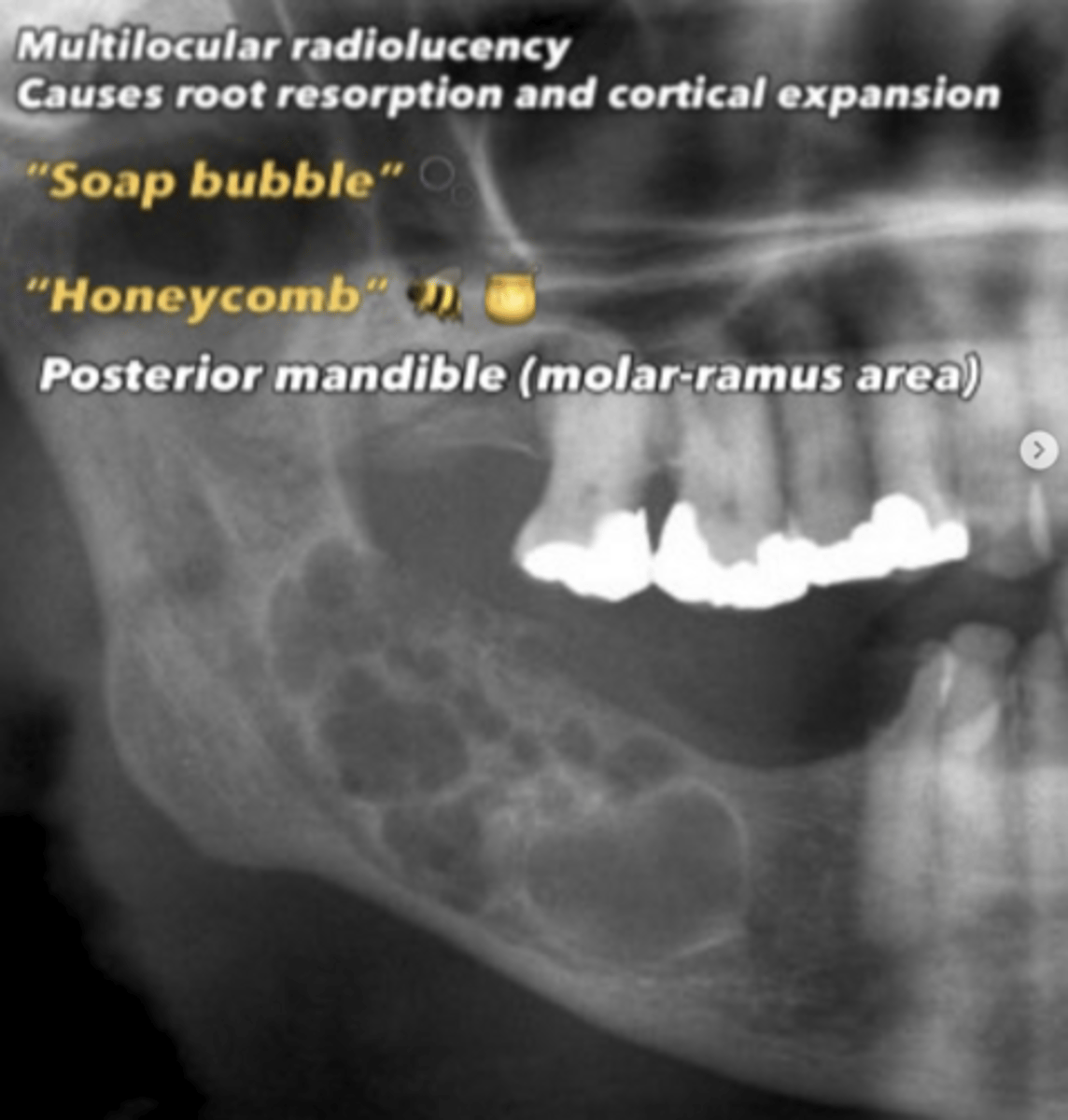
what is the treatment for solid ameloblastomas?
Resection is the gold standard -> lowest rate of recurrence
explain peripheral ameloblastomas
- the most rare form
- pedunculate (attached to tissue via a narrow stalk) gingival lesions
- <1.5cm
- doesn't infiltrate bone
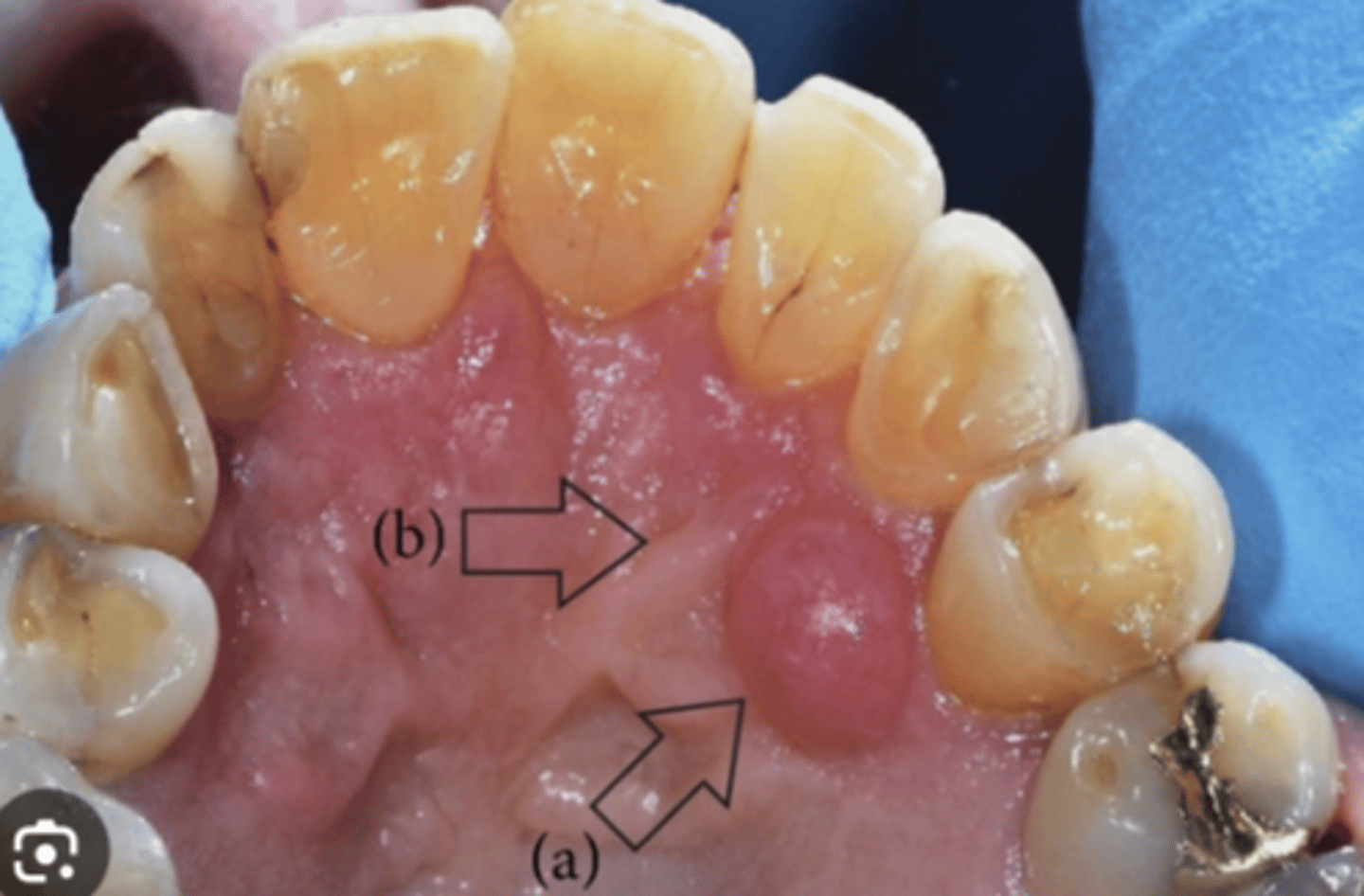
what is the treatment for peripheral ameloblastomas?
wide local incision
- we take out the tumour AND include some margins which are healthy
explain desmoplastic ameloblastomas
asymptomatic and slow growing
xray- mixed radiolucent/ radiopaque
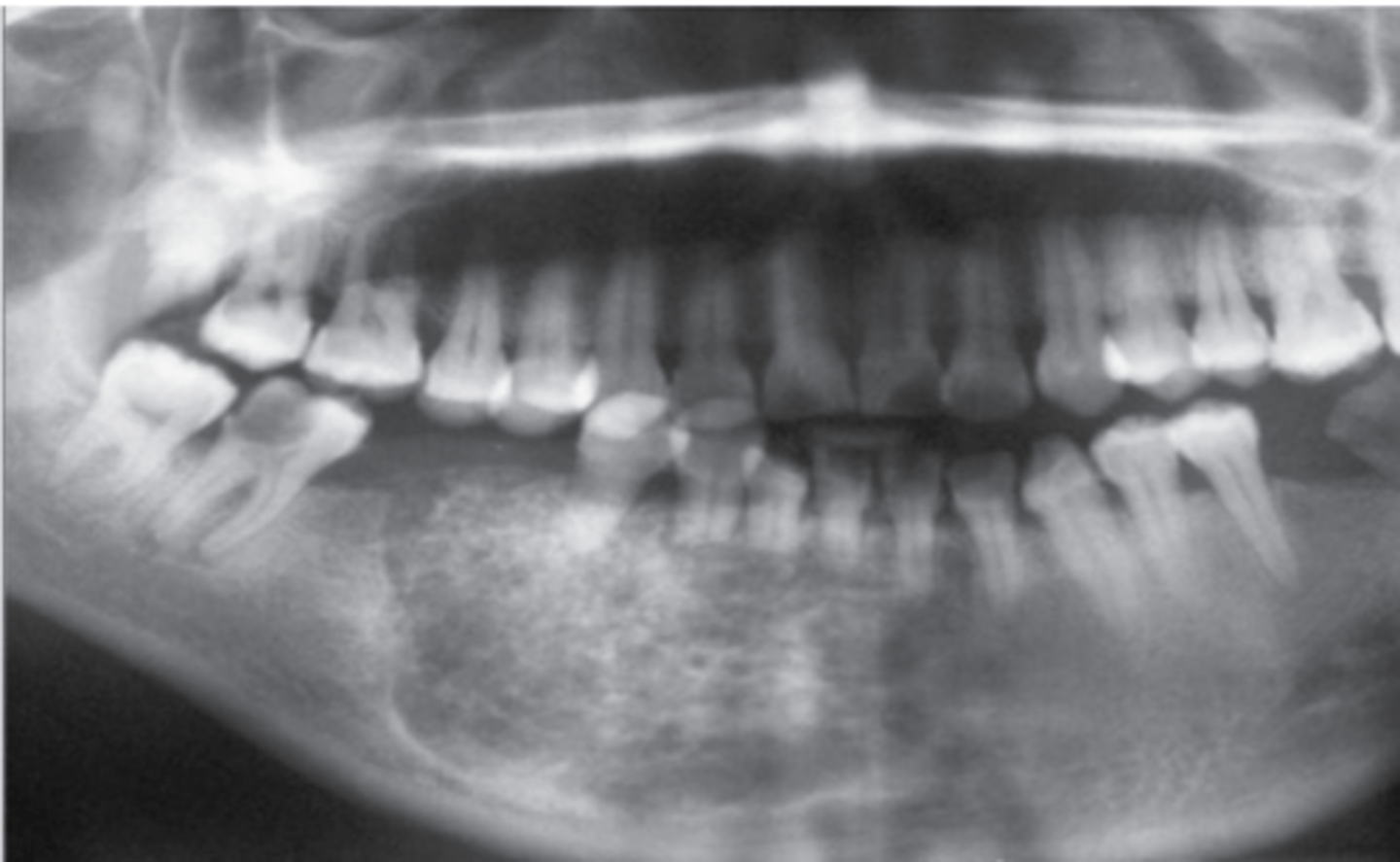
what is the treatment for desmoplasmic ameloblastomas?
radical resection {complete removal of lesion + surrounding healthy tissue}
explain unicystic ameloblastomas
common in younger patients
they mimic dentigerous cysts
xray- unilocular radiolucency (less invasive)
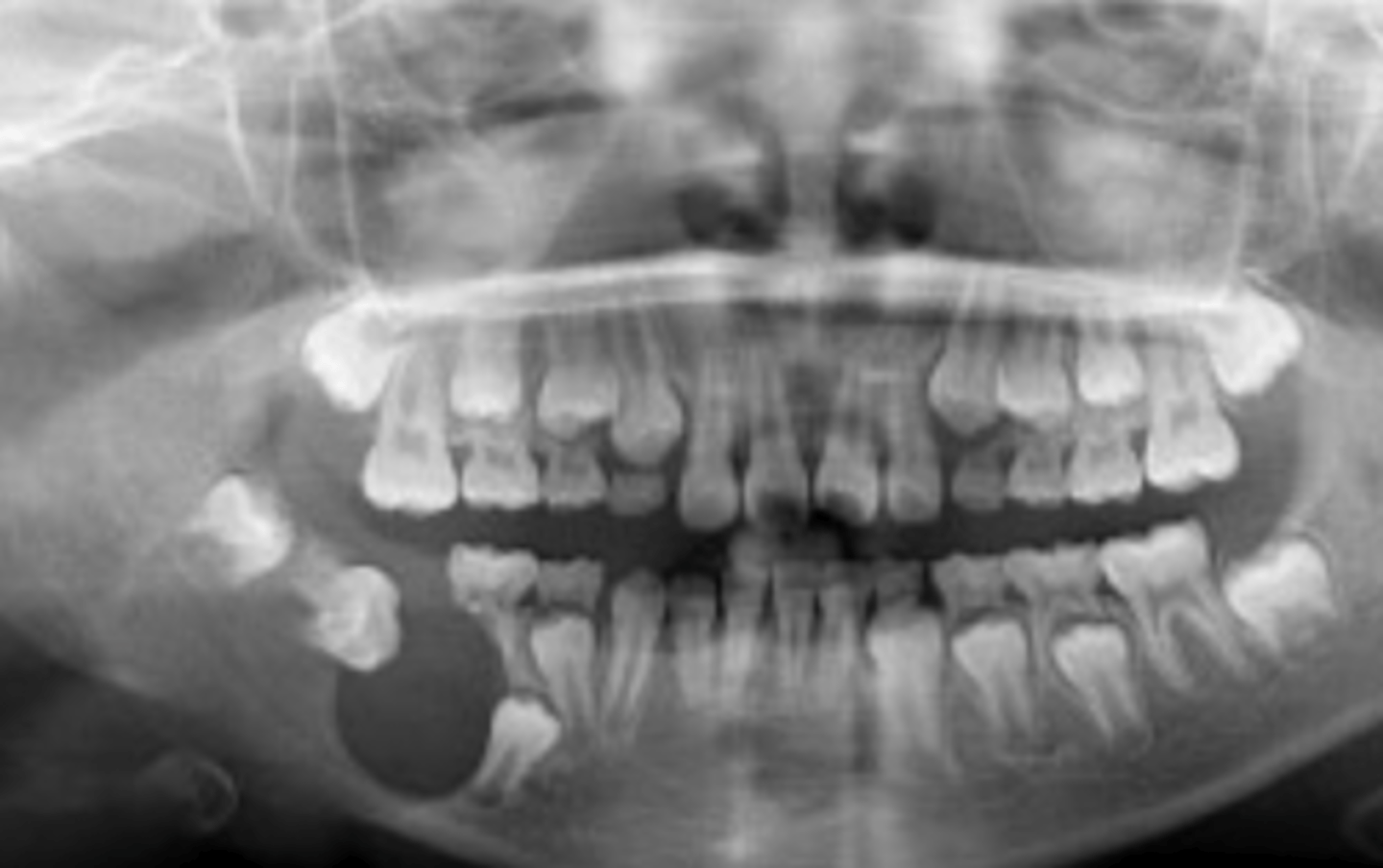
what is the treatment for unicystic ameloblastomas?
1. enucleation and curettage
2. resection when they reoccur
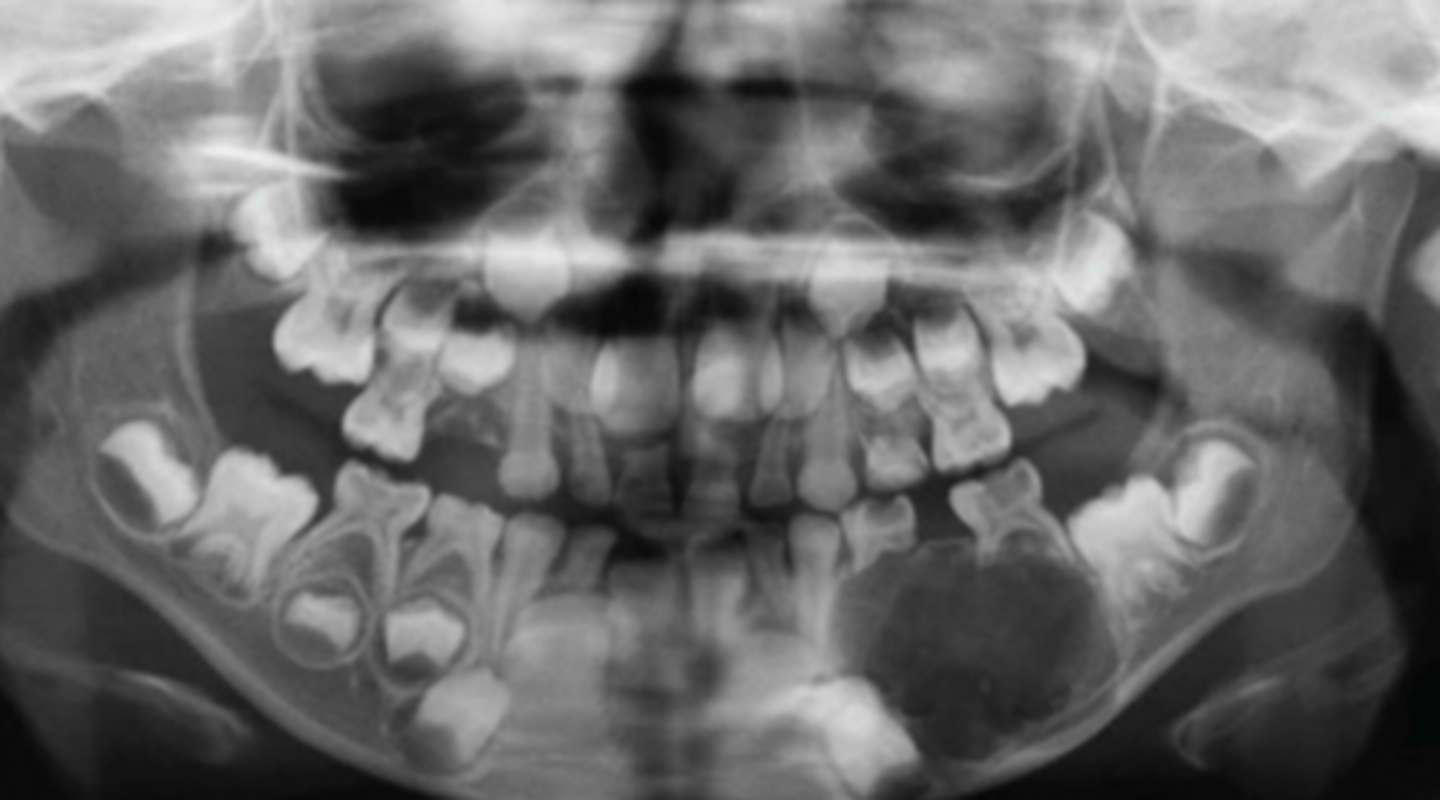
what are ameloblastic fibromas?
true tumours- they involve both epithelial and neoplastic tissues
explain the clinical appearance of ameloblastic fibromas
mostly in younger patients
posterior mandible is affected mostly
associated with unerupted tooth
xray- small and unilocular OR large and multilocular
what is the treatment for ameloblastic fibromas?
1. enucleation and curettage
2. resection for recurrences
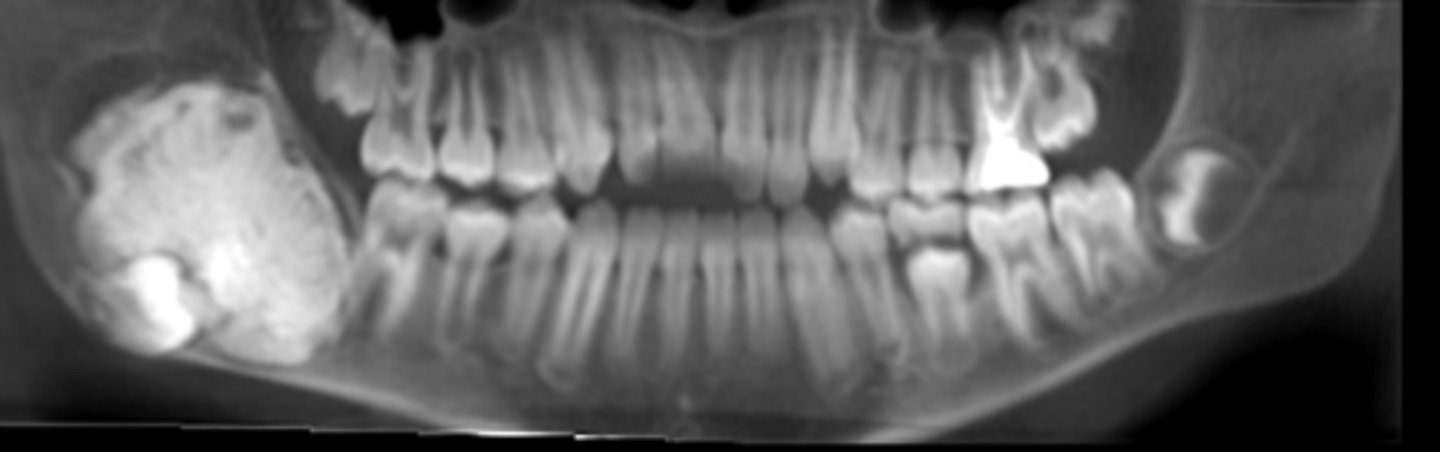
what are ameloblastic fibro-odontoma?
benign tumours made up of abnormal mixtures of cells and tissues {considered a "hamartoma"}
explain the clinical appearance of amelobastic fibro-odontomas
more likely to occur in the posterior regions of the jaw
asymptomatic and usually discovered by accident
associated with delayed/asymmetric tooth eruption
xray- well circumscribed, mixed radiolucencies and radiopacities
what are odontomas?
the most common benign tumours :
a hamartoma (abnormal collection of normal tissues)
2 main types- complex and compound
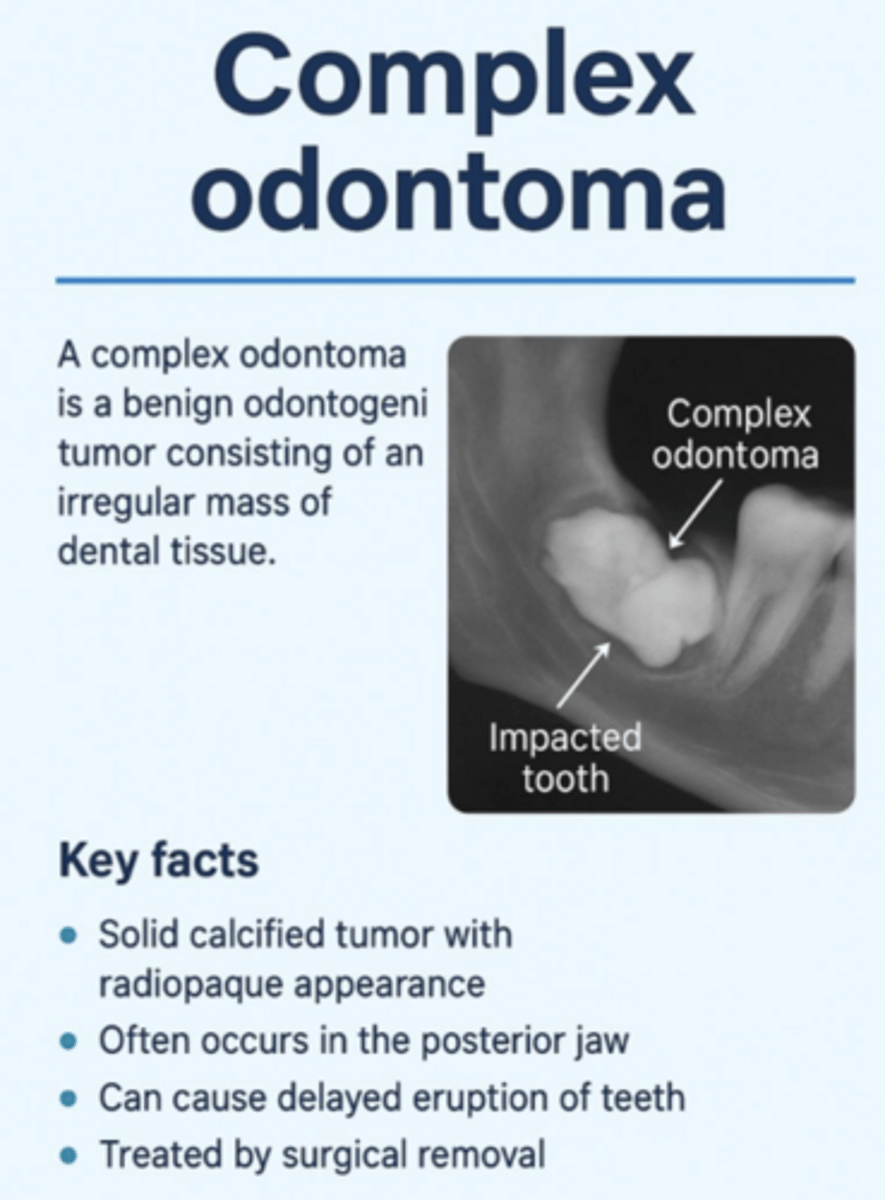
explain complex odontomas?
found in posterior mandible or maxilla
disorganised mass of enamel and dentin (no resemblance of tooth)
made up of irregular dentin and enamel masses
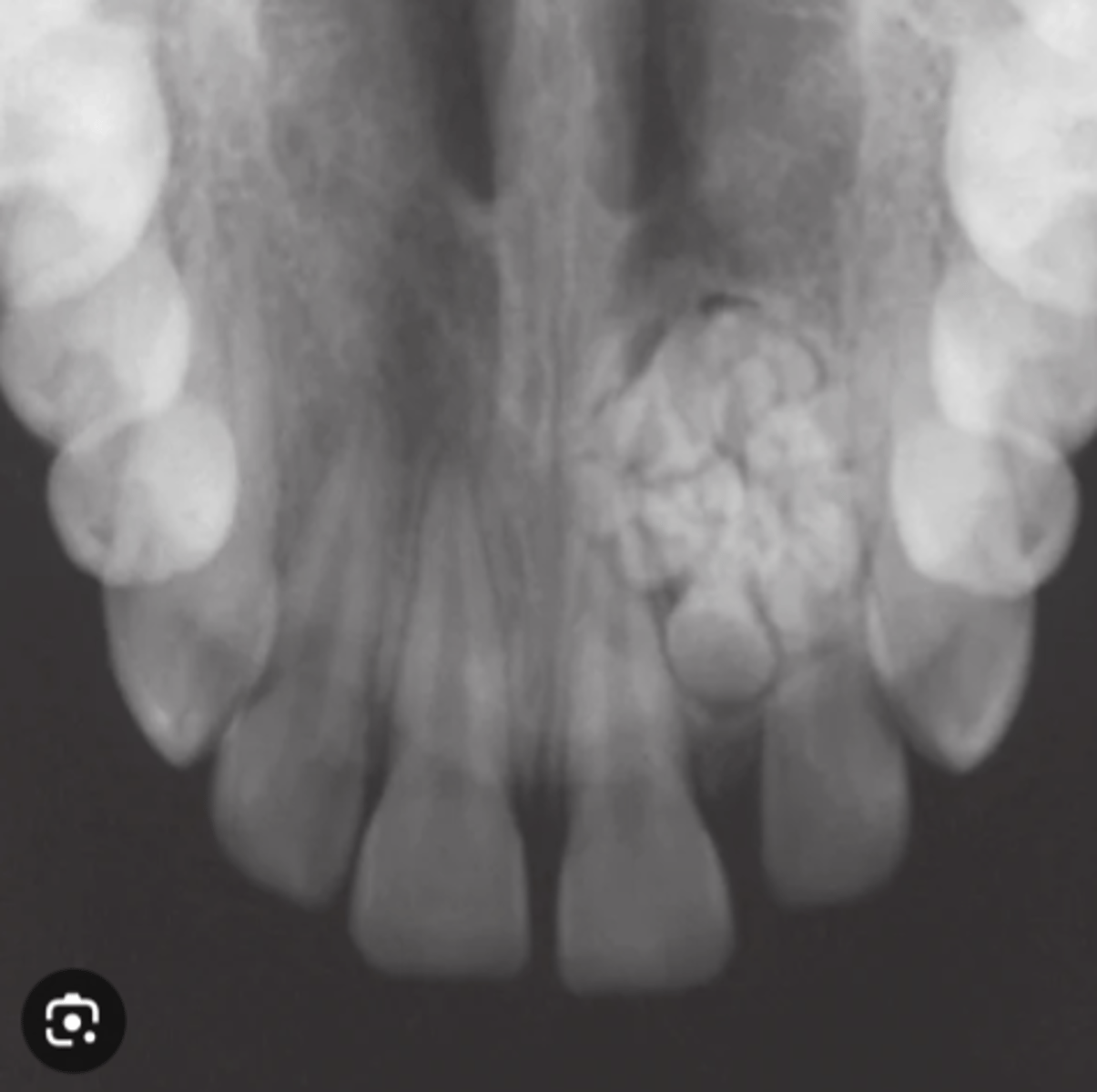
explain compound odontomas?
found in anterior maxilla
contains tiny tooth-like structures
xray- well defined, radiopaque, tooth resembling
what is an odontoameloblastoma?
very very rare benign tumour
what are the features of odontoameloblastoma?
locally aggressive
painless jaw expansion
explain the clinical appearance of odontoameloblastoma
xray- varying amount of radiopaque material- looks like displaced and unerupted teeth
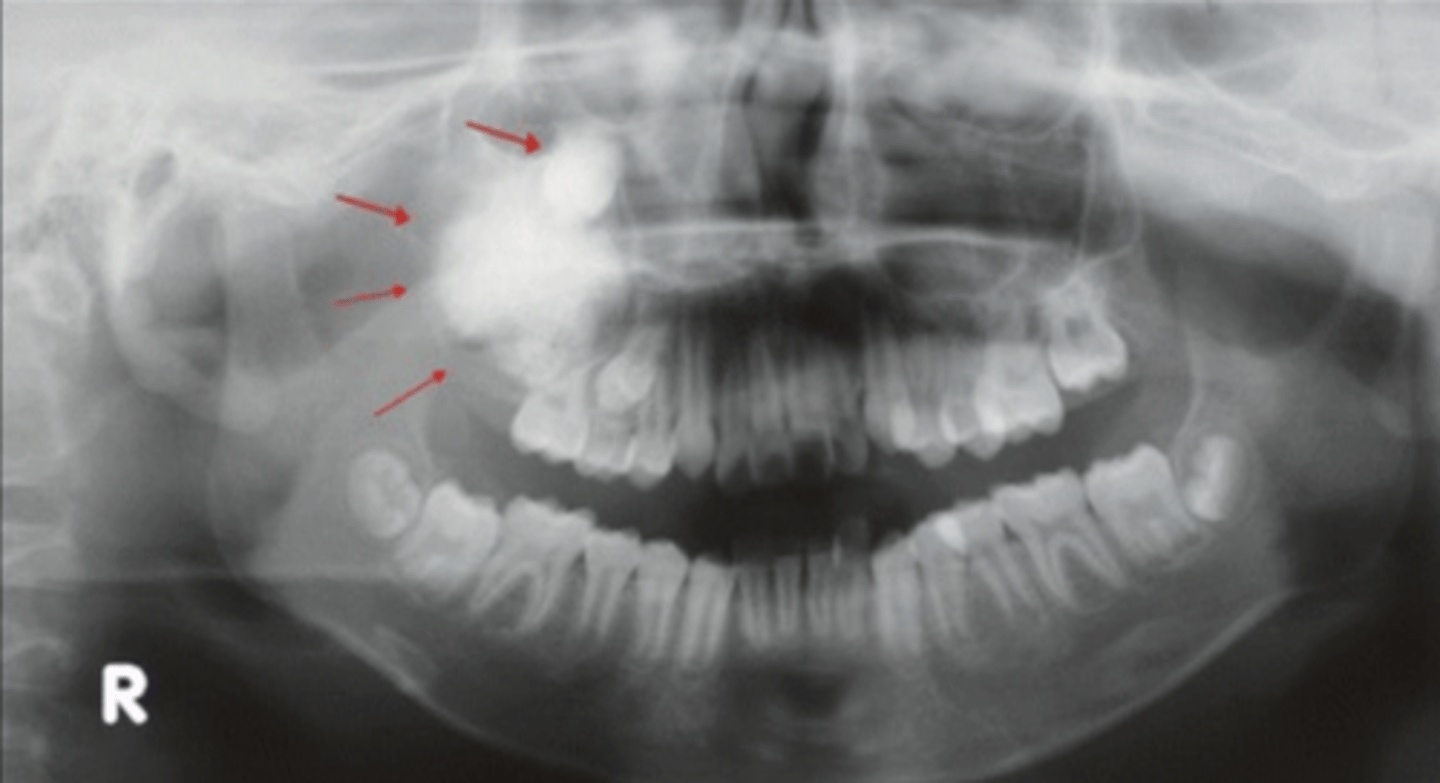
what is the treatment for odontoameloblastoma?
surgical excision which includes 0.5-1cm healthy margins
what is an odontogenic fibroma? explain its clinical appearance
odontogenic epithelium embedded in fibrous storm
-> slow growing + painless
xray- radiolucent lesion -> unilocular or multilocular
causes cortical expansion/ tooth displacement
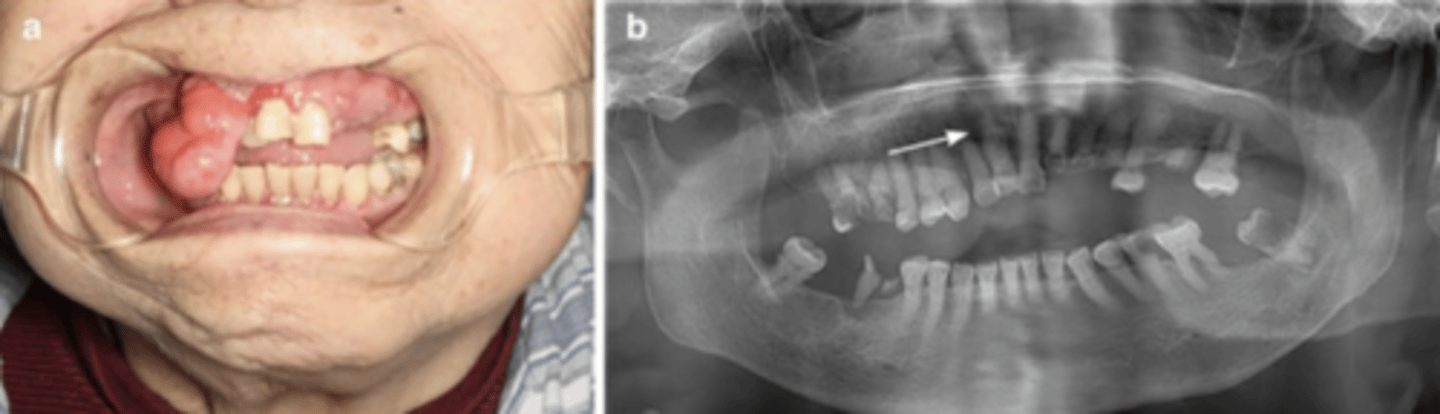
what is the treatment for odontogenic fibroma?
enucleation and curettage
what is an odontogenic myxoma?
rare, odontogenic, infiltrating tumour of the jaws
if left untreated it can spread to the base of the skull
what is a cementoblastoma?
odontogenic tumour of cementoblasts (tumour = fused to roots)
cause pain
xray- radiolucent ring surrounding a radiopaque lesion, around the roots of teeth
Still learning (1)
You've begun learning these terms. Keep up the good work!