ArHi 201 Etruscans
 Call Kai
 Learn
Learn Practice Test
 Spaced Repetition
 Match
Match Flashcards
 Knowt Play
1/30

There's no tags or description
Looks like no tags are added yet.
Name | Mastery | Learn | Test | Matching | Spaced | Call with Kai | Chat |
|---|
No analytics yet
Send a link to your students to track their progress
31 Terms
Cultural Ties of Estruscans
to the near east because of sailors and merchants who travelled through the Mediterranean.
Began to use the Greek alphabet
End of 8th century BCE
Reached the height of their power
7th and 6th century BCE (archaic age of Greece).
Early iron age
900-700 BCE
Orientalizing period
700-600 BCE
Archaic Period
600-480 BCE
Classical Period
480-300 BCE
Etruscan culture is absorbed into Roman Culture
300 BCE
Tumuli
Tombs carved out of volcanic stone or formed mounds. They were grouped together to form a necropolis (city of the dead)
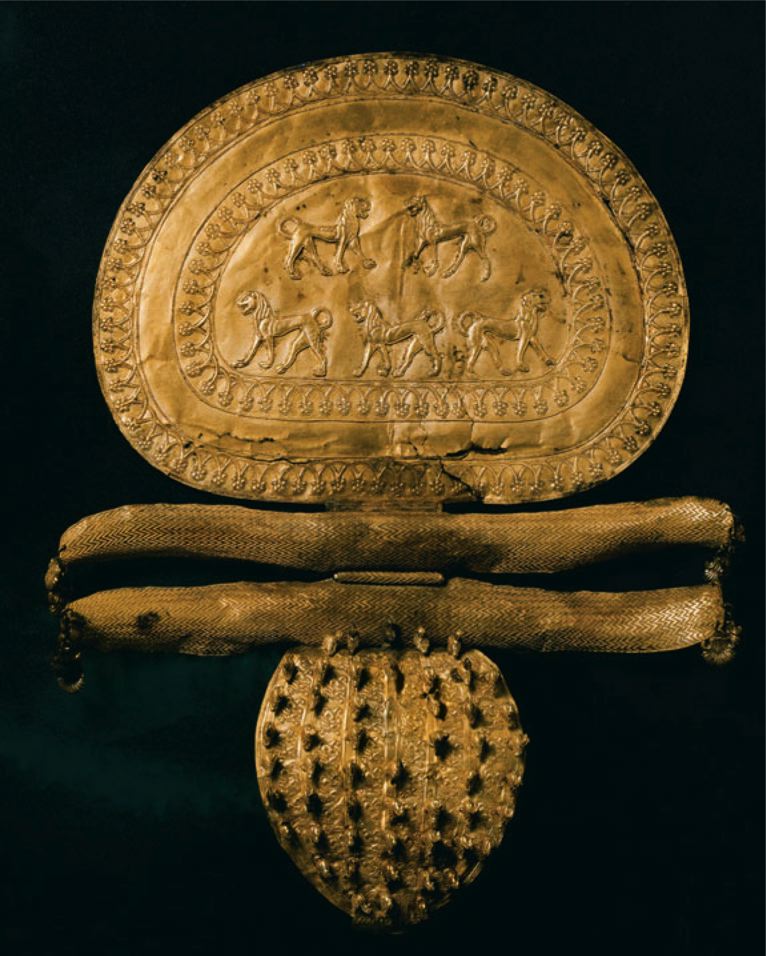
Fibula
Brooch or decorative safety pin to hold garment together at the neck
Dromoi
Pathways in the funeral mound
Height of Etruscan power
600s-500s BCE
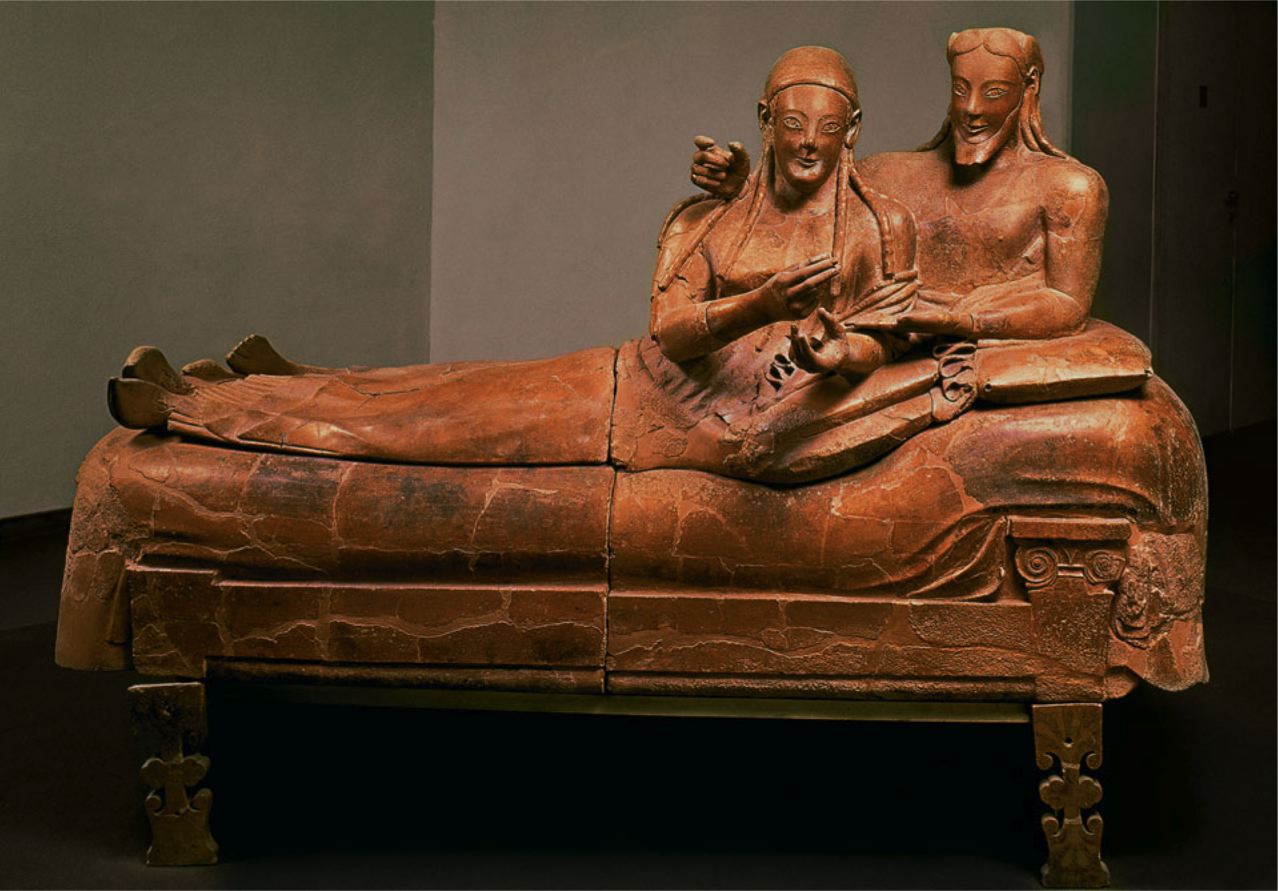
Etruscan terra cotta sarcophagi from Cerveteri 520 BCE
Construction of the Persian Palace at Persepolis begins
518 BCE
Classical Period in Greece
480-336 BCE
All Estruscan city states lose independence to Rome
270
Masters of
architectural engineering, town planning, and surveying
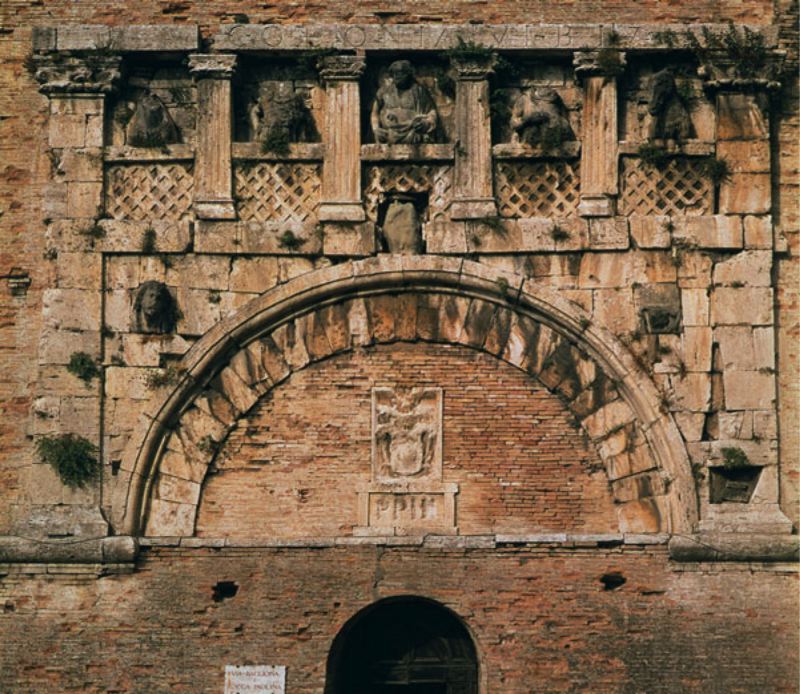
Voussoir arch
An arch built out of a series of truncated wedge-shaped stones called voussoirs set in the semi-circle using a disposable wood frame during construction, e.g. Porta Marzia. 2nd c BCE, Perugia.
City planning
Based on two majors thoroughfares: north-south-the cardo, east-west: decumanus
Temples built of
mud brick, so only the stone foundation survives
Appearance of Etruscan culture on Italian peninsula
1000 BCE
Etruscans begin colonizing flatlands south of Rome
500 BCE
Construction of Parthenon in Athens
447-432 BCE
Defeat of the Persians by Alexander the Great
331 BCE
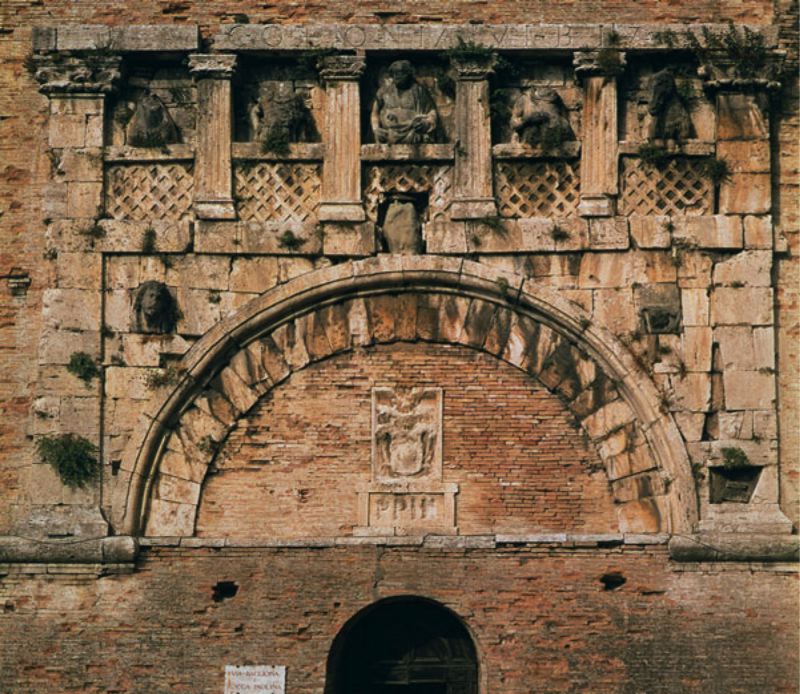
Surviving Etruscan gate, the Porta Marzia in Perugia 200s BCE
Sculpture
Made of brightly painted terra-cotta because they had no access to marble
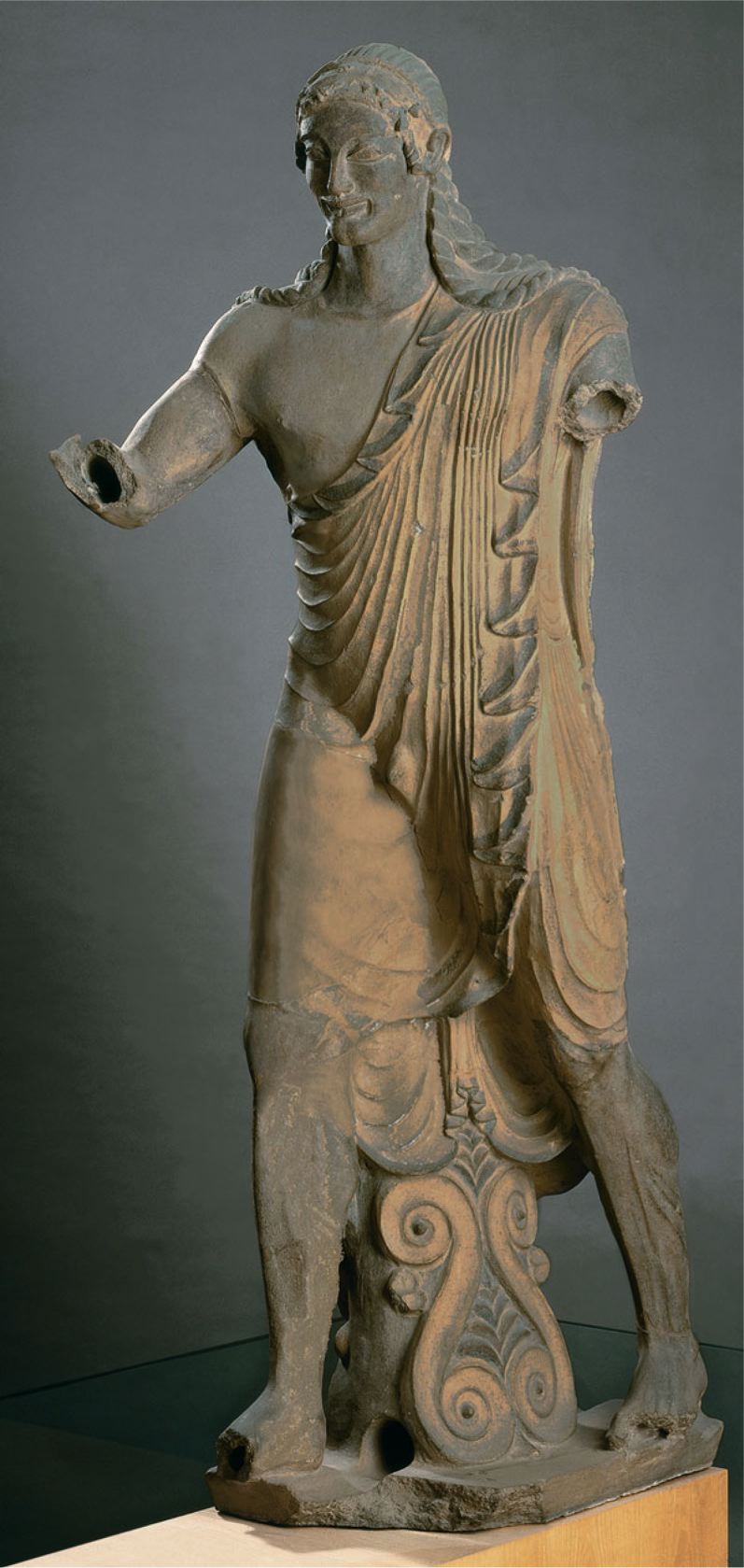
Apollo (Aplu), from Veii, 510 BCE, 1.75m. Attributed to Vulca of Veii
Gable
The triangular area framed by the cornice or eaves of a building and the sloping sides of a pitched roof. In Classical architecture, it is called a pediment.
Palette
The range of colors used by a particular painter.
Sarcophogus
A large coffin, generally of stone, and often decorated with sculpture or inscriptions. The term is derived from two Greek words meaning “flesh” and “eating.”
Exedra
In Classical architecture, an alcove, often semicircular, and often defined with columns. Sometimes, exedrae framed sculptures.e