Progress Check #1 (Polarity & Water)
 Call Kai
 Learn
Learn Practice Test
 Spaced Repetition
 Match
Match Flashcards
 Knowt Play
1/11

There's no tags or description
Looks like no tags are added yet.
Name | Mastery | Learn | Test | Matching | Spaced | Call with Kai |
|---|
No analytics yet
Send a link to your students to track their progress
12 Terms
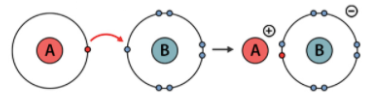
How do electrons form an ionic bond?
Two atoms, one is stronger and one is weaker fights over electrons, but one is stronger, stealing the electrons making it more negative, and the weaker one more positive.
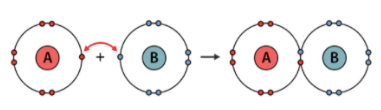
How do electrons form a polar-covalent bond?
Two atoms, one is slightly stronger one is slightly weaker, so they share electrons unequally, fighting over them.
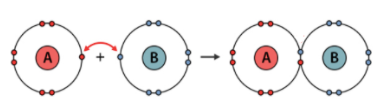
How do electrons form a non polar covalent bond?
Two atoms, neither one is stronger or weaker, so they share electrons equally.
How do hydrogen bonds form?
A partially positive hydrogen of one molecule interacts with a partially negative part of another molecule.
What are hydrogen bonds importance in living things?
It contributes to adhesion, cohesion, surface tension, capillary action, and being a universal solvent (This is because it’s Polarity has neg and pos, allowing for it to attract different parts of different molecules pulling them apart).
How does the polarity of water molecules result in adhesion?
Water molecules polarity allows them to form hydrogen bonds with other polar molecules, adhering to them.
How does the polarity of water molecules result in cohesion?
Water molecules polarity allows them to form hydrogen bonds with other water molecules, cohesion to them.
How does the polarity of water molecules result in surface tension?
The polarity of water molecules results in adhesion, which causes surface tension. Strong hydrogen bonds together.
How does the polarity of water molecules result in capillary action?
The polarity of water molecules results in adhesion, which is what allows the water to adhere to the sides of things forming capillary action. However it also experiences cohesion, keeping the water together.
How does the polarity of water molecules result in evaporative cooling?
Hydrogen bonds take a lot of heat energy to break apart, and when they do and the water starts to form into a gas, it absorbs the heat energy from its surroundings. (Sweating)
What is the difference between hydrophilic and hydrophobic molecules?
Hydrophilic molecules interact with or dissolve in water (Water loving). Hydrophobic molecules DO NOT interact with or dissolve in water (Water-fearing).
Why is the difference between hydrophilic and hydrophobic molecules significant in a cellular environment?
The key concept is that water makes up most of the cell (inside and outside). Molecules that can't interact with water need to adapt to that. For example, proteins are made up of smaller subunits, some of which are polar and some are nonpolar. The nonpolar parts will fold up inside the protein away from the water, affecting the overall shape of the protein.