Age of Dinosaurs Final Exam
 Call Kai
 Learn
Learn Practice Test
 Spaced Repetition
 Match
Match Flashcards
 Knowt Play
1/42

There's no tags or description
Looks like no tags are added yet.
Name | Mastery | Learn | Test | Matching | Spaced | Call with Kai |
|---|
No analytics yet
Send a link to your students to track their progress
43 Terms
which organisms went extinct in the K/Pg extinction (4)
plesiosaurs, mosasaurs, ammonites, rudists
iridium (what, how, why)
o What: Platinum group element that is rare on Earth’s crust, but abundant in asteroids
o How: asteroid hitting earth or volcano from earth’s mantle fine particles traveled globally
o Why: mainly found in extraterrestrial things (spread globally indicating large impact)
spherules (what, how, why)
o What: tiny glassy spheres
o how: vaporized rock
o why: rock got hot enough that it vaporized (close to and far from impact)
tektites (what, how, why)
o what: drops of cooled rock
o how: rock hot enough it became liquid
o why: earth got hot enough that it vaporized rock (close to impact)
shocked quartz (what, how, why)
o what: internally fractured quartz grains
o how: due to impact force
o why: require a huge amount of pressure to fracture quartz (more than anything on the earth can produce) (near impact)
Nickel-rich spinels (what, how, why)
o What: formed mineral
o How: through oxidation of asteroid passing through atmosphere
o Why: showed evidence that an asteroid passed through earth’s atmosphere (close to and far from impact)
environmental affects of the bolide impact
o 4km high tsunamis
o Wildfires
o Giant dust cloud
o Acid rain
phylogenetic tree
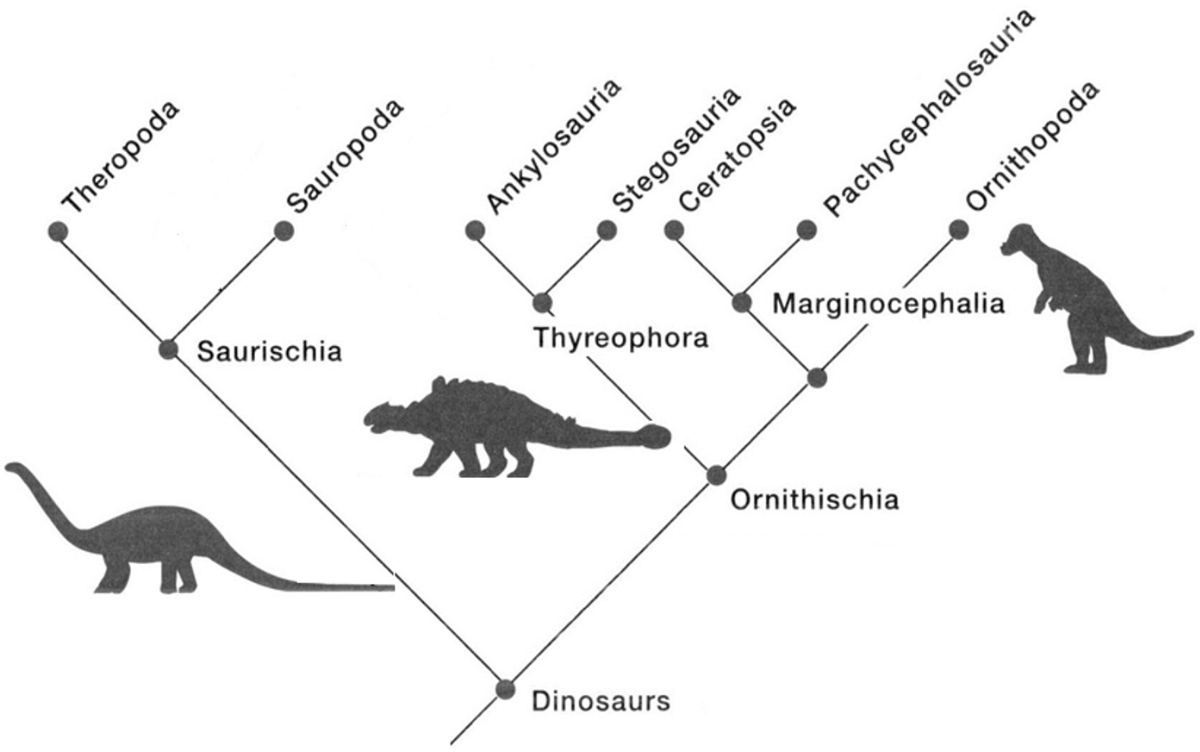
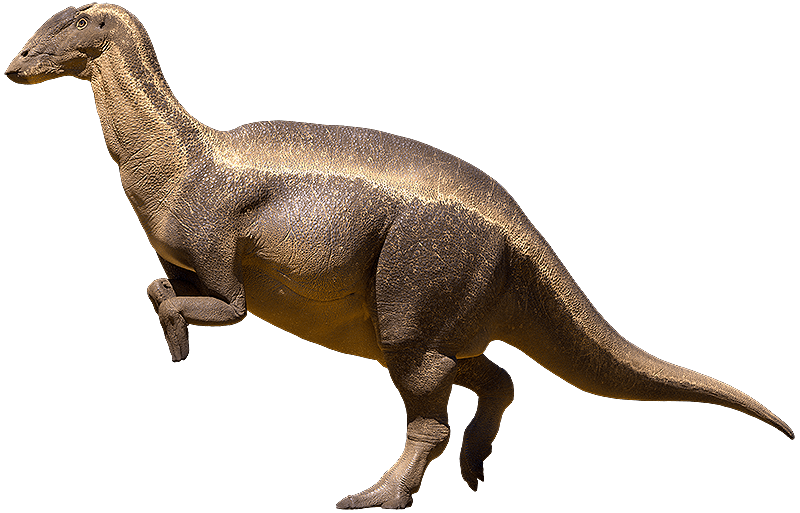
ornithopods (name, when, where, pedal, diet, trace fossils)
Name: bird feet
Stratigraphic range: mid jurassic to end cretaceous
Geographic range: all seven continents
Pedal: obligate to facultatively biped
Diet: herbivorous
Trace fossils: mummies, eggs, hatchlings, trackways, sclerotic rings, stapes and hyoid bones
ornithopod (adaptations for herbivory, functions of crests and how to test)
Adaptations for herbivory:
Slender jaws with small teeth in a single row, cut vegetation but not grind
Cheek teeth become larger with thicker enamel for increased strength
Edges of teeth have denticles for cutting
Two staggered tooth rows, positioned one atop the other
Complex tooth battery, teeth enameled on one side
Pleurokinetic skull, upper jaws hinged against skull, swung outward
Beak wider with horny covering
Functions of ornithopod crests:
Communication
Understand how air moves through the crests using CAT scanning
Olfaction
Look at how air moves through the crests and how it’s connected with the nares using CAT scanning
intraspecific combat
Look at damage on crests and what force they could withstand
ritualized display
Look at crests in males vs. females
Courtship
social ranking
Looking at ratios of sexually dimorphic and juveniles vs. adults and morphology (sizes and shapes of crests)
bone bed environemtns
lacustrine, watering hole accumulations, crevasse splay, and debris flow
lacustrine bonebed
Many fully articulated bones (in original position)
No bone weathering
Low bone density
No bone sorting
No bone breakage
No bone orientation
Aquatics, invertebrates, fish fossils
Mudstone, laminations
watering hole accumulations bonebed
No articulated bones
Extreme bone weathering
Medium bone density
No bone sorting
Extreme bone breakage
No bone orientation
Aquatic, invertebrates, fish fossils
Silt to sandstone, bioturbated
crevasse splay bonebed
Few articulate bones
Rare bone weathering
High bone density
Often bone sorting
Little bone breakage
Strong bone orientation
Varied fossils
Graded deposits (multiple repeated layers), turbulent flow, sandy
debris flow bonebed
Few articulated bone
Some bone weathering
High bone density
Often bone sorting
Substantial bone breakage
Strong bone orientation
Varied fossils
One massive graded deposit, poor sorted
bone density sorting
Lacustrine: low
Watering hole: medium
Crevasse splay: often
Debris flow: often
bone breakage
Lacustrine: none
Watering hole: extreme
Crevasse splay: little
Debris flow: substantial
Orientation help to differentiate between environments:
Lacustrine: none
Watering hole: none
Crevasse splay: strong
Debris flow: strong
Explain why sun river bone bed is either a crevasse splay or debris flow:
The sun river bone bed is a debris flow because it has substantial bone breakage at 28% and is one massive graded deposit that is poorly sorted. Whereas crevasse splays are layered deposits with little bone breakage.
sauropods (name, when, where, pedal, diet, trace fossils) NOVELTIES
Name: lizard footed
Stratigraphic range: middle triassic to late cretacous
Geographic range: all continents
Pedal: bi or quadrupeds
Diet: herbivores
Trace fossils:
Trackways
Gastroliths and teeth
Eggs and nests
Evolutionary novelties:
Head very small relative to body
Spatulate teeth
Short feet
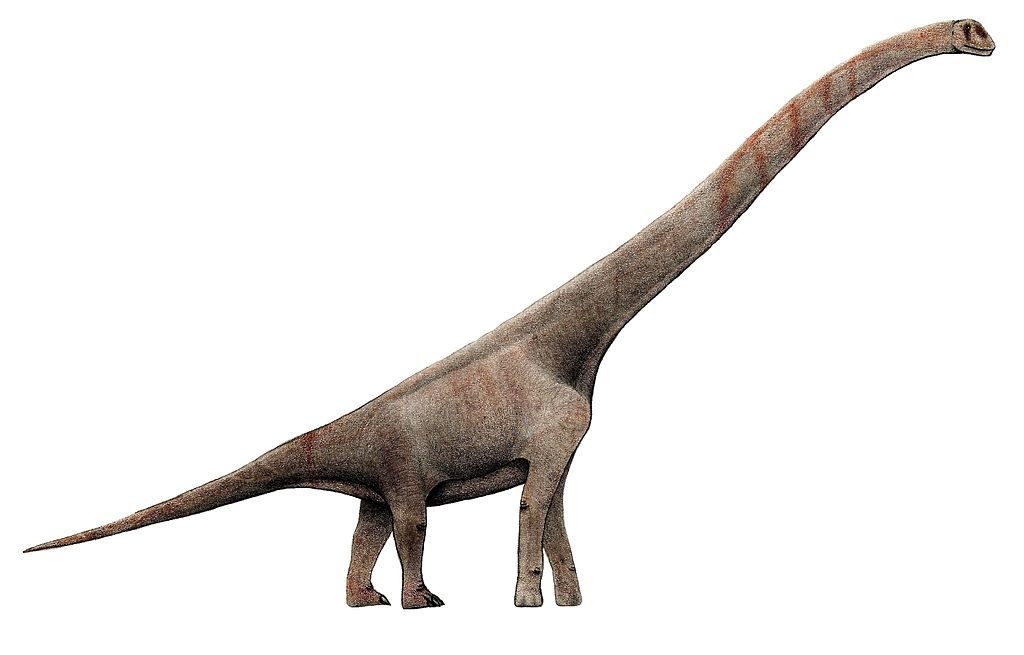
sauropods (longer neck, history of name, newspaper)
How do sauropods have a longer neck?
Length of vertebrae
Number of vertebrae
Distribution of vertebrae
Added cavities and struts to decrease weight
History of genus name brontosaurus:
Marsh named sacral material as apatosaurus in 1877 Marsh named another sacrum as brontosaurus in 1879
Decided they were the same genera
2015: Tschopp resurrected brontosaurus genus
Why was it switched to apatosaurus?
Marsh thought the sacral material were from the same genus
Why was it switched back?
Tschopp found that brontosaurus is a separate genus from apatosaurus
How do scientific journalists capture readers’ interest?
Use phrases like “makes a comeback” or “no longer extinct” to try to show that something noteworthy has occurred.
To what extent did newspaper articles accurately explain the science?
Some articles were better than others. As for saying brontosaurus is “no longer extinct,” that is not scientifically accurate. However, most of the article did a decent job with explaining the scientific aspect.
Tschopp’s study
Main research goal of the study
Reorganize the diplodichidae clade
3 results Tschopp got:
The resuscitation of brontosaurus as a distinct genus from apatosauurs
Discovery of an additional genus within diplodicidae named galeamopus
Origin of the clade lies in europe
How they did their work:
Looked at skeletons for unique features that they could divide the phylogenetic tree
Specimen-based approach: randomly assigned each specimen a number and looked at them all without previous notions of what genera they were labeled as
theropods (name, when, where, pedal, diet, trace fossils)
Name: beast-footed
Stratigraphic range: late triassic to cretaceous
Geographic range: every continent
Pedal: obligate bipedal
Diet: carnivores (everything)
Trace fossils:
Trackways
Bonebeds
Gastroliths
Coprolites
Eggs and nests
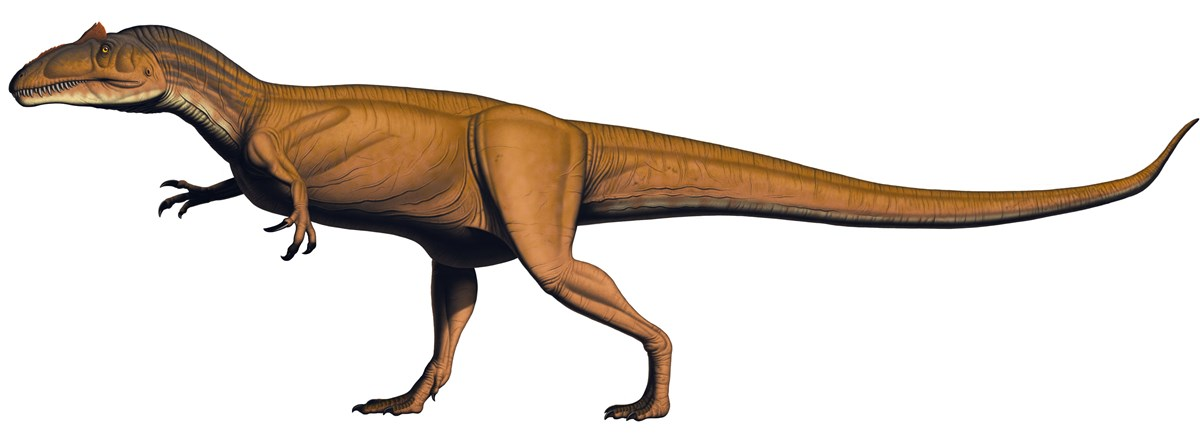
theropods (predation, disease/pathology, sexual dimorphism)
Predation strategies:
Land shark:
slice and run
raptors
Large cats:
wrestle and grapple with prey
Clamp jaws around neck to suffocate prey
t-rex
Disease and pathology:
Bone fractures
Broken teeth (common with carnivores)
Bone infections
Metastatic cancer
Gout
Trichomonas parasitism
Sexual dimorphism:
Slight size differences
Prominent cranial processes
what is a modern bird?
Teeth absent
Fused hand and ankle
No bony tail
Fusion of pectoral, pelvic, and skull bones
Well developed keel
Feathers
Pneumatic bones
furcula
which theropods are most closely related to birds?`
Domaeosaurus (velociraptor and deinonychus)
Unfused digits
Non-pneumatic bones
Long bony tail
gastralia
archaeopteryx (when, where, important, traits)
Upper jurassic
Germany
Transitional fossil with both dinosaur and avian traits showing that dinosaurs evolved into birds
Dinosaur traits: teeth, bony tail, gastralia, unfused digits, non-pneumatic bones
avian traits: furcula
feathers (functions, different forms)
Functions:
Thermoregulation
Display
Sensory adaptation
Different forms:
Filamentous feathers (hollow tube)
Downy feathers (unhooked, loosely-associated)
Contour feathers (hooked, symmetrical)
Flight feathers (hooked, asymmetrical)
evolution of flight (cursorial and arboreal hypothesis, WAIR)
Arboreal: trees down (living in trees and began gliding down)
Cursorial: ground up (adapted for running and taking leaps)
More likely because dinosaurs were land-dwellers.
WAIR: Wing-Assisted Incline Running
Flapping to gain purchase on inclined slopes
Supports cursorial hypothesis because it shows how birds can move up surfaces using their wings and maybe began to fly
ethics
a set of principles of conduct in human society and how that conduct affects people’s relationship with one another
ethics in paleontology
In paleontology: ethical problems increase with a decrease in the number of fossils and an increase in media attention
Fossils thought of as art and an economic commodity to be owned
sue case study (discovery, controversy, legal battle, ethical issues)
Discovered by Sue Hendrickson in 1990 in south dakota
Land owned by Williams
Williams claimed he never sold it, Fossil confiscated by FBI
Determined that Williams owned it
Sold to field museum working with Disney and McDonald’s
Ethical issues:
Should you be able to sell fossils?
Who does it actually belong to? The landowner, the government, scientists, the public?
The Cheyenne Sioux tribe that controlled the land/reservation it was found on received nothing
archaeoraptor case study (who, where, description, controversy, ethical issues)
Bought by Stephen Czerkas from China
Turned out to be a forgery with bones from a bunch dinosaurs
Published in national geographic without peer review
Ethical issues:
Faking science to be famous or known for something
Taking fossils from other countries without permission (from black market)
National geographic publishing without peer review
dino literature (the lost world plot and importance, children’s literature)
Plot: dinosaurs still living on a high plateau in the Amazon. After escaping the amazon, they bring a pterodactyl to london which gets loose
importance:
Children’s books:
All my friends are dead
Danny and the dinosaur
benjamin waterhouse hawkins
Time period: 1807-1894
Early examples of art:
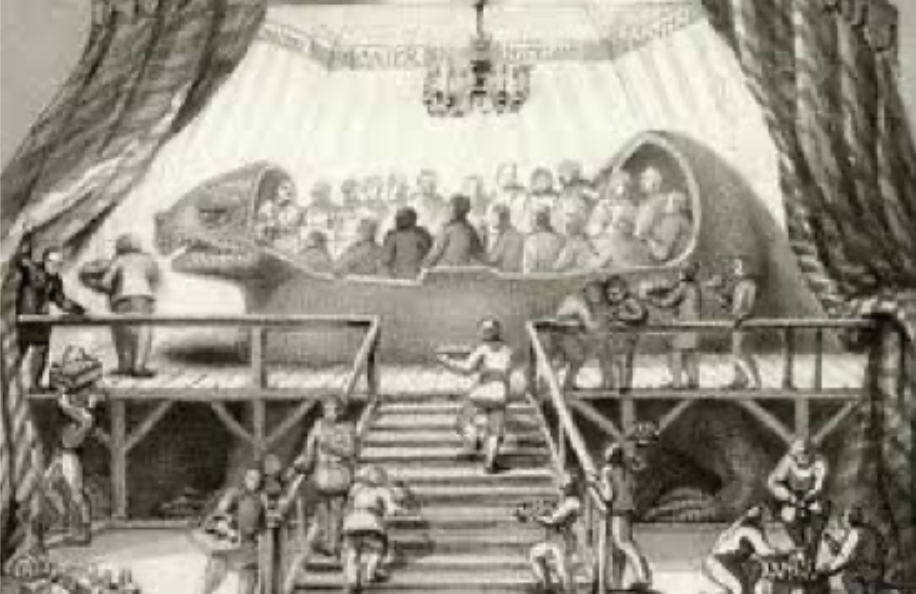
Charles R. Knight
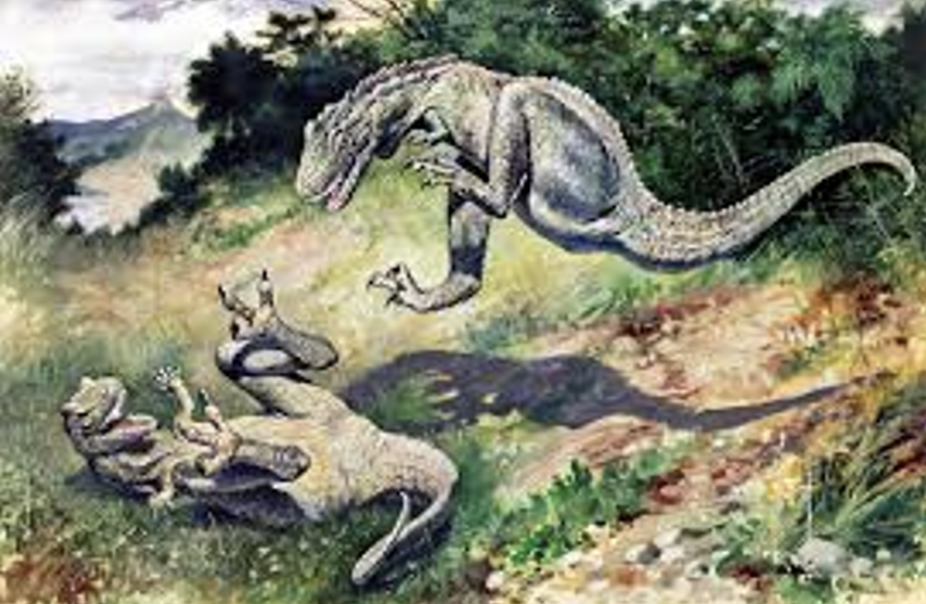
Time period: 1874-1953
Early examples of art: leaping laelaps
importance: First showing of dinosaurs being agile indicating endothermy which wasn’t decided until 20 years later
Rudolph Zallinger
Time period: 1919-1995
Examples of art: murals

Relationship between dinosaur scientists and artists:
Many artists collaborate with dinosaur scientists and museums now for accurate depictions
Sometimes art can help dinosaur scientists realize things about dinos that they wouldn’t have previously considered (endothermy)
Gertie the dinosaur (time period, significance)
Time period: 1914
Significance: first animated dinosaur and first use of animation loops
the lost world movie (time period, significance)
Time period: 1925
Significance: first feature length dino movie and first dino running around in a city
king kong movie (time period, significance)
Time period: 1933
Significance: first brontosaurus in a swamp
jurassic park (time period, significance, cloning, inaccuracies, plot)
Time period: 1993, 1997, 2001, 2015, 2018, 2022, 2025
Significance: dinosaurs in movies evolved with research (posture and behavior of T-rex)
Cloning:
Not scientifically accurate. DNA decays over time. The oldest DNA sample found was 2 million years old (not nearly far back enough for dinosaurs). Frogs are not similar to dinosaurs so would not be possible to splice their DNA together. Amber only keeps carbon copies, no liquid so no blood would have survived inside amber
Inaccuracies:
Velociraptor way too big
Dilophosaurus did not have venom or a frill and was too small
T-rex’s vision is not based on movement (they have good eyesight)
Plot and characters:
Jurassic park was created after dinosaur clones were created. Hurricane hits and dinosaurs escape the park after an employee commits corporate espionage. Hammond brings in Allen Grant and Ellie Sattler (paleontologists) and Ian Malcolm who specializes in chaos math. Hammond’s grandkids are also there plus a lawyer.
which evidence for the bolide impact best informs us of the location of the impact
Tektites are better for pinpointing location of impact because they are deposited close to the impact. Larger, so probably easier to find than shocked quartz (which is also deposited close to the impact).