5. ECDYOSOZOA SUPERPHYLUM
 Call Kai
 Learn
Learn Practice Test
 Spaced Repetition
 Match
Match Flashcards
 Knowt Play
1/21

Earn XP
Name | Mastery | Learn | Test | Matching | Spaced | Call with Kai |
|---|
No analytics yet
Send a link to your students to track their progress
22 Terms
Animal Phylogeny
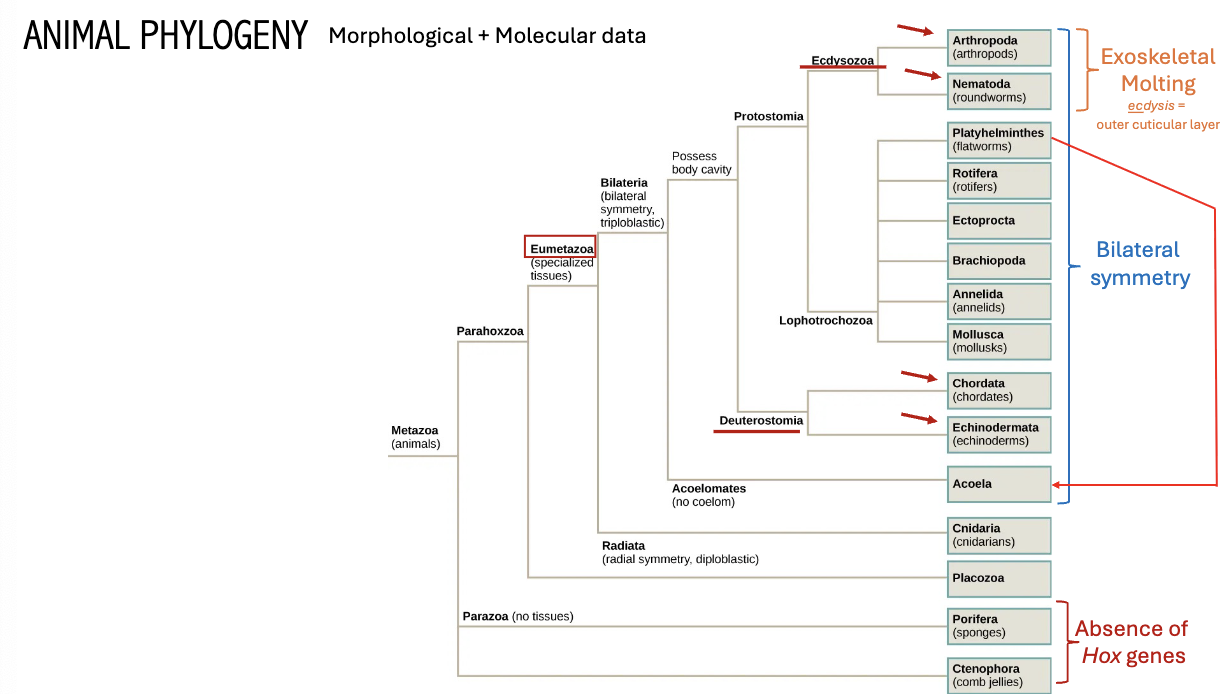
ECDYSOZOA Superphylum (3)
3 Phyla, 1 Monophyletic Group:
Cuticle (Exoskeleton)
Nematoda (roundworms)
Tardigrada (tardigrades)
Anthropoda (arthropods)
NEMATODA
Epidermis with one cell layer (syncytium)
Cuticle: Collagen + Chitin
Cylindrical
Triploblastic
Bilateral
Pseudocoelomates
External rings do not reflect true internal body segmentation
Renette Cells: Excretory cells
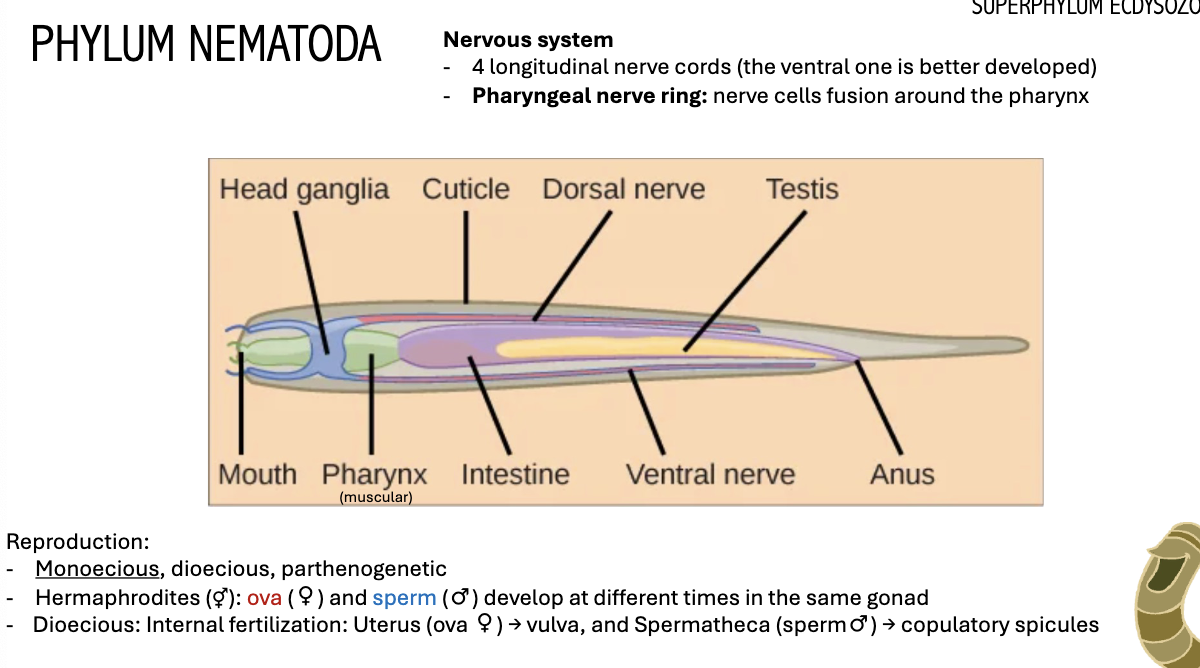
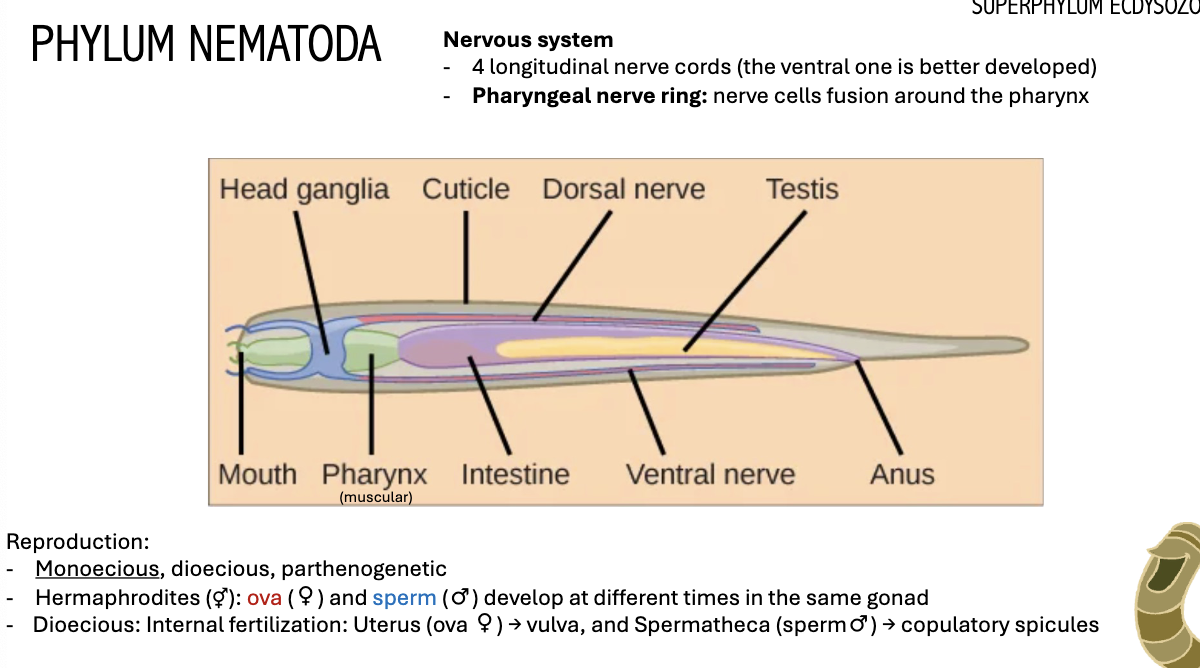
NEMATODA ANATOMY
Nervous System:
Four longitudinal nerve cords
Ventral is better developed
Pharyngeal nerve ring
Nerve cells fusion around pharynx
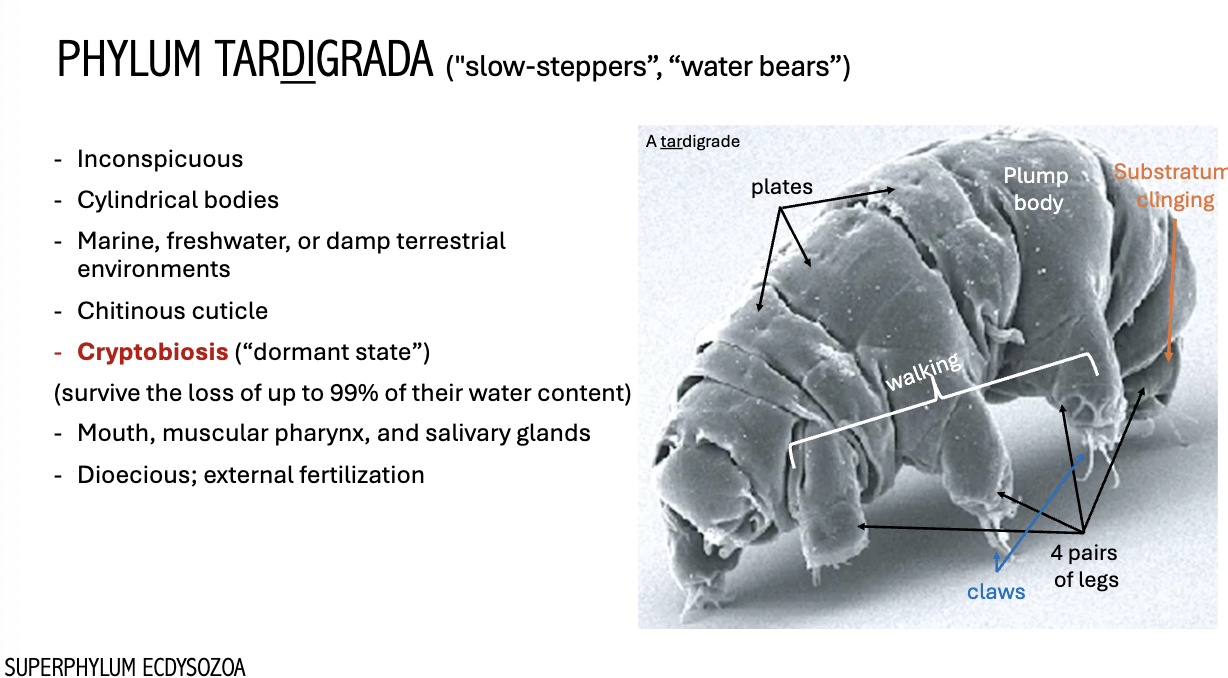
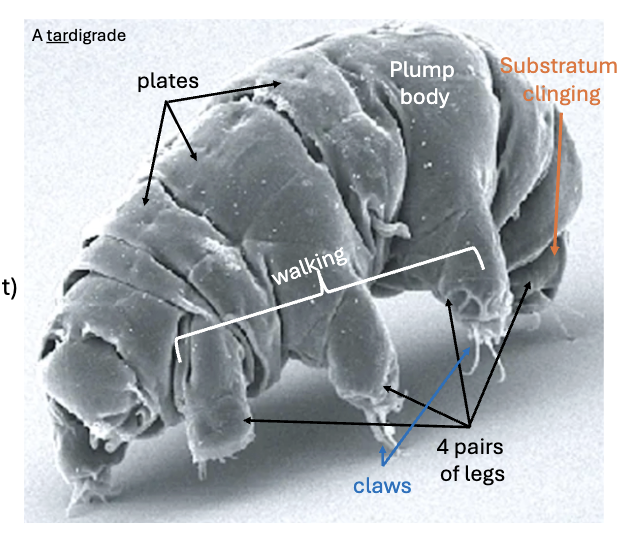
TARDIGRADA (“Water bears”)
CRYPTOBIOSIS
Go into dormant state in response to environmental stress
Able to survive loss of up to 99% of water content
ANTHROPODA CHARACTERISTICS (“Jointed Feet”)
“Jointed feet”
Jointed appendages
Body segmentation
MOLTING followed by ECDYSIS
Molt then shed
ANTHROPODA SUBPHYLA (5)
TCMCH
Trilobita
All extinct
Chelicerata
Myriapoda
Crustacea
Hexapoda
ANTHROPODA MORPHOLOGY (5)
Tagmata
Appendages
Hemocoel
Nervous System
Respiratory System

ANTHROPODA TAGMATA (3 Types, 3-2-2)
Body regions
Head, thorax, abdomen
Cephalothorax and abdomen
Fused body region
Head + Thorax
Head and trunk
ANTHROPODA APPENDAGES (2)
SEGMENTAL PAIRS
Walking, jumping, digging, swimming
ANTENNAE:
Sensing environment
MANDIBLES/MAXILLAE:
Capturing and manipulating food
ANTHROPODA HEMOCOEL
HEMOCOEL:
Blood cavity
Hemocoel liquid
N EXCRETION:
Excretion of toxic nitrogenous waste from protein metabolism
Terrestrial: Uric acid; conserve water
Malpighian tubules (insects)
Aquatic: Ammonia
Green glands (crustaceans)
ANTHROPODA NERVOUS SYSTEM
ALL SEGMENTS
Larger Ganglia
Segments with sensory structures
Ganglia
Connected by ventral nerve cord
ANTHROPODA RESPIRATORY SYSTEM (4 Types)
TRACHAE:
Insects & Myriapods
GILLS:
Crustaceans
BOOK LUNGS:
Terrestrial chelicrates
BOOK GILLS:
Aquatic chelicerates
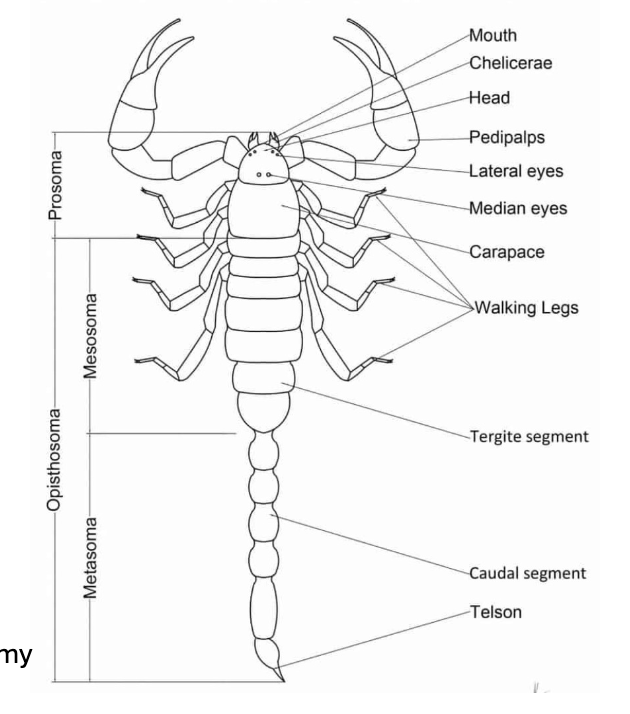
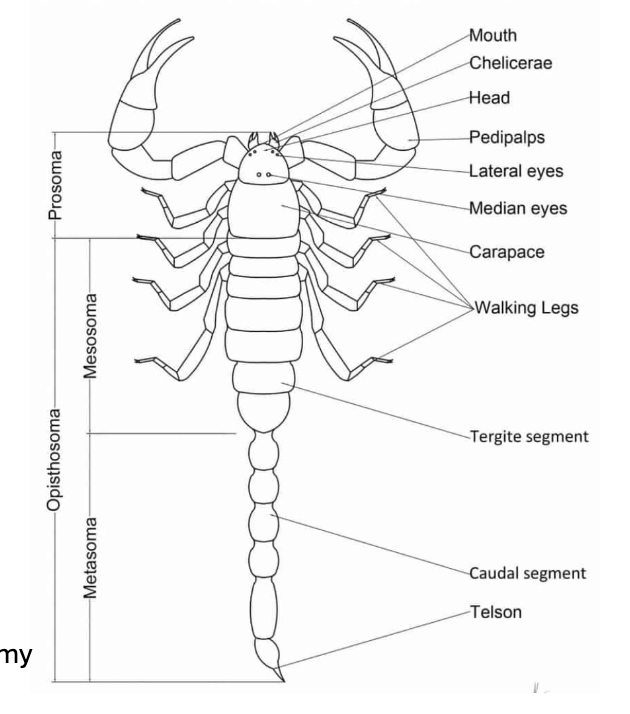
CHELICERATA (Scorpions)
CHELICERAE:
Specialized claw-like or fang-like mouthparts
MODIFIED LEGS
TAGMATA (2):
Prosoma
Cephalothorax
Opisthosoma
Abdomen
PEDIPALPS:
Sense environment
NO ANTENNAE
OPEN CIRCULATORY SYSTEM:
Heart pumps blood into hemocoel
Exchange both matter (nutrients/waste) and energy (heat/light) with surroundings
MYRIAPODA (“Ten thousand”)
Myriad = Ten thousand
Chilopoda (Centipedes)
Numerous legs
Pair of legs per segment
Mandibles as mouthparts
CRUSTACEA
Krill, shrimp, lobsters, crabs, crayfish
Marine and terrestrial
EXOSKELETON with Chitin + CaCO3
Two pairs of antennae
Mandibles as mouth parts
CRUSTACEA TAGMATA
TAGMATA (2):
Cephalothorax
Abdomen
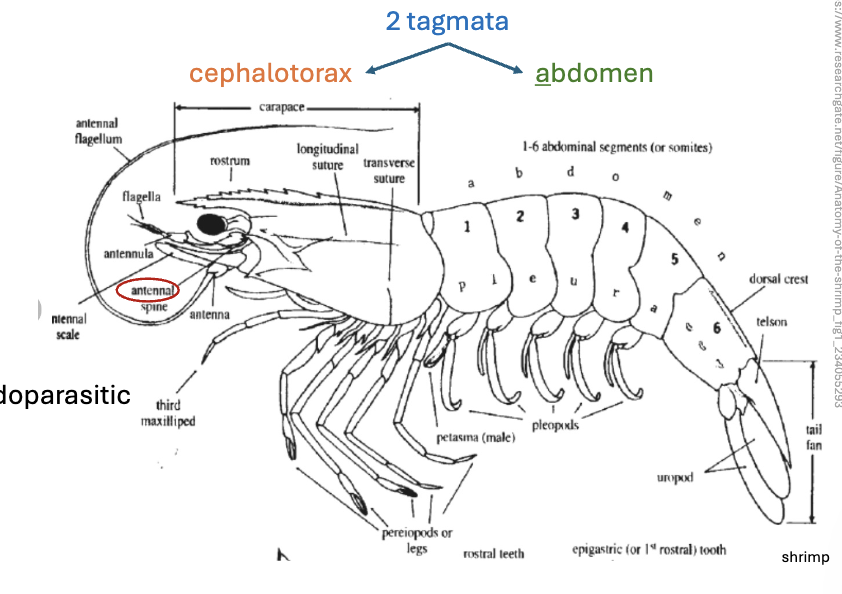
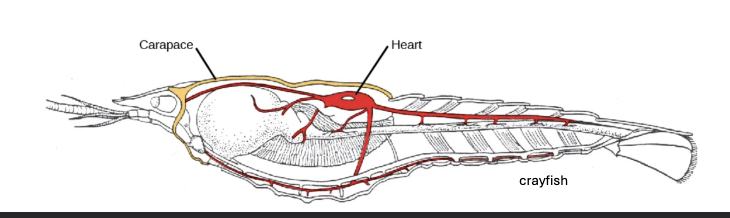
CRUSTACEA OPEN CIRCULATORY SYSTEM
HEMOLYMPH:
Hemocyanin and Hemoglobin
DORSAL HEART
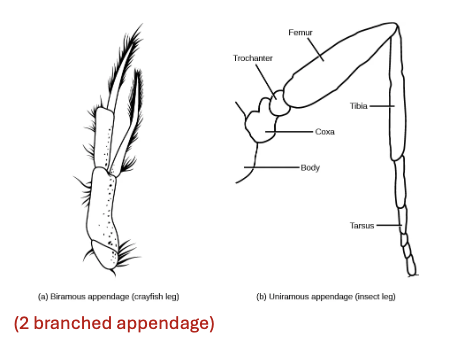
CRUSTACEA APPENDAGES (2)
2 Branches appendages
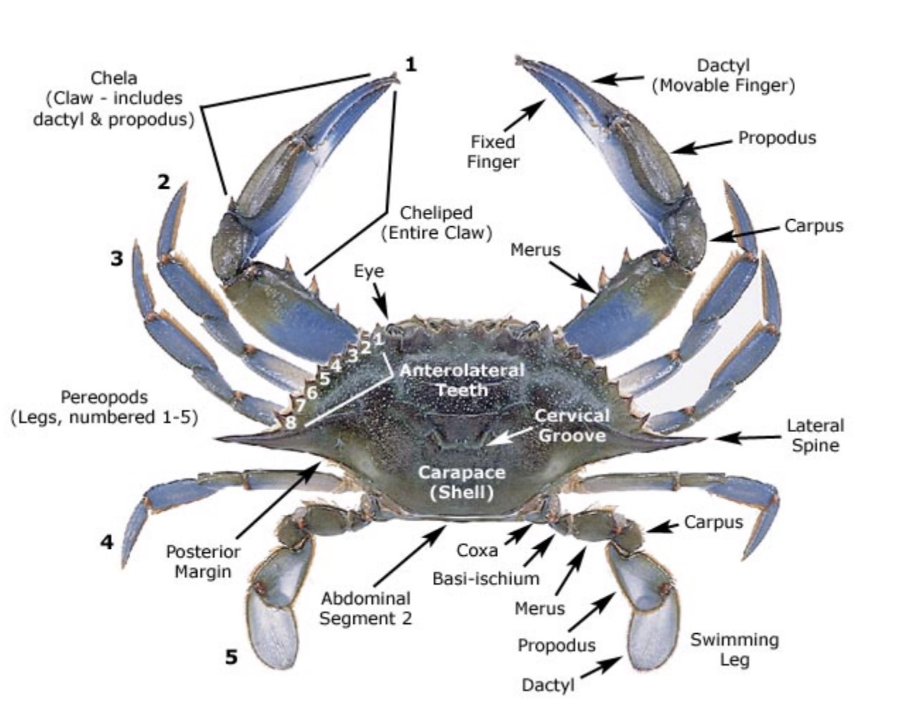
CRUSTACEA Blue Crab Anatomy
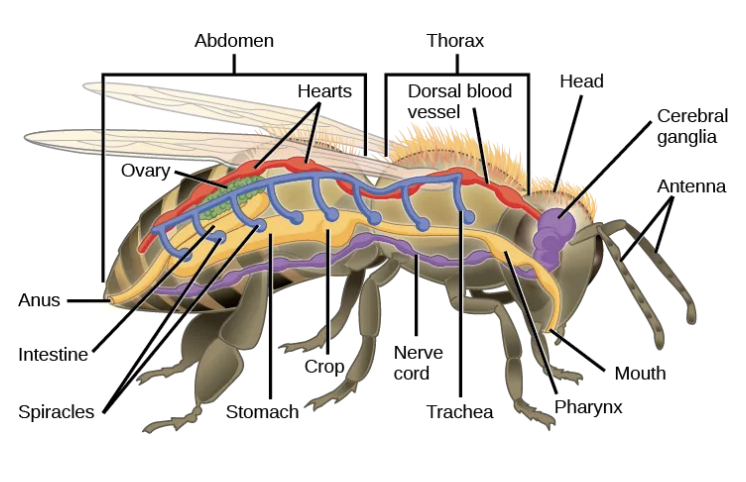
HEXAPODA (Insects)
HEXA = SIX
Ants, beetles, cockroaches, butterflies, crickets, flies
SIX LEGS (3 Pairs)
TAGMATA (3):
Head
Thorax
Abdomen
Winged or wiingless
Metamorphosis
Social/Use pheromones
HEXAPODA Anatomy