cg30820 week 5
 Call Kai
 Learn
Learn Practice Test
 Spaced Repetition
 Match
Match Flashcards
 Knowt Play
1/23

There's no tags or description
Looks like no tags are added yet.
Name | Mastery | Learn | Test | Matching | Spaced | Call with Kai |
|---|
No analytics yet
Send a link to your students to track their progress
24 Terms
habit
a repetitive act that a particular individual performs
custom
a repetitive act of a group, performed to the extent that it becomes characteristic of the group
folk culture
traditionally practiced primarily by small homogeneous groups living in isolated rural areas
popular culture
found in large, heterogeneous societies that share certain habits despite other differences
folk culture odd
Origin: anonymous, sometimes multiple hearths
Diffusion: slowly, through migration diffusion
Distribution: spatially isolated, influenced by local factors
popular culture odd
Origin: specific point of origin, usually developed country
Diffusion: rapidly through hierarchical diffusion
Distribution: widespread wherever technology allows
diffusion of electronic communications
one place does something and everyone else follows
ex In 2005, most cell phones (a) were in Europe
and North America. By 2017, cell phone ownership (b) was
common in much of the world
ex The vast majority of the developed world is
available in Google Street View.
ex Most popular social network, 2009. A wide
variety of social media were in use globally, especially in
Eastern Europe and Southeast Asia. By 2018, Facebook
had come to dominate except in countries where the
government limited access
origin and diffusion of music
Folk music is often anonymous origin and tells a traditional story
Popular music is from known authors and is produced for sale
origin and diffusion of sports
Soccer is an example of global popular sport with folk origins
Ice hockey prevails in cold northern climates
Some sports have more distinct regional appeal such as cricket, wushu, lacrosse
Baseball has its origins in the United States but has become popular in the Caribbean and Japan
distribution of clothing
Folk clothing may reflect environmental or cultural
factors, including religious tradition
Popular clothing reflects occupation and income
food customs
Local environmental conditions influence what can be grown
Food taboos may protect the local environment or serve
other functions. Several major world religions have
distinctive food taboos (e.g., Hindus do not consume meat,
Jews and Muslims refrain from eating pork)
terroir
The contribution of a location’s distinctive physical features to the way food tastes
folk housing
can have
environmental influences—choice of building materials, climate considerations
cultural influences—beliefs about shape and orientation of house
diffused from 3 hearths: new england, middle atlantic, lower chesapeake and tidewater
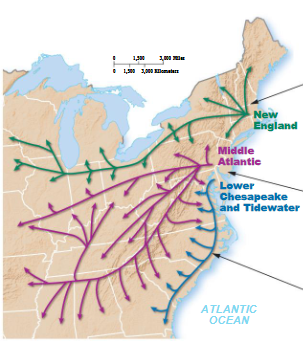
new england folk housing
The distinctive style was box
shaped with a central hall. The New England
house types can be found throughout the Great
Lakes region as far west as Wisconsin because
this area was settled primarily by migrants
from New England.
middle atlantic folk housing
The principal house type was known as the “I”- house, typically two full stories in height, one room deep and at least two rooms wide. Middle Atlantic migrants carried their house type westward across the Ohio Valley and southwestward along the Appalachian trails
lower chesapeake tidewater folk housing
The style typically comprised one story, with a steep roof and chimneys at either end. Migrants spread these houses from the Chesapeake Bay and Tidewater, Virginia, area along the Southeast Coast. In wet areas, houses in the coastal southeast were often raised on piers or on brick foundations
electronic diffusion of culture
Television ownership was relatively high in the United States in the1950s. The United States had 86% of the world’s TV sets in 1954
Europe by 1970, but most of Africa and Asia had little TV broadcasting
Near-universal TV access by the start of the 21st century
electronic diffusion internet
Most countries did not have Internet service in 1995. The United States had 63% percent of the world’s users
U.S. Internet use increased rapidly between 1995 and 2000, from 9% to 44% of the population, but the worldwide increase was much greater. The share of the world’s Internet users clustered in the United States declined from 63% to 35%
Internet usage continued to increase rapidly in the United States between 2000 and 2017, to more than 75% of the population, but the share of the world’s Internet users found in the United States continued to decline to 7% in 2017. China now accounts for 22% of the world’s Internet users
governments controlling electronic media
Control use by banning or limiting technology
Censor or filter Internet content
Harass or punish users
China, Russia, and Iran are notorious for violating the rights of individuals in order to exert control
cyber espionage
the deployment of a virus to observe and/or destroy data in the computer system of a government agency or large corporation
maintaining folk culture
The Amish are an example of a people attempting to
maintain their folk culture within the culturally
heterogenous United States. Influenced by the price of land, Amish
settlements have diffused from the culture’s hearth in
Pennsylvania
other example is dowry
cultural homogenization
Popular culture has many positive attributes but poses a
risk to folk culture. The spread of popular culture results
in a loss of localized folk culture diversity
cultural homogenization risks
Pollution of the landscape
Depletion of scarce natural resources
Crowding-out of locally owned businesses by global franchises
ex. golf courses
cultural divergence
Popular culture may diffuse rapidly but differences persist in cultural preferences at several scales. Examples can be found of differences between urban
and rural residents
Rural areas whose economies focus on agriculture and manufacturing tend to value more traditional forms of popular culture
Urban spaces with concentrations of wealth and diverse ethnic groups may value more progressive forms of popular culture