Chapter 3: Cell Division and Chromosome Heredity
 Call Kai
 Learn
Learn Practice Test
 Spaced Repetition
 Match
Match Flashcards
 Knowt Play
1/51

Earn XP
Description and Tags
1. How mitosis divides somatic cells (and stages of); remember the definition of somatic cells means it’s a body cell (aka NOT a gamete) 2. How meiosis produces cells for sexual reproduction (and stages of) 3. Chromosome theory – genes are carried on Chromosomes; X-linked vs autosomal inheritance 4. Sex determination is Chromosomal and genetic 5. Sex-linked inheritance patterns: Thomas Morgan’s Drosophila eye color X-linked discovery
Name | Mastery | Learn | Test | Matching | Spaced | Call with Kai |
|---|
No analytics yet
Send a link to your students to track their progress
52 Terms
Chromatin
the material of which eukaryotic chromosomes are composed; protein, RNA and DNA
Euchromatin
chromosomal material that I snot densely compacted during normal cell operation; comprises many functional (genes) parts of the genome
Heterochromatin
chromosomal material more densely packed and containing few expressed genes
Chromatid
one of the replicated structures
Sister Chromatids
the two replicated chromosomes as a unit
Cell Reproduction
continues throughout the life of the multicellular organism
Replaces old or died cells, and worn out blood cells
Diploid
2n chromosomes present in pairs
Haploid
1n only 1 chromosome pair
Somatic Cells
non reproductive cells, usually diploid “body cells”
produced though mitosis
Gametes
reproductive cells, germ-line cells
haploid
produced meiosis
sperm, egg cells
not genetically identical to one another
Meiosis
produces gametes that have held the number of chromosomes as the original cell (reduction type division)
M Phase (mitotic)
includes mitosis
only a small percentages of cells in a tissue are in mitosis at any given time
cytokinesis
DNA is tightly packed and inaccessible
usual processes of protein synthesis are largely shut down
Cytokinesis
entire cell and its cytoplasm divide into 2 daughter cells
Mitosis
Process of nuclear division
replicated DNA molecules of each chromosome are parted into 2 nuclei
accompanied by cytokinesis
Maintains chromosome number
Starts with one cell with a. diploid number 2n
Ends with two cells with diploid complements of each chromosome
generates new cells for organism growth, maintenance and repair
happens in diploid or haploid cells
5 stages
Interphase
divided into G1 (first gap), S (synthesis) & G2 (second gap)
carries bulk of cycle
most DNA is unpacked and distributed throughout the nucleus
cell prepares for mitosis, replicates DNA, performs normal metabolic functions
G1
Cell grows and carries out normal metabolism
Organelles duplicate
Active gene expression and cell activity
Preparation for DNA synthesis
S Phase
DNA replication and chromosome duplication
46 chromosomes and 92 sister chromatids
G2
Cell grows and prepares for mitosis
Preparation for cell division
G0
Terminal differentiation and arrest of cell division
cell remains specialized but does not divide
Eventual cell death (apoptosis)
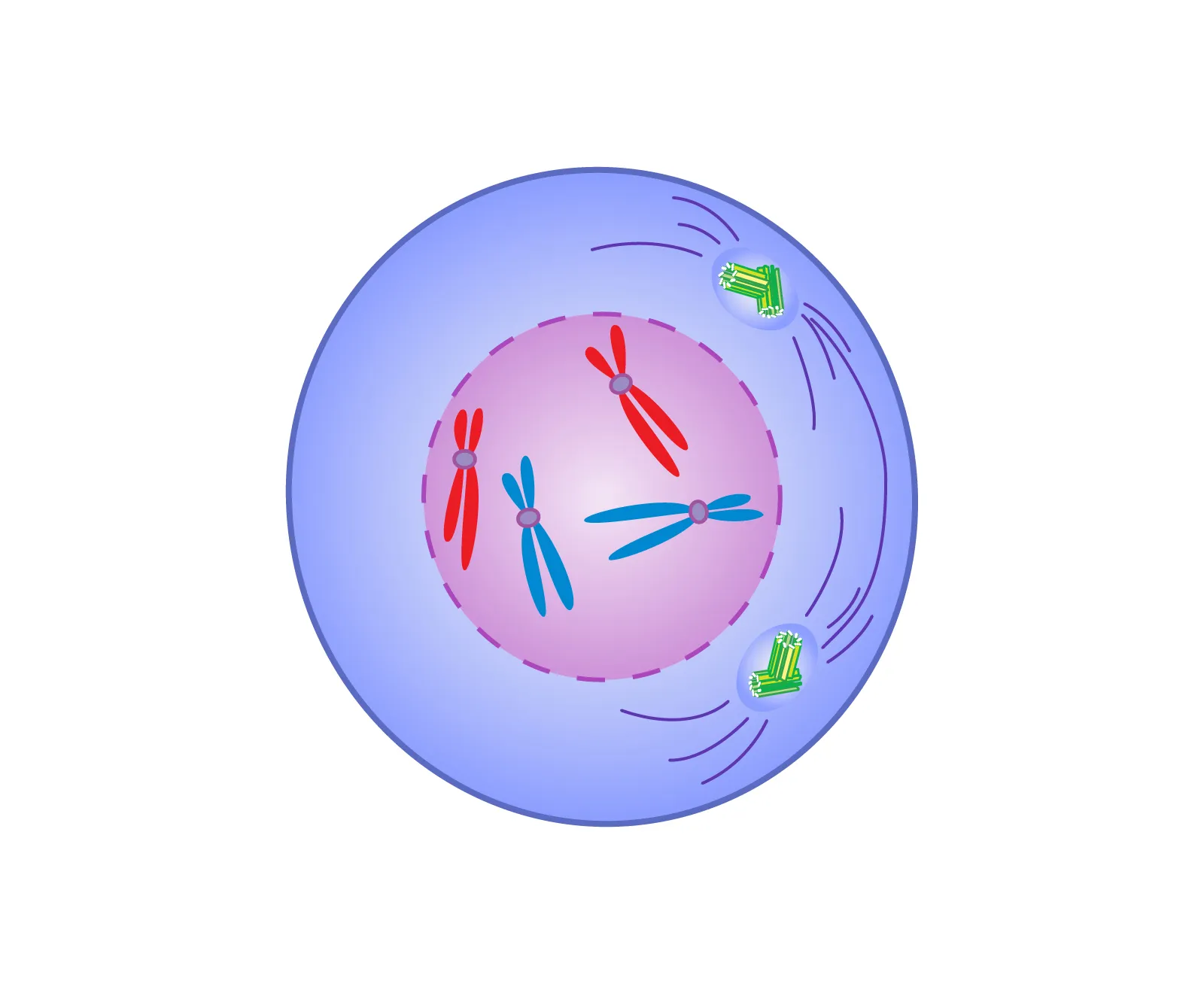
Prophase
Duplicated chromosomes are prepared for segregation & mitotic machinery is assembled
chromosomal material condenses to form compact mitotic chromosomes (2 sister chromatids)
held together wit a multi protein complex called cohesion
cytoskeleton is disassembled and mitotic spindle is assembled
spindle formation
microtubules appear around each centrosome
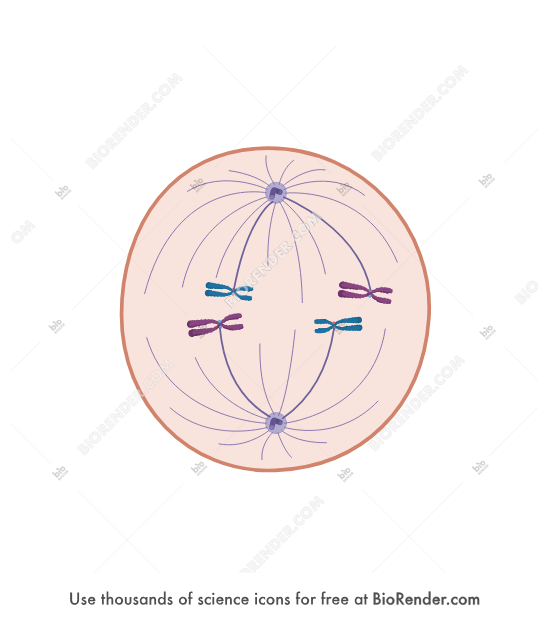
Prometaphase
starts with dissolution of the nuclear envelope
spindle assembly is completed
chromosomes are moved into position at center of cell
Microtubules penetrate central cell region,
The free ends grow & shrink as if they are searching for chromosome
Those that contact a kinetochore are captured & stabilized
Kinetochore from one chromatid becomes stably associated with spindle microtubules from one pole
Unattached sister chromatid kinetochore captures its own MTs from opposite spindle pole
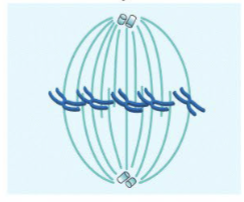
Metaphase
chromosomes aligned at the equator plane (metaphase plate)
Anaphase
chromosomes spilt and migrate poleward
Chromosomes move very slow
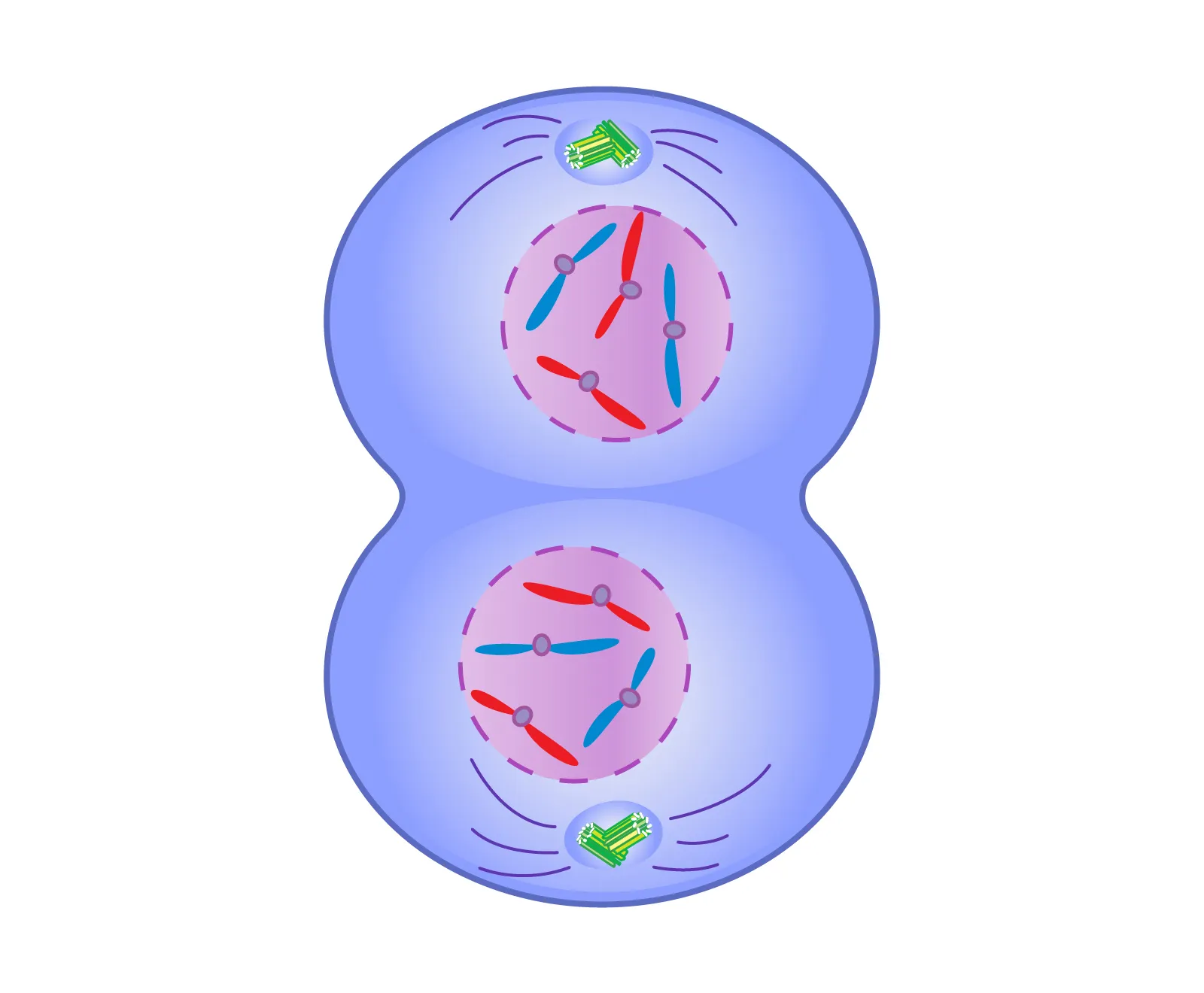
Telophase
Chromosomes collecting as they near their respective poles
Daughter cells return to their interphase condition
Nuclear envelope reforms
Chromosomes disperse until they disappear from view under microscope
Meiosis
Produces haploid gametes for sexual reproduction
union of haploid gametes produces progeny
followed by two divisions, no DNA replication
recombination or crossing over
only happens in reproductive organs
Meiosis I
separation of homologous pairs of chromosomes
Homologous chromosomes pair
crossing over occurs at chiasmata
Segregation of homologous chromosomes occurs to make haploid complements
Synapsis: pairing of homologous chromosomes
occurs in early prophase I
Prophase I
The chromosomes condense, and the nuclear envelope breaks down
Crossing over occurs
Metaphase I
Pairs of homologous chromosomes move to the equator of the cell
Anaphase I
Homologous chromosomes move to the opposite poles of the cell
reduces the amount of DNA by ½
Telophase I & Cytokinesis
Chromosomes gather at the poles of the cells
The cytoplasm divides
Prophase II
A spindle forms around the chromosomes
Metaphase II
Chromosomes line at the equator
Anaphase II
Centromere divides
Chromatids move to the opposite poles of the cells
reduces DNA amount by an additional ½
Telophase II & Cytokinesis
A nuclear envelope forms around each set of chromosomes
The cytoplasm divides
Meiosis II
separation of sister chromatids
X-linked inheritance
differences in male and female chromosomes in many species die to the presence of 2 X chromosomes in females and a smaller Y chromosome in males
refers to the inheritance of genes on the X chromosome
Wild Type (WT)
the phenotype most common in a population
Sex-linked inheritance
refers to transmission of genes on sex chromosomes
Reciprocal cross
crossing a pair of parents with the sexes reversed
Hemizygous
males having only one X that carry traits
gene trait only found on X
XO male
sterile
Nondisjunction
no separation of gametes
in females, gametes have either tow X chromosomes or no sex chromosomes
SRY
a gene on the Y chromosome responsible for phenotypic male-ness
produces a protein, testis-determining factor (TDF)
induces the cascade of events leading to phenotypic male-ness
Chromosomal sex
the presence of chromosomes characteristics of each sex and is determined at the moment of fertilization
Phenotypic sex
the internal and external morphology of each sex, and results from differences in gene expression
X-linked inheritance patterns
can be dominant or recessice
more males than females have recessive X-linked phenotype
if recessive male mates with dominant homozygous female → all are dominant
Recessive males x heterozygous females → 50/50
Homozygous recessive female x hemizygous dominant male → recessive males and dominant females
affected males always yield affected daughters
Y-linked inheritance patterns
an genes are inherited as singletons
always dominant and only found in males
fewer then 50 genes
Dosage compensation
compensates for the differences
Genes on autosomes typically contribute protein from both copies
same in females
half for males
randome X-inactivation
Placental mammals
one of X chromosomes of females is converted into an inactive Barr body