anatomy respiratory system
 Call Kai
 Learn
Learn Practice Test
 Spaced Repetition
 Match
Match Flashcards
 Knowt Play
1/55

There's no tags or description
Looks like no tags are added yet.
Name | Mastery | Learn | Test | Matching | Spaced | Call with Kai |
|---|
No analytics yet
Send a link to your students to track their progress
56 Terms
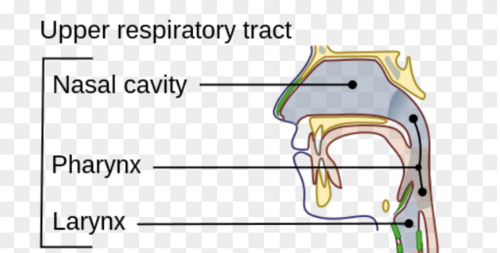
upper respiratory tract
includes larynx & above
-filters, humidifies, sound production (larynx), smell, and immune
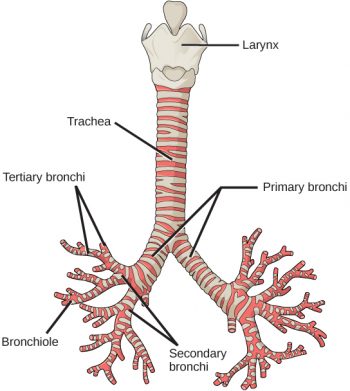
lower respiratory tract
trachea & below
-air passage and gas exchange
conducting zone
travels from nose →terminal bronchioles
respiratory zone
respiratory bronchioles (ex. stem) and alveoli (ex. grapes of stem)
nasal cavity
space between nose
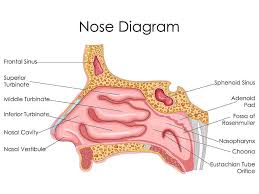
What helps filter and purify in the nasal cavity?
mucus membrane
cilia
aka nasal hairs meant to trap particles in nasal cavity
olfactory receptors
located high up in back of nasal cavity that detects smells
nasal conchae
3 pairs of bony projections which create turbulence, allowing more particles in nasal cavity to be trapped.
meatus
passage in nasal cavity created by conchae
nose
only external part of respiratory system. it’s bone forms it’s bridge, cartilage forms point.
what forms the nose’s nostrils?
dense irregular tissue
sinuses
air filled cavities which lightens skull, strengthens tone of voice, and warms & moistens air
pharynx
passage from nasal cavity to larynx which includes (from top → bottom) nasopharynx, oropharynx, and laryngopharynx
epiglottis
The epiglottis is a small flap of tissue at the base of the tongue that covers the windpipe (trachea) when you swallow, preventing food and drink from entering your lungs.
larynx
voice box, vocal folds vibrate. usually opens air passage for speech but closes during swallowing
trachea
windpipe which is apart of lower respiratory, connecting larynx to primary bronchi.
what are the trachea walls reinforced w/ ?
c-shaped hyaline cartilage rings
what is the trachea lined with to sweep foreign material up to be coughed out?
pseudo-stratified ciliated columnar epithelium
primary bronchi
(red) first bronchi entry. enters lungs at hilum, inhaled substances are more likely to get stuck in right bronchus.
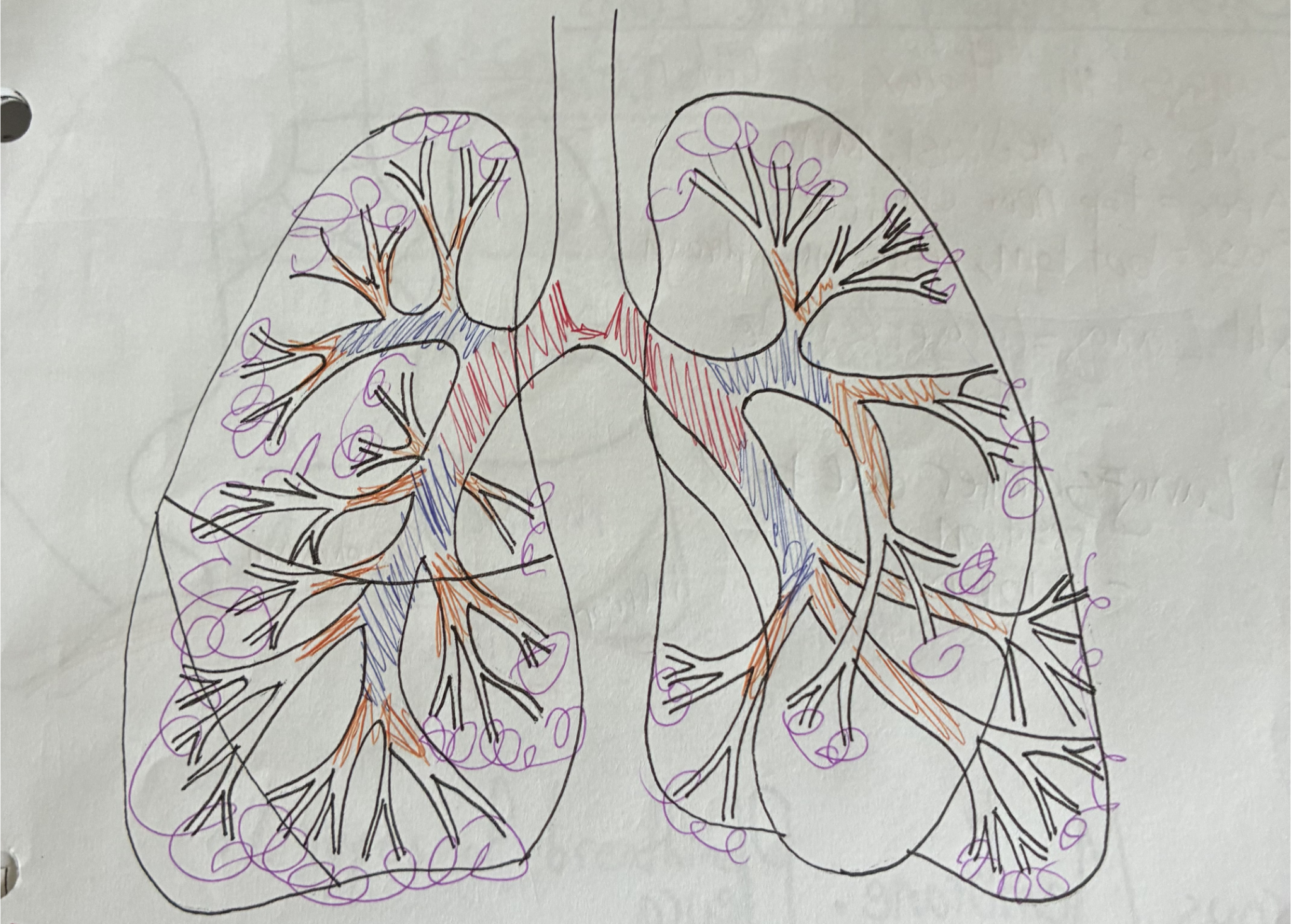
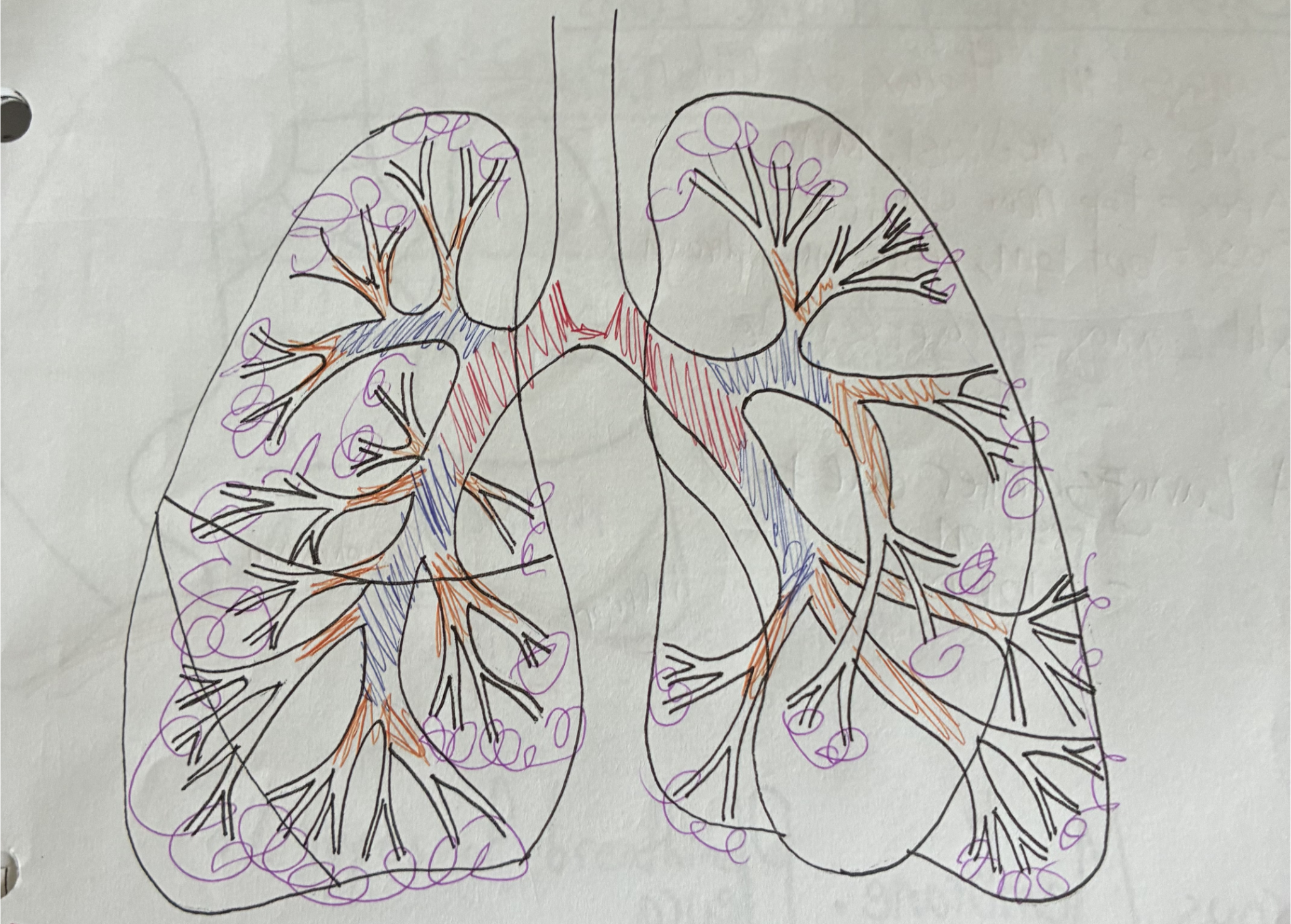
What is the blue section called?
lobar (secondary) bronchi
Segmental (tertiary) bronchi
(orange) divided further into: terminal bronchioles → respiratory bronchioles
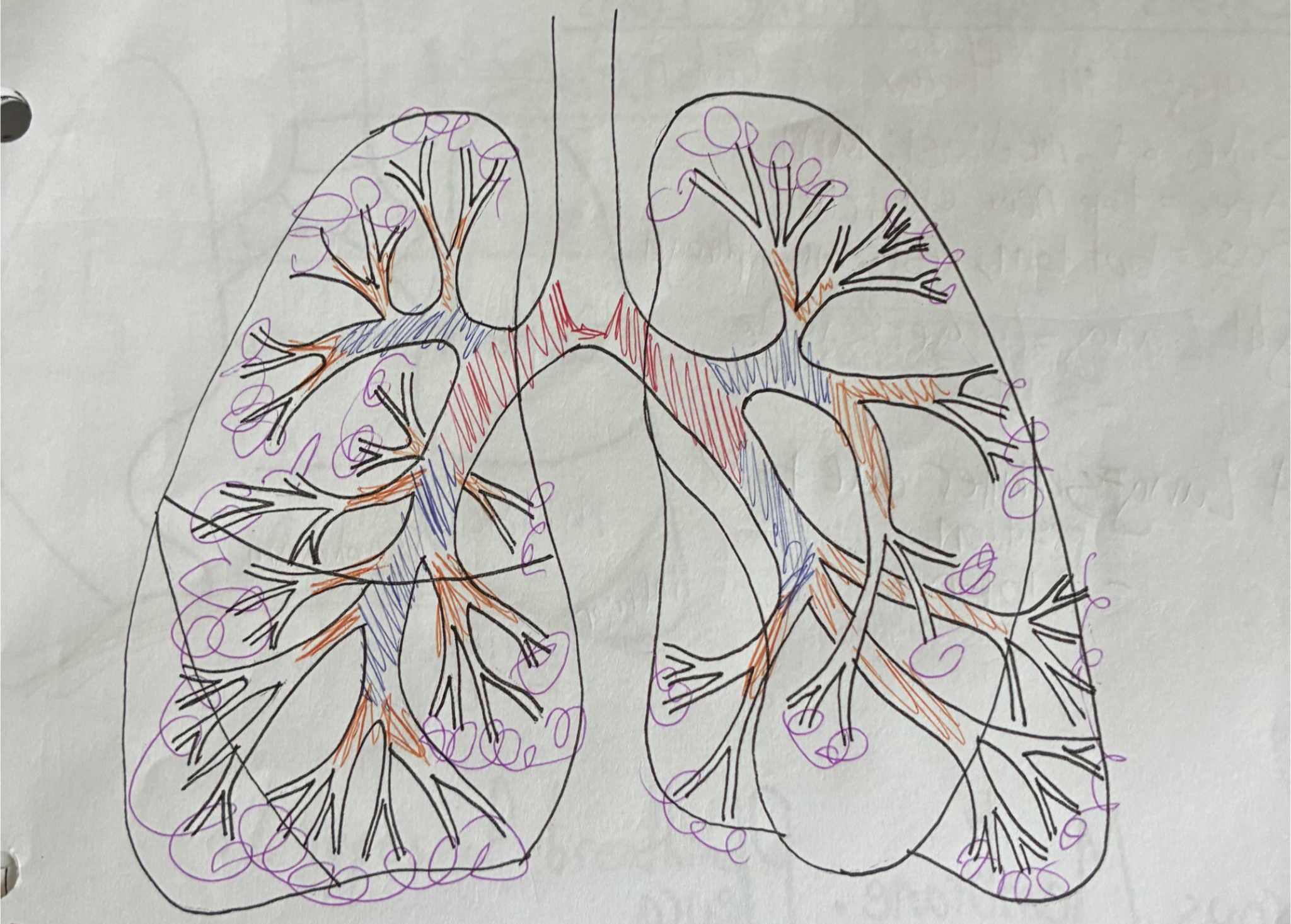
alveoli
(purple)air filled sacs for gas exchange, lined w/ simple squamous
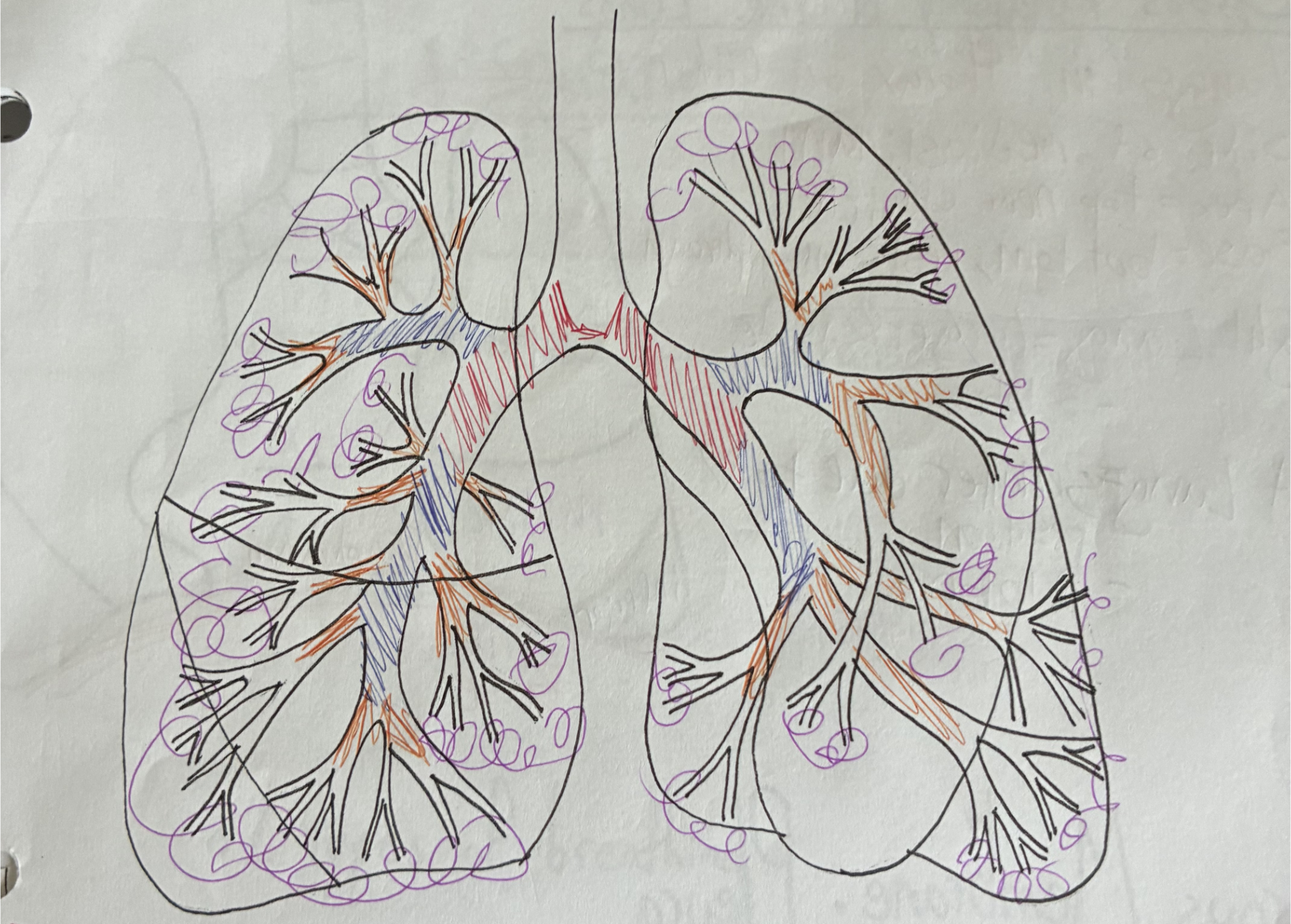
where are lungs located
in thorax on either side of mediastinum
right lung
larger, wide, and has three lobes
left lung
smaller due to heart position, two lobes
viseral pleura
covers surface of lungs (interior)
parietal pleura
lines thoracic cavity wall (exterior)
pulmonary ventilation (breathing)
movement of gases between atmosphere and alveoli
2 phases: inspiration & expiration
quiet breathing
rhythmic breathing occurring at rest and requires the diaphragm and external intercostal
forced breathing
vigorous breathing; accompanies exercise and requires several additional muscles
alveolar gas exchange (external respiration)
exchange of gas between alveoli and blood
gas transport
transport of gases in the blood between lungs and systemic cells
systemic gas exchange (internal respiration)
exchange of gases between blood and systemic cells
boyle’s law
relationship of volume and pressure. at constant temperature, pressure (p) of a container decreases if a volume (v) of a container increases. air flows to follow a gradient high → low
inspiration
aka inhalation, external intercostal muscles contract, lifting ribs up and out while diaphragm contracts downward and flattens.
^ thoracic cavity volume
lower pulmonary pressure
air goes in lungs
expiration
aka exhalation, external intercostal muscles and diaphragm relax
decreases lower thoracic cavity
^ intrapulmonary pressure
air is forced out of lungs
what are some non-respiratory air maneuvers?
coughs to clear dust or debris from lower respiratory tract
sneeze to clear upper respiratory
hiccup, an irritation of phrenic nerve that causes diaphragm to spasm
yawn, theorized to happen by a need for increases oxygen
average adult respiratory rate
12-15 breaths per min
infants average respiratory rate
40 to 60 breaths per min
neural
rate and depth is controlled by breathing centers in brain
medulla oblongata
one of the breathing centers in brain, it sets normal breathing pace
pons
one of the breathing centers in brain, it fine tunes rate and depth and coordinates transition between expiration and inspiration
central chemoreceptors
chemical control of breathing, it constantly monitors changes in the pH (acidic or alkaline) of cerebrospinal fluid.
decrease in pH indicates high amt. of carbon dioxide
peripheral chemoreceptor
a chemical control of breathing, it’s located in aorta and carotid arteries . they’re sensitive to changes in blood oxygen lvls
mechanoreceptor
a chemical control of breathing located in muscles and joints to detect muscle contraction and force generation during exercise. they’re responsible for quick increase in ventilation during exercise.
static
volume at fixed point in time
dynamic
volume over a specific period of time
tidal volume
static, which an amount of air inhaled during a normal breath
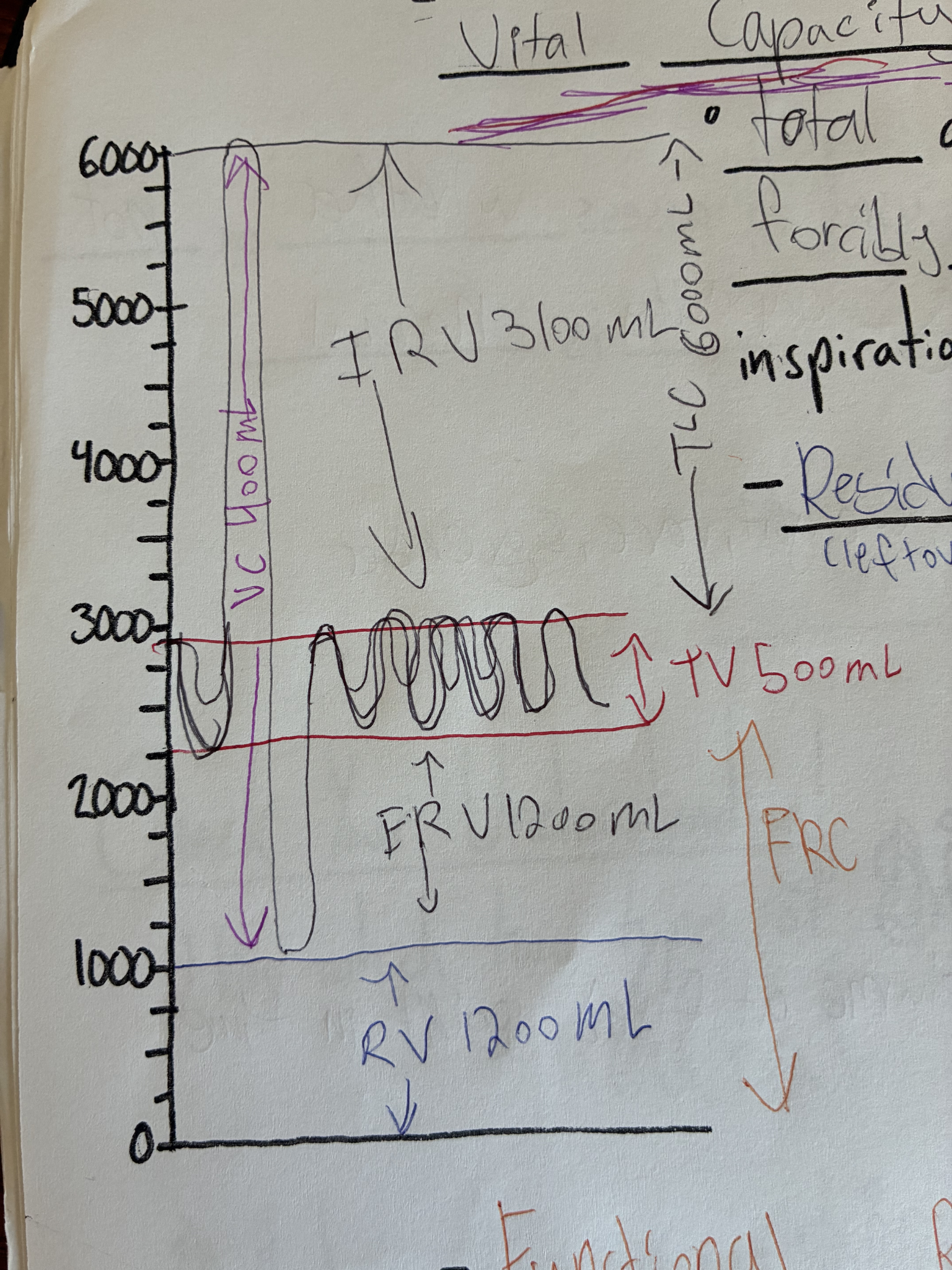
vital capacity
total amt of air that can be forcibly expired after a maximal inspiration
residual volume
vol of air that never leaves the lungs, allowing gas exchange to occur continuously
functional residual capacity
amt of air that remains in the lungs after a normal expiration
ERV+RV
inspiratory reserve volume
amt of air that can be inhaled immediately after a normal inspiration
expiratory reserve volume
amt of air that can be exhaled or forced from the lungs, immediately after a normal expiration
total lung capacity
combination of vital capacity plus the residual volume
VC+RV
usually 6L of air
pulmonary function testing
a form of dynamic lung volume, it can be used to determine if whether a person has: asthma, obstructive lung disease, restrictive lung disease