Section 7: Force of Contraction & Muscle Fiber Types
 Call Kai
 Learn
Learn Practice Test
 Spaced Repetition
 Match
Match Flashcards
 Knowt Play
1/21

There's no tags or description
Looks like no tags are added yet.
Name | Mastery | Learn | Test | Matching | Spaced | Call with Kai |
|---|
No analytics yet
Send a link to your students to track their progress
22 Terms
Force depends on ____, which is affected by
number of cross bridges attached
number of muscle fibers stimulated - recruitment
Size of fiber (hypertrophy increase strength)
Stimulation frequency
Degree of muscle stretch
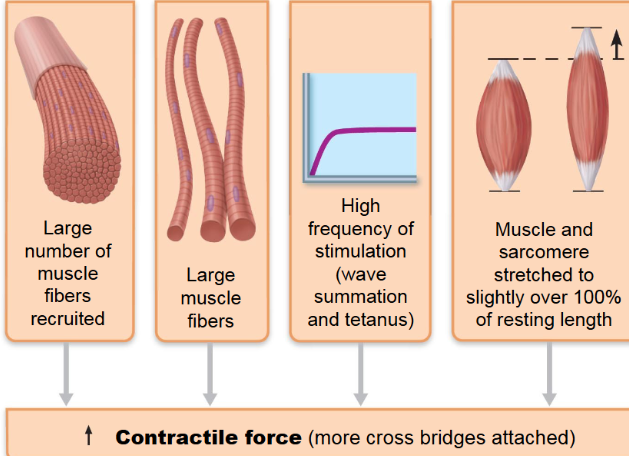
Length tension relationship
Muscle fibers at 80-120% normal resting length → more force
Too short - excessive overlap → less force
Too long - not enough overlap → less force
what affects Velocity and Duration of Contraction (3 things)
Muscle fiber type (fast or slow)
load (greater load less contraction)
recruitment ( more motor units contracting, faster and longer contraction)
Influence of load
Greater load, greater latent period, slower contraction and shorter duration of contraction
Three types of muscle fibers
Slow oxidative fibers, Fast oxidative fibers, Fast glycolytic fibers
Most muscles contain _____ fiber type, all fibers in one motor unit is ____ fiber type, ____ dictates percentage of each
mixture of, same, genetics
Slow oxidative fibers - size
half diameter of fast fibers
what is slow oxidative fibers good for and why
long periods of contraction (marathons)
capillary networks that support oxygen demand
lots of myoglobin (carry oxygen) → aerobic pathway
Fast Glycolytic Fibers - structure
Large diameters with densely packed myofibrils
high glycogen reserves
and few mitochondria
no myoglobin
Fast glycolytic fibers - good for what - how and why
powerful contractions - really short term
Use massive amounts of ATP & fatigue quickly → anaerobic respiration
Fast oxidative fibers
Hybrid of other two
Fast contraction - uses aerobic respiration and some anaerobic respiration
high myoglobin content and some glycogen
Recruitment order
slow oxidative fibers, fast oxidative fibers, fast glycolytic fibers
Which fiber contributes to high contractile velocity
fast glycolytic fibers (fatigable)
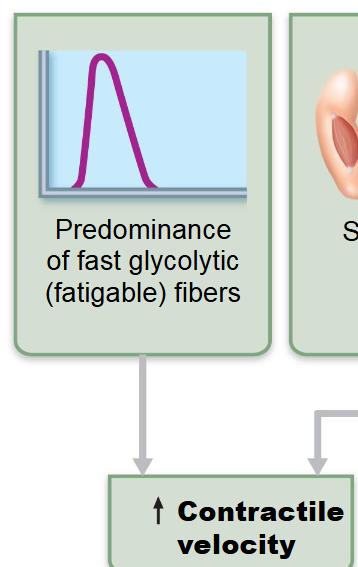
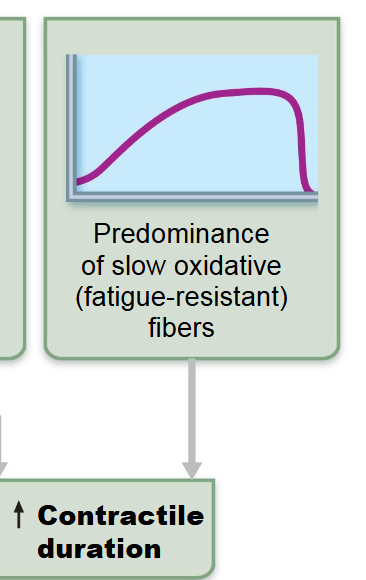
which fiber contributes to high contractile duration
slow oxidative fibers (fatigue resistant)
Aerobic exercises
endurance exercises
Running
Cycling
Swimming
Distance sports
aerobic exercise adaptations
more muscle capillaries, mitochondria, myoglobin synthesis
more oxygen and atp production
Could convert fast glycolytic fibers into fast oxidative fibers
What does aerobic exercises improve
endurance, strength, and
resistance to fatigue
Resistance exercise
usually anaerobic
Weight lifting
Resistance bands
Strength training
Resistance exercise adaptations and how
hypertrophy (muscle fiber size increase) → Increased muscle strength
and size
more myofilaments,glycogen stores, and connective tissue
Atrophy and waht are the two types
opposite of hypertrophy
disuse and neurogenic
disuse hypertrophy
from immobilization → muscle strength decline 5% a day
neurogenic hypertrophy
no neural stimulation → ¼ of original size
fibrous connective tissue replace muscle tissue → cant rehibilitate