Medieval Europe and Renaissance: Key Figures and Events
 Call Kai
 Learn
Learn Practice Test
 Spaced Repetition
 Match
Match Flashcards
 Knowt Play
1/200

There's no tags or description
Looks like no tags are added yet.
Name | Mastery | Learn | Test | Matching | Spaced | Call with Kai |
|---|
No analytics yet
Send a link to your students to track their progress
201 Terms
What major change occurred in the Western Roman Empire by the end of the 5th century?
Rome was filled with Germanic peoples who gave loyalty to chiefs instead of the emperor.
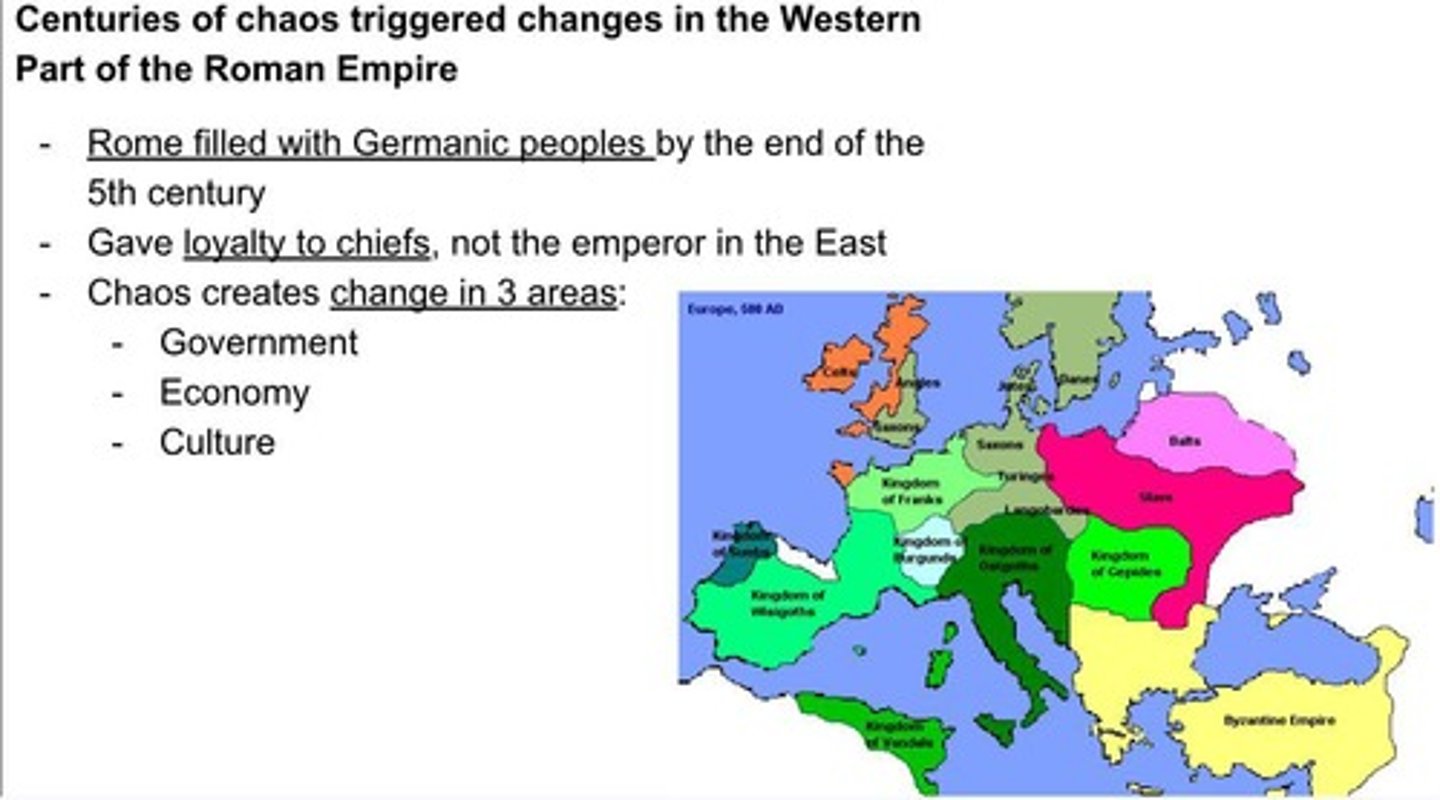
What were the three areas of change due to chaos in the Middle Ages?
Government, Economy, and Culture.
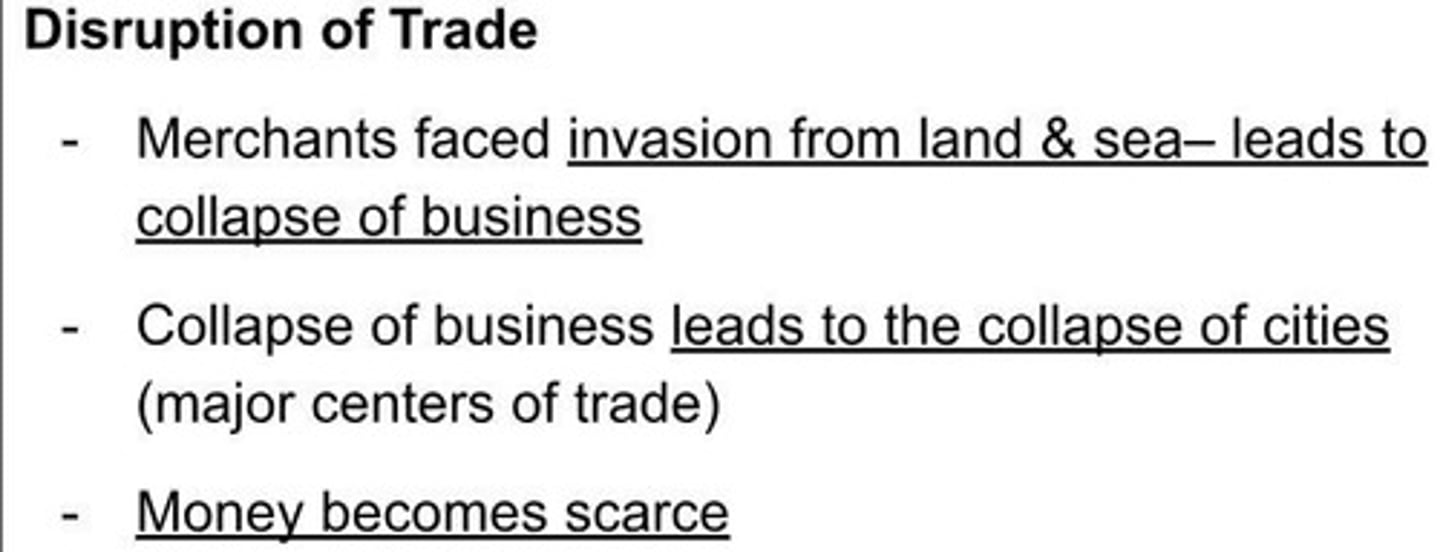
What happened to trade during the Middle Ages?
Disruption of trade led to the collapse of business and cities.
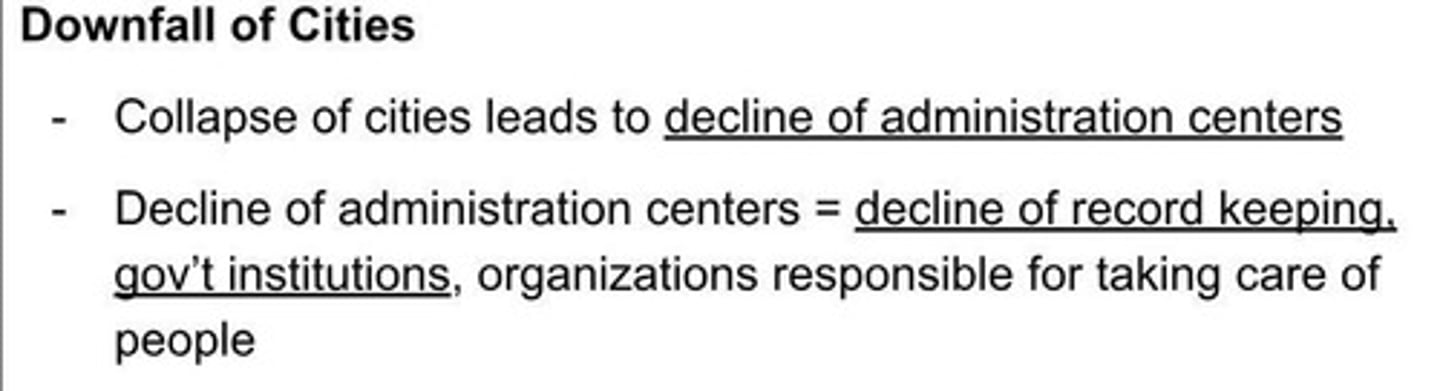
How did the collapse of cities affect record keeping?
The decline of administration centers resulted in a decline of record keeping and governmental institutions.
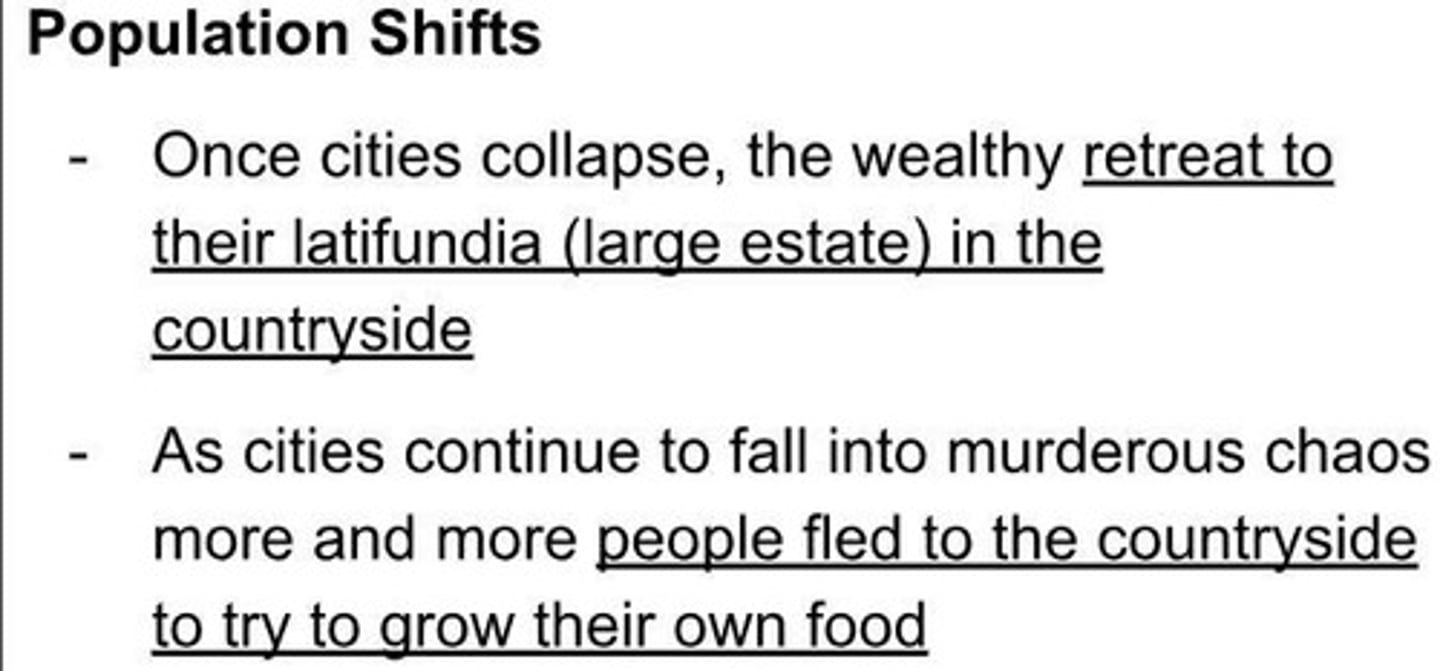
What population shift occurred as cities collapsed?
Wealthy individuals retreated to their latifundia in the countryside, and many people fled to grow their own food.
What was the literacy level of Germanic peoples who settled in the West?
They were largely illiterate and lacked knowledge of Greek culture.
What happened to the common language during the Middle Ages?
Latin disappeared, and new Romance languages emerged by the 800s.
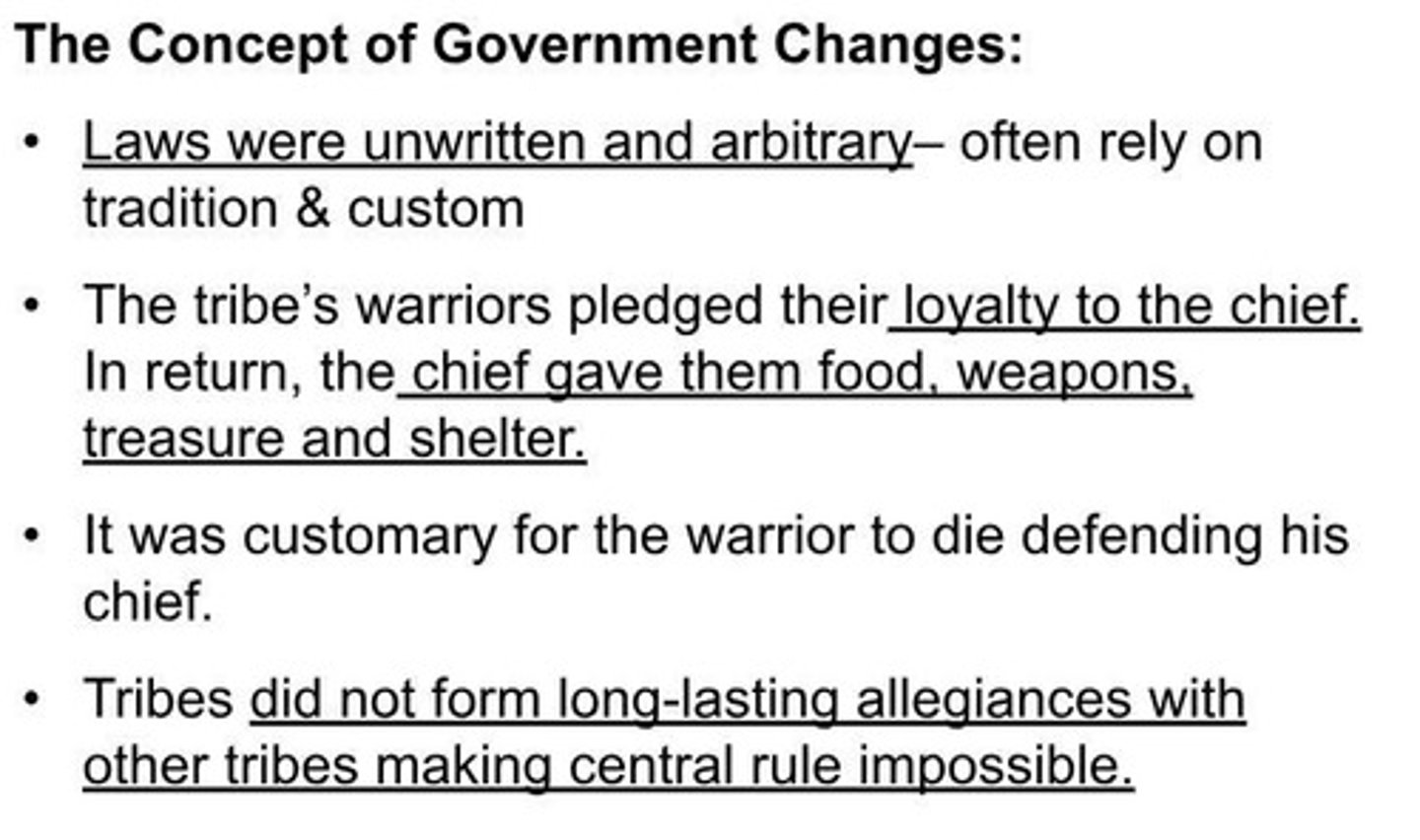
How did the concept of government change during the Middle Ages?
Laws became unwritten and arbitrary, relying on tradition and custom.
Who was Clovis I?
The king of a powerful Frankish tribe who ruled from 481-511 and converted to Roman Catholicism.
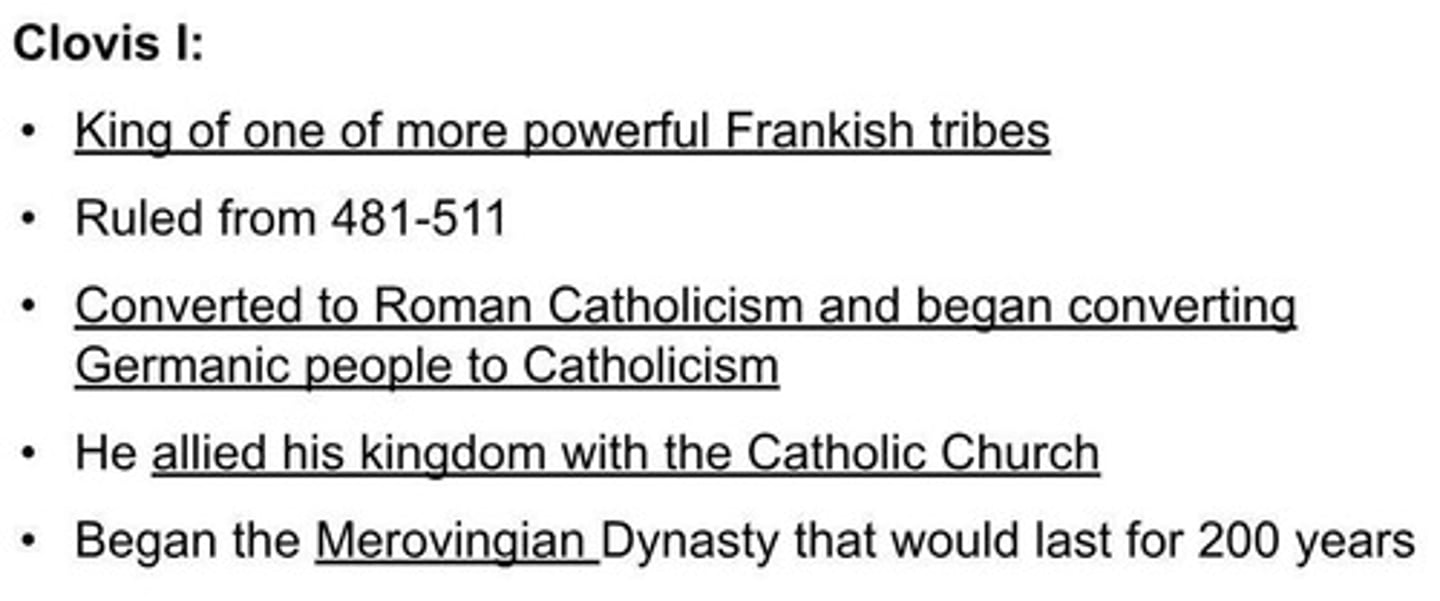
What dynasty did Clovis I begin?
The Merovingian Dynasty.
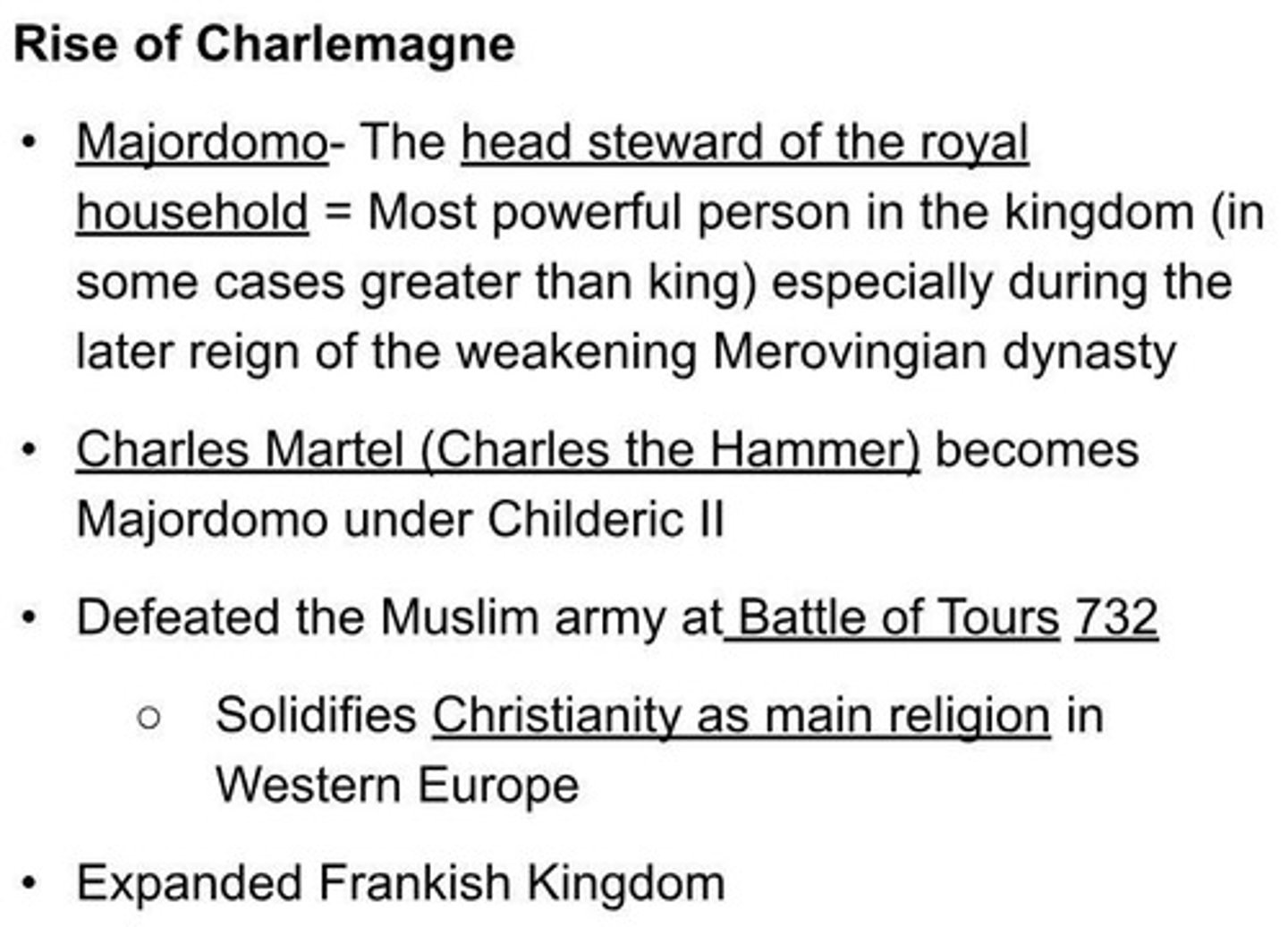
Who was Charles Martel and what was his significant achievement?
He was the Majordomo who defeated the Muslim army at the Battle of Tours in 732.
What title was given to Charlemagne in 800?
He was crowned Holy Roman Emperor by Pope Leo III.
What was one of Charlemagne's major accomplishments?
He created an empire larger than any since Rome and united Western Europe.
What educational initiatives did Charlemagne promote?
He hired scholars, opened schools, and supported monastic libraries, leading to a revival of learning.
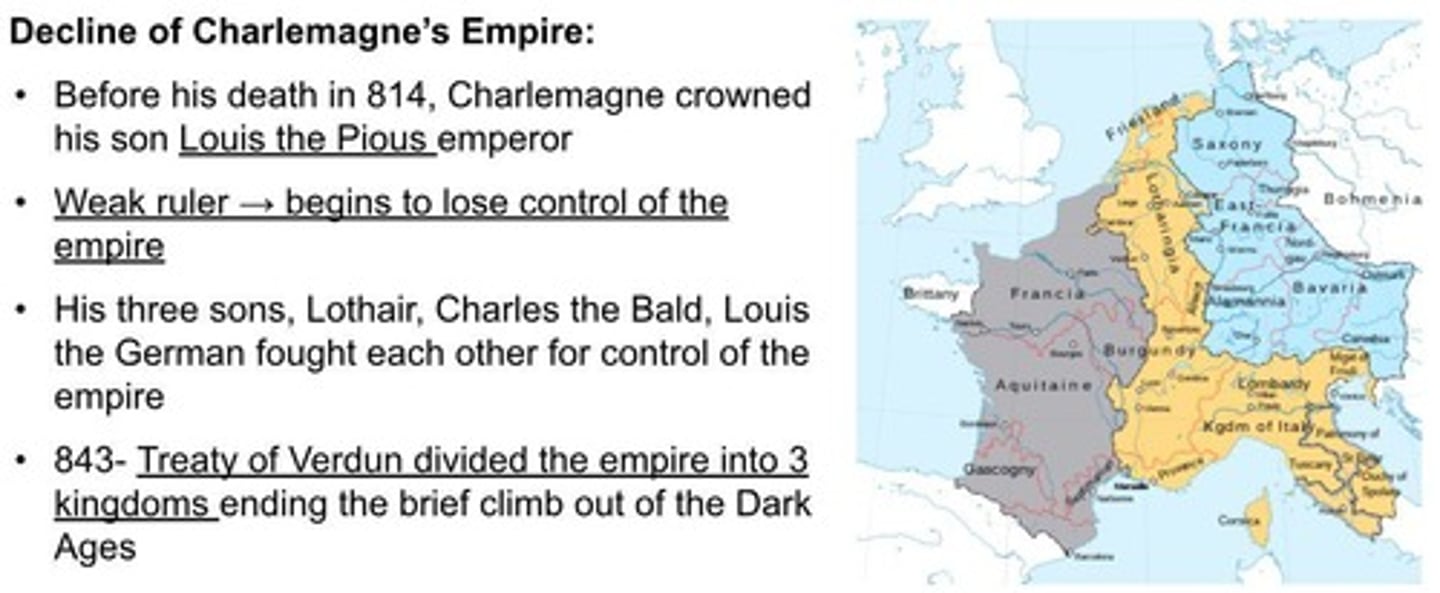
What event in 843 divided Charlemagne's empire?
The Treaty of Verdun.
What external threats did the Carolingian Dynasty face?
Invasions by Saxons, Magyars, and Vikings.
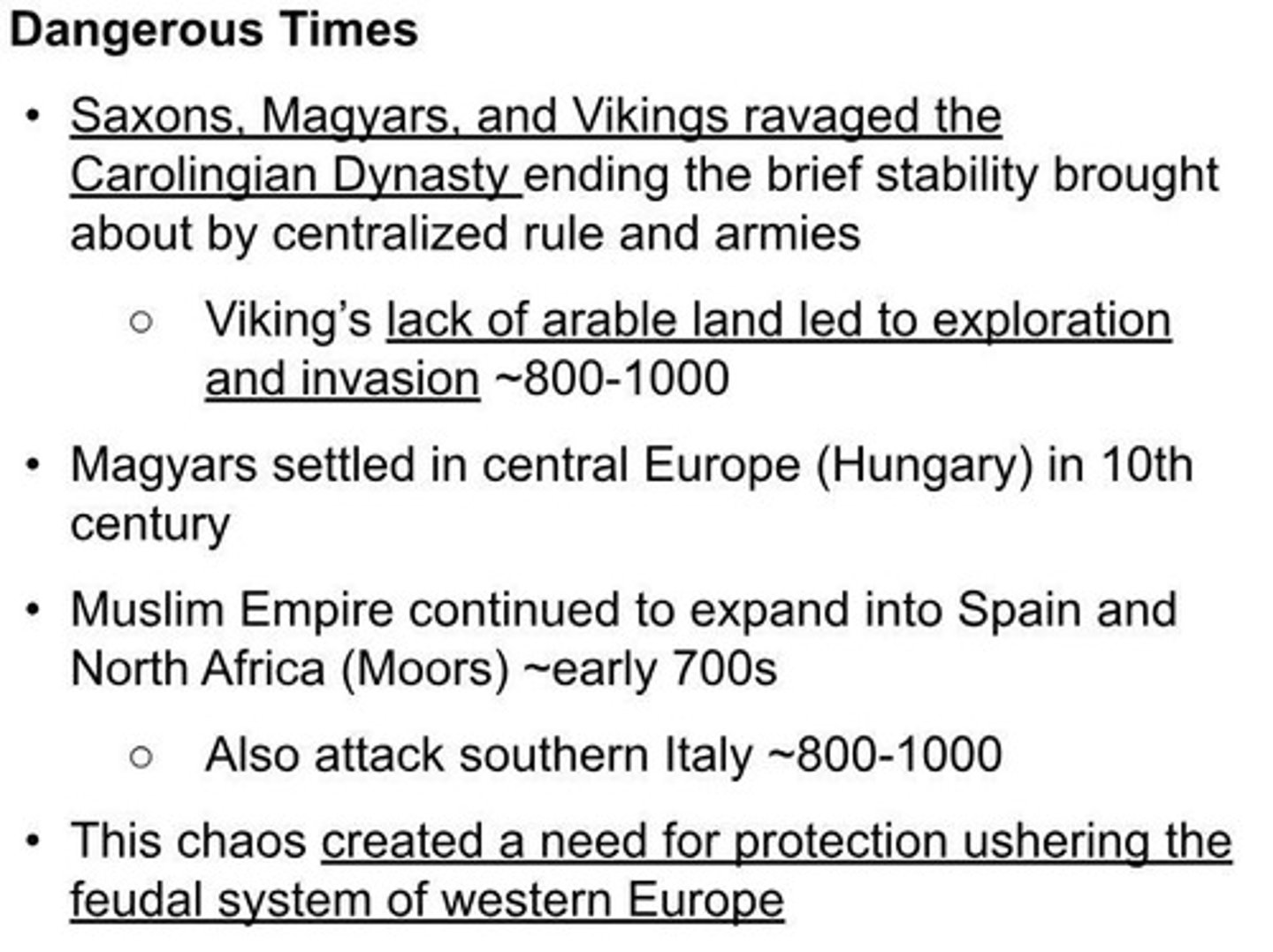
What was feudalism?
A system where landowners (lords) granted land (fiefs) to vassals in exchange for loyalty and protection.
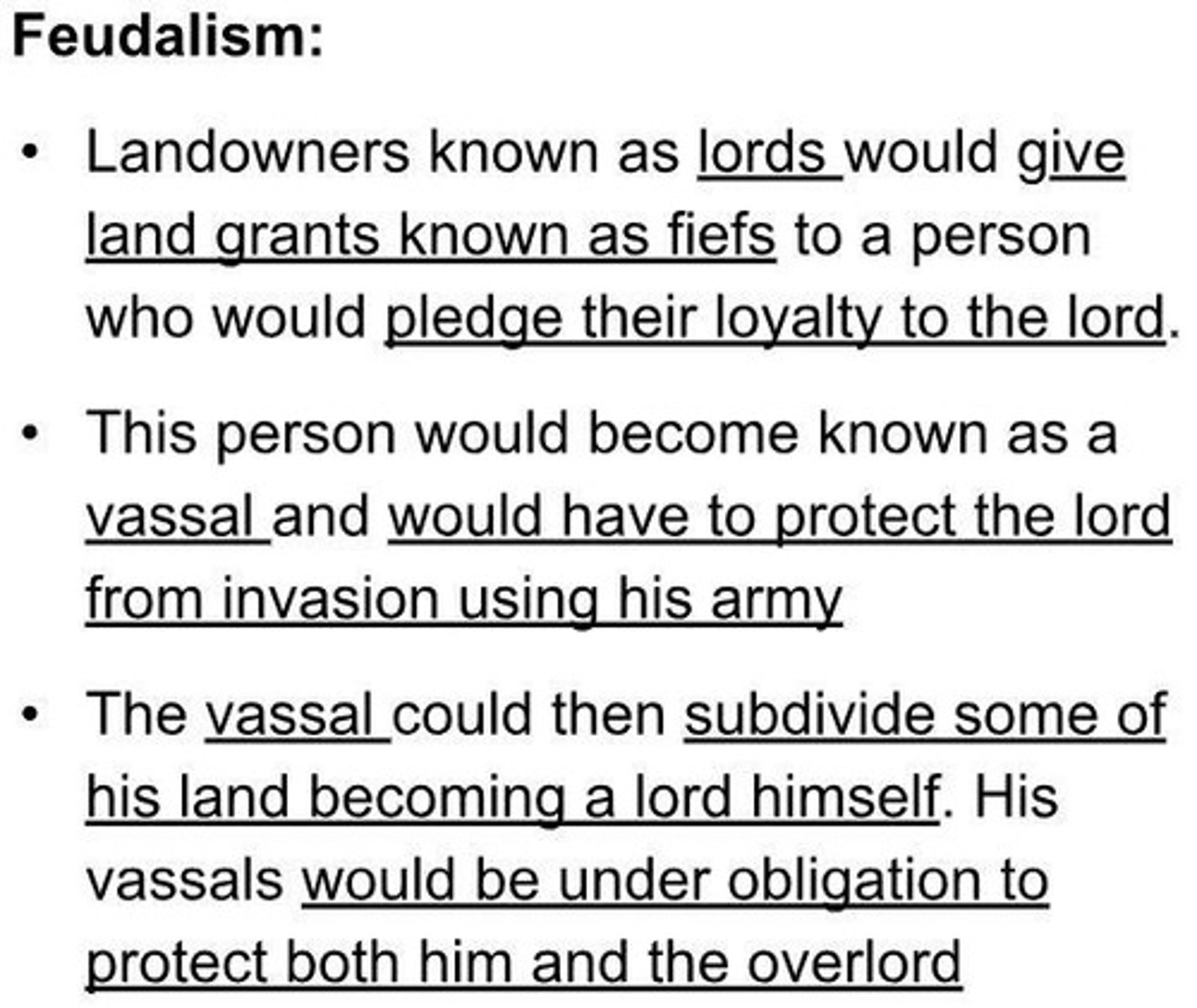
What role did peasants and serfs play in the feudal system?
They worked the land, paid taxes, and provided food while having limited rights.
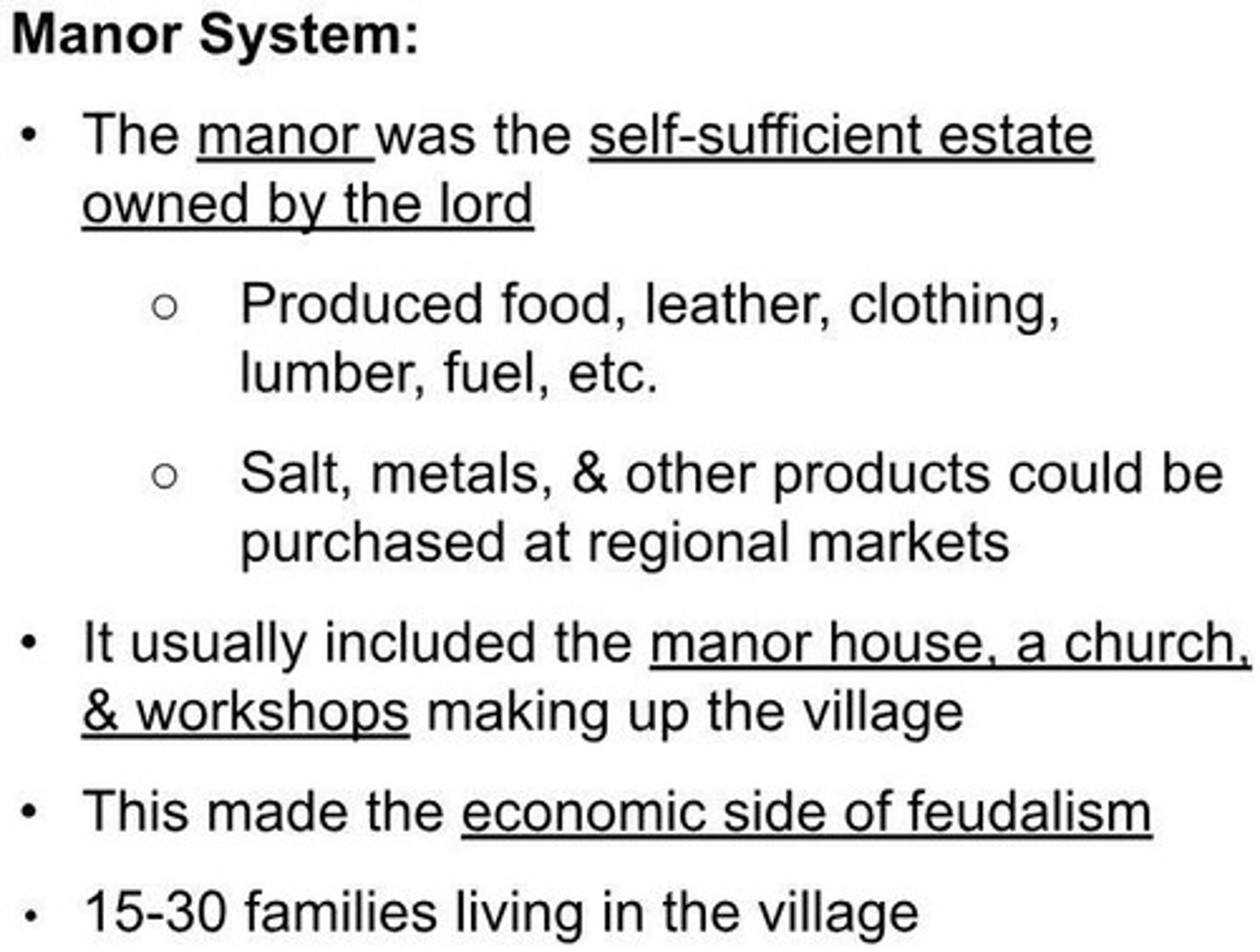
What is the manor system?
A self-sufficient estate owned by a lord that produced food and resources.
How did the collapse of cities impact the economy?
It led to a decline in trade and scarcity of money.
What was the significance of the Battle of Tours?
It solidified Christianity as the main religion in Western Europe.
What was the impact of the Viking invasions?
They contributed to the chaos that led to the establishment of the feudal system.
What was the relationship between lords and vassals?
Lords provided land and protection, while vassals pledged loyalty and military service.
What was the effect of the decline of learning during the Middle Ages?
A significant loss of knowledge, including basic literacy, persisted for nearly 1000 years.
How did Charlemagne's empire contribute to the cultural revival?
His support for education and learning led to a brief revival of Hellenistic knowledge.
What was the role of the Catholic Church during the Middle Ages?
It was a central institution that influenced politics and education.
What characterized the governance of tribes during the Middle Ages?
Governance was based on unwritten laws and the loyalty of warriors to their chiefs.
What products could be purchased at regional markets during feudalism?
Salt, metals, and other products.
What were the three main social classes in feudal society?
Those who fought (knights and nobles), those who prayed (church officials), and those who worked (peasants and serfs).
What is chivalry?
A religious, moral, and social code of conduct that knights were expected to uphold.
What age did young men of noble birth begin their training for knighthood?
Age 7, as a page.
What role did knights play in feudalism?
They provided security as vassals to their lords in exchange for fiefs.
What was the role of noblewomen in feudal society?
Noblewomen could inherit estates and defend castles while their husbands were away.
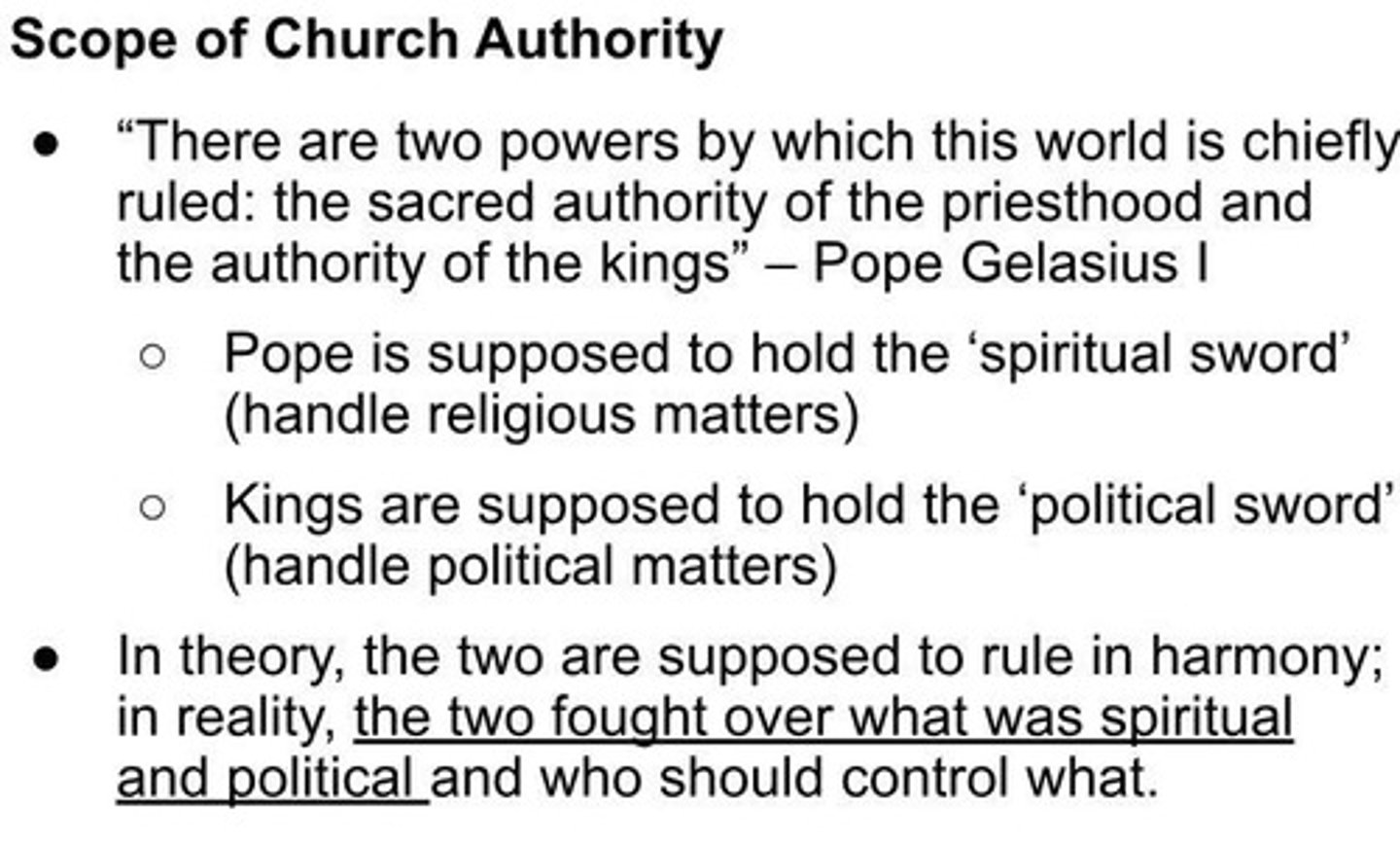
Who was Pope Gelasius I and what did he state about power?
He stated that the world is ruled by the sacred authority of the priesthood and the authority of kings.
What was the significance of Clovis in the context of Christianity in the Middle Ages?
He allied with the church and converted many Germanic people to Catholicism, strengthening both the Franks and the Church.
What did Pope Gregory I expand during his papacy?
The role of the church, making the papacy more powerful in politics.
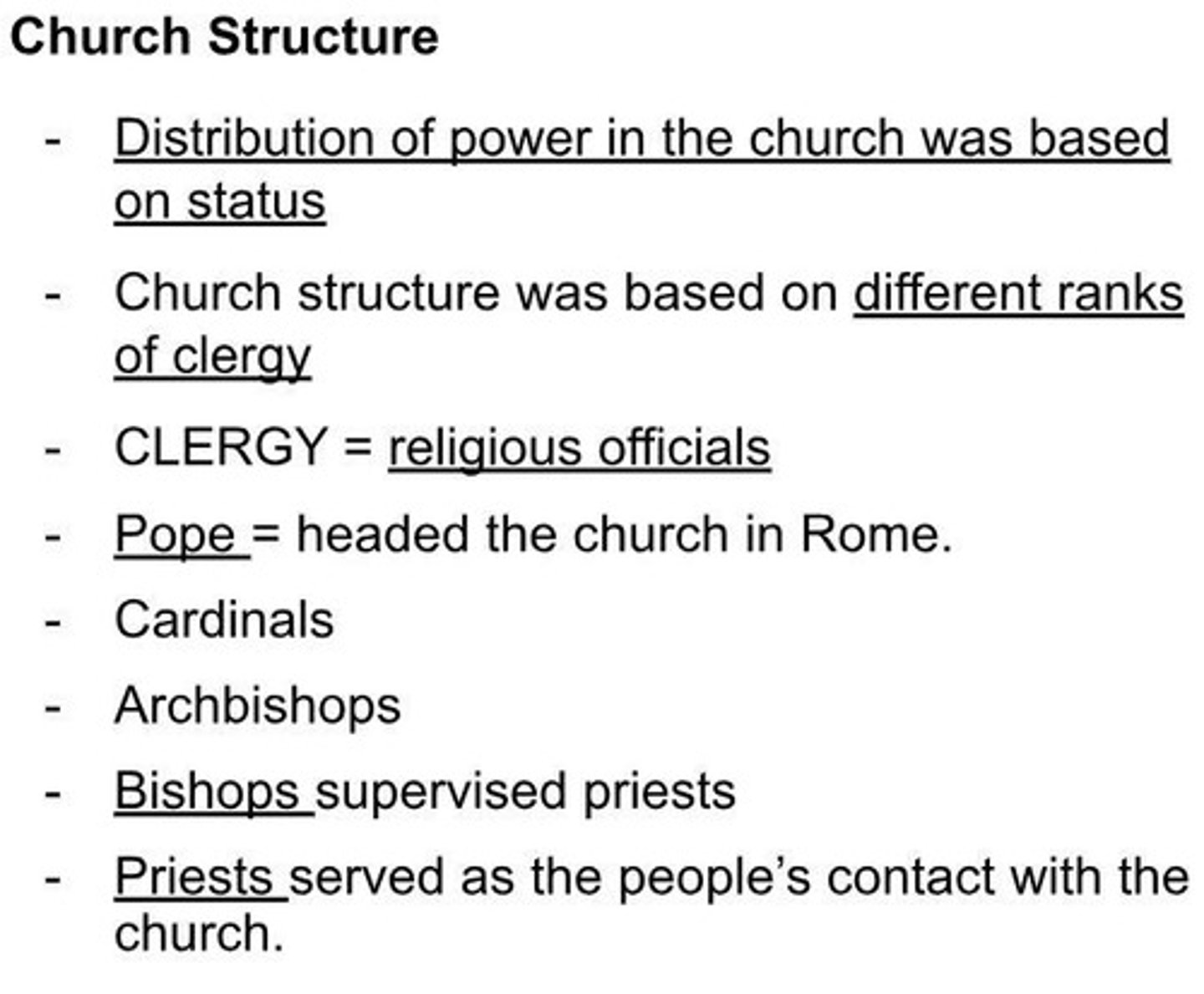
What is the structure of the church based on?
Different ranks of clergy, with the Pope at the top.
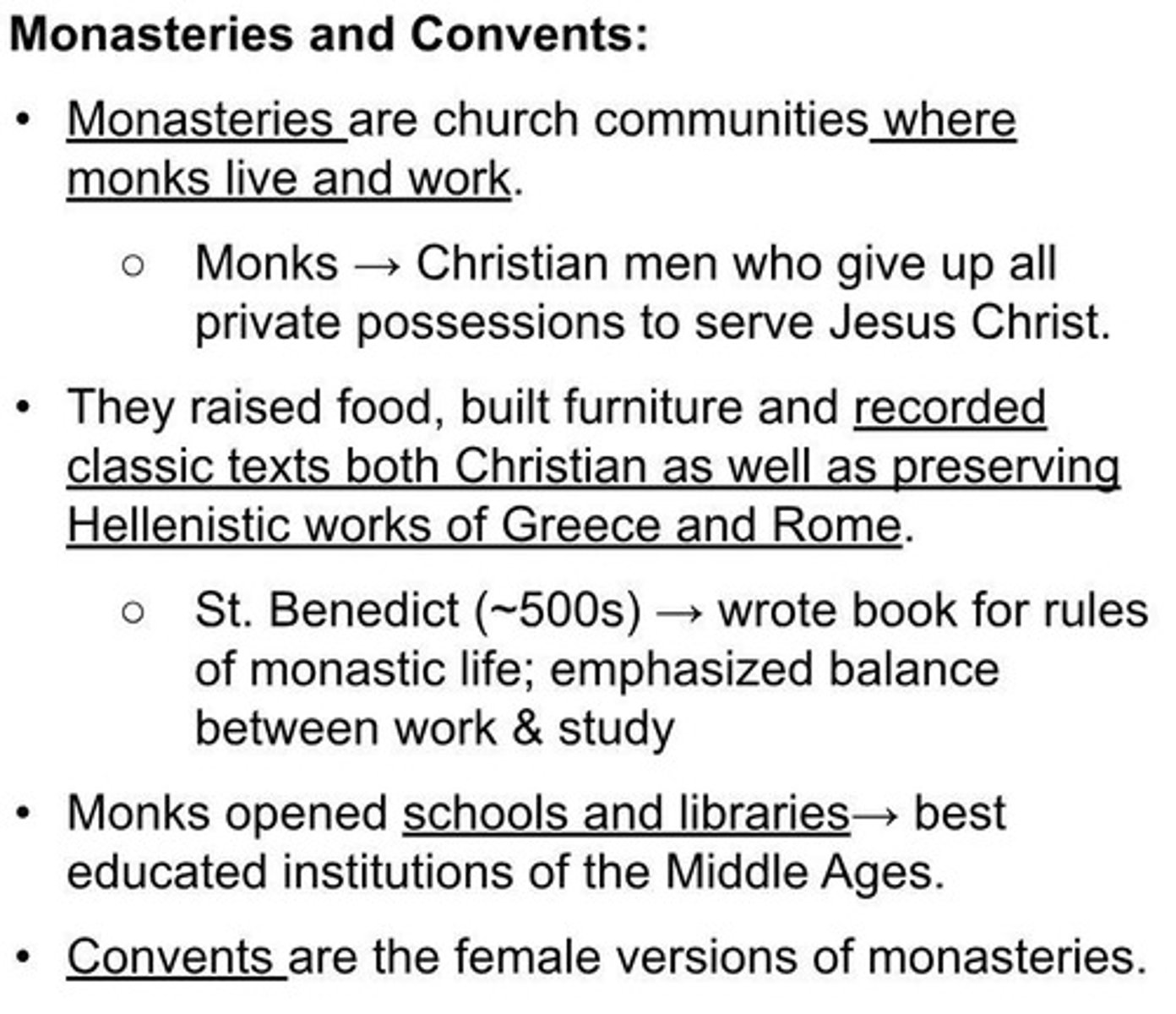
What is a monastery?
A church community where monks live and work, giving up private possessions to serve Jesus Christ.
What is canon law?
The law of the Church, governing matters such as marriage and religious practices.
What was lay investiture?
A ceremony to choose or appoint bishops, which led to conflict between kings and popes.
What was the outcome of the Concordat of Worms?
The Church could grant a bishop his symbols of office, but the emperor could veto the appointment.
What was the significance of the battle of Legnano in 1176?
Frederick I's army was defeated, leading to the dissolution of his state into fragmented feudal territories.
What was the role of the Church in providing a unifying force during the Middle Ages?
It offered a sense of security and community, allowing people to follow the same path to salvation.
What did Pope Gregory VII do regarding lay investiture?
He banned it in 1075, claiming it was the Pope's right to appoint bishops.
What was the significance of the showdown at Canossa?
Henry IV apologized to Pope Gregory VII after being excommunicated, highlighting the Pope's power over kings.
What did monasteries contribute to education during the Middle Ages?
They were the best-educated institutions, opening schools and libraries.
What was the relationship between Otto I and the Church?
He formed a close alliance with the Church to gain support and limit the power of nobles.
How did the Church exert power over political leaders?
Through excommunication and interdiction, denying salvation and sacraments to the king's subjects.
What was the role of priests in the Church?
They served as the people's contact with the Church.
What did monks do in monasteries?
They raised food, built furniture, and preserved classic texts.
What was the impact of Frederick I's invasions of Italy?
It angered the Pope and Italian merchants, leading to further conflicts.
What was the significance of the Church's wealth during the Middle Ages?
The Church became the wealthiest organization, often wealthier than kings.
What did Pope Gregory I believe about his authority?
He believed he was in charge of all lands from England to Italy, Spain to Eastern Germany.
What is a Nation State?
A type of state with defined borders formed around common cultural beliefs, practices, ethnicities, and languages.
Which regions began the formation of Nation States?
Western Europe, particularly England, France, and Spain.
Who united the feudal manors to form England?
King Alfred the Great from 871-899.
What significant event happened in 1066 in England?
William the Conqueror invaded England and established a strong, centralized monarchy after the Battle of Hastings.
What legal system did Henry II establish in England?
The establishment of English Common Law through royal judges and juries.
What was the Magna Carta and when was it signed?
A document signed on June 15, 1215, that limited the powers of the king and established principles like no taxation without representation.
What was the significance of the first Parliament assembled by King Edward I?
It included Burgesses, knights, bishops, and lords to decide on taxes, leading to the creation of the House of Commons and House of Lords.
Who was Hugh Capet and what was his significance?
He became the king of France in 987 CE and established the Capetian dynasty.
What did Philip II achieve during his reign?
He reclaimed French lands from King John of England, including Normandy, and established bailiffs to enforce laws and collect taxes.
Who was Louis IX and what was he known for?
He ruled from 1226-1270 and was known as the ideal king, creating the French appeals court which weakened feudal ties.
What was the Estates-General?
A meeting called by Philip IV that included representatives from the First Estate (Church), Second Estate (lords), and Third Estate (commoners) to limit the powers of the lords.
What was the Reconquista in Spain?
The unification of Spain under Ferdinand and Isabella, which included the expulsion of Jews and Moors.
What was the Spanish Inquisition?
A campaign to ensure that converted Jews were not practicing their old traditions, often resulting in severe punishment.
What prompted the Christian Crusades?
A request from Byzantine Emperor Alexius to Pope Urban II to help defeat the Seljuk Turks attacking Constantinople.
What was the outcome of the First Crusade?
A surprising Christian victory that resulted in the capture of Jerusalem on July 15, 1099.
What was the significance of the Second Crusade?
It was a Christian defeat where Muslims recaptured Edessa, highlighting the challenges faced by the Crusaders.
What was the King's Crusade?
The Third Crusade (1190) where leaders like Richard the Lionheart fought Saladin to a draw, resulting in a truce allowing Christian visits to Jerusalem.
What was the outcome of the Fourth Crusade?
Crusaders captured and ransacked Constantinople instead of Jerusalem, leading to significant consequences for the Byzantine Empire.
What were some outcomes of the Christian Crusades?
Expansion of trade, weakening of the Byzantine Empire, decline of the pope's political power, and increased tension between Christians and Muslims.
What agricultural changes occurred in Medieval Europe?
Improvements included a warmer climate, horse-drawn plows, and the three-field system, leading to a growing food supply.
What role did guilds play in Medieval trade?
Guilds controlled wages, prices, and quality standards for crafts, and merchants often borrowed money to buy goods.
Why were Jews involved in money lending during the Middle Ages?
Christians were forbidden from lending money with interest (usury), so Jews filled this role despite the church's stance.
What social group could not hold land and often lived in Ghettos?
Jews
What led serfs to run away from their lords during the Medieval period?
The desire to escape the feudal system and gain freedom after living in towns for a year and a day.
What were the living conditions like in Medieval towns?
Unhealthy, with narrow streets, no sewers, and little fresh air.
Who were the burghers in Medieval towns?
Wealthy town dwellers who organized and won rights from lords.
How did the king's ability to tax towns affect loyalty during the Medieval period?
People's loyalties shifted from feudal lords to the king, who could provide protection.
What was the impact of the Crusades on learning in Europe?
Interactions with Byzantines and Muslims brought knowledge of science, law, and math.
What significant work did Thomas Aquinas write in the mid-1200s?
Summa Theologica, arguing that basic religious truths can be proven by logic.
Who wrote The Divine Comedy and what was its significance?
Dante Alighieri; it was written in the vernacular instead of Latin.
What major outbreak began in Constantinople in 1347?
The Black Death.
How did the Bubonic Plague spread to Europe?
Through fleas on rats carried by merchants.
What were some symptoms of the Black Death?
Swelling, black bruises, heavy sweats, and convulsive coughing.
What was the economic impact of the Black Death?
Decline in population led to a scarcity of labor, high prices, and demands for higher wages.
What triggered the Hundred Years' War?
Disputed land claims, particularly the Duchy of Guyenne/Aquitaine.
Who claimed the French throne in 1337, leading to the Hundred Years' War?
Edward III, the English King.
What role did Joan of Arc play in the Hundred Years' War?
She led the French army to several victories and became a unifying factor.
What was the outcome of the Hundred Years' War for France?
It created a growing sense of nationalism and allowed French kings to expand their power.
What does the term 'Renaissance' mean?
Rebirth of art and learning, focusing on classical (Greek & Roman) works.
What was a significant change in lifestyle during the Renaissance?
People enjoyed material luxuries and a carefree life with fewer hardships.
Who was known as the Father of Humanism?
Petrarch.
What is a 'Renaissance Man'?
A person who excels in many fields, exemplified by Leonardo da Vinci.
What was the significance of the printing press invented by Johann Gutenberg?
It allowed for the mass production of books, spreading new ideas quickly.
What did Martin Luther do in 1517 that sparked the Protestant Reformation?
He nailed the 95 Theses to a church door, criticizing the Catholic Church.
What was the result of the Black Death on the church's influence?
A decline in church influence, as people felt the church could not help them.
What did Thomas More write and what was its theme?
Utopia, depicting an ideal society and promoting free education for men and women.
What was the impact of the Northern Renaissance compared to the Italian Renaissance?
The Northern Renaissance merged humanist ideas with Christianity and was influenced by strong monarchs.