WBC Disorders and Syphilis Serology
 Call Kai
 Learn
Learn Practice Test
 Spaced Repetition
 Match
Match Flashcards
 Knowt Play
1/24

There's no tags or description
Looks like no tags are added yet.
Name | Mastery | Learn | Test | Matching | Spaced | Call with Kai |
|---|
No analytics yet
Send a link to your students to track their progress
25 Terms
an enzyme that breaks down sphingomyelin in phagocytes
deficiency leads to Type A or B Niemann-Pick Disease
What is sphingomyelinase?
a small area of inflammation that forms in response to infection
created due to the immune system trying to isolate a foreign substance
What is a granuloma?
a genetic disease caused when a person acquires two copies of an abnormal gene (one from each parent)
What is an autosomal recessive disorder?
condition where neutrophils are unable to reach the site of infection
phagocytosis and bactericidal activity are normal, but motility and chemotaxis are defective
patients suffer from repeated bacterial infections
probably due to mutations in the cell’s actomycin system (used for cell motility)
What is lazy leukocyte syndrome?
a rare, congenital autosomal disease
causes altered granules in neutrophils
giant, azurophilic, and ineffective
chemotaxis is impaired
results in delays in killing bacteria
frequent skin infections, photosensitivity, and hypopigmentation
fatal by age 7
What is Chediak-Higashi Syndrome?
a hereditary disease (congenital)
autosomal and X linked (X linked is more common and severe)
where phagocytes cannot produce superoxide, so no “oxidative bursts”
enzymes are unable to produce hydrogen peroxide for bursts
results in recurrent catalase positive bacterial infections and fungal infections
life threatening, patients live into their 40s
What is Chronic Granulomatous Disease (CGD)?
rare autosomal recessive trait (congenital)
adhesion deficiency of neutrophils
aggregation of neutrophils is decreased
results in decreased phagocytosis of opsonized organisms
affects T cells
causes: bacterial infections (skin, musoca, and gums), neutropenia, and decreased inflammatory response
What is Complement C3 Receptor Deficiency?
can be inherited or acquired (congenital)
most common phagocytic disorder
granules are present in the cell, but MP is decreased or absent
MP is responsible for peroxidase activity within the cell
defects in bacterial and fungal killing
most patients are asymptomatic, but some may have increased Candida infections
What is myeloperoxidase deficiency (MP)?
a rare autosomal recessive disorder (congenital)
neutrophils are unable to synthesize specific granules during WBC differentiation in the bone marrow
causes decreased inflammatory responses
results in severe and chronic cutaneous infections (ulcers and abscesses) and recurrent lung infections (pneumonia)
What is Specific Granule Deficiency?
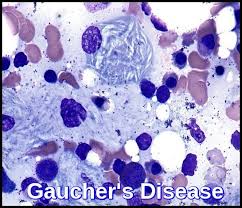
a rare genetic disorder of monocytes and macrophages
alpha-glucocerebrosidase deficiency
an enzyme that splits glucose from glucosylceramide in cells
causes an accumulation of cerebroside
found in bone marrow but NOT in peripheral blood smears
cells are large, have 1-3 eccentric nuclei, and wrinkled cytoplasm
types:
type 1: most organs are involved, but not the brain
type 2: brain involved
some patients can live a possibly normal life while others have premature deaths
What is Gaucher Disease?
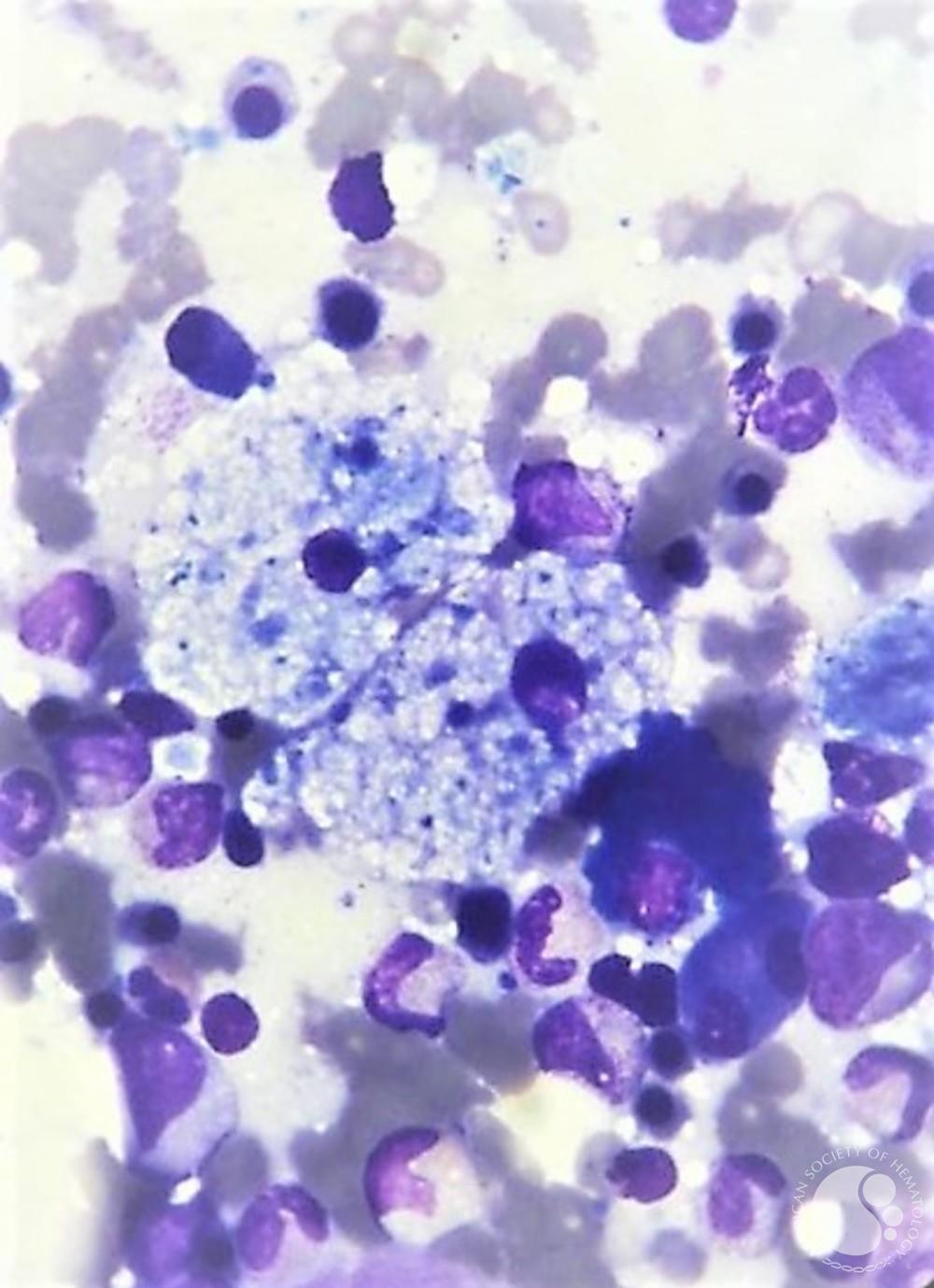
a group of monocyte and macrophage diseases
3 types:
type A and B:
sphingomyelin accumulates in cells deficient in the enzyme sphingomyelinase, affecting the function of the involved organ
common in Eastern European and Jewish populations
type C:
inability to metabolize cholesterol, causes accumulation in the liver and spleen
common in Puerto Ricans and Spanish populations
PBS shows pick cells, cells that have foamy-looking cytoplasm
What is Niemann-Pick Disease?
a technique used to decrease the concentration of a solution in a sequence of dilutions with a constant dilution factor
used in immunology to determine the titer of antigens or antibodies in a sample
What is serial dilution?
Treponema pallidum
What is the bacteria that causes syphilis?
stands for T. pallidum Particle Agglutination
it is a confirmatory test used to diagnose syphilis
uses indirect/passive agglutination
the antigen used is gelatin particles sensitized with T. pallidum
the antibody we look for in patient serum is Anti-T. pallidum
What is TP-PA?
stands for Rapid Plasma Reagin
a test that screens for nonspecific reagin (antibodies produced in syphilis) in patient plasma
indirect/passive agglutination test
charcoal particles are coated with antigen
false positives are possible
What is an RPR test?
Venereal Disease Research Lab test
an indirect/passive test that screens for nonspecific reagin antibodies in patient sample
procedure:
sample (either serum or CSF) is heated for 30 minutes to inactivate complements
reagin in patient sample combines with latex particles coated in cardiolipin antigens
flocculation is observed
a positive result on CSF is diagnostic for neurosyphilis
What is a VDRL test?
Fluorescent Treponemal Antibody Absorption test
a confirmatory test for late neurosyphilis when patients have symptoms and a negative RPR test
procedure:
whole treponemes are fixed to a slide
patient serum is mixed with non-T. pallidum antigen (to reduce cross reactivity) and added to the slide
fluoroscein-conjugated antihuman antibody is added
What is an FTA-AB test?
T pallidum (variant)
T. pertenue
T. carateum
What are the three other species of T. pallidum?
direct contact with skin or oral lesions
sexually
sharing a bed with an infected person
through the placenta in pregnancy
How is syphilis transmitted?
enters through the mucous membranes or broken skin
spreads to every organ
incubation period is 3 weeks
How does T. pallidum enter the body?
Primary
painless chancre sore develops at entry site, highly contagious
diagnosed with darkfield microscopy
Secondary
rashes and lesions 2-8 weeks after sores, highly contagious
NS abnormalities develop: meningitis, then neurosyphilis
diagnosed via RPR, VDRL, or TP-PA
Latent
asymptomatic, relapse into secondary stage can happen
congenital transfer is the main route of transmission
typically not diagnosed at this stage
Tertiary
granulomas (mass of immune cells) form, CV system and CNS become involved
diagnosed with CSF using the VDRL test
What are the 4 stages of syphilis?
antitreponemal
antibodies the immune system produces specific to T. pallidum
nontreponemal
antibodies produced in response to syphilis, but not specific to T. pallidum
also known as reagin antibodies: always produced in syphilis (may also be produced in other diseases too)
What is the difference between antitreponemal antibodies and nontreponemal antibodies?
darkfield microscopy
direct and indirect fluorescent antibody tests
RPR test
VDRL test
TP-PA test
DNA probes
harvested molecular material from the patient sample is matched to treponemal DNA
ELISA
looks for anti-treponemal IgG antibodies in patient sample that have crossed the placenta to newborn
FTA-AB test
What are the 8 ways to diagnose/screen for syphilis?
nonreactive
patient does not have the disease, or the infection is in the early stages, could be wrong technique by tech or alcohol consumpton
weakly reactive
can be caused by inferior technique by tech, early stage in infection, or biologic false positives
reactive
patient has disease, or could be a biological false positive or inferior technique by tech
How are syphilis test results interpreted?
a reaction that is due to the presence of an antibody not specific to the antigen in the test
caused by another living organism or disease
like lupus, rheumatoid arthritis, hepatitis, etc.
can be seen in RPR and VDRL tests, but NOT TP-PA
What are biological false positives?