Sequence stratigraphy
 Call Kai
 Learn
Learn Practice Test
 Spaced Repetition
 Match
Match Flashcards
 Knowt Play
1/16

There's no tags or description
Looks like no tags are added yet.
Name | Mastery | Learn | Test | Matching | Spaced | Call with Kai |
|---|
No analytics yet
Send a link to your students to track their progress
17 Terms
Define sequence stratigraphy.
The relationship between sedimentation and sea level change is known as sequence stratigraphy.
What are the three factors that are fundametal to sequence stratigraphy?
1) Sea level fall/rise
2)Tectonic uplift /subsidence
3)Sedimentation
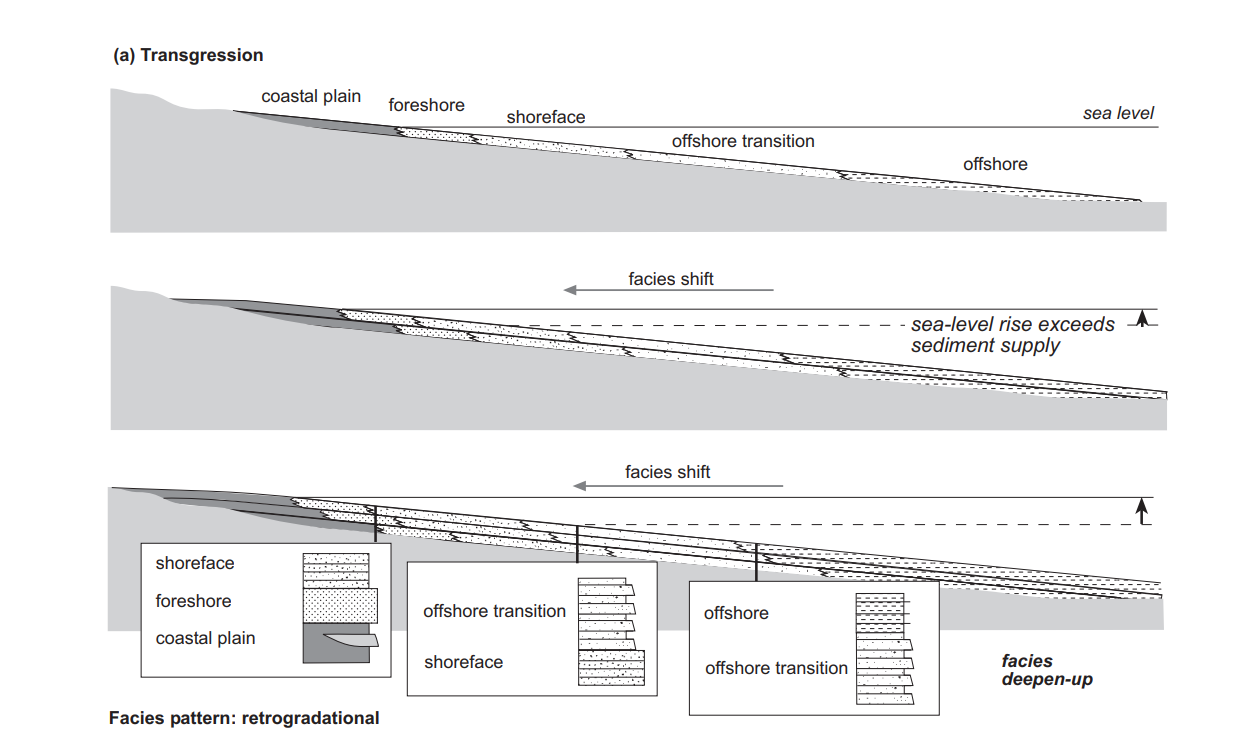
Define transgression.
The shifting of shoreline landwards due to sea level rise is called transgression.
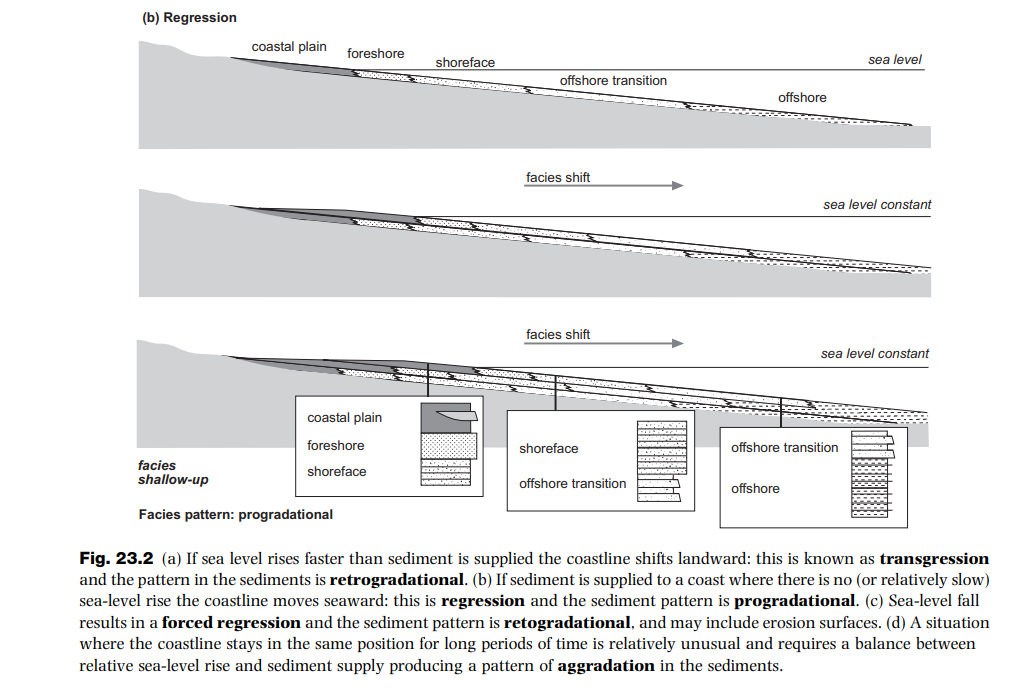
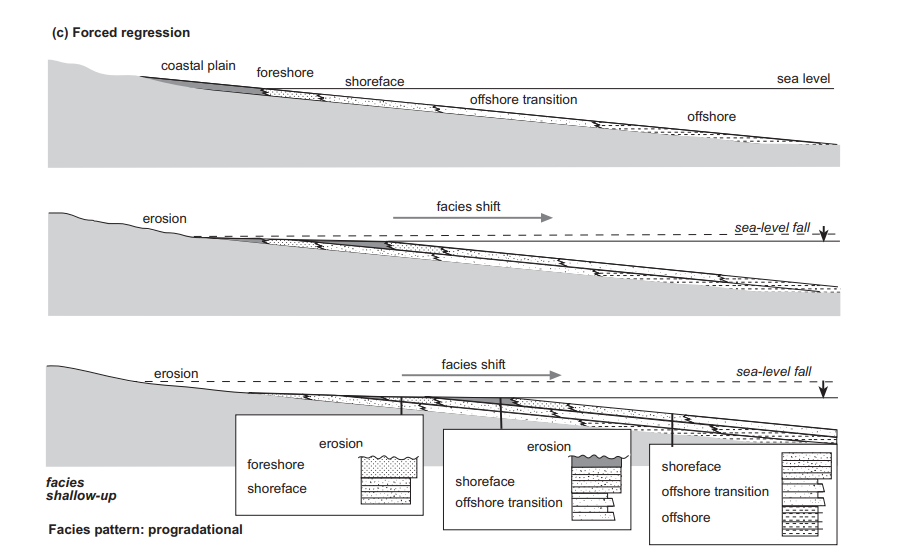
Define regression and forced regression. Underline the difference between the two.
The shifting of shoreline seaward due to sedimentation is called is called regression whereas the shifting of shoreline seaward due to a relative fall in sea level is called forced regression.
In case of forced regression, the sea level has to fall.
However, regression can take place even when the sea level is rising, given that sedimentation is high enough to shift the shoreline seaward.
Transgression with diagram
Sea level rise exceeds sediment supply. Sedimentation<accomodation space
Facies deepen up.
Regression with diagram
Shoreline shifts seaward due to sedimentation.
Sedimentation>Sea level rise.
Progradational pattern of facies.(coarsening upward)
Forced regression with diagram.
Erosion takes place.
No deposition of sediments.
Shoreline shifts seaward due to sea level fall.
Progradational pattern of facies.
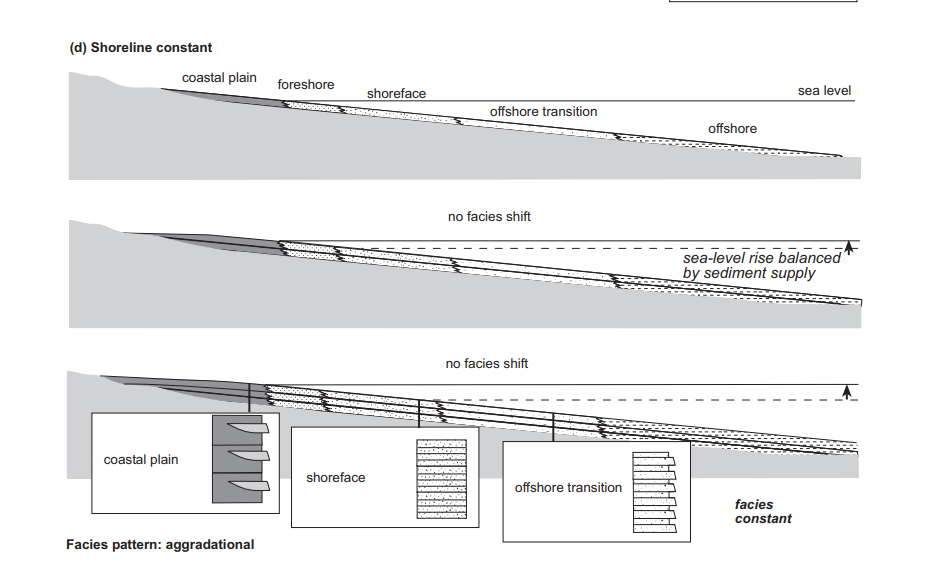
Shoreline constant
Sediment supply=Sea level rise(Accomodation space=Sediment supply)
Constant facies.
8 cases of sediment supply and sea level change.
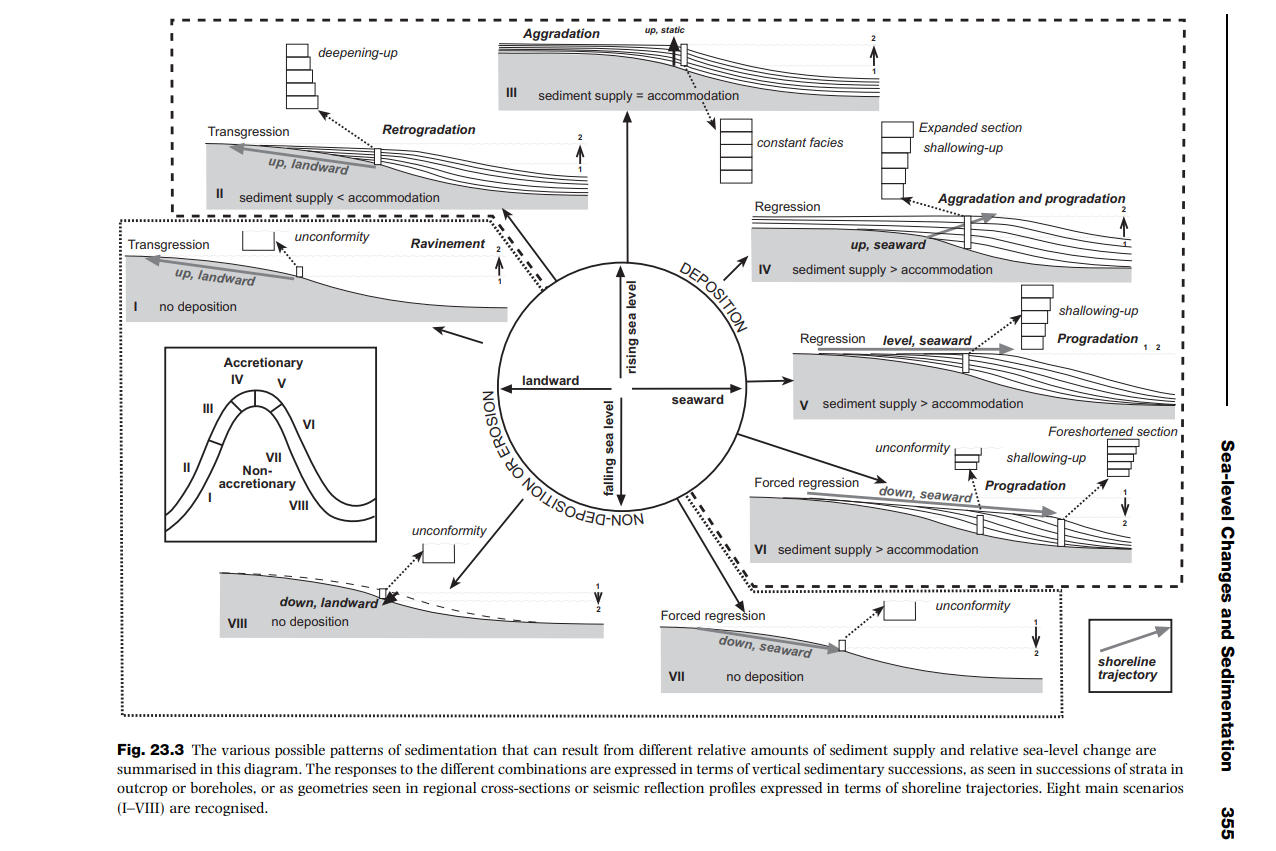
1st case. Transgression without deposition
Sediment supply is very low. The shoreline shifts up and landward.
Transgression takes place.
No deposition takes place. There is possibility of erosion.
Ravinement.
Transgression with deposition.
Sediment supply<Accomodation space
Retrogradational facies pattern(deepening up)
Shoreline shifts up and landward.
Aggradation
No transgression or regression.
Sediment supply=accomodation space.
Constant facies.
The shoreline moves up, remaing static horizontally.
Regression with aggradation and progradation.
Sediment supply>Accomodation space
The shoreline shifts up and seaward
So aggradation and progradation take place together.
The facies pattern is progradational.
Regression with only progradation.(no aggradation)
The shoreline is level. Shifts seaward.
The facies pattern is progradational.
Sediment supply >Accomodation space.
Forced regression.
The shoreline shifts down and seaward.
Faceis patern is progradational.
Sediment supply>Accomodation space.
Forced regression without any deposition.
the shoreline shifts down, seaward.
Final case. where the sea level drops but erosion takes place faster in the shore.
The shoreline shifts landward despite sea level fall due to rapid erosion at the coast