skeletal system
 Call Kai
 Learn
Learn Practice Test
 Spaced Repetition
 Match
Match Flashcards
 Knowt Play
1/62

There's no tags or description
Looks like no tags are added yet.
Name | Mastery | Learn | Test | Matching | Spaced | Call with Kai |
|---|
No analytics yet
Send a link to your students to track their progress
63 Terms
How many bones do humans have?
Adults - 206
Kids - 300
What are the several roles of the skeleton?
Protect organs
Provide shape
Aid in movement (with muscle)
produce red and white blood cells
maintains homeostasis of stored minerals like calcium
What are the different categories in bones?
Axial - centre, skull, spine (vertebrae), ribs (thoracic rib cage + sternum)
Appendicular - limbs, shoulder girdle and hip girdle
long
flat
irregular bone
sesamoid bone
In depth, what makes up the axial skeleton?
skull = cranium + facial bones
Hyoid = swallow +holds tongue
Ribs + sternum =. 25 bones
Spine = 33 vertebrae
what is the thorax?
between neck and above abdomen
What are the 4 areas in the axial? (based on location)
Cervical
Thoracic
Lumbar
Sacral
How many bones are in the axial skeleton?
80
What makes up the appendicular skeleton?
The shoulder girdle - Scapula (shoulder blade) + Cavicle (collar bone)
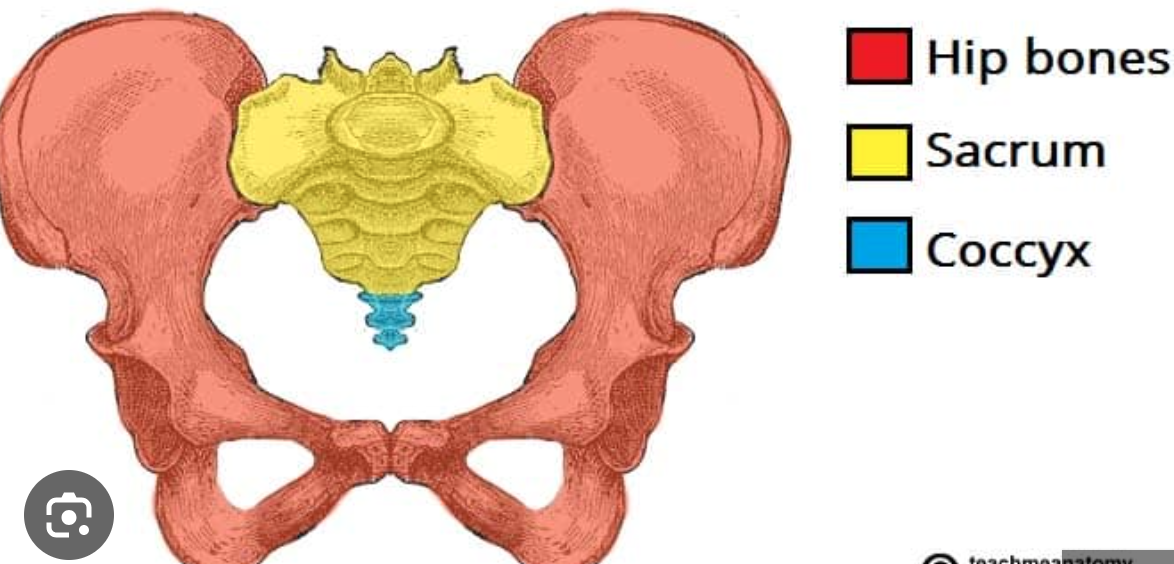
The Pelvic girdle - Hip, Sacrum, Coccyx
What are the three different types of bone (describing internal texture)?
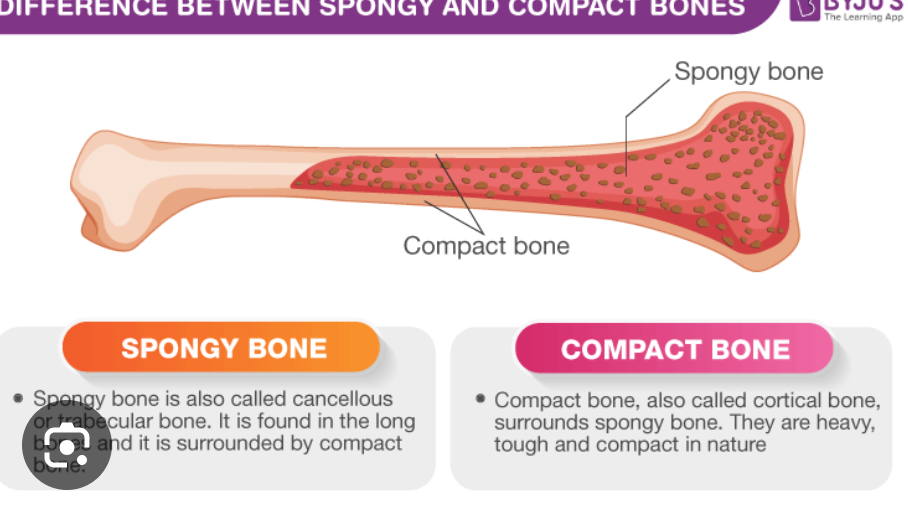
Cancellous
Woven
Compact
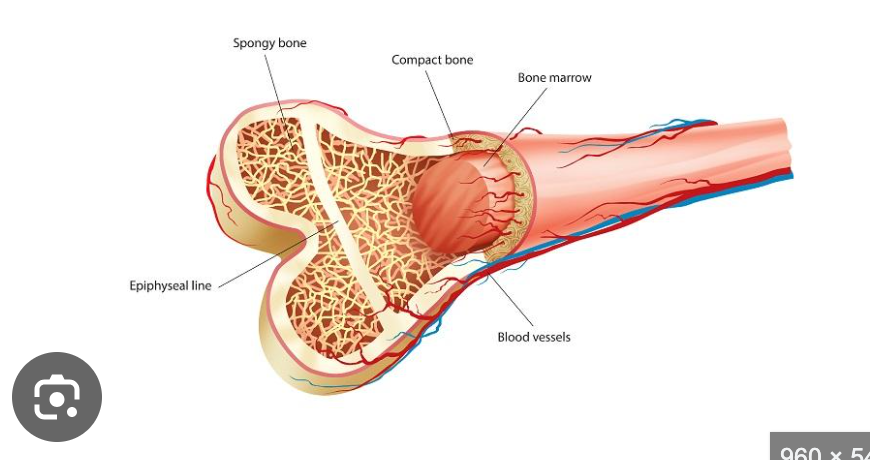
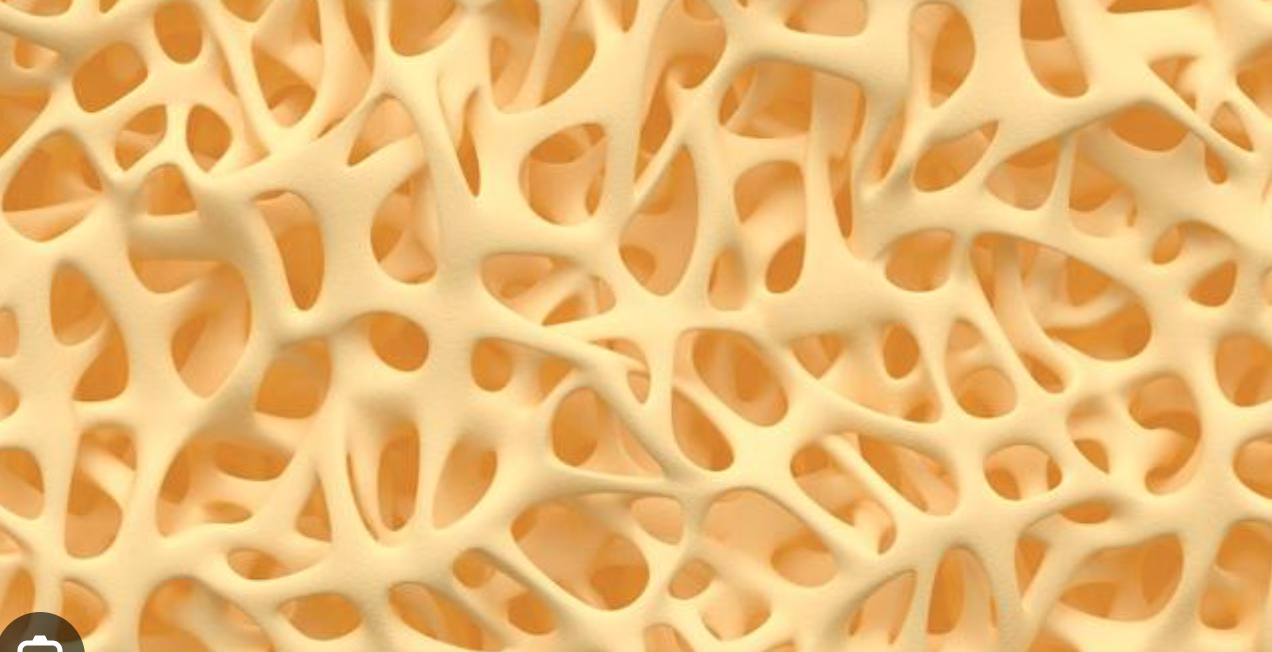
Describe cancellous bone
Honeycomb-spongy texture
Usually found at the end of long bone
Describe woven bone
irregular arrangement of collagen
Describe compact bone
Dense outer shell of bones
What type of cells in the bone marrow are responsible for RBC and WBC production
The bone marrow contains hematopoietic stem cells which differentiate into red and white blood cells
The bone marrow is responsible for __% of RBC production
100%
The bone marrow is responsible for __% of WBC production
70%, the rest is made in the lymph system
What is the lifespan of RBC?
120 days, approx 1% of rbc replaced per day
What is the lifespan of WBC?
A few hours, approx 1.5 billion per day
What is the majority of bone composition? aka what is it made from?
Calcium and Phosphorus
is 65% of bone composition
The skeleton is the bodies largest storage of minerals
What are calcium and phosphorus used for?
Nerve conduction
Muscle contraction - link why granny needs strength training, more ca means need increase bone density to store it, less likely to break
Hormone regulation - link why exercise is good for mood, more minerals absorbed that aid mood
What are the three main bone cells?
Osteocytes
Osteoblasts
Osteoclasts
What is the role of osteoclasts?
To break down old and damaged bone, this makes space for new bone to be made by osteo___
it does this by releasing enzymes, the nutrients are then releabsorbed into the bloodstream
resorption
What is the role of osteoblasts?
to grow new bone
to heal damaged bone
to reshape bone as you age
builds extracellular matrix
What is an osteocyte?
A bone cell that monitors bone strength and signals to osteoblasts and osteoclasts when to work
They used to be osteoblasts, they been promoted over time
What is woven bone
rapidly formed bone which is weaker and usually replaced by lamellar bone by age 4
Used in: babies, kids, fractured healing
What are the three different types of joints?
Fibrous
Synovial
Cartilaginous
Name where we would find the three different types of joints:
Synovial - between a bone and a ligament/muscle (this one enables movement fr)
Fibrous - in your skull (this is dense and does not aloud movement)
Cartilaginous - Between the vertebrae in your spine, or between your ribs and your sternum (this one allows a little movement) (crucial to inhale and exhale, or full range of spinal movement)
Describe a fibrous joint?
a dense connective joint that prevents movement
What is lamellar bone?
Mature, highly organised strong bone -
A - Cortical Compact (dense outer layer, makes up 80% of skeleton)
B - Cancellous (described as trabecular or spongy, porous and lightweight, makes up 20% of skeleton, in joints to absorb impact)
What is hematopoiesis?
The process of producing new blood cells, continuously
What are some examples of joint names (that describe movement)?
Ball and socket - full range of movement e.g. shoulder
glide - slides past, slight movement, back of hand
hinge - limit to flex and extend e.g. elbow
pivot - elbow
saddle
candyloid - limit to flex and extend e.g. fingers
What is a ligament?
Dense connective tissues fibres made from collagen
bone x bone
allows limited movement
Has good blood supply, nerve supply and ability to heal
provides proprioceptive input
What is proprioceptive input?
Proprioceptive input is baso your bodies internal ability to sense position and movement, it helps your regulate how much force to use when completing an activity, baso coordination but without eyes
point is to to enhance movement and minimse injury
describe cartilage?
Highly specialised tissue made up of high water contents, glossy look
No specific nerve or blood supply x no ability to heal
2 types: hyaline and fibro
Hyaline cartilafge:
Smooths movement, reduce friction, protects joint surfaces, strong
Fibro cartilage:
Shock absorber - spongy, strong
Describe a tendon
Muscle x bone
Contains Golgi-Tendon Organs (GTO) which monitor the amount of force being used in the muscle, this way it can grow proportionately to the muscle to prevent microtears and injury (like if the muscle was way bigger than the tendon)
Contains collagen
limited blood supply, limited healing abilities
What is the level of strength in a bone attributed to?
80% of it is density aka how much calcium and phosphorus
20% is its architectural structure
so baso how many layers, and how it was built infrastructure
What is the relationship between physical activity and bone density?
Strong relationship between exercise and bone mass
Skeleton responds in a site- specific manner to mechanical loading i.e. density in areas where there is greater loading or stress
What is the significance of exercise in relation to bone density in adolescence and childhood
Adolescence/childhood = when bone is actively being built and shaped (osteoblast/clast/cyte at work fr) so exercise at this point in time = more efficient building bone density = reduce likelihood of develop osteoporasis when older
What is Wolff’s Law?
The bones ability to grow, change shape and size due to mechanical demands placed on it
How long does bone remodelling/wolffs law take?
4-8 Months
it is a cyclical process
Define Resorption
The breakdown of bone via osteoclasts releasing enzymes
Releasing minerals e.g. calcium into blood stream
Problem occurs when rate of resorption out does rate of
can be caused by lack of estrogen (post menopause) - effects women more
Lack of exercise
10 days
Describe Bone Matrix Formation:
Osteoblasts secrete organic compounds mainly collagen (90%) which will interact with calcium and phosphorus to rebuild structure
10-20 days
Describe Mineralisation
the depositing of calcium and phosphor into this structure
3-4 months
Describe osteoporosis (in physical stature)
Reduced compact bone
Bigger pores in cancellous bone
Weaker cancellous bone, less minerals (last 2 called pathological)
What age groups may be more at risk of osteoporosis?
Women over 65 (menopause, lack of estrogen, loop of hormone regulation)
Men over 75 (men have more muscle, hence less likely, 1 in. 5 men v 1 in 3 women)
What lifestyle choices may increase risk of developing osteoporosis?
people with eating disorders (lack of calcium and vit D intake through food)
People with long term chronic conditions intake steroids
Smokers/Alcoholics long term
People w less physical activity
What percent of people with osteoporatic hip fractures will fully recover?
30%
Describe the structure of a bone from joint to joint
Hyaline cartilage - on edge of bone/at joint, protection
Epiphysis - rounder section at end of bones (x2) more cancellous
Diaphysis - Long section (shaft), mainly compact bone
Medullary canal - contains fatty yellow bone marrow aka rbc/wbc prod.
Nutrient artery - supplies the bone shaft, also where nerves are
Describe the periosteum
Membrane of blood vessels and nerves that surrounds bone
This outer shell of the bone
Containing nerve endings and blood supply
It’s job is to supply the bone with blood/nutrients
Where sense of feeling derives from
Also why pain from fractures is so painful
Role: heal fractured bones, it has osteoprogenitors which create osteoblasts
They are most active in kids, then in adults when sum breaks theyre woken up
Thicker in kids
Describe the outer and inner layer of the periosteum:
Outer: Protector, collagen fibres + nerve and blood supply + attach to tendon
Inner: Contains osteoprogenitor cells aka osteoblasts and osteoclasts and blood vessels
What is the effect of menopause on bone resorption?
Estrogen levels drop
Estrogen was a key inhibitor to bone resorption
What is the difference between an osteoblast and a fibroblast?
Osteoblast - produces bone matrix
fibroblasts - produce collagen to maintain general connective tissues
Name somewhere on a bone you would not find a periosteum
where joints are
How does testosterone affect bone growth vs how does oestrogen affect bone growth in puberty?
Adult men tend to be taller than adult women
male puberty happens later than female puberty
aka male bones have more time to grow
Oestrogen is responsible for female wider hip pelvic bone
What is the role of calcitonin and parathyroid hormone?
Calcitonin hormone- increase bone uptake of calcium, reduce ca in blood
Parathyroid hormone - decreases bone uptake of calcium, increase ca in blood
What is an epiphyseal line?
Epihyseal line was an epipypheseal plate as a child, it baso allows the bone to grow in length, once hormones stopped the bone from grrowing in length, all thats left is the line
What is the name of the fibers connecting the periosteum to the bone
Sharpey’s fibers or Perforating fibers
On a microscopic level describe the structure of an osteon
in the centre - blood vessels (Central Canal/ Haversian Canal)
around it is layers of bone tissue called lamellae
Inbetween each lamellae is gaps called LACUNA
These gaps contain osteocytes
coming across from the centre is tiny canals called canaliculus
this transportation system ensures bones are well vascularised and bones heal fast
What is trabeculae?
Rod like tissue forming spongy texture
What is an osteon
The basic structural unit of a bone:
Haversian canal - lamellae - lacunae - osteocyte
What is a perforating/volkmann’s canal
canals w blood vessels from the periosteum to the central/haversian canal
What is bone remodelling and describe how it works?
Bones are constantly regenerating - this process is called remodelling
So how does it work?
When blood calcium levels drop