[LBBBION] LABACT 8 REVIEWER
 Call Kai
 Learn
Learn Practice Test
 Spaced Repetition
 Match
Match Flashcards
 Knowt Play
1/203

There's no tags or description
Looks like no tags are added yet.
Name | Mastery | Learn | Test | Matching | Spaced | Call with Kai | Chat |
|---|
No analytics yet
Send a link to your students to track their progress
204 Terms
taproot
root system found in dicot plants
fibrous root
root system found in monocot plants
adventitious root
root system developing from the nodes, internodes, base of the stems, and even from the leaves
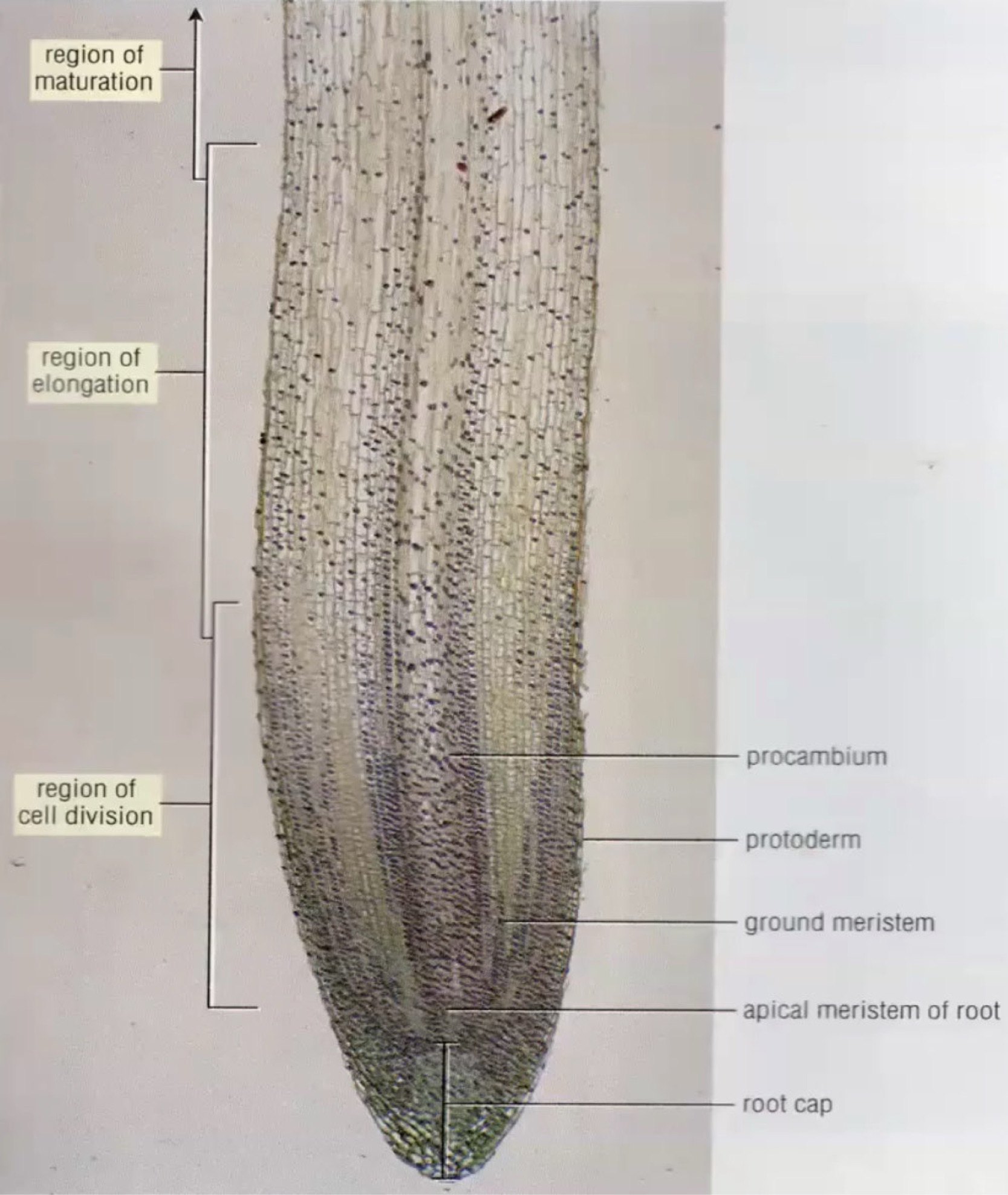
root tip
region where growth in length occurs
root cap
thick layer of cells protecting the root apical meristem
region of elongation
region where cells undergo division and expansion
region of maturation
contains enlarged cells that have now developed certain structural features; aka root hair zone
root meristem
identify the part in red
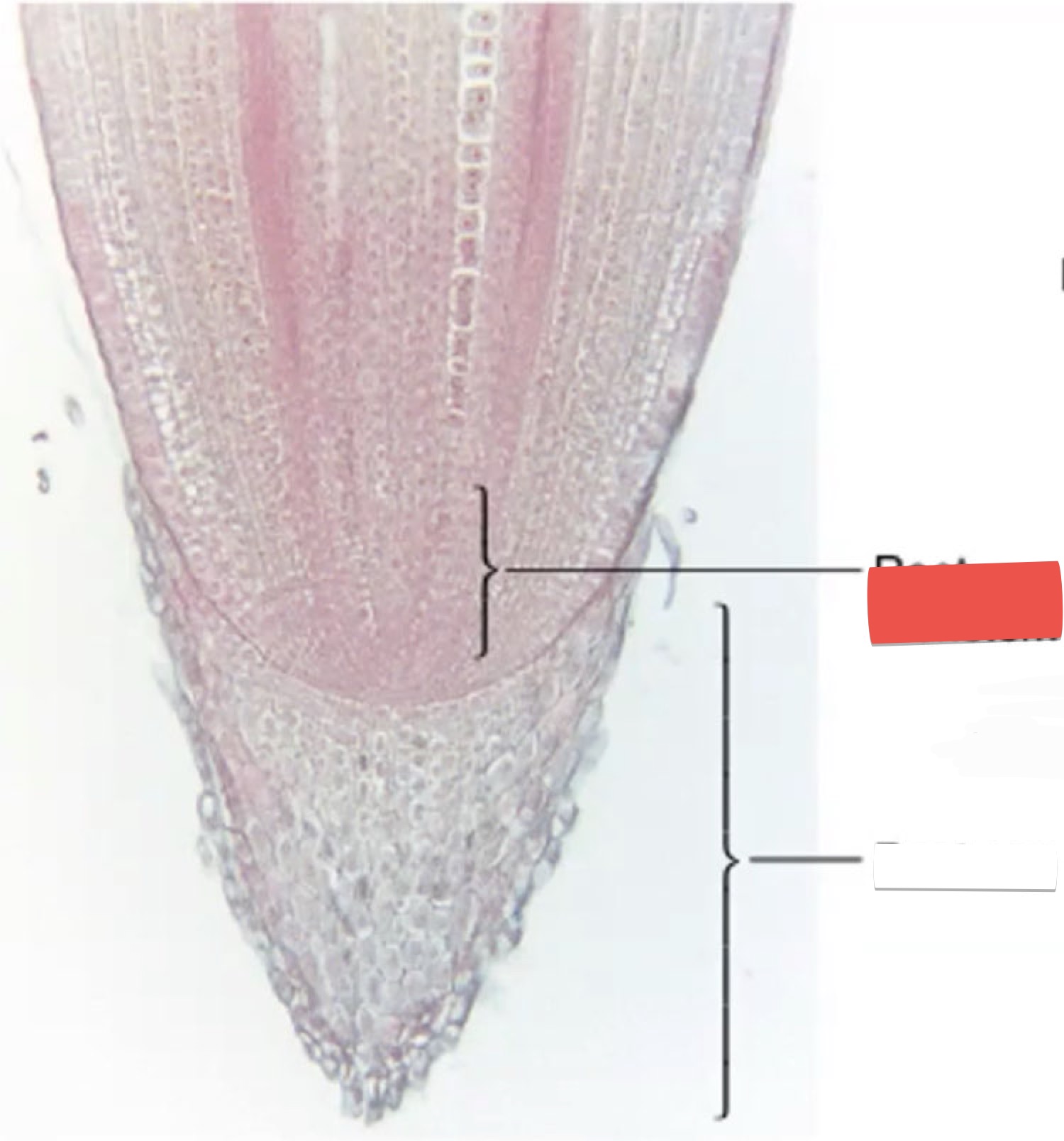
root cap
identify the part in red
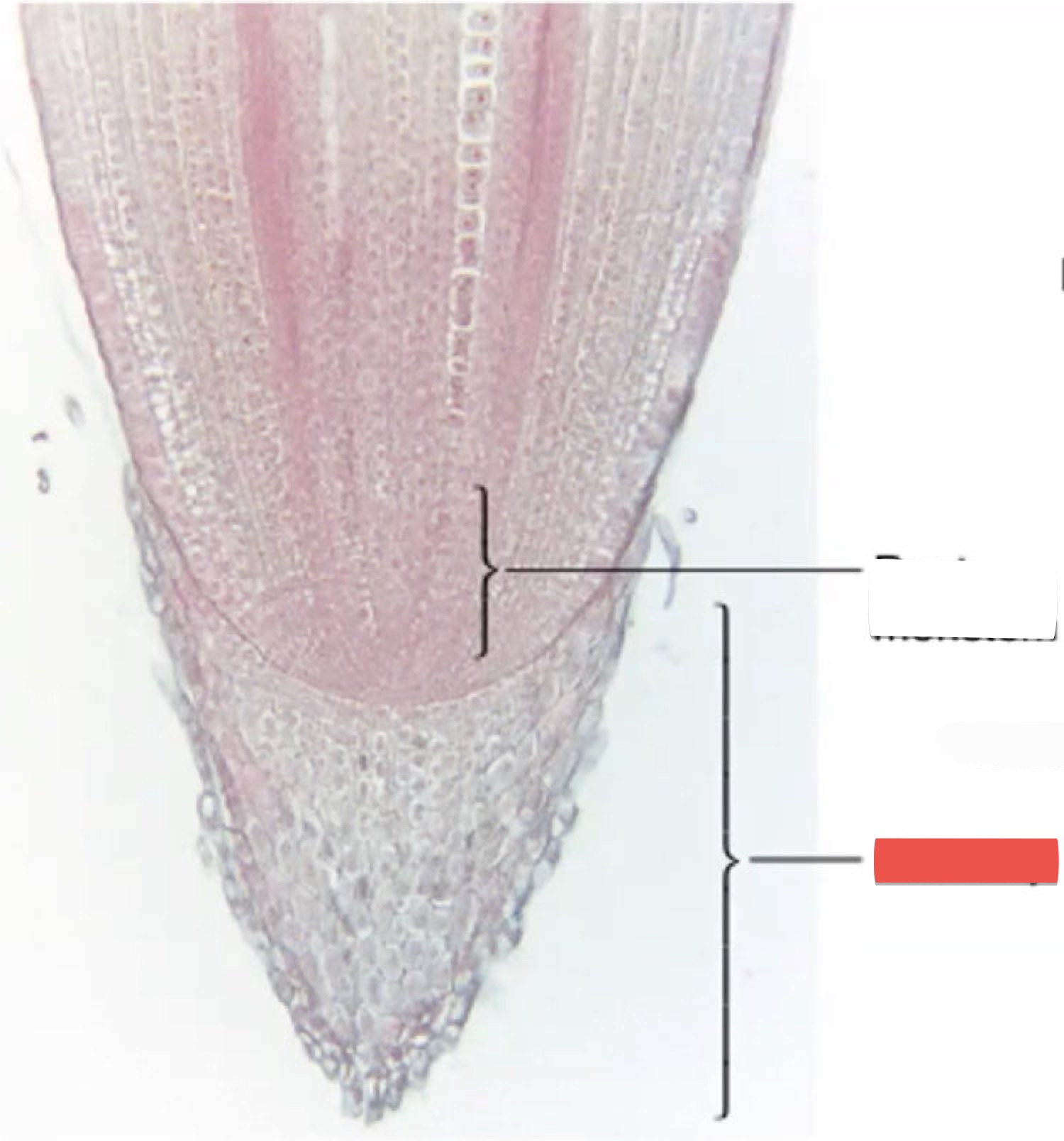
root
identify the part in red
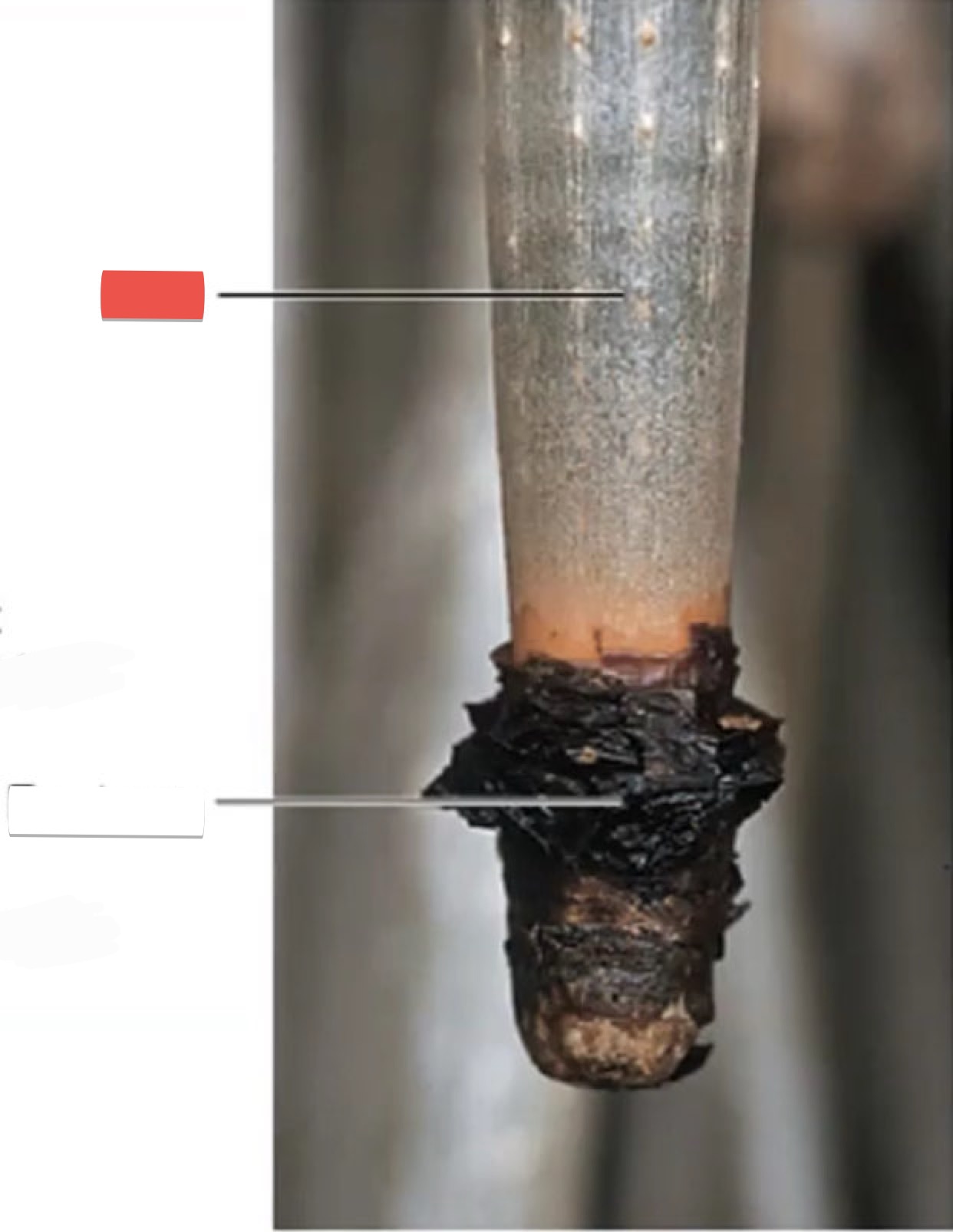
root cap
identify the part in red
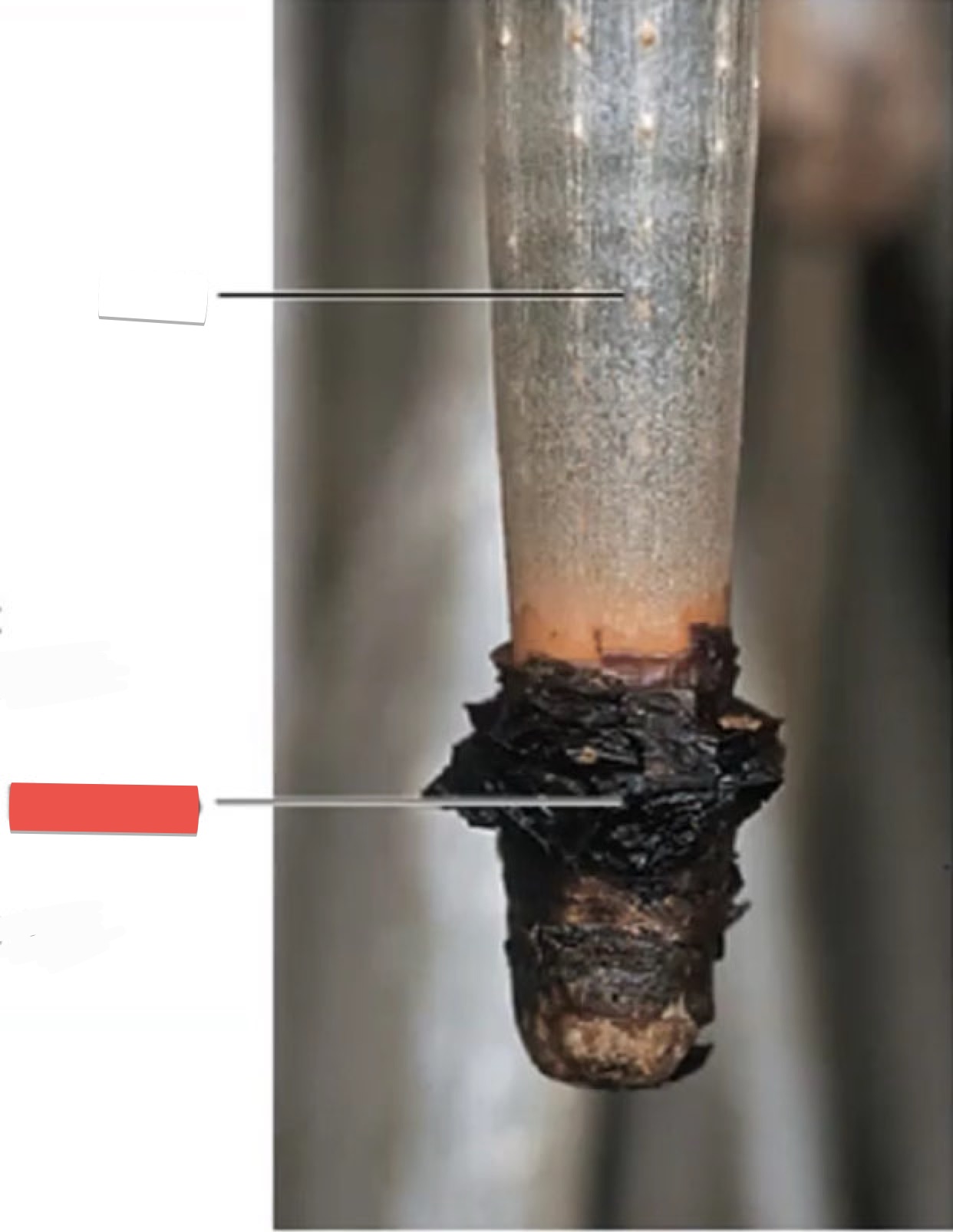
region of maturation
identify the part in red
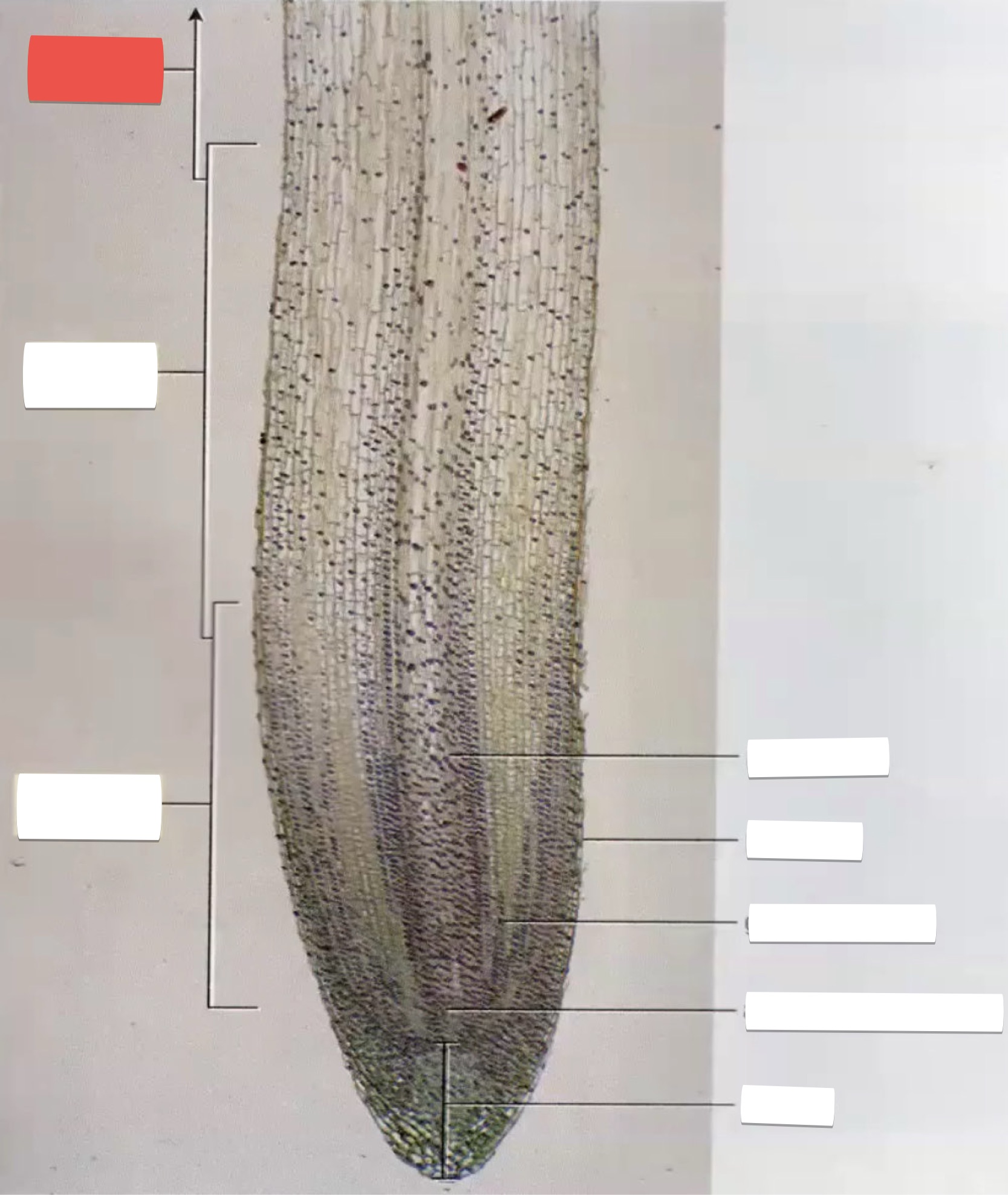
region of elongation
identify the part in red
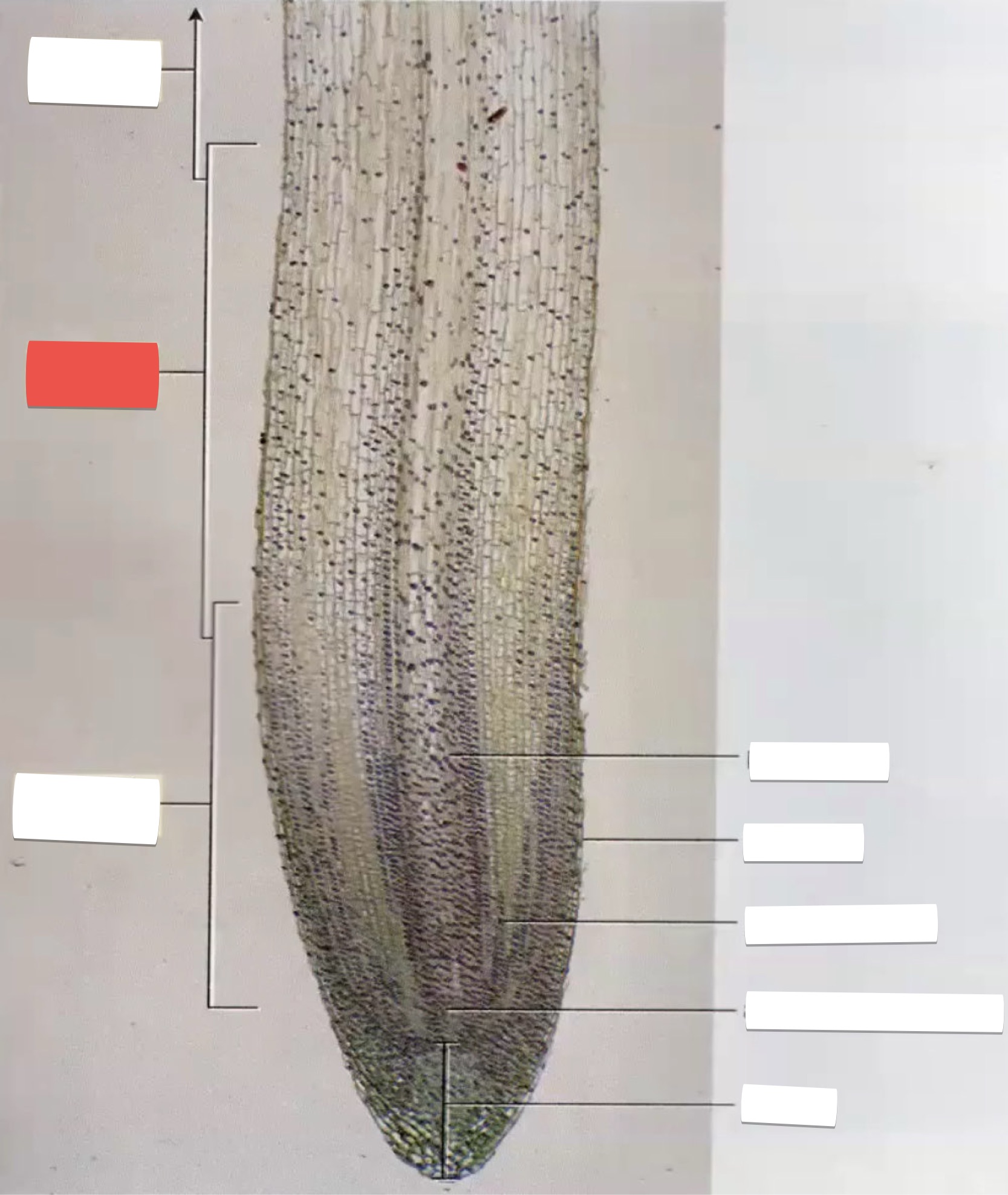
region of cell division
identify the part in red
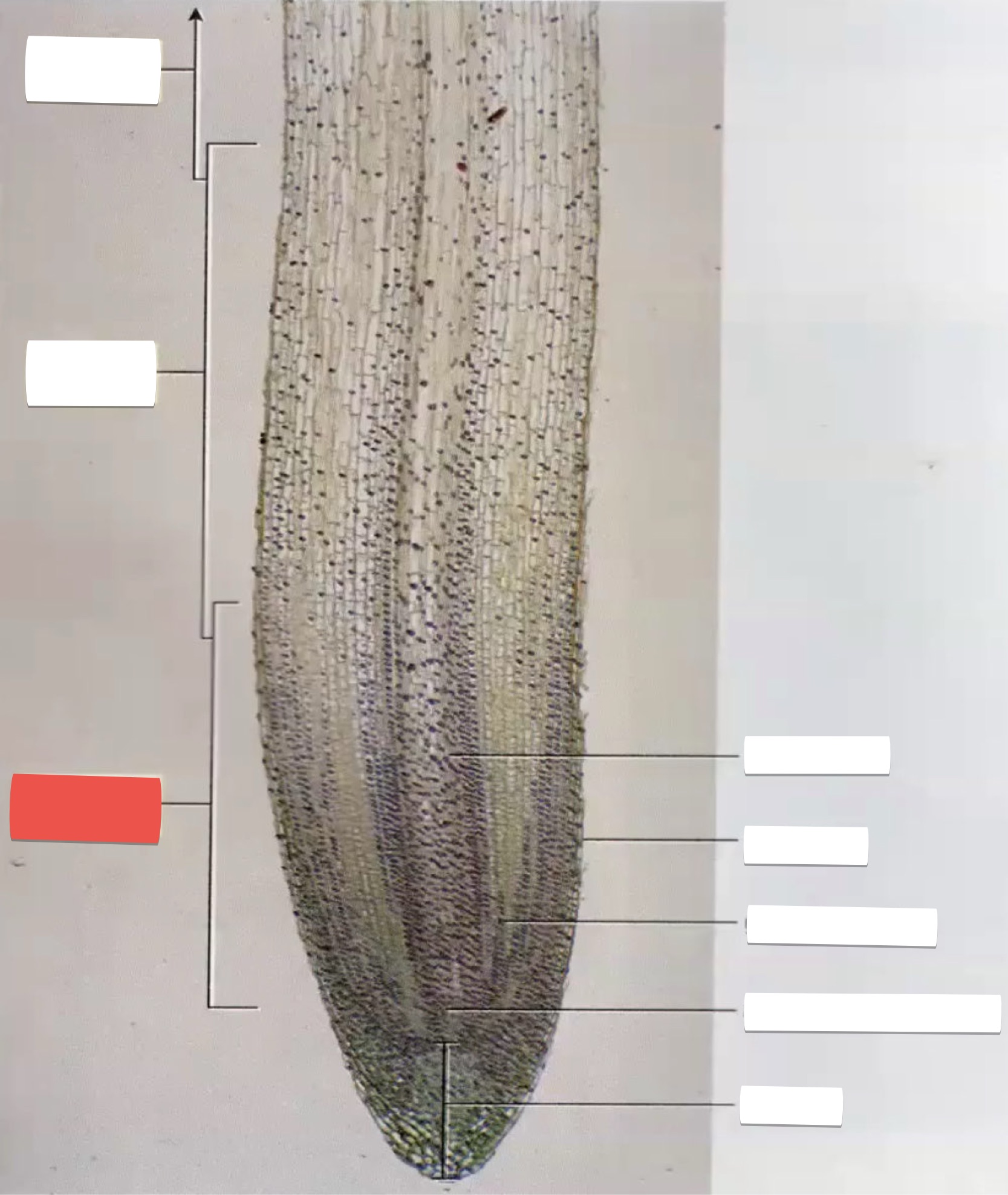
procambium
identify the part in red
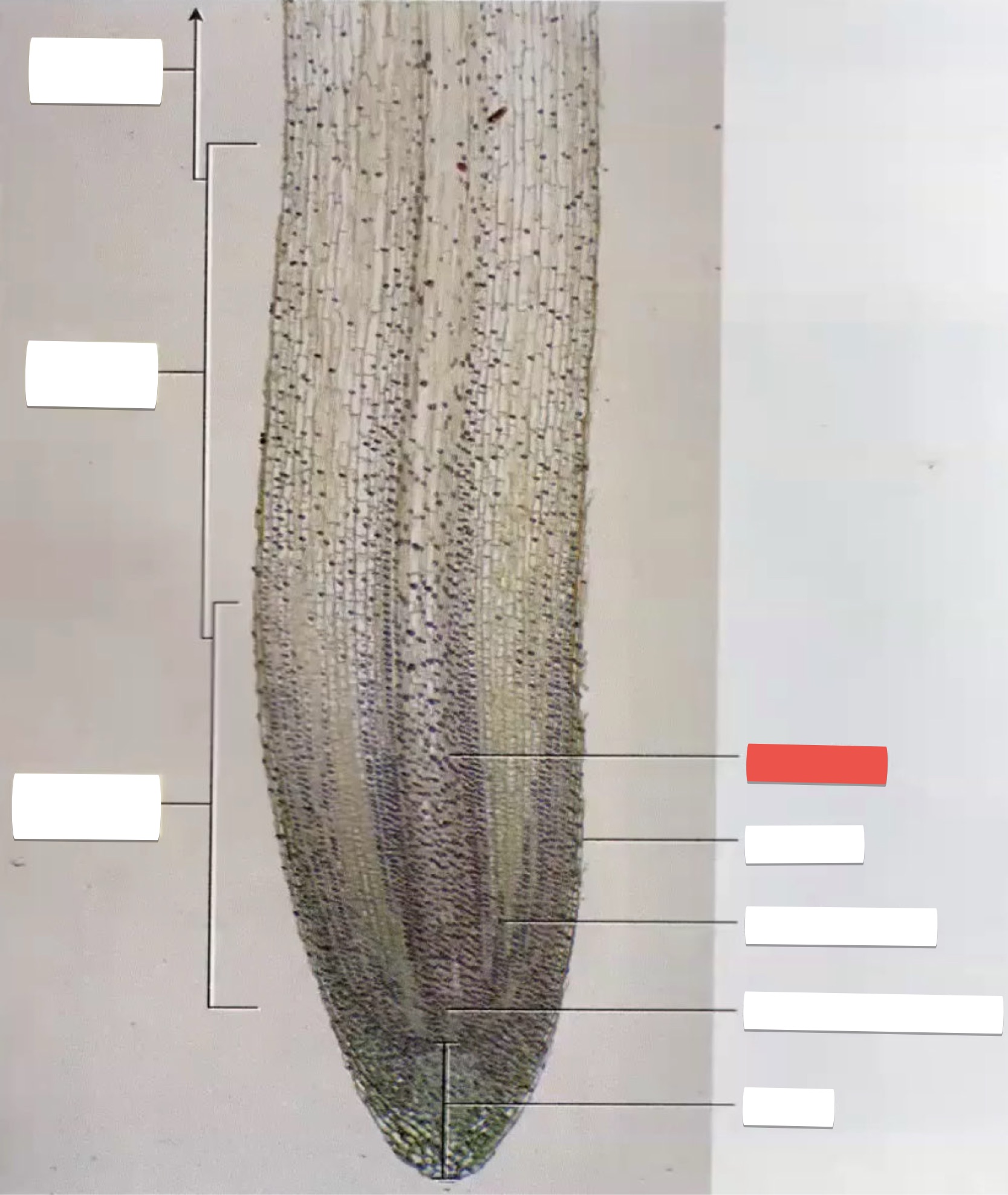
protoderm
identify the part in red
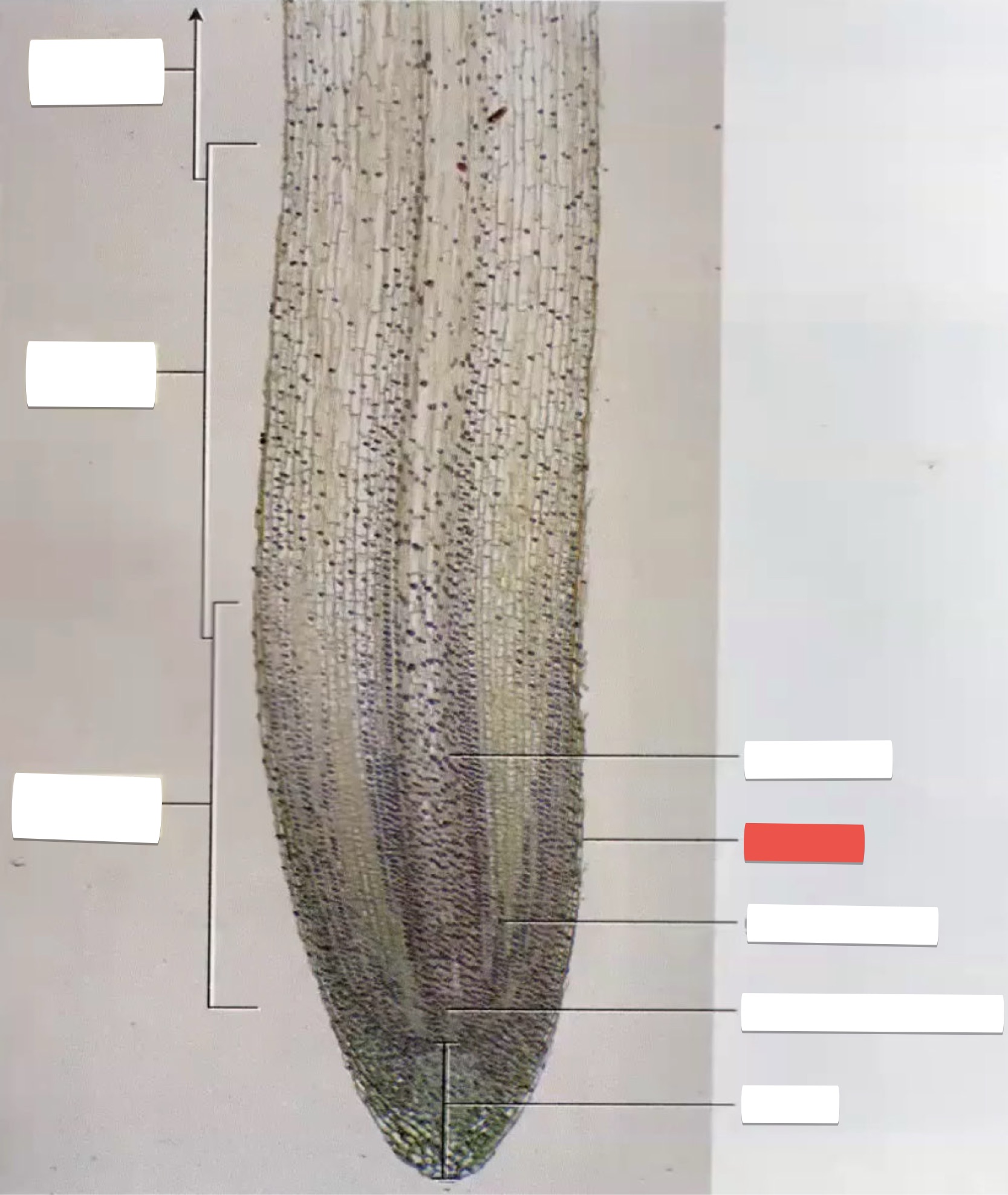
ground meristem
identify the part in red
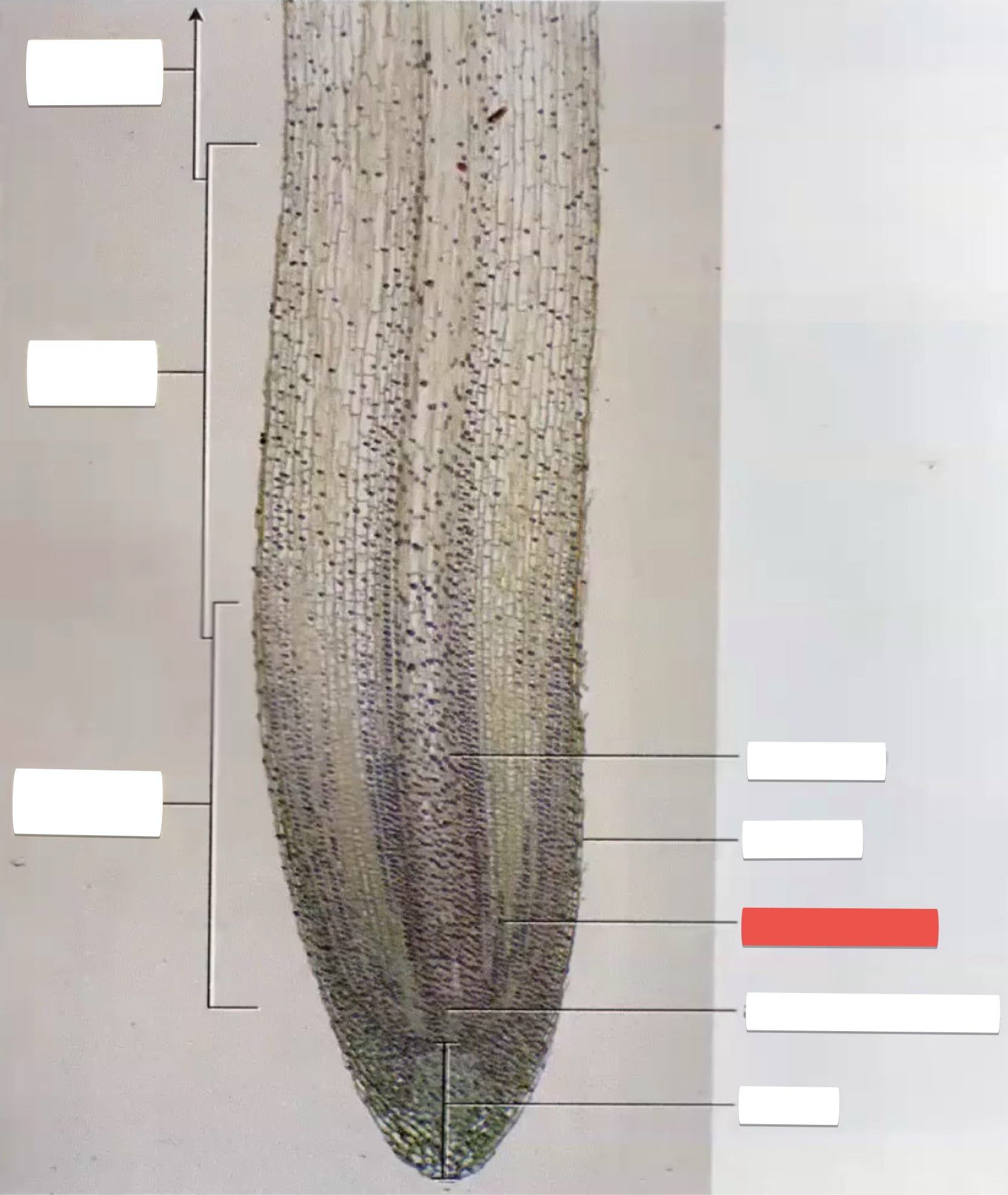
apical meristem of the root
identify the part in red
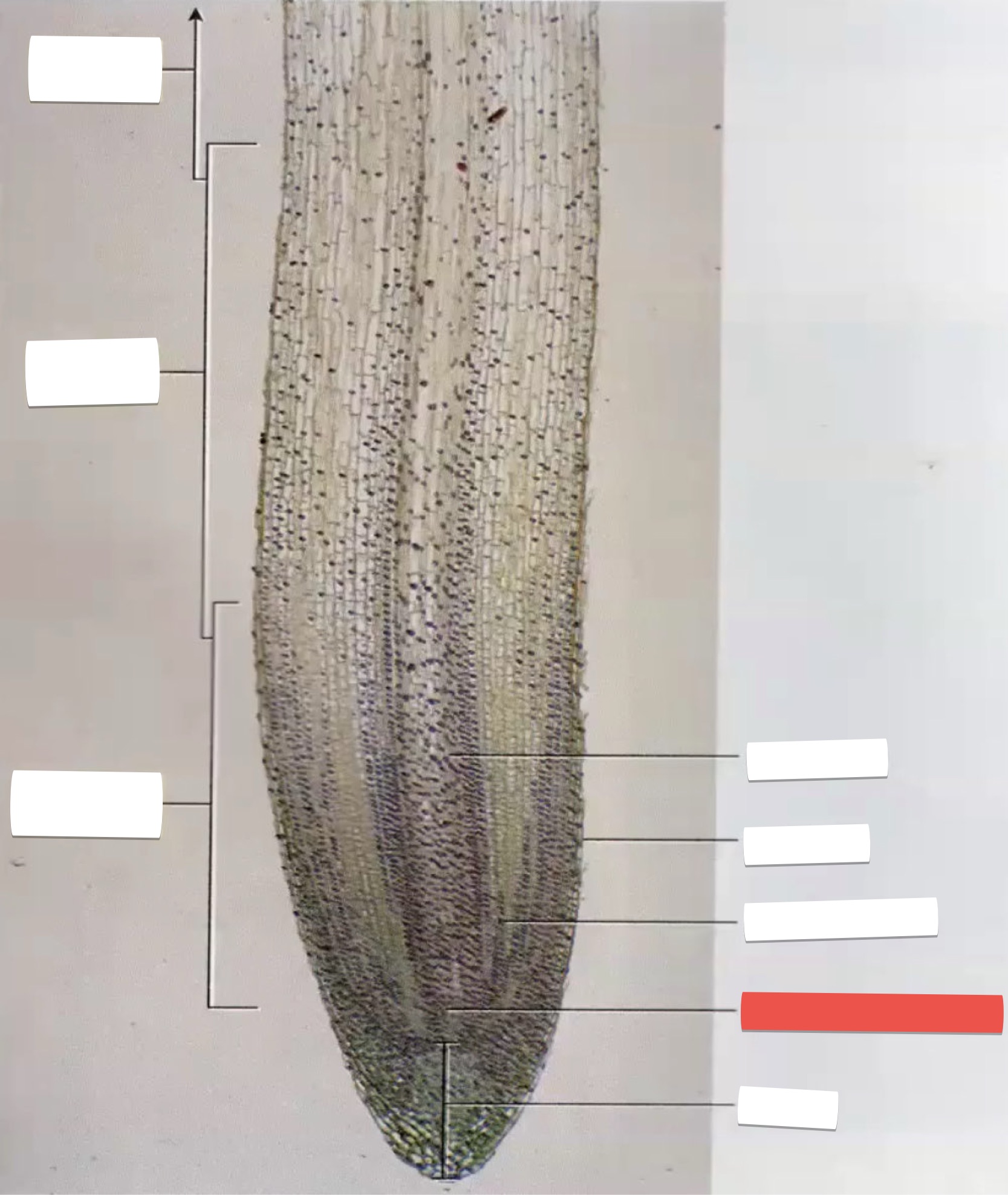
root cap
identify the part in red
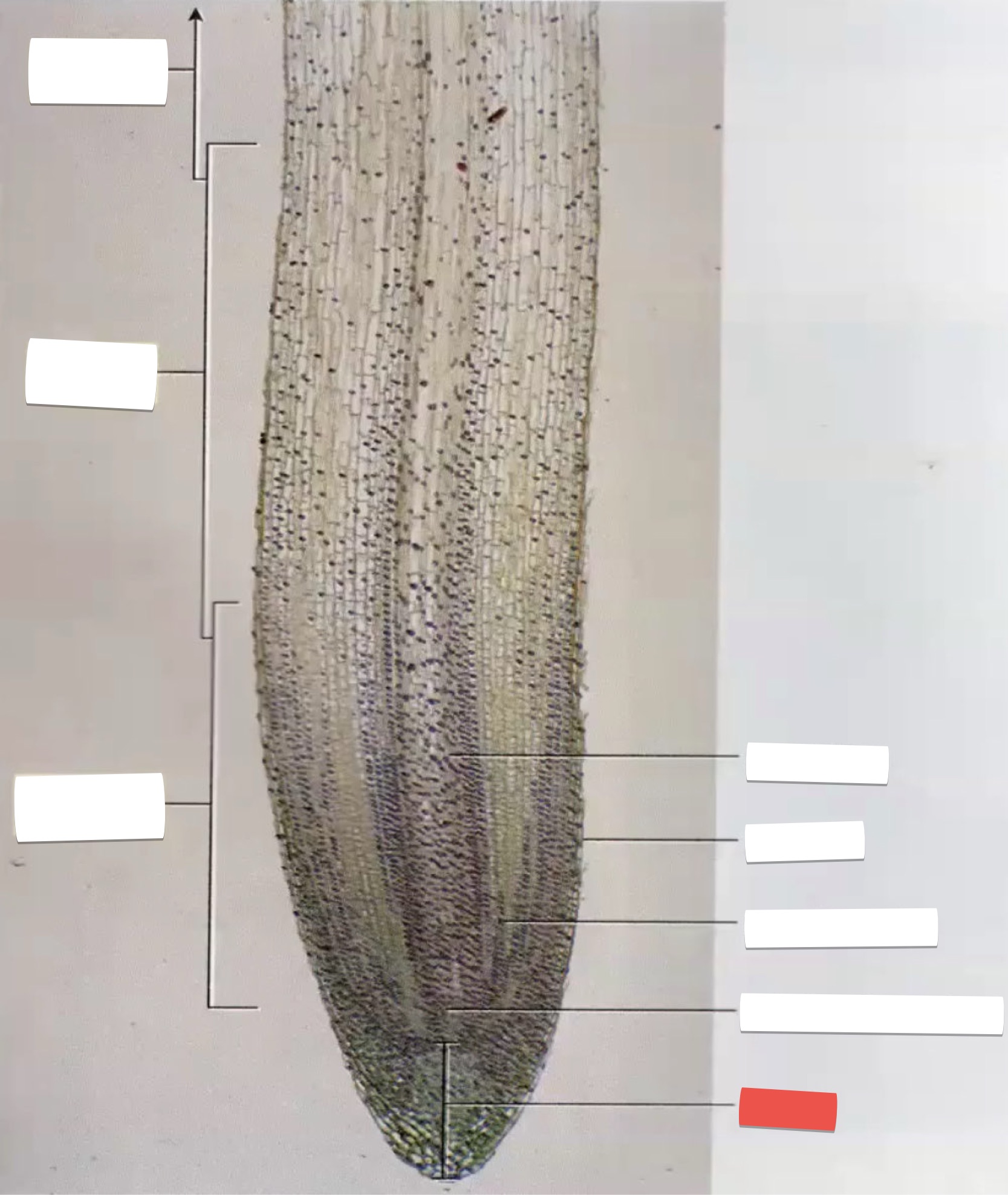
alium (onion) root
identify the specimen
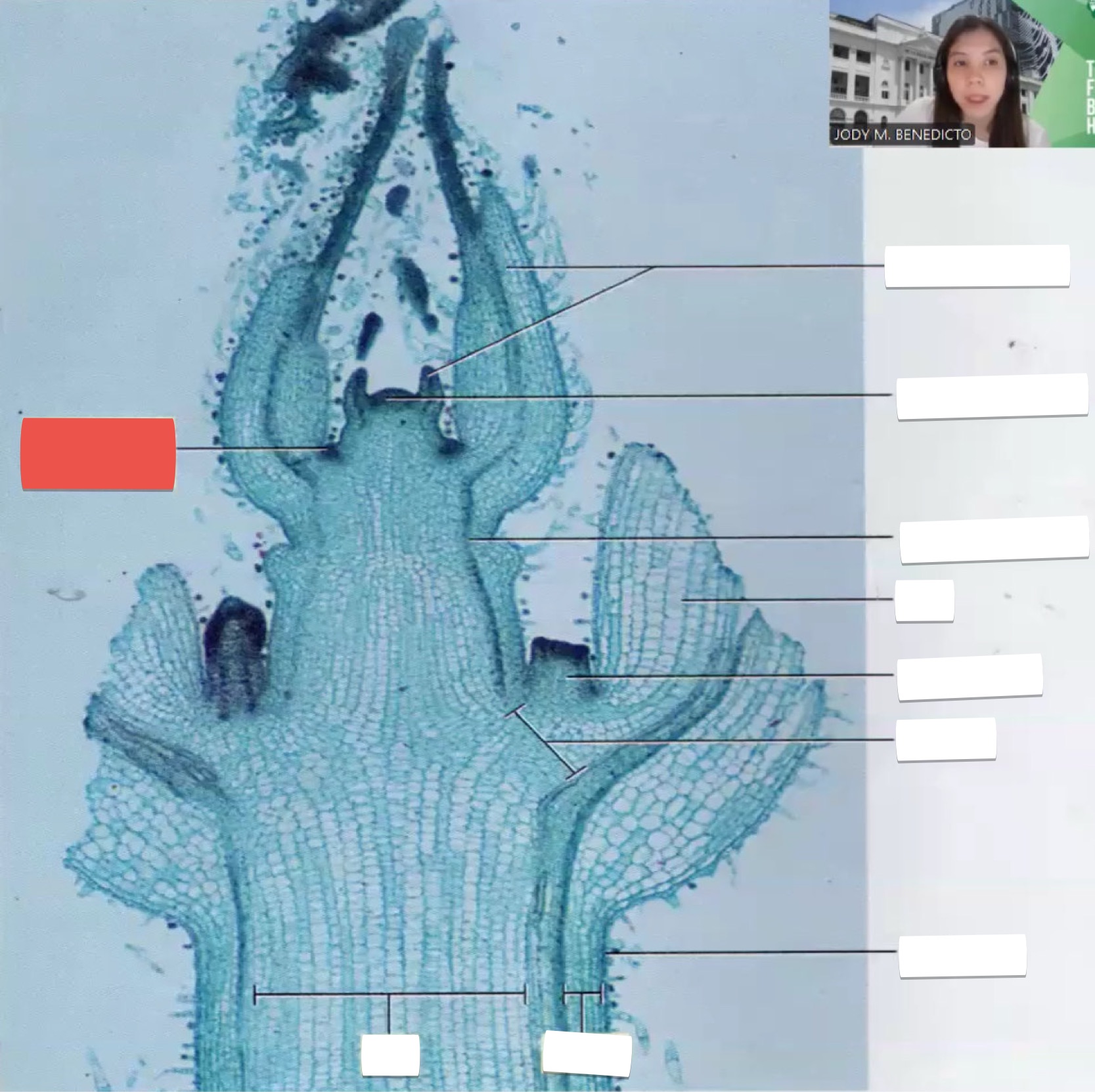
axillary bud primordium
identify the part in red
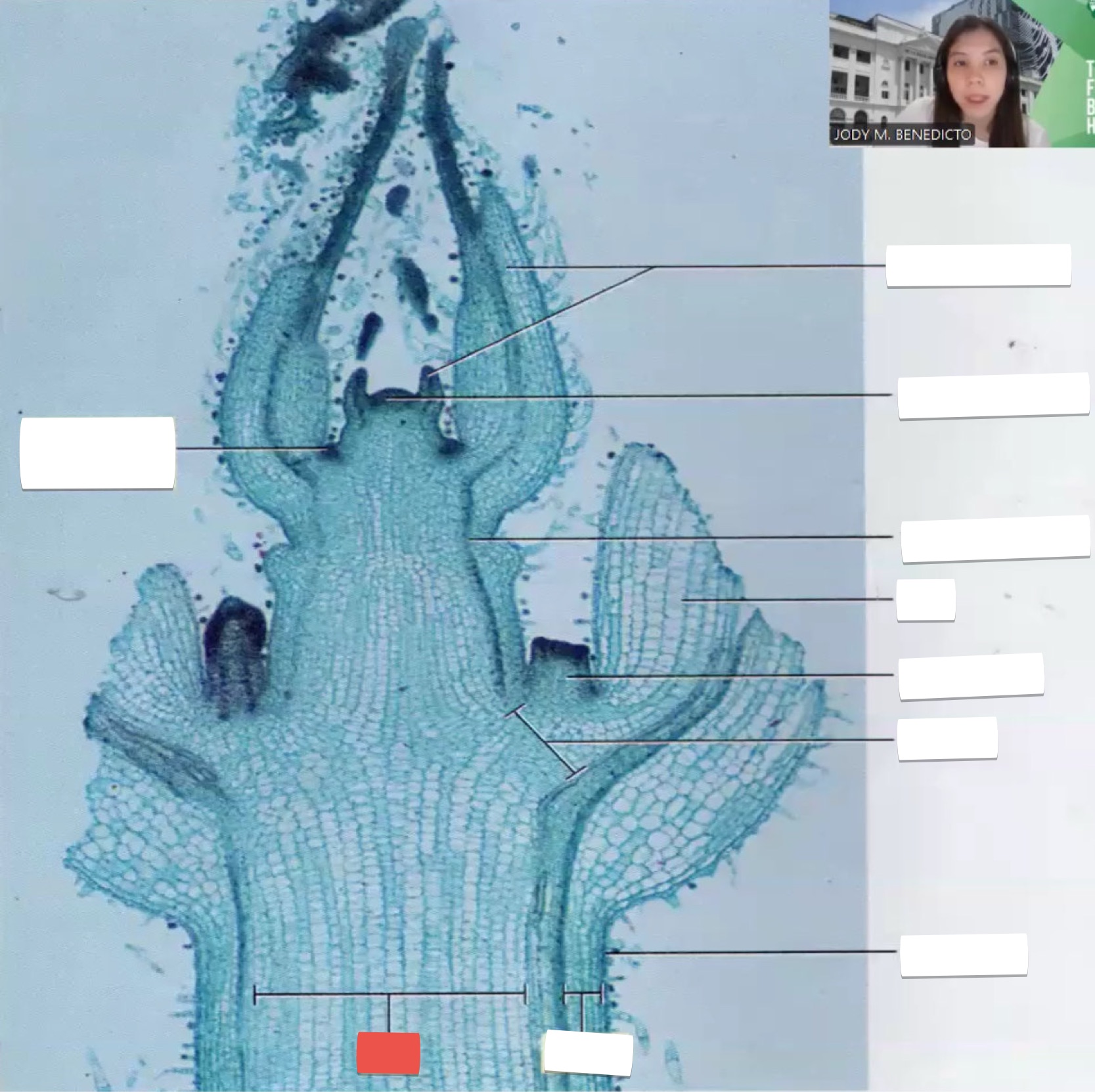
pith
identify the part in red
cortex
identify the part in red
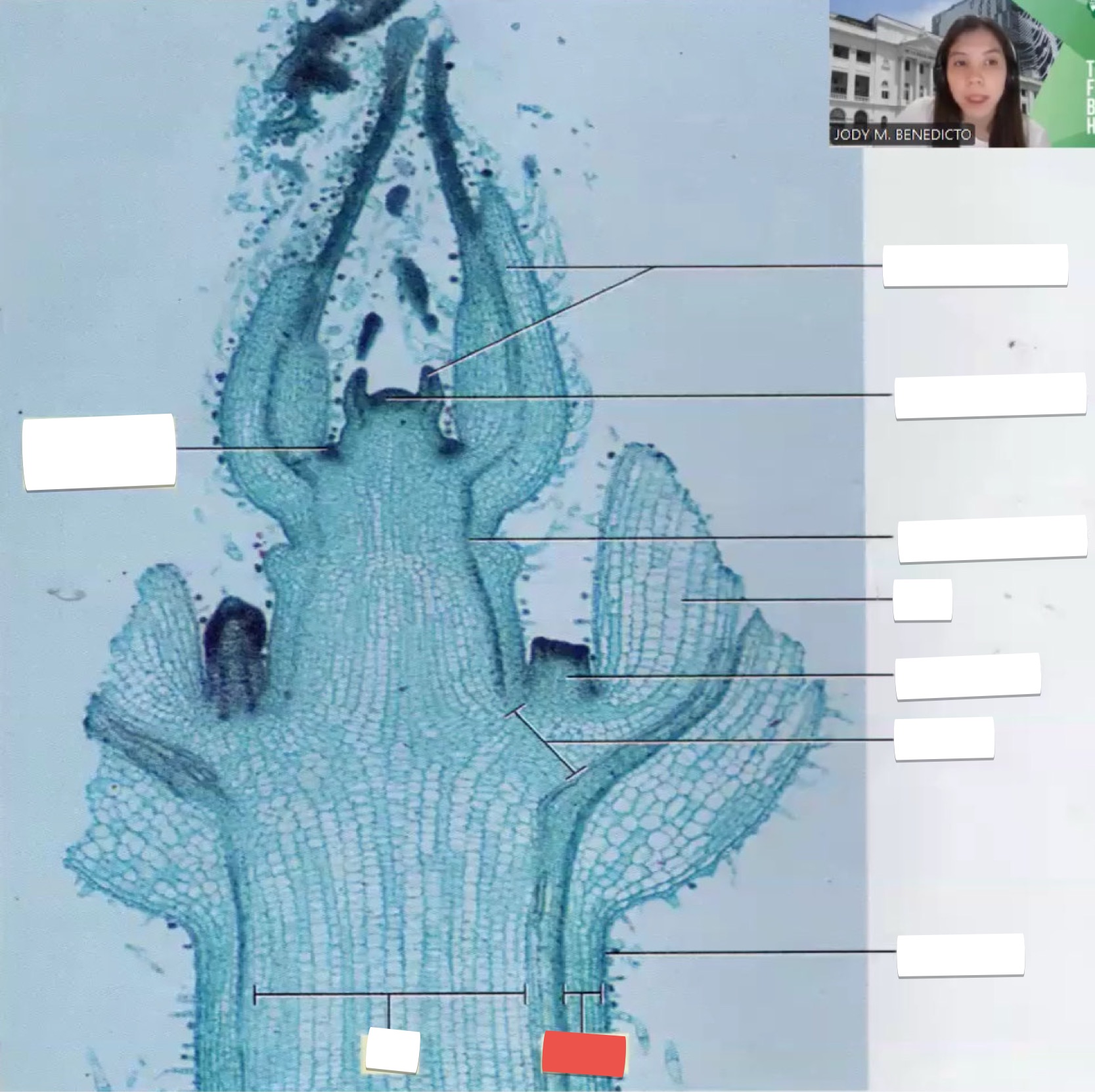
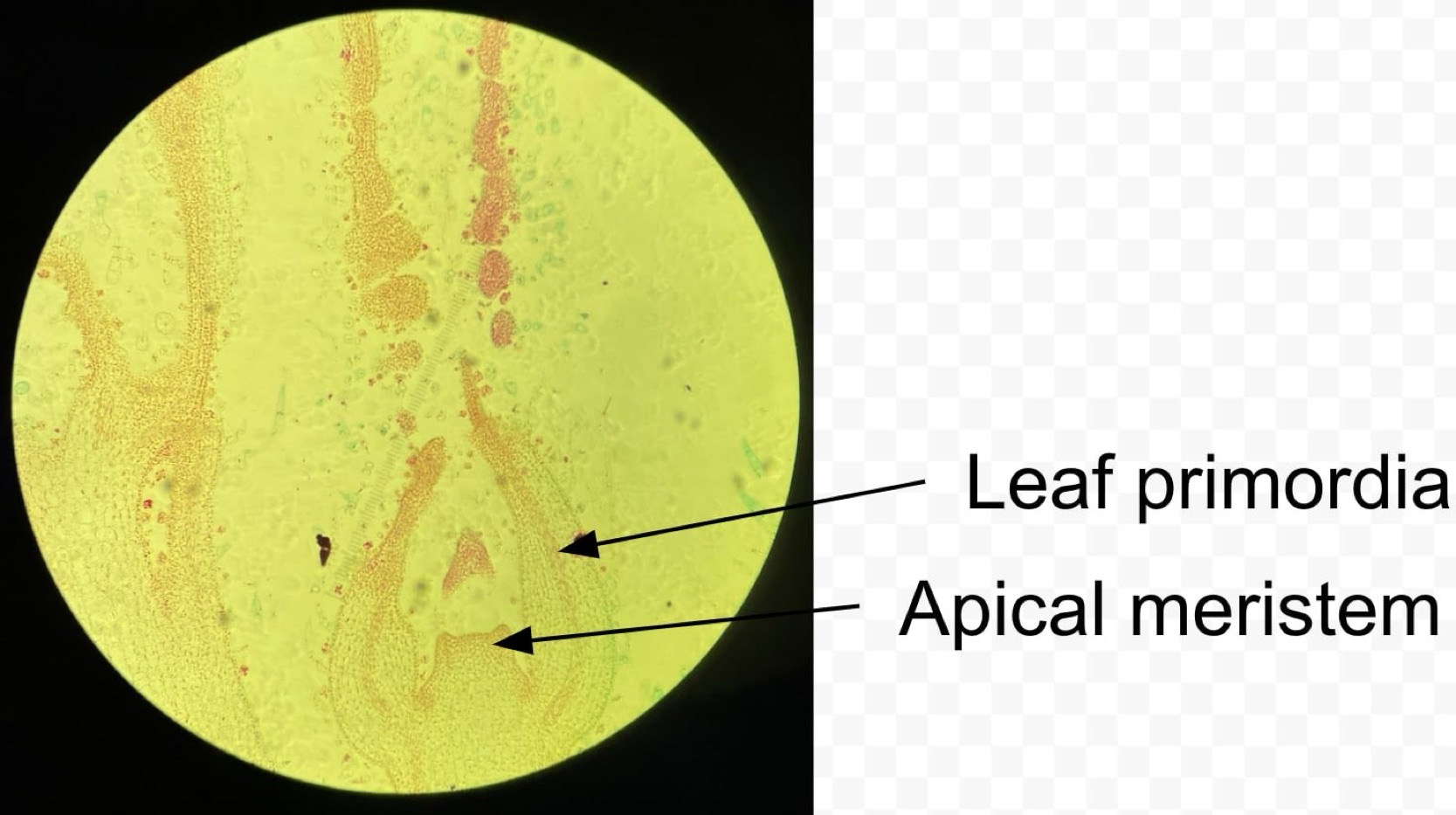
leaf primordia
identify the part in red
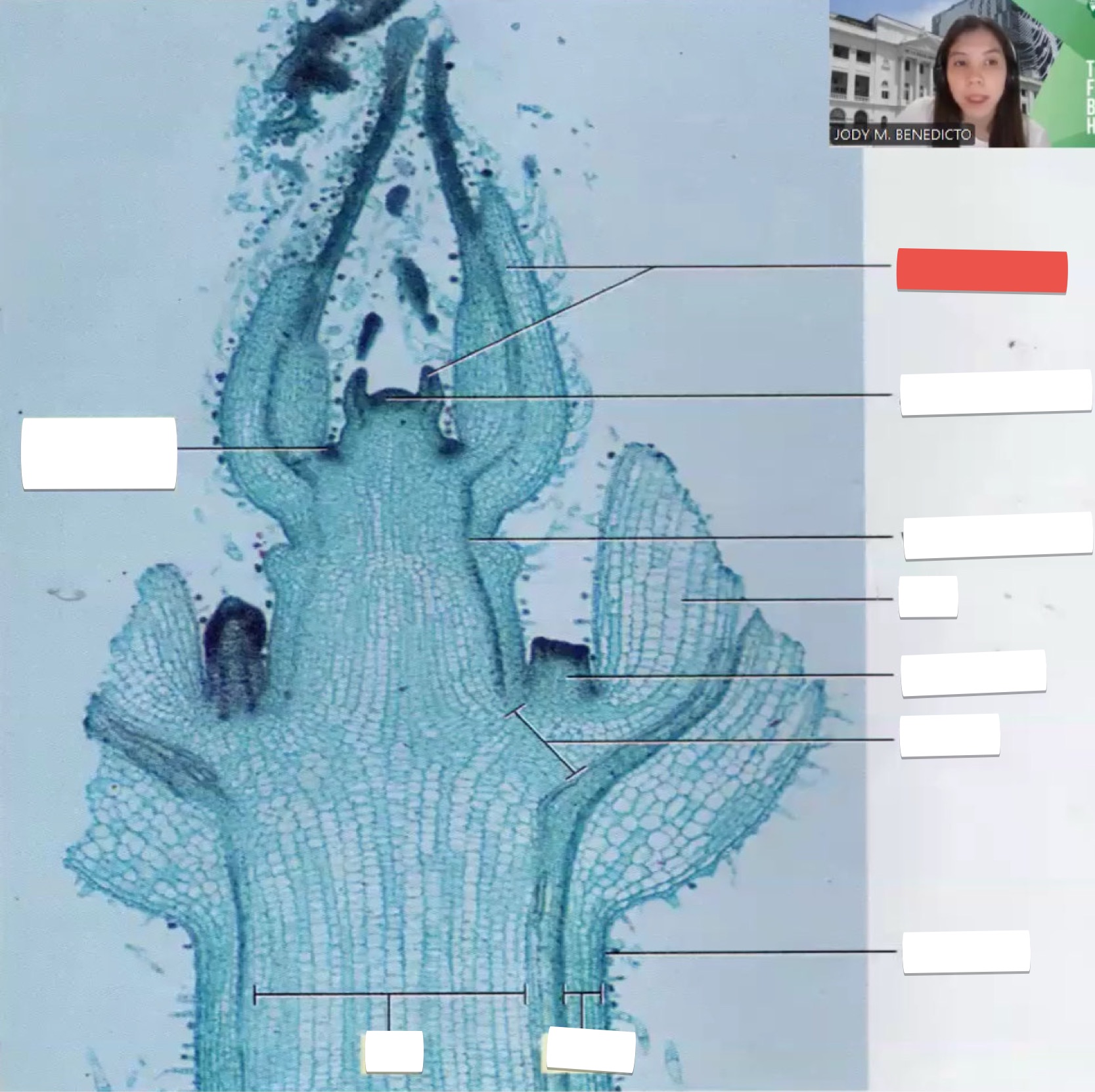
apical meristem
identify the part in red
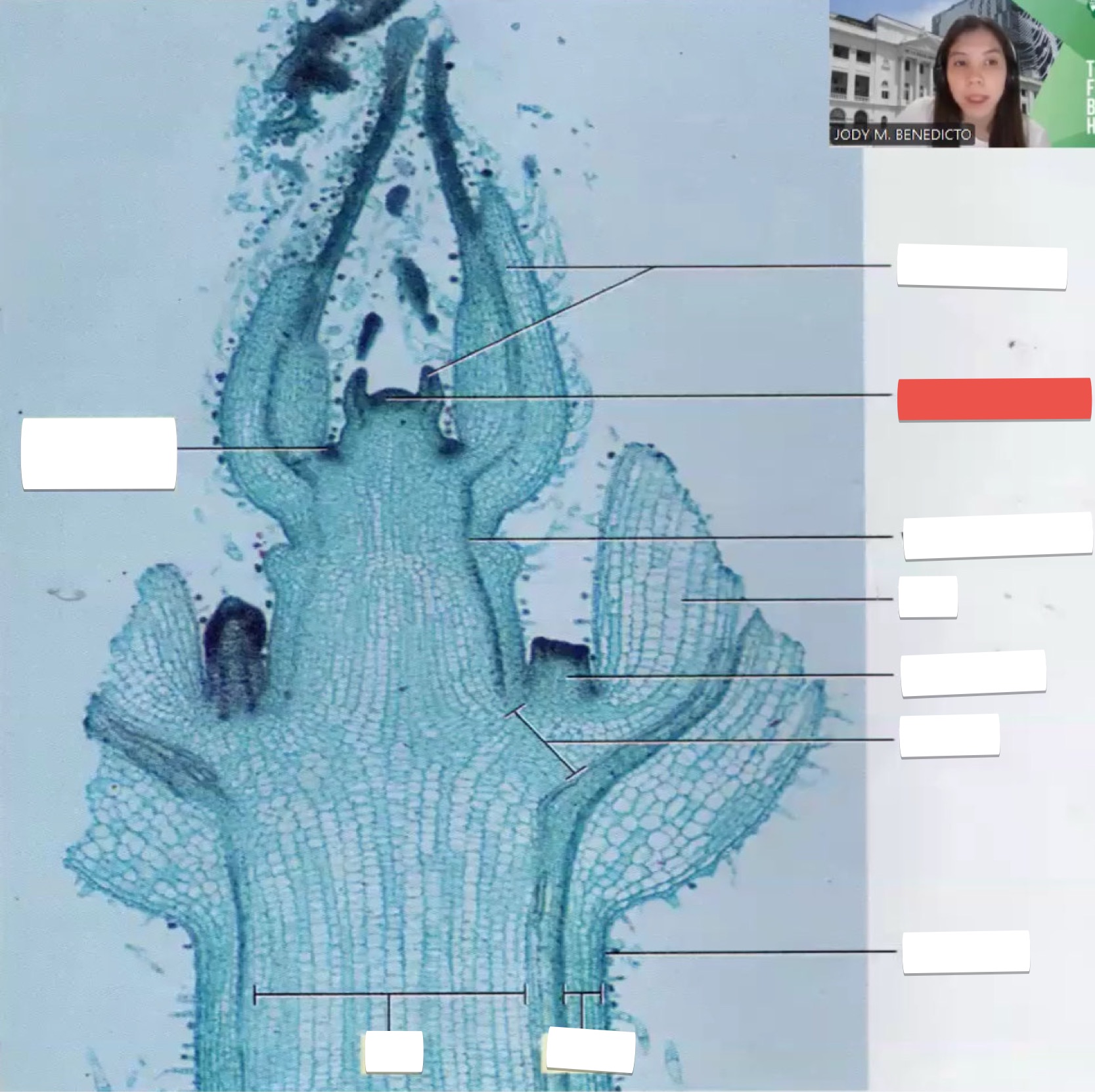
vascular bundle
identify the part in red
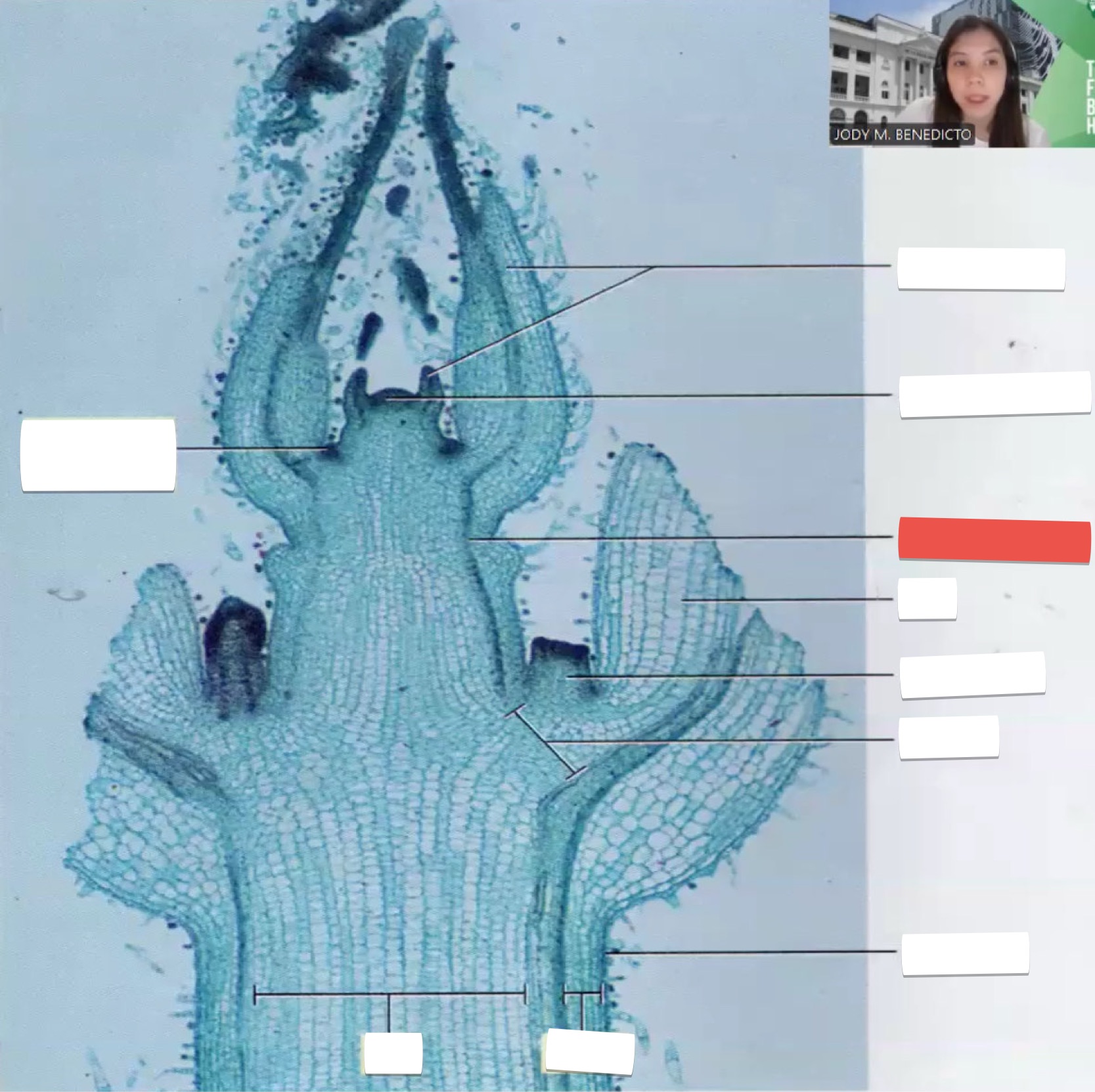
leaf
identify the part in red
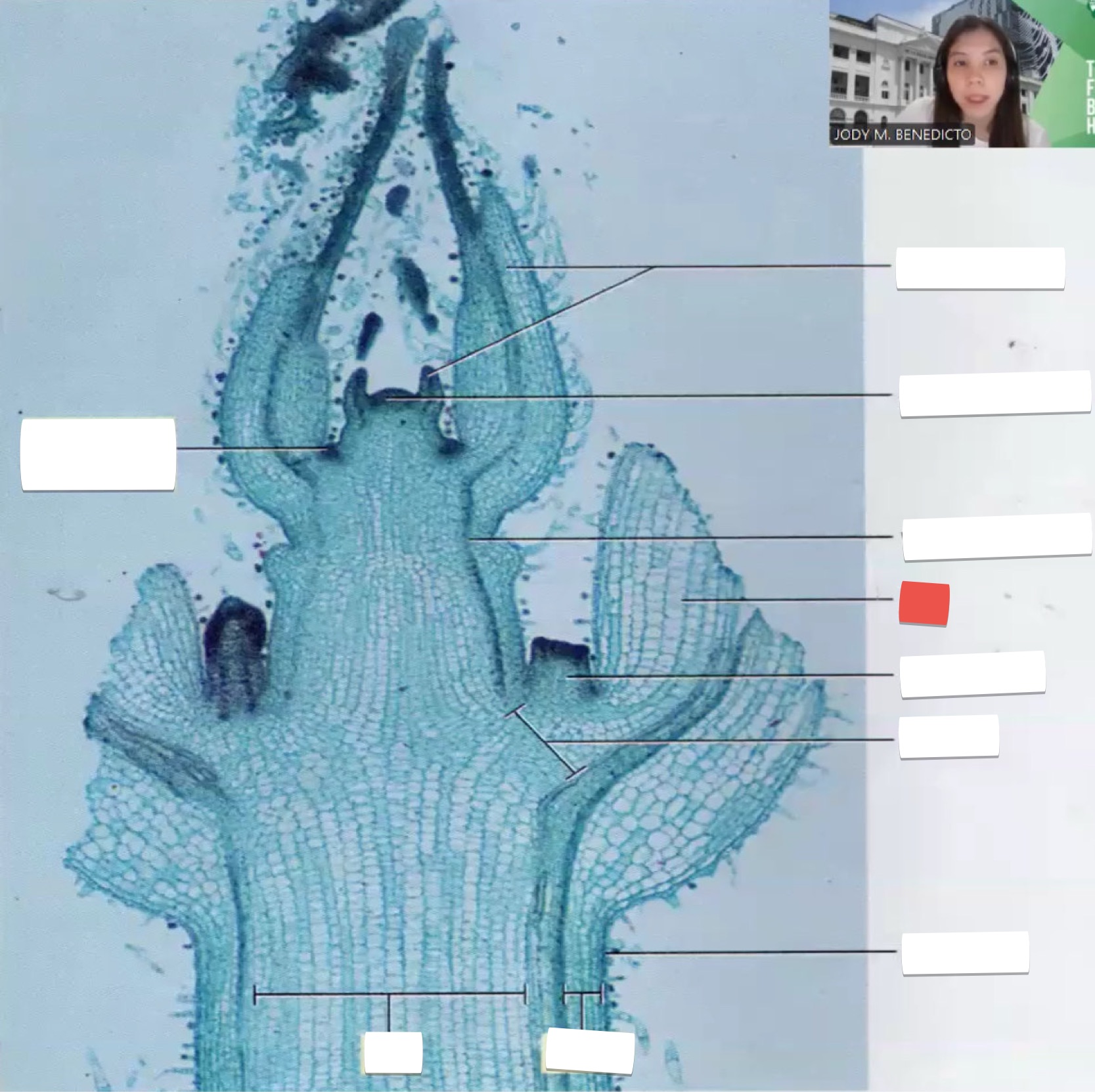
axillary bud
identify the part in red
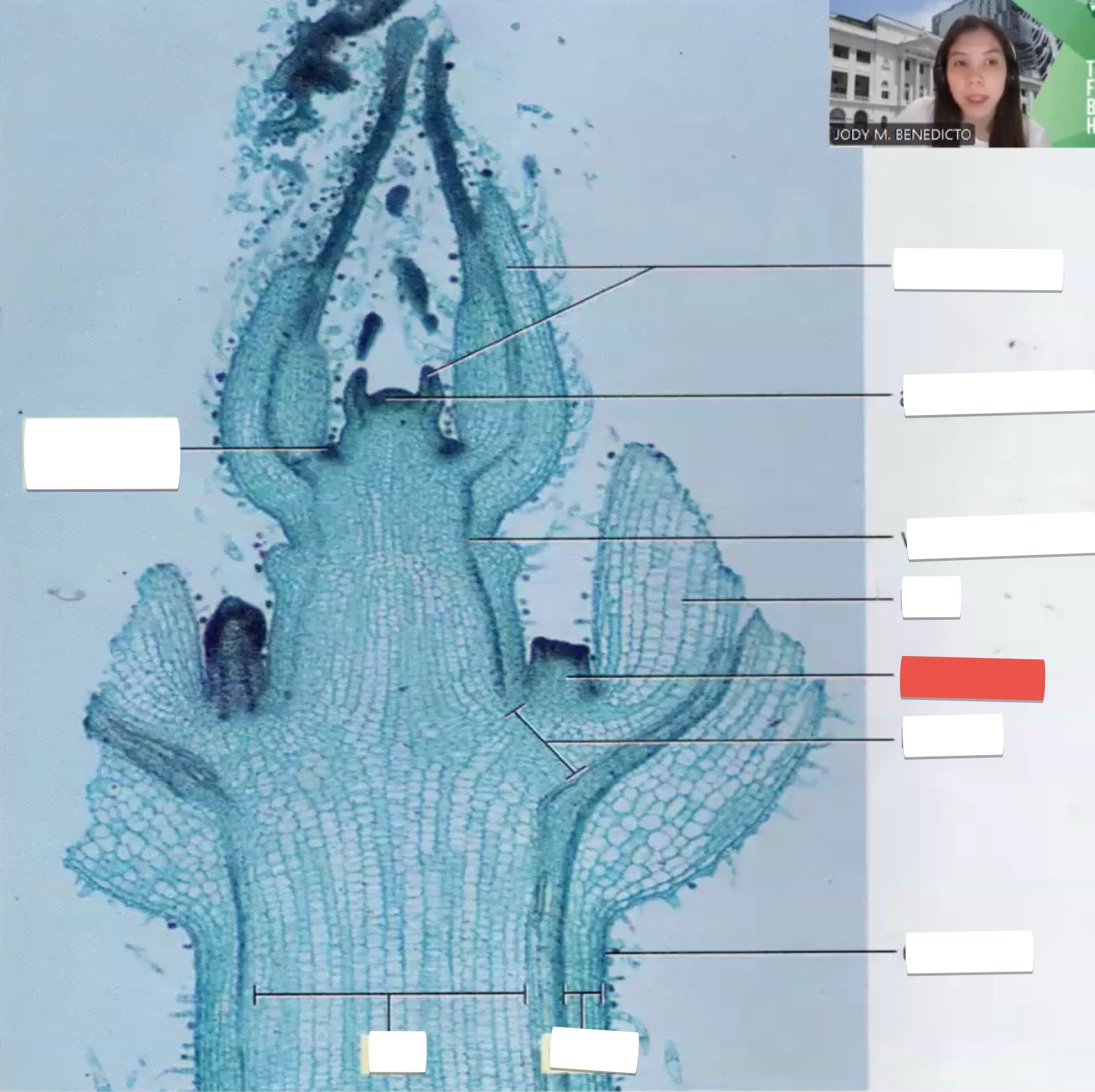
leaf gap
identify the part in red
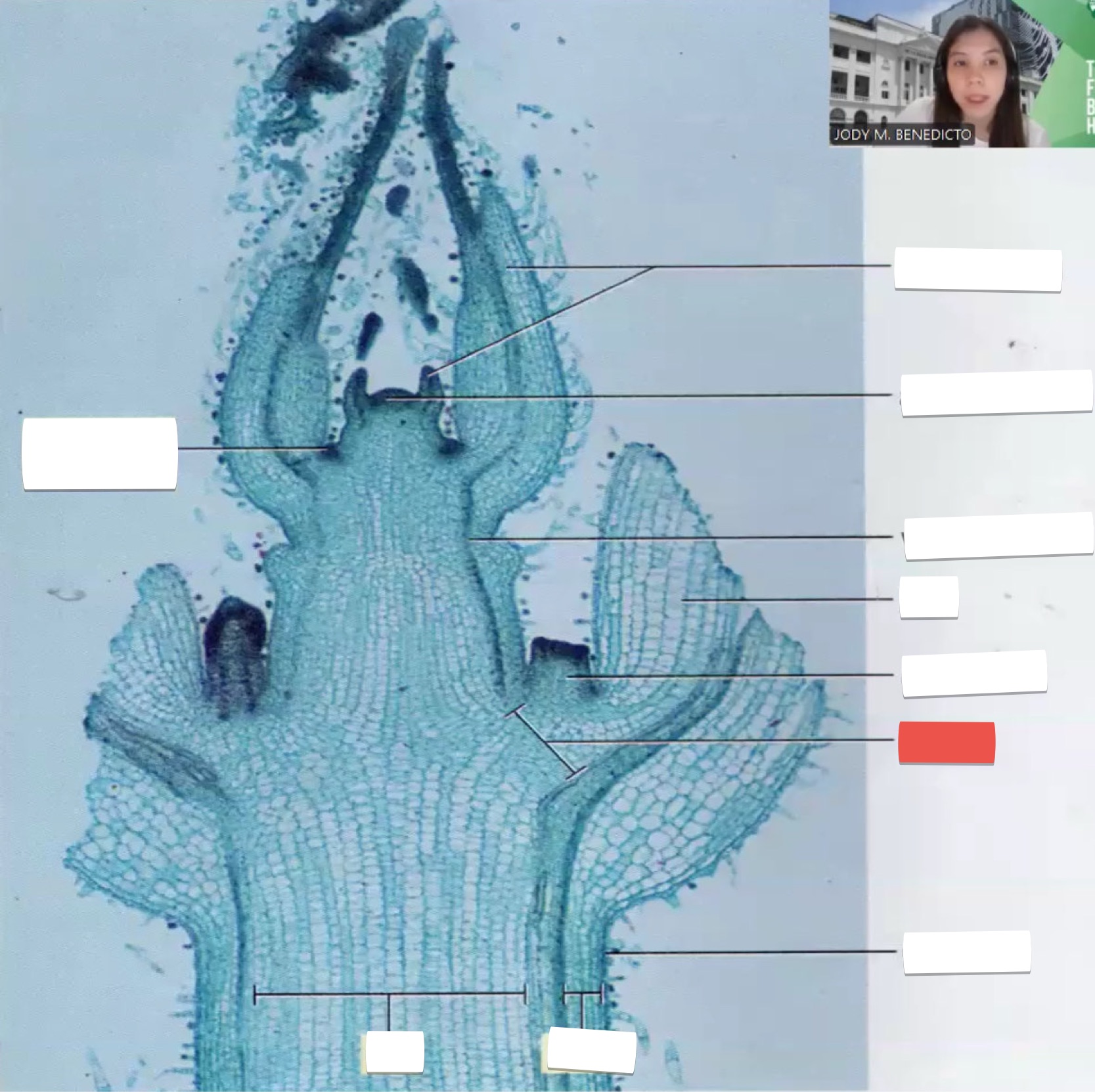
epidermis
identify the part in red
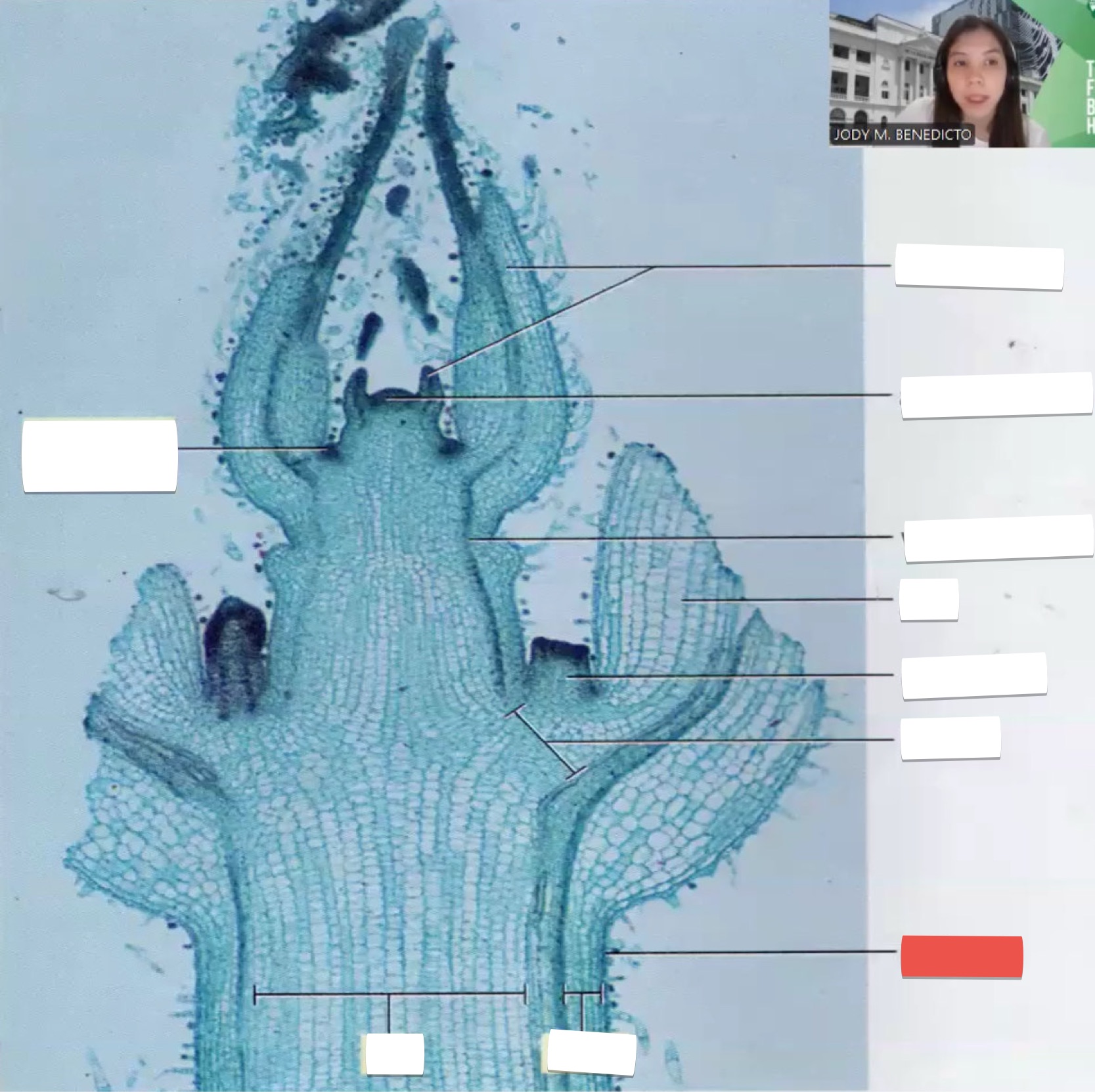
coleus shoot tip
identify the specimen
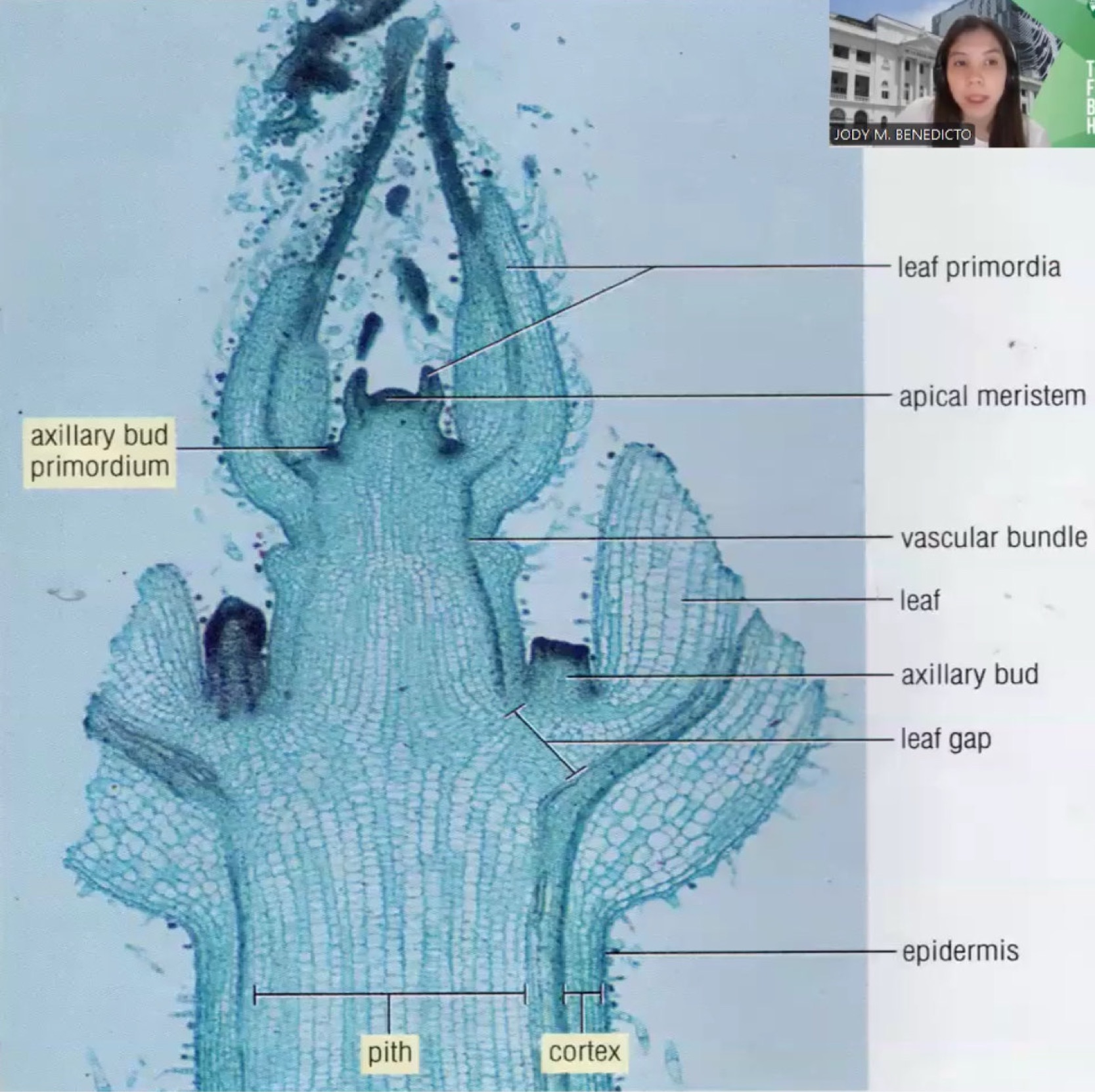
onion root hair
identify the part in red
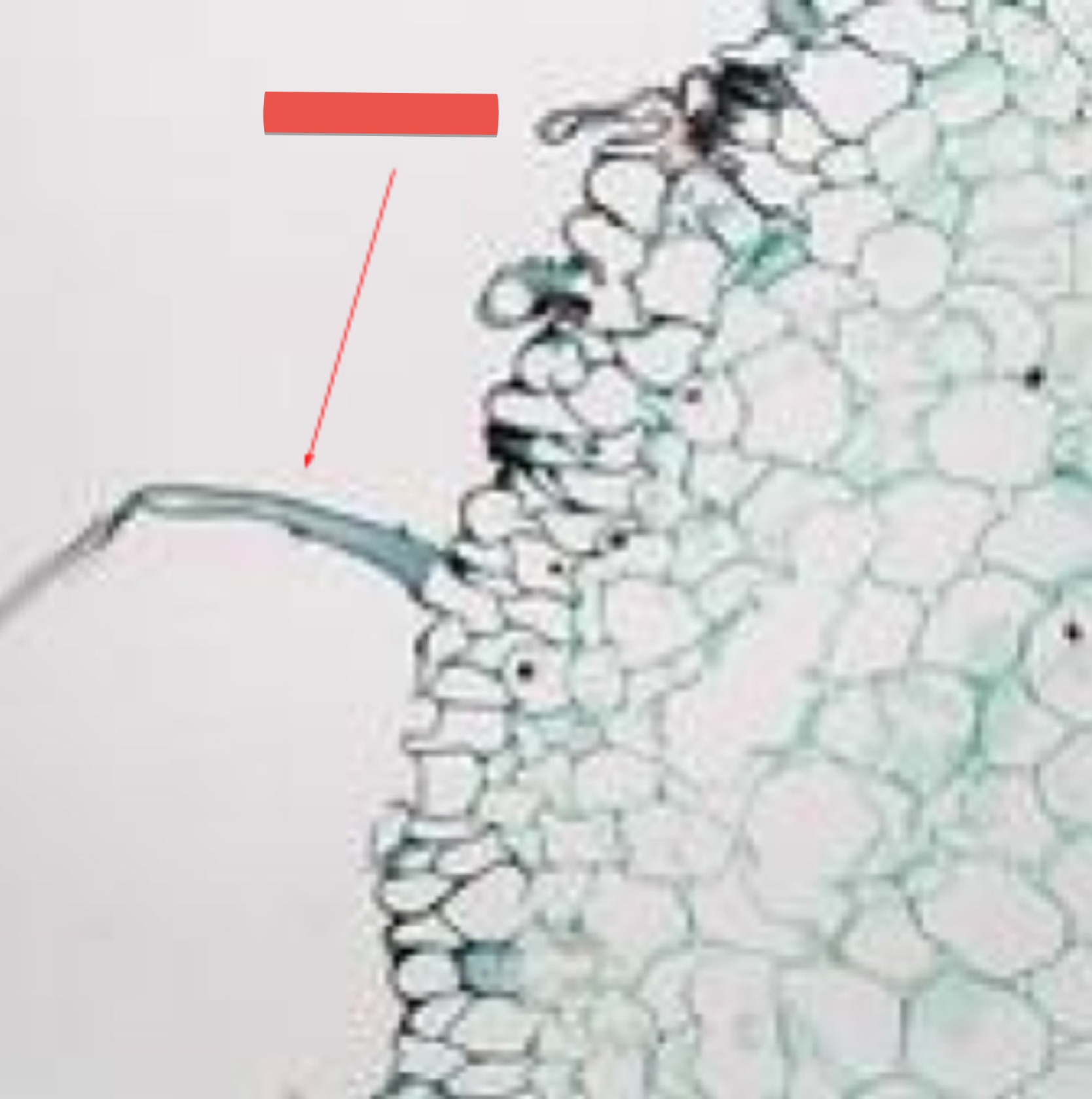
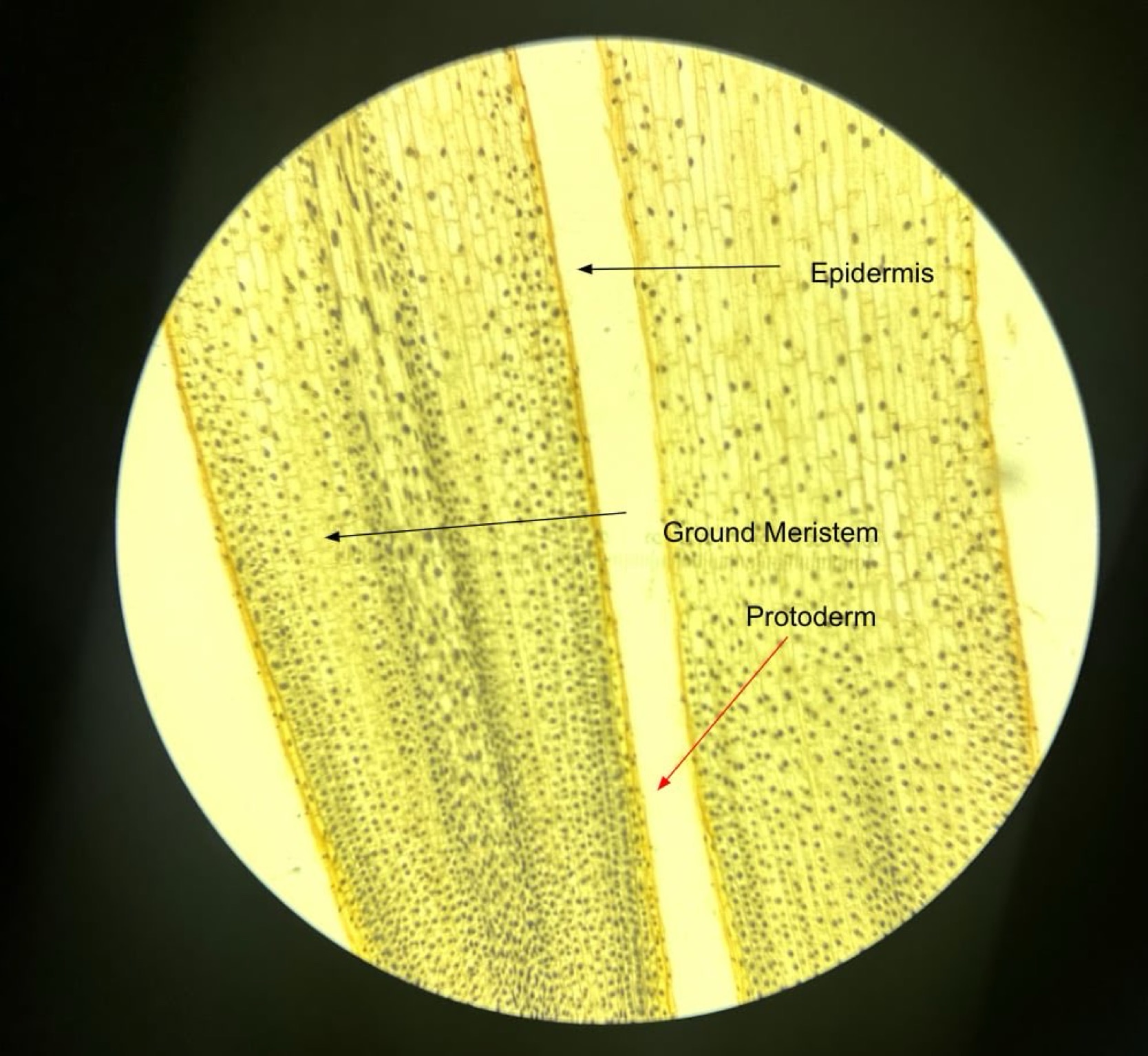
epidermis
identify the part in red
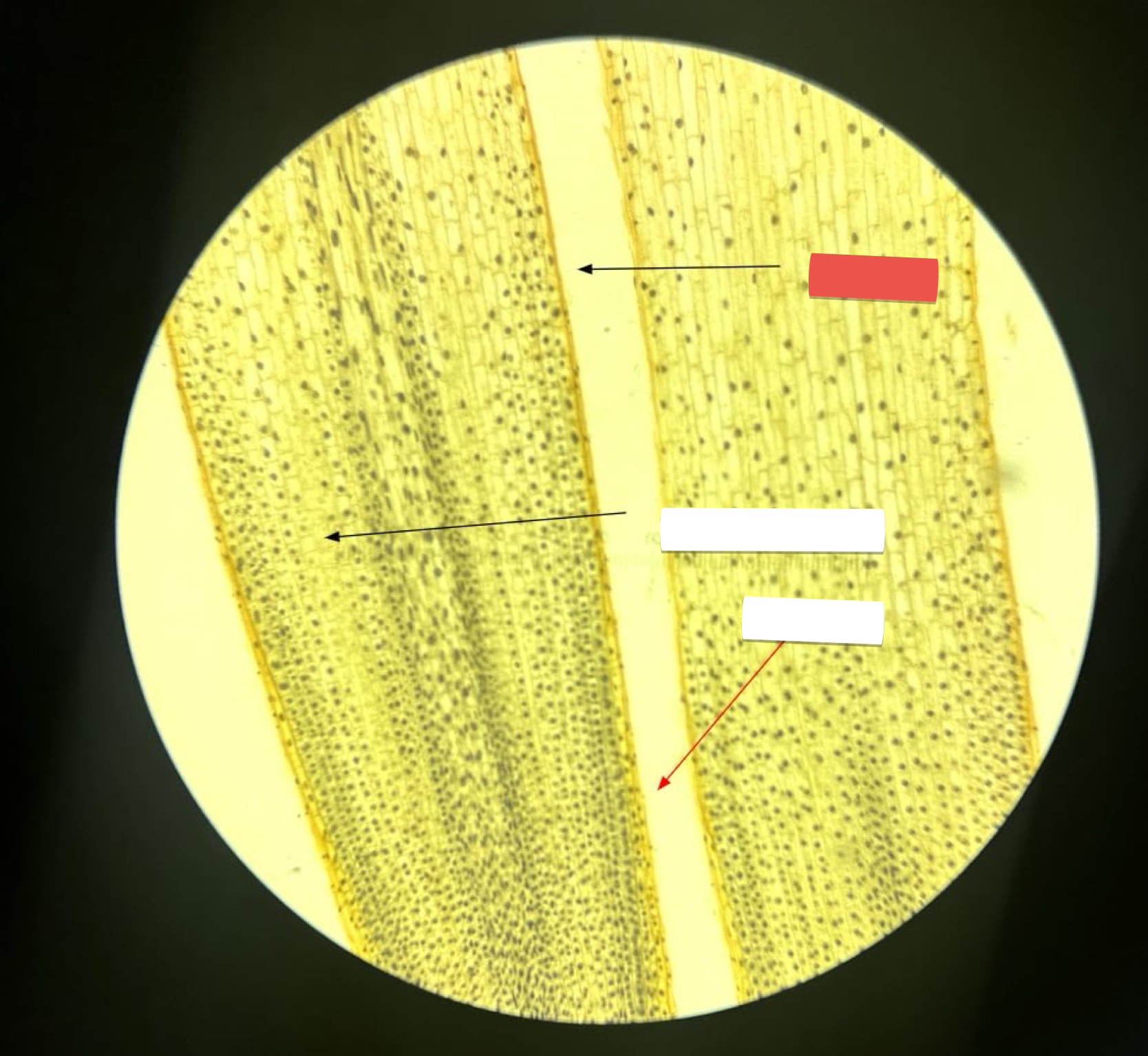
ground meristem
identify the part in red
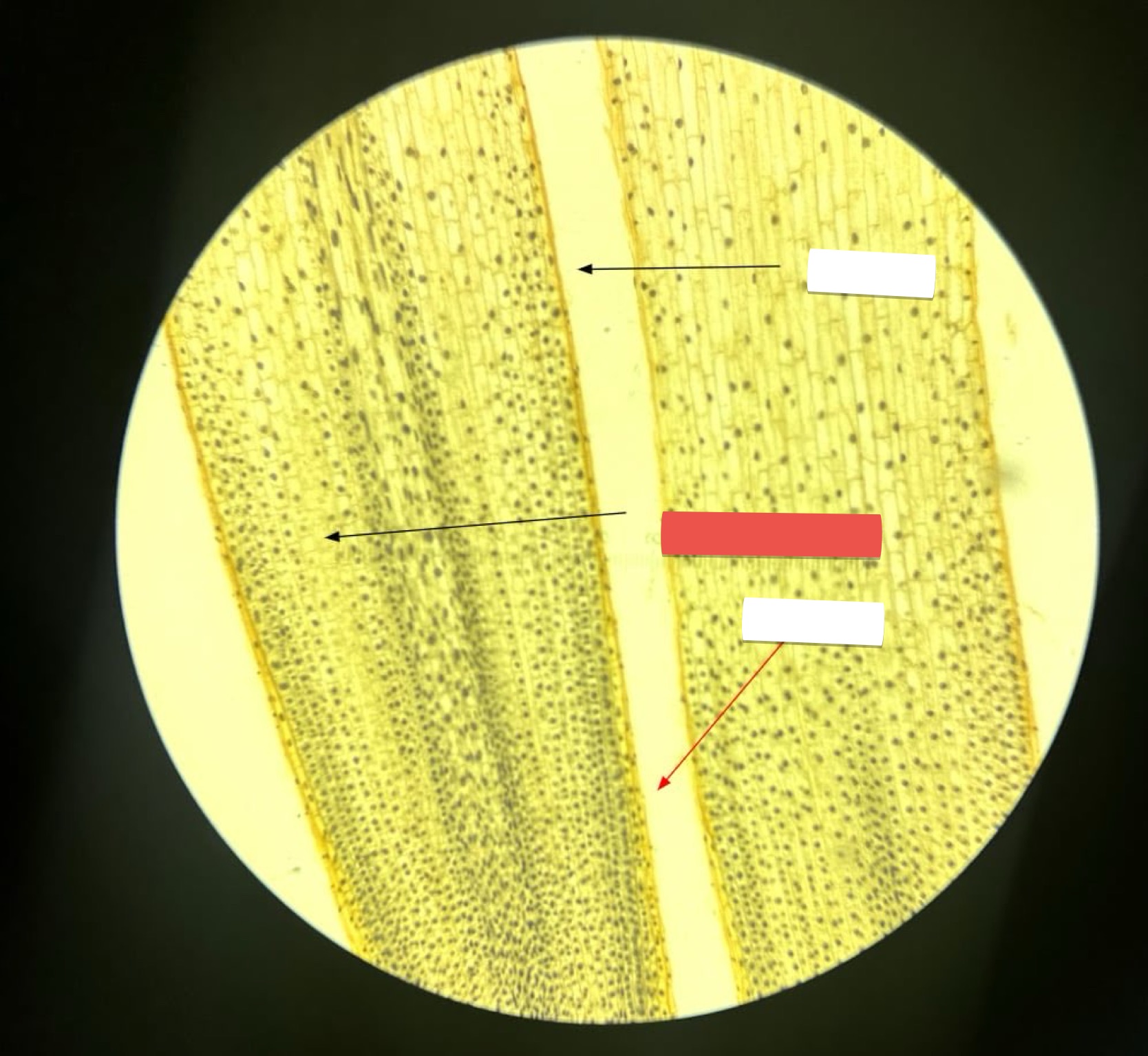
protoderm
identify the part in red
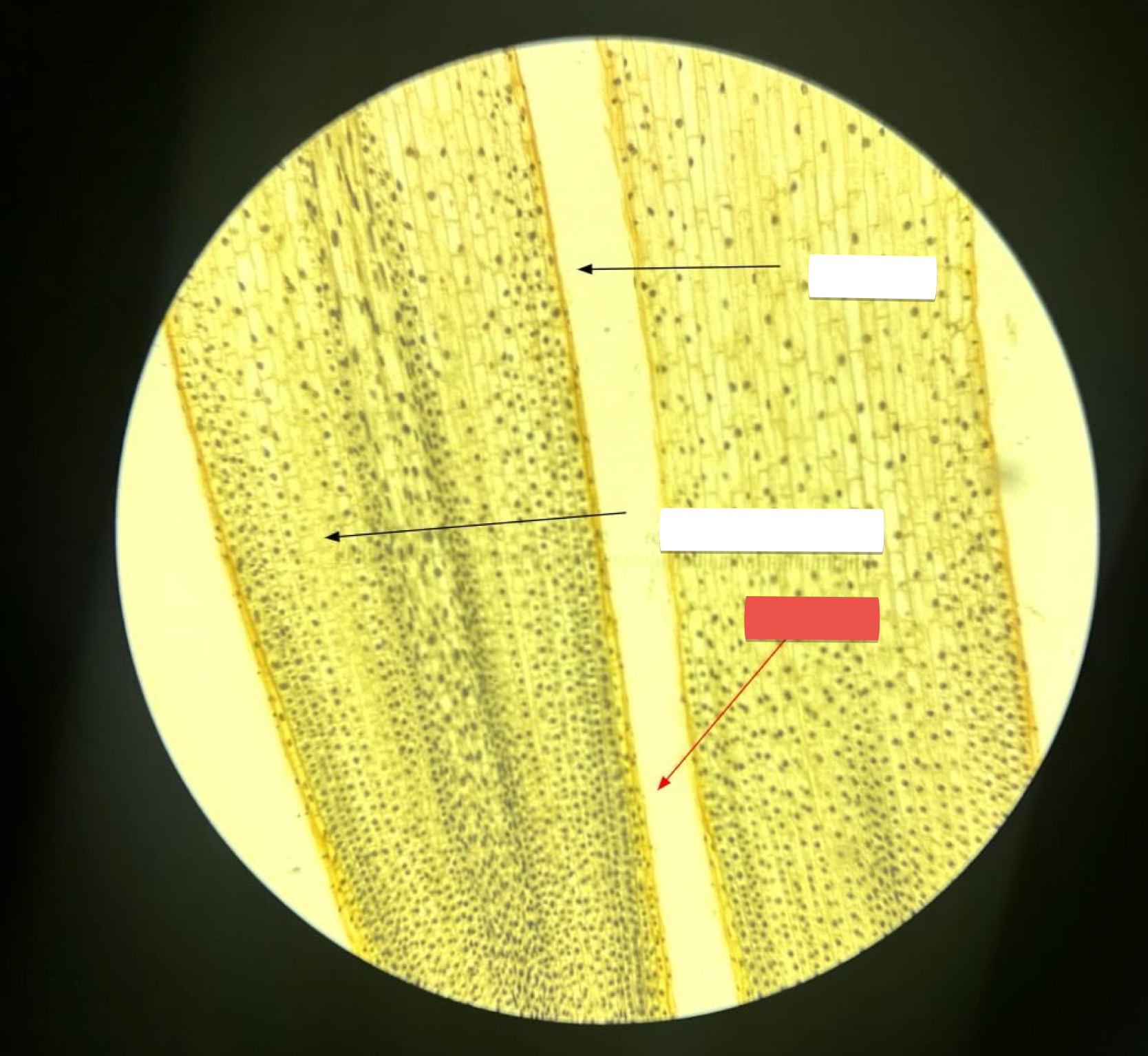
Alium capa root l.s. cepa
identify the specimen
cortex
ground tissue which is primarily composed of parenchyma cells
endodermis
innermost layer of the cortex
casparian strip
acts as a barrier, forcing water and dissolved substances to pass through the cell membrane of endodermal cells
pericycle
outermost layer of the stele which is in contact with the endodermis (lateral roots)
pith
centermost portion which is occupied by parenchyma cells
xylem
chief conducting tissue of water and minerals in plant body
phloem
chief conducting tissue of food material (primarily sugars)
phloem
identify the part in red
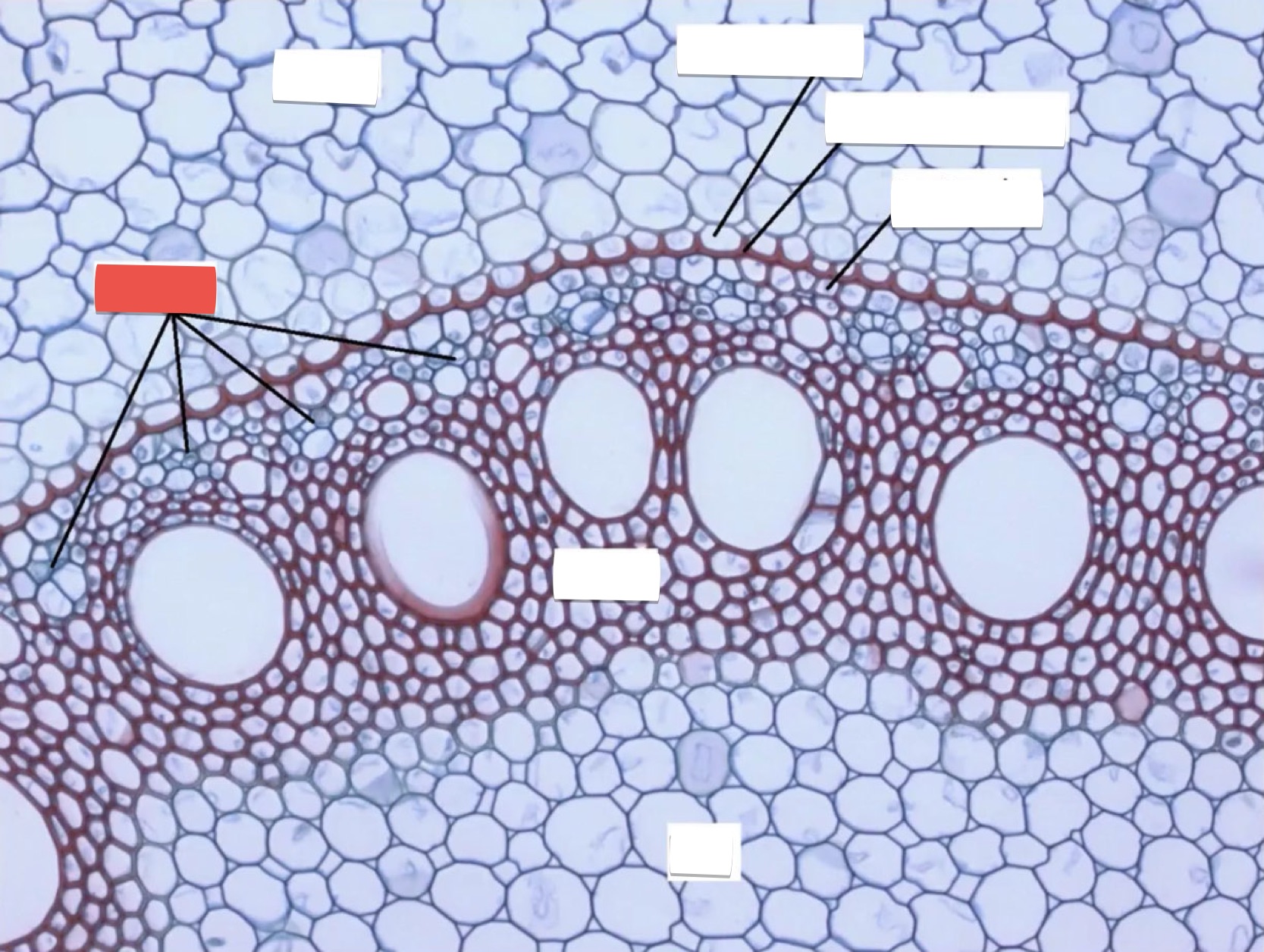
cortex
identify the part in red
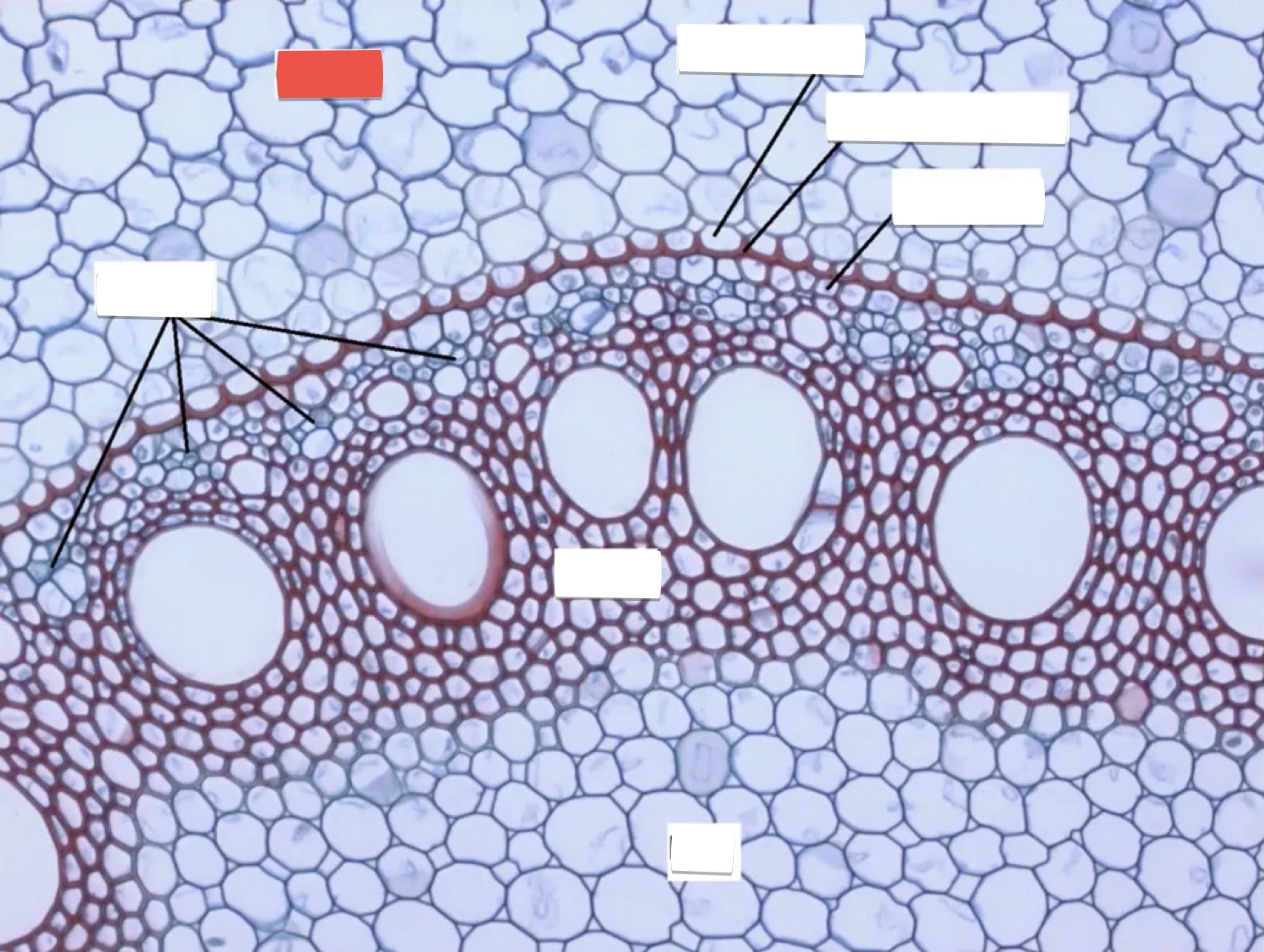
endodermis
identify the part in red
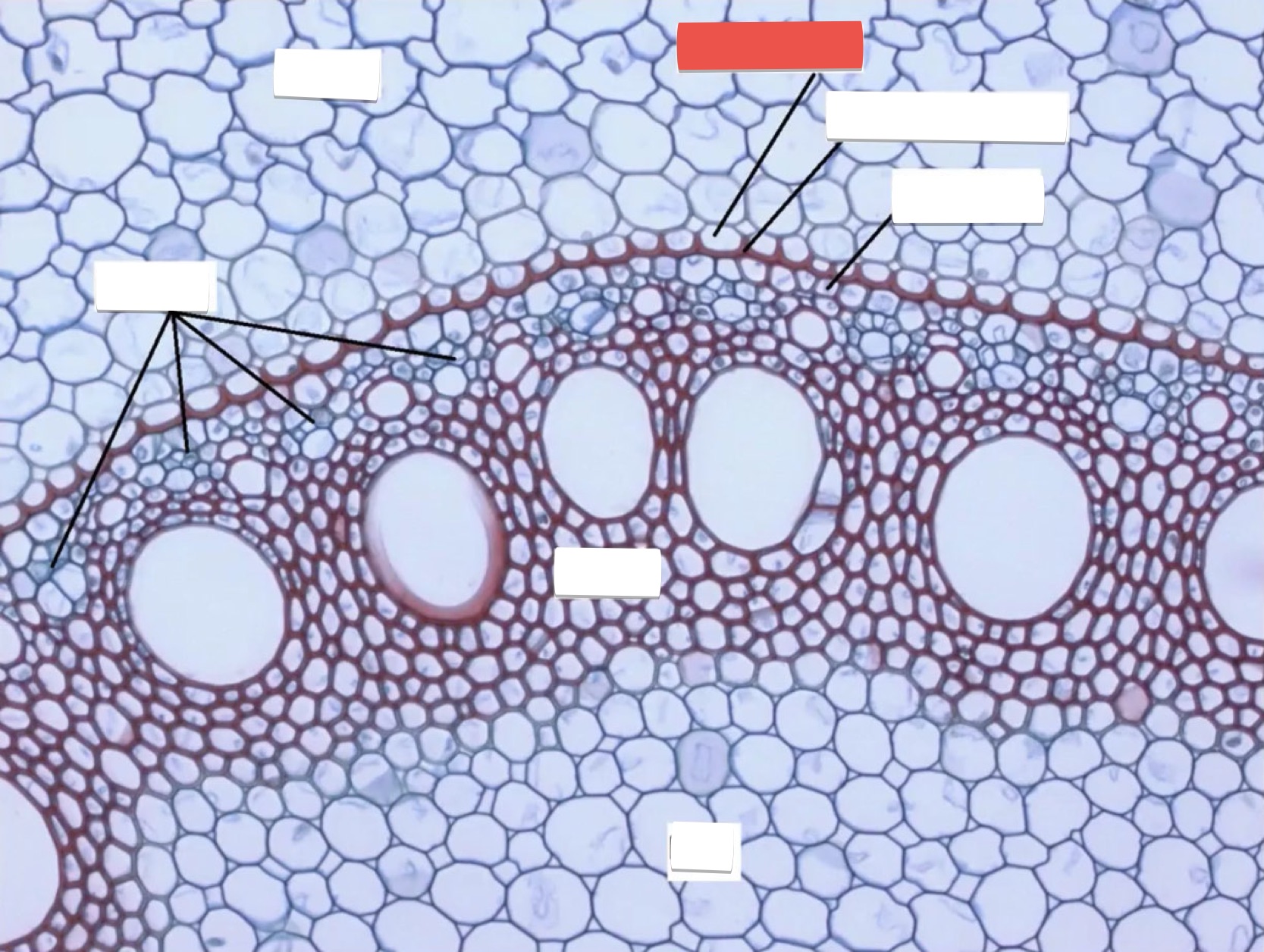
casparian strip
identify the part in red
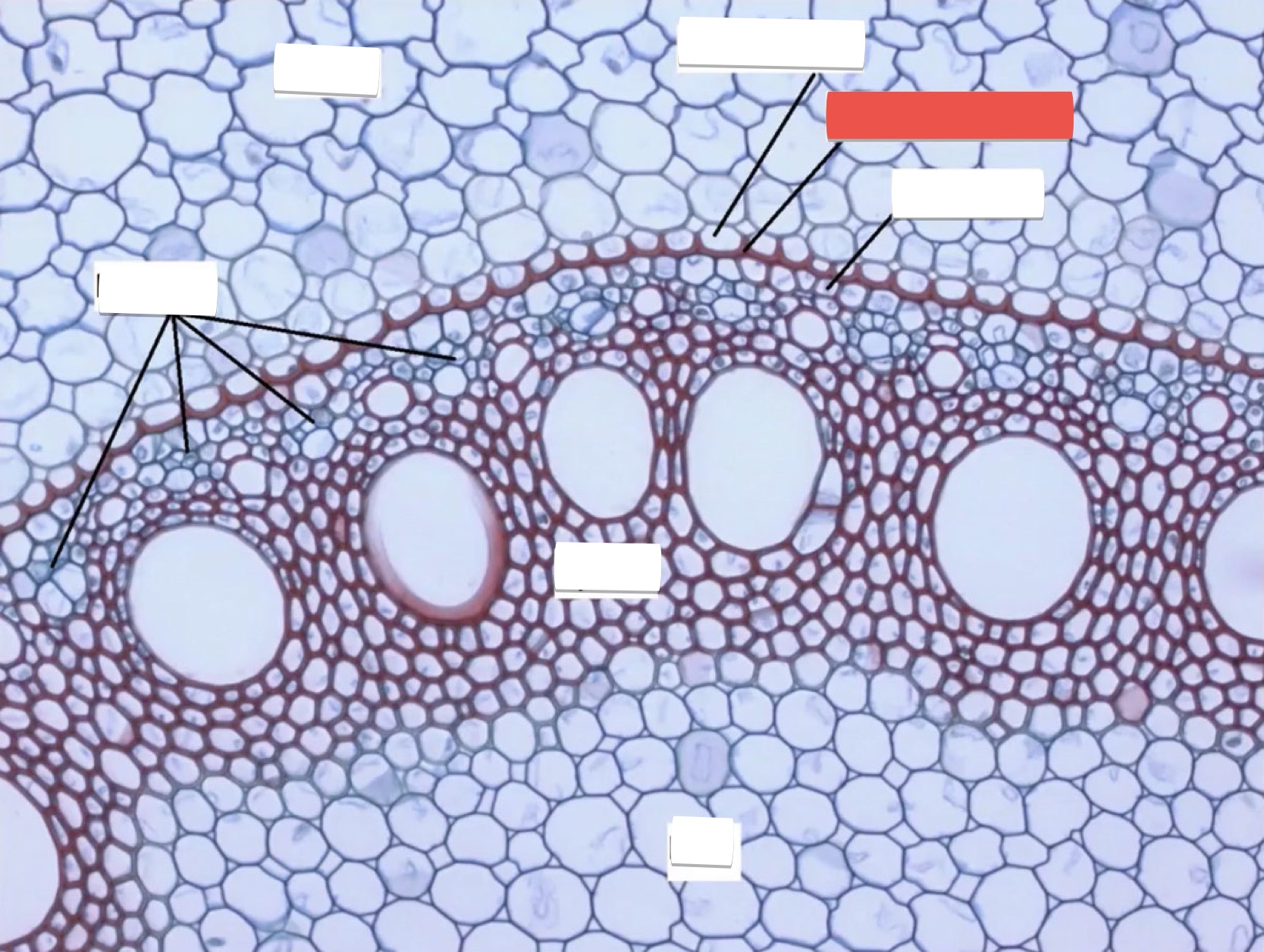
pericycle
identify the part in red
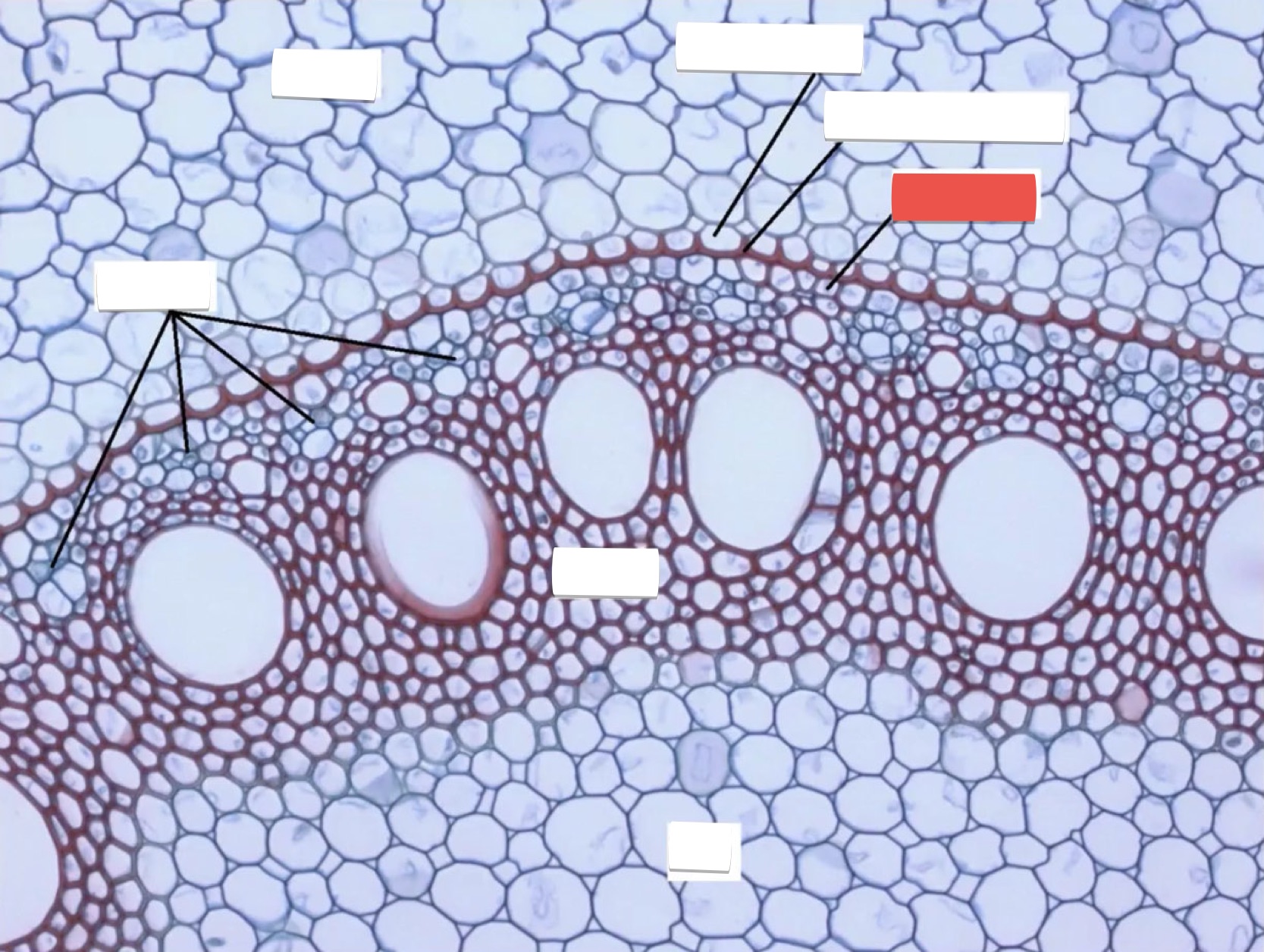
xylem
identify the part in red
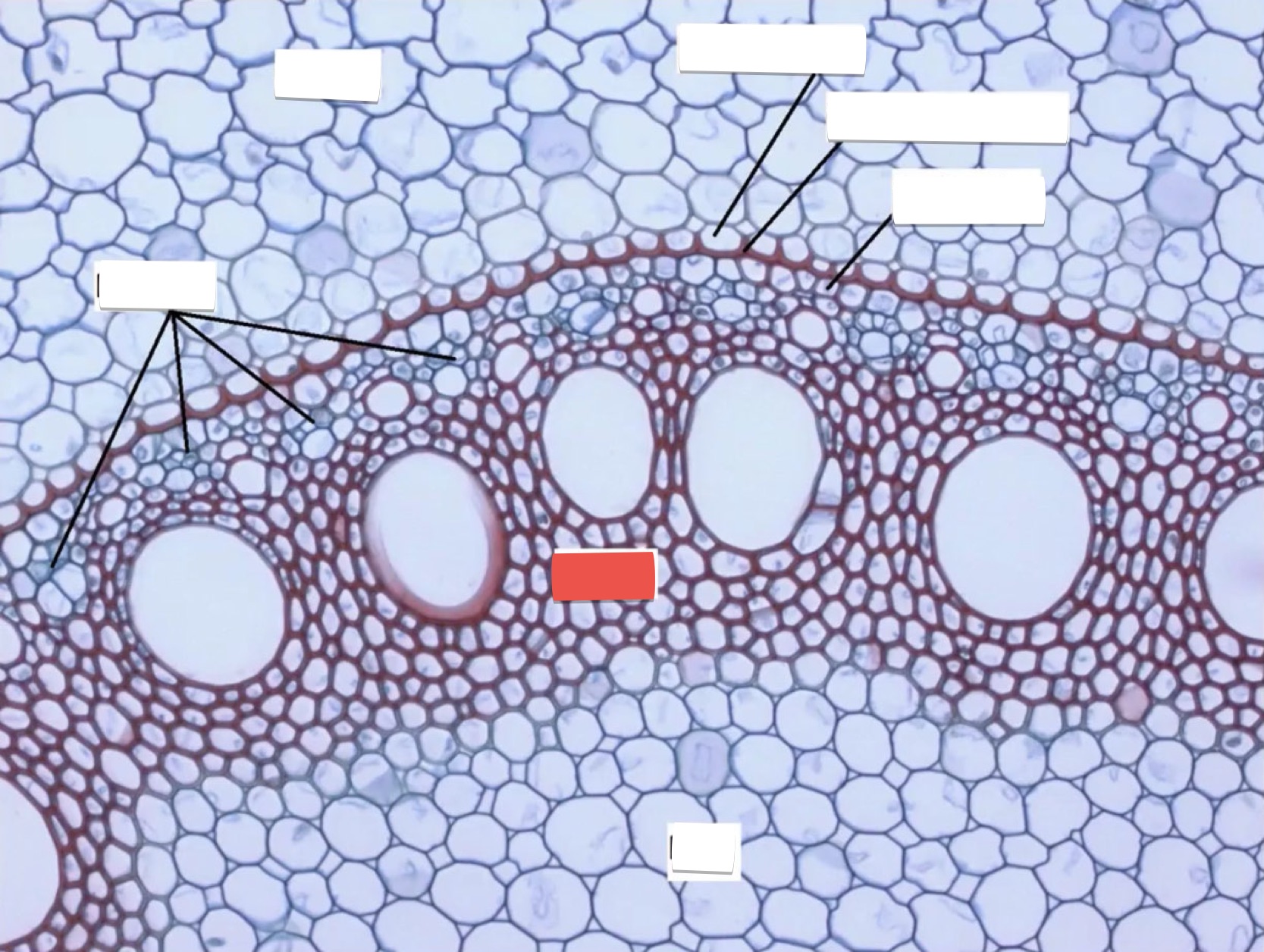
pith
identify the part in red
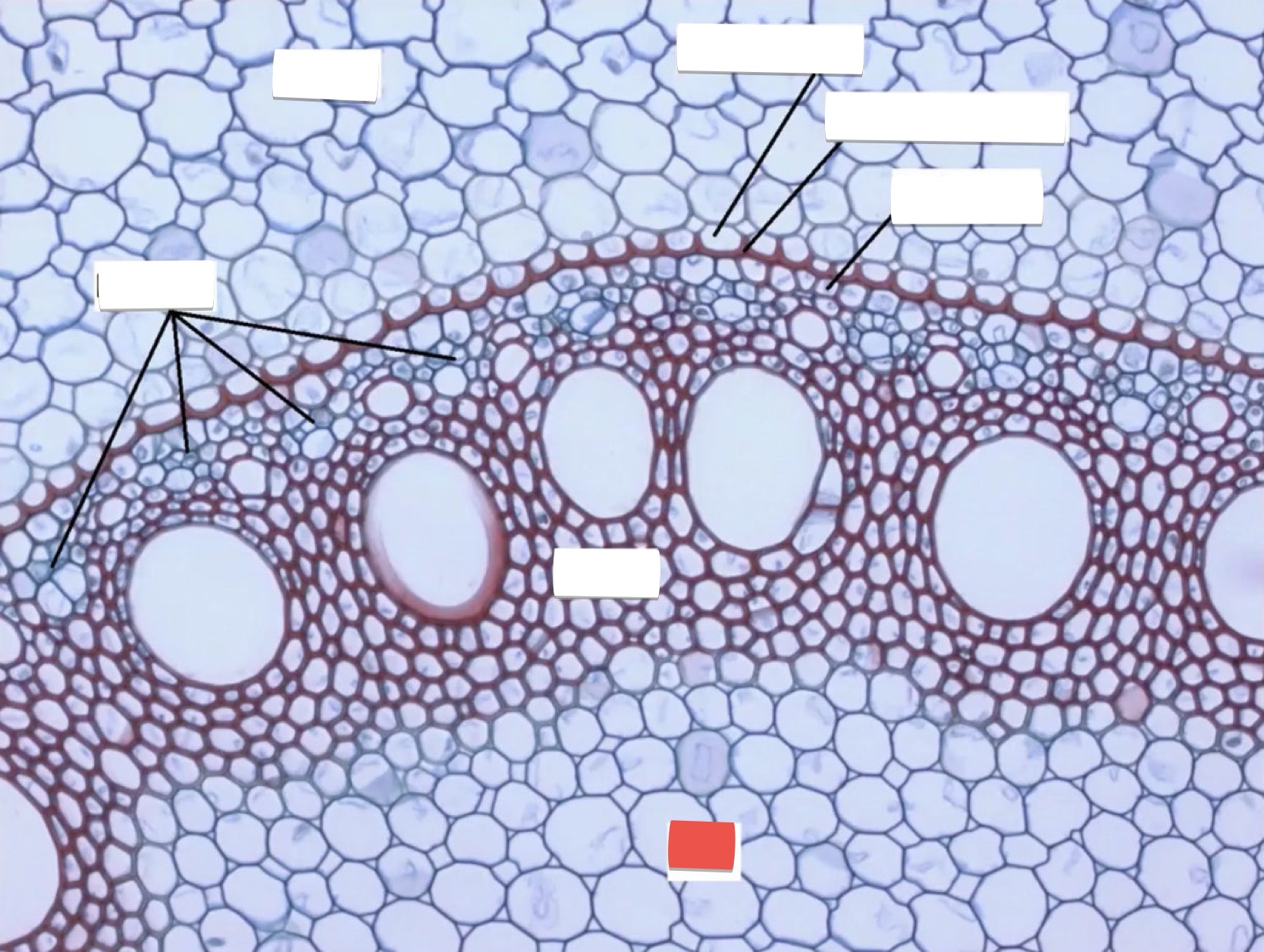
epidermis
identify the part in red
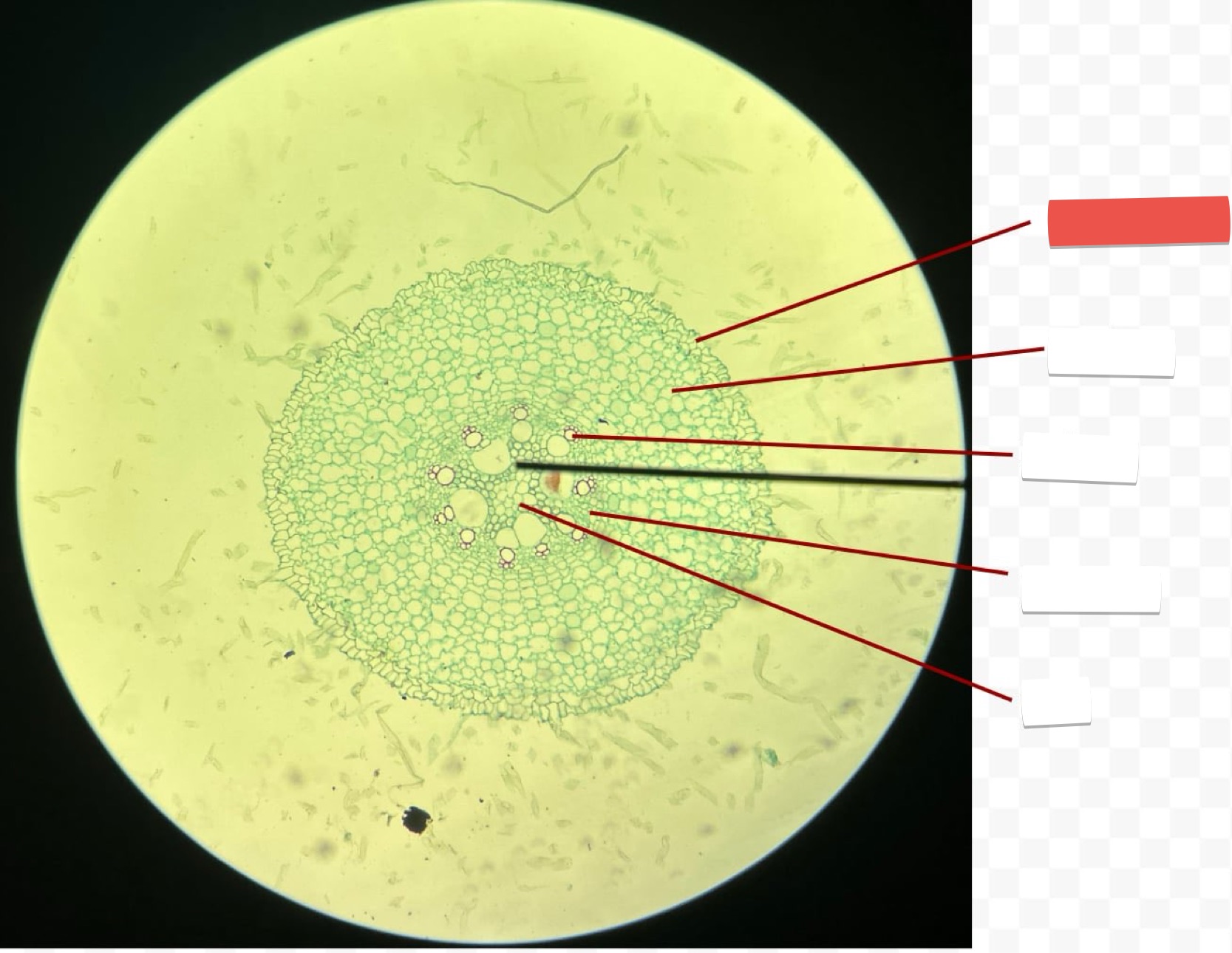
cortex
identify the part in red
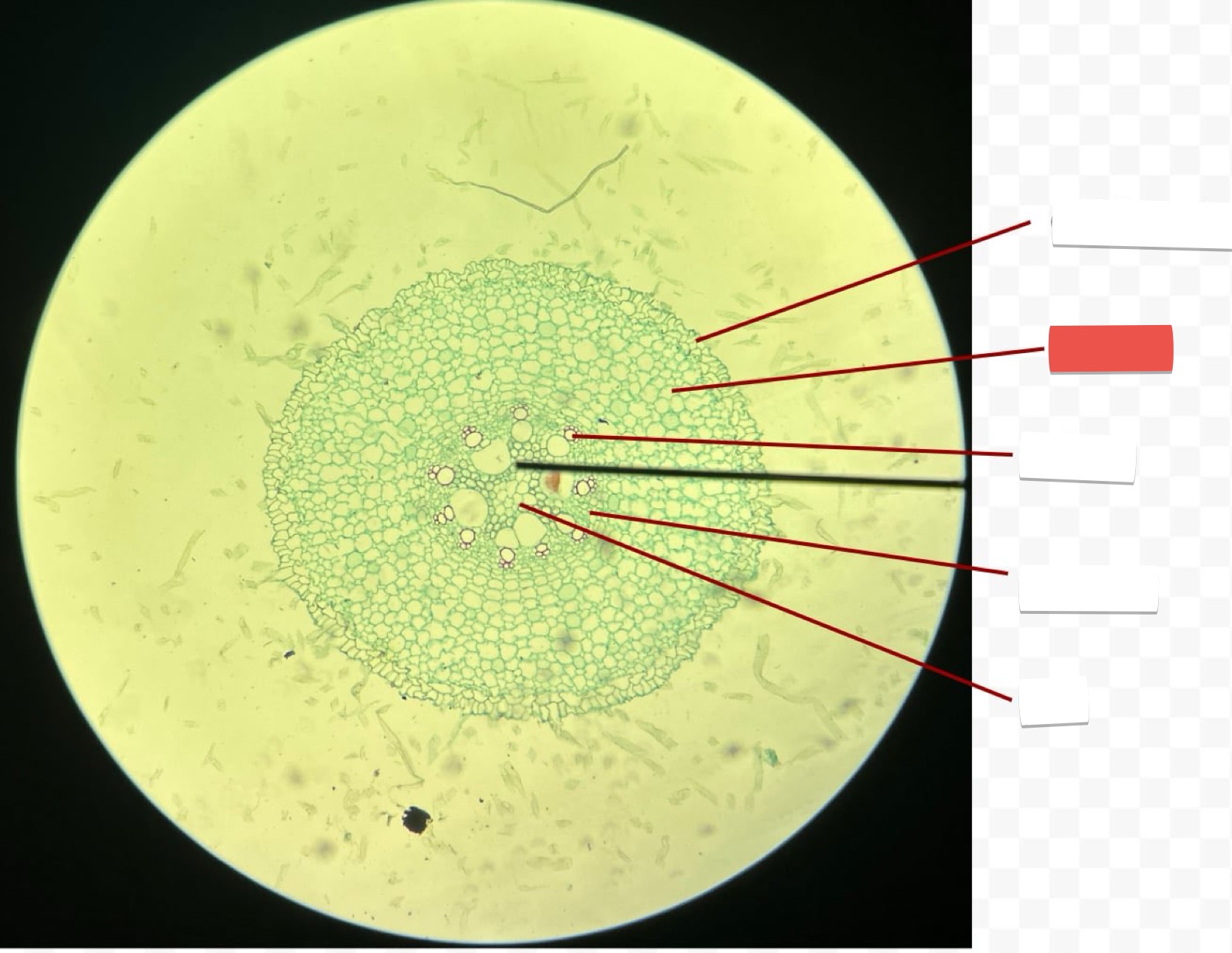
phloem
identify the part in red
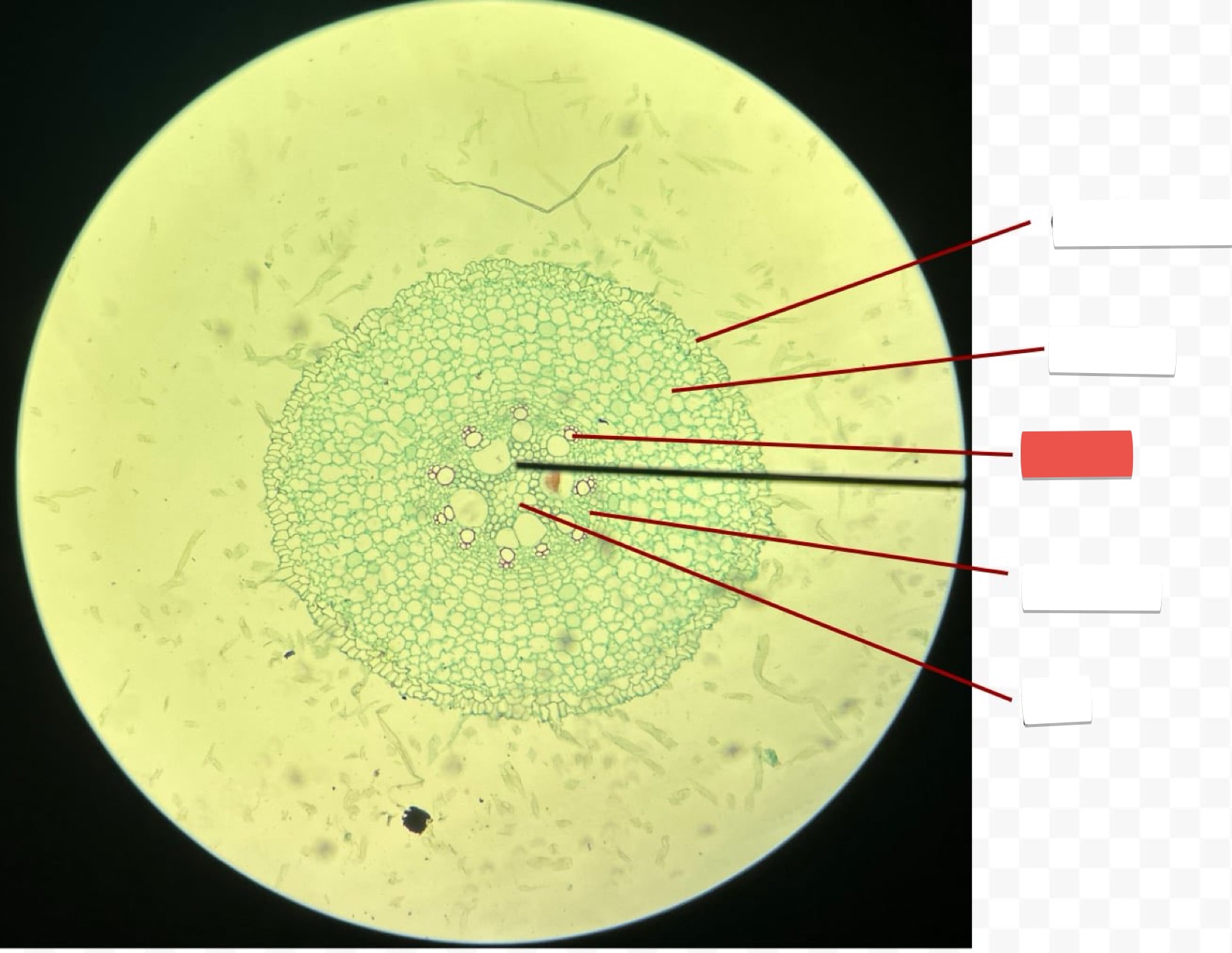
xylem
identify the part in red
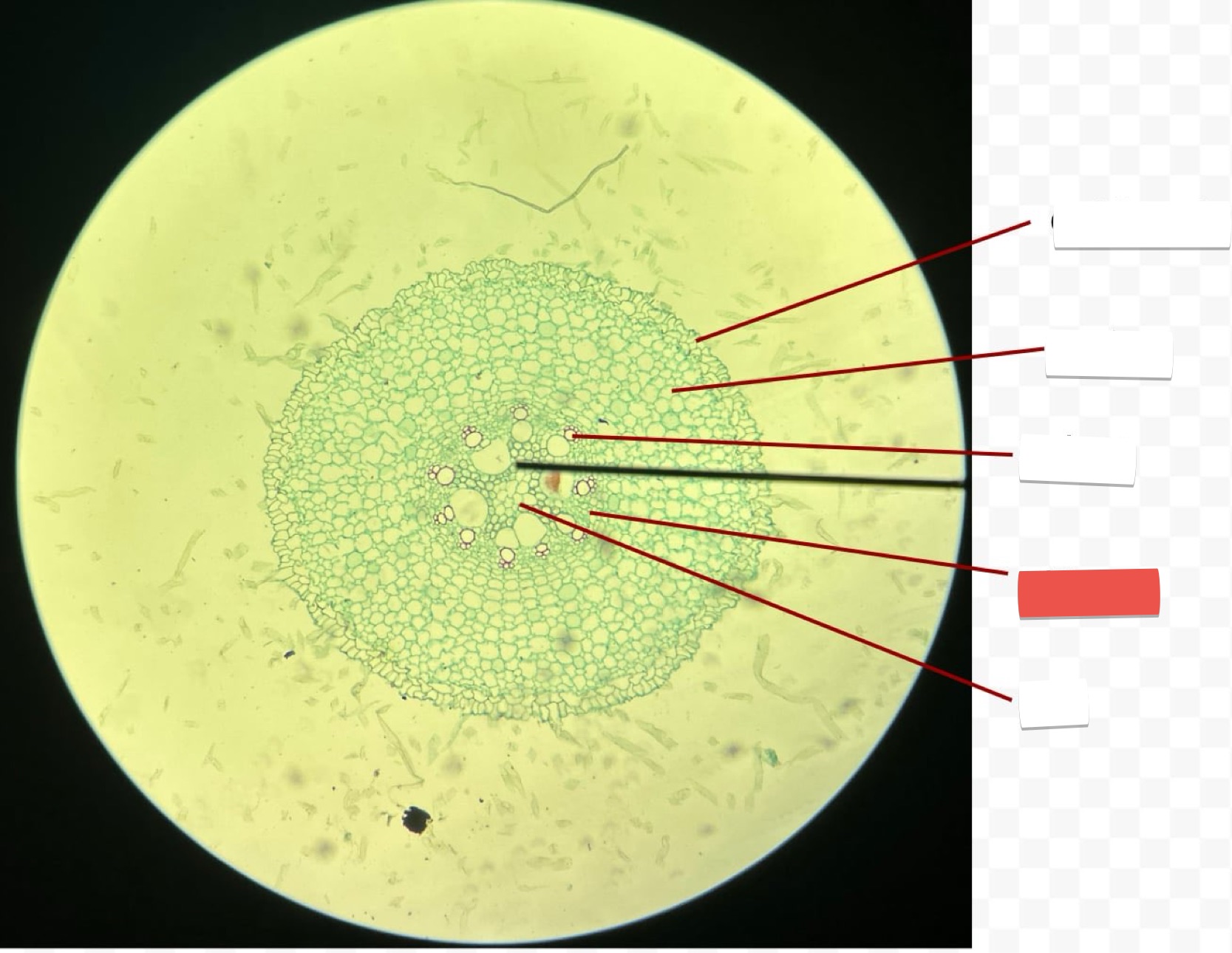
pith
identify the part in red
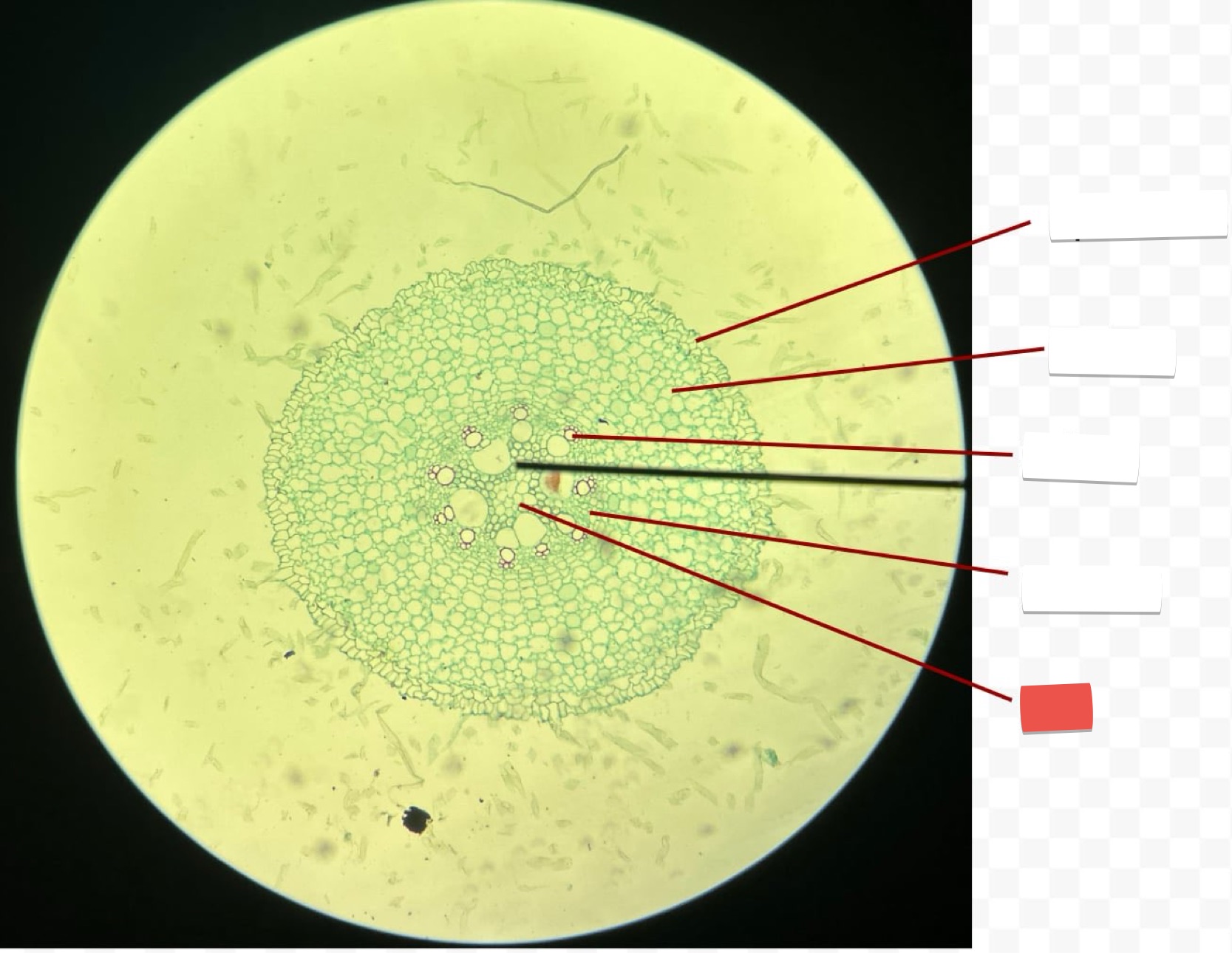
Commelina benghalensis
identify the specimen
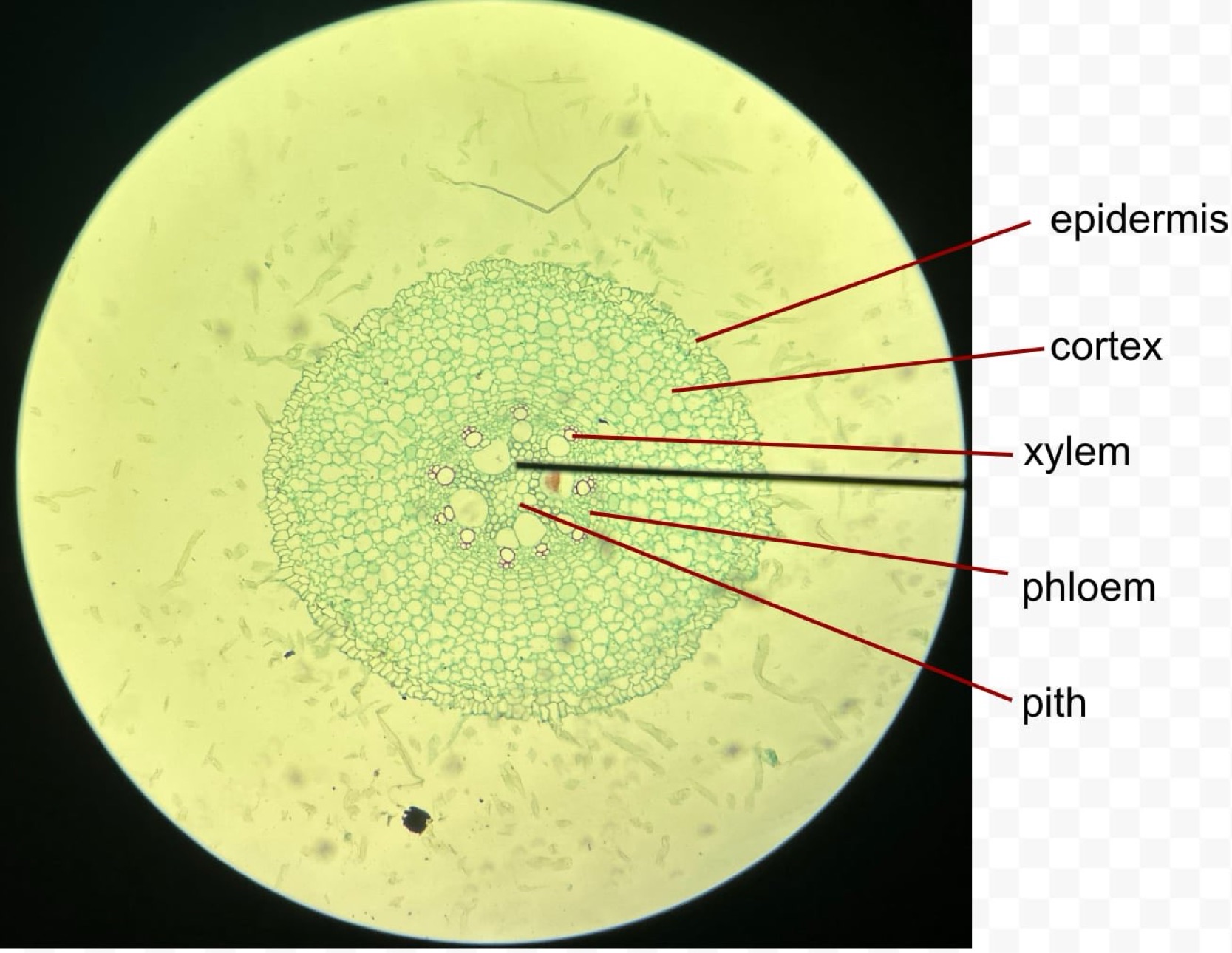
xylem
identify the part in red
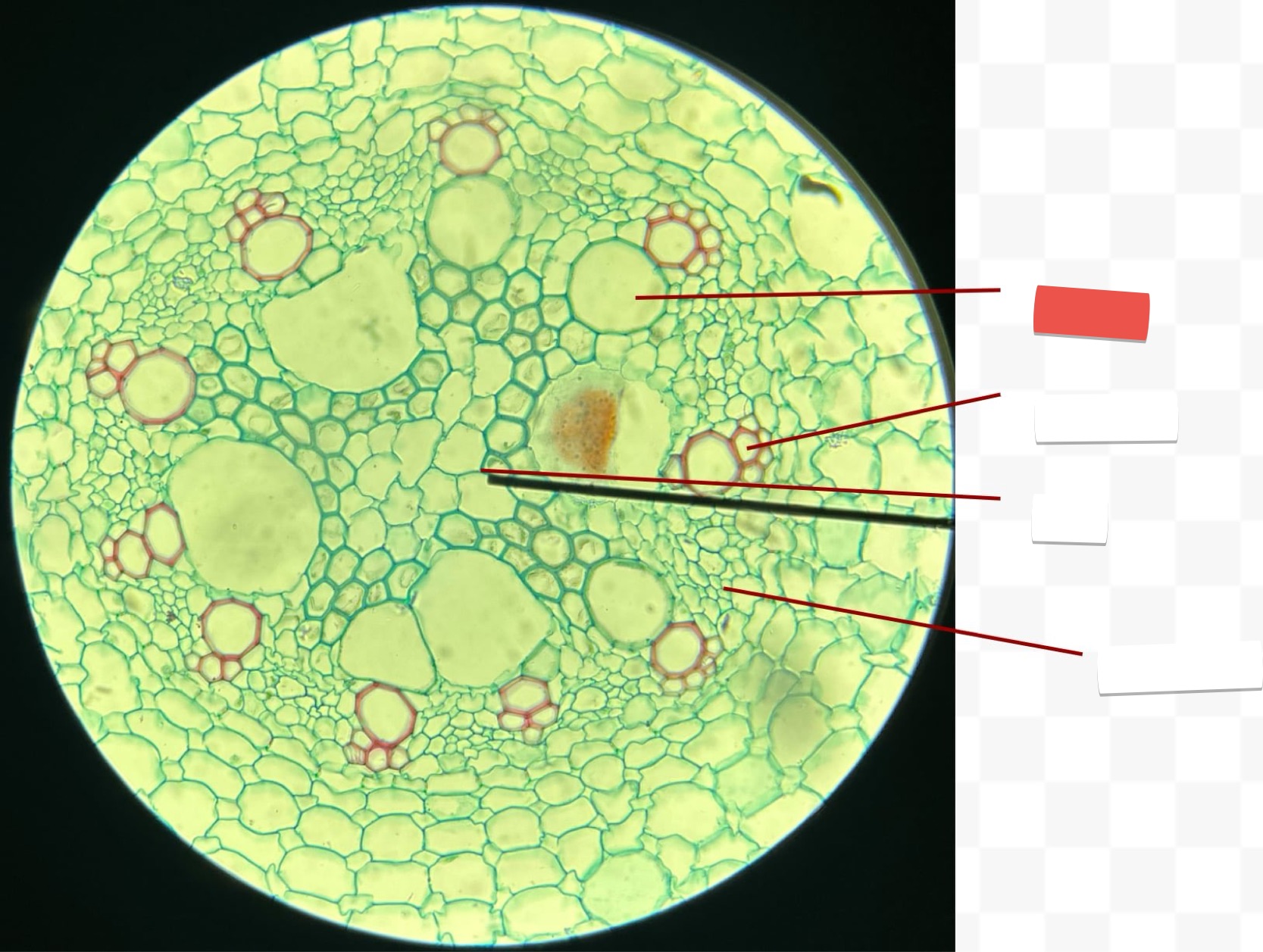
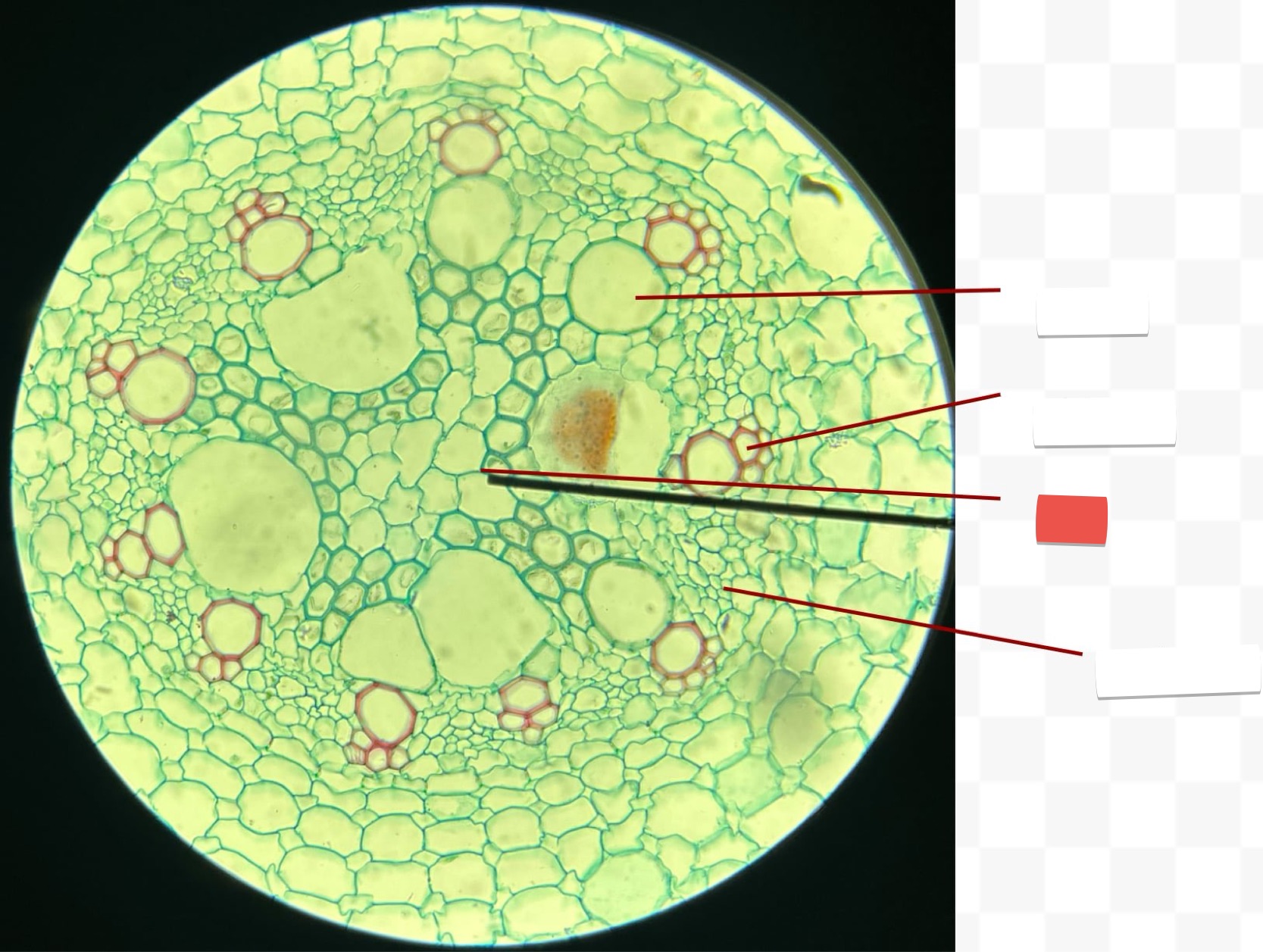
phloem
identify the part in red
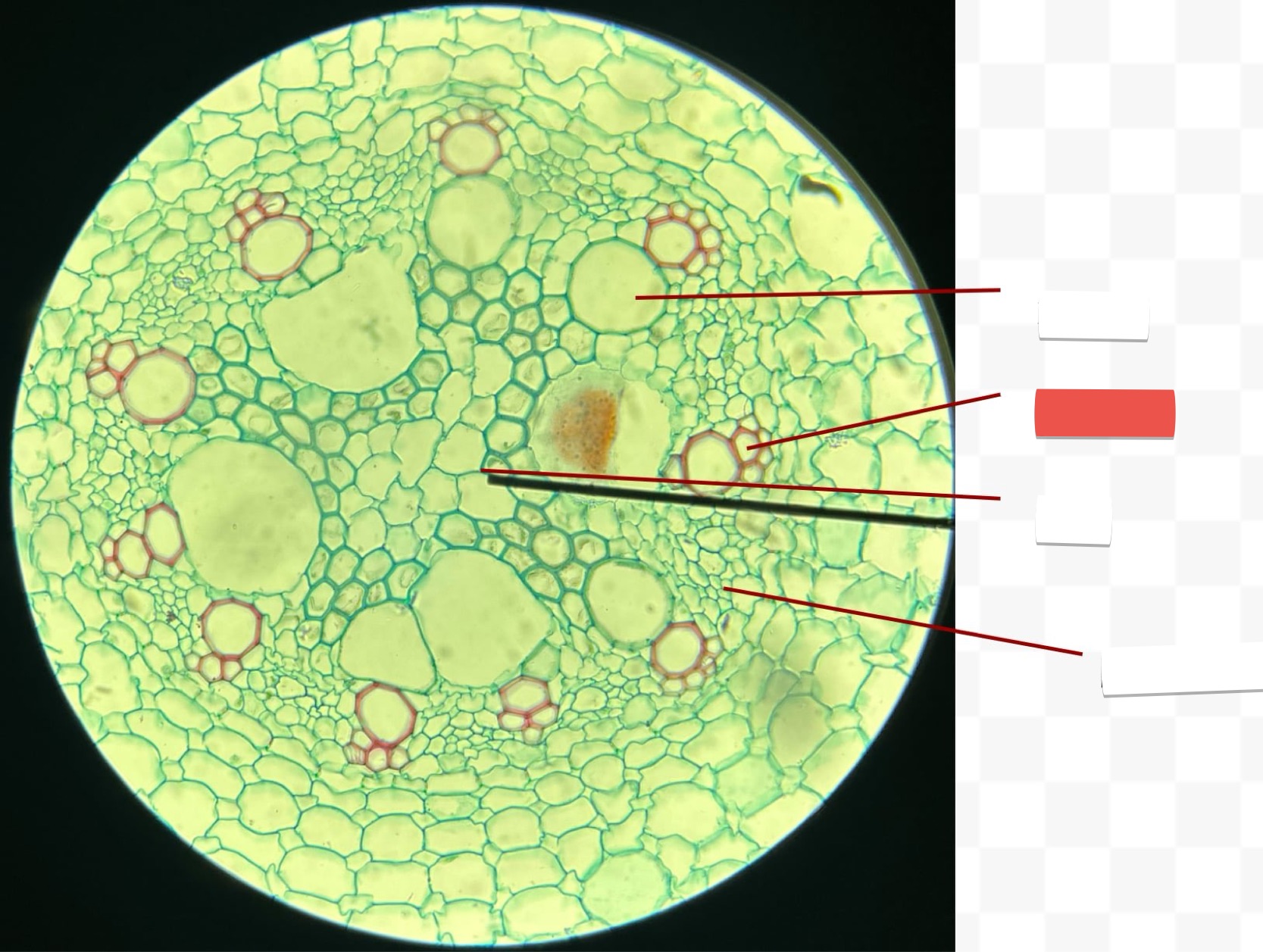
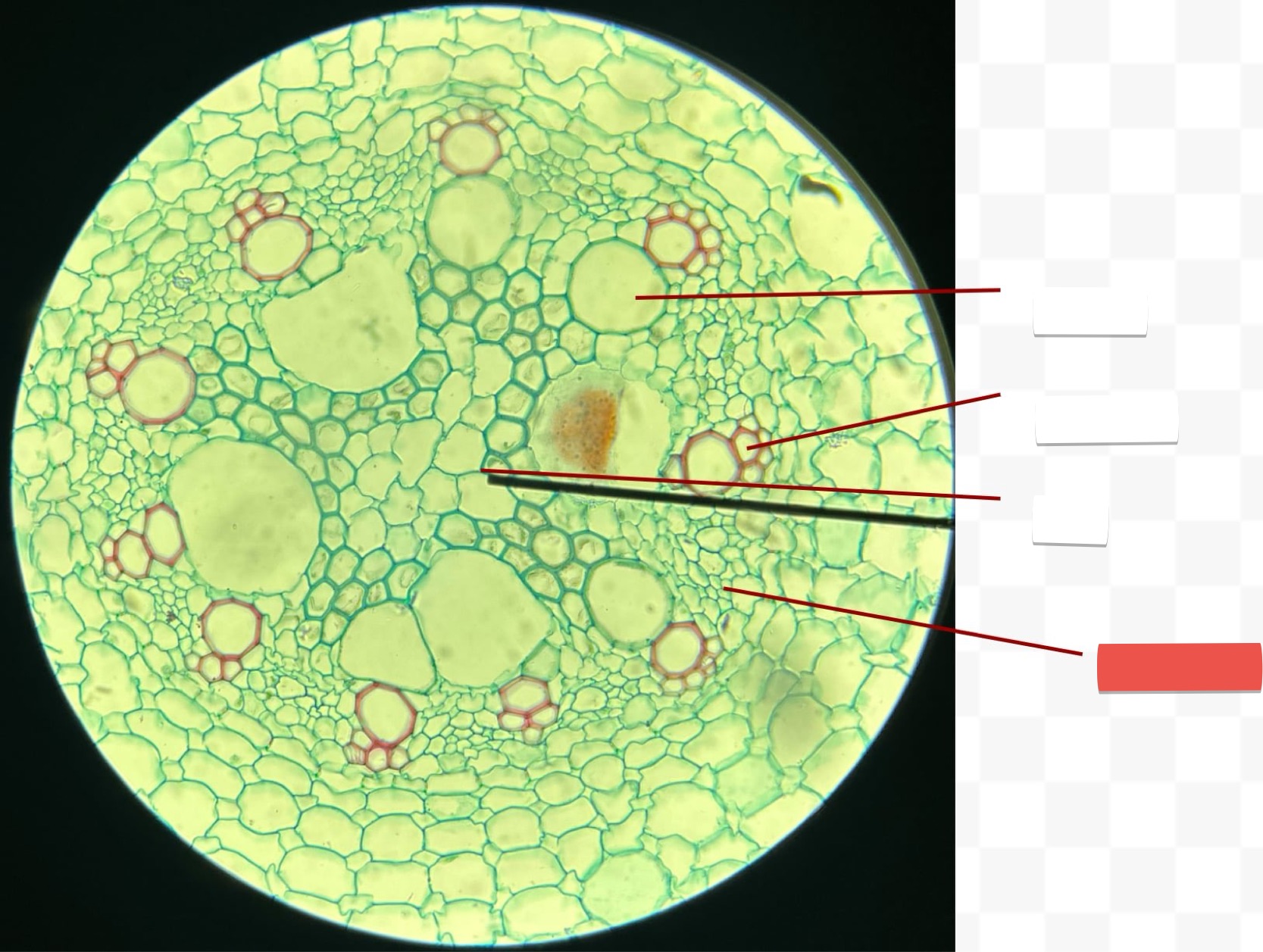
pith
identify the part in red
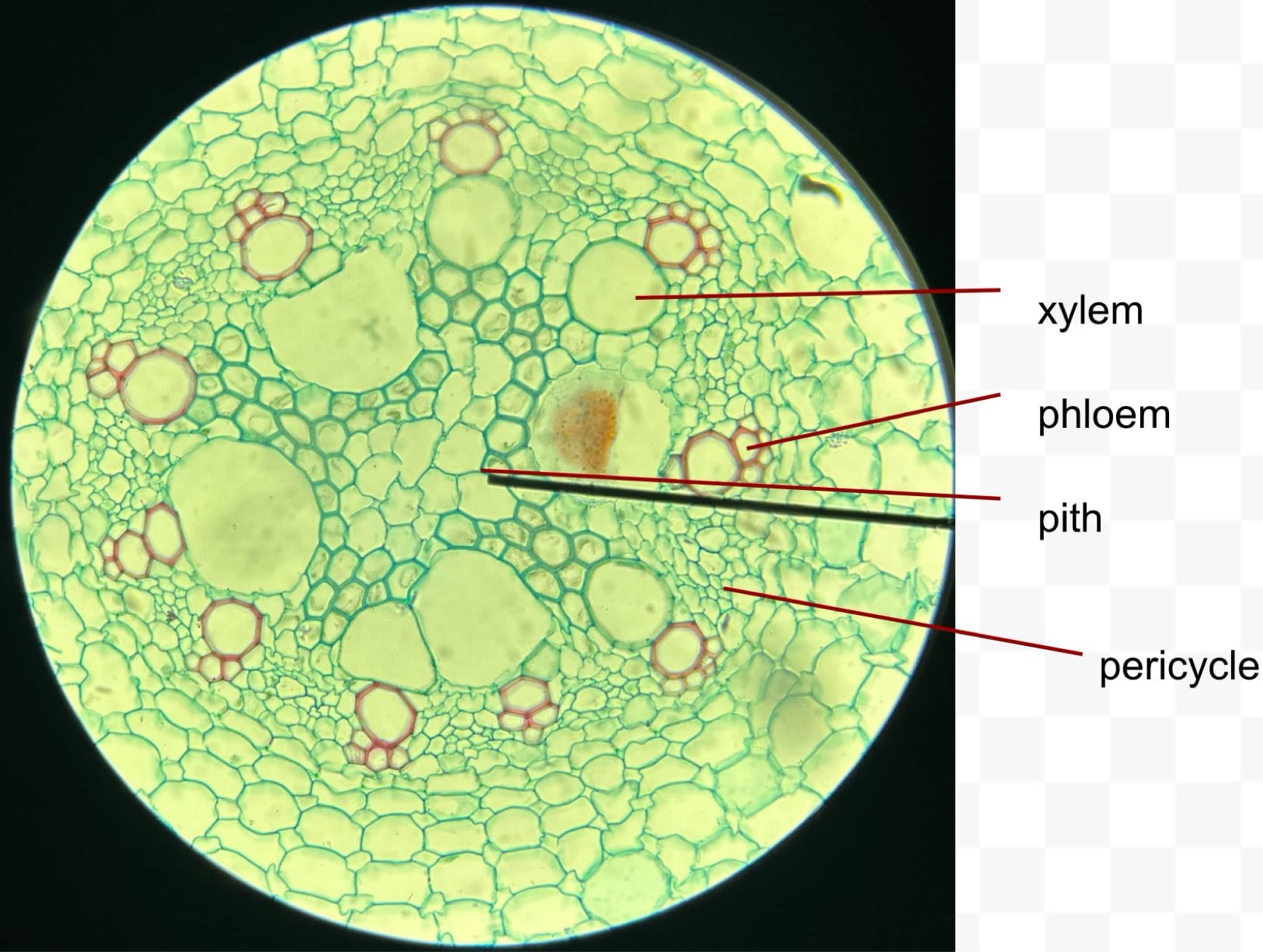
pericycle
identify the part in red
Commelina benghalensis
identify the specimen
cortex
identify the part in red
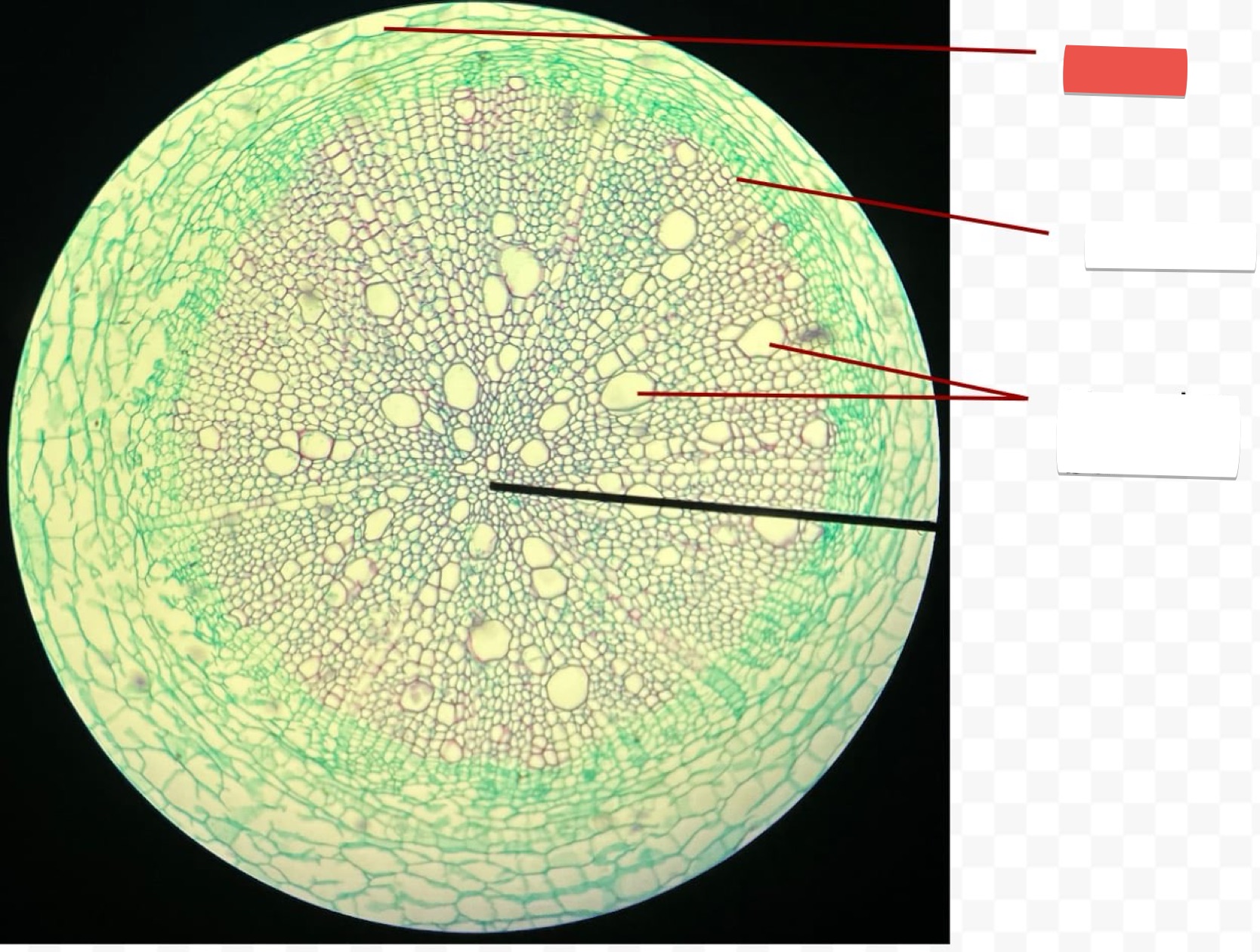
pericycle
identify the part in red
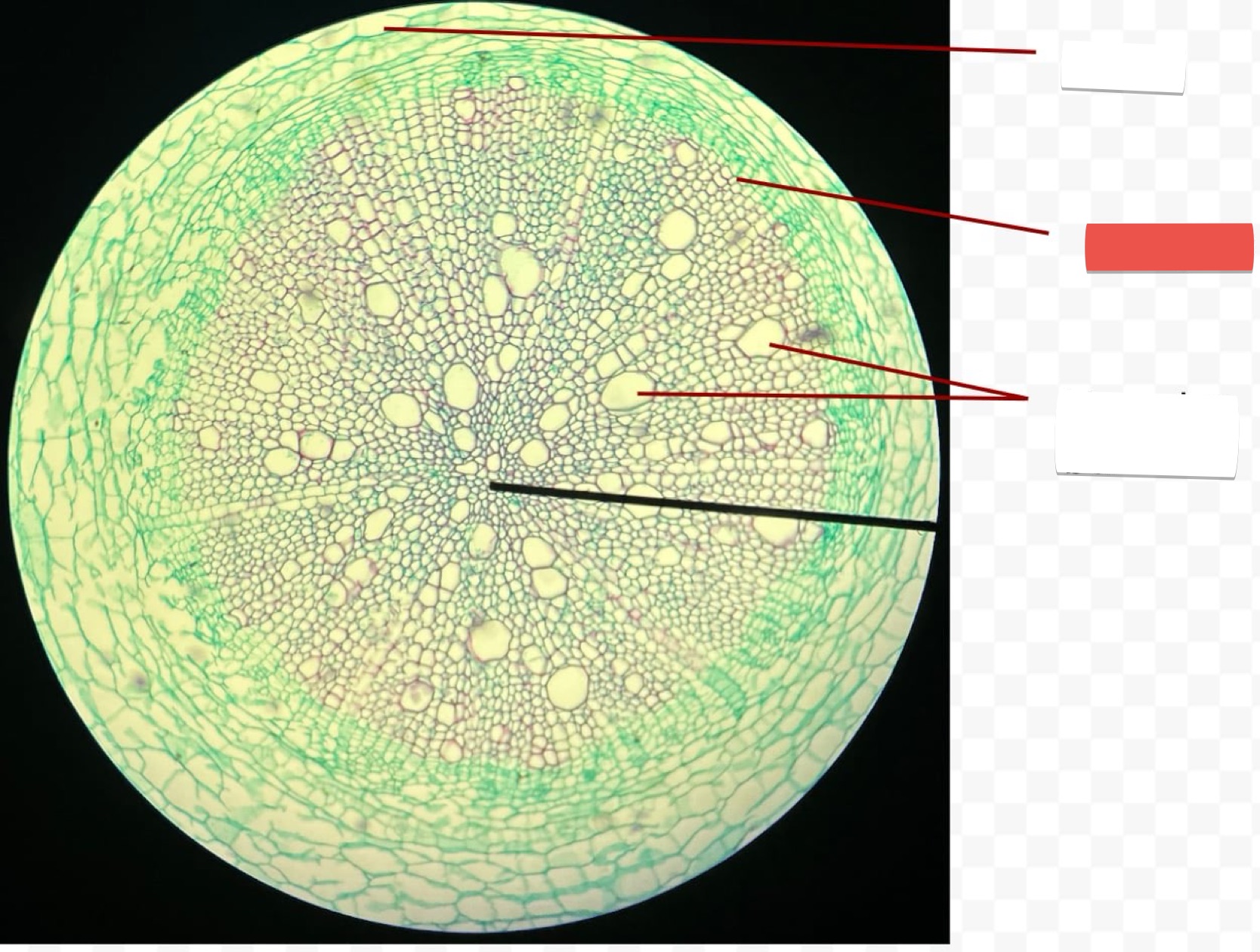
vascular bundles
identify the part in red
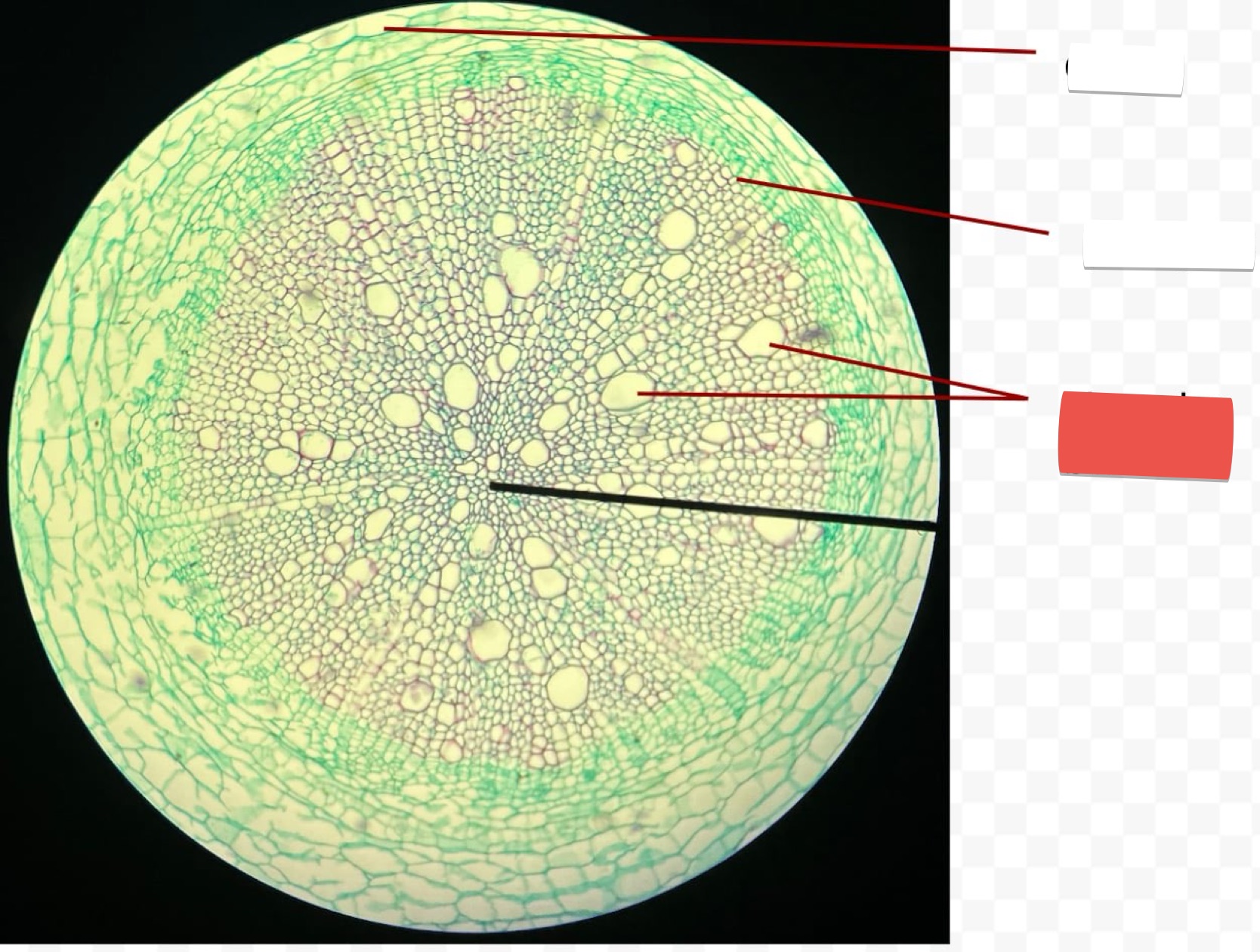
Helianthus
identify the specimen
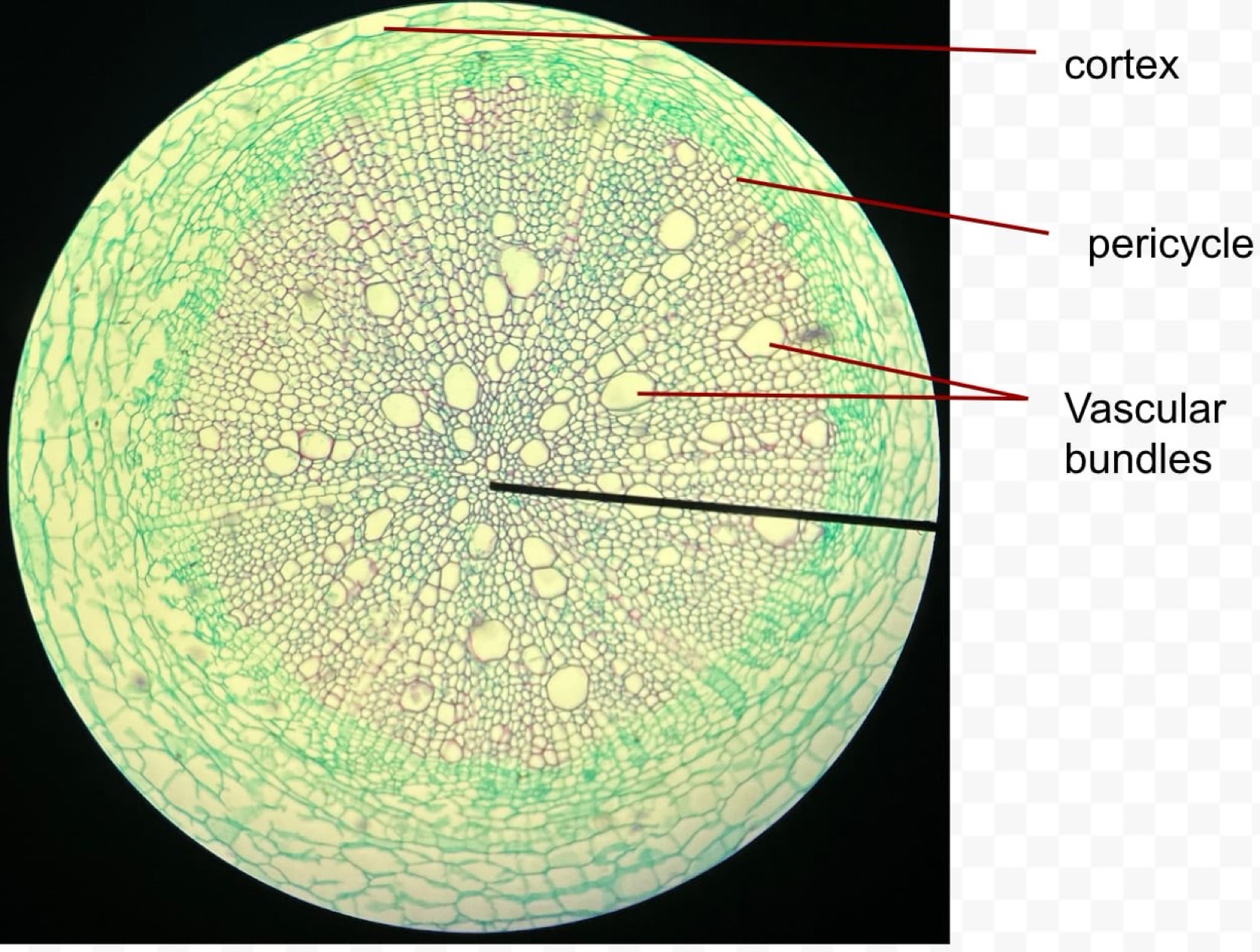
cortex
identify the part in red
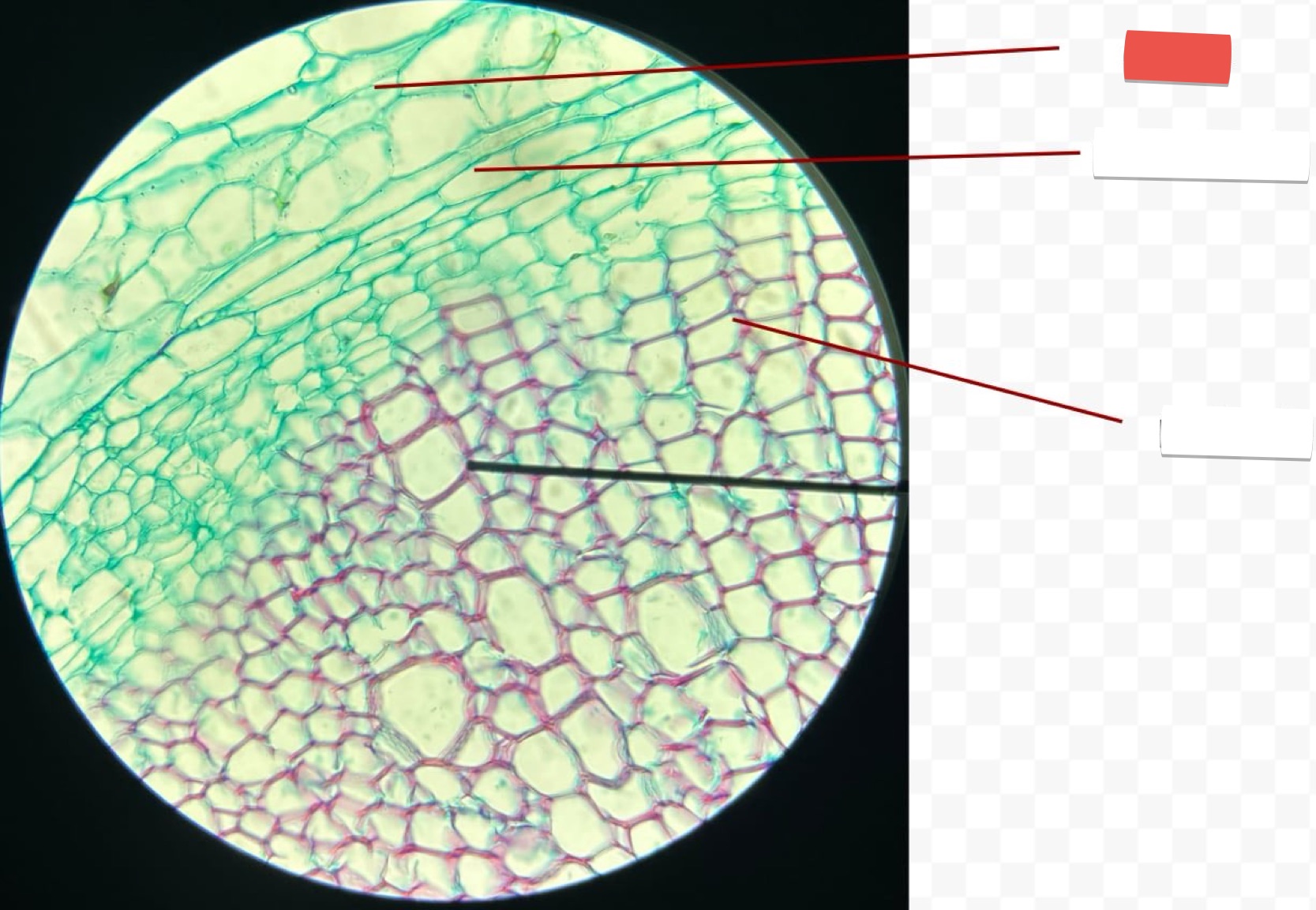
endodermis
identify the part in red
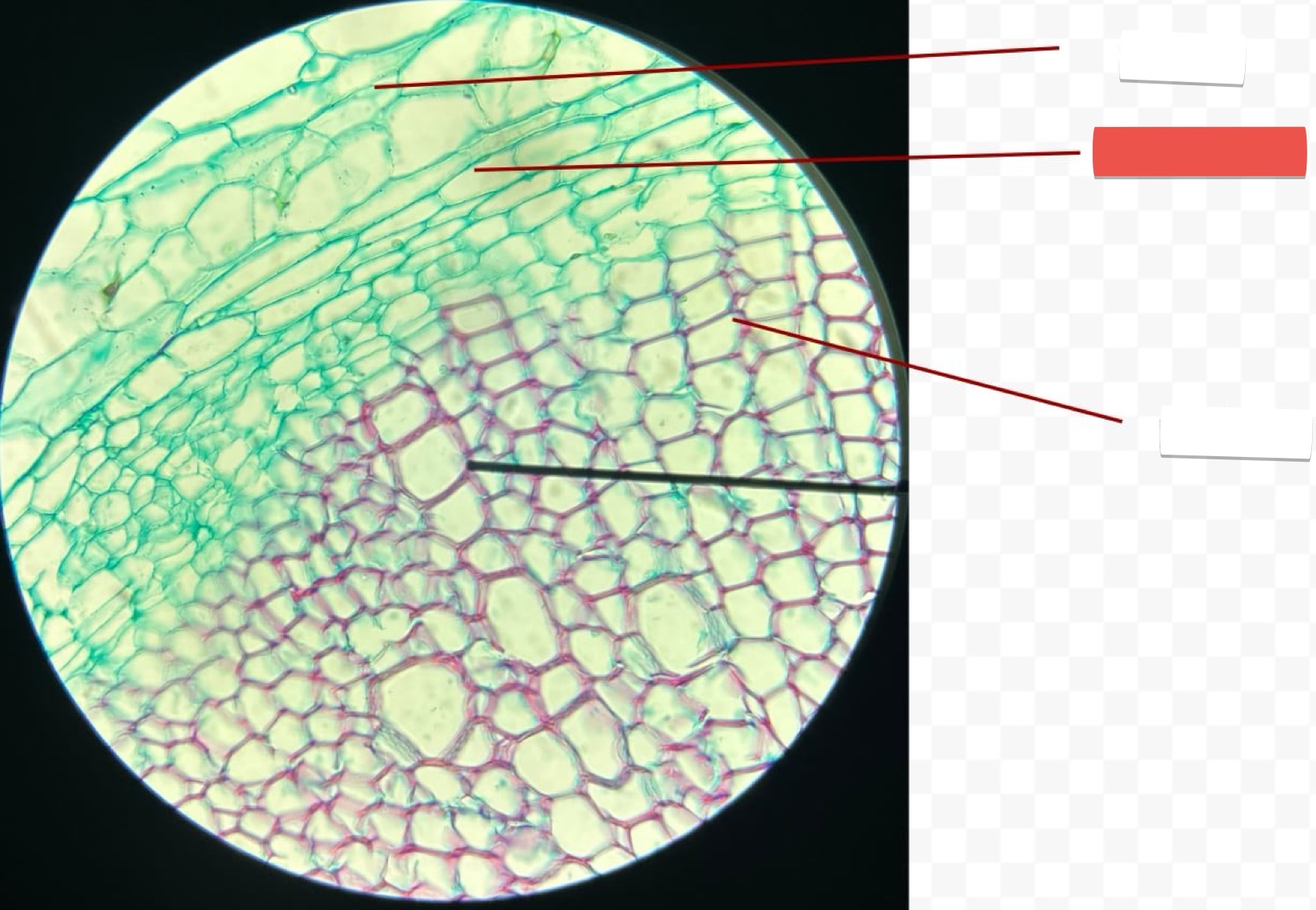
pericycle
identify the part in red
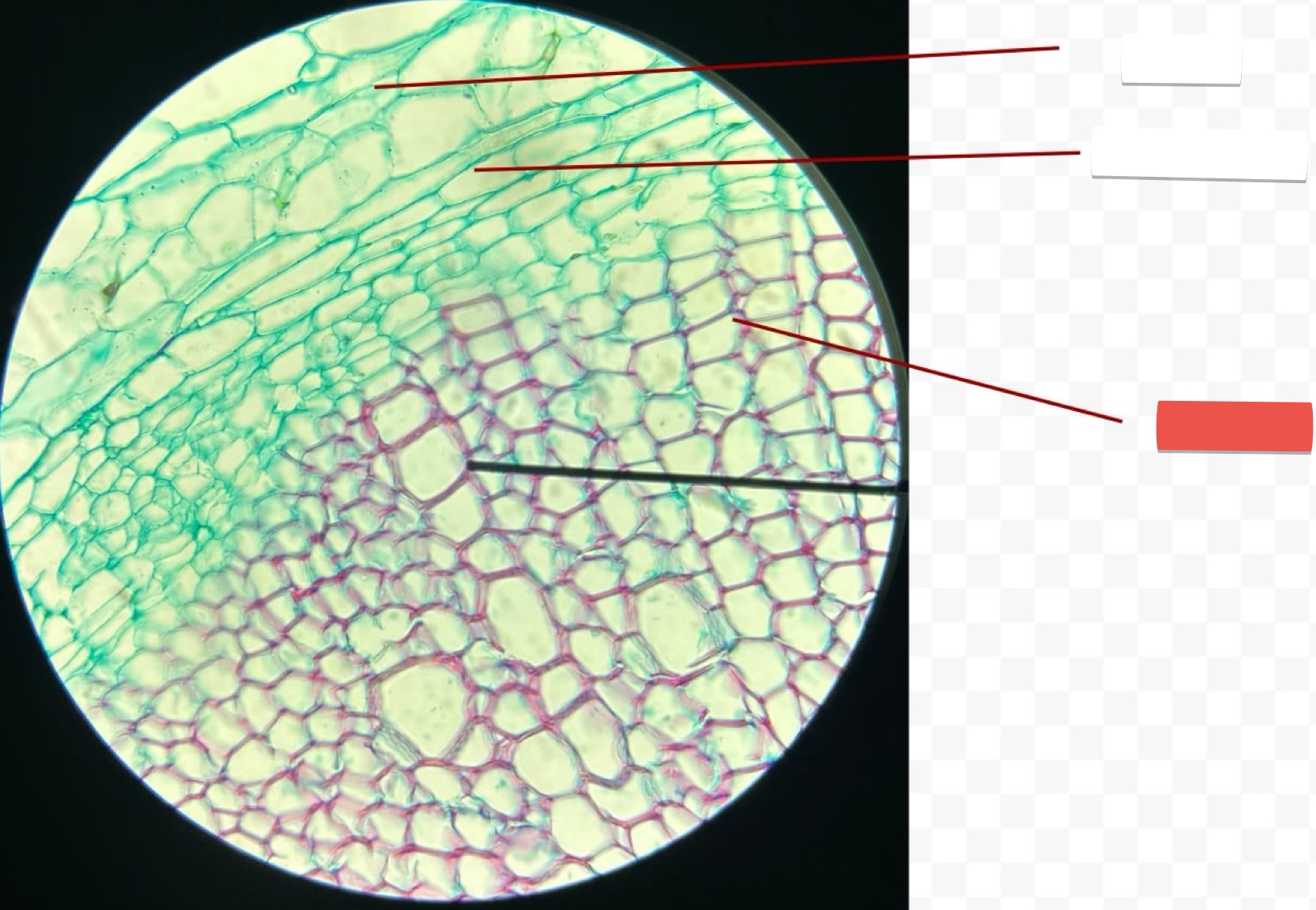
Helianthus
identify the specimen
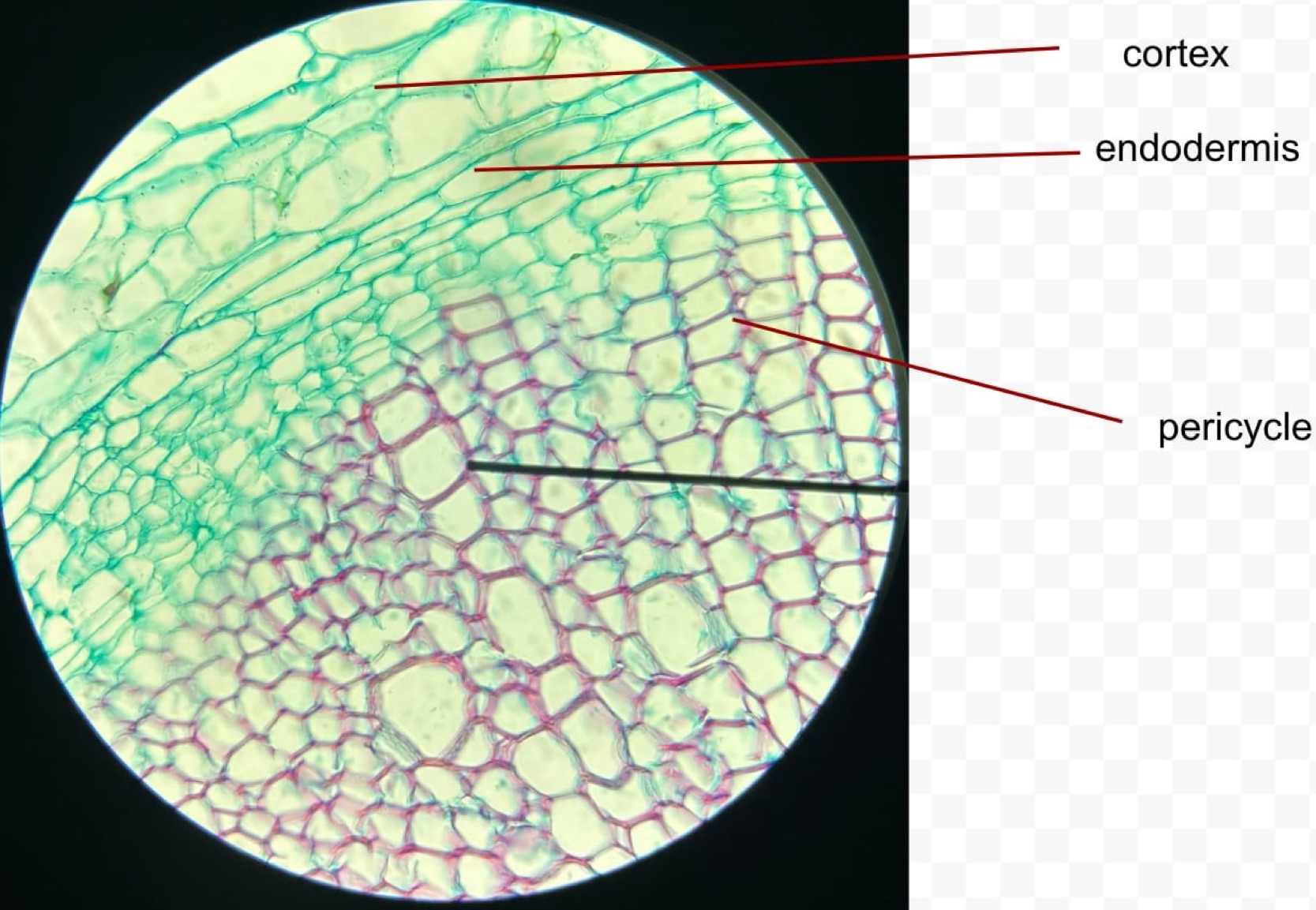
vascular cylinder
identify the part in red
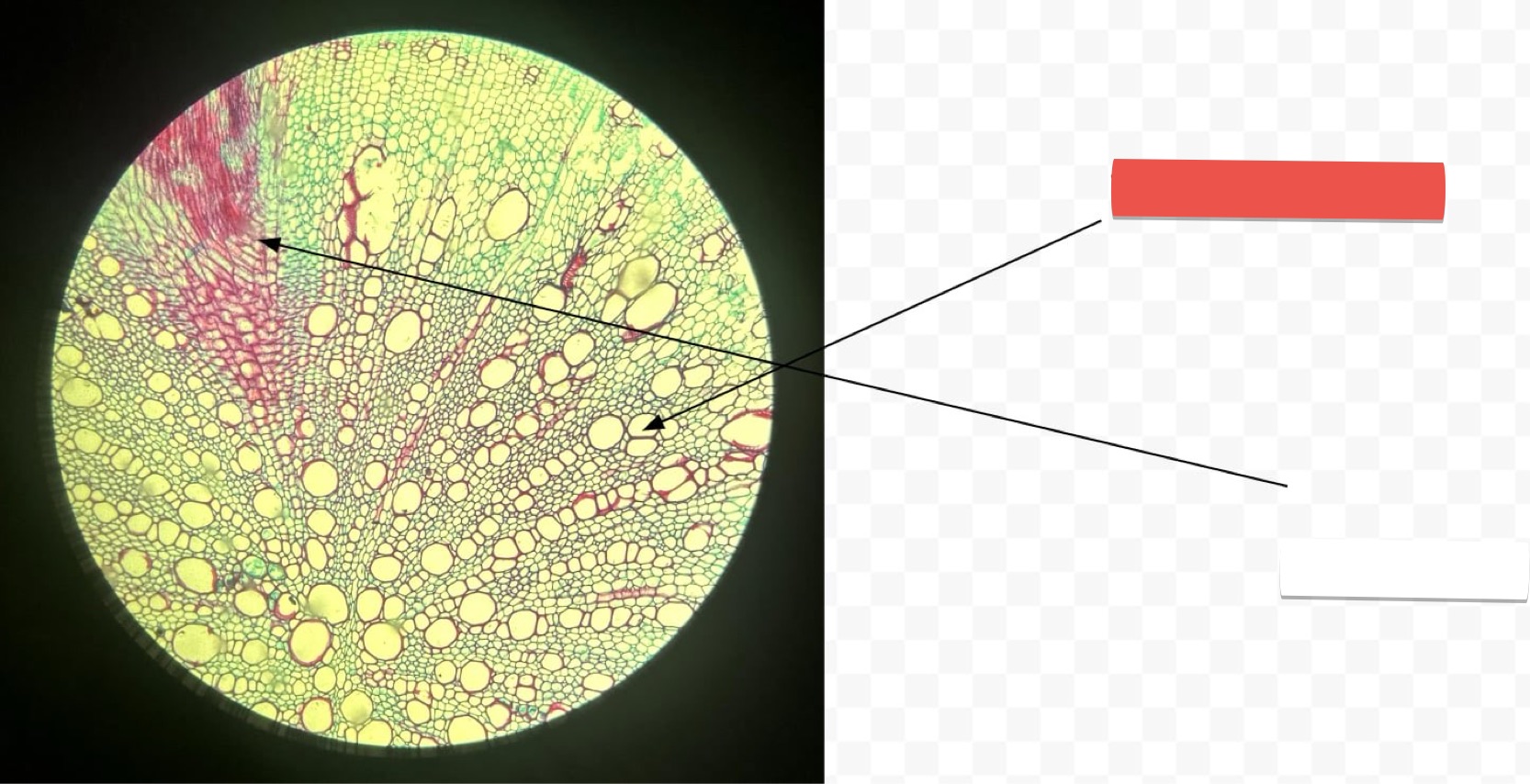
lateral root
identify the part in red
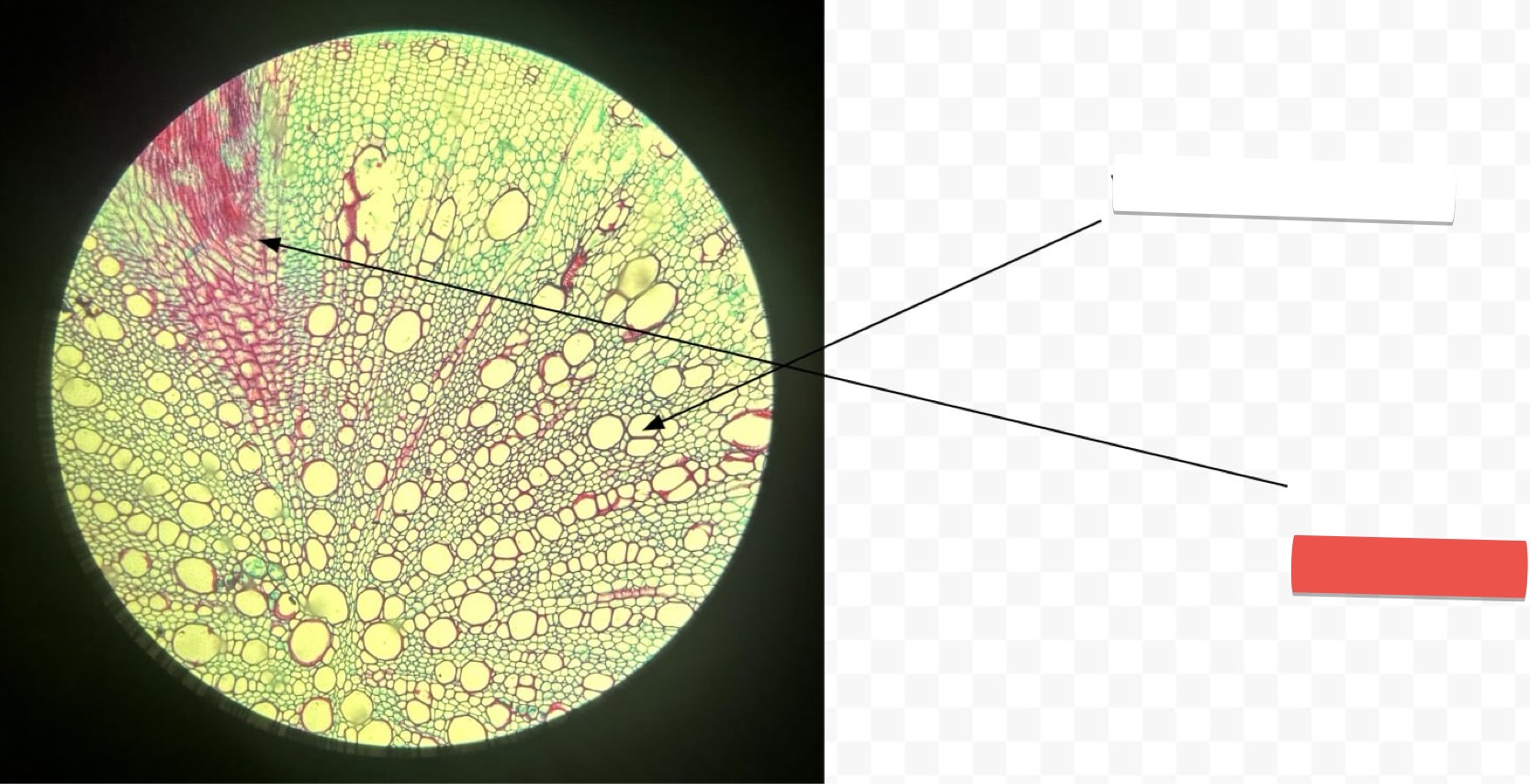
pericycle
origin of lateral roots
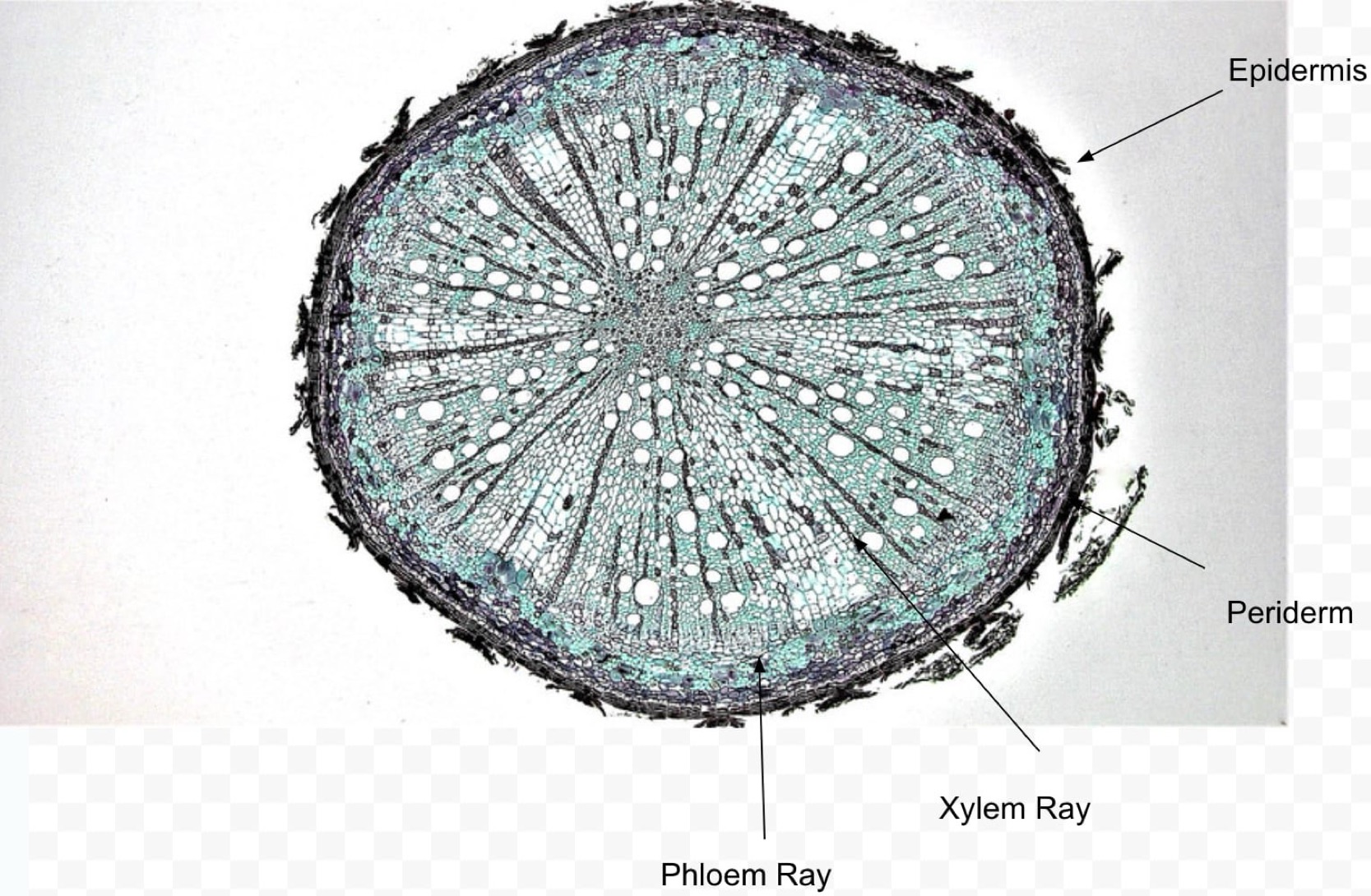
epidermis
identify the part in red
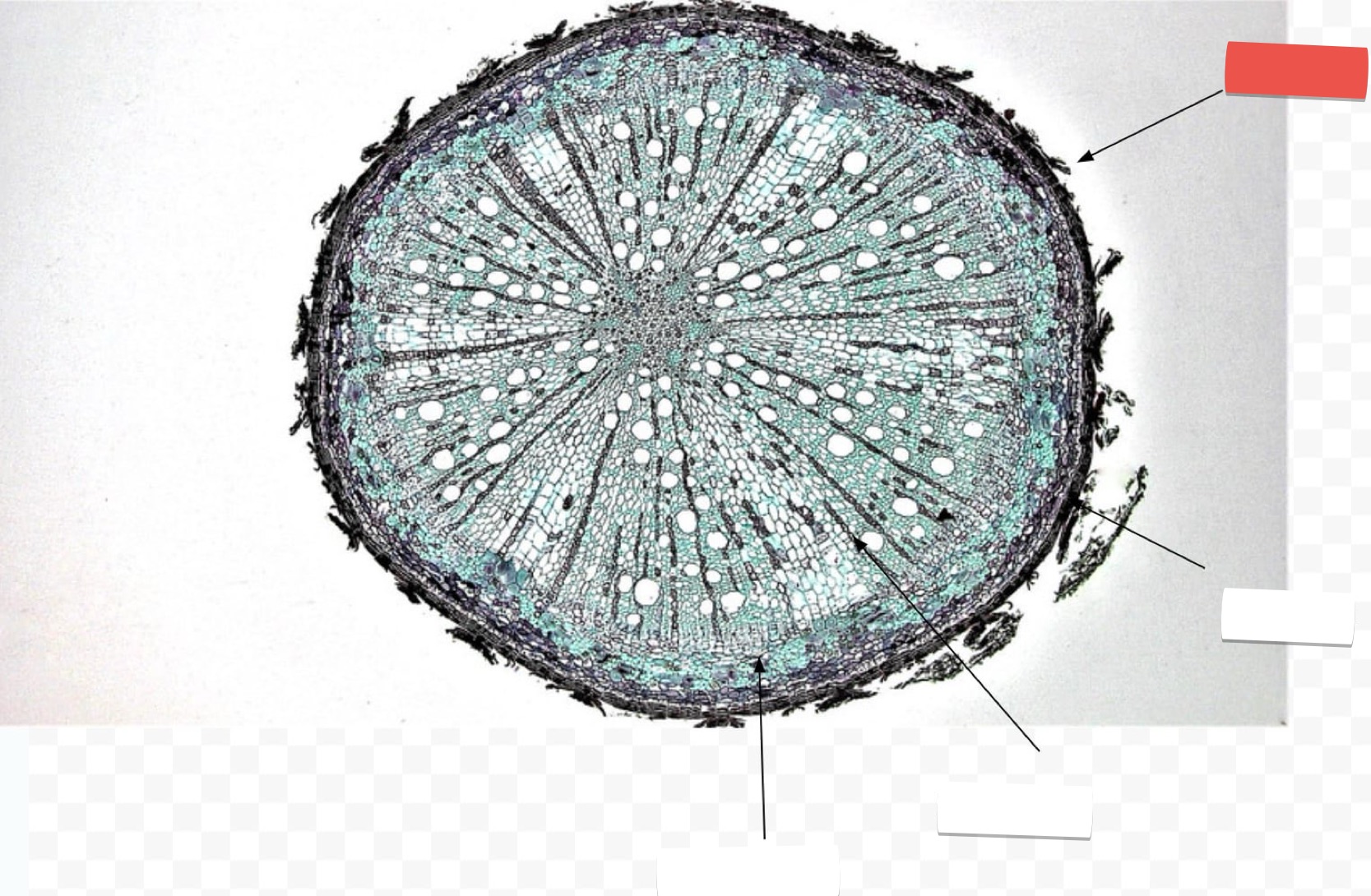
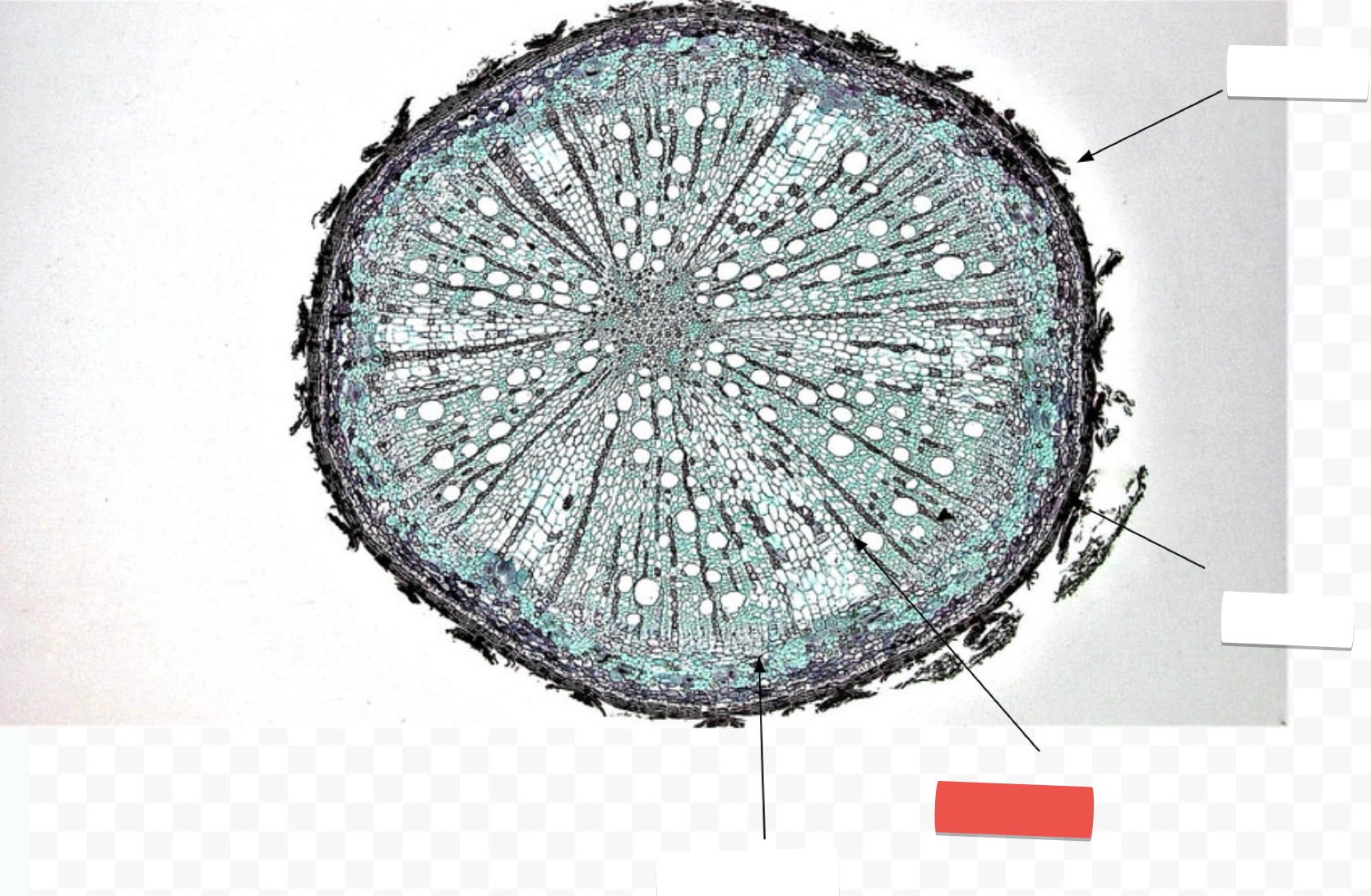
periderm
identify the part in red
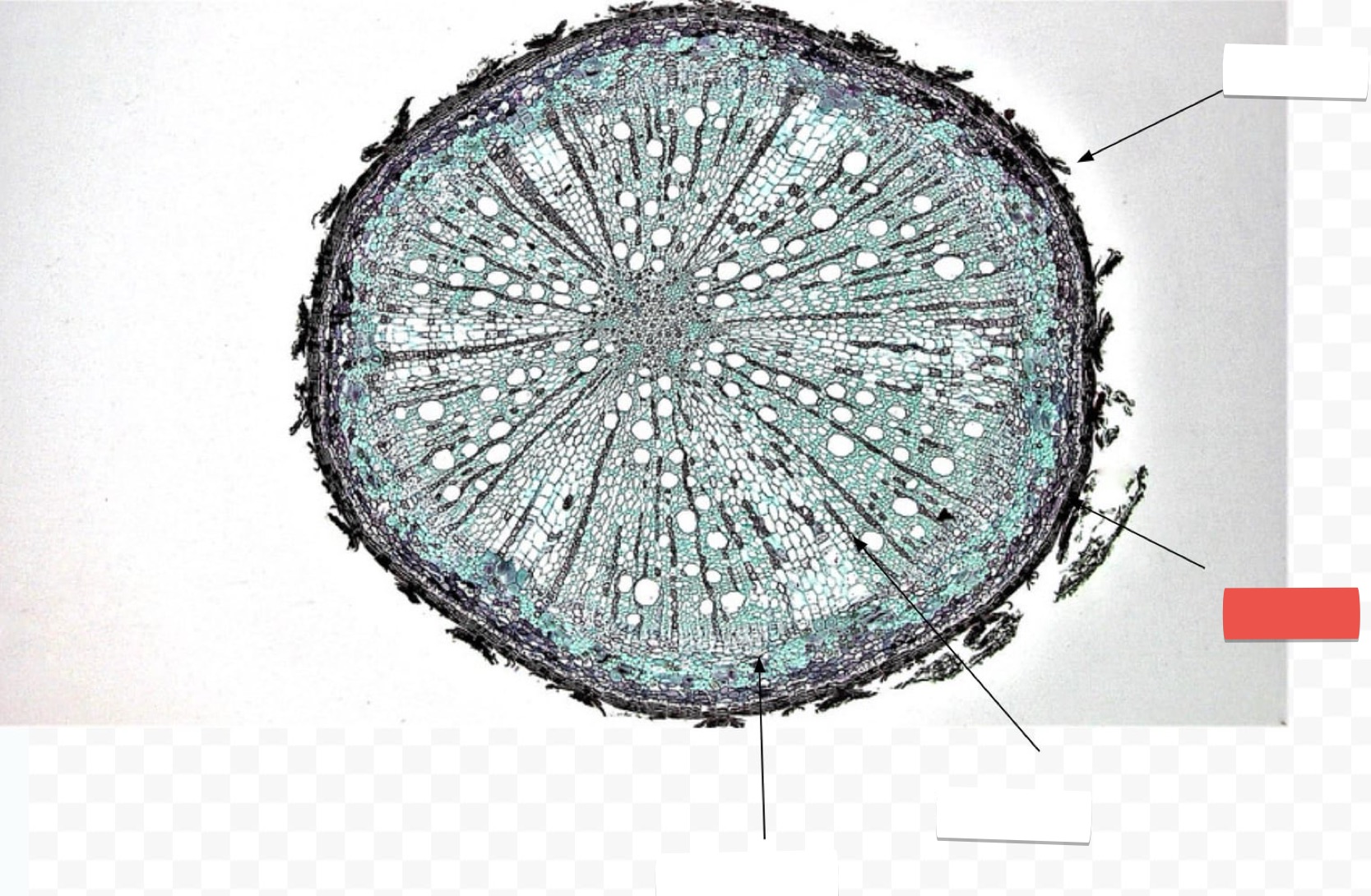
xylem ray
identify the part in red
phloem ray
identify the part in red
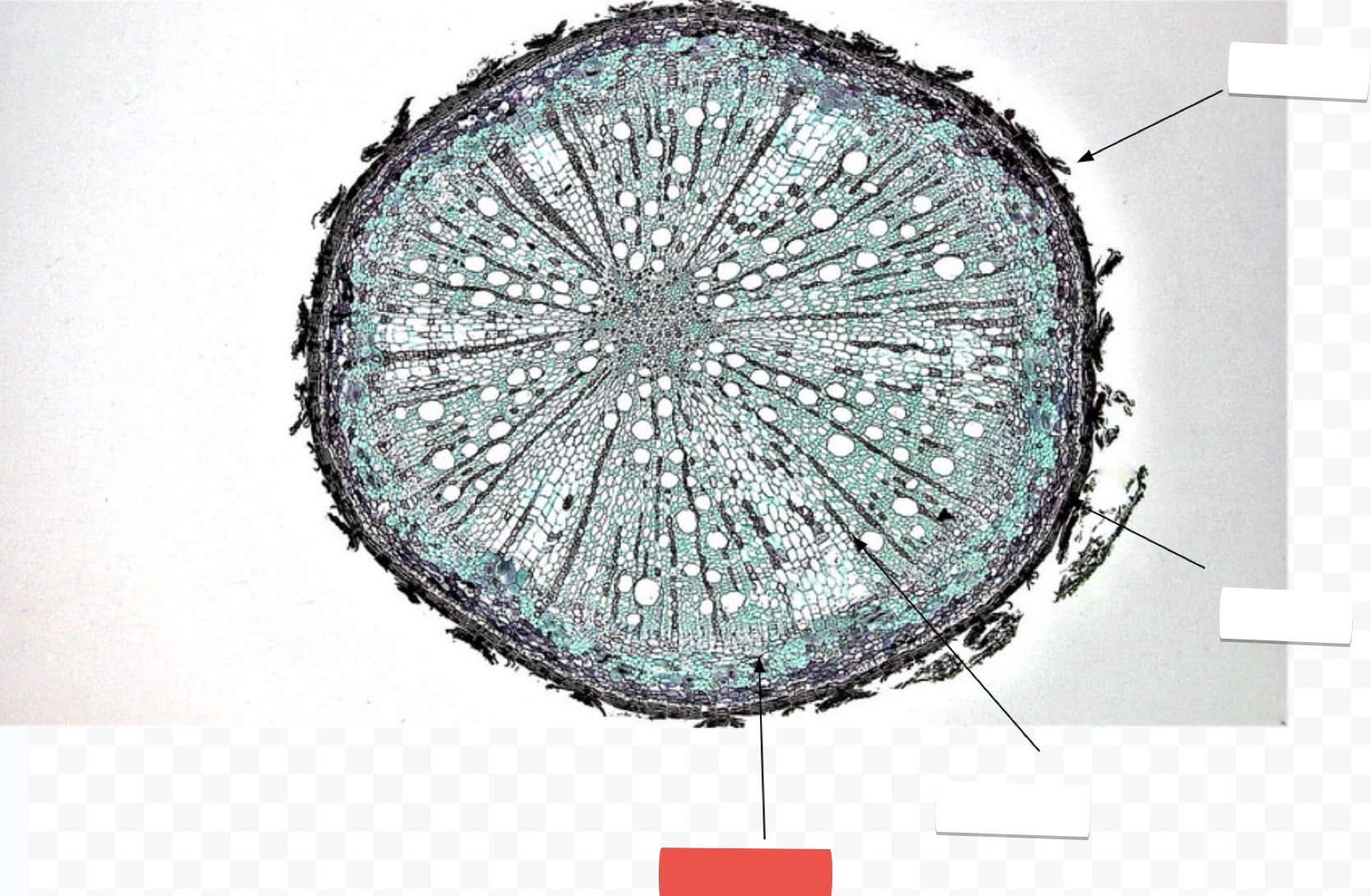
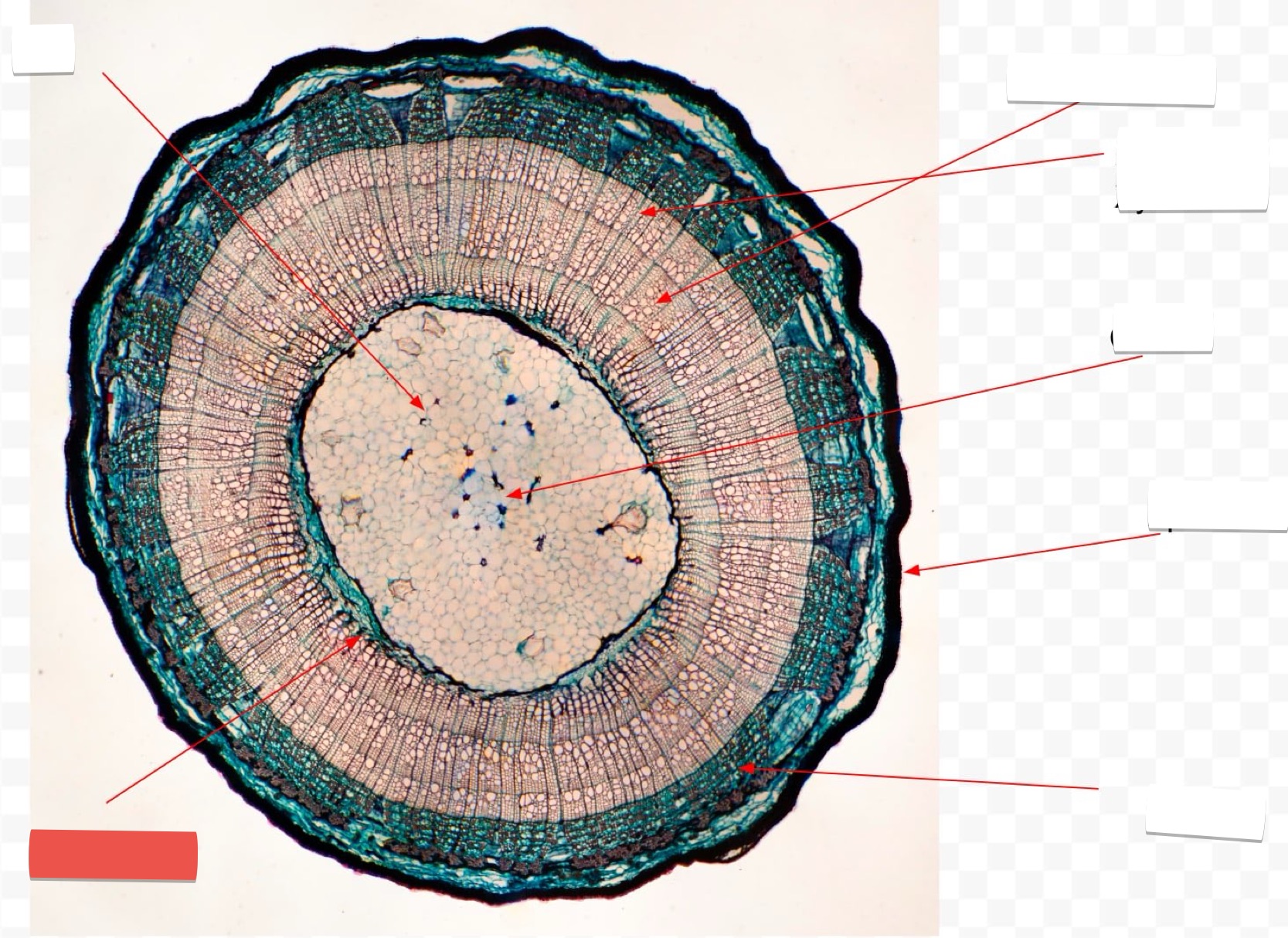
Older Quercus root cross section
identify the specimen
primary xylem
identify the part in red
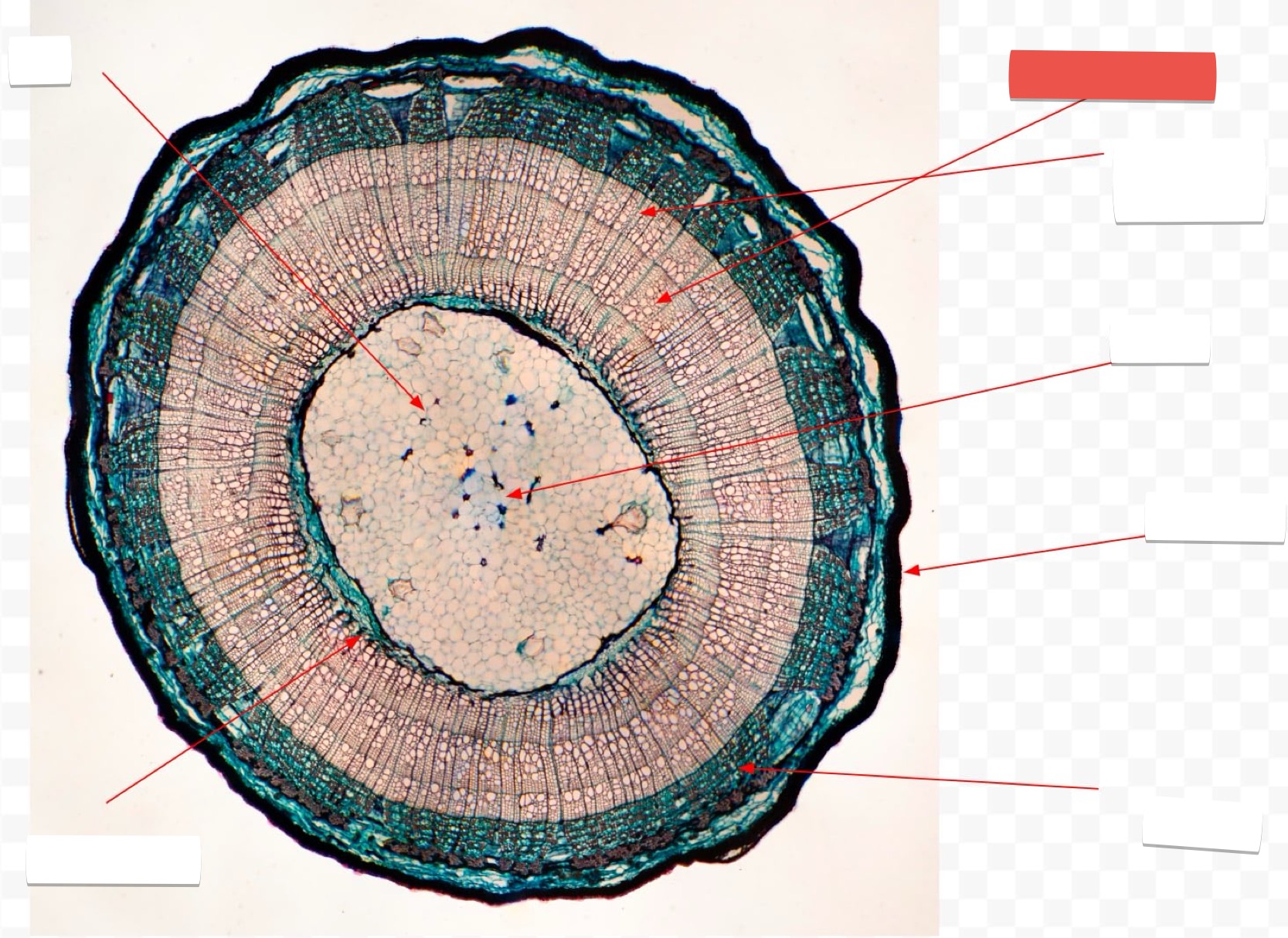
pith
identify the part in red
(not sure if this right)
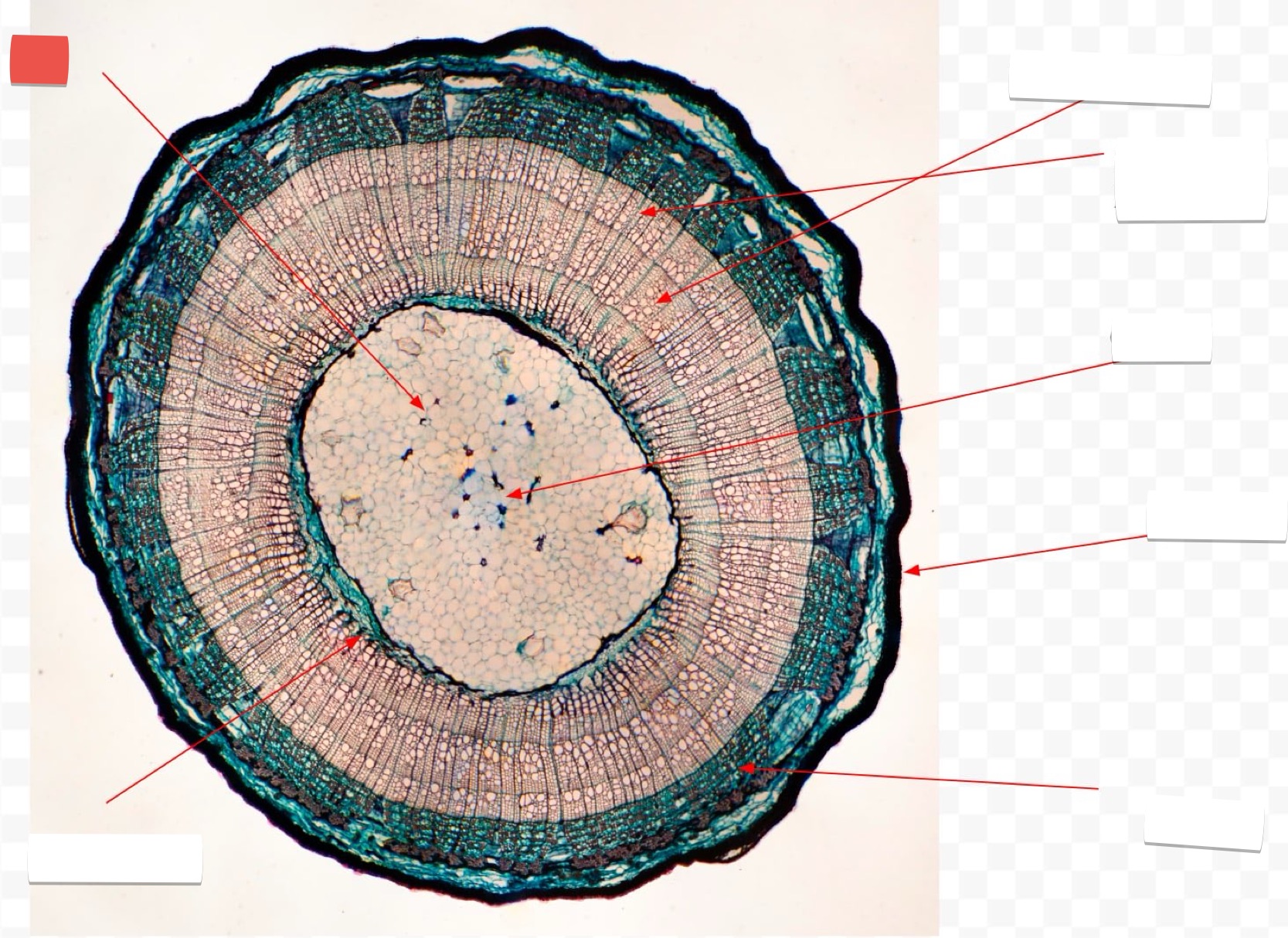
secondary xylem
identify the part in red
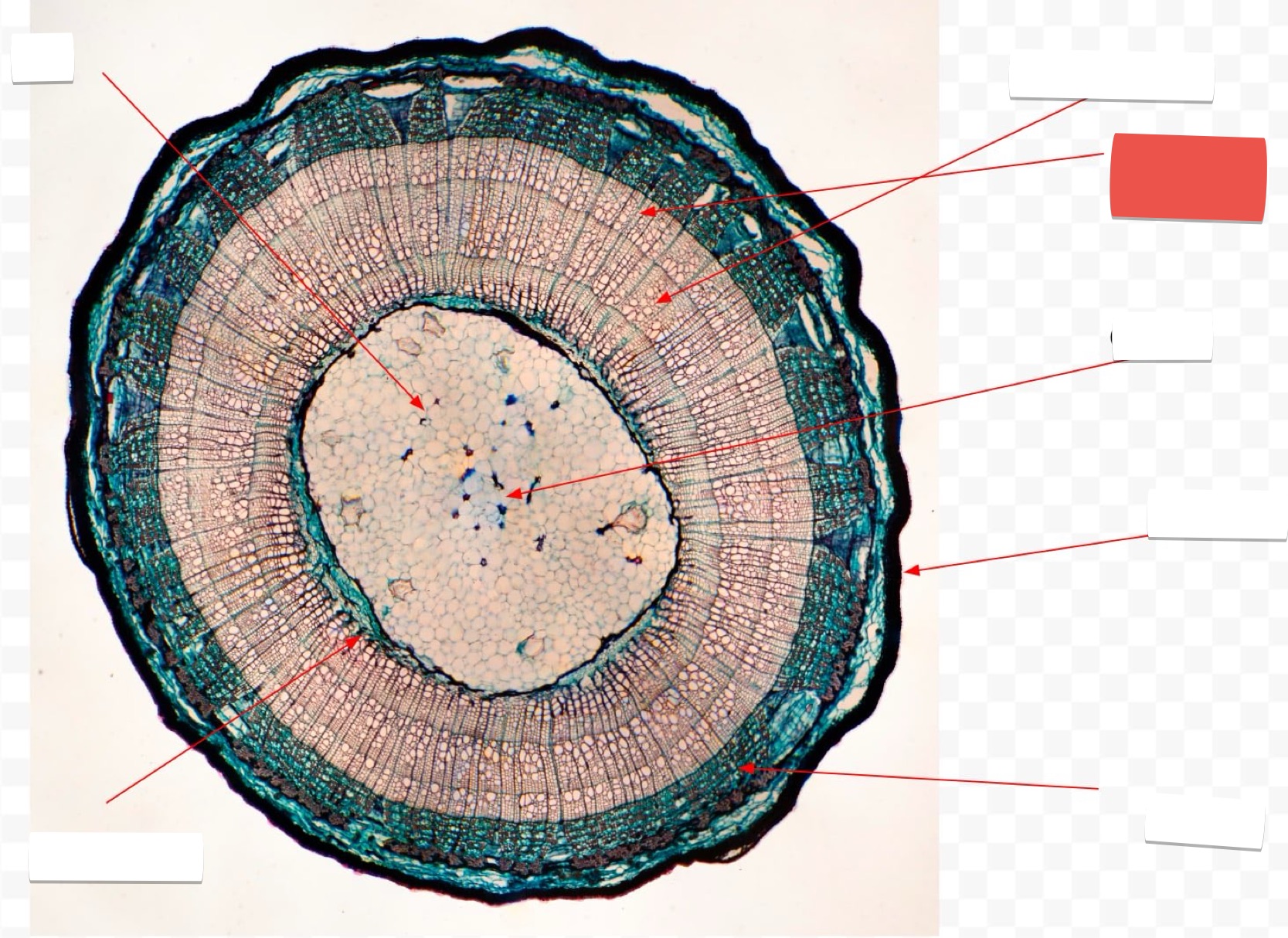
cortex
identify the part in red
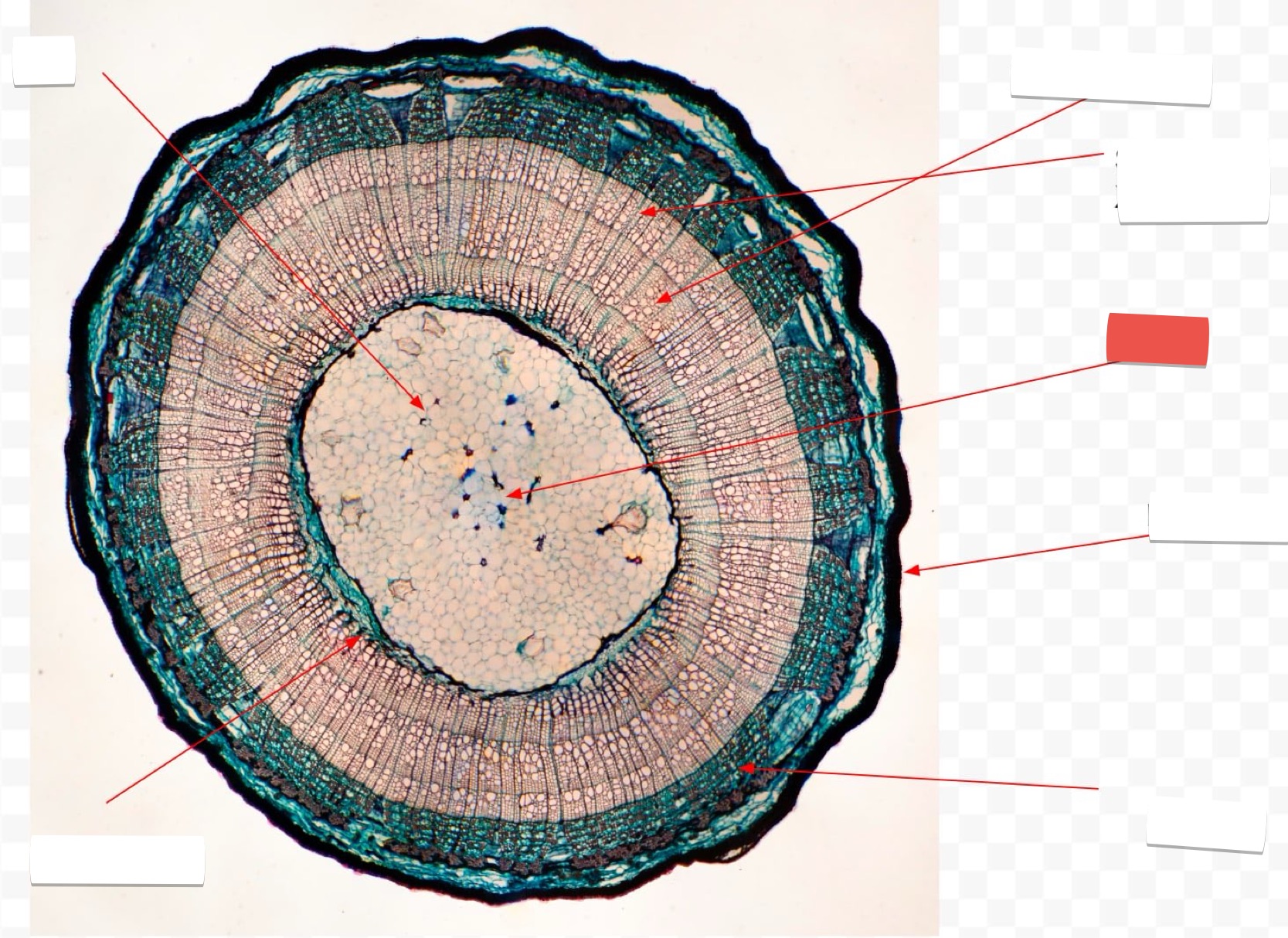
epidermis
identify the part in red
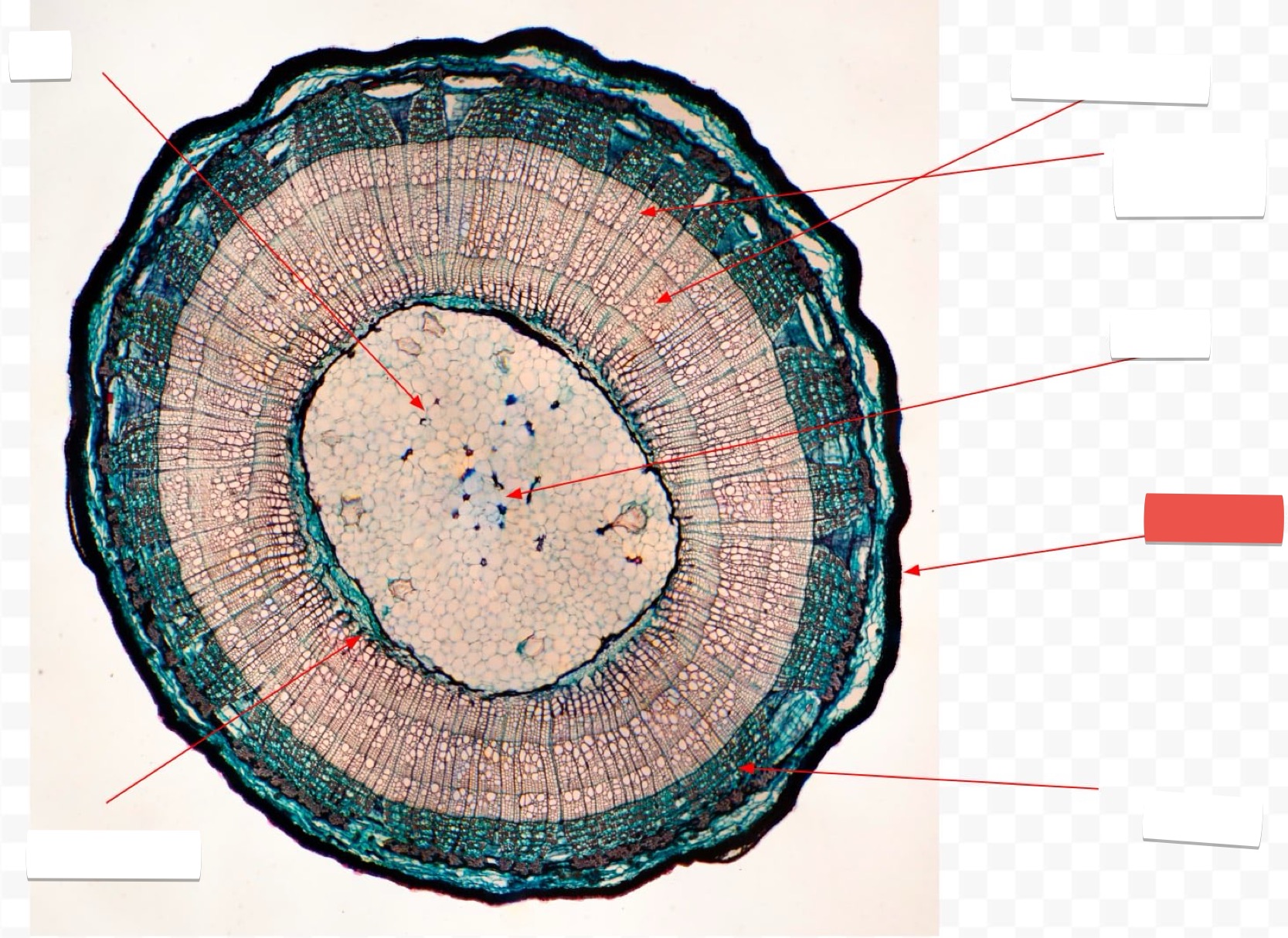
phloem
identify the part in red
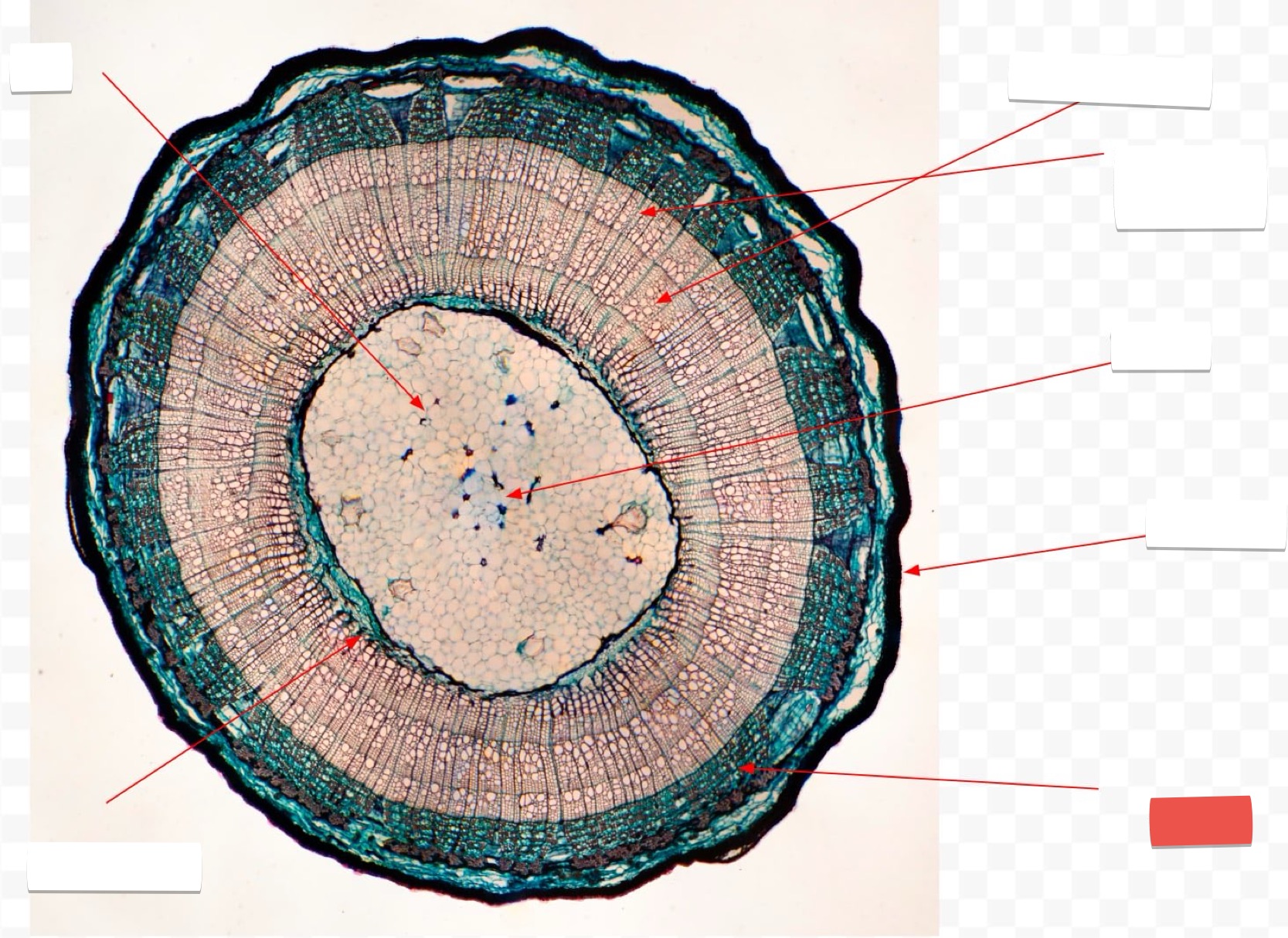
endodermis
identify the part in red
axillary bud
bud located at the angles of the stem (axil) which may develop into branches or flowers
terminal bud
located at the tip of each twig which produces tissues that extend the length of the stem
lenticels
dark spots or elevations in the stem which functions in gas exchange
protoderm
epidermis
procambium
vascular or conducting tissues
ground meristem
cortex and pith
apical meristem
identify the part in red
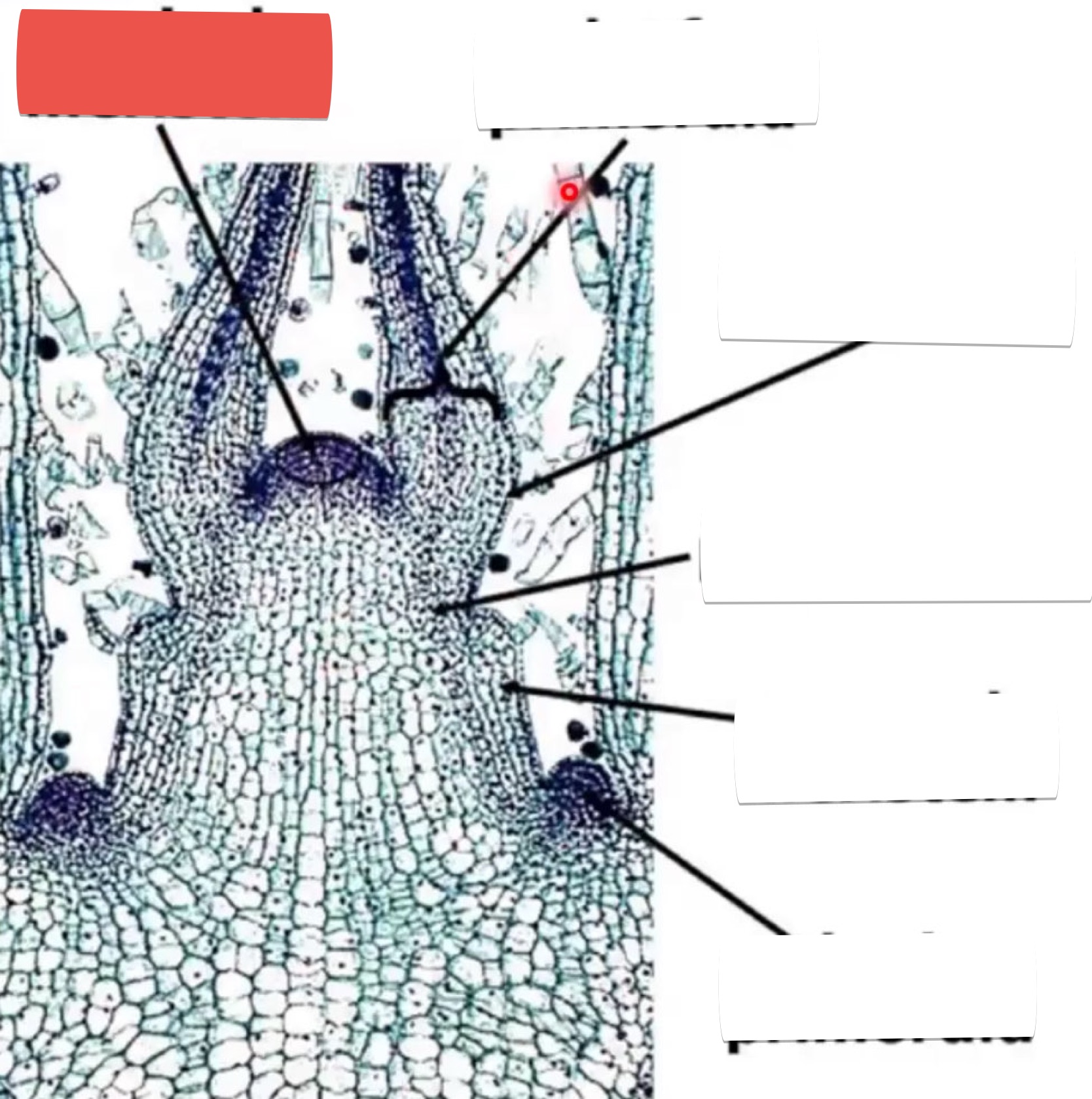
leaf primordia
identify the part in red
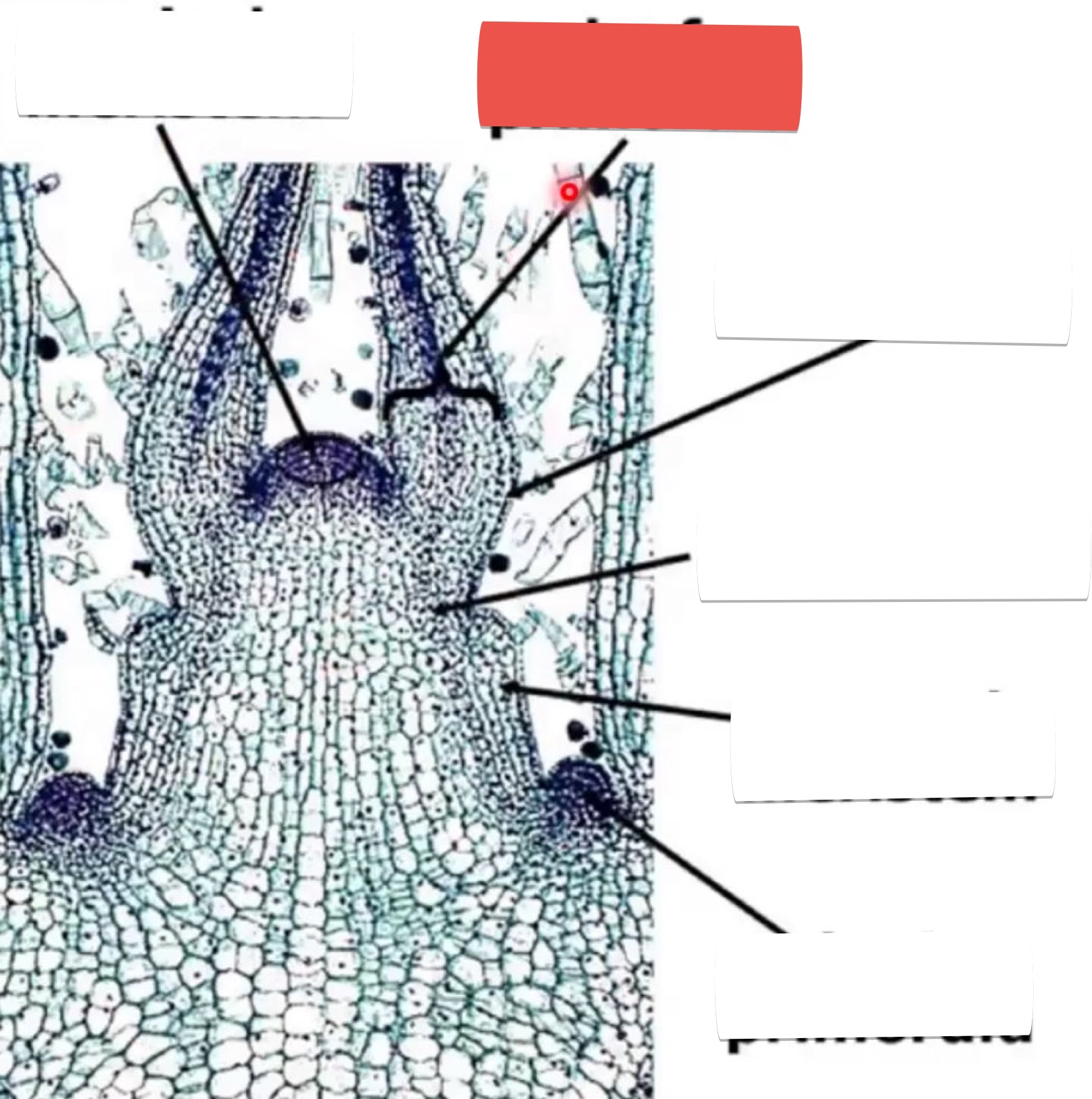
protoderm
identify the part in red
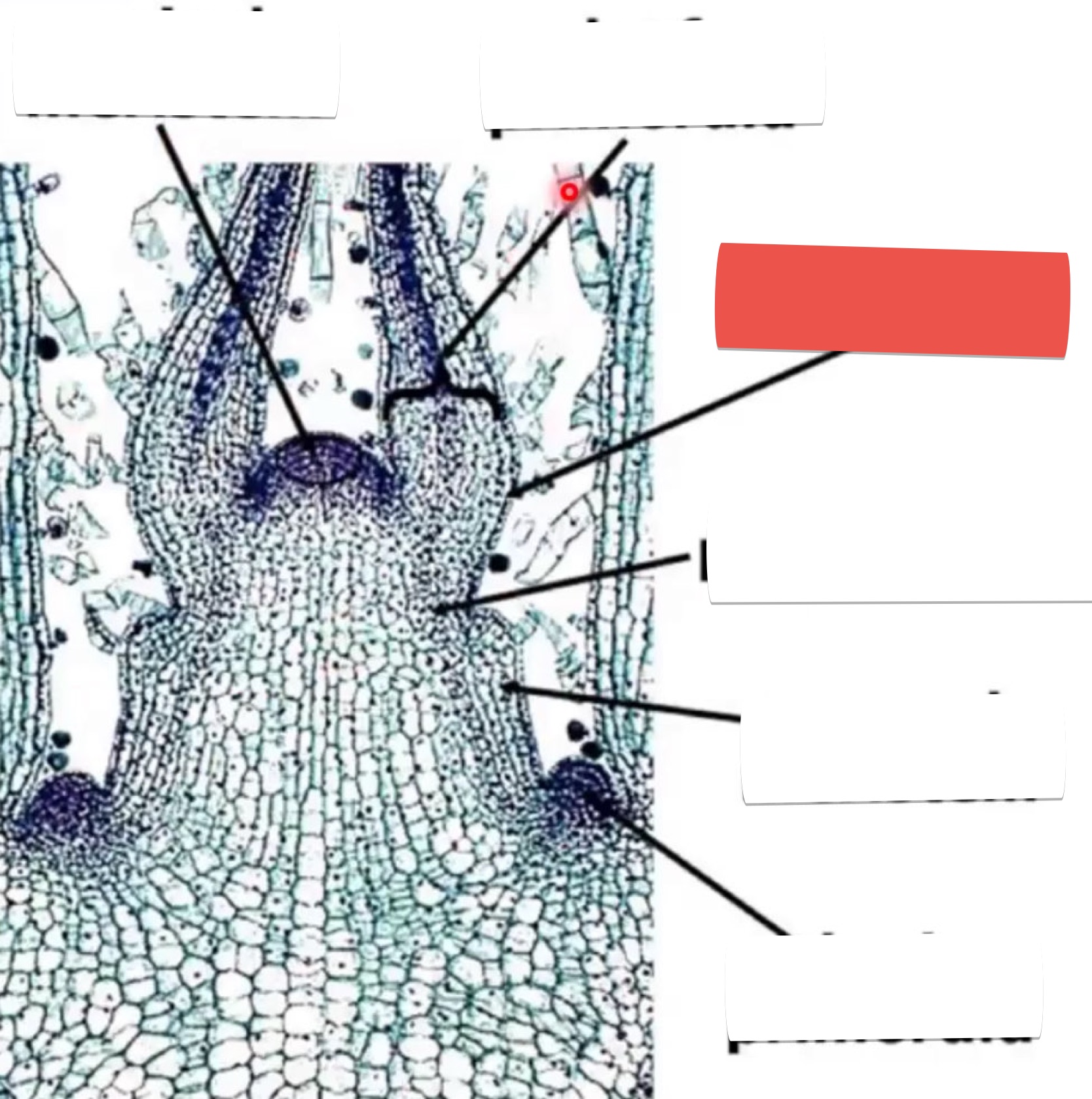
procambium
identify the part in red
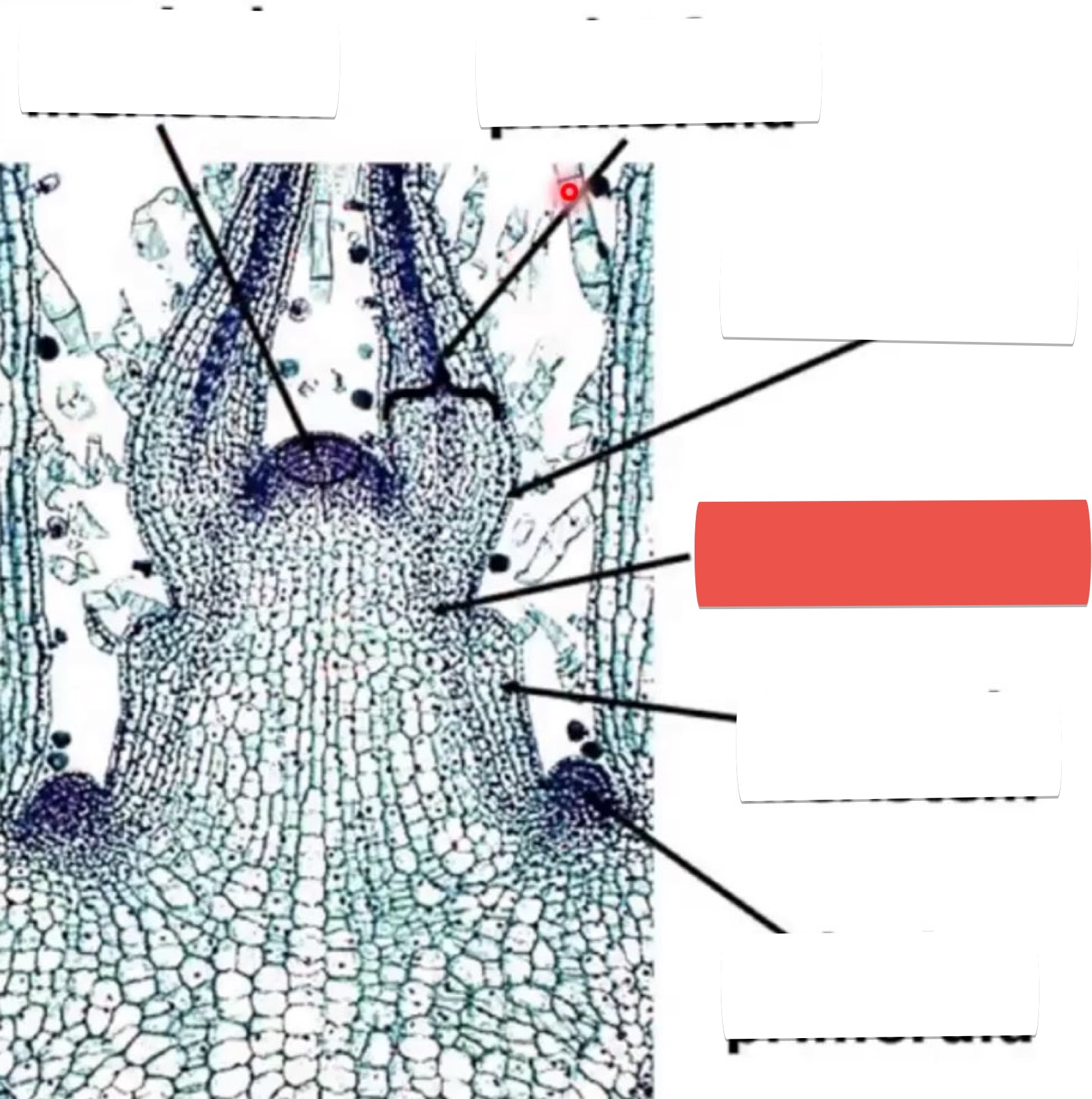
ground meristem
identify the part in red
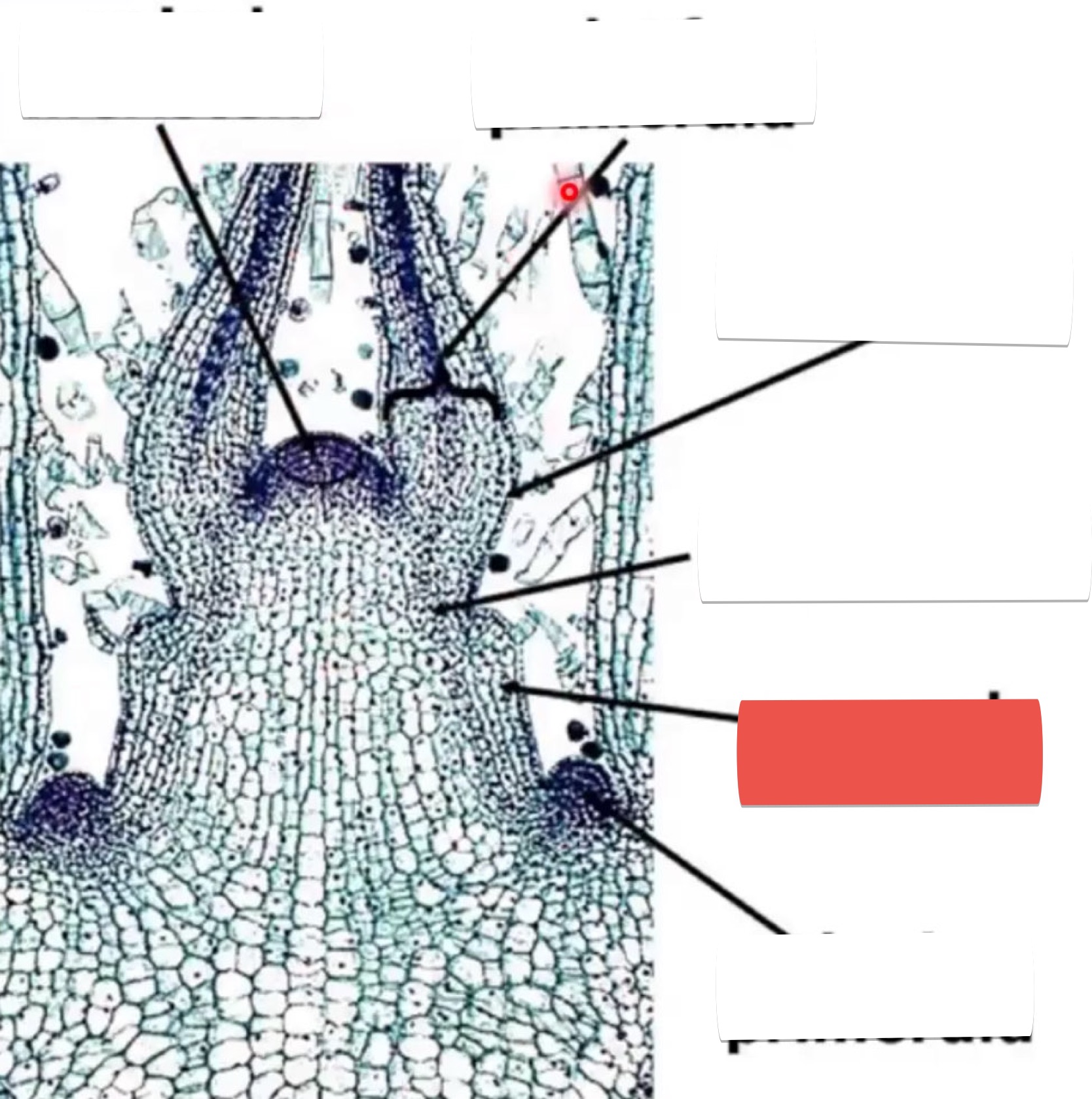
bud primordia
identify the part in red
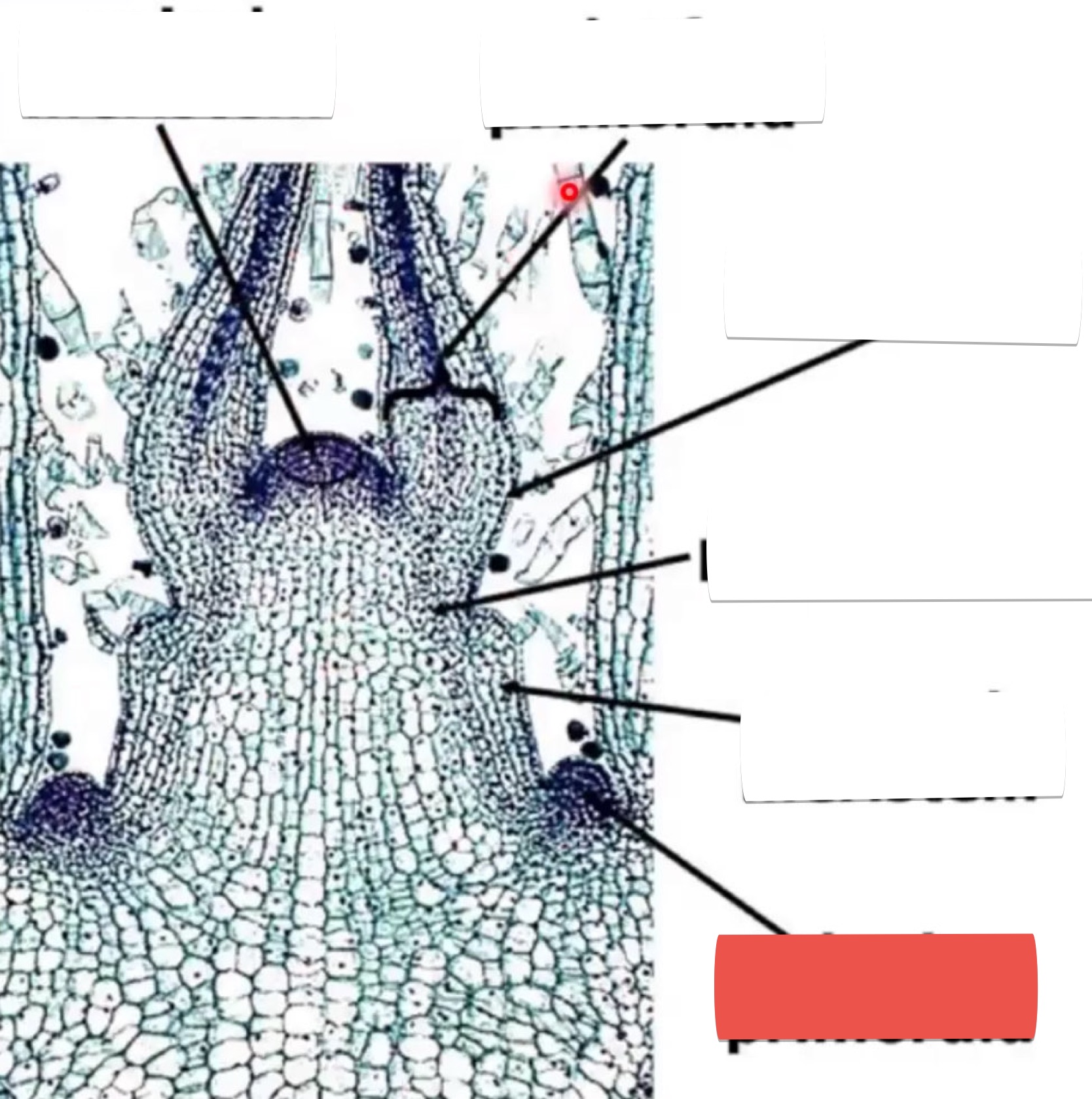
leaf primordia
identify the part in red
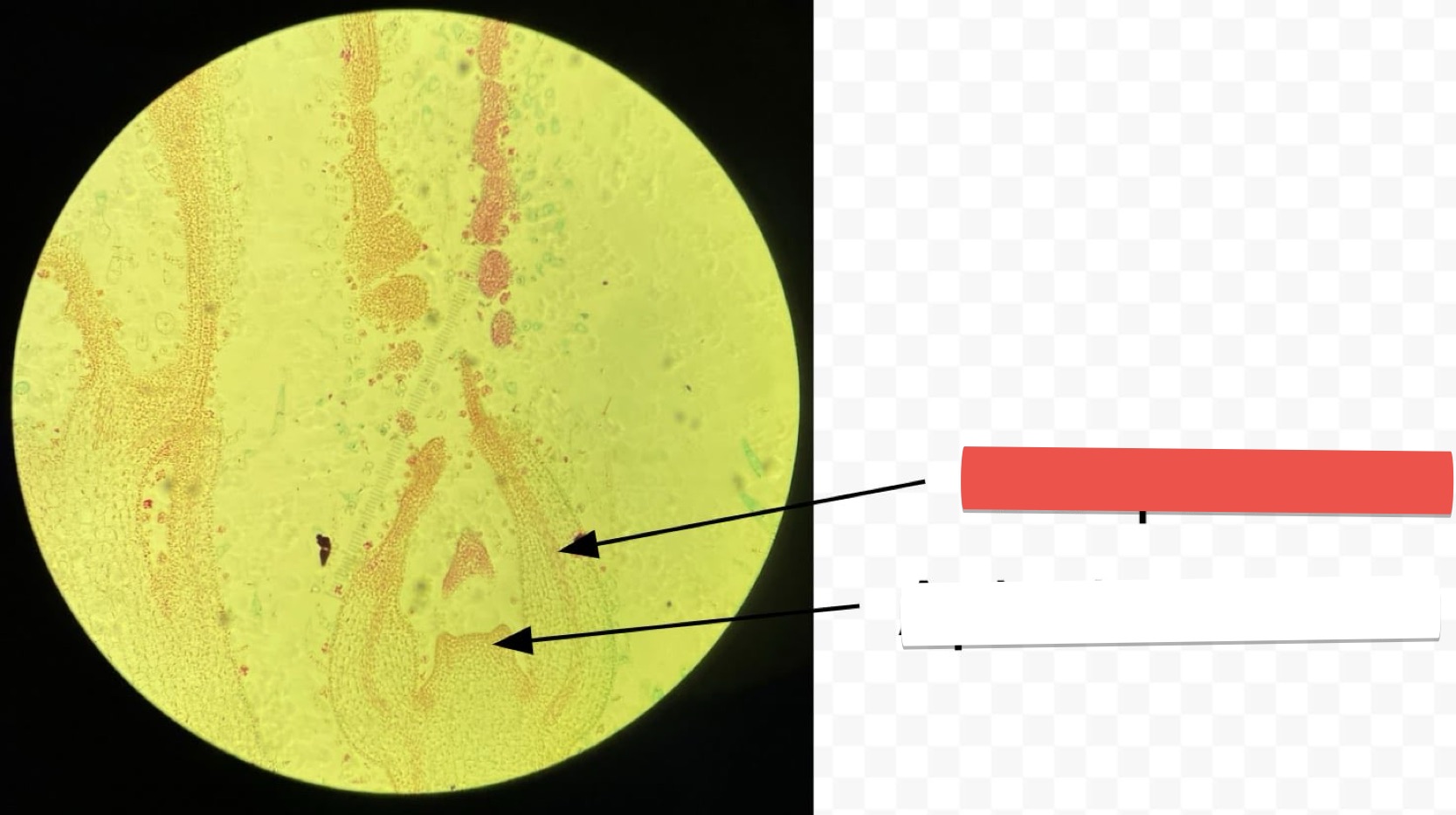
apical meristem
identify the part in red
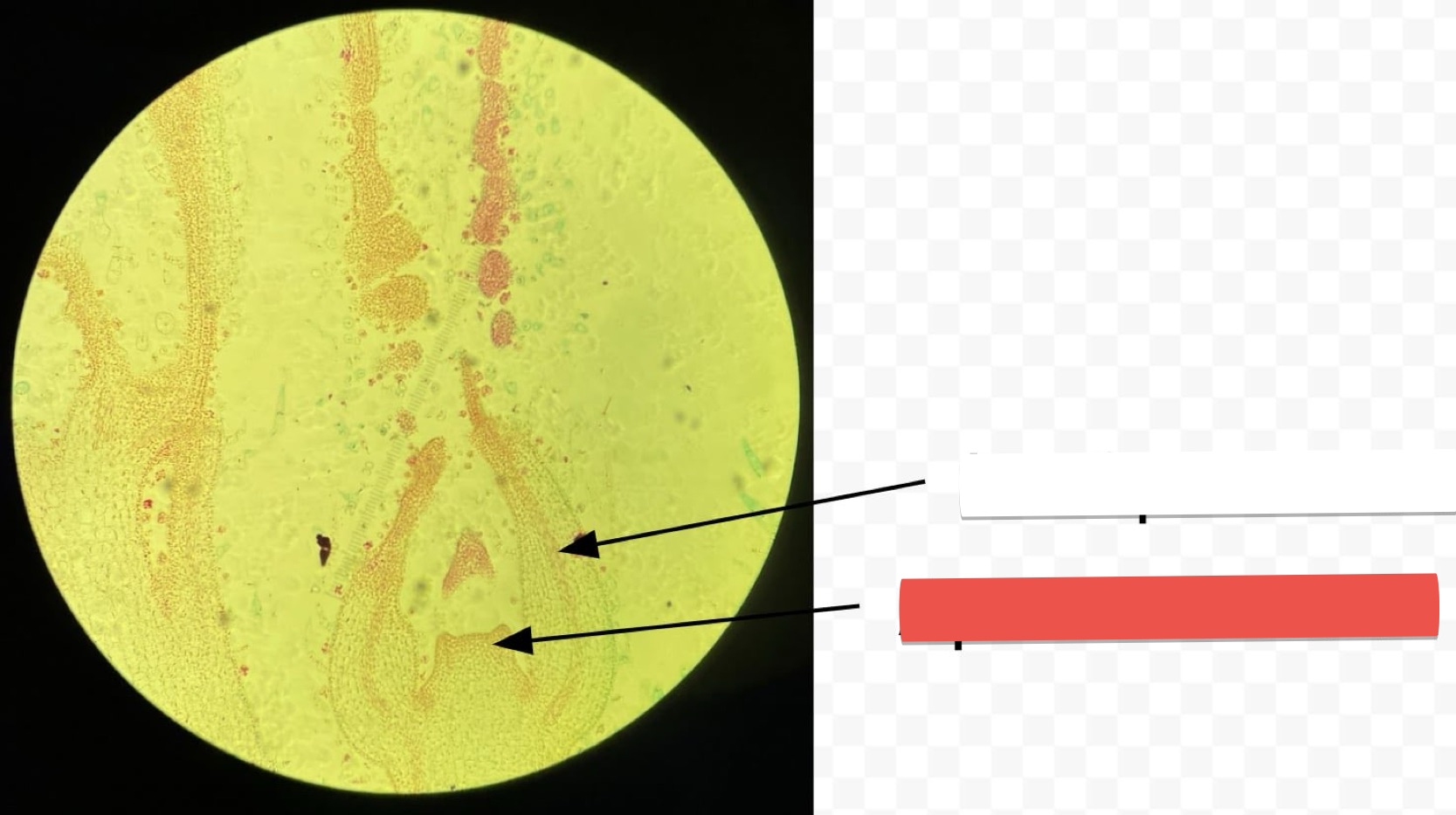
Coleus stem
identify the stem