Cellular Biology: Cell Structure
 Call Kai
 Learn
Learn Practice Test
 Spaced Repetition
 Match
Match Flashcards
 Knowt Play
1/38

There's no tags or description
Looks like no tags are added yet.
Name | Mastery | Learn | Test | Matching | Spaced | Call with Kai |
|---|
No analytics yet
Send a link to your students to track their progress
39 Terms
What are the key concepts of Cell Theory
All living things are composed of cells
The cell is the basic functional unit of life
The chemical reactions of life take place inside the cell
Cells arise only from pre-existing cells
Cells carry genetic information in the form of DNA. This genetic material is passed from parent cell to daughter cell
What are the key organelles that make up the structure of a cell?
Nucleus
Ribosomes
Endoplasmic rectiulum
Golgi apparatus
Vesicles
Vacuoles
Lysosomes
Mitochondria
Chloroplasts
Centrioles
What are the key organelles that make up the structure of a cell?
Nucleus
Ribosomes
Endoplasmic rectiulum
Golgi apparatus
Vesicles
Vacuoles
Lysosomes
Mitochondria
Chloroplasts
Centrioles
What is the role of the Cell Membrane?
It encloses the cell and exhibits selective permeability (controls what enters and exits the cell).
What is the role of the Cell Membrane?
It encloses the cell and exhibits selective permeability (controls what enters and exits the cell).
Which part of the Phospholipid Molecule is Hydrophilic?
The head
Which part of the Phospholipid Molecule is Hydrophilic?
The head
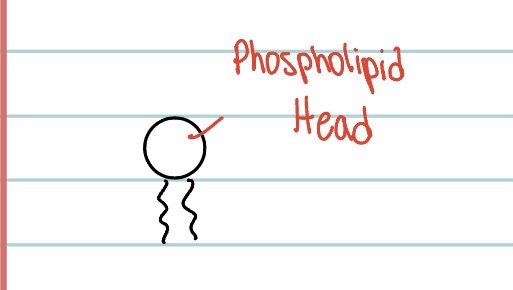
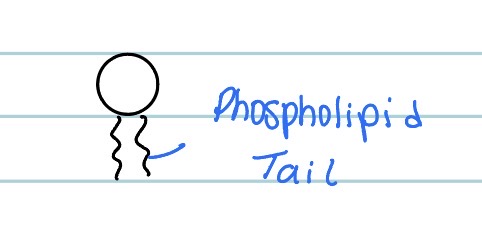
What part of the Phospholipid Molecule is Hydrophobic?
The tail
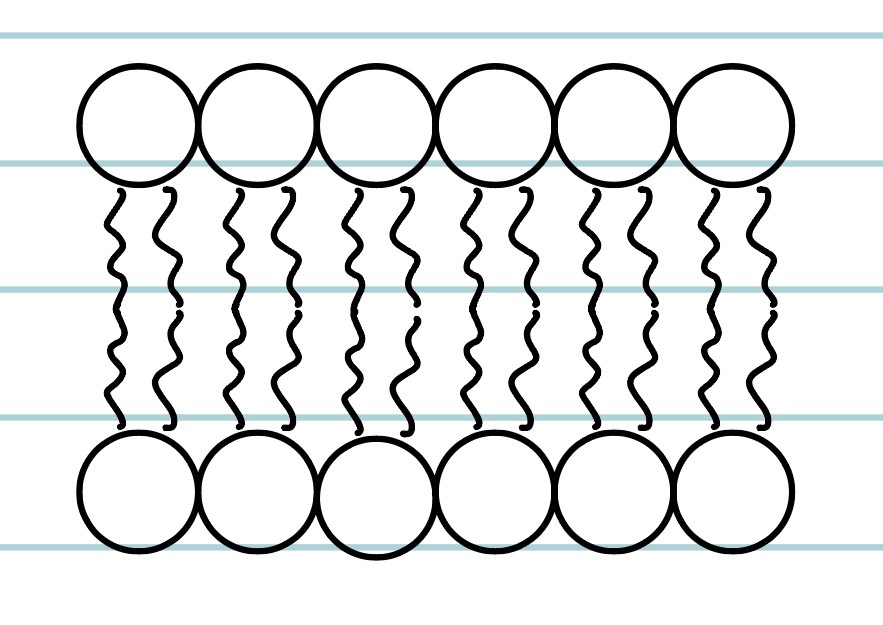
How are the Phospholipid Molecules in a Cell Membrane arranged?
Hydrophilic heads face outward toward the watery regions
Hydrophobic tails face towards each other. Towards inside with no water.
What type of molecules are permeable through the Cell Membrane?
Small, nonpolar hydrophobic molecules (Oxygen)
Small, polar water molecules such as water
Small charged particles through protein channels
How are Charged Ions and Larger Charged Particles able to cross through Cell Membrane?
Only with the assistance of Carrier Protiens
What is are Carrier Proteins?
Assist charged ions and larger charged particles in crossing through cell membrane
What is the function of the Nucleus in a cell?
Controls the activities of the cell, including cell division
How are Chromosomes formed?
DNA within the nucleus is complexed with structural proteins called histones
What is the Nucleolus?
A dense structure in the nucleus where ribosomal RNA (rRNA) and ribosome synthesis occurs
What are Ribosomes?
They are the sites for protein production and are synthesized by the nucleolus
Where are Free Ribosomes found?
In the Cytoplasm
Where are Bound Ribosomes found?
Along the outer membrane of the endoplasmic reticulum
What is the Endoplasmic Reticulum?
A network of membrane-enclosed spaces involved in the transport of materials throughout the cell, particularly those materials destined to be secreted by the cell
What are the two kinds of Endoplasmic Reticuli? What are they’re functions?
Rough ER: Contains ribosomes and plays an important role in the production of proteins
Smooth ER: Does NOT contain ribosomes and is involved with metabolism and production of lipids
What is the function of Rough ER?
It contains ribosomes and plays a key role in the production of proteins
What is the function of Smooth ER?
It DOES NOT contain ribosomes and plays a key role in metabolism and production of lipids
What is the Golgi Apparatus?
It receives vesicles and their contents from the smooth ER and then modifies them, repackages them into vesicles, and distributes them to the cell surface by exocytosis
What is the Mitochondria
The powerhouse of the cell. It’s the site of aerobic respiration within the cell and the suppliers of energy (ATP)
What is a Mitochondrion composed of?
An outer and inner layer phospholipid bilayer
What is the function of the Cytoplasm?
It is where most of the cells metabolic activity occurs
What is the Cytosol?
The cellular fluid contained within the cell membrane
What are Vacuoles/Vesicles?
Membrane-bound sacs involved in the transport and storage of materials that are ingested, secreted, processed, or digested by the cell
What is the difference between a Vacuole and a Vesicle?
Vacuoles are larger than vesicles and are more likely to be found in plant cells rather than animal cells
What are the functions of Centrioles?
Directs the separation of chromosomes during cell division. Involved in the spindle organization during cell division and are not bound by a membrane. These are only found in animal cells.
What are Lysosomes?
Membrane-bound vesicles that contain hydrolytic enzymes involved in intracellular digestion
What is a Hydrolytic Enzyme?
Known as Hydrolases; A biochemical catalyst that breaks down chemical bonds using water
What is Autolysis?
A process where an injured or dying tissue will “commit suicide” by rupturing the lysosome membrane and releasing its hydrolytic enzymes
What is the function of the Cytoskeleton?
It supports the cell, maintains its shape, and aids in cell motility (ability for cell to independently and actively move, change shape or navigate its environment)
What is the Cytoskeleton composed of?
Microtubules
Microfilaments
Intermediate filaments
What are Microtubules?
Hollow rods made of tubulin that radiate throughout the cell and provide it with support. It provides a framework for organelle movement within the cell
What are the special arrangements of Microtubules?
Cilia
Flagella
Involved in cell motility and cytoplasmic movement
What are Microfilaments?
Solid rods of actin. They move materials across the plasma membrane
What is Actin?
Aid in the movement of cells and supports them