Lab Exam Grade 10:

0.0(0)
Studied by 0 people
call kaiCall Kai
learnLearn
examPractice Test
spaced repetitionSpaced Repetition
heart puzzleMatch
flashcardsFlashcards
GameKnowt Play
Card Sorting

1/81

encourage image

There's no tags or description

Looks like no tags are added yet.

Last updated 5:03 PM on 6/10/26
Name
Mastery
Learn
Test
Matching
Spaced
Call with Kai

No analytics yet

Send a link to your students to track their progress

82 Terms

1
New cards

STATION 1: Acids & Bases

Make sure you are familiar with safe handling and use of acids and bases in the lab. You should be prepared to determine and/or classify materials as acids, bases or neutral. You should be able to balance and classify reactions involving acids and bases

2
New cards

What are some Acids Characteristics?

  • Taste sour

  • Turn litmus paper red!

  • pH less than 7

  • React with metals to form flammable hydrogen gas

  • React with bases

3
New cards

What are some Bases Characteristics?

  • Taste bitter

  • Turn litmus paper blue!

  • pH greater than 7

  • Feel soapy/slippery because  they react with fats to make soap

  • React with acids

4
New cards

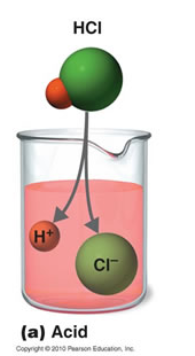
What do Acids Produce?

  • Acids – produce H+

<ul><li><p><span style="background-color: transparent; font-family: &quot;Twentieth Century&quot;, sans-serif;">Acids – produce H<sup>+</sup></span></p></li></ul><p></p>
5
New cards

What do Bases Produce?

Bases - produce OH-
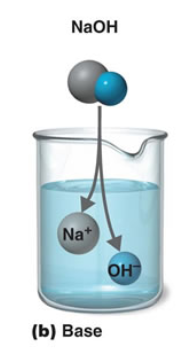
<p><span style="background-color: transparent; font-family: &quot;Twentieth Century&quot;, sans-serif;">Bases - produce OH<sup>-</sup></span></p>
6
New cards

What do Scientists use to represent how Acidic or Basic a Solution is?

Scientists use a pH scale. pH means "power of hydrogen”.
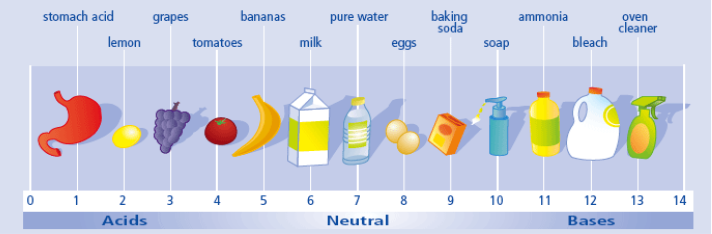
<p><span style="background-color: transparent; font-family: &quot;Twentieth Century&quot;, sans-serif;">Scientists use a <strong>pH scale. </strong>pH means "power of hydrogen”.</span></p>
7
New cards

What is the pH scale?

The pH scale is logarithmic, just like the Richter scale for earthquakes! So a change of 1 pH means the concentration has changed by a factor of 10.

8
New cards

What is an Indicator?

  • The most common method to get an idea about the pH of solution is to use an acid base indicator

    • An indicator is a chemical that changes colour depending on the pH

  • A variety of indicators change colour at various pH levels
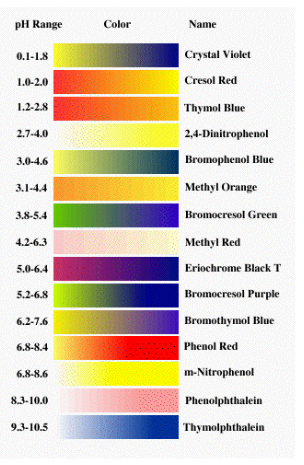
<ul><li><p><span style="background-color: transparent; font-family: &quot;Twentieth Century&quot;, sans-serif;">The most common method to get an idea about the pH of solution is to use an acid base indicator</span></p><ul><li><p><span style="background-color: transparent; font-family: &quot;Twentieth Century&quot;, sans-serif;">An indicator is a chemical that changes colour depending on the pH</span></p></li></ul></li><li><p><span style="background-color: transparent; font-family: &quot;Twentieth Century&quot;, sans-serif;">A variety of indicators change colour at various pH levels</span></p></li></ul><p></p>
9
New cards

What is the most common Indicator?

  • The most common indicator is found on "litmus" paper

  • It is red below pH 4.5 and blue above pH 8.2 
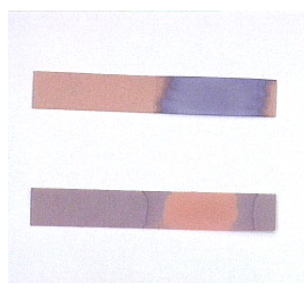
<ul><li><p><span style="background-color: transparent; font-family: &quot;Twentieth Century&quot;, sans-serif;">The most common indicator is found on "litmus" paper</span></p></li><li><p><span style="background-color: transparent; font-family: &quot;Twentieth Century&quot;, sans-serif;">It is red below pH 4.5 and blue above pH 8.2&nbsp;</span></p></li></ul><p></p>
10
New cards

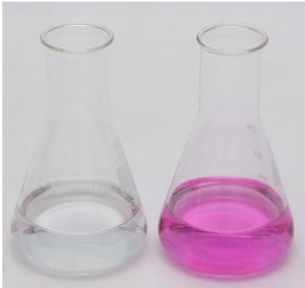
What is a Most Common Liquid Indicator?

  • Phenolphthalein is a most common liquid indicator

  • It is clear below pH 8.5 and pink above pH 8.5
<ul><li><p><span style="background-color: transparent; font-family: &quot;Twentieth Century&quot;, sans-serif;">Phenolphthalein is a most common liquid indicator</span></p></li><li><p><span style="background-color: transparent; font-family: &quot;Twentieth Century&quot;, sans-serif;">It is clear below pH 8.5 and pink above pH 8.5</span></p></li></ul><p></p>
11
New cards

What is a Chemical Change?

  • A Chemical Change is a Change in which one or more kinds of matter are transformed to new kinds of matter with altered compositions

    • A Chemical Reaction has occurred!

<ul><li><p><span style="background-color: transparent; font-family: &quot;Twentieth Century&quot;, sans-serif;">A Chemical Change is a Change in which one or more kinds of matter are&nbsp;transformed to new kinds of matter with altered compositions</span></p><ul><li><p><span style="background-color: transparent; font-family: &quot;Twentieth Century&quot;, sans-serif;">A Chemical Reaction has occurred!</span></p></li></ul></li></ul><p></p>
12
New cards

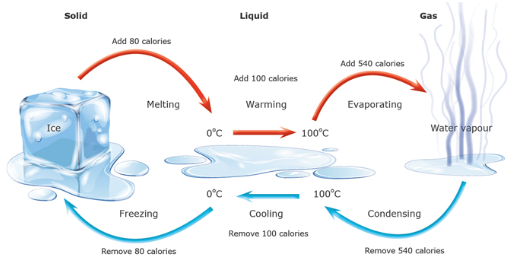
Is a Chemical Change different from a Physical Change?

  • Chemical Changes are different than physical changes

    • A Physical Change is a change in which the matter's physical appearance is altered, but composition remains unchanged. 

    • i.e. There is a change in state or shape of matter
<ul><li><p><span style="background-color: transparent; font-family: &quot;Twentieth Century&quot;, sans-serif;">Chemical Changes are different than physical changes</span></p><ul><li><p><span style="background-color: transparent; font-family: &quot;Twentieth Century&quot;, sans-serif;">A Physical Change is a change in which the matter's physical appearance is altered, but composition remains unchanged.&nbsp;</span></p></li><li><p><span style="background-color: transparent; font-family: &quot;Twentieth Century&quot;, sans-serif;">i.e. There is a change in state or shape of matter</span></p></li></ul></li></ul><p></p>
13
New cards

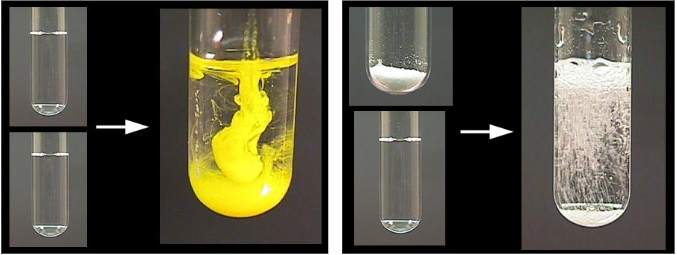
What are Different Hints of Gas?

  1. Production of a Gas

  2. Change in colour

  3. Formation of a Precipitate

14
New cards

What is the Law of Conservation of Mass?

  • The law states that in a chemical reactions the mass of the products always equals the mass of the reactants

    • i.e. No atoms are created or destroyed-simply rearranged

15
New cards

How do you Balance Equations?

  1. Balance Metals

  2. Balance Non-Metals

  3. Balance Oxygen 

  4. Balance Hydrogen

16
New cards

STATION 2:  Types of Reactions

You should be familiar with how to conduct yourself safely in the lab. You should be able to classify reactions as a physical or chemical change, supporting your conclusions with evidence. You should be able to balance, classify and predict the products of reactions

17
New cards

What is a Synthesis Reaction?

  • Chemical reactions that involve two or more substances coming together to form a more complex compound

  • Like putting together a puzzle

<ul><li><p><span style="background-color: transparent; font-family: &quot;Twentieth Century&quot;, sans-serif;">Chemical reactions that involve two or more substances coming together to form a more complex compound</span></p></li><li><p><span style="background-color: transparent; font-family: &quot;Twentieth Century&quot;, sans-serif;">Like putting together a puzzle</span></p></li></ul><p></p>
18
New cards

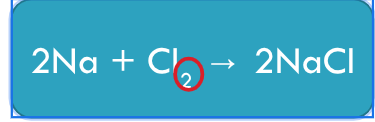
What will be produced if the two elements are a metal (multi- or univalent) and a non-metal?

It will produce an ionic compound!
<p><span style="background-color: transparent; font-family: &quot;Twentieth Century&quot;, sans-serif;">It will produce an ionic compound!</span></p>
19
New cards

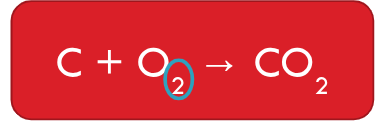
What will be produced if the two elements are both non-metals?

It will produce a molecular compound
<p><span style="background-color: transparent; font-family: &quot;Twentieth Century&quot;, sans-serif;">It will produce a molecular compound</span></p>
20
New cards

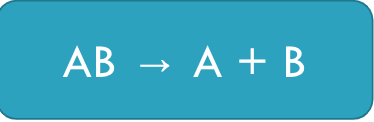
What is a Decomposition?

  • Chemical reaction in which a substance is broken down into two or more simple substances

  • Generally why so explosive

    • i.e. TNT is a decomposition

  • Like breaking apart a puzzle

<ul><li><p><span style="background-color: transparent; font-family: &quot;Twentieth Century&quot;, sans-serif;">Chemical reaction in which a substance is broken down into two or more simple substances</span></p></li><li><p><span style="background-color: transparent; font-family: &quot;Twentieth Century&quot;, sans-serif;">Generally why so <strong>explosive</strong></span></p><ul><li><p><span style="background-color: transparent; font-family: &quot;Twentieth Century&quot;, sans-serif;">i.e. TNT is a decomposition</span></p></li></ul></li><li><p><span style="background-color: transparent; font-family: &quot;Twentieth Century&quot;, sans-serif;">Like breaking apart a puzzle</span></p></li></ul><p></p>
21
New cards

What is HOFBrINCl?

  • The H O F Br I N Cl gasses are atoms that almost always occur as diatomic molecules

    • A diatomic molecule is an atom that never occurs on its own, it is always in a pair!
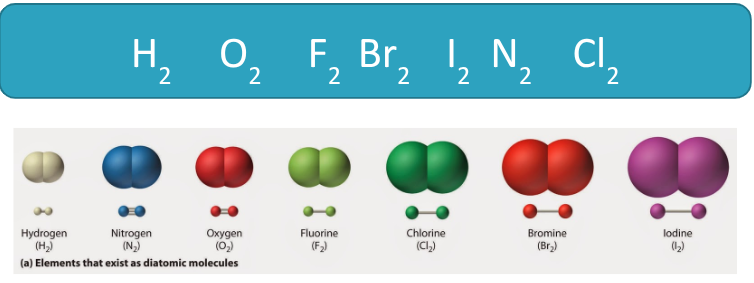
<ul><li><p><span style="background-color: transparent; font-family: &quot;Twentieth Century&quot;, sans-serif;">The H O F Br I N Cl gasses are atoms that almost always occur as diatomic molecules</span></p><ul><li><p><span style="background-color: transparent; font-family: &quot;Twentieth Century&quot;, sans-serif;">A diatomic molecule is an atom that never occurs on its own, it is always in a pair!</span></p></li></ul></li></ul><p></p>
22
New cards

What is a Single Displacement Reaction?

  • Like a “swap” of partners

    • A lone metal or hydrogen replaces a metal in a compound

    • Or a lone non-metal replaces a non-metal in a compound

  • Generally they occur in aqueous solutions (aq)

    • Meaning the solution is dissolved in water

<ul><li><p><span style="background-color: transparent; font-family: &quot;Twentieth Century&quot;, sans-serif;">Like a “swap” of partners</span></p><ul><li><p><span style="background-color: transparent; font-family: &quot;Twentieth Century&quot;, sans-serif;">A lone metal or hydrogen replaces a metal in a compound</span></p></li><li><p><span style="background-color: transparent; font-family: &quot;Twentieth Century&quot;, sans-serif;">Or a lone non-metal replaces a non-metal in a compound</span></p></li></ul></li><li><p><span style="background-color: transparent; font-family: &quot;Twentieth Century&quot;, sans-serif;">Generally they occur in aqueous solutions (aq)</span></p><ul><li><p><span style="background-color: transparent; font-family: &quot;Twentieth Century&quot;, sans-serif;">Meaning the solution is dissolved in water</span></p></li></ul></li></ul><p></p>
23
New cards

What is a Double Displacement Reaction?

  • Like a DOUBLE “Swap” of partners

    • A metal in compound replaces a metal in a compound

    • AND a non-metal in compound replaces a non-metal in a compound

  • Also generally occurring in aqueous solutions (aq)

    • Meaning the solution is dissolved in water

<ul><li><p><span style="background-color: transparent; font-family: &quot;Twentieth Century&quot;, sans-serif;">Like a DOUBLE “Swap” of partners</span></p><ul><li><p><span style="background-color: transparent; font-family: &quot;Twentieth Century&quot;, sans-serif;">A metal in compound replaces a metal in a compound</span></p></li><li><p><span style="background-color: transparent; font-family: &quot;Twentieth Century&quot;, sans-serif;"><strong><u>AND</u></strong> a non-metal in compound replaces a non-metal in a compound</span></p></li></ul></li><li><p><span style="background-color: transparent; font-family: &quot;Twentieth Century&quot;, sans-serif;">Also generally occurring in aqueous solutions (aq)</span></p><ul><li><p><span style="background-color: transparent; font-family: &quot;Twentieth Century&quot;, sans-serif;">Meaning the solution is dissolved in water</span></p></li></ul></li></ul><p></p>
24
New cards

What does a flame do in the presence of the following gases: Oxygen, Hydrogen, & Carbon Dioxide?

  • Oxygen (O₂): Makes the flame burn brighter and stronger.

  • Hydrogen (H₂): Burns with a small "pop" sound and produces a pale blue flame.

  • Carbon Dioxide (CO₂): Puts out the flame because it does not support burning.

25
New cards

STATION 3: Mitosis & Cells

Make sure you are familiar with cell types, the cell cycle and parts of the cell. You should be able to classify cells by their type and/or stage of the cell cycle they are in. You should also be able to create labeled biological diagrams of a cell.

26
New cards

What is the Function of the Cell?

  • Cells make up EVERYTHING in our bodies

  • There are a few key characteristics of all cells

    • Take in nutrients from their environments 

    • Release waste products into their environments

    • Cells can make copies of themselves

    • Cells contain everything they need to live and grow

27
New cards

What is the Cell Theory?

  • The fact that cells are the basic unit of life is described as  the Cell Theory 

    • All organisms are composed of at least one cell

    • Cells are the basic organizational structure of all living things

    • All cells come from pre-existing cells

28
New cards

What is a Prokaryotic Cell?

  • These cells have no compartmentalization

    • This means they have no nucleus or membrane-bound organelles

  • These are the first cell-type to have evolved

    • These organisms are often unicellular

    • They are able to carry out all of the life processes and display all features of a cell!
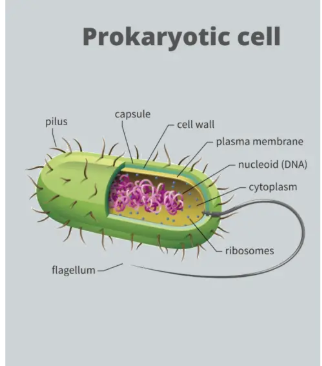
<ul><li><p><span style="background-color: transparent; font-family: &quot;Twentieth Century&quot;, sans-serif;">These cells have no compartmentalization</span></p><ul><li><p><span style="background-color: transparent; font-family: &quot;Twentieth Century&quot;, sans-serif;">This means they have no nucleus or membrane-bound organelles</span></p></li></ul></li><li><p><span style="background-color: transparent; font-family: &quot;Twentieth Century&quot;, sans-serif;">These are the first cell-type to have evolved</span></p><ul><li><p><span style="background-color: transparent; font-family: &quot;Twentieth Century&quot;, sans-serif;">These organisms are often unicellular</span></p></li><li><p><span style="background-color: transparent; font-family: &quot;Twentieth Century&quot;, sans-serif;">They are able to carry out all of the life processes and display all features of a cell!</span></p></li></ul></li></ul><p></p>
29
New cards

What is a Eukaryotic Cell?

  • These cells have compartmentalization

    • This means they have a nucleus and membrane-bound organelles!

  • These more evolved cell types 

    • These organisms are often multicellular

    • There are several different types of eukaryotic cells, but we will focus on animal & plant cells
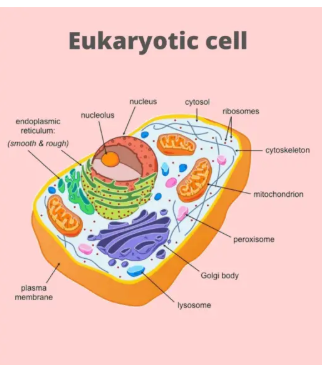
<ul><li><p><span style="background-color: transparent; font-family: &quot;Twentieth Century&quot;, sans-serif;">These cells have compartmentalization</span></p><ul><li><p><span style="background-color: transparent; font-family: &quot;Twentieth Century&quot;, sans-serif;">This means they have a nucleus and membrane-bound organelles!</span></p></li></ul></li><li><p><span style="background-color: transparent; font-family: &quot;Twentieth Century&quot;, sans-serif;">These more evolved cell types&nbsp;</span></p><ul><li><p><span style="background-color: transparent; font-family: &quot;Twentieth Century&quot;, sans-serif;">These organisms are often multicellular</span></p></li><li><p><span style="background-color: transparent; font-family: &quot;Twentieth Century&quot;, sans-serif;">There are several different types of eukaryotic cells, but we will focus on animal &amp; plant cells</span></p></li></ul></li></ul><p></p>
30
New cards

What is an Animal Cell?

  • Are eukaryotic

  • Cells are usually round or irregular in shape

  • They store their energy as carbohydrates or fats

  • May appear red/pink under a microscope

  • Have different organelle organization

    • i.e. no chloroplasts, no cell wall, many small vacuoles, centrioles are present, more details to come…

  • Make unique specialized cells and tissues

    • i.e. epithelial tissue, connective tissue, nervous tissue, muscle tissue, stem cells
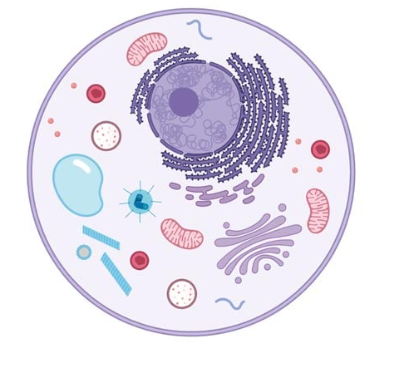
<ul><li><p><span style="background-color: transparent; font-family: &quot;Twentieth Century&quot;, sans-serif;">Are eukaryotic</span></p></li><li><p><span style="background-color: transparent; font-family: &quot;Twentieth Century&quot;, sans-serif;">Cells are usually round or irregular in shape</span></p></li><li><p><span style="background-color: transparent; font-family: &quot;Twentieth Century&quot;, sans-serif;">They store their energy as carbohydrates or fats</span></p></li><li><p><span style="background-color: transparent; font-family: &quot;Twentieth Century&quot;, sans-serif;">May appear red/pink under a microscope</span></p></li><li><p><span style="background-color: transparent; font-family: &quot;Twentieth Century&quot;, sans-serif;">Have different organelle organization</span></p><ul><li><p><span style="background-color: transparent; font-family: &quot;Twentieth Century&quot;, sans-serif;">i.e. no chloroplasts, no cell wall, many small vacuoles, centrioles are present, more details to come…</span></p></li></ul></li><li><p><span style="background-color: transparent; font-family: &quot;Twentieth Century&quot;, sans-serif;">Make unique specialized cells and tissues</span></p><ul><li><p><span style="background-color: transparent; font-family: &quot;Twentieth Century&quot;, sans-serif;">i.e. epithelial tissue, connective tissue, nervous tissue, muscle tissue, stem cells</span></p></li></ul></li></ul><p></p>
31
New cards

What is a Plant Cell?

  • Are eukaryotic

  • Cells are usually rectangular or regular in shape

  • They store their energy as starch or oils

  • Will often appear green under a microscope from the chlorophyll present

  • Have different organelle organization

    • i.e. have chloroplasts, have a cell wall, one large vacuole, no centrioles present, more details to come…

  • Make unique specialized cells and tissues

    • i.e. epidermal tissue, vascular tissue,  ground tissue,  meristematic tissue
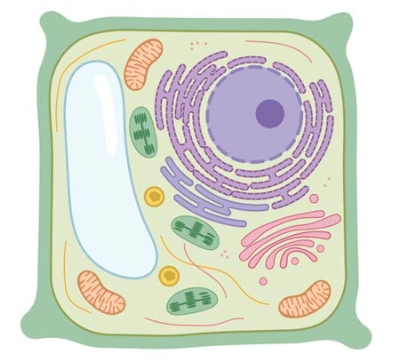
<ul><li><p><span style="background-color: transparent; font-family: &quot;Twentieth Century&quot;, sans-serif;">Are eukaryotic</span></p></li><li><p><span style="background-color: transparent; font-family: &quot;Twentieth Century&quot;, sans-serif;">Cells are usually rectangular or regular in shape</span></p></li><li><p><span style="background-color: transparent; font-family: &quot;Twentieth Century&quot;, sans-serif;">They store their energy as starch or oils</span></p></li><li><p><span style="background-color: transparent; font-family: &quot;Twentieth Century&quot;, sans-serif;">Will often appear green under a microscope from the chlorophyll present</span></p></li><li><p><span style="background-color: transparent; font-family: &quot;Twentieth Century&quot;, sans-serif;">Have different organelle organization</span></p><ul><li><p><span style="background-color: transparent; font-family: &quot;Twentieth Century&quot;, sans-serif;">i.e. have chloroplasts, have a cell wall, one large vacuole, no centrioles present, more details to come…</span></p></li></ul></li><li><p><span style="background-color: transparent; font-family: &quot;Twentieth Century&quot;, sans-serif;">Make unique specialized cells and tissues</span></p><ul><li><p><span style="background-color: transparent; font-family: &quot;Twentieth Century&quot;, sans-serif;">i.e. epidermal tissue, vascular tissue,&nbsp; ground tissue,&nbsp; meristematic tissue</span></p></li></ul></li></ul><p></p>
32
New cards

What is Mitosis?

  • Mitosis is the process by which our cells’ nuclei divide

    •  Somatic (body) cells

33
New cards

Why do our cells divide?

  1. Growth

  2. Repair

34
New cards

What is DNA?

  • (deoxyribonucleic acid)

  • This is the genetic information of the cell with all the “instructions” needed to survive

    • Anything you have “inherited” is coded for on your DNA

  • EVERY SINGLE cell in your body has a copy of your DNA to ensure all cells have the “instructions” they need

35
New cards

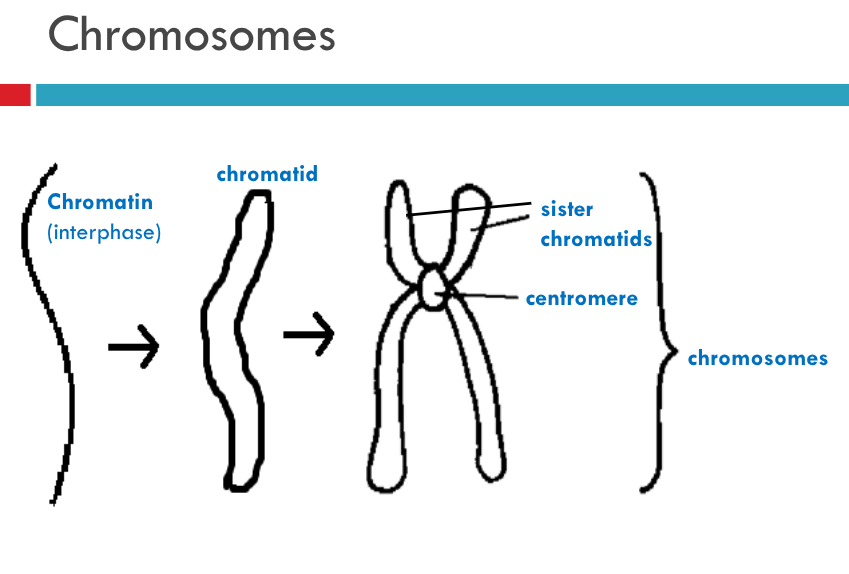
Chromosomes:

36
New cards

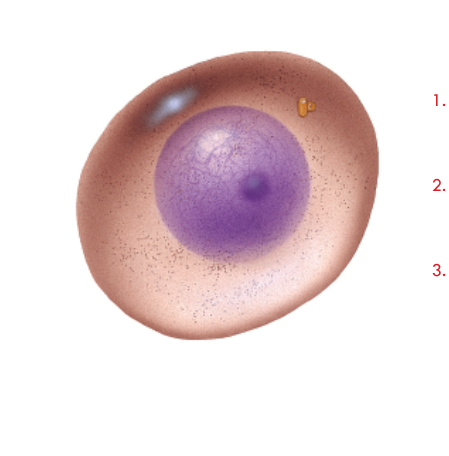
Cell Cycle: Growth Phase

  1. Growth stage

    • Also known as Interphase

    • Most of the cells life spent in this stage
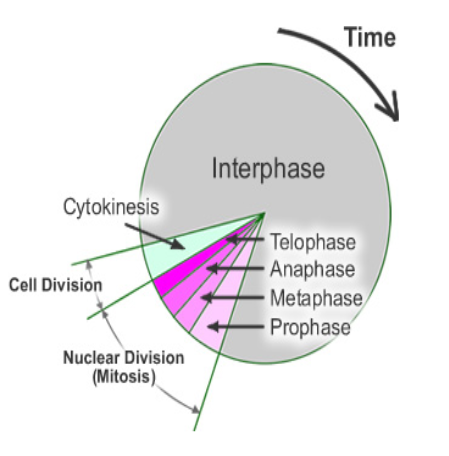
<ol><li><p><span style="background-color: transparent; font-family: &quot;Twentieth Century&quot;, sans-serif;"><strong>Growth stage</strong></span></p><ul><li><p><span style="background-color: transparent; font-family: &quot;Twentieth Century&quot;, sans-serif;">Also known as Interphase</span></p></li><li><p><span style="background-color: transparent; font-family: &quot;Twentieth Century&quot;, sans-serif;">Most of the cells life spent in this stage</span></p></li></ul></li></ol><p></p>
37
New cards

Interphase:

  1. Cell grows to nearly twice in size

  2. Nucleus makes a copy of its DNA

  3. Organelles are also replicated

<ol><li><p><span style="background-color: transparent; font-family: &quot;Twentieth Century&quot;, sans-serif;">Cell grows to nearly twice in size</span></p></li><li><p><span style="background-color: transparent; font-family: &quot;Twentieth Century&quot;, sans-serif;">Nucleus makes a copy of its DNA</span></p></li><li><p><span style="background-color: transparent; font-family: &quot;Twentieth Century&quot;, sans-serif;">Organelles are also replicated</span></p></li></ol><p></p>
38
New cards

Cell Cycle: Division Phase

  1. Division stage

    • A much shorter stage

    • Two Parts:

      • Mitosis: Division of the Nucleus

      • Cytokinesis: Division of the Cytoplasm

39
New cards

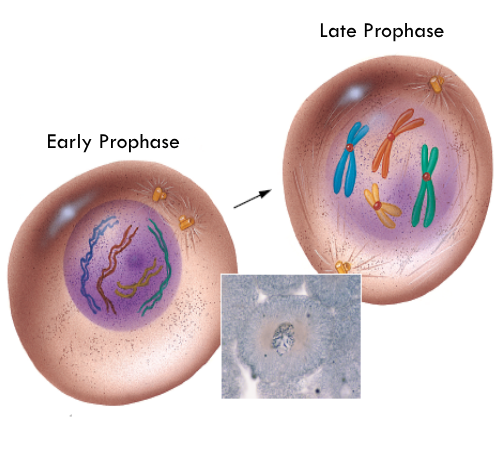
Prophase:

  1. Chromatin (DNA) condenses into chromosomes

  2. Centrioles move to opposite ends of the cell

  3. Spindle fibers form from the centrioles

  4. Nuclear membrane dissolves

<ol><li><p><span style="background-color: transparent; font-family: &quot;Twentieth Century&quot;, sans-serif;">Chromatin (DNA) condenses into chromosomes</span></p></li><li><p><span style="background-color: transparent; font-family: &quot;Twentieth Century&quot;, sans-serif;">Centrioles move to opposite ends of the cell</span></p></li><li><p><span style="background-color: transparent; font-family: &quot;Twentieth Century&quot;, sans-serif;">Spindle fibers form from the centrioles</span></p></li><li><p><span style="background-color: transparent; font-family: &quot;Twentieth Century&quot;, sans-serif;">Nuclear membrane dissolves</span></p></li></ol><p></p>
40
New cards

Metaphase:

  1. Spindle fibers attach to centromeres

  2. Chromosomes align along the equatorial plate 

    • Equatorial plate is like the equator of the cell
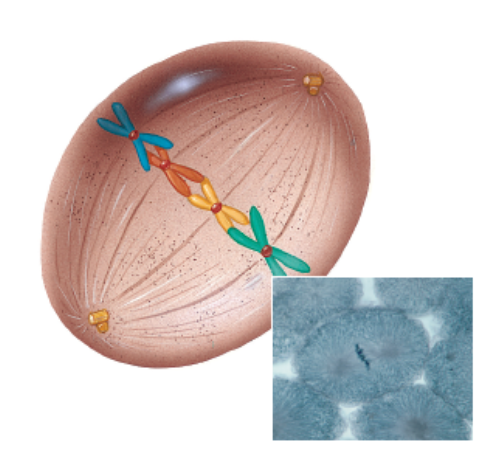
<ol><li><p><span style="background-color: transparent; font-family: &quot;Twentieth Century&quot;, sans-serif;">Spindle fibers attach to centromeres</span></p></li><li><p><span style="background-color: transparent; font-family: &quot;Twentieth Century&quot;, sans-serif;">Chromosomes align along the equatorial plate&nbsp;</span></p><ul><li><p><span style="background-color: transparent; font-family: &quot;Twentieth Century&quot;, sans-serif;">Equatorial plate is like the equator of the cell</span></p></li></ul></li></ol><p></p>
41
New cards

Anaphase:

  1. Spindle fibers shorten

  2. Centromere splits and pulls chromatids to opposite ends of the cell
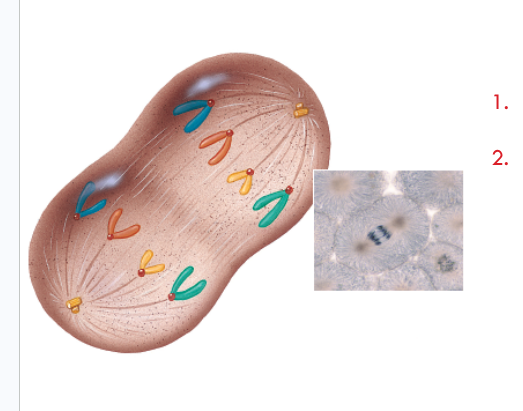
<ol><li><p><span style="background-color: transparent; font-family: &quot;Twentieth Century&quot;, sans-serif;">Spindle fibers shorten</span></p></li><li><p><span style="background-color: transparent; font-family: &quot;Twentieth Century&quot;, sans-serif;">Centromere splits and pulls chromatids to opposite ends of the cell</span></p></li></ol><p></p>
42
New cards

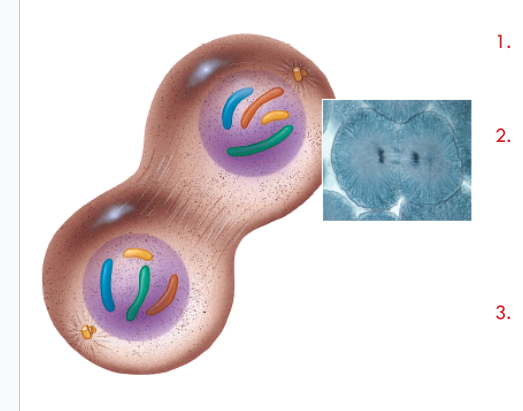
Telephase:

  1. Chromosomes relax into chromatin

  2. Nuclear membrane reappears 

    • Two new nuclei are formed

  3. Spindle fibers disappear

<ol><li><p><span style="background-color: transparent; font-family: &quot;Twentieth Century&quot;, sans-serif;">Chromosomes relax into chromatin</span></p></li><li><p><span style="background-color: transparent; font-family: &quot;Twentieth Century&quot;, sans-serif;">Nuclear membrane reappears&nbsp;</span></p><ul><li><p><span style="background-color: transparent; font-family: &quot;Twentieth Century&quot;, sans-serif;">Two new nuclei are formed</span></p></li></ul></li><li><p><span style="background-color: transparent; font-family: &quot;Twentieth Century&quot;, sans-serif;">Spindle fibers disappear</span></p></li></ol><p></p>
43
New cards

What is Cytokenisis?

  • Not a true part of mitosis 

    • During cytokineses, the cytoplasm divides

  • In animal cells, cleavage furrows are formed.

In plant cells, cell plates are formed
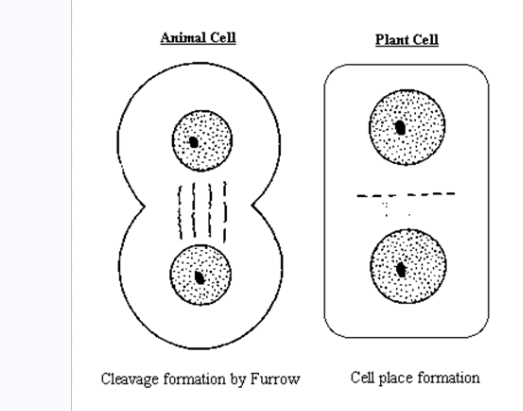
<ul><li><p><span style="background-color: transparent; font-family: &quot;Twentieth Century&quot;, sans-serif;">Not a true part of mitosis&nbsp;</span></p><ul><li><p><span style="background-color: transparent; font-family: &quot;Twentieth Century&quot;, sans-serif;">During&nbsp;<strong>cytokineses</strong>, the cytoplasm divides</span></p></li></ul></li><li><p><span style="background-color: transparent; font-family: &quot;Twentieth Century&quot;, sans-serif;">In animal cells, <strong>cleavage furrows </strong>are formed.</span></p></li></ul><p><span style="background-color: transparent; font-family: &quot;Twentieth Century&quot;, sans-serif;">In plant cells, <strong>cell plates</strong> are formed</span></p>
44
New cards

What is the Cell Membrane?

A thin, flexible barrier that surrounds every cell and controls what enters and leaves the cell.
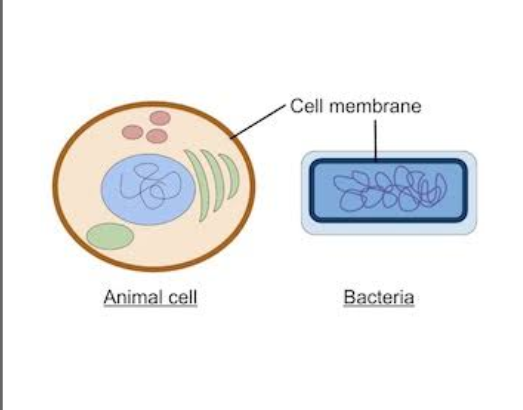
<p><span style="background-color: transparent;">A thin, flexible barrier that surrounds every cell and controls what enters and leaves the cell.</span></p>
45
New cards

What is the Cell Wall?

A rigid outer layer that provides support and protection for plant cells, bacteria, and fungi.
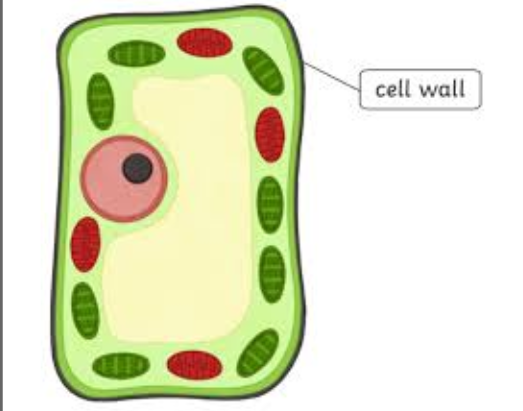
<p><span style="background-color: transparent;">A rigid outer layer that provides support and protection for plant cells, bacteria, and fungi.</span></p>
46
New cards

What are the Chloroplasts?

Organelles found in plant cells that capture light energy from the sun and convert it into chemical energy (sugar) through photosynthesis.
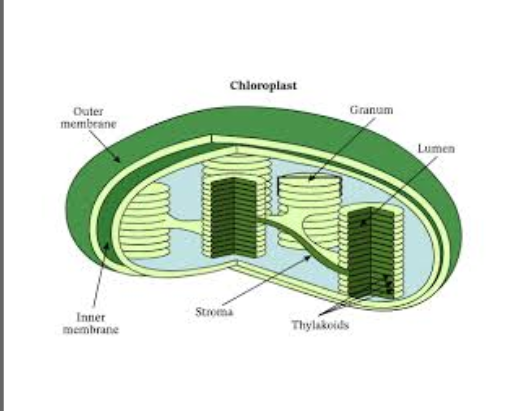
<p><span style="background-color: transparent;">Organelles found in plant cells that capture light energy from the sun and convert it into chemical energy (sugar) through photosynthesis.</span></p>
47
New cards

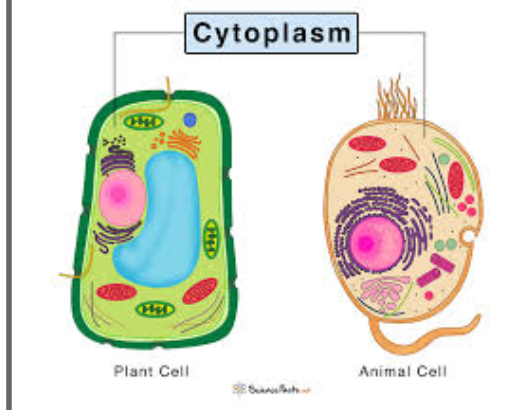
What is the Cytoplasm?

The jelly-like substance that fills the inside of a cell, where many of the cell's important processes occur.
<p><span style="background-color: transparent;">The jelly-like substance that fills the inside of a cell, where many of the cell's important processes occur.</span></p>
48
New cards

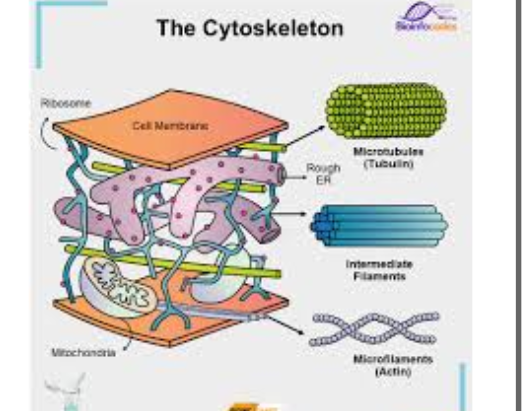
What is the Cytoskeleton?

The cytoskeleton is like the cell's internal scaffolding, giving it shape and allowing it to move.
<p><span style="background-color: transparent;">The cytoskeleton is like the cell's internal scaffolding, giving it shape and allowing it to move.</span></p>
49
New cards

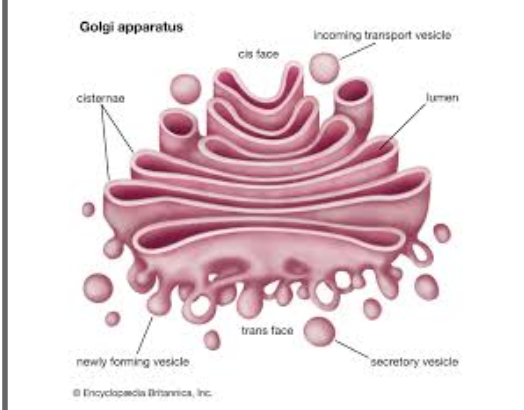
What is the Golgi Apparatus?

A stack of flattened sacs that package and modify proteins and other molecules for transport within or outside the cell.
<p><span style="background-color: transparent;">A stack of flattened sacs that package and modify proteins and other molecules for transport within or outside the cell.</span></p>
50
New cards

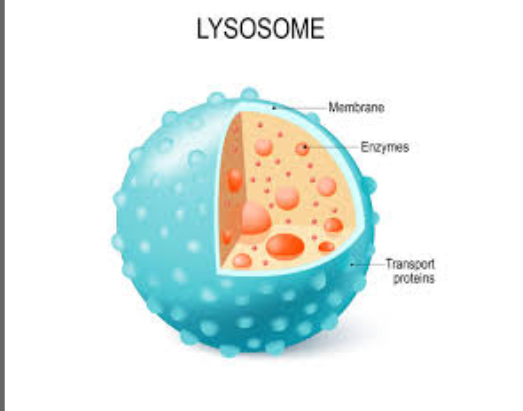
What are the Lysosomes?

Small, sac-like organelles that contain enzymes that break down waste materials and worn-out cell parts.
<p><span style="background-color: transparent;">Small, sac-like organelles that contain enzymes that break down waste materials and worn-out cell parts.</span></p>
51
New cards

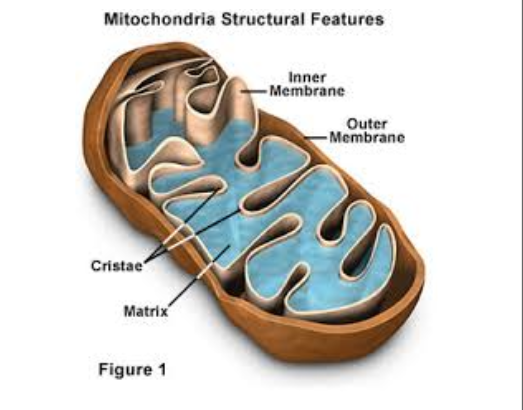
What is Mitochondria.

Organelles that are the powerhouses of the cell, converting food into usable energy (ATP) through cellular respiration.
<p><span style="background-color: transparent;">Organelles that are the powerhouses of the cell, converting food into usable energy (ATP) through cellular respiration.</span></p>
52
New cards

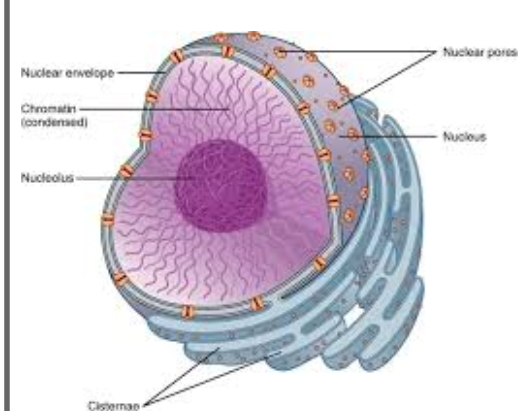
What is the Nucleus?

The control center of the cell, containing the cell's DNA (genetic material) and directing all cell activities.
<p><span style="background-color: transparent;">The control center of the cell, containing the cell's DNA (genetic material) and directing all cell activities.</span></p>
53
New cards

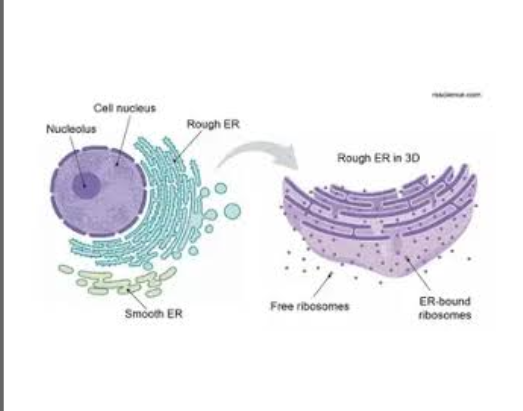
What is a Ribosome?

Small, round organelles that are responsible for protein synthesis, using instructions from the DNA.
<p><span style="background-color: transparent;">Small, round organelles that are responsible for protein synthesis, using instructions from the DNA.</span></p>
54
New cards

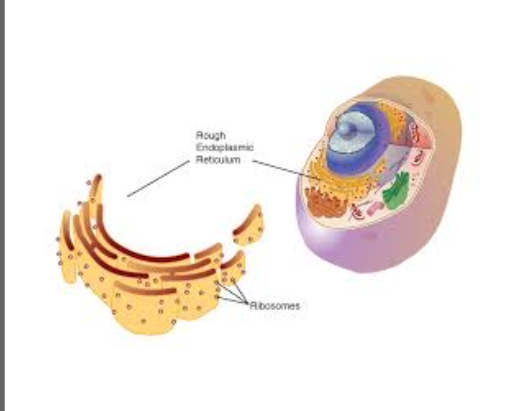
What is the Rough Endoplasmic Reticulum?

A network of interconnected membranes studded with ribosomes, involved in protein synthesis and transport.
<p><span style="background-color: transparent;">A network of interconnected membranes studded with ribosomes, involved in protein synthesis and transport.</span></p>
55
New cards

What is the Smooth Endoplasmic Reticulum?

A network of interconnected membranes without ribosomes, involved in lipid synthesis, detoxification, and other processes.
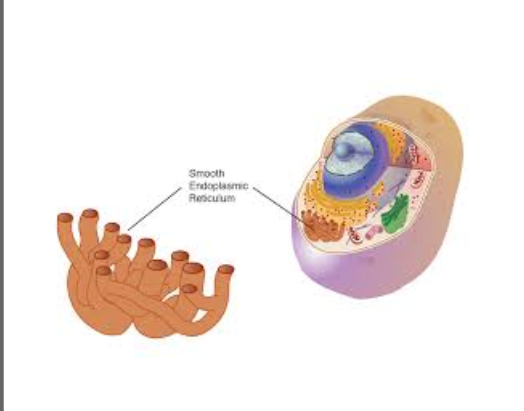
<p><span style="background-color: transparent;">A network of interconnected membranes without ribosomes, involved in lipid synthesis, detoxification, and other processes.</span></p>
56
New cards

What is a Vacuole?

Large, fluid-filled sacs in plant cells that store water, nutrients, and waste products.
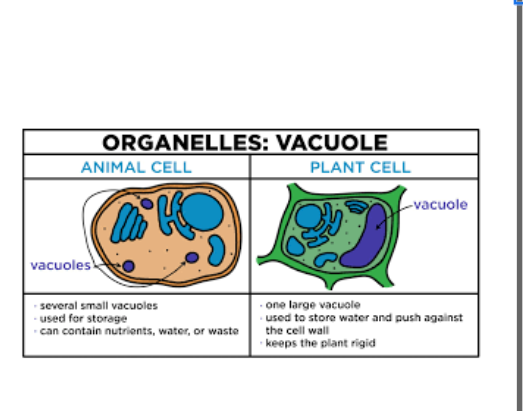
<p><span style="background-color: transparent;">Large, fluid-filled sacs in plant cells that store water, nutrients, and waste products.</span></p>
57
New cards

STATION 4: Organ Systems


Make sure you are familiar with the organ systems explored in class, including their parts, functions and interconnectedness. You should be able to identify each part and how the health of the human body is dependent on all systems working together.

58
New cards

What is Ingestion?

Ingestion – Taking food and drink into the body through the mouth.

59
New cards

What is Digestion?

Digestion – Breaking food down into smaller nutrients that the body can use.

60
New cards

What is Absorption?

Absorption – Nutrients from digested food pass through the small intestine into the bloodstream.

61
New cards

What is Egestion?

  • Egestion – Removing undigested food and waste from the body through the anu$ (feces).

62
New cards

What does the mouth help out with Ingestion and Digestion?

  • Both chemical and physical digestion of your food starts in the mouth

    • It is broken down physically by your teeth by tearing and cutting with your incisors and canines and by grinding and crushing with your molars

    • It is broken down chemically with your saliva which contains enzymes

63
New cards

How does the oesophagus help with Ingestion?

  • Once food is swallowed it moved into the stomach through the oesophagus

    • This is a long muscular tube

    • As it is stretched by the food, wave-like muscle contractions push the food downwards

    • This process takes about 8 seconds

64
New cards

How does the Stomach help with Digestion?

  • The food enters the stomach where it continues to be digested

    • Food is physically digested when your stomach muscles churns the food around

    • Food is chemically digested by the enzymes and acid in your stomach

  • The stomach can accommodate 2L of food

65
New cards

How does the small entestines help with Digestion and Absorption?

  • Most of your digestion and absorption happens in the small intestines

    • This is a 7m muscular tube about 2.5 cm in diameter that is essential for digestion

  • The inner surface of the small intestine is folded into many finger-like projection

    • These are called villi and microvilli 

    • They maximize surface area and absorption and provide a supply of blood

66
New cards

How does the Large Entestine help with Absorption and Ejestion?

  • The large intestine is a muscular tube 1.5 m in length and 7.6 cm in diameter

    • The large intestine plays an important role in the absorption of water, ions and vitamins

    • Your large intestine also houses about bacteria that are important in vitamin production and the proper digestion of food

    • At the end of the large intestine, leftover waste products are removed from the body

    • This is called egestion

    • Nervous tissue in the large intestine detect the movement of food in the rectum and tells us to eject the food by a bowl movement

67
New cards

How many breaths do we take a day?

  • Without being consciously aware, you take between 17,000-29,000 breaths a day and up to 750 million over the course of your life!

    • Each deep breath can take in 3-4 L on average

68
New cards

What do we breathe in?

  • The air we breath in is a mixture of gases including:

    • 78% Nitrogen, 21% Oxygen, 1% Argon, 0.04% Carbon Dioxide and trace amounts of other gases

69
New cards

What do all plants and animals need to survive?

  • All plant and animal cells need oxygen to survive

    • Oxygen enters our body two key processes: ventilation and gas exchange

    • Oxygen is a key reactant cellular respiration, the process we use to obtain energy from food

70
New cards

What is Respiration?

Respiration: Process of taking in oxygen to the body and its cells, and getting carbon dioxide out of the body and its cells.

Cellular Respiration: Breakdown of glucose and oxygen to make ATP (Energy)

71
New cards

What is Ventillation?

Process of breathing- getting air in and out of the lungs (mechanical process)

72
New cards

What is Gas Exchange?

When materials move across a membrane. For example when oxygen moves from your lungs into your blood (cellular level).

73
New cards

How does the nose use ventillation?

Air from the outside enters the respiratory system by your nose and mouth

  • The air is warmed and moistened in your nasal passage before it enters the lungs which prevents damage to the thin, delicate tissue of your lungs

  • The nasal passage is also lined with hairs and mucus to filter out and trap any airborne particles

74
New cards

How does the Trachea ventilate?

  • The air then travels into the Trachea

  • Your trachea has c-shaped rings of cartilage around it to keep it semi-rigid and open

    • It also is lined with mucus producing cells and cilia which protect the lungs from foreign matter

75
New cards

How do the lungs use ventillation and gas exchange?

  • The trachea branches into two bronchi which are housed in the lungs

    • The bronchi then branch off into smaller tubes called the bronchioles

    • These tubes end in small sacs called the alveoli which are surrounded by a network of capillaries

76
New cards

How does the Alveoli use Gas Exchange?

  • The large number of alveoli allow for maximum surface area for gas exchange

    • This is facilitated by the warm, moist and extremely thin membrane they are made of

    • This allows for the gases to move from the lungs into the blood, and vice versa

77
New cards

Systems working as a team, heart region:
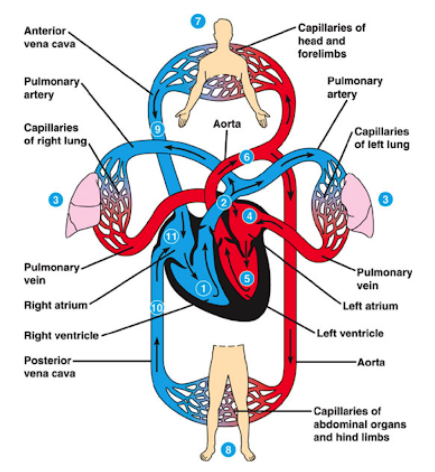
78
New cards

STATION 5: Mirrors & Reflection

You should be familiar with how light reflects off plane mirrors and how to diagram it using the ray model of light. Make sure you can predict how light reflects using normal, angles of incidence and angles of reflection. 

79
New cards

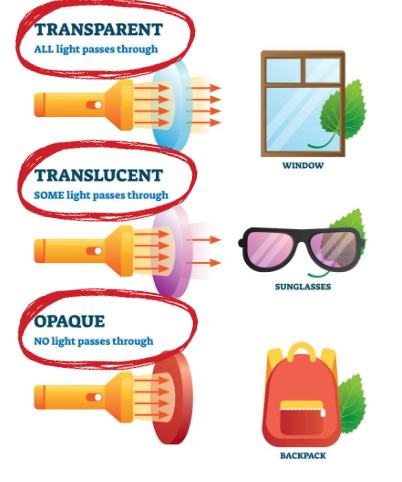
What is the Pathway of Light?

  • Light will travel until it hits an object

  • When it hits a material the light will either:

    • Bounce off the object (reflect)

    • Be absorbed by the object

    • Go through the object

<ul><li><p><span style="background-color: transparent; font-family: &quot;Twentieth Century&quot;, sans-serif;">Light will travel until it hits an object</span></p></li><li><p><span style="background-color: transparent; font-family: &quot;Twentieth Century&quot;, sans-serif;">When it hits a material the light will either:</span></p><ul><li><p><span style="background-color: transparent; font-family: &quot;Twentieth Century&quot;, sans-serif;">Bounce off the object (reflect)</span></p></li><li><p><span style="background-color: transparent; font-family: &quot;Twentieth Century&quot;, sans-serif;">Be absorbed by the object</span></p></li><li><p><span style="background-color: transparent; font-family: &quot;Twentieth Century&quot;, sans-serif;">Go through the object</span></p></li></ul></li></ul><p></p>
80
New cards
81
New cards

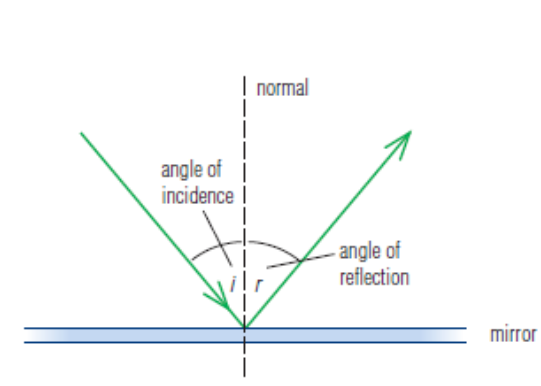
What is the Law of Reflection?

  • “When light reflects off a surface, the angle of incidence is always equal to the angle of reflection”

    • Θ = theta

    • Θi = Θr

      •  Aka: angle of incidence = angle of reflection
<ul><li><p><span style="background-color: transparent; font-family: &quot;Twentieth Century&quot;, sans-serif;">“When light reflects off a surface, the angle of incidence is always equal to the angle of reflection”</span></p><ul><li><p><span style="background-color: transparent; font-family: &quot;Twentieth Century&quot;, sans-serif;">Θ = theta</span></p></li><li><p><span style="background-color: transparent; font-family: &quot;Twentieth Century&quot;, sans-serif;">Θ<sub>i</sub> = Θ<sub>r</sub></span></p><ul><li><p><span style="background-color: transparent; font-family: &quot;Twentieth Century&quot;, sans-serif;"><sub>&nbsp;</sub>Aka: angle of incidence = angle of reflection</span></p></li></ul></li></ul></li></ul><p></p>
82
New cards