L21 - Membrane Proteins
 Call Kai
 Learn
Learn Practice Test
 Spaced Repetition
 Match
Match Flashcards
 Knowt Play
1/7

There's no tags or description
Looks like no tags are added yet.
Name | Mastery | Learn | Test | Matching | Spaced | Call with Kai |
|---|
No analytics yet
Send a link to your students to track their progress
8 Terms
overview
typical membrane is half lipid, half proteins
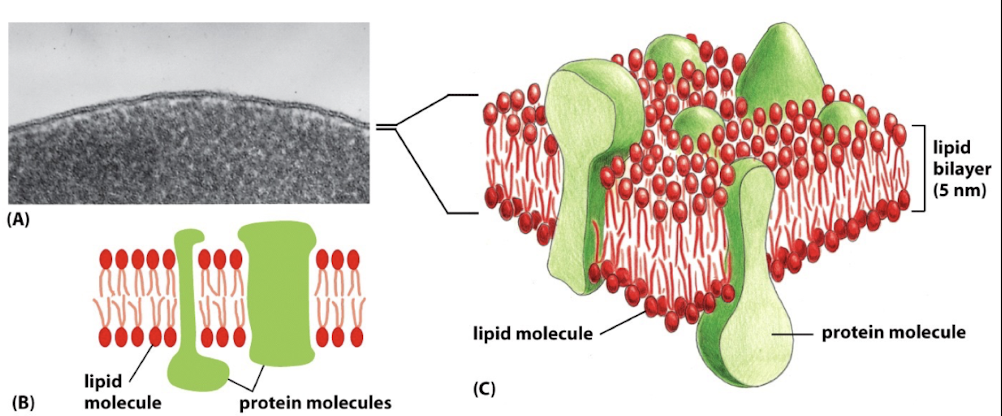
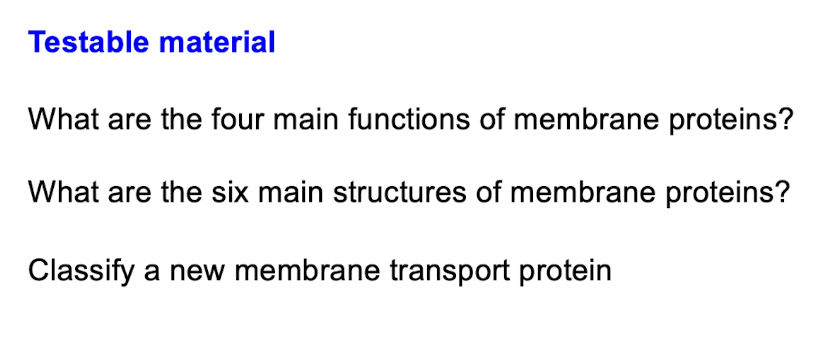
What are the 4 main functions of membrane proteins?
transporters & channels
anchors = connect inside cell to outside
receptors (changes shape)
enzymes
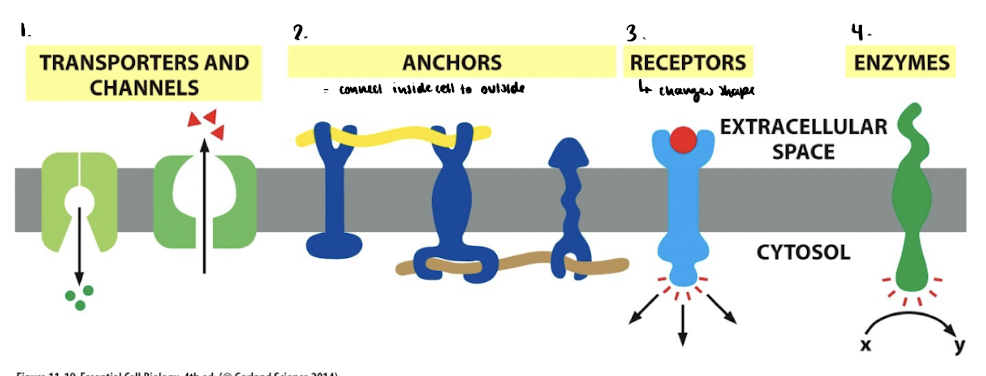
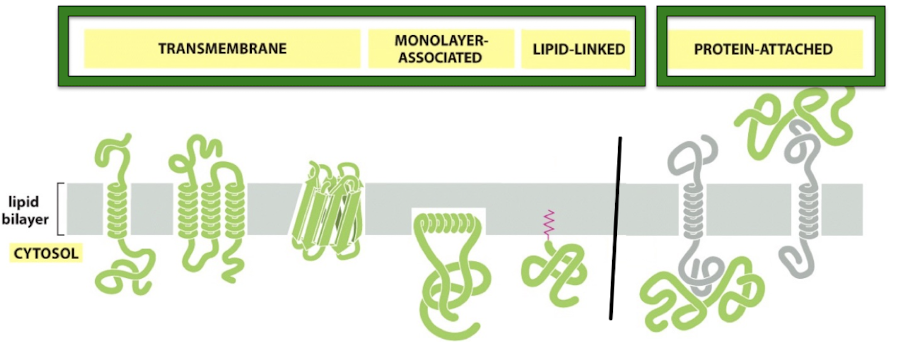
What are the 6 main structures of membrane proteins?
2 categories : integral & peripheral
Integral:
transmembrane
with single alpha helix (SNAREs)
with multiple alpha helices (channel proteins)
with beta barrel (porins)
monolayer-associated = in one leaflet of bilayer (smooth ER enzymes)
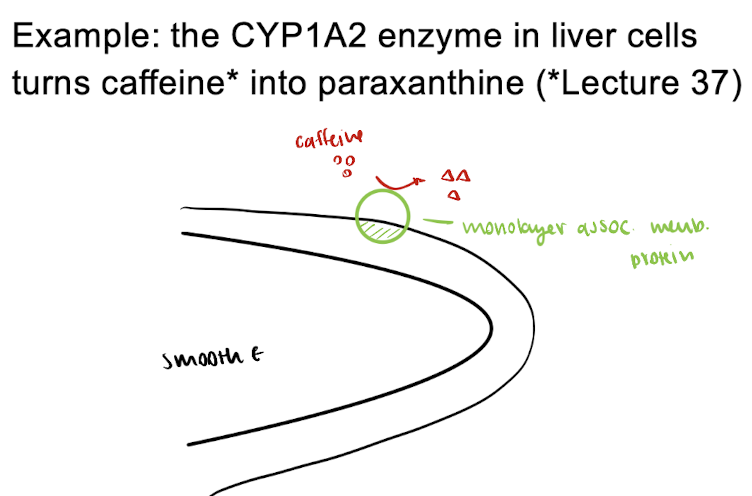
lipid-linked (G-protein-coupled receptors)
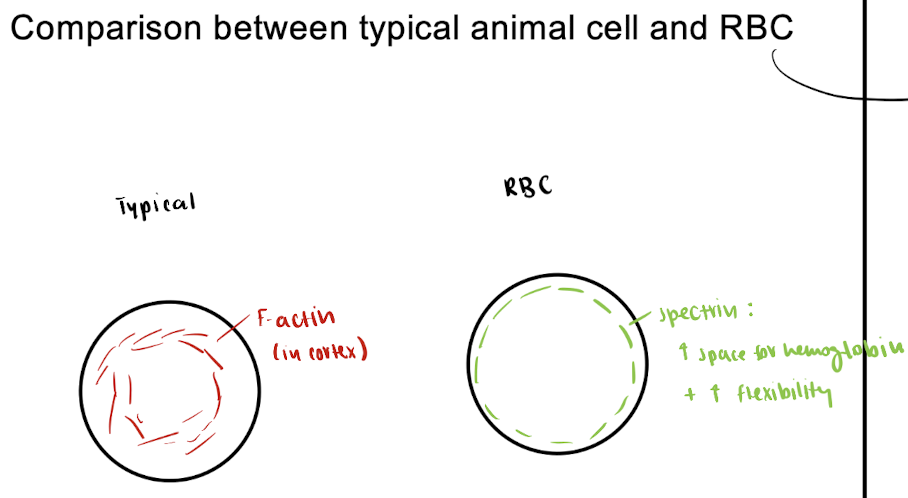
Peripheral:
protein attached (can be attached to inside or outside of the cell)
ex. spectrin on RBC plasma membrane (inside of RBC)
Classifying a new membrane transport protein:
By:
shape = channel or transporter
energy = passive, ATP-powered, H+ gradient powered, Na+ gradient powered
direction = uniporter, symporter, antiporter
regulation = gated (can open or close) or non-gated (always open)
transporters & channel are non-gated
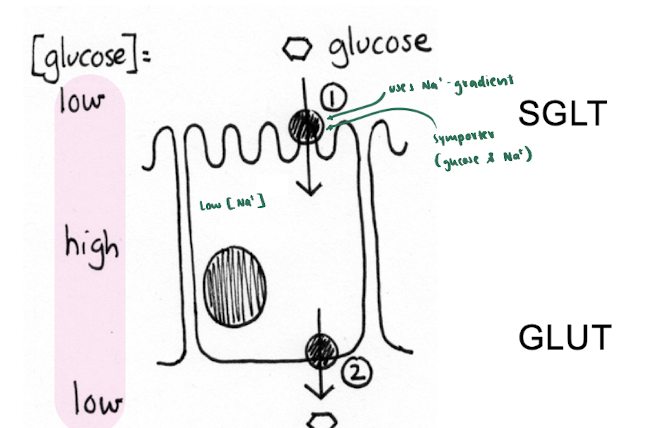
ex. SLGT (sodium glucose transporter)
integral - multiple alpha-helices
Na+ gradient powered (active)
symporter
non gated (transporter)
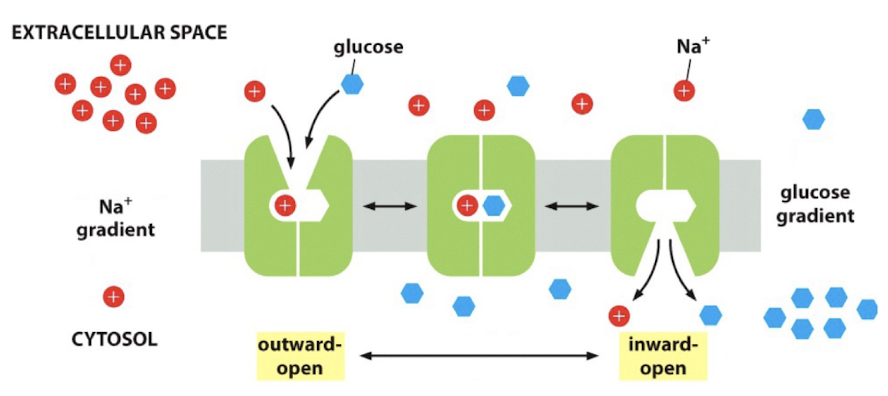
when does the SLGT flip?
a). empty
b). Na+ present
c). glucose present
d). Na+ and glucose present
e). A and D
e). A and D
bc: it also needs to reopen to the gut for re-entrance
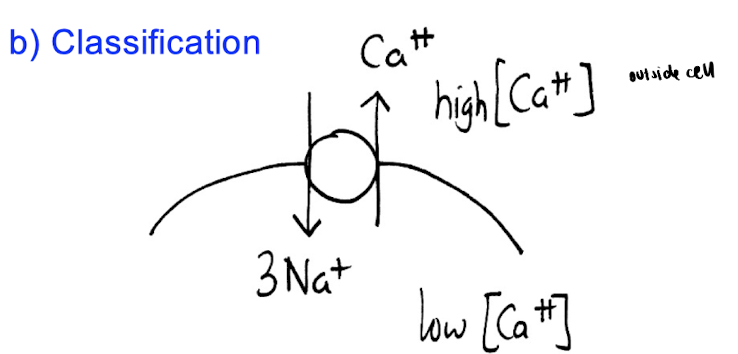
ex. sodium calcium exchanger (NCX)
what’s its classification?
= found on neurons
shape : transporter (moves 2 things)
energy: Na+ gradient powered (active)
direction: antiporter
Regulation: non-gated (bc transporter)
examinable content