Safety, Mobility, & Hygiene
 Call Kai
 Learn
Learn Practice Test
 Spaced Repetition
 Match
Match Flashcards
 Knowt Play
1/41

There's no tags or description
Looks like no tags are added yet.
Name | Mastery | Learn | Test | Matching | Spaced | Call with Kai |
|---|
No analytics yet
Send a link to your students to track their progress
42 Terms
Big Picture: Creating a safe, aseptic environment
patients rights (to be informed and privacy
patient identification (name and DOB)
prevent falls
prevent infection
use equipment safety & correctly
know where safety equipment is kept
Which organization follows patient safety and develops the NPSGs?
Joint Commission
Contributing factors with fall prevention
motor disability
improperly fitted canes and walkers
wheelchairs
environmental hazards
frailty
polypharmacy
multi-morbidities
3 reasons patients get out of bed
pain
potty
position
Postural hypotension
sitting the patient on the side of the bed and slowly getting them to stand this way the patient doesn’t move too quickly and get dizzy
Universal risk reduction
Call light & physical & sensory assistive devices within reach
Hourly rounds
Well-lit patients areas
Bed/chair wheels locked & in low position
Clean spills immediately
Bed rails locked
Non-skid socks
Clutter-free room
Change positions slowly - “dangle”
High Risk Patient risk reductions
Close to nurse station
Sitter
Bed-chair alarms
What do we do if we find a patient that has fallen or if we witness a fall?
Assessment of patient, safety, get help
if activity falling- lowering to the ground
Restraint
any device or substance that limits movement of patients
Restraint order time lengths
Behavioral- good for 4hrs
Surgical/Medical- good for 24hrs
Precautions used to prevent injury in patients that are restrainted
attach on immobile bed frame
2 finger breaths (for circulation)
Quick release buckle/tie (slipknot)
every 2hrs, release restraint (one at a time)
Assess: Skin integrity, pulses, skin temp, color, sensation
Interventions: reposition, toileting, hydration & nutrition, re-evaluate need for restraints
Fire Safety: RACE
Rescue
Activate Alarm
Contain
Evacuate
Fire Safety: PASS
Pull Pin
Aim at base
Squeeze
Sweep
Interventions for patient having a seizure
AIRWAYS
position on side
nothing in the mouth
Remove objects that could cause injury
glasses
tight clothing/scarves
Time the seizure
Bed in low position
Pad side rails
Suction and Oxygen for after seizure
Importance of using mechanical lifts
potential for injury is reduced
lessens patient anxiety
more comfortable- less forceful
patient dignity/self-esteem maintained
equipment can match their own ability
contributes to patient autonomy
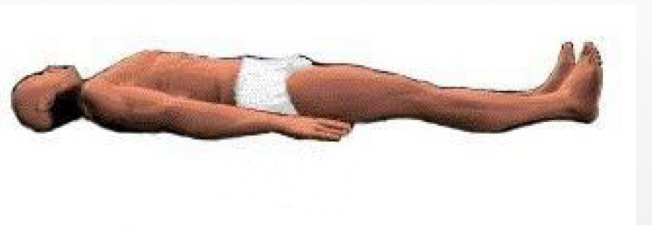
supine
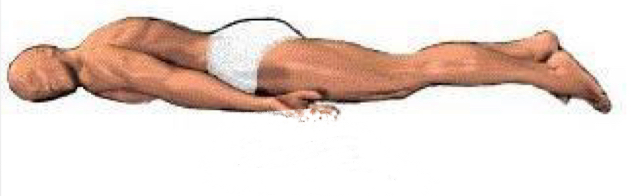
prone
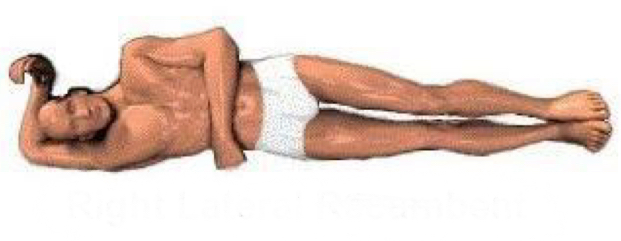
right lateral recumbent
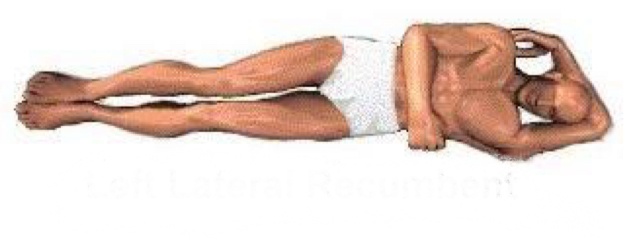
left lateral recumbent
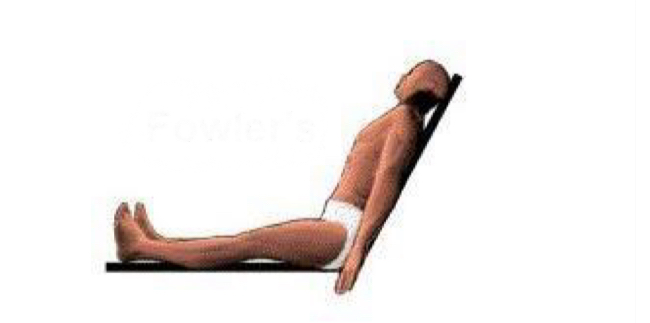
fowler’s- 90 semi fowler’s- 30-45
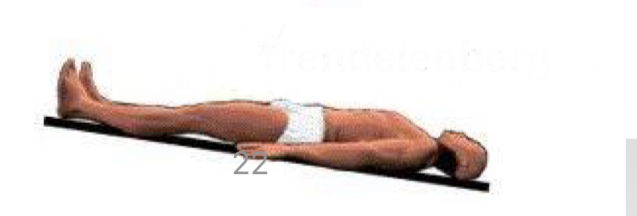
trendelenberg
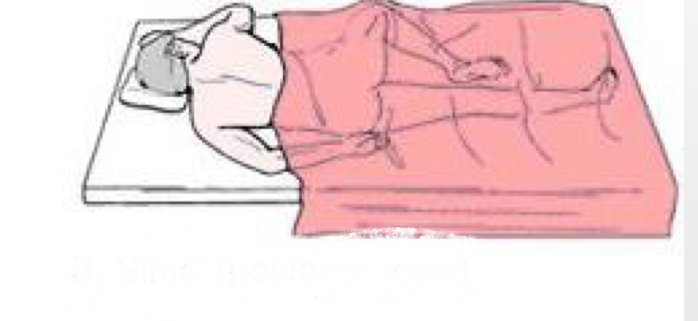
sims’
Skin Integrity
1st line of defense against infection
Assess
Braden Scale
Skin condition, nutrition, hydration, age, smoking, medication, co-morbidities
Intervent
prevention is KEY
address underlying issue- nutrition, hydration, hygiene, lotion
Evaluate
Reddened areas
non-blanched = pressure related (stays red)
blanched = moisture-related (turns white)
Positioning
bed controls
pillows
wedge pillows
abductor pillows (after hip replacement)
preventing deconditioning and deep vein thrombosis (DVT)
EBP: Early non-pharm & pharm prophylaxis
early ambulation
TED (Thrombo-embolic deterrent) hose
SCDs (sequential compression device)/ ALPs Alternating leg position
Heparin (use 2nd)
Performing range of motion exercises: when stable
move them slowly to a seated position on the bed
“Dangle”
Gait belt
Stand up
Start slow
Performing range of motion exercises: when unstable
passive ROM
performed by caregiver
support extremity
never force past comfort level
active assisted
can move with assistance against gravity
active ROM
able to move against gravity
Contraindications for wearing either elastic stocking or SCDs
dermatitis
open wounds
recent skin graft or surgery to legs
decreased arterial circulation in lower extremities
signs & symptoms of a DVT
guide lines for providing personal hygiene to patients
privacy-draping
cultural sensitivity
preferences of who, when, what, etc
encourage participants throughout
avoid wounds- follow wound care orders
medical aseptic technique for bed bath
perform hand hygiene & don gloves
Offer bedpan or urinal FIRST
do NOT disconnect IV to remove gown
use new wipe for each area
Chlorhexidine (CHG)
ICU,CVICU, Pre op, Central line
only from neck down (not on face or private areas)
Bathing tips
Female patients: clean front to back
Male patients: replace foreskin
precautions for tub bath or shower
Falls
call lights
handles/chair
grip strips
towels/needs within reach
Infection Control
clean between patients
shower chairs
bucket under seat
clean the underside
guidelines for oral hygiene
includes teeth, gums, tongue, mucous membrane
prevent inflammation, infection
promotes ease of swallowing, comfort & ease of communication
provide based on patient’s need
Oral hygiene of Unconscious Patients
High risk
dry mucous membrane
thickened secretions
inability to eat or drink
aspiration ex
2 people- 1 for suctioning
side-lying position
if unable to keep mouth open, use oral airway- not your fingers
Hair care
Scalp, facial hair, body hair
traditional shampoo & water
disposable dry shampoo cap
combing/shaving
Shaving
be aware of blood thinners & blood disorders
disposable razor= 1 use
towel over chest
shaving cream
45 degree angle- pull skin taut
short firm stokes with grain of hair
rinse with warm water
Nail and Foot care
*don’t cut nails of a diabetic patient*
hand hygiene & don gloves
soak nails in warm water
no sharp corners
dispose of emery board
apply lotion- no excess
risk factor for foot and nail problems
*consult Podiatrist*
peripheral vascular disease (PVD)
diabetes mellitus (DM)
Older adults
Immunocompromised
Foot disorder
care for eye
Assess
Protheses- handel with care
Comatose? No blinking
Skin near device
Intervene
Inner to outer canthus
Irrigation- cool solution x 15 min, don gloves
goal is to reduce visual loss
position: side lying to side affected eye, supine for both eyes
retract eye lids, pt look up- do not touch eye with syringe
Evaluate
care for ear
Assess
Risk: tympanic membrane rupture, injury to canal, infection if not dried properly, vertigo and nausea
Intervene
Position: sitting or lying, toward affected ear
Pinna: up and back for adults, and for 3yrs or younger
Gently instill- head towards affected side- allow to drain
leave cotton ball in place 5-10 min after
Evaluate