MOD 9 - Photon Counting CT
 Call Kai
 Learn
Learn Practice Test
 Spaced Repetition
 Match
Match Flashcards
 Knowt Play
1/10

There's no tags or description
Looks like no tags are added yet.
Name | Mastery | Learn | Test | Matching | Spaced | Call with Kai |
|---|
No analytics yet
Send a link to your students to track their progress
11 Terms
PCCT
major advance of CT, regarding the detectors which have the unique ability to measure each and every individual photon interaction → precise attenuation measurements, multiple energy discrimination, and vastly improved increased spatial resolution
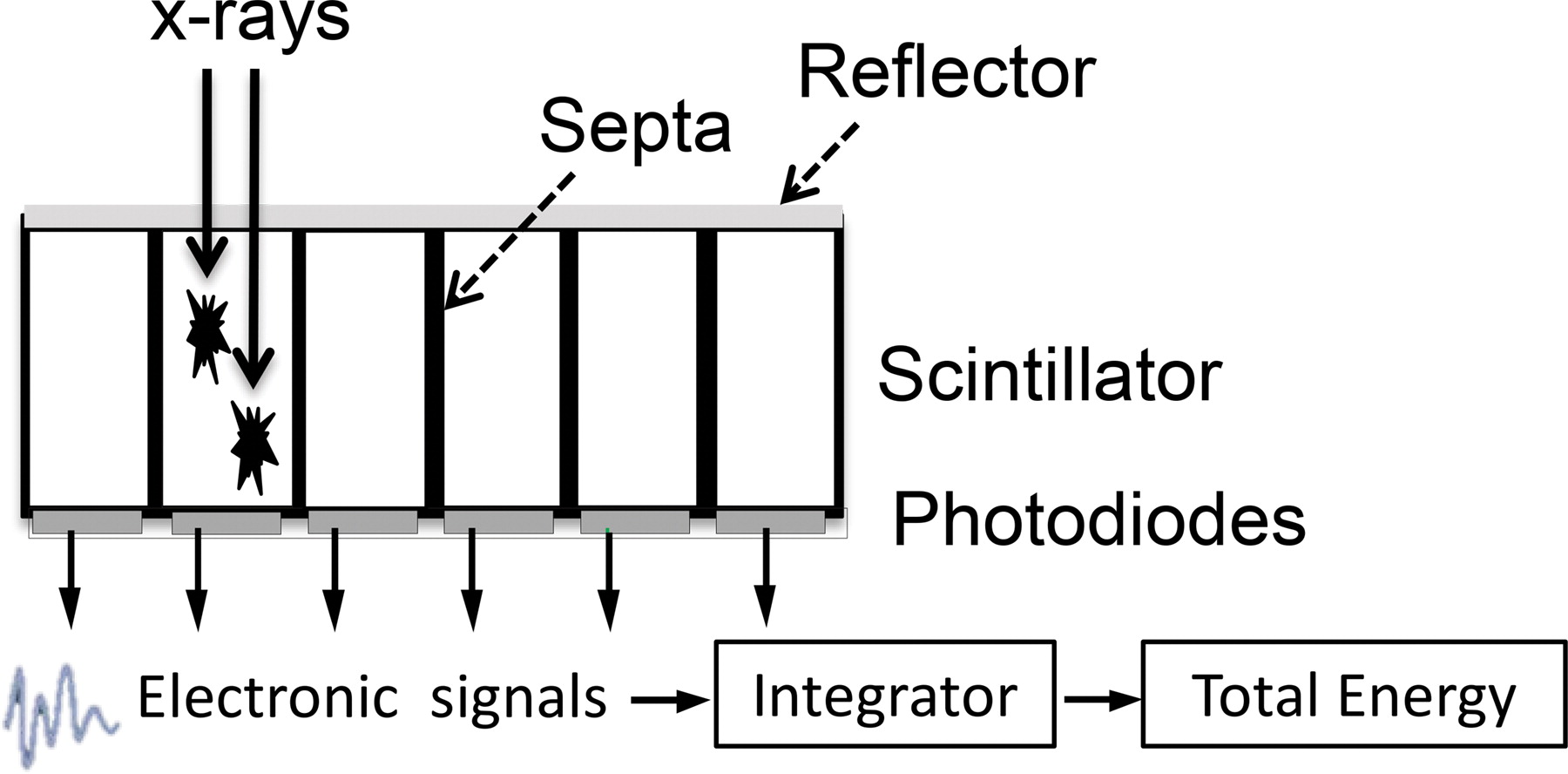
Scintillation Dectectors (EID)
earlier CT detector models were made of Gadolinium Oxisulphide or Cadmium Tungstate, with fused photodiodes
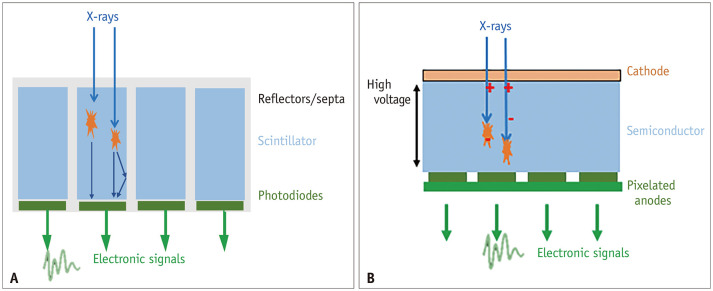
photon absored → light emitted → light converted to electrical signals, this two step process allowed electronic noise to enter
Septa
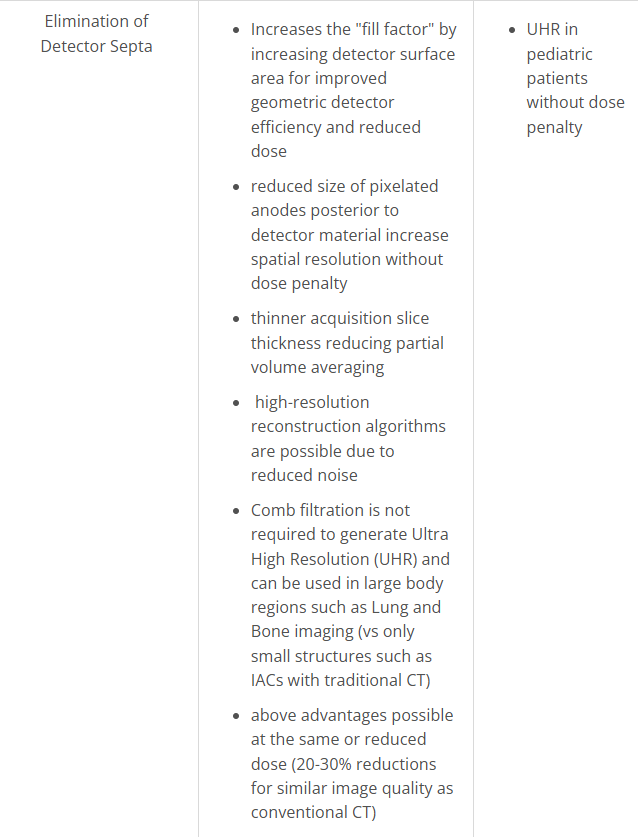
walls between scintillation detectors to block light/signal spread into adjacent detectors, taking up precious surface area and thus creating dose inefficiencies
Photon Counting Detector
relies on a solid (non-pixelated, silicone, cadmium zinc telluride) semiconductor material for the direct conversion of photons into electrical signal
no septa = increased SA, and no light spread
challenge: significant heat generation combined with heat-sensitive detector materials
MultiEnergy CT with PCD
elimination of low-energy ‘noise” photons
no need to preemtively select dual energy protocols
Advantages of PCD Technology
Dose reduction
Increased Spatial Resolution
Inherent Spectral Acquisition
Elimination of Electronic Noise
Dose Reduction
since more photons are measured with increased SA, less photons are required to generate an equivalent image to EID CT
Inherent Spectral Data
inherently generates spectral data making it available with all acquisitions, allowing to gain information about the elemental composition of an object
elimination of high attenuation/ beam hardening artifacts hen used in conjunction with adapted reconstruction algorithms
PCD Direct Conversion Impact and Application
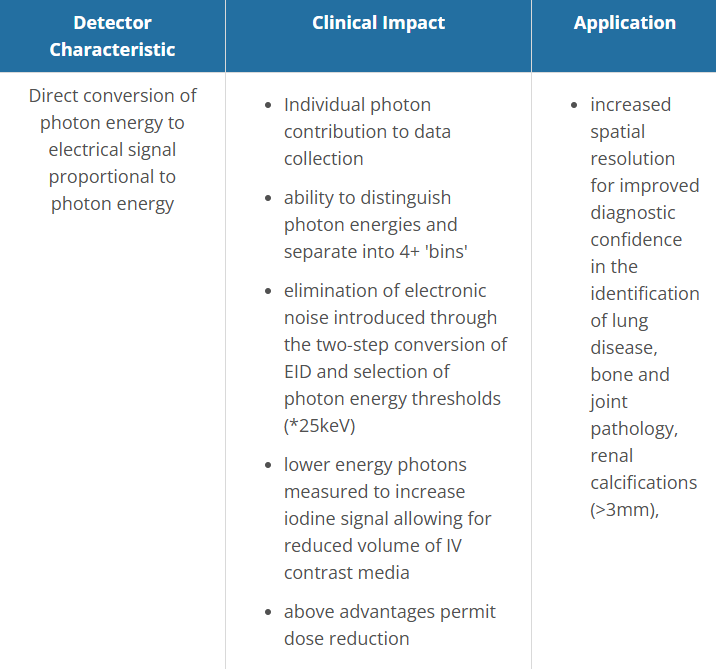
PCD Elimination of Septa Impact and Application
Disadvantages of PCD / PCCT
additional recons which take time
cost of equipment