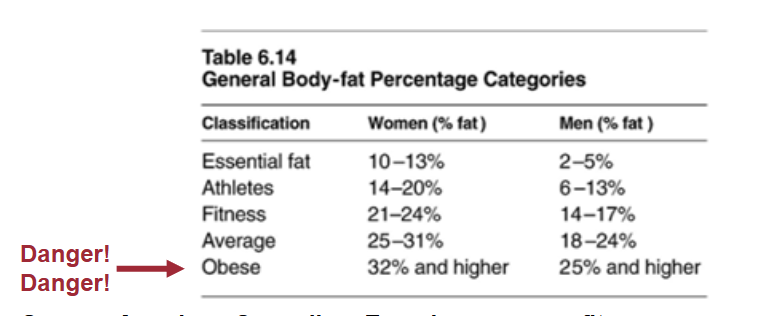
BMI + Body Fat
 Call Kai
 Learn
Learn Practice Test
 Spaced Repetition
 Match
Match Flashcards
 Knowt Play
1/13

There's no tags or description
Looks like no tags are added yet.
Name | Mastery | Learn | Test | Matching | Spaced | Call with Kai |
|---|
No analytics yet
Send a link to your students to track their progress
14 Terms
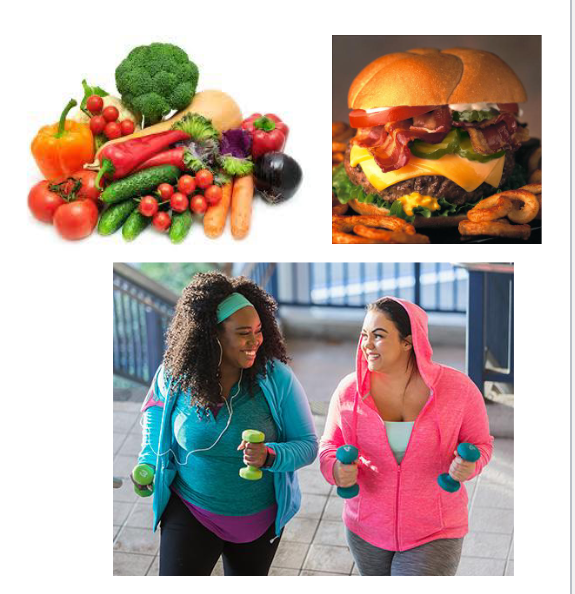
Approx how many calories to consume per day
males (16-50 yrs old): 2400-2800 calories/day, assuming a moderate activity level
Females (16-50yrs old) 2000-2200 calories/day, assuming a moderate activity level
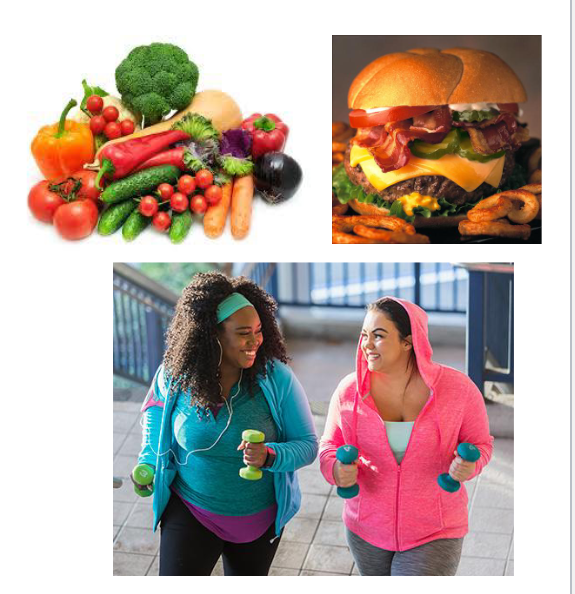
Maintaining a balance between….
Energy intake (caloric intake)
→ you have (some) control over your dietary choices
→ prioritize nutrient dense, natural foods as much as possible
→ avoid sodium, saturated fat, and added sugar (in any form) as much as possible
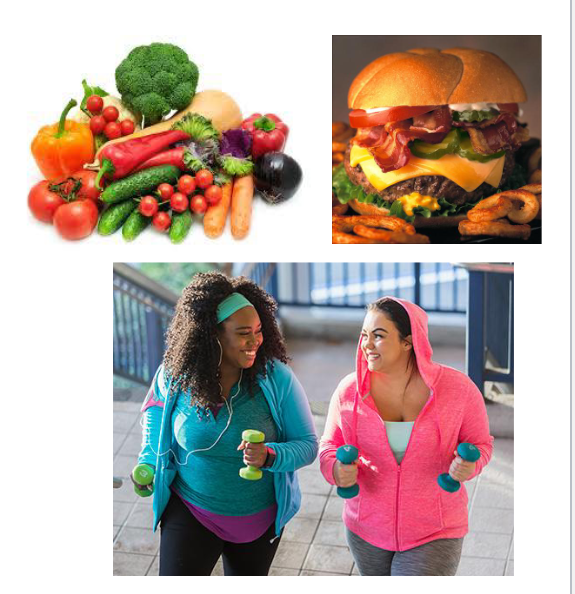
Energy output or expenditure (caloric output)
Basal/resting metabolic rate
→ accounts for ~60% of your caloric expenditure
Thermic effect of digestion
→ aka the “specific dynamic action” or “diet induced thermogenesis”
→ accounts for ~8% of your caloric expenditure
your lifestyle/activity choices
→ accounts for ~32%
→ you can modulate this too!
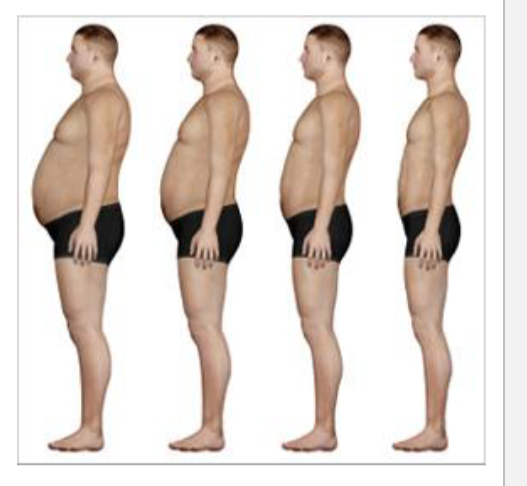
If you can maintain caloric balance (caloric intake = caloric output)
you will maintain body fat levels and your current health status (for better or worse)
if body weight does not change over the course of several weeks, caloric balance has been achieved
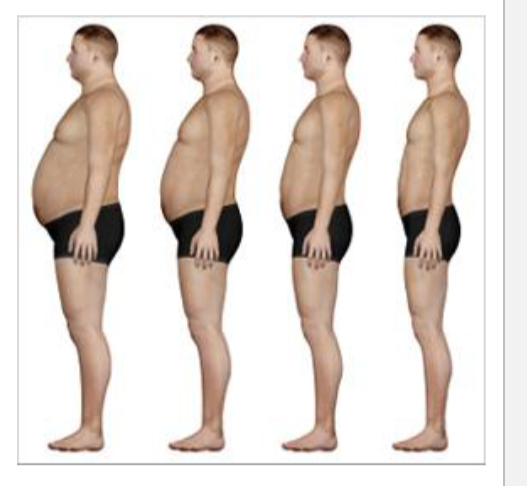
if caloric intake > caloric output…
that is called “positive caloric balance”
you will gain abdominal fat and that leads to higher likelihood of negative physical and mental health outcomes
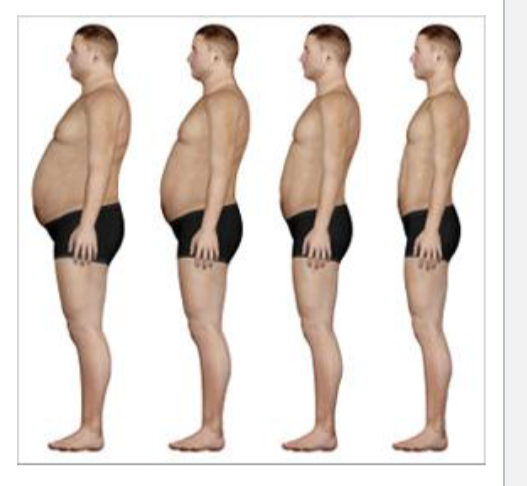
if caloric output > caloric intake…
that is called “negative caloric balance”
you will lose abdominal fat and that promotes physical and mental wellness
Body Mass Index (BMI)
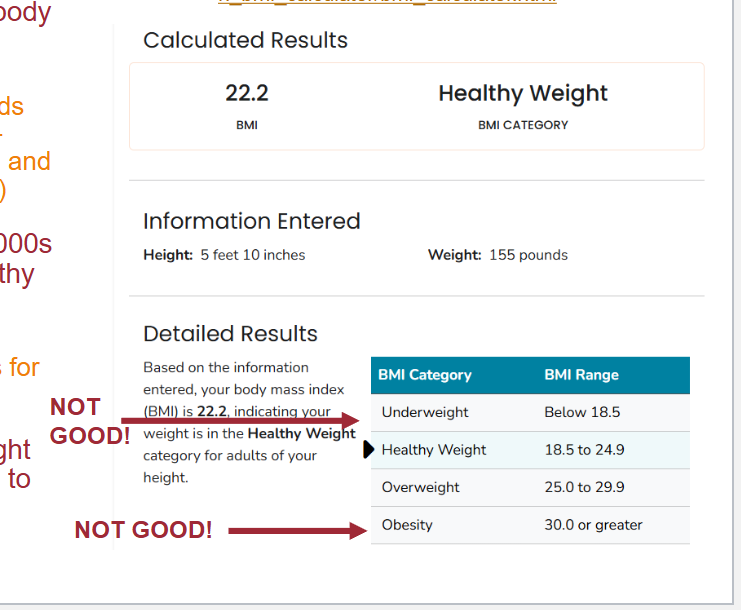
BMI = Body mass (kg)/Height² (m²)
most common measurement of body condition in clinical and research settings
→ can be collected easily and lends itself well to LARGE population-based studies of body condition and health risks (w/ some caveats)
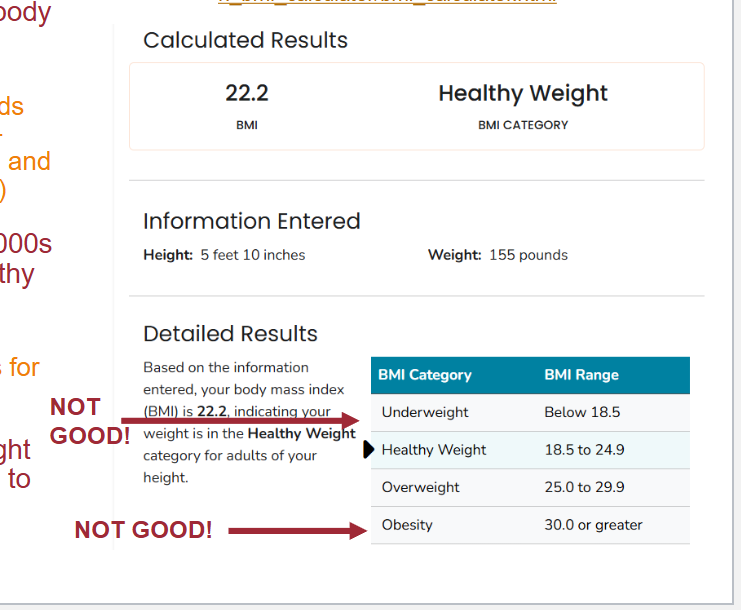
Multiple studies from the early 2000s have found that it is NOT unhealthy to have a BMI in the overweight category…
Providing some energy reserves for stressful times
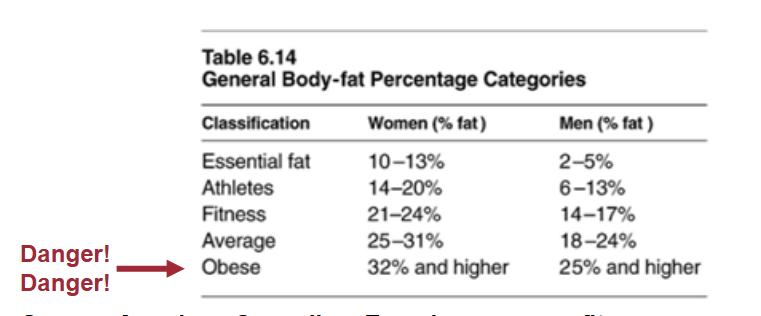
however, being in the underweight and obese categories does lead to significant health risks
Important limitations of BMI measurements
it does not actually measure body fat, which is the main factor that determines negative health outcomes
it is inaccurate for very muscular individuals, bc they weigh more than their height would predict
→ there are much better ways of actually measuring body fat, but they are more difficult to deploy to large populations
— muscle man vs chubby man
~using body roundness index

The best way to measure body fat
calculating body fat requires a measure of body density, as shown in this equation
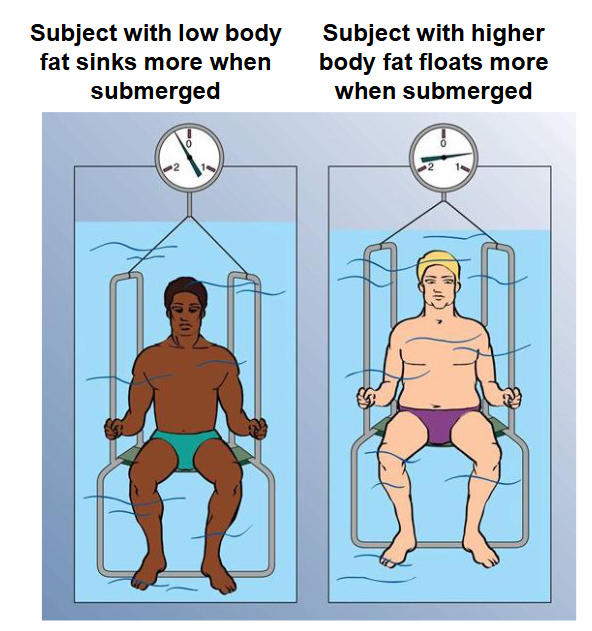
Hydrostatic weighing allows for a VERY accurate measurement of body volume
therefore, it is the gold standard for measuring body fat percent
subjects re weighed on dry land AND while submerged in a water tank and with all air pushed out of their longs
These two weights are used to calculate body volume
→ the difference between these two weights is small for muscular individuals, bc muscle mass is denser than water
→ the opposite holds for ppl with high body fat, which is less dense than water
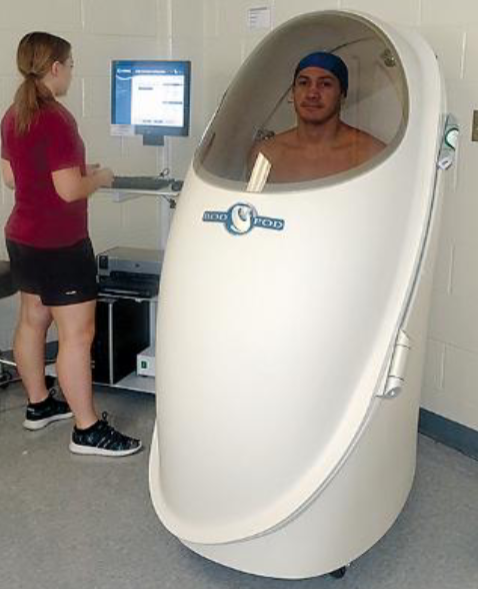
Air displacement plethysmography (The “Bod Pod” can also determine body volume and fat percent
the volume and pressure inside the chamber are known
placing a person in the chamber decreases the volume of air
→ therefore it will increase the pressure
this change of pressure is used to measure the subject’s volume and therefore calculate their body fat
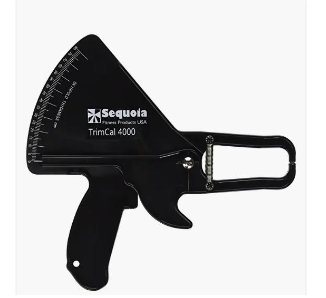
Skin fold analysis
measuring the thickness of four skin folds at specific sites around the body
sum those values and compare to a table to determine body fat percentage
Bioelectrical impedance
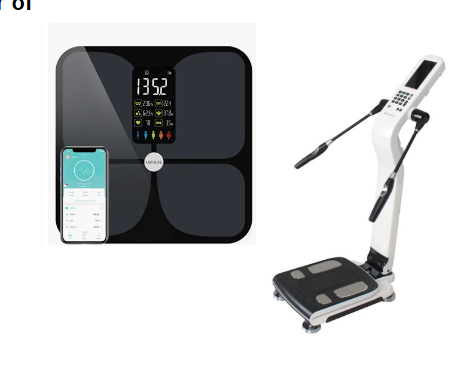
measures the resistance of body tissues to the flow of a small electrical signal
more body fat leads to more resistance
less body fat leads to less resistance
some small smart scales can do this or you can find devices to do this at your local heath club or some health food stores