BSCI 171: Cell Communication
 Call Kai
 Learn
Learn Practice Test
 Spaced Repetition
 Match
Match Flashcards
 Knowt Play
1/27

Earn XP
Description and Tags
Exam 2 materal
Name | Mastery | Learn | Test | Matching | Spaced | Call with Kai |
|---|
No analytics yet
Send a link to your students to track their progress
28 Terms
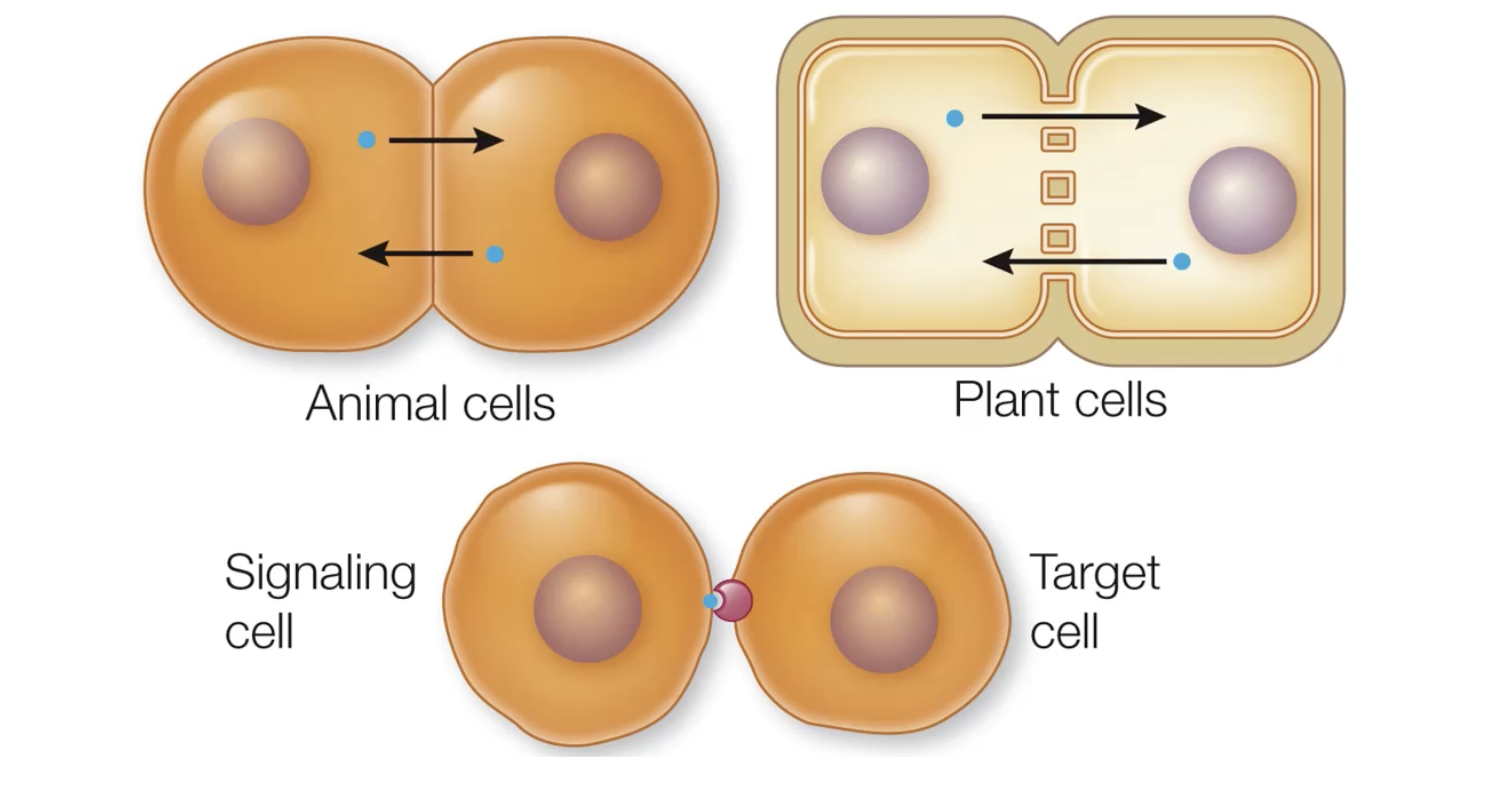
signaling between adjacent cells
juxtacrine
“just right next to”
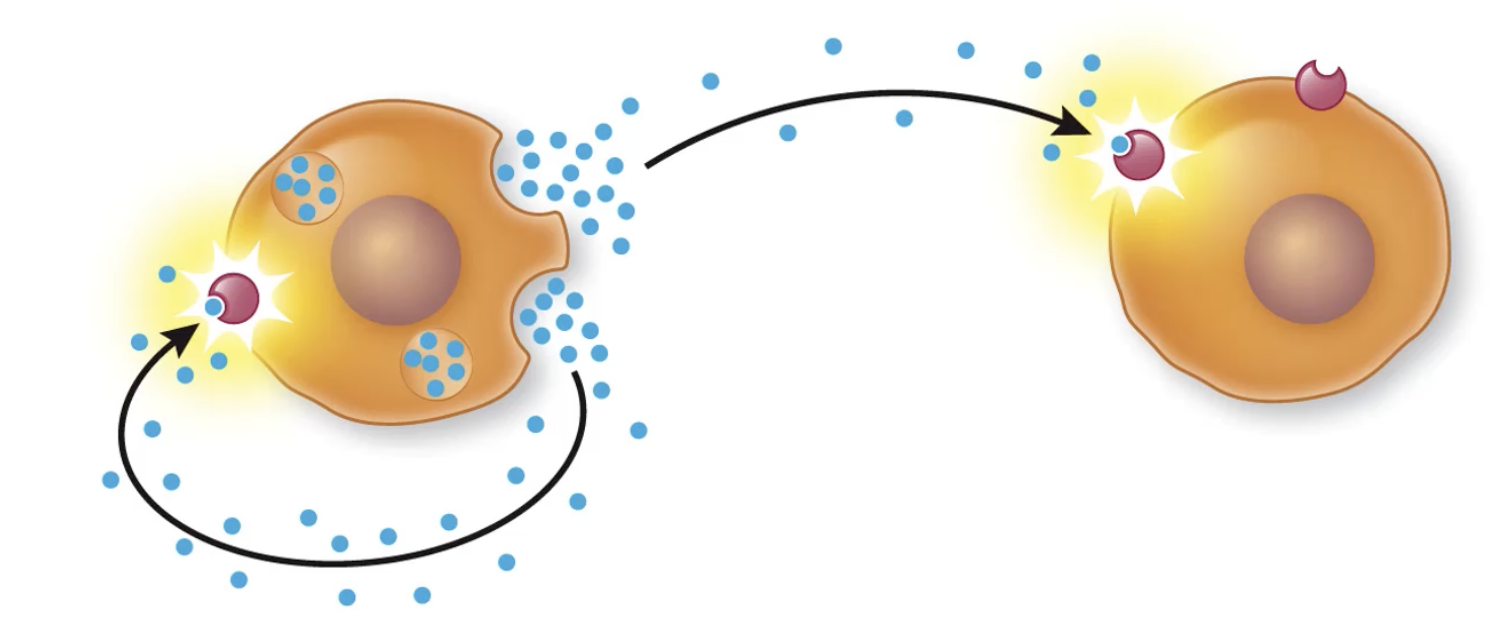
signaling between nearby cells
paracrine signaling
synaptic signaling
electrical signal triggers release of neurotransmitter
signaling between distant cells
endocrine signaling
signaling cell sends singaing molecule that travels to target cell
Only cells with __ tuned to a specific signal will receive the signal sent by another cell
receptor
In what ways do cells respond to signals?
through changes in cellular activity
ex.) enzyme activity, gene expression, cell division
ligand
signaling molecule
most chemical signals are ___
hydrophilic
means they cannot pass through membrane without help
most receptors are ____
transmembrane proteins
interact on both in and out of membrane
Lipid soluble signals (hyrdrophobic)
pass through plasma membrane and bind to specific receptor in cytoplasm or in nucleus
activated receptor-ligand complex regulates genes by binding DNA
Water soluble signals (hydrophilic)
cannot pass through membrane
bind to specific plasma membrane receptors
eceptor-ligand complex activates cascade of events in cell
intracellular signaling: receptors are found in the ___ or ___
cytiplasm or nucleus
intracellular signaling: signal must be ___ or ___ to diffuse through membrane
hydrophobic or very small
membrane bound receptors
interact with hydrophilic signals
ligand gated
G protein coupled
enzyme linked
Ligand gated receptors
channels that open to allow things to move into them
G Protein coupled receptor
need transmembrane protein
GDP becomes phosphorylated to activate G protein
G protein interacts with effector protein
Enzyme linked receptors
linked to enzymatic activivty
signal transduction pathway
series of steps that eventually leads to biochemical response
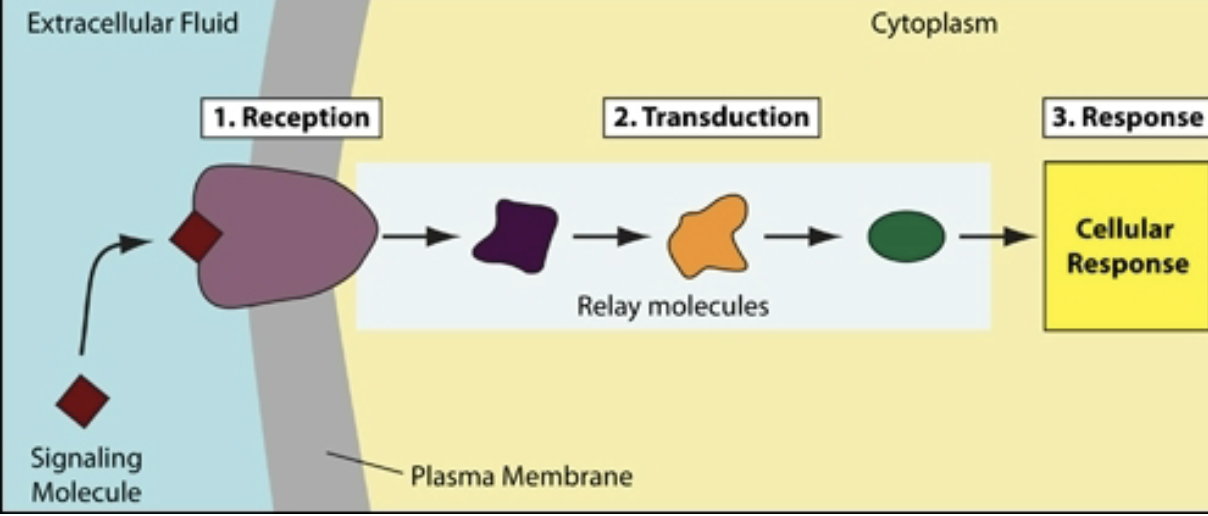
the intermediate steps in signal transduction involve _____ of enzymes
activation or inactivation
most common step is addition or removal of phosphate group
Protein kinase
enzyme that helps add phosphate group from ATP to a protein
protein phosphatase
enzyme that helps remove phosphate groups from proteins
Second messengers
part of signal transduction
they’re activated by the initial signal & carry instructions through cell
Cyclic AMP
common second messenger
produced by cells in response to several different hormones
generaed from ATP from adenylyl cyclase
2 phosphate groups removed frmom adenylyl cyclase
phosphodiesterase
breaks down cAMP back to AMP
What kind of responses is seen in the nucleus?
changes in gene expression
What kind of responses is seen in the cytoplasm?
changes in:
enzyme activity
motor activity
cytoskeletal structure
fine tuning of response can lead to:
amplification: small signal leads to large response
regulation:
termination:
How can different cells respond to the same signal differently?
different receptors
different intermediate proteins
different final targets