PTH7607: Pain Neuroscience Education
 Call Kai
 Learn
Learn Practice Test
 Spaced Repetition
 Match
Match Flashcards
 Knowt Play
1/71

There's no tags or description
Looks like no tags are added yet.
Name | Mastery | Learn | Test | Matching | Spaced | Call with Kai |
|---|
No analytics yet
Send a link to your students to track their progress
72 Terms
What is the leading cause of injury-related death in the US?
Drug overdose
Can you use pain neuroscience education as a treatment
No
What is pain?
unpleasant sensory and emotional experience associated with actual or potential tissue damage
how is pain transmitted?
multiple system output activated by an individual's specific pain neuromatrix, which is activated whenever the brain concludes the body's tissues are in danger and action is required
What is acute pain?
pain related to an underlying health condition lasting less than 6 months
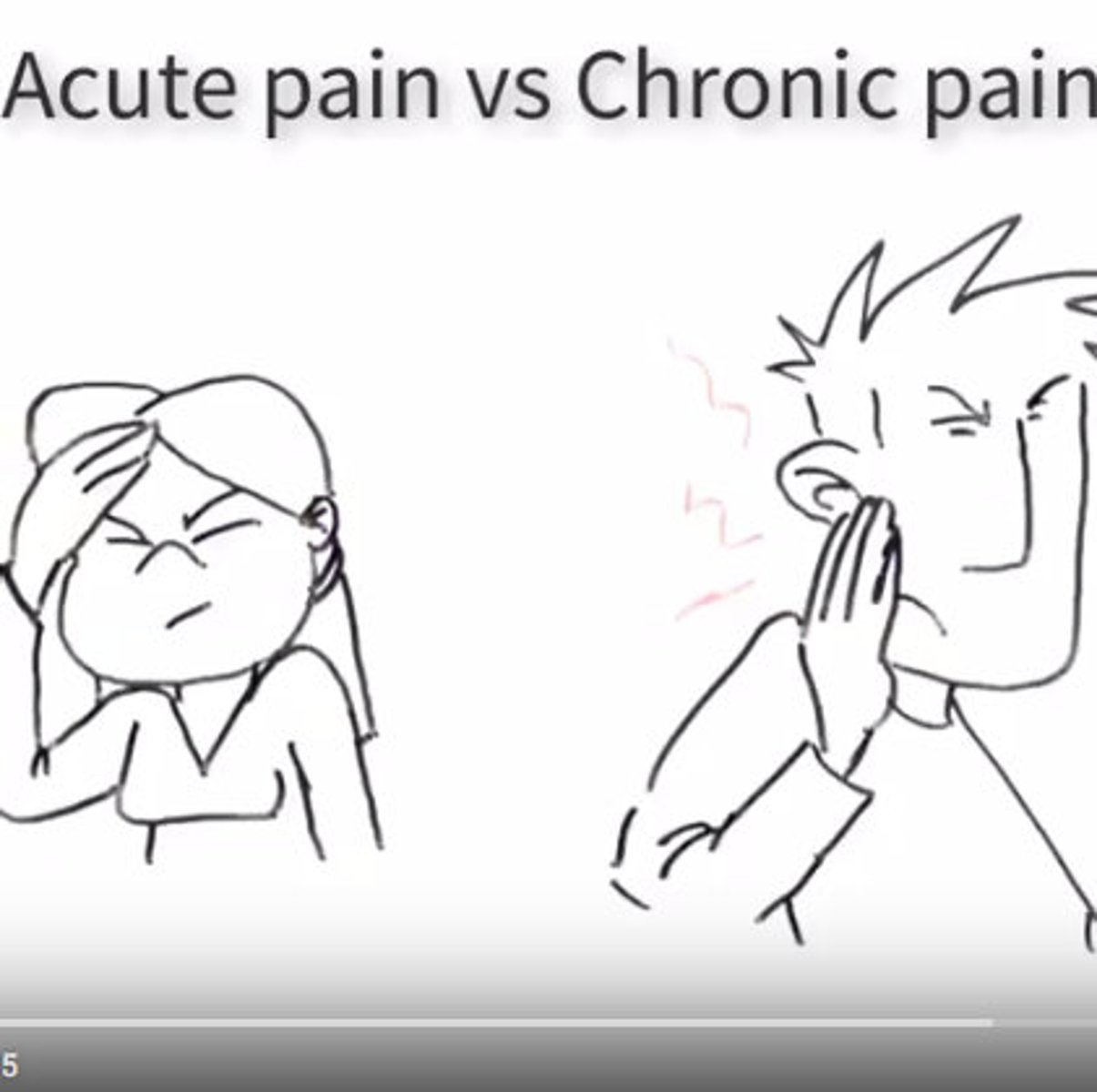
What is chronic pain?
pain lasting longer than 6 months and is now independent of the underlying health condition

How did those who were shown damage to their disc respond to treatment?
Patients that were shown their damaged disc recovered significantly better
what is the Cartesian Model (old pain model)
The body was a machine and pain was a disturbance passed down along nerve fibers until it reached the brain - continues to impact modern thinking regarding pain
what are the components of the Cartesian Model
-more pain = more tissue damage
-all pain is caused by an injury
-there is a division of mind and body
-if pain persists more than 6 months the tissues must not have healed
-nociception and pain are the same
**** HE WAS VERY WRONG
what is Gate Control Theory
- pain primarily seen as an overstimulation of various receptors
- gating mechanism in the dorsal horn of the spinal cord
- stimulation of large nerve fibers may block transmission of pain signals from the smaller nerves
what are some issues / limitations with Gate Control Theory
-can't explain phantom limb pain
-pain sensations below level of SCIs
-how emotional/psychological issues effect the pain
experiences
-inhibitory/downward messaging from the brain
Gate Control Theory is considered a ___ approach to pain
bottom-up approach
Pain Neuroscience Education is considered a ___ approach to pain
top-down approach

What is the Mature Organism Model
multiple items may affect the pain experience
What are some items that are included in the mature organism model?
• Tissues
• Positive and negative influences of a person’s environment
• Peripheral nervous system inputs into the spinal cord including ion channel activation, demyelination, abnormal impulse generation, blood supply to the nervous system
• Peripheral inputs entering the spinal cord with gating and transmission to second order neurons
• The brain’s processing along with environment, past experiences, memory, beliefs, culture
•Output mechanisms in response to a threat heavily driving by biological and physiological processes which effect brain plasticity, immune function, the neuroendocrine system, and the overall health of tissues
3 key elements of the Mature Organism Model
input mechanisms
processing mechanisms
output mechanisms
what are the main input mechanisms of the mature organism model?
various forms of information entering the spinal cord and brain for processing
nociception
environmental influences
peripheral nervous system
what are the processing mechanisms of the mature organism model?
structures and processes inside the CNS
brain processing the info it receives (sensory, cognitive, emotional)
brain placing value on the info and coming to a conclusion
what are the output mechanisms of the mature organisms model?
response to the input and the brain's interpretation of the experience
strongly driven by survival instincts or past pain experiences
Type A nerve fiber description?
thickest, fastest, myelinated
Type A efferent and afferents?
efferent motor fibers
afferent fibers from the skin
Type B nerve fiber description?
medium sized, myelinated, slower
Type B efferent fibers?
autonomic efferent fibers
Type C nerve fiber description?
smallest, non-myelinated, slowest
Type C efferent and afferent fibers?
autonomic efferent fibers
afferent fibers from the skin
Type A and C have what kind of pain fibers?
nociceptive fibers
what are nociceptors stimulated by?
mechanical deformation
temperature, tissue inflammation
neurogenic inflammation
immune system
What is allostasis?
the process by which the body responds to stressors in order to regain homeostasis
What are ion channels?
Regulate the flow of ions across the membrane in all cells
where are ion channels found? examples?
found in higher concentration in areas where there is less myelin
dorsal root ganglion
nodes of Ranvier
What is sensitization of our nervous system closely linked to?
Blood flow
What happens to sensitivity when blood flow is decreased? How about increased?
BF decreased = sensitivity increases
BF increased = sensitivity decreases
How do you increase blood flow of the nervous system?
Exercise!!!!!!
what are second order neurons?
take information from the spinal level to the brain for interpretation and potential action
*relay neurons
When information via second order-neurons reach the brain, how does the brain respond?
Facilitates incoming information
Or
inhibit incoming information
what are interneurons? are they excitatory or inhibitory?
neuron that forms a connection between other neurons - not sensory or motor
*act as inhibitory neurons in the CNS
What are wide dynamic range neurons?
second order neurons that relay most day-to-day information to the brain
what are the Nociceptive specific neurons
second order neurons that require a certain threshold to activate and are associated with severe threats
Where is the signal sent if there is chronic pain?
Sent to the emotional areas of the brain
what is an action potential windup
the persistent input from the periphery changes the second order neurons and brain pathways leading to heightened sensitization and information reaches the brain more readily
constant barrage from C fibers can lead to? what happens if it is in a constant toxic environment?
interneuron death
in a persistent toxic environment, no regeneration will occur
interneuron death results in what?
results in: decreased ability to modulate nociception/pain experience, thresholds are more easily met to stimulate second order transmission, info from various spinal levels and the other side of the body have access to 2nd order neurons and the brain perceives an increased threat, the brain produces less endogenous descending mechanisms
nociception is mostly received by the ___
thalamus (relay center)
after an immediate injury, what processeses nocipetion and protective responses such as reflexice movement and adrenaline?
lower brain centers
what is cortical restructuring
with chronic pain, the homunculus changes
*cortical smudging
what is cortical smudging?
the ability to clearly ID a body part is decreased,
2-point discrimination is decreases
L/R discrimination is impaired
Where is Pain produced?
ONLY BY THE BRAIN
what is a good predictor of acute pain becoming chronic?
intensity and duration
Can you have pain without knowing about?
it is possible to have pain and not know about it
T/F: when part of your body is injured, special pain receptors convey the message to your brain
False
T/F: pain only occurs when you are injured or at risk of being injured
false
T/F: when you are injured, special receptors convey the danger message to your spinal cord
True
T/F: special nerves in your spinal cord convey danger messages to your brain
true
T/F: nerves adapt by increasing their resting level of excitement
True
T/F: chronic pain means that an injury hasn't healed properly
false
T/F: worse injuries always result in worse pain
false
T/F: descending neurons are always inhibitory
False
T/F: pain occurs when you are injured
false
T/F: when you injure yourself, the environment that you are in will not affect the amount of pain you experience, as long as the injury is exactly the same
False
T/F: the brain decides when you will experience pain
True
4 key points of Pain Neuroscience Education
1) validate
2) spread the good news
3) answer 4 questions (what's wrong, what can I do, what they think is wrong, how long it will take)
4) ask permission

yellow flags?
psychosocial factors that have been shown to correlate to the development of chronic pain
Yellow flags slide 76
nociceptive pain?
proportionate pain, clear aggravators and eases, pain that is intermittent sharp/dull ache/throbbing at rest, no night pain/dysesthesia/shooting/electric
peripheral neurogenic pain?
pain in a dermatomal or cutaneous nerve distribution, positive neurodynamic tests, history of nerve pathology
central sensitization pain?
disproportionate pain, no clear aggravators or eases, diffuse palpation tenderness, psychosocial issues/+ yellow flags
what is placebo?
phenomenon in which patients may improve while receiving a harmless treatment that is without therapeutic benefit - effects of the treatment are unintentional
what is nocebo?
patient's symptoms worsen after receiving a harmless treatment without therapeutic benefit - effects of the treatment are unintentional
What is an example phrase of nocebo we should avoid?
"Widow maker blockage", "degenerative disc disease" "lumbar disc herniations"
** LIMIT PHRASES OF THE UNKOWN
What are the "do's" of pain neuroscience application
- neurophysiology of pain
- nociception and nociceptive pathways
- spinal inhibition and facilitation
- central sensitization
- plasticity
Should we use patho-anatomical explanations, visuals / models?
NOOOOOOOOO
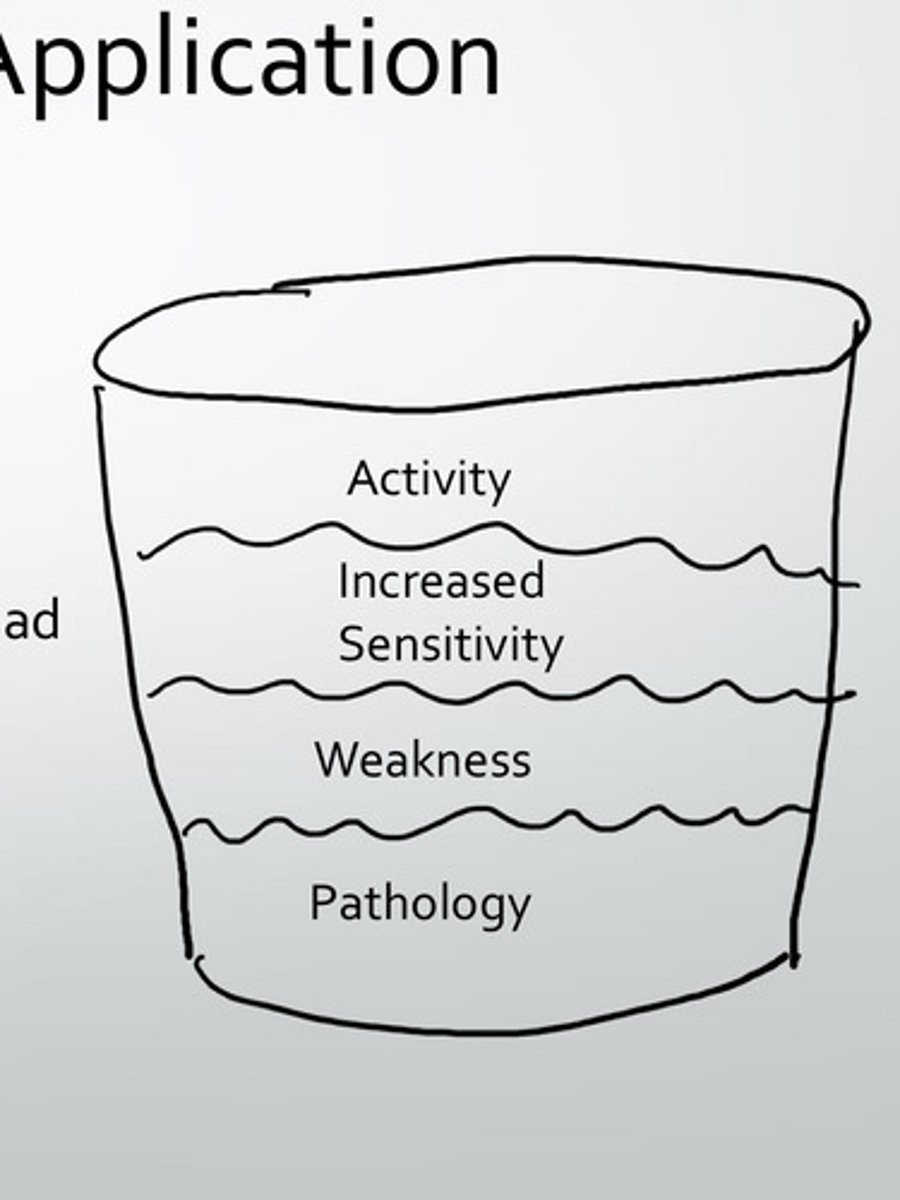
Allostatic overload picture?