Insurance Exam 3
 Call Kai
 Learn
Learn Practice Test
 Spaced Repetition
 Match
Match Flashcards
 Knowt Play
1/30

There's no tags or description
Looks like no tags are added yet.
Name | Mastery | Learn | Test | Matching | Spaced | Call with Kai |
|---|
No analytics yet
Send a link to your students to track their progress
31 Terms
Tort
A legal wrong for which the law allows a remedy in the form of money damages. The person who is injured or harmed by the actions of another party can sue for damages.
Three Category’s:
Intentional torts
Strict liability (absolute liability) - Does not matter what happened because you took that risk.
Negligence
Negligence
As the failure to exercise the standard of care required by law to protect others from an unreasonable risk of harm.
Proving Negligence
•No duty, no breach, no causation, no harm
(1) Prove that the plaintiff assumed the risk of injury
Assumption of risk
(2) Prove negligence on the part of injured party
Contributory:
•bar to recovery by plaintiff since plaintiff helped cause the accident
Comparative:
•Pure Rule: allocate damages based on fault. If 95% at fault, the defendant pays 95% of the damages
49 Percent Rule: plaintiff can only recover if his fault is <= 49%
•50 Percent Rule: plaintiff can only recover if his fault is <= 50%
Last clear chance rule
Elements of Proving Negligence
1.Proof of legal duty by defendants
2.Proof that duty was breached
3.Proof that breach of duty was proximate cause of harm
4.Proof of injury, damage, harm
Joint and Several Liability Rule
Several people may be responsible for the injury, but a defendant who is only slightly responsible may be required to pay the full amount of damages.
Personal Auto Policy Coverages
Part A: Liability Coverage
Part B: Medical Payments Coverage
Part C: Uninsured Motorists Coverage
Part D: Coverage for Damage to Your Auto
Part E: Duties after an Accident or Loss
Part F: General Provisions
Uninsured Motorist Coverage
Pays for bodily injury (and property damage in some states) caused by an uninsured motorist, by a hit-and-run driver, or by a negligent driver whose insurance company is insolvent.
Compulsory Insurance Law
Requires motorists to carry at least a minimum amount of liability insurance before the vehicle can be licensed or registered.
Cons:
In general, there is no correlation between __________ and the number of uninsured vehicles on the highway.
requires motorists to carry at least a minimum amount of liability insurance before the vehicle can be licensed or registered.
Pure No-fault
Accident victims could not sue at all, regardless of the amount of the claim, and no payments would be made for pain and suffering.
Modified No Fault
Injured person has the right to sue a negligent driver only if the bodily injury claim exceeds the dollar or verbal threshold.
Add on Plan
Pays benefits to an accident victim without regard to fault, and the injured person still has the right to sue the negligent driver who caused the accident.
Choice No Fault
Pays benefits to an accident victim without regard to fault, and the injured person still has the right to sue the negligent driver who caused the accident.
Arguments for No-Fault Laws
Inequity in claim payments
High transaction costs and attorney fees
Fraudulent and inflated claims
Delay in payments
Arguments Against No-Fault Laws
Defects of the negligence system are exaggerated
Claims of efficiency and premium savings are exaggerated
Court delays are not universal
Safe drivers may be penalized
There is no payment for pain and suffering
The tort liability system needs only to be reformed
Financial Responsibility Law
Does not require proof of financial responsibility until after the driver has his or her first accident or until after conviction for certain offenses, such as driving under the influence of alcohol.
Joint Underwriting Association
An organization of auto insurers operating in the state in which high-risk business is placed in a common pool, and each company pays its pro rata share of pool losses and expenses. The ______ influences the design of the high-risk auto policy and sets the rates that are charged.
Reforming tort (civil) justice system
Capping noneconomic damages, such as pain and suffering
Reinstating the state-of-the-art defense
Restricting punitive damages
Modifying the collateral source rule
Modifying the joint and several liability rule
Alternative dispute resolution (ADR) techniques
Reinsurance Facility Pool
Under this arrangement, the insurance company must accept all applicants for insurance, both good and bad drivers. If the applicant is considered a high-risk driver, the insurer has the option of placing the driver in the reinsurance pool. Although the high-risk driver is in the reinsurance pool, the original insurer services the policy.
Maryland Automobile Insurance
A state entity that makes auto insurance available to motorists who are unable to obtain insurance in the voluntary market.
Specialty Insurers
Specialize in insuring motorists with poor driving records. These insurers typically insure drivers who have been canceled or refused insurance, teenage drivers, and drivers convicted of drunk driving. The premiums are substantially higher than premiums charged in the standard market
Homeowners (HO)-8
Is a modified coverage form that covers loss to the dwelling and other structures on the basis of repair cost, which is the amount required to repair or replace damaged property using common construction materials and methods.
Homeowners HO-4
Is designed for tenants who rent apartments, houses, or rooms. ______ covers the tenant’s personal property against loss or damage and also provides personal liability insurance.
Homeowners 3
Persons insured:
Named insured and residents of the household who are your relatives.
Other persons under age 21
Full-time student away from home
Coverage A: Dwelling
Coverage B: Other structures
Coverage C: Personal property
Coverage D: Loss of use
Factors that Effect Homeowners' Insurance
Construction
Location
Fire-protection class
Construction costs
Age of the home
Type of policy
Deductible amount
Insurance score
Loss history report
Personal Umbrella Policy
Provides protection against a catastrophic lawsuit or judgment. Most insurers write this coverage in amounts ranging from $1 million to $10 million.
Characteristics:
Excess liability insurance
Broad coverage
Self-insured retention or deductible
Reasonable cost
Coverage HO-2 (broad form), HO-3 (special form), HO-4 (contents broad form)
Section I Coverages
A. Dwelling
Minimum varies by company. Minimum varies by company.
Not applicable
B. Other structures
10% of A , 10% of A , Not applicable
C. Personal property
50% of A, 50% of A, Minimum amount varies.
D. Loss of use
30% of A, 30% of A, 30% of C
Covered perils
Fire or lightning, Windstorm or hail, Explosion, Riot or civil commotion, Aircraft, Vehicles, Smoke, Vandalism or malicious mischief, Theft, Falling objects, Weight of ice, snow, or sleet, Accidental discharge or overflow of water or steam, Sudden and accidental tearing apart, cracking, burning, or bulging of a steam, hot water, air conditioning, or automatic fire protective sprinkler system, or from within a household appliance, Freezing of a plumbing, heating, air conditioning, or automatic fire sprinkler system, or of a household appliance, Sudden and accidental damage from artificially generated electrical current, Volcanic eruption
Dwelling and other structures are covered against direct physical loss to property, All direct physical losses are covered except those losses specifically excluded, Personal property is covered for the same perils as HO-2, Same perils as HO-2 for personal property
E. Personal liability
$100,000, $100,000, $100,000
F. Medical payments to others
$1,000 per person, $1,000 per person, $1,000 per person
HO-5 (comprehensive form), HO-6 (unit-owners form), HO-8 (modified coverage form) Section 1 Coverage
Minimum varies by company, $5,000 minimum, Minimum varies by company.
10% of A, Included in Coverage A, 10% of A
50% of A, Minimum amount varies, 50% of A
30% of A, 50% of C, 10% of A
Dwelling and other structures are covered against direct physical loss to property. All direct physical losses are covered except those losses specifically excluded, Personal property is covered against direct physical loss to property. All direct physical losses are covered except those losses specifically excluded.
Same perils as HO-2 for personal property.
Fire or lightning, Windstorm or hail, Explosion, Riot or civil commotion, Aircraft, Vehicles, Smoke, Vandalism or malicious mischief, Theft (applies only to loss on the residence premises up to a maximum of $1,000), Volcanic eruption
Section II Coverages
$100,000, $100,000, $100,000
$1,000 per person, $1,000 per person, $1,000 per person
a Minimum amounts can be increased.
Homeowners Exclusions
Ordinance or Law
Earth Movement
Water Damage
Power Failure
Neglect
War
Nuclear Hazard
Intentional Loss
Governmental Action
Weather Conditions
Acts or Decisions
Faulty, Inadequate, or Defective Planning and Design
Replacement Cost Coverage
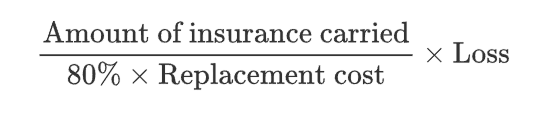
Is the amount necessary to repair or replace the dwelling with material of like kind and quality at current prices.