Flatworms (Exam 2)
 Call Kai
 Learn
Learn Practice Test
 Spaced Repetition
 Match
Match Flashcards
 Knowt Play
1/30

There's no tags or description
Looks like no tags are added yet.
Name | Mastery | Learn | Test | Matching | Spaced | Call with Kai | Chat |
|---|
No analytics yet
Send a link to your students to track their progress
31 Terms
Flatworm phylum
Platyhelminminthes
Symmetry type
bilateral
Body cavity type
Acoelomate
Acoelomate means
no body cavity
Platyhelminthes belongs to which clade?
Bilateria
Free-living worms can be found in what kind of environment?
Wet
Segmented or unsegmented?
Unsegmented
The —- is more complex in free-living worms than parasites
Digestive system
Where does the digestion and absorption of food take place
Gastrovascular cavity
The —- is more productive in parasites than free-living
Reproductive system
Free-living worms has more
Cephalization
Classes in Platyhelminthes
Turbellaria, Cestoda, and Trematoda
Class Turbellaria are mostly
Free-living
Class Turbellaria habitat
Many marine, some freshwater, few terrestrial
Class Turbellaria reproduction process called
Penis fencing
Playing the female role in reproduction is more
Energy-expensive
Class Trematoda AKA
Flukes
Class Trematoda are all
Parasitic
Class Trematoda requires both a definitive —- and a intermediate —-
Host
In Class Trematoda, a definitive host is
The final host, houses adult reproductive form
In Class Trematoda, a intermediate host
Hosts juvenile form
Organ of attachment in Class Trematoda
Sucker
Disease caused by Class Trematoda (blood worms)
Schistosomiasis
Physical presentation of Schistosomiasis
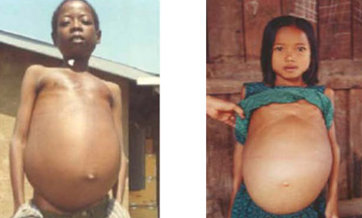
Class Cestoda AKA
Tapeworms
Definitive host in Class Cestoda
Humans
Intermediate host in Class Cestoda
Cattle
Organ of attatchment in Class Cestoda
Scolex
Class Cestoda proglottid
Segments, full of reproductive systems
Class Cestoda digestion
Through diffusion