Risk and Insurance
 Call Kai
 Learn
Learn Practice Test
 Spaced Repetition
 Match
Match Flashcards
 Knowt Play
1/29

There's no tags or description
Looks like no tags are added yet.
Name | Mastery | Learn | Test | Matching | Spaced | Call with Kai |
|---|
No analytics yet
Send a link to your students to track their progress
30 Terms
Expected Income E(I)
E(I) = pW + (1-p)L
Why does insurance exist?
Because most people dislike risk
Win state
W
Loss state
L
Expected income meaning
The average income you would get if the gamble happened many times
Insurance meaning
Insurance converts uncertain income into certain income
Utility
Used to describe how much satisfaction people get from income
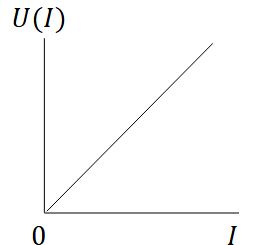
Risk neutral individual characteristics + graph
The utility function is linear
Constant marginal utility
Only cares about average income
Indifferent between certainty and risk
U(I) = Ia where a = 1
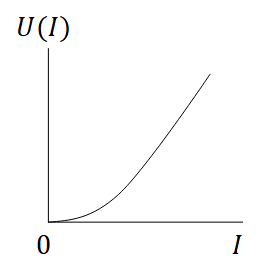
Risk Loving
Utility function is convex
Enjoys gambling
Prefers risky outcomes
EU(I) > U(E(I))
U(I) = Ia where a > 1
Risk averse
Concave utility function
Diminishing marginal utility
Dislike uncertainty
EU(I) > U(E(I))
U(I) = Ia where 0 < a < 1
Expected Utility Formula
EU(I) = pU(W) + (1 - p)U(L)
Certainty equivalent
when a guaranteed amount of money gives the SAME utility as a risky gamble (x)
Certainty equivalent formula
U(x) = EU(I)
Fair premium formula
σc = (1-p)(W - L)
Fair premium meaning
Expected loss
What type of profit is made by insurance firms in the comopetitive market?
E(π) = 0
Normal profit, hence why they care about expected profit
Risk Premium meaning
The extra amount of risk a risk-averse person will pay to eliminate risk
Risk premium formula
E(I) - CE (CE stands for certainty equivalent)
Interpretation of the risk premium calculation
The more risk averse someone is the larger their risk premium and the more they value certainty
Why are insurance firms less risk averse than individuals?
Because they diversify their risk by selling insurance to a lot of customers some of which will not actually suffer the loss
What does concave mean economically?
Diminishing marginal utility
An extra pound gives POSITIVE utility but less additional utility than the PREVIOUS pound
What does convex mean economically?
Increasing marginal utility
Each extra pound gives more extra utility than the previous pound
How is price decided in competitive markets?
Price is pushed down to fair premium price
Unless the firm has market power then the firms can charge above fair premium using this formula
σMP=σC+θED where 0 ≤ 𝜃 ≤ 1
𝜃 = 0 gives the competitive outcome
• 𝜃 = 1 gives the most uncompetitive outcome (where the insurer charges the highest
price the individual will pay)
Market failure meaning
The market doesn’t produce the efficient outcome
Asymmetric information meaning
One side of the market has more information than the other
Who tends to have more information?
The customer tends to have more information than thre insurer
Types of asymmetric information
Adverse Selection
Moral Hazard
Adverse Selection - THE PROBLE
Occurs before the insurance is bought
Issue is : Insurers cannot tell who is high risk and who is low risk
Adverse selection - What happens
Insurer is forced to charge based on average risk
this is decided using the pooled insurance premium formula
Adverse Selection - Final conclusion
for low risk people this premium is too high - they then leave the market
Only the high risk people are insured
Becomes inefficient because due to the asymmetric info there is no way of the insurer being able to specify premium charges based on the risk each individual has