IB Exam (Option D)
 View linked note
 Call Kai
 Learn
Learn Practice Test
 Spaced Repetition
 Match
Match Flashcards
 Knowt Play
1/29

Earn XP
Description and Tags
Name | Mastery | Learn | Test | Matching | Spaced | Call with Kai | Chat |
|---|
No analytics yet
Send a link to your students to track their progress
30 Terms
Define Nutrition
the supply of nutrients
U: Why must nutrients be included in diets?
because essential nutrients cannot be synthesized by the body
U2: What are Dietary Minerals?
essential chemical elements
U3: What are Vitamins?
chemically diverse carbon compounds that cannot be synthesized by the body
U4: Some fatty acids and some amino acids are ________.
essential
U5: In relation to Digestion, what affects proteins?
the lack of essential amino acids
U: What causes Malnutrition?
deficiency
imbalance
excess of nutrients in diet
U: What Controls Appetite?
a centre in the hypothalamus
U8: Overweight individuals are more likely to suffer ___________ and ____ ______
hypertension
type II diabetes
U: What can Starvation lead to?
body tissue breakdown
What is Ascorbic Acid?
Vitamin C
A1: Production of ascorbic acid by some mammals, but not others that need a dietary supply
needed for the synthesis of collagen fibres in many body tissues including skin and blood vessel walls
vitamin C is an essential aa so must be obtained externally through diet
Scurvy - deficiency in vitamin C
artificial scurvy unsuccessful in other species due to them having proteins to synthesize vitamin C
scurvy also occurs in guinea pigs, chimps and apes
A: Cause and treatment of phenylketonuria (PKU)
phenylalanine - essential aa
tyrosine - non-essential aa
phenylalanline (via phenylallanine hydroxylase) → tyrosine
phenylketonuria - overabundance of phenylalanine
mutation from recessive gene produces low or no phenylalanine hydroxylase
A: Lack of Vitamin D or calcium can affect bone mineralization and cause rickets or osteomalacia
low vitamin D = low calcium absorption = low calcium count
vitamin D deficiencies = calcium deficiencies
osteomalacia - softened bones due to inadequate bone materialism resulting from calcium not being absorbed
rickets - osteomalacia in kids
vitamin D is found in oily fish, dairy, and liver
can be synthesized with UV rays (sunlight)
liver stores vitamin D during summer for winter
A: Breakdown of heart muscle due to anorexia
condition where individual does not eat enough food even though it is available
Once glycogen and fat reserves are used up, body tissues have to be broken down and used in respiration
A: Cholesterol in blood as an indicator of the risk of coronary heart disease
only cholesterol in LDL (low-density lipoprotein) is related to CHD
reducing dietary cholesterol barely affect blood cholesterol = small effect on CHD
since liver can synthesize cholesterol, diet is no the sole source
genetics are more important than diet
positive correation between high saturated fats + high cholesterol intake
suggests high sat fats
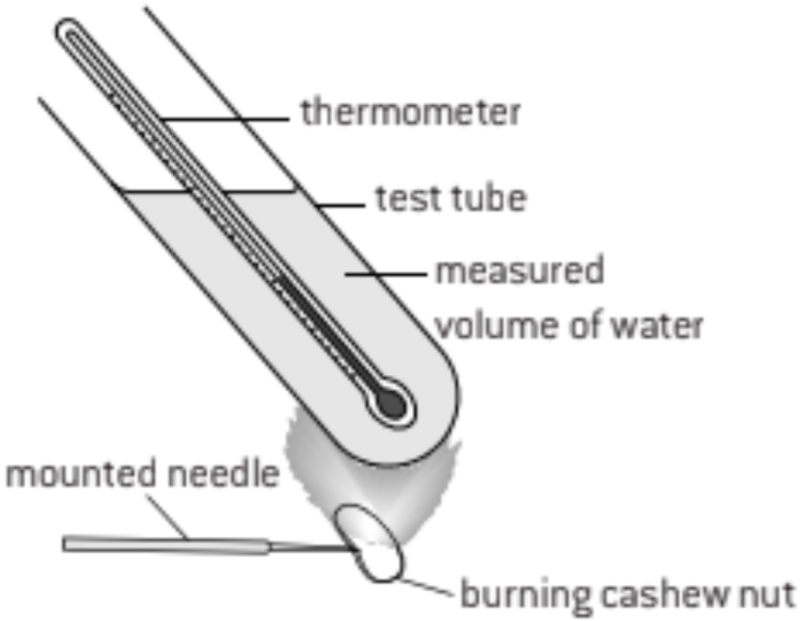
S: Determination of the energy content of food by combustion
since it take 4.2 J of energy to heat 1 mL of water by 1 degree
energy content of a food ( J g) = (°C×mL×4.2J)÷(g)
food calorimer are more accurate since it traps all heat
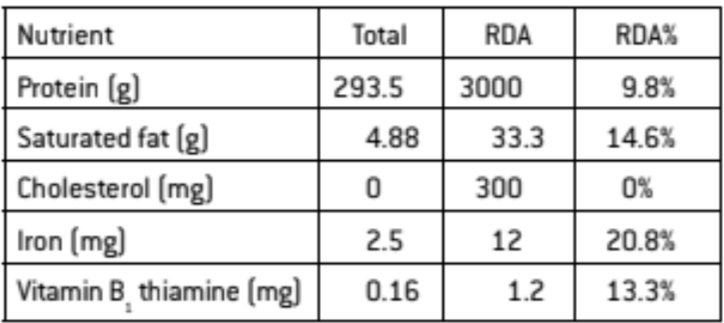
S: Use of databases of nutritional content of foods and software to calculate intakes of essential nutrients from a daily diet.
RDA = recommended daily amount
table shows some of the nutrients in 50 g of salted cashew nuts, the recommended daily amount (RDA) of the nutrient for a 14-18 year-old boy and the percentage of this that the cashew nuts contain:
U: What controls the secretion of digestive juices?*
Nervous and hormonal mechanisms
exocrine:
glands that secrete digestive juice are exocrine
secrete through a duct onto to the surface of the body or into the lumen of the gut
U: The volume and content of gastric secretions are controlled by…
nervous and hormonal mechanisms
sight or smell of food send nerve impulses to parietal cells
U: Acid conditions in the stomach favour… Tell me more about it.*
some hydrolysis reactions and help to control pathogens in ingested food
Gastric juice is secreted by cells in the epithelium that lines the stomach
Hydrogen ions are secreted by the parietal
cells
(pH 13),
hydrolysis by pepsin o peptide bonds in polypeptides.
Pepsin is secreted by chie cells in the inactive orm o pepsinogen; stomach acid converts it to pepsin.
U: The structure of cells of the epithelium of the villi is adapted to the absorption of food*
Microvilli
protrusions of the apical (relating to apex) plasma membrane
(about 1m by 0.1m)
increase the surface area of plasma membrane exposed to the digested foods in the ileum and therefore food absorption.
Mitochondria there are many scattered through the
cytoplasm, which produce the ATP needed orabsorption o
digested oods by active transport.
U: The rate of transit of materials through the large intestine is positively correlated with their fibre content*
dietary fibre - substances that cannot be digested by the intestestines so they must be egested
Cellulose, lignin, pectin and chitin are all dietary fibres
A: The reduction of stomach acid secretion by proton pump inhibitor drugs
secretion of acids into stomach is controlled by H⁺/K⁺-ATPase
exchange H⁺ in cytoplasm for K⁺ in stomach
gradient of H⁺ can reach up to 3 million
mucus protects lining of stomach
if lining breaks, it causes an ulcer
acid reflux - entry of acid stomach contents to the esophagus, causing the pain known as heartburn
proton-pump inhibitors or PPIs -
A: Dehydration due to cholera toxin
Vibrio cholerae releases toxin
toxin binds to receptor on intestinal cells
V. cholera releases toxins
toxin enters cell via endocytosis
toxin triggers release of HCO₃⁻ and Cl⁻
water follows due to osmosis
causes watery diarrhea
water in blood replaces water
causes severe near fatal dehydration
A: Helicobacter pylori infection as a cause of stomach ulcers
Stomach Ulcers - open sores caused by partial digestion of the stomach lining by the enzyme pepsin and hydrochloric acid in gastric juice
emotional stress and excessive acid secretion were regarded as the major contributory factors
now about 80 percent of ulcers are now considered to be due to infection with bacterium Helicobacter pylori
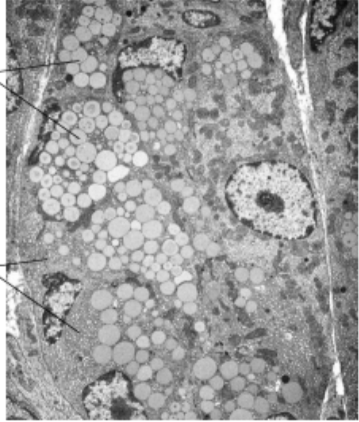
S: Identify this cell. How did you know it was that cell?
Exocrine Pancreatic Gland Cell
large amounts of Rough Endoplasmic Reticulum, Golgi apparatus and secretory vesicles