Modern World History
 Call Kai
 Learn
Learn Practice Test
 Spaced Repetition
 Match
Match Flashcards
 Knowt Play
1/99

Earn XP
Description and Tags
Final
Name | Mastery | Learn | Test | Matching | Spaced | Call with Kai |
|---|
No analytics yet
Send a link to your students to track their progress
100 Terms
What is history?
Reconstruction of the past event (taking evidence and piecing it together)
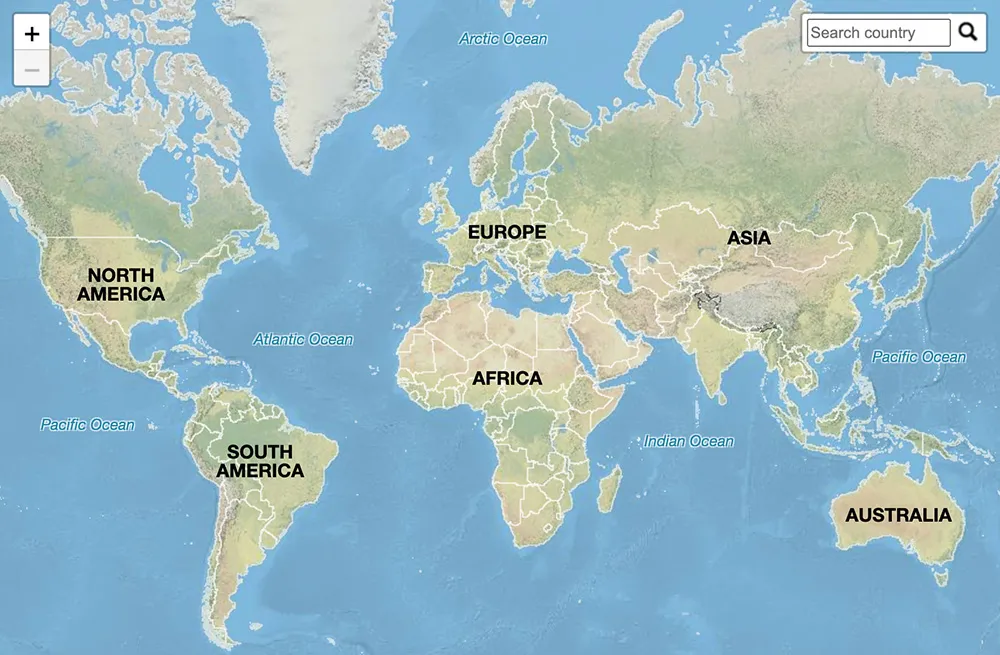
Basic World Geography
Oceans and continents
Impact of the Printing Press
Spread ideas quickly, equivalent to the internet today
Renaissance
Explosion of creativity in Europe (Paintings, sculptures, music, and writing)
Causes of Protestant Reformation
Humanism, Secularism, Martin Luther’s beliefs, and the churches were corrupt
Secularism
Caused by Renaissance, focused on the here and now rather than the afterlife (opposite of following religious beliefs)
Humanism
Caused by Renaissance, focused on people and reasoning
Church of England
King Henry wanted to have a son but his wife couldn’t, so he went to the Catholic church to get a divorce. The church disagreed, causing King Henry to form his own Church
Martin Luther’s beliefs
Don’t have to do good deeds in order to go to heaven (just need faith), it its not in the Bible it doesn’t matter, and anyone can interpret the Bible.
European Overseas Exploration (motives and impact on Americas)
Europeans explorers went to Portugal then to Spain looking for a sea route from Europe to Asia because the land route was full of Muslims who imposed high taxes. Motives for exploration were Gold (money), God (spreading Christianity), and Glory (fame). Impact on Americas was that millions of native people died from diseases brought in by Europeans (like smallpox, influenza, and woofing cough).
Columbian Exchange
Animals (horses), food (potatoes), diseases (smallpox), and ideas were exchanged from the eastern hemisphere to the western hemisphere.
Trans-Atlantic Slave Trade
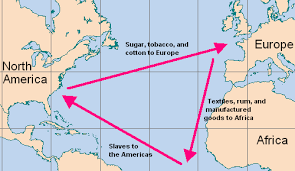
Most native Americans died from diseases so there was no source of labor. Slaves were brought across the Atlantic Ocean, from Africa (Caribbean and South America) to Americas for labor.
Triangular trade
Once slaves arrived to the Americas, they grew natural products/cash crops like cotton, tobacco and sugar. Then these products would go to Europe to become things like weapons or alcohol and then traded in Africa for slaves.
Impact of Europeans on Africa
Millions of people were kidnapped, sold, and killed
Louis XIV (14th)
Absolute Monarch of France. The French thought a strong ruler would be beneficial
Palace of Versailles
Built by Louis XIV, where the nobles live, luxurious palace, and cost billions of dollars
Divine Right
Absolute Monarchs used this to back up their ruling. The idea that Absolute monarchs were "God’s Representative”
Peter the Great
Absolute monarch of Russia, founded Saint Petersburg, and had nobles live there
Glorious Revolution
King James II wanted England to be Catholic but the people disagreed and put his daughter (Mary II) in charge. Mary II kept England Protestant.
English Civil War
Charles I tries to get rid of Parliament 2 times, and begins
war. Charles looses against the people of England.
Heliocentric Theory
the idea that the sun is the center of the universe.
Absolutism
One person in total and complete control over a country
Effects of the Enlightenment
People acting on the Enlightenment thinkers ideas by taking those ideas into their own hands, caused the French and American Revolution.
Impact of the Enlightenment
People questioning everything, focusing on government, and human rights.
Scientific Revolution
Telescope, microscope, barometer, scientific method, anatomy of the human body, observation of bacteria, vaccine for smallpox, observation of stars and planets.
Galileo Galilei
Proved the heliocentric theory to be true
Nicolaus Copernicus
Printed his book about the heliocentric theory on his death bed.
Causes of the French Revolution
Enlightenment, inspiration from American Revolution, financial issues from funding the American revolution, and estate system.
Bastille Day
On July 14, an angry mob from Paris stormed the Bastille (a prison) because they needed gunpowder, this is France’s independence day
Louiss XVI (16th) and Marie Antoinette
He was indecisive and she spent too much money, so they were hated by the French and were sent to the Guillotine.
Robespierre and the Jacobins
Led the Reign of Terror, extremely against Monarchy, they scared people in order to be liked.
Reign of Terror
Lasted a year, ended when Robespierre died, millions of people were sent to the Guillotine.
Napoleon’s accomplishments
He climbed up the chain of command, came to power through the military, very smart, evened taxes, created a bank, Napoleonic code, took over most of Europe and influenced Europe.
Napoleon’s defeat in Russia
Went into Russia in Summer, Russian army continuously retreated deeper into Russia and used the scorched-earth policy leaving Napoleons army without supplies. Tsar Alexander refused to surrender for a whole month, causing Napoleon’s army to retreat and 400,000 soldiers were killed
Goals of the Congress of Vienna
Restored original monarchs, weakened France, balanced power in Europe, and caused 40 years of peace (basically cleaned up Napoleon’s mess in Europe)
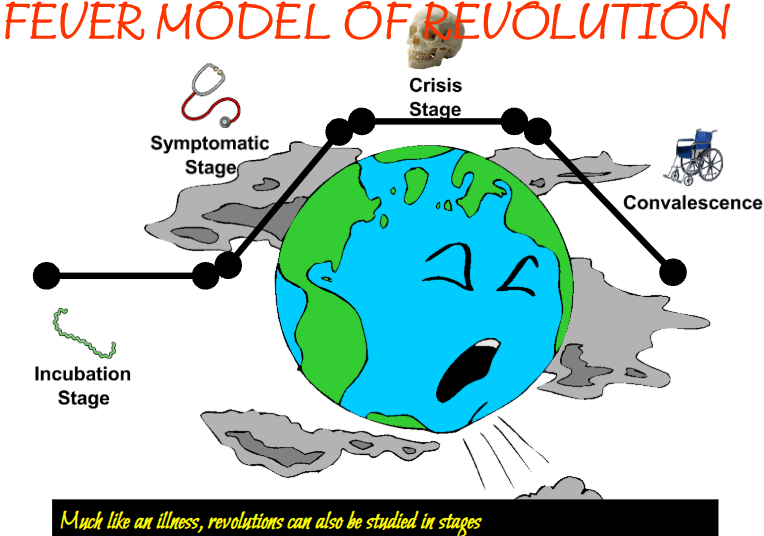
Model of a Revolution
The flu model, incubation stage, Symptomatic stage, crisis stage, and convalescence stage.
Nationalism
Extreme love for one’s nation and superiority or people who want their own nation. Shown in Imperialism and World Wars.
Industrial Revolution
Changed how people live. Human and animal powered —> Machinery and water or steam-powered. Lots and lots of factories!
Results of Agricultural Revolution
Lots of food without the labor
Factors of production
Land (natural resources), Labor (workers), Capital (money). Needed to industrialize.
Causes of Urbanization
People living in more cities than rural areas.
New Middle Class
People who have money because they own factories (or overseers). They are very wealthy but not nobility because you would need to be born into it.
Unions/Strikes
People realized they were stronger together so they formed ______. Their biggest weapon was ________, however they would loose their jobs or be blacklisted. Eventually this led to better wages.
New technology in industry
Improved and more efficient work. The spinning Jenny could spin hundreds of threads at a time.
Socialism
Gave everyone a chance at making money ( like universal healthcare)
Capitalism
Private businesses, and for money
Communism
Extreme level, everything equal by force, no private property, no freedom, and no social classes.
Increasing productivity
how much is produced in a set of time (efficiency). Like better capital goods (products used to make other things) and updated energy sources.
Working and living conditions in factories
Long hours (14-16), dangerous, crowded living, diseases, no trash, no sewer, child labor
Railroads and steam engine
a top invention. Allows for development of transportation, factories can be anywhere, side businesses, resources moved faster, and further.
Imperialism
One country taking over another (involuntary)
Motives for Imperialism
EMPIRE (economics, raw materials and sell), (military strategy), (politics), (ideology, white supremacy), (religion, spread Christianity), (exploration).
Results of Berlin Conference of 1884-1885
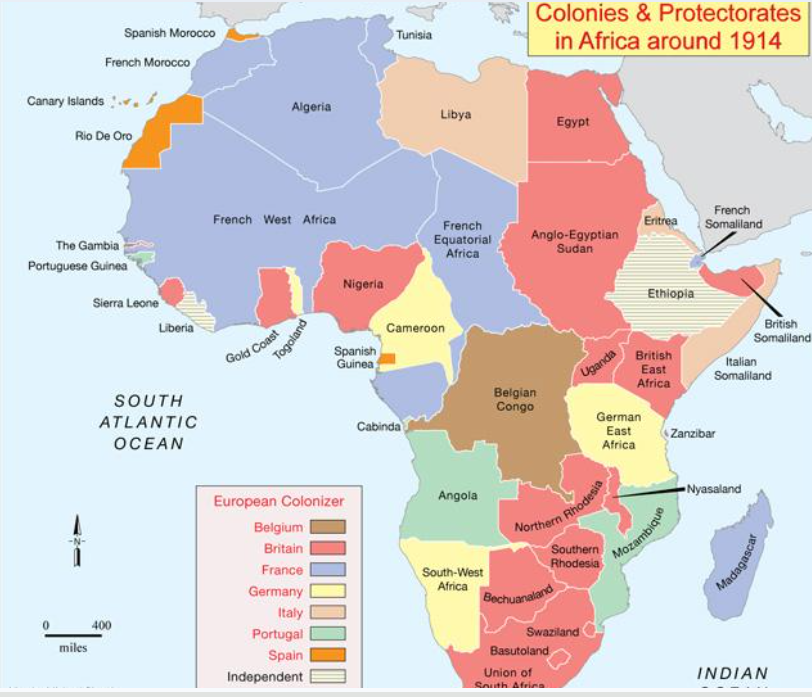
European nations decided who was going to take what of Africa, no Africans were present or even thought of during this. Britain and France took most of Africa.
Map of Africa
Only Liberia and Ethiopia were independent
African Independence
When over 40 African countries took power back after being colonized by Europeans
Rwandan Genocide
Caused by Imperialism. Belgians created Hutu and Tutsi groups, and gave Tutsi’s privileges. Once Belgium left, Hutu took control and killed about 500,000 Tutsi men.
India as the “Jewel in the Crown”
The British East India Company used resources from India to make lots of money by selling them.
Hinduism
Predominant religion in India, very old, multiple gods, British are disrespectful to people of this religion.
Results of Sepoy Mutiny
India soldiers run by Britain, the new rifle used a cartridge with animal fat, making it disrespectful towards Hindus and Muslims. This caused the soldiers to rebel, after a year of fighting, the British East India Company was abloished.
Negative impact of Imperialism on Africa and Asia
Land stolen, resources taken, children learned European culture, and European languages
Opium in China
Britain wants more trade with China but China disagreed, so Britain starts selling Opium in China to get the citizens addicted. It works and 12 million Chinese people became addicted to it.
Similarities of Opium War and Boxer Rebellion
Started because of hate for foreign influence/western imperialism, ended with military defeats of China, and unfair treaties.
Sphere of Influence
Treaty negotiations after conflicts, that gave increasing control over China’s Economy. Britain, France, and Japan gained control of China’s trade and investment.
Open Door Policy
Stated that China’s doors stay open to merchants of all nations because the U.S. feared that other nations would divide China into Colonies.
Similarities of Russo-Japanese War and Sino-Japanese War
Japan started wars in order to gain control over Korea and Manchuria.
Edo Japan
Era where culture is the number 1 priority, and lasted 250 years.
Commodore Perry and the Japanese
Mathew Perry with the US Navy ended Japan’s Edo period and forced Japan to open 2 ports to the US. The emperor then studied the best modern technology form European nations and used them to Westernize Japan.
Changes of the Meiji Era
Built railroads, factories, and increased coal production. Also strengthened central government, Army, Navy, and improved Education.
Militarism
Focuses on improving military (using new technology)
Causes of WWI
M.A.I.N (Militarism, Alliance system, Imperialism, and Nationalism)
New weapons of WWI
Tanks, submarines, planes, poisonous gas, and machine guns
Alliance System
Brought lots of other countries into wars
Balkan Peninsula
Also known as “powder keg” of Europe, Ethnic rivalries and leading powers had lots of interest in this area.
Assassination of Archduke Franz Ferdinand
The Black Hand (terrorist group), wanted to unite Slavic people and believed Archduke was a threat so they shot him and his wife (didn’t go as planned).
Purpose of Trench Warfare
To protect the soldiers for as long as possible
US entry into WWI
Germany blew up the Lucitania which had innocent civilians on board and the Zimmerman telegram revealed Germany’s plan against US.
Western and Eastern Front
France and Russia. Germany fought on both fronts
Armistice
WWI ended at 11 o’clock, on 11/11/1918 .
Treaty of Versailles’ impact on Germany
Negative impact, punished Germany, took Colonies, financial reparations, army and navy restricted.
War-guilt clause
Forced Germany to take full responsibility for causing WWI’s damages.
Treaty of Brest-Litovsk
Because of Russian Revolution and created 9 nations
League of Nations
Woodrow Wilson proposed 14 points but only one was approved. Stated that it would guarantee the political and territorial independence of all states.
Propaganda
Tool used to influence people’s opinions (used to join war effort or to fund war)
Big Four
US, Britain, France, Italy. They wrote the peace treaty that ended the war.
Order of Declarations of war in WWI
Austria-Hungary declared war on Serbia, then Russia (Serbia’s ally) declares war on Austria Hungary, Germany declared war on France and Russia.
Russian Revolution
Russia suffered more deaths than any other nation during WWI, causing the people to want to surrender the war, but Tsar Nicholas II disagreed. The Tsar was then overthrown by Communists, who 2 months later, surrendered.
Indian Independence
Ghandi was the leader, he had a nonviolent approach, which were the same methods that Martin Luther King Jr. used later.
Depression after WWI
Economic depression (worst for Europe), unemployment, and Veterans suffering from PTSD
Germany’s reaction to Treaty of Versailles
Germans hated the treaty because it was unfair how they had to take responsibility for something they didn’t do, so they ignored it.
Hitler’s rise to power
Desperate Germans wanted a better economy. Hitler scapegoated the Jewish people and the Germans believed him, so they elected him as ruler. Hitler used intimidation and violence to get his way though.
Roosevelt, Churchill, and Stalin
US president, Ruler of Britain, and in charge of USSR
Non-Aggression pact
Hitler made a pact with Stalin (USSR), so he wouldn’t have to fight a war on 2 fronts. However, Hitler invades the Soviet Union, breaking this pact.
Appeasement
To give in to an aggressor
Munich Agreement
Allowed Germany to annex Sudetenland (a German speaking region of Czechoslovakia)
Fascism
Political ideology, one party rule (usually a dictator), no rights for the people, and symbols are used to identify who a person is siding with.
Hitler’s expansion in Europe
Hitler taking control over Rhineland, Poland, Austria, and Czechoslovakia
Beginning of WWI
Invasion of Poland caused Britain and France to declare war.
Tripartite Pact
Agreement between Germany, Italy, and Japan
Blitzkrieg
Means Lightning War, it uses fast airplanes and tanks followed by massive infantry. This strategy worked on Poland.
Germany’s losses in Soviet Union
Hitler invades USSR in Summer, but the war continued until October. Germany was forced to surrender because they were surrounded in Berlin. 600,000 German soldiers died.