Comprehensive Guide to Plumbing Materials: Pipes, Fittings, and Properties
 Call Kai
 Learn
Learn Practice Test
 Spaced Repetition
 Match
Match Flashcards
 Knowt Play
1/102

There's no tags or description
Looks like no tags are added yet.
Name | Mastery | Learn | Test | Matching | Spaced | Call with Kai |
|---|
No analytics yet
Send a link to your students to track their progress
103 Terms
Pipe
A cylindrical conduit or conductor usually cylindrical in cross section, of sufficient wall thickness capable of conveying or allowing the flow of liquid, gas, steam or air through it.
Fitting
Standardized part or component usually pre-fabricated that is used to connect sections or segments of pipes, equipment, fixtures, trims, etc.
Malleability
The property of a metal that permits mechanical deformation by extrusion, forging, rolling, etc., without fracturing.
Hardness
The resistance of a material to deformation by compression or indentation.
Brittleness
The property of a material which fractures under low stress without appreciable deformation.
Ductility
Property of a material described as being capable of being stretched or deformed without fracturing.
Weatherability
Material property which enables it to retain its appearance and integrity when exposed to the effects of the sun, wind, moisture, and changes in temperature.
Abrasion Resistance
Material property that refers to its resistance to being worn down by friction when rubbed against another object.
Impact Resistance
Resistance of a surface/material to shock or impact applied in an instant, such as the impact of being dropped on the floor.
Corrosion Resistance
Property of piping materials that evaluates its durability and resistance to wearing away as a result of chemical intervention (such as rusting).
Acid Resistance/Chemical Resistance
The degree of which a surface can resist the degrading effects of acid, such as porcelain or enamel.
Thermal Conductivity
Rate of heat transfer by conduction.
Thermal Resistivity
An index of material resistance to the transmission of heat.
Fire Resistance
The capacity of a material for withstanding open flame or providing protection from fire.
Heat Resistance
Ability of a piping material to withstand the effect of heat without causing deformation to the material.
Flow Characteristic
Material characteristic which causes resistance of liquid flow.
Pressure Resistance
Resistance of a material to rupture caused by overpressure of air or liquid inside the pipe.
Return Bend
A pipe fitting or a preformed piece of tubing which provides a 180° change in direction.
Elbow
A fitting having a 90° change in direction with a very short radius, suitable for use in water supply systems as well as vent systems.
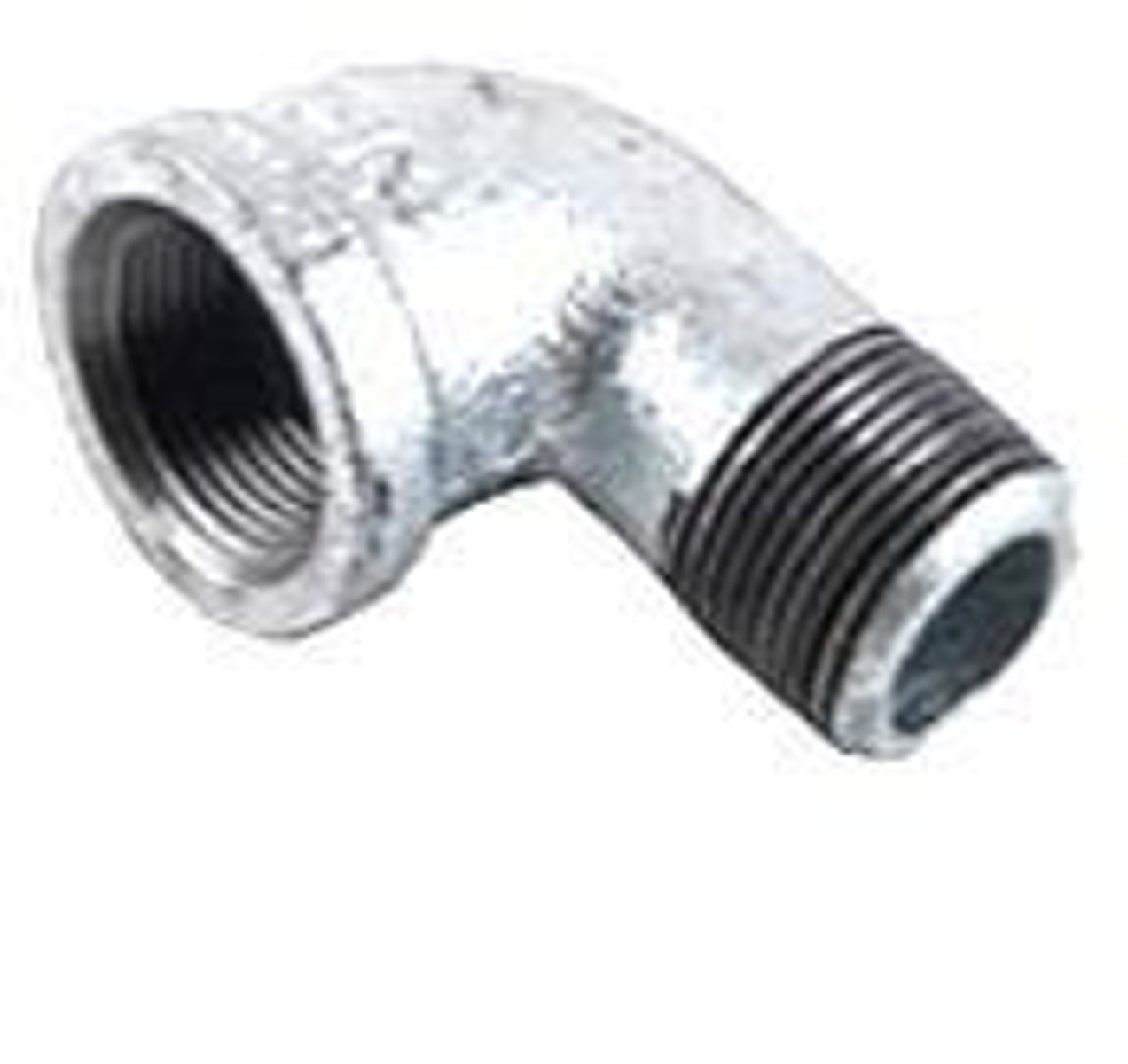
Straight Elbow
An elbow having both ends internally threaded and of the same diameter.
Street or Service Elbow
A malleable iron fitting for threaded pipe, having a 45° or 90° bend, with an inside thread on one end and an outside thread on the other.
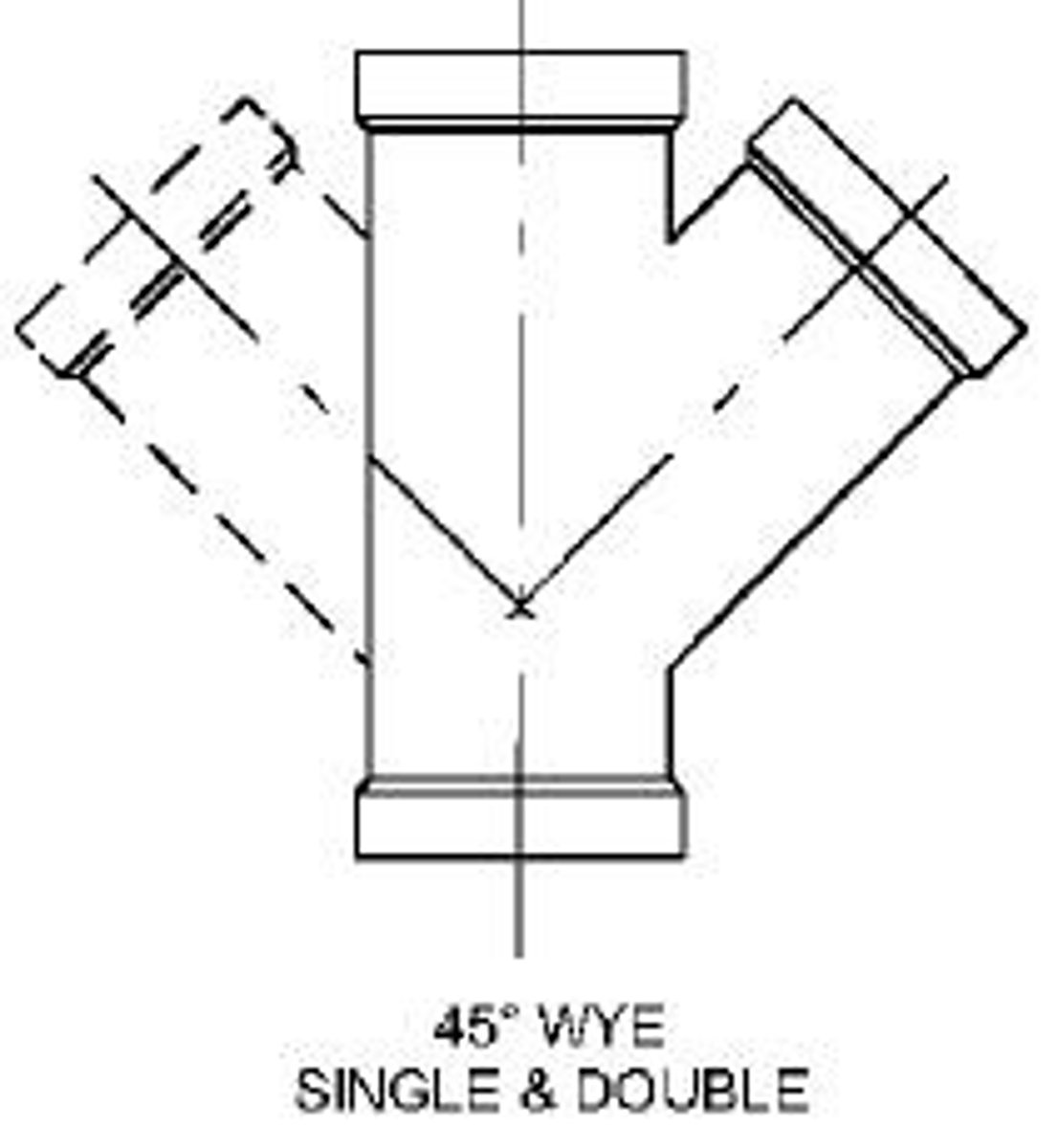
Wye or Wye Branch
A fitting used to connect a branch pipe into a straight run of piping at a 45° angle.
Bend or Sweep
A fitting used to change direction, especially in a sanitary drainage system.
Tapped Tee
A bell-end tee, which has a branch that is tapped to receive a threaded pipe or threaded pipe fitting.
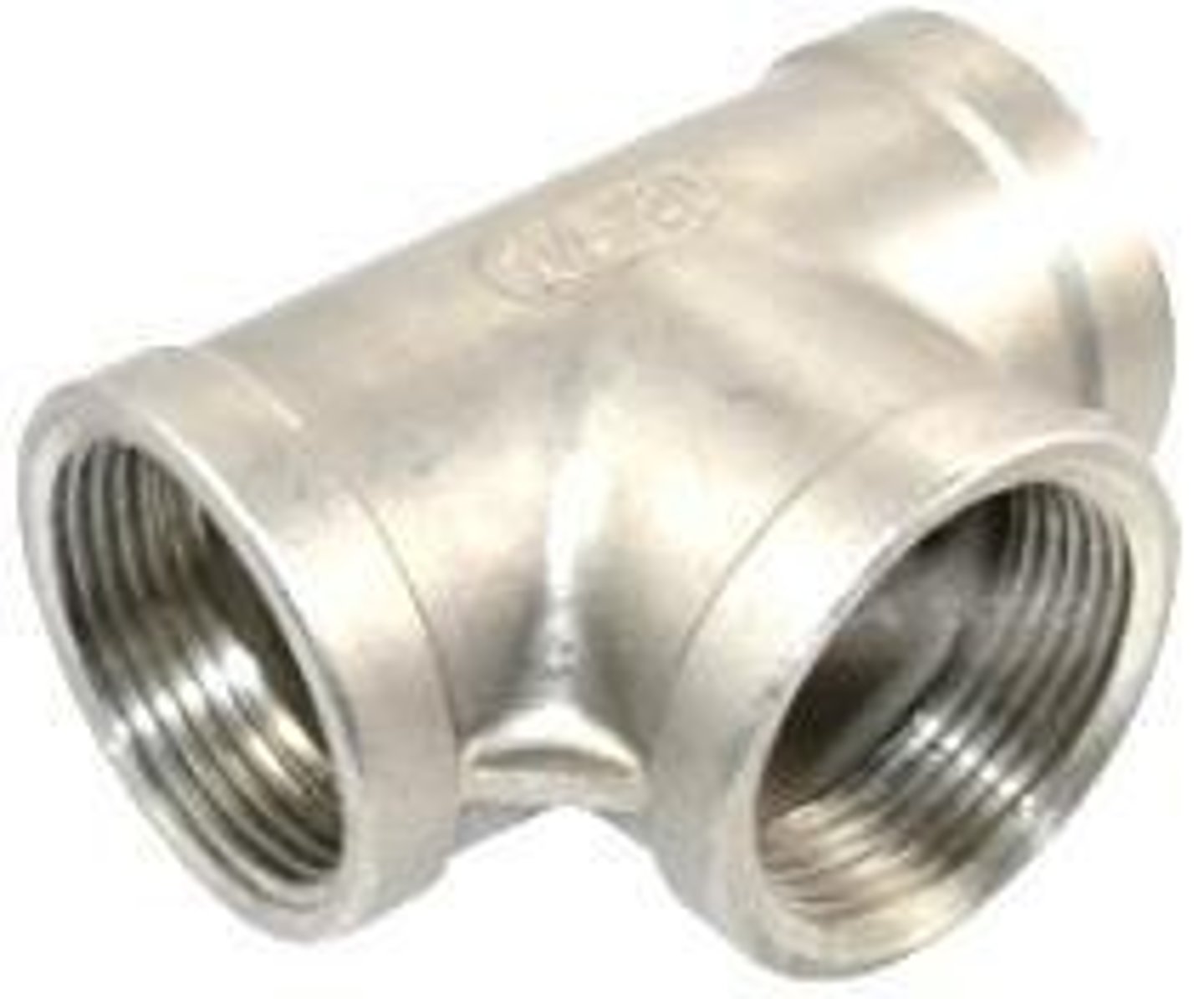
Upright Wye Combination
A one-piece fitting composed of 1/8 bend and wye branch where the branch inlet is parallel to the drum.
Coupling
A short internally-threaded section of pipe, used to join two pipes.
Socket
Has a similar application as a coupling but its ends are enlarged to provide additional mechanical strength.
Tee
A fitting used in connecting a branch pipe into a straight run of piping at a right angle.
Adapter
A type of fitting used to connect pipes of different materials
Sanitary Tee
A tee used as fitting for a soil pipe designed with a slight curve in the 90° transition so as to channel flow from a branch line toward the direction of the main flow.
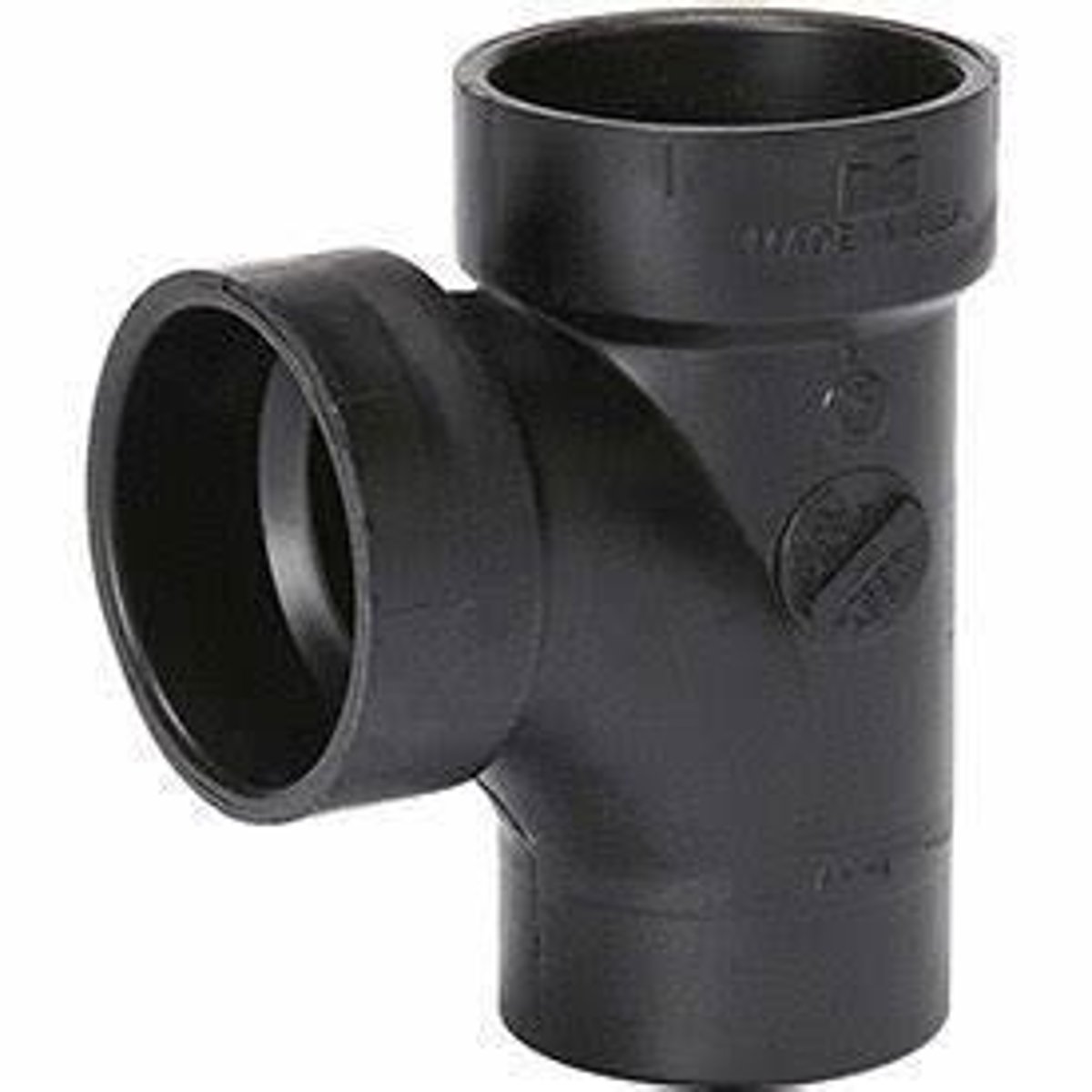
Straight Tee
A tee having all openings the same size.
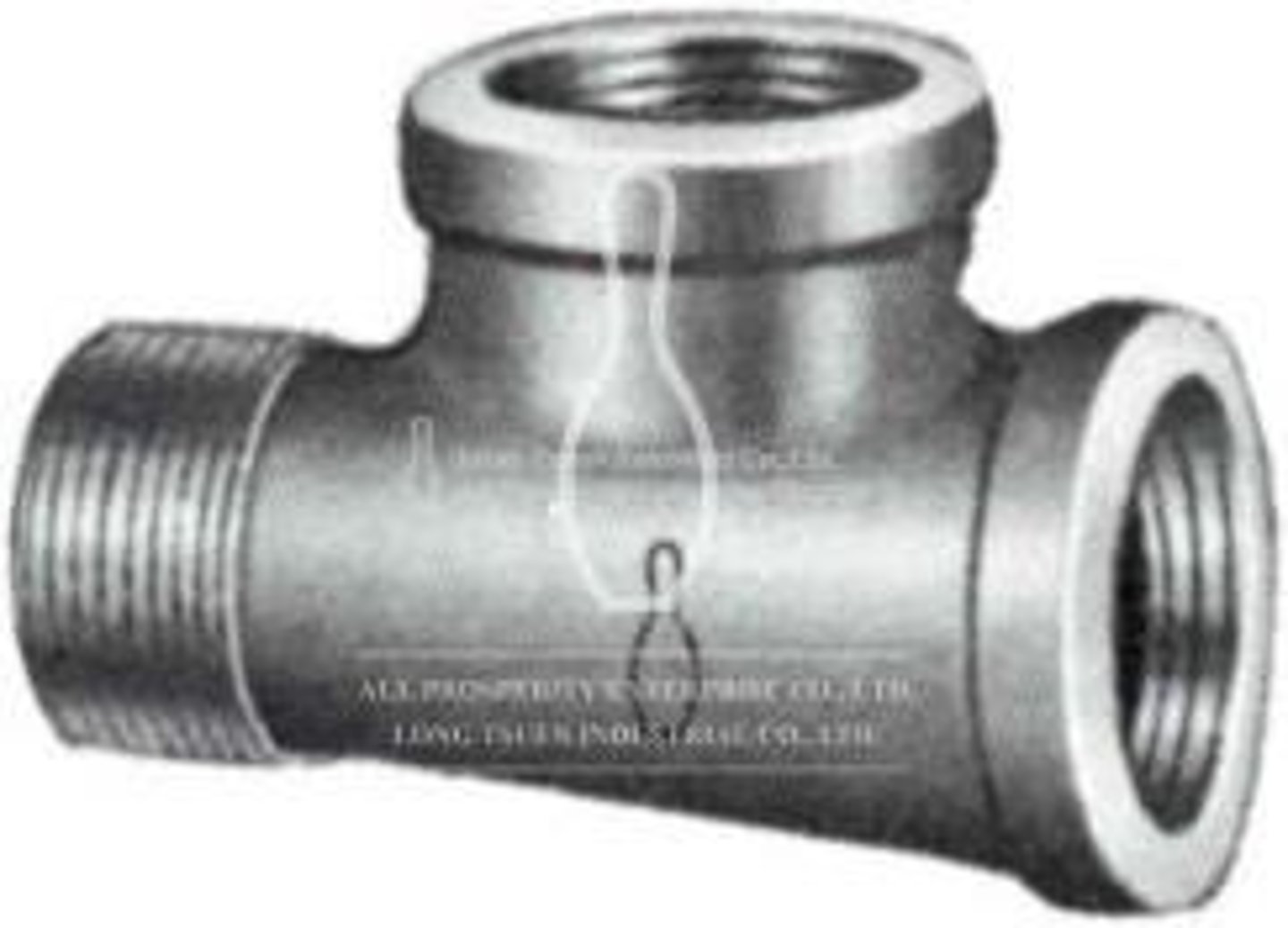
Street Tee or Service Tee
A malleable iron fitting for threaded pipe in the form of a tee having an outside thread on one end and an inside thread on the other and on the branch.
Nipple
A short length of pipe with external threads at each end; used to join couplings or fittings.
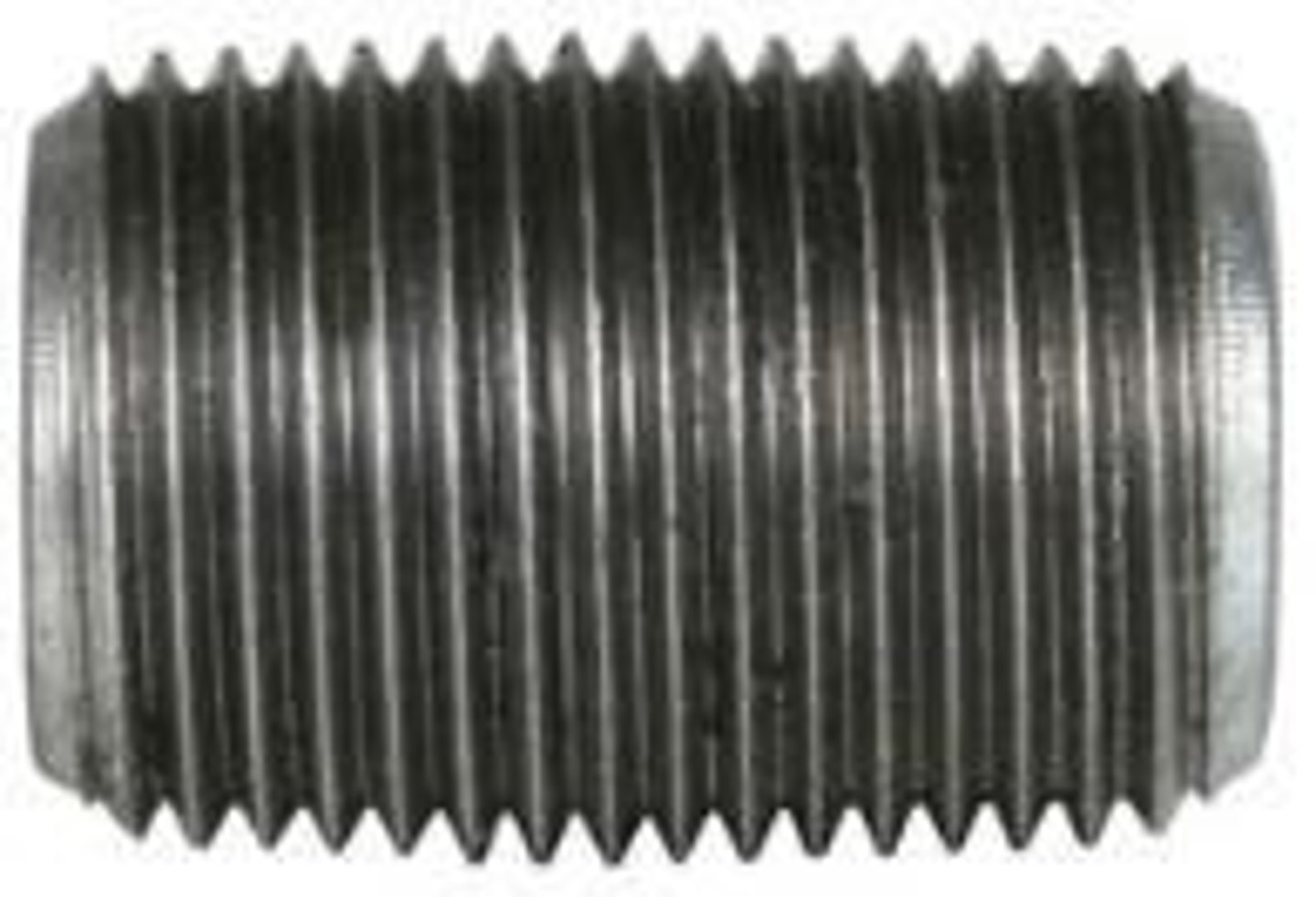
Close Nipple
A type of nipple with the entire length externally threaded.
Open Nipple/Shoulder Nipple
A type of nipple having both ends externally threaded and the midsection unthreaded.
Sanitary Cross Tee
A tee used as fitting for a soil pipe designed with a slight curve in the 90° transition to channel flow.
Cap
An internally-threaded fitting used to close the end of a pipe.
Plug
An externally-threaded fitting usually with a square head; used to close the end of a pipe.
Bushing
A pipe fitting which is threaded on both the inside and the outside to connect two pipes of different sizes.
Flange
A fitting with a projecting collar along the edge; used on installations requiring increased area coverage.
Union or Union Patente
A type of fitting that allows for easy disconnection of pipes.
Cast Iron Soil Pipe
A pipe fabricated from an alloy containing carbon and silicon, used in plumbing installations.
Standard Pipe (Std) Pipe
Pipe having a bell or hub on one end and a spigot on the other.
Single Hub (SH) Pipe
One end of this pipe has a bell or hub and a plain end on the other; plain end can be joined with another plain end pipe using compression coupling joint.
Reducer
A pipe fitting with inside threads, larger at one end than at the other.
Double Hub (DH) Pipe
Both ends have bells or hubs; may be cut into two resulting in two single hub pipes.
Hubless (H) Pipe
Both ends are plain; uses mechanical compression coupling joint
Increaser
A tapered coupling used for joining a pipe to another of larger size.
Adaptor
A fitting used to connect different types of pipes together; also a fitting that connects threaded pipes with non-threaded pipes,
1/4 Bend
1/4 Bend, Long Sweep (LS)
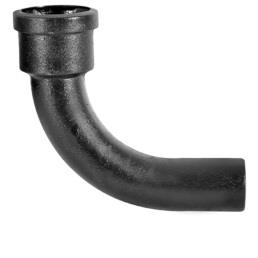
Acid-Resistant (AR) Cast Iron Pipe
A gray cast iron alloy containing between 14.5 - 15% silicon, used for drainage of corrosive liquids.
Galvanized Steel Pipes
Pipes made of mild steel treated in a bath of zinc to resist acid effects.
Advantages of Steel Pipes
Availability in long lengths, varying thicknesses, high internal and external strength, good flow characteristics, good fire resistance, and low initial cost.
Disadvantage of Steel Pipes
Low corrosion resistance necessitating internal and external corrosion protection such as galvanization.
Welded Pipe
Made by drawing flat strips of steel through dies to form round shapes, before welding an electric butt down the seam. Manufactured in 20-foot lengths.
Seamless Pipe
Made by piercing red-hot solid cylindrical billets of steel with a series of mandrels while passing the steel through rollers.
Ductile Iron (DI) Pipe
Cast iron wherein the carbon has been reformed by magnesium inoculation, possessing high strength without changing its basic properties.
Ductile Iron Pipe Pressure Rating
Pressure rating of ductile iron pipe of a nominal diameter between 3 and 24 inches (7.6 and 61 cm) is 350 psi (2413 kPa).
Plastic or Synthetic Pipe
Fabricated in a variety of compositions, suitable for drainage, vents, and water supply systems - both hot and cold applications.
Thermoset Piping
Not affected by heat and remains permanently rigid, more resistant to solvents than thermoplastics.
Thermoplastic Piping
Softens when subjected to heat and re-hardens upon removal of heat, affecting the strength of the pipe.
Types of Plastic or Synthetic Pipe
Includes Rigid Type and Flexible Type.
Polyvinyl Chloride (PVC)
A rigid, strong, and economical pipe with excellent chemical resistance.
Galvanized Wrought Iron Pipe
Constructed of wrought iron, dipped in molten zinc, and resists acid wastes more than steel.
Chlorinated Polyvinyl Chloride (CPVC)
A plastic pipe with excellent chemical, crush, and fire resistance, used in hot and cold water applications.
Acrylonitrile Butadiene Styrene (ABS)
Possesses good chemical resistance and excellent impact strength, especially at low temperatures.
Polyethylene (PE)
Excellent chemical and crush resistance, has impact strength and flexibility, and good low temperature performance.
Polybutylene (PB)
Only flexible plastic tubing suitable for use with hot and cold water pressure systems. PB possesses excellent chemical resistance to acids and alkali but is not suited for fuel oil, gasoline, or kerosene distribution systems.
Polypropylene (PP) or PP-R
Possesses excellent chemical resistance, resistant to sulfur-bearing compounds, lightweight, good tensile strength, and saltwater resistant.
Polyacetal (ACETAL)
Excellent resistance to paraffins and solvents, used for process systems and approved for use with potable water.
Polyvinylidine Fluoride (PVDF)
Strong, tough, and abrasive-resistant material, with excellent chemical resistance to most acids and bases.
Rubber Modified Styrene (SR)
Possesses good crush resistance, fair impact strength, and moderate chemical resistance.
Flexible Type Plastic Pipe
Includes Polyethylene (PE), Polybutylene (PB), and others.
Wall Thicknesses of Plastic Pipe
Manufactured in Standard Wall, Extra-Strong Wall, and Double Extra-Strong Wall.
Applications of Threaded Galvanized Steel Pipes
Used for water supply piping, vent pipe, and sanitary and storm drainage piping.
Polypropylene
Possesses excellent chemical resistance, resistant to sulfur-bearing compounds, lightweight, good tensile strength, and saltwater resistant.
Type L (blue)
Lighter than K - used often in residential water lines.
Type M (red)
Hard (20' lengths and under); recommended for light domestic water lines, but not permitted under some city codes.
Type DWV (Drain, Waste, and Vent)
PB is rated to function at 180° up to 100 psi; higher temperatures can be tolerated with a relatively small reduction in pressure.
Copper Tube (yellow)
Rigid only, comes in lengths of 20'; made from almost pure copper (99.9%) and available only in drawn, soft form.
Type ACR (Air-conditioning and Refrigeration)
Available in 50' coils and rigid 20' lengths; most refrigeration copper has moisture removed and ends sealed.
Brass Pipe
Manufactured from an alloy containing 85% copper and 15% zinc; used in local branch lines and can be used as a drain pipe under pressure.
Lead Pipe
Made from 99.7% pig lead; used for connections to floor-mounted water closets and for special laboratory corrosive wastes.
Block Tin
Seldom used for water supply due to cost and difficulties in making joints.
Vitrified Clay Pipe
Used in underground public sewers, house sewers, and house drains; made of clay treated with glaze and fired.
Asbestos Cement Pipe
Manufactured in sizes ranging from 3 to 36 inches in diameter; composed of cement and asbestos fibers.
Concrete Pipe
Mostly used for storm drainage applications; composed of a mixture of cement, fine aggregates, and water.
Type K (green)
Heaviest type of copper tube; used in municipal systems.
Type K Copper Tubes
Used in residential buildings for waste lines and in larger buildings for local branch lines.
Type L Copper Tubes
Manufactured in hard (rigid 20' lengths) and soft (60,' 100', and 200' lengths) forms.
Type M Copper Tubes
Recommended for light domestic water lines.
Reinforced Concrete Pipe
Usually has large pipe diameters; those with diameters more than 300 mm are reinforced.
Non-reinforced Concrete Pipe
Usually has smaller diameters and is not reinforced.
Magnesium Pipe
Used in most water heaters to counteract electrolytic action.
Aluminum Pipe
Not extensively used due to high cost and low resistance to chemical corrosion.
Copper Tubes
Sized according to their inside diameter; available in rigid and flexible forms.
Copper Tube Joints
Can either be soldered or brazed.
Advantages of Copper Tubes
Light weight, ease of assembly, and smooth interior.
Disadvantages of Copper Tubes
Corrosive attacks from ordinary sewage, poor fire resistance, and necessity for dielectric connections.