research methods
 Call Kai
 Learn
Learn Practice Test
 Spaced Repetition
 Match
Match Flashcards
 Knowt Play
1/130

Earn XP
Description and Tags
aqa psychology
Name | Mastery | Learn | Test | Matching | Spaced | Call with Kai |
|---|
No analytics yet
Send a link to your students to track their progress
131 Terms
reliability
consistency
validity
accuracy
objective
Free from bias or preconceived ideas. Opposite of subjective.
systematic
Research is carried out in an orderly + consistent way. It uses standardised procedures
Standardised
Same for every person.
Replicable
Research can be repeated by others to determine whether the same results can be obtained. If the same results are obtained then they have reliable.
Empirical evidence-
Research evidence based on the collection and analysis of data.
Standardised procedures
Carried out in an unvarying way
strengths of questionnaires
Allows participants to describe their own experiences rather than a psychologist inferring this from observing participants.
large amounts of data can be collected fairly quickly and cheaply, which can increase representativeness and generalisability
weaknesses of questionnaires
Social desirability bias may occur where participants may lie to present themselves in a socially acceptable manner, this can reduce validity
Questions can often be leading, The researchers may be forcing the participant to give a particular reply
Questions/scales may be interpreted differently by different participants.
open questionnaires
Do not have a fixed range of answers and respondents are free to answer in any way they wish e.g. what do you think of A-level psychology
Open questions tend to produce qualitative data that is rich in depth and detail but may be difficult to analyse.
strengths of open questionnaires
May provide unexpected answers, allowing the researchers to gain new insights into people’s feelings and attitudes. |
Better validity as respondents can answer fully rather than being forced to respond in a particular way.
|
weaknesses of open questionnaires
Open questions are very time consuming and expensive to interpret and analyse. |
They are hard to analyse and interpret and so it is difficult to compare responses. |
closed questionnaires
Offers a fixed number of responses e.g. we might ask participants if they feel more talkative as a result of drinking an energy drink and restrict their options to 'yes' or 'no' or we could get participants to rate how talkative they were on a sale from 1 to 10
Closed questions provided numerical data by limiting he answers respondents can give- quantitative data which is usually easy to analyse but it may lack depth and detail associated with open answers.
strengths of closed questions
They provide quantitative data and so the results can be easily summarised, presented and compared between respondents.
weaknesses of closed questionnaires
Respondents may be forced to select answers that don’t represent their real thoughts or behaviour, lowering validity. |
Participants may often select ‘don’t know’ meaning data collected is not informative. |
evaluation of questionnaires
Cost effective
Can be distributed easily which allows for large samples which produce large amounts of data
Can be completed with or without the researcher being present
Less effort to distribute and conduct than other RMs
Produce quantitative data which is easy to analyse and compare
Negatives
Respondents can lie (which renders data invalid)
Respondents can cat in a socially desirable fashion (a form of bias)
Questionnaires often produce a response bias
Respondents may not answer the questions properly as they might rush the questionnaire or fail to read questions properly
Susceptible to acquiesce bias (some people just like to agree)
Unstructured interviews
Works like a conversation
there are no set questions
There is a general aim that a certain topic will be discussed, and interaction tends to be free-flowing.
The interviewee Is encouraged to expand on their answers as prompted by the interviewer.
strengths of unstructured interviews
|
|
weakness of unstructured interviews
Respondents can not elaborate on their points which may make them feel frustrated, nut also valuable information may be lost
Structured interviews
Made up of a pre-determined set of questions that are asked in a fixed order
Like a questionnaire but conducted face-to-face (or over the phone) and in real time. I.e. the interviewer asks the questions and waits for a response.
Strengths of structured interviews
|
The interviewer can follow up on points to gain insight into the worldwide of the interviewee |
weakness of structured interviews
|
|
|
Semi-structured interviews
Many interviews are likely to fall somewhere in-between the two types described above
A job interview is a good example of a semi-structured interview as there is a list of questions that have been worked out in advance but interviewers are also free to ask follow-up questions when they feel it is appropriate.
designing questionnaires
Questionnaires could include two types of questions: open questions and closed questions
It is also the case that closed questions can be further divided into different types
It makes sense to refer to the following examples as 'items'
rating scales
a rating scale works in a similar way but gets respondents to identify a value that represents their strength of feeling about a particular topic
Likert scale
a rating scale works in a similar way but gets respondents to identify a value that represents their strength of feeling about a particular topic
fixed choice option
A fixed choice option item includes a list of possible options and respondents are required to indicate those that apply to them.
Designing interviews
Most interviews involve an interview schedule which is the list of questions that the interviewers intends to cover
This should be standardized for each participant to reduce the contaminating effect of interviewer bias
Typically the interviewer will take notes or may recorded the interview to be analyzed later.
Designing one –to-one interviews
In the case of a one-to-one interview, the interviewer should conduct the interview in a quiet room, away from other people, as this will increase the likelihood that the interviewee will open up
It is good practice to begin the interview with some neutral questions to make the participants feel relaxed and comfortable, and as a way of establishing rapport
Interviewees should be reminded on several that their answers will be treated in the strictest confidence. This is especially important if the interview includes topics that may be sensitive
writing good questions
Clarity is key when designing questionnaires and interviews.
if respondents are confused by or misinterpret particular questions, this will have a negative impact on the quality of the information received
Double barrelled question and double negatives
a double barrelled question contains two questions in one; the issue being that respondents may agree with one half of the question and not the other
Finally, questions that include double negatives can be difficult for respondents to decipher
independent group design
Different participants doing different conditions of the experiment.
weakness
twice as many participants neeeded
important differences between groups, than those deliberately manipulated by experimenter (Uncontrolled participant variables)
can be minimised through random allocation of participants to each condition.
repeated measures
The same participants doing all the conditions
weaknesses
order effects, may do better or worse on the second attempt (boredom, fatigue, practice)
can be controlled by counterbalancing where half participants start with experimental condition then control and other half do control then experimental
Matched pairs design
Different participants in different conditions, but they are matched with each other on one or more variables.
time consuming
difficult to find appropriate combination of participants to match on all important characteristics
participant variables
Variation between participants can affect dependent variables
Can hide an effect
Can show an effect where none exists.
This is a problem with independent measures
Control for this by random allocation to groups or
Use repeated measures design or matched participants instead.
random allocation
Random allocation of participants to experimental and control conditions is an extremely important process in research.
Random allocation greatly decrease systematic errors, as every participant has equal chance of being chosen for either condition, so individual differences in responses or ability are far less likely to affect the results
order effects
Carrying out a task repeatedly leads to changes in performance:
Deterioration as participants become tired/ bored
Improvement due to practice
Increase in demand characteristics
demand characteristics
These are cues in the research setting which can reveal the aims of the study and influence a participants behaviour. They help the participant work out what the researcher expects to find. |
Counterbalancing
Important control when using repeated measures
Reduces order effects
Half the participants do condition a/ then b
Fully counterbalanced :ABBA
Any order effects are then controlled for as they are balanced across the both conditions
attrition
When participants drop out of a study data is lost
Fewer data - less powerful study
This can be a problem with matched participants (and repeated measures if there is a gap between conditions)
Loss of participants in these designs means losing data from both conditions
Representational generalisability
The target population- is the group of people that the researchers want to investigate
A group selected from a target population is a sample
The findings can only be generalised to the population from which the sample is drawn.
Why is the sampling technique important?
The sample should be representative of the population that you are trying to study
If the sample is representative, then the findings can be generalised to that population. This is called population validity ( a type of external validity)
Avoids selection bias. When participants for a study are not representative of the larger population being studied.
3 ways selection bias can occur
Participants self-select in the study
The researcher intentionally or unintentionally chooses certain types of people
Certain groups are excluded from the sample due to how participants are recruited.
the experimental method (CAUSALITY)
In psychology, causality is the study of cause-and- effect relationships
It involves understanding how one event, behaviour, or variable ( the cause) produces or influences another (the effect)
By manipulating and independent variable and observing its effect on a dependent variable while controlling for other factors, they can gather evidence for a causal relationship
Experiments aim to establish causality
Extraneous variable
unwanted, outside influence that can affect the dependent variable (results)
The participant
The environment
The experimenter
Dependent variable
The factor which the experimenter measures and expects to vary between the two groups or conditions as a result of the independent variable
Independent variable
-cause
The factor which the experimenter deliberately makes sure is different(manipulates) between the two groups or conditions.
confounding variables
If an extraneous variable is not controlled for and then affects the data of one of the conditions, then all the findings of that condition are affected, it has become a confounding variable.
Operationalisation variables
A lot of behaviours psychologists are interested in are abstract and hard to define. Therefore, the researcher must ensure that the variables being investigated are measurable and defined. That is, they must be operationalised
The Null Hypothesis:
A null hypothesis states that there will be no difference or relationship between the variables.
The Alternate Hypothesis
A statement that makes a prediction that something will happen in a study is called an “alternate hypothesis”. A hypothesis should be TESTABLE (it includes the IV and the DV).
A directional (or one-tailed) hypothesis
states the direction of the difference between the two conditions or two groups of participants. It will include words like more or less, higher or lower, faster or slower etc.
A non-directional (two-tailed) hypothesis
does not state the direction, it merely states that there WILL be a difference.
random sampling
every memeber of the target population has equal chance of being selected
finds a random sample without bias from researcher
larger variation of participants
however
time consuming
opportunity sampling
means selecting individuals from population the research is focused on, but those that are willing and available to take part
easy
convenient
useful when limited time
however
bias is high risk
volunteer sampling
participants are self-selected. they volunteer
systematic sampling
nth number of target population is selected, every 3rd person on a register
sampling frame
list of people in target populationm organised into order.
stratified sampling
composition of sample reflects proportions of people in a certain sub group (strata) within the target population to the wider population
Laboratory Experiment |
controlled environment within which the researcher manipulates the IV and records the effect on the DV, whilst maintaining strict control on the extraneous variables
strengths of lab experiment
- high control on extraneous variables which ensures any effect on the dependent variable so likely to be the result of an manipulation of the IV. HIGH ENTERNAL VALIDITY
-Replication is possible, as it is vital to see if the results are valid and not a one off
weaknesses of lab experiment
- may lack generalisability, as the environment is artificial. (low external validity)
High chance of unnatural behaviour
Doesn't represent real-life experience so low mundane realism
field experiment
natural setting within which the researcher manipulates the IV and records the effect on the DV
strengths of field experiment
- high mundane realism than lab experiments as environment is more natural
-Behaviour will be more valid and authentic
High external validity
weaknesses of field experiment
-loss of extraneous variables, this means that the cause and effect between the IV and the DV may be more difficult to establish and precise replication may not be possible
Ethical issues, if participants are unaware of being studied they cant give consent and therefore may be an invasion of privacy
Natural Experiment
the change in the IV is not brought about by the researcher but would have happened even if the researcher had not been there. The researcher records the effect on the DV
Natural Experiment strengths
- allows for research that may not be practical or ethical, such as studies of institutionalised Romanian orphans
High external validity as they involve the study of real life issues and problems
Natural Experiment weaknesses
natural occurring event may happen very rarely which decrease opportunities for research and limit the scope for generalising findings
-Participants may not be randomly allocate to experimental conditions, only applies when there is an independent group design
-the research is less sure whether the IV affected the DV
Quasi Experiment
almost an experiment. The IV has not been determined by anyone, the 'variables' simply exist, such as being old or young
Quasi Experiment strengths
carried out under controlled conditions and therefore share the strengths of a lab experiments
high control on extraneous variables which ensures any effect on the dependent variable so likely to be the result of an manipulation of the IV. HIGH ENTERNAL VALIDITY
-Replication is possible, as it is vital to see if the results are valid and not a one of
Quasi Experiment weaknesses
Like natural experiments, they cannot randomly allocate participants to conditions and therefore there maybe confounding variables
internal valdiity
is the level to which we are confident that the independent variable affected the dependent variable.
external validity
is whether we are able to generalise beyond the research – being able to apply the findings from an experiment to other situations, people and other times.
Different places or setting ecological validity
Different people or populations population validity
Different times e.g. 1950s temporal validity
correlation
assocation - extent to which two variable are related
used to establish whether there is a relationship between 2 co-variables
It involves the measurement of two variables (co-variables) and does NOT involve any manipulation of these
Experiment
IV is deliberately manipulated to see the effect on the DV. Without this no cause and effect can be established
Correlation
variables are not deliberately manipulated but simply measured
Therefore, no cause and effect can be established. No conclusion can be made about one variable causing the other.
Correlational hypotheses
Unlike an experimental hypothesis, there is no IV and DV, so the hypothesis needs to predict the RELATIONSHIP between two variable
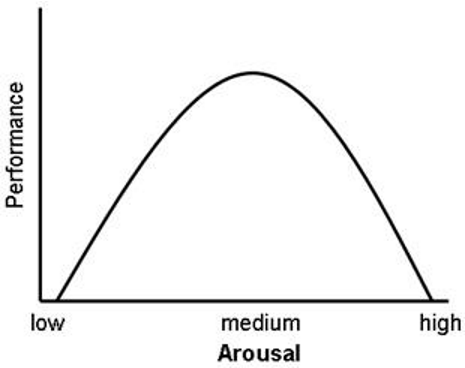
curvilinear correlation
The curvilinear correlation starts off positive, to a certain point and then becomes a negative one. It is still a predictable one.
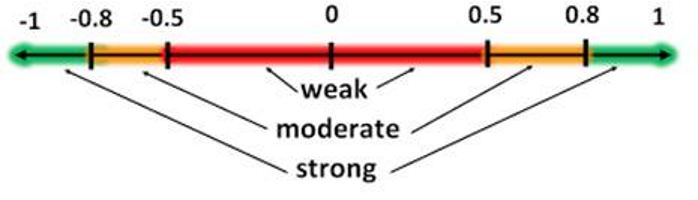
correlation co-efficient
-1 is the perfect negative correlation
+1 is the perfect positive correlation
Above 0.80 and -0.81 is a strong relationship
strengths of correlation
It can be a USEFUL technique in psychological research as there are so many variables that cannot be manipulated for either ethical or practical reasons.
It can also act as a starting point for research, in that once relationships have been established, more research can be conducted (such as an experiment) to investigate them further.
Can be replicated to confirm findings.
Weakness of the Correlation:
A correlation ONLY demonstrates the strength and direction of the relationship.
It CANNOT establish a cause-and-effect relationship, that is changes to one variable causes an effect on the other variable.
There may be intervening variables that can explain why the co-variables are linked.
For example, what other factors may contribute to a relationship between memory recall and anxiety, other than the co-variables?
Locational factors- noise, temperature, light intensity
Concentration
Age
IQ
stress
observation
Involves watching and recording peoples behaviour
Usually carried out in peoples natural behaviour in their natural environment, but not always
Observations are conducted in a more systematic way that everyday observations of life.
Researcher must have a clear idea of what type of behaviour to observe in order for findings to be valid- operationalised behavioural categories
Behavioural categories
Observable, measurable and self-evident as well as being exclusive with no overlaps
Or they may use a scale to indicate a degree of behaviour
Operationalisation
breaking the behaviour studied into a set of components
Objective
the researcher should not have to make inferences about the behaviour
Naturalistic observation
Naturalistic observation - where lab studies are difficult or less useful, researchers can observe subjects in their real-life environment
Natural environment without control over variables
No interference from researcher
People make their own choices about how they behave
Naturalistic observation strength
High degree of natural degree- finding can be generalised to everyday life
Likely to be high in ecological validity
Naturalistic observation weakness
Hard to replicate
Less reliable as variables are not controlled
No manipulation of variables means that the cause and effect relationship cannot be established
Because of lack of control, extraneous variables may account for the behaviour observed
Controlled environment
The have been organised by the researcher for observation
participants are likely to know they are being studied, but not always
Reduces the naturalness of the environment and the naturalness of the behaviour being investigated
Ainsworth add in from PPT
Controlled environment strength
high level of control
Easier to establish cause and effect relationships
Can be easily replicated - easy to test its reliability
Controlled environment weakness
The environment is artificial- participants may not show natural behaviour - lack validity
Demand characteristics if they are aware of being studied
Overt observations
Observations that takes place with the full knowledge and awareness of participants
They know that their behaviour is being watched and recorded
Since this is likely to have an effect on the naturalness of participants behaviour, researchers try to be unobtrusive
Overt observations strengths
Ethically sound as participants know that they are being observed and have given consent
Overt observations weaknesses
Participants may not behave naturally - demand characteristics
Covert observation
Without the knowledge or awareness of participants knowing they are being observed
Hidden viewpoints, secret cameras or two way mirrors
Such behaviour must be public and happen anyway for the observation to be ethical
Covert observation strength
More valid results from participants as natural behaviour is being observed
Covert observation weakness
Not ethically sound to observe participants behaviour in private settings
Lack of informed consent means that there are ethical issues
Participant observations
Data is gathered by psychologists whilst being part of the observed group or situation
In both covert and overt observations, the researcher may be a participants, but often this is unknown to the other participants
Participant observations strengths
Greater insights into behaviour gained by being in group
Increased validity of findings