hot deserts
 Call Kai
 Learn
Learn Practice Test
 Spaced Repetition
 Match
Match Flashcards
 Knowt Play
1/12

There's no tags or description
Looks like no tags are added yet.
Name | Mastery | Learn | Test | Matching | Spaced | Call with Kai |
|---|
No analytics yet
Send a link to your students to track their progress
13 Terms
What is the climate in a hot desert like?
Temperatures are extreme (can range from 45°C during the day, to 0°C at night) → lack of cloud clover due to high pressure belt at 30°N and S
Low precipitation → less than 250mm a year
What is the soil in a hot desert like?
Infertile → a lack of vegetation means a lack of leaf fall, therefore little biomass is decomposed to form nutrients
Dry → lack of rainfall
Shallow and gravelly in texture
What are plants in a hot desert like?
Plant growth is sparse and minimal → lack of rainfall
Those that do grow require little water, e.g. cacti
Plants are generally short
Many plants have short life cycles, quickly growing after rain
What are animals in a hot desert like?
Mammals tend to be small and nocturnal to save energy
Most birds leave the desert during the harshest conditions
How are hot deserts interdependent ecosystems?
All the biotic and abiotic components in hot deserts depend on each other.
EX: Cattle overgraze land → fewer plants stabilising soil → soil erosion → dust clouds → reduction in rainfall → desert become drier → plants/animals/people may die
How are plants adapted to the physical conditions in hot deserts?
Plant roots are:
extremely long to reach deep water supplies or,
spread out wide near the surface to absorb as much water possible when it rains
Some plants have small leaves/spines to lower the surface area and reduce the loss of water via transpiration
Some plants only germinate after it rains, growing quickly to take advantage of the wet conditions
Many plants are succulents (e.g. cacti) → they store water in their roots/stems/leaves
How are animals adapted to the physical conditions in hot deserts?
Many animals are nocturnal → they sleep when temperatures are hottest, helping them stay cool
A lot of desert animals have long limbs/ears to increase their surface area so that they lose more heat, faster
Bigger animals, such as camels, store fat that they break down into water when needed
Most desert animals sweat and urinate as little as possible to reduce water loss (e.g. kangaroo rats don’t sweat)
What are some threats to biodiversity in hot deserts?
Climate change
Desertification
What is an example of a hot desert?
The Thar desert located in north-west India and south-eastern Pakistan.
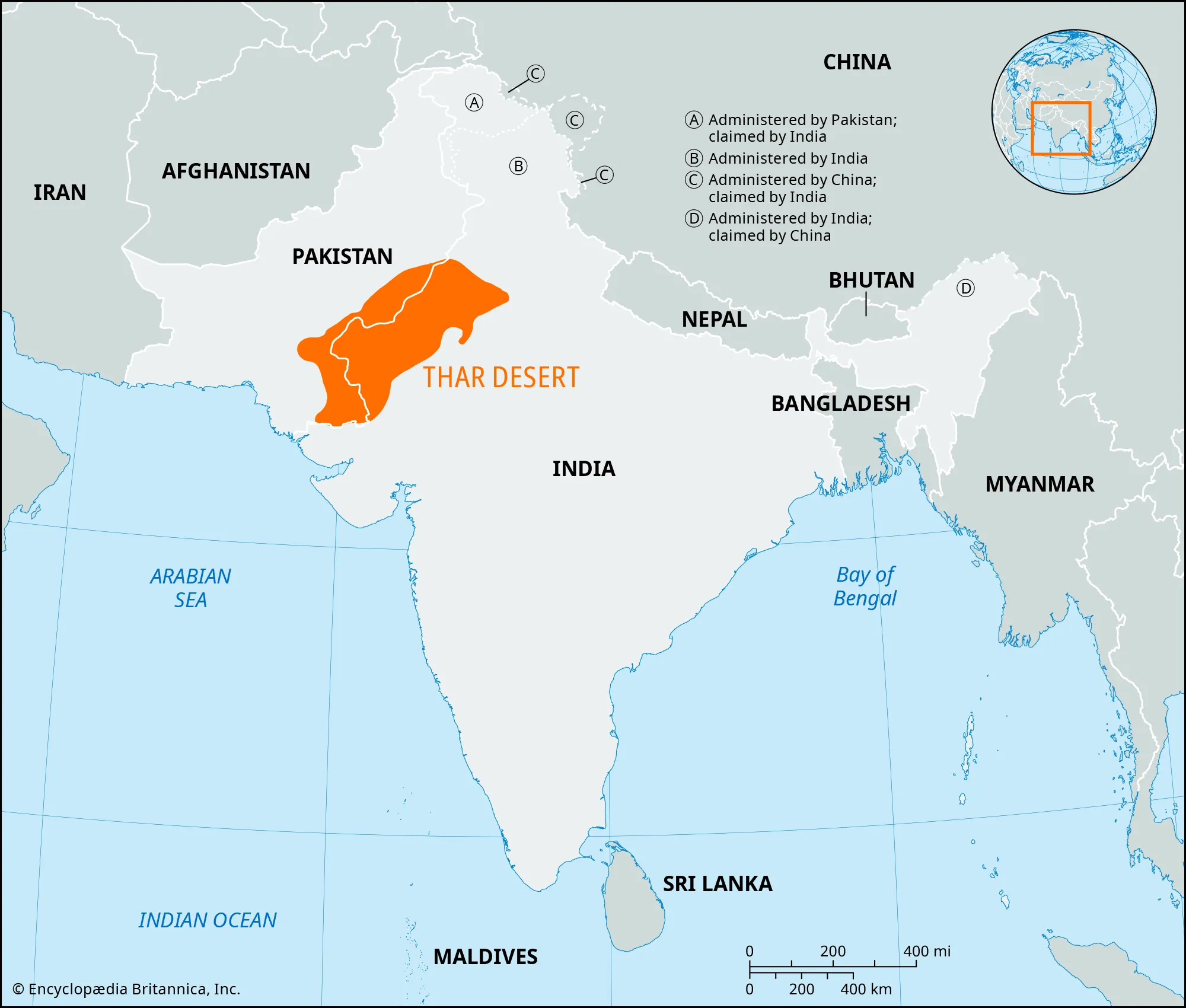
What are some development opportunities in the Thar desert?
Mineral extraction
Energy
Farming
Tourism