Edexcel GCSE Psychology (The Brain and Neuropsychology)
 Call Kai
 Learn
Learn Practice Test
 Spaced Repetition
 Match
Match Flashcards
 Knowt Play
1/50

There's no tags or description
Looks like no tags are added yet.
Name | Mastery | Learn | Test | Matching | Spaced | Call with Kai |
|---|
No analytics yet
Send a link to your students to track their progress
51 Terms
Where is the frontal lobe located?
At the front of the brain, behind the forehead.
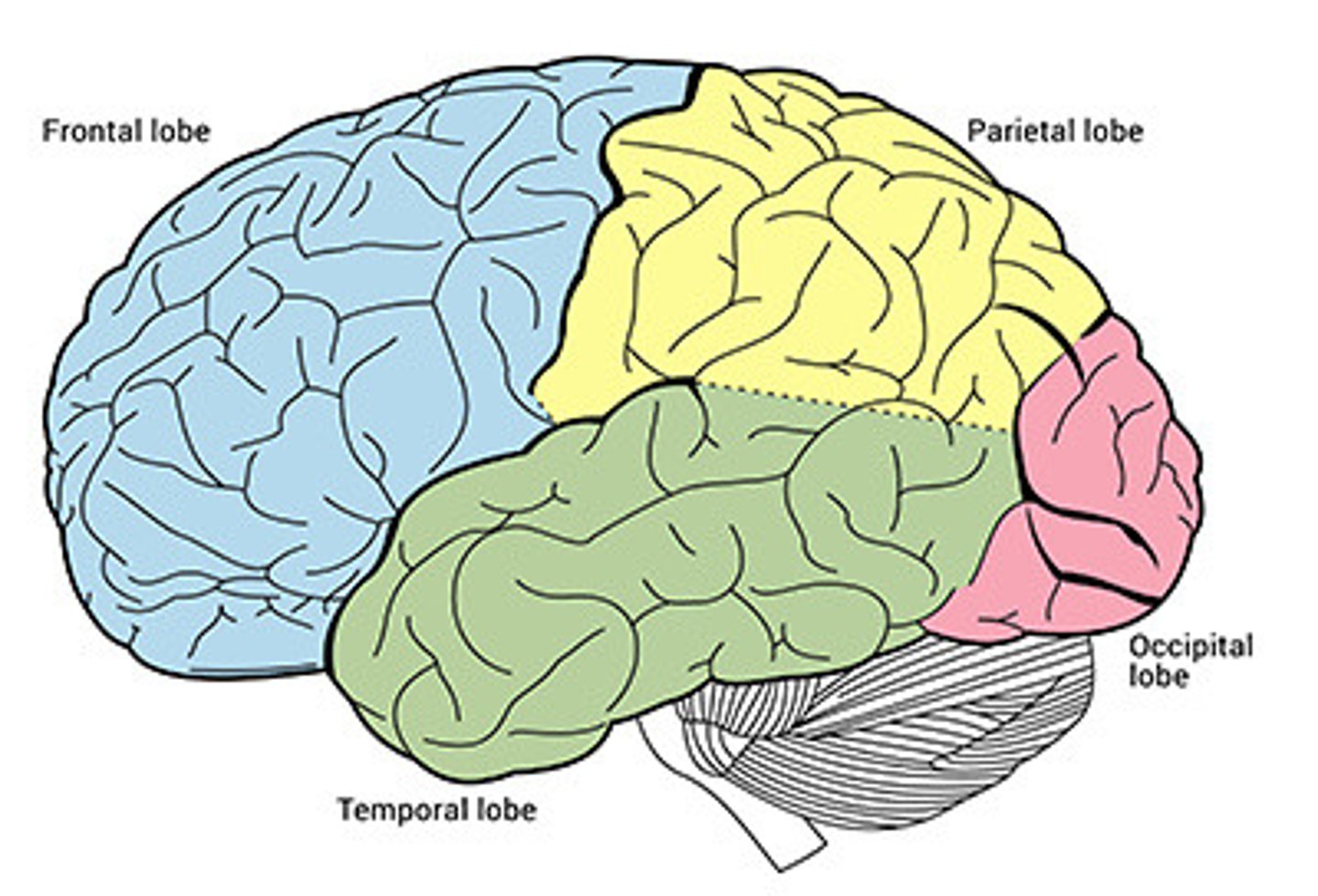
What is the function of the frontal lobe?
We use the frontal lobe to make daily decisions, such as what to eat for breakfast. It controls voluntary movement and is necessary for speaking fluently and meaningfully.

Where is the parietal lobe located?
At the top of the head, behind the frontal lobe.
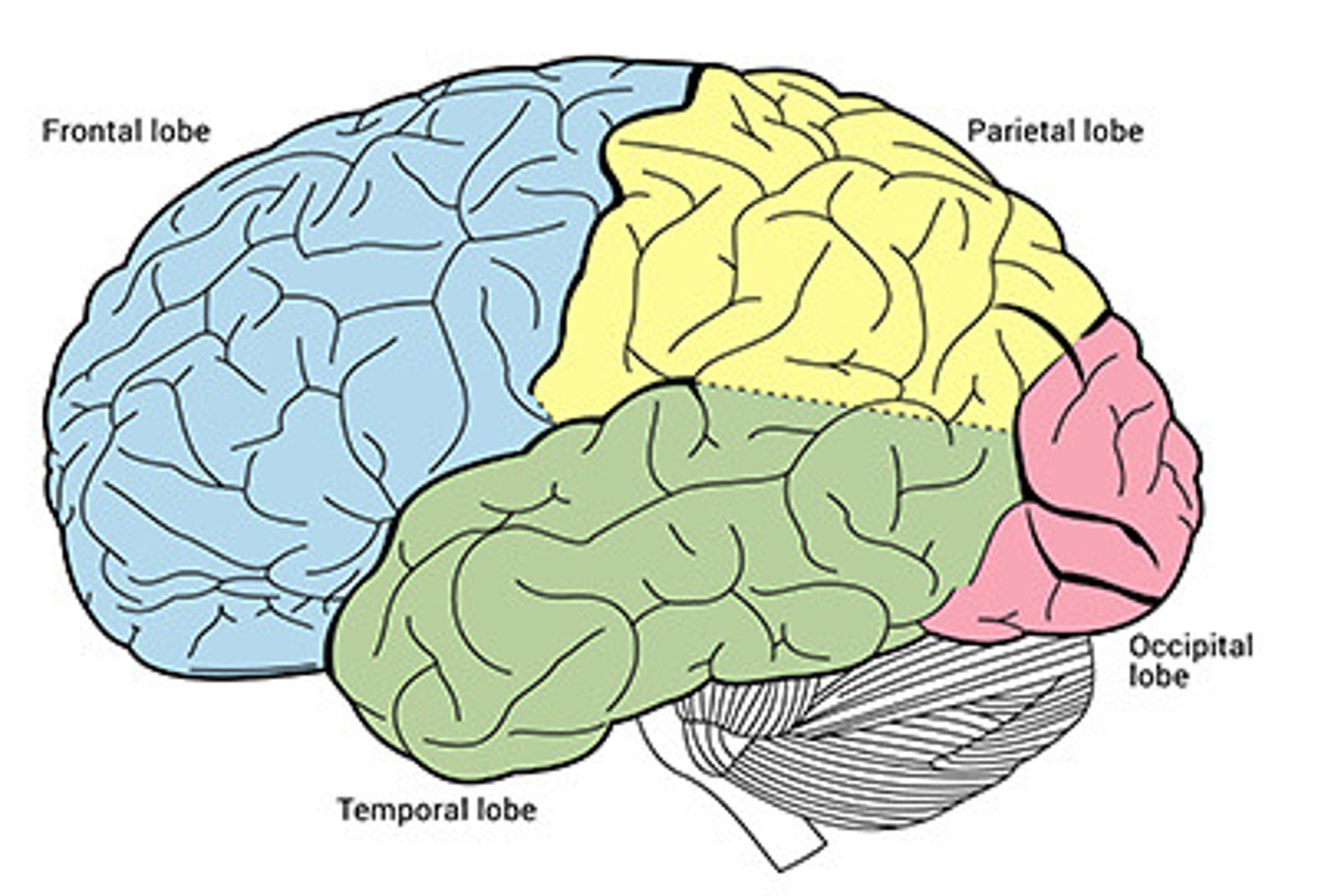
What is the function of the parietal lobe?
It is involved in attention and motor control; processing spatial location and perceiving pain, touch, tastes and temperature.

Where is the temporal lobe located?
Side of the head, around where the ears are located.
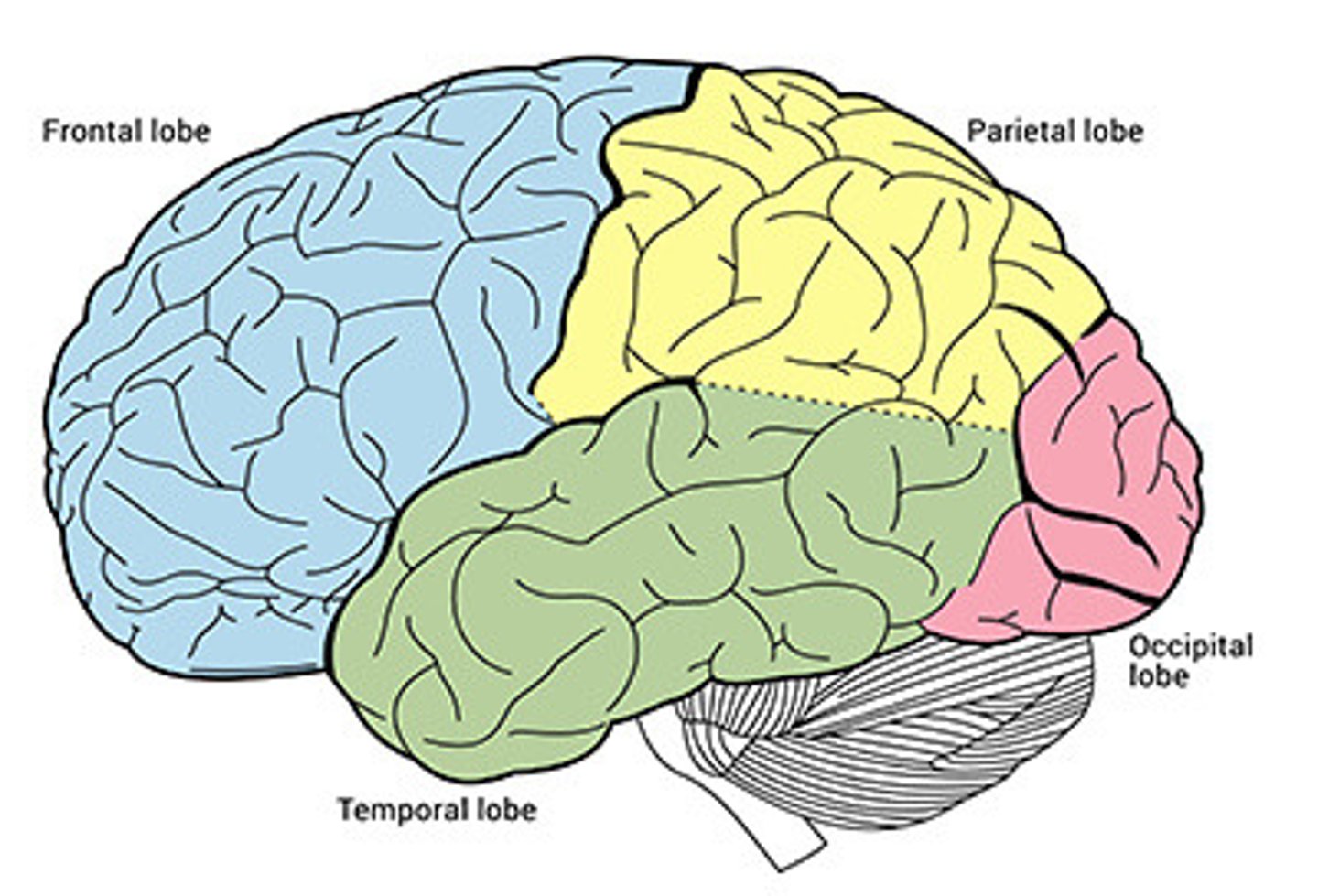
What is the function of the temporal lobe?
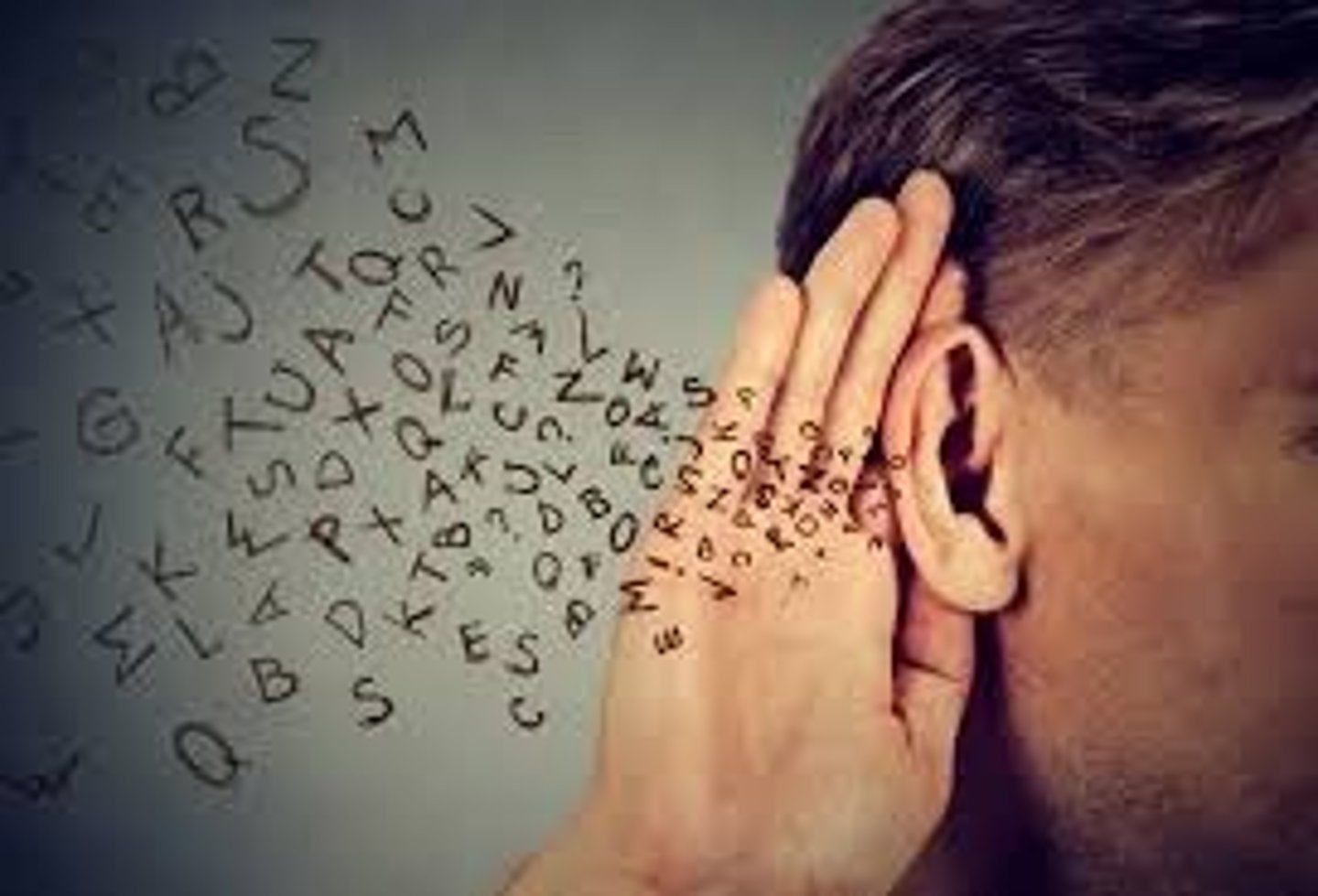
Involved in hearing , processing language and memory. Damage to the temporal lobe leads to failure to store new information and difficulty understanding what others are saying.
Where is the occipital lobe located?
At the back of the head just above the brain stem.
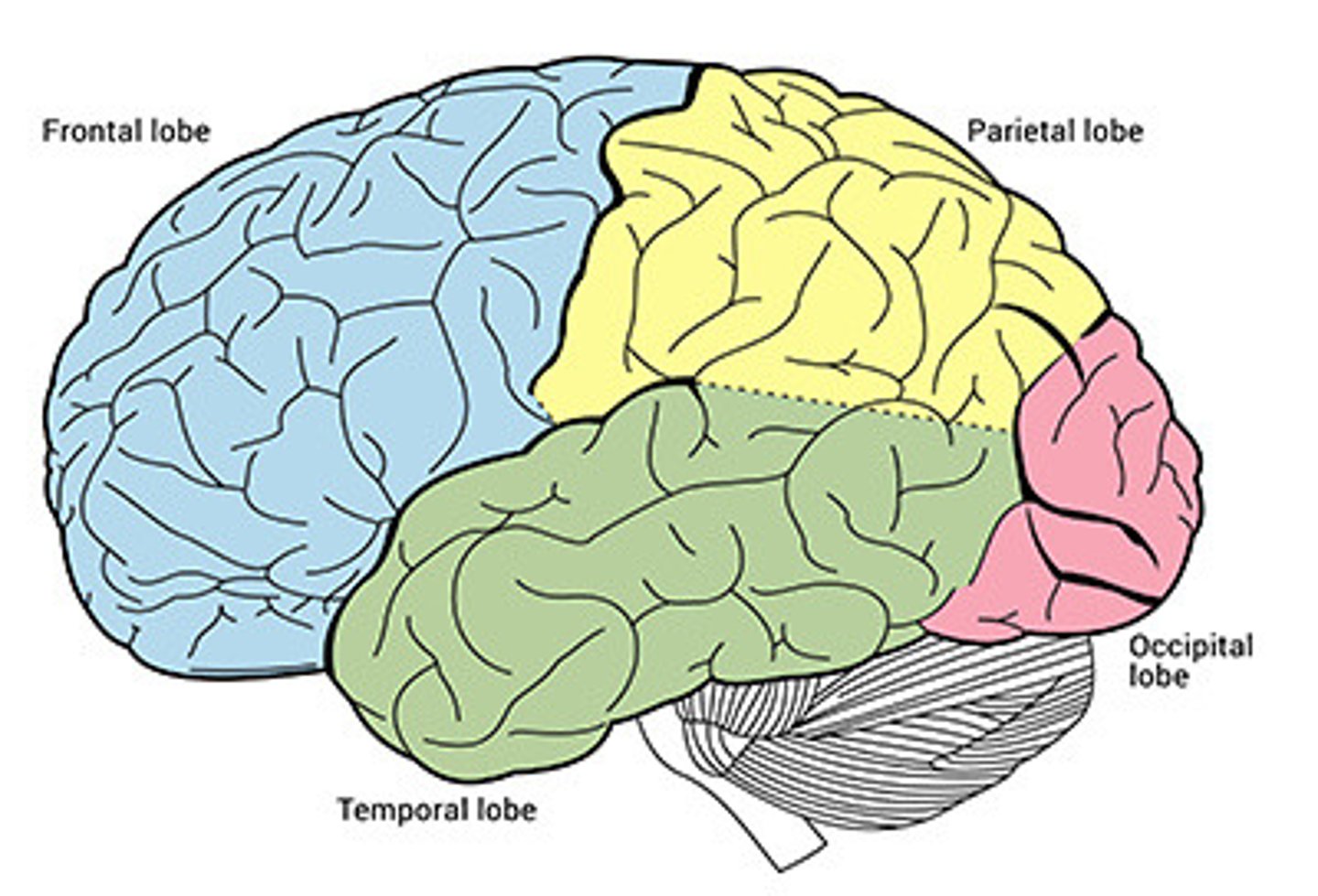
What is the function of the occipital lobe?
It is involved in processing visual information such as colour, shape and motion. These lobes need to be very fast in processing visual information in order for the brain to understand what it is seeing.

Where is the cerebellum located?
Back end of the brain, underneath the occipital lobe and near to the brain stem.
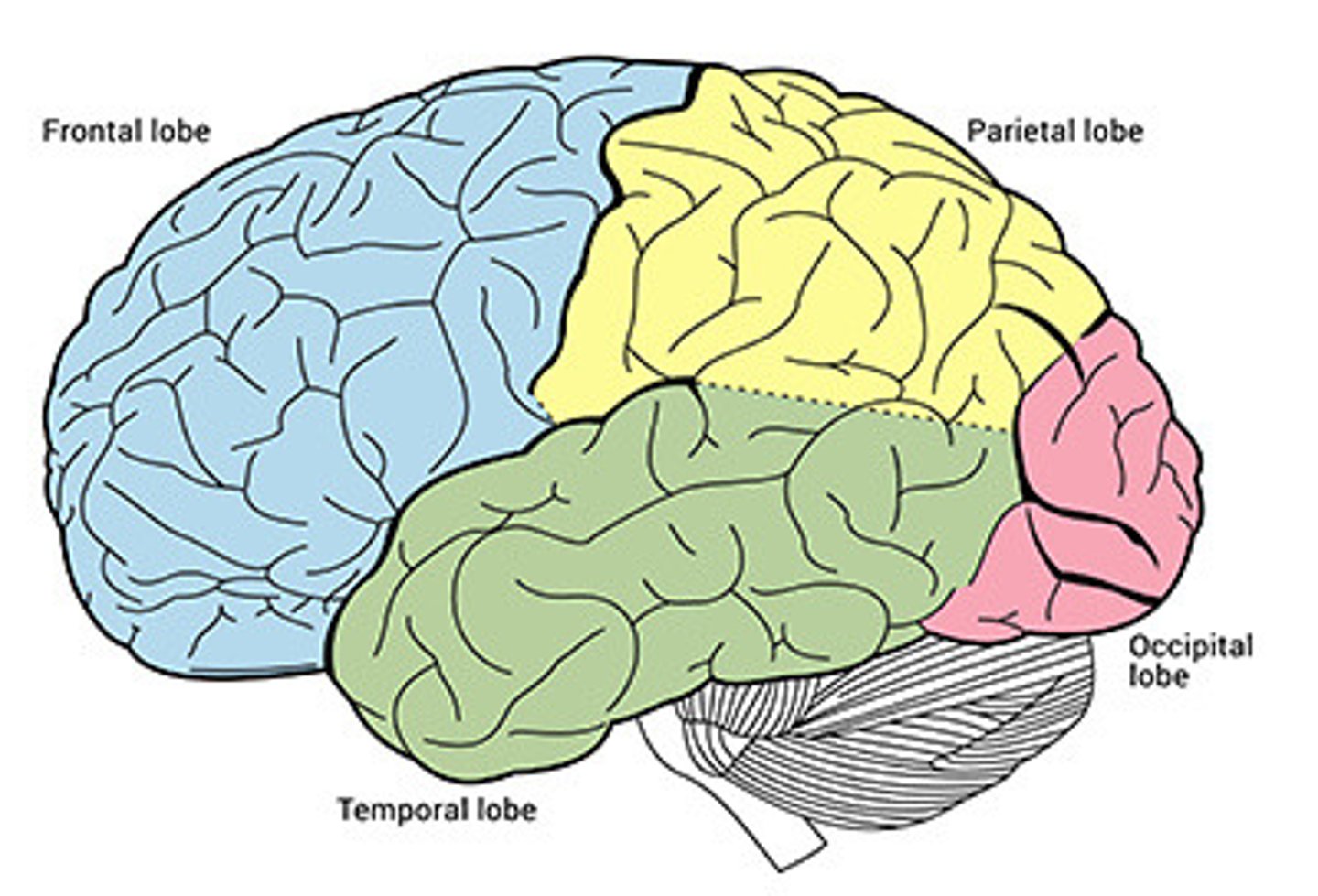
What is the function of the cerebellum?
It is responsible for muscle coordination in helping us carry out everyday voluntary tasks, such as walking and writing. It is important for staying balanced and upright.

What is the structure that connects the two brain hemispheres together called?
The corpus callosum.
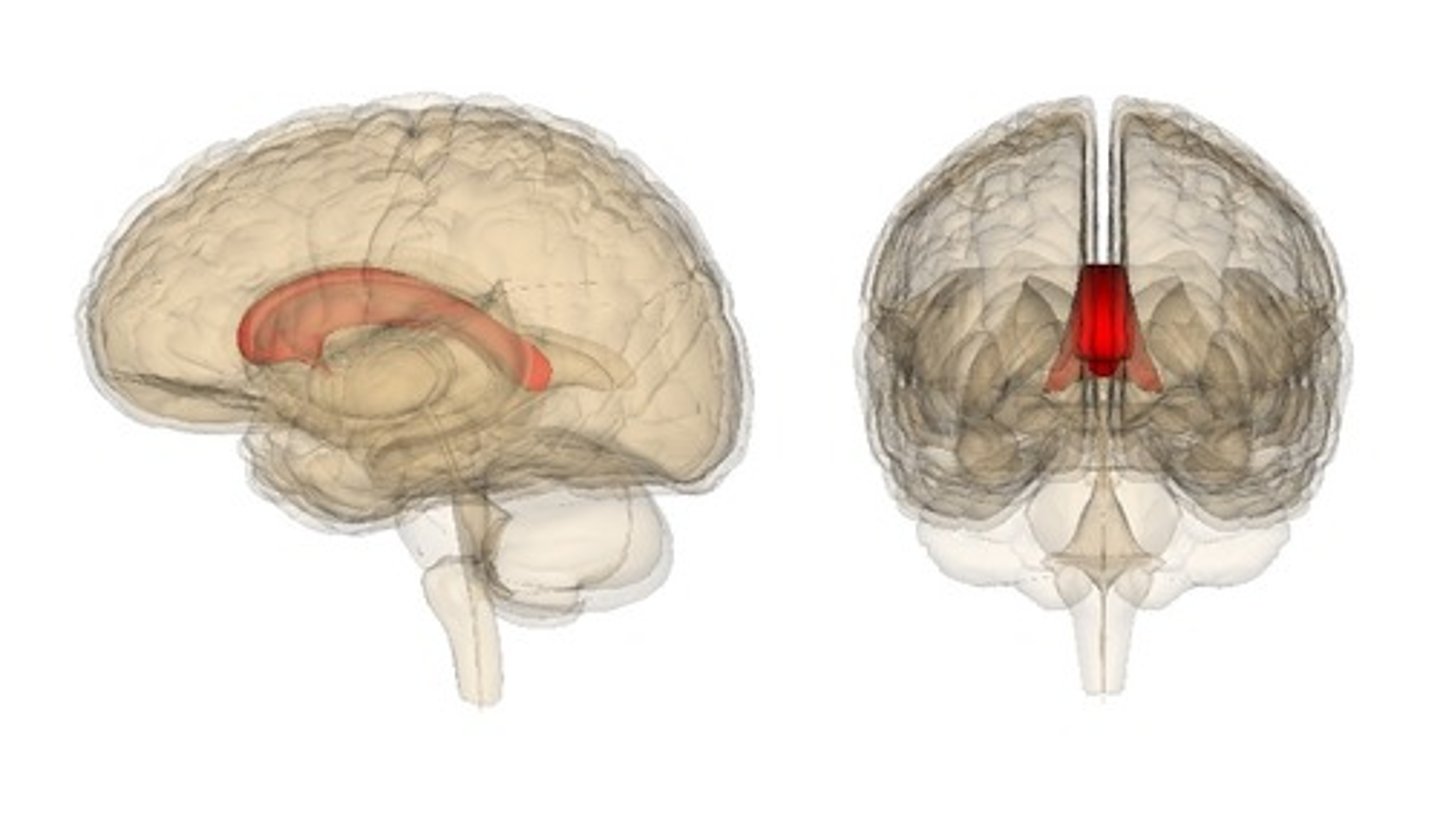
What is the corpus callosum?
It is a thick band of nerve fibres that connects the two brain hemispheres. It allows for communication between the two hemispheres of the brain and is responsible for transmitting neural messages between them.
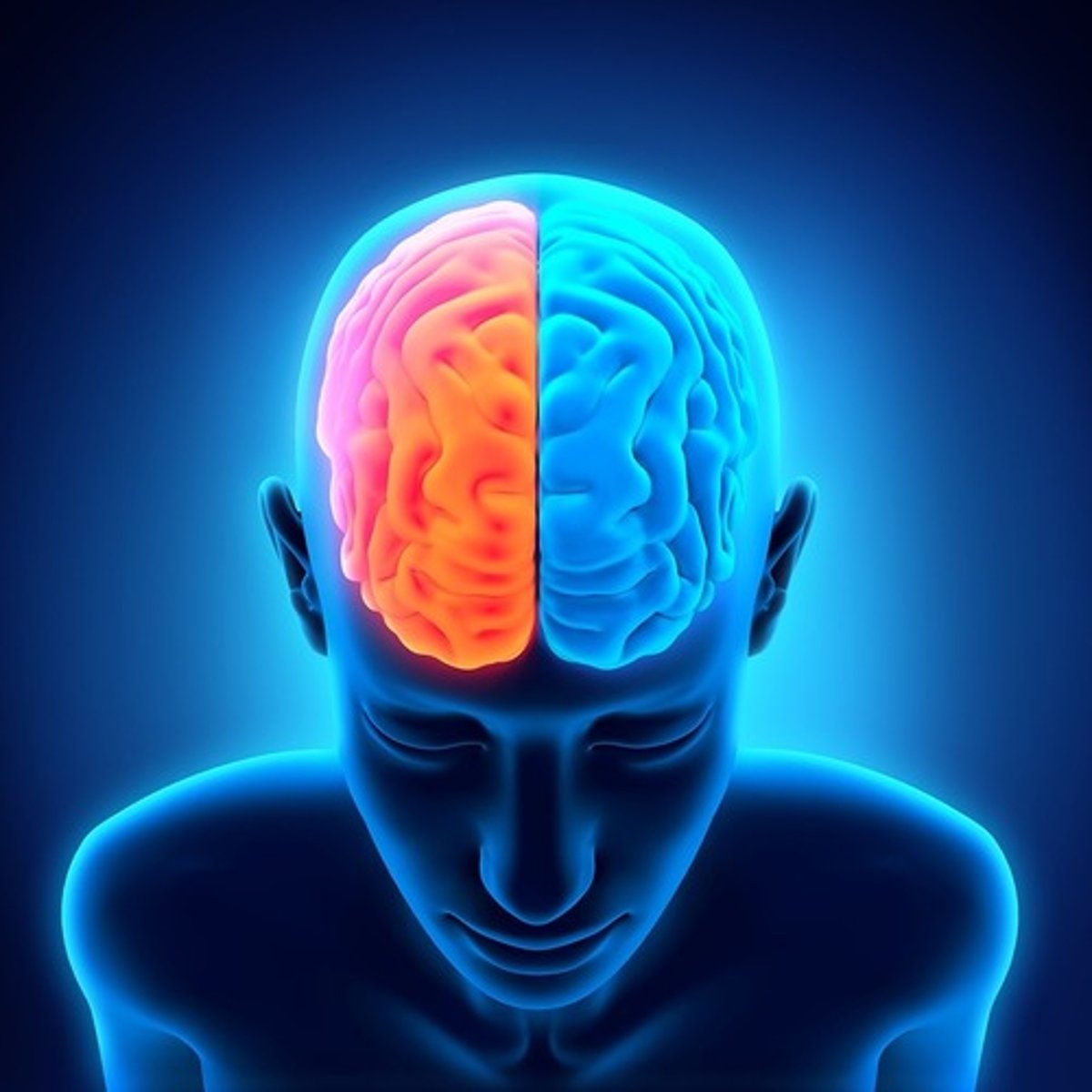
What does having two hemispheres allow humans to do?
It allows us to multi-task. Similar to modern computers the two hemispheres or dual processors
allow for two things to happen at once. Like how on a computer, we can check emails, whilst it plays music for us.

What does an 'Asymmetrical Brain' mean?
Both hemispheres do not mirror each other exactly in terms of structure and function.
What does lateralisation of function mean?
There are certain mental jobs that are mainly specialised to either the left or right hemisphere.
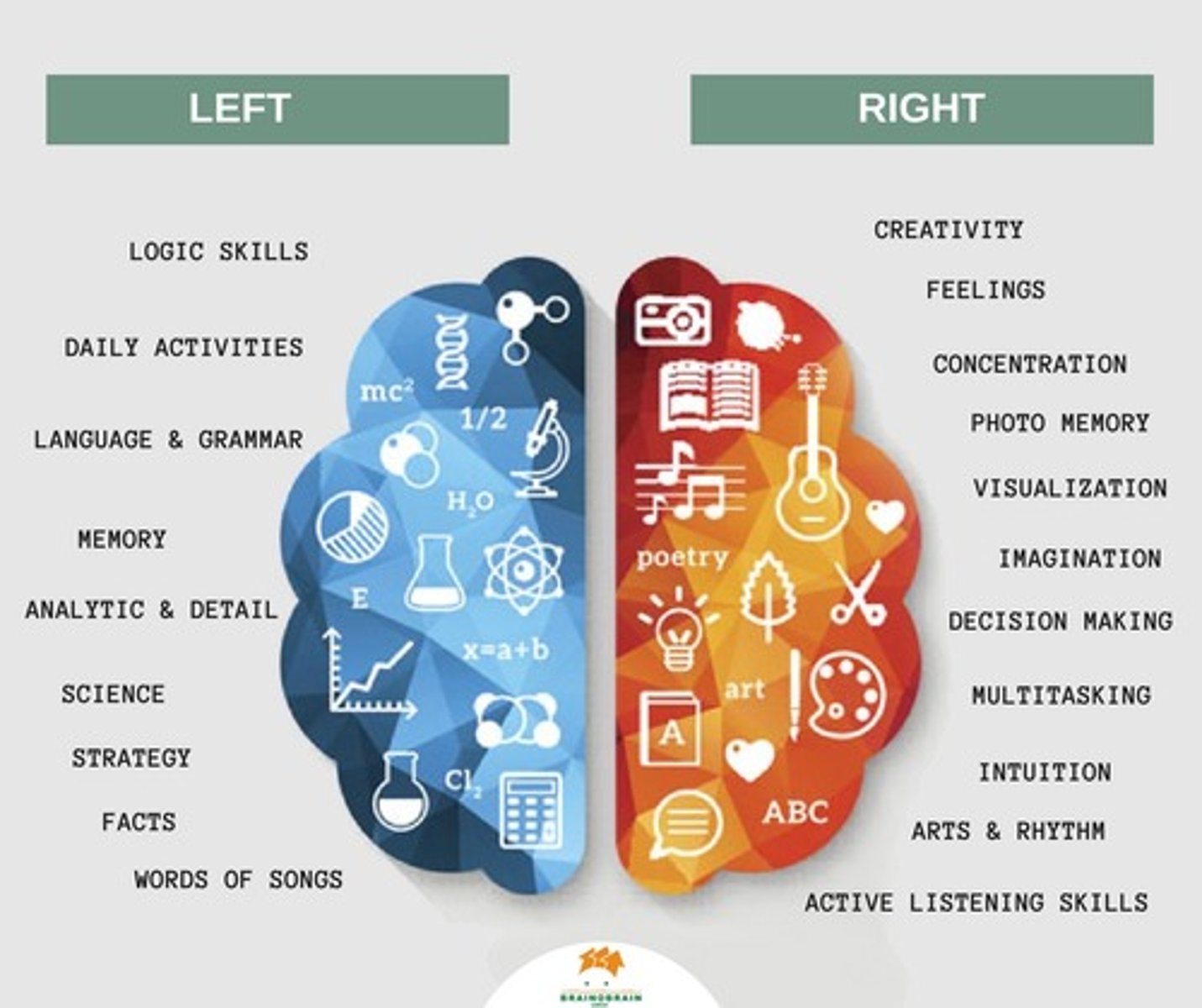
What is the left hemisphere responsible for?
• Language [reading, writing, speaking]
• Arithmetic reasoning and understanding.
Studies have shown that when we speak or do arithmetic calculations, the activity increases in our left hemisphere.
![<p>• Language [reading, writing, speaking]</p><p>• Arithmetic reasoning and understanding.</p><p>Studies have shown that when we speak or do arithmetic calculations, the activity increases in our left hemisphere.</p>](https://knowt-user-attachments.s3.amazonaws.com/722fb0b0-990f-41eb-a207-d5cdec4a9429.jpg)
What is Broca's area?
An area of the left hemisphere that controls the production of speech; if it is damaged, people may find it difficult to talk.

What is spatial awareness?
The ability to negotiate space and navigate our way around our environment.

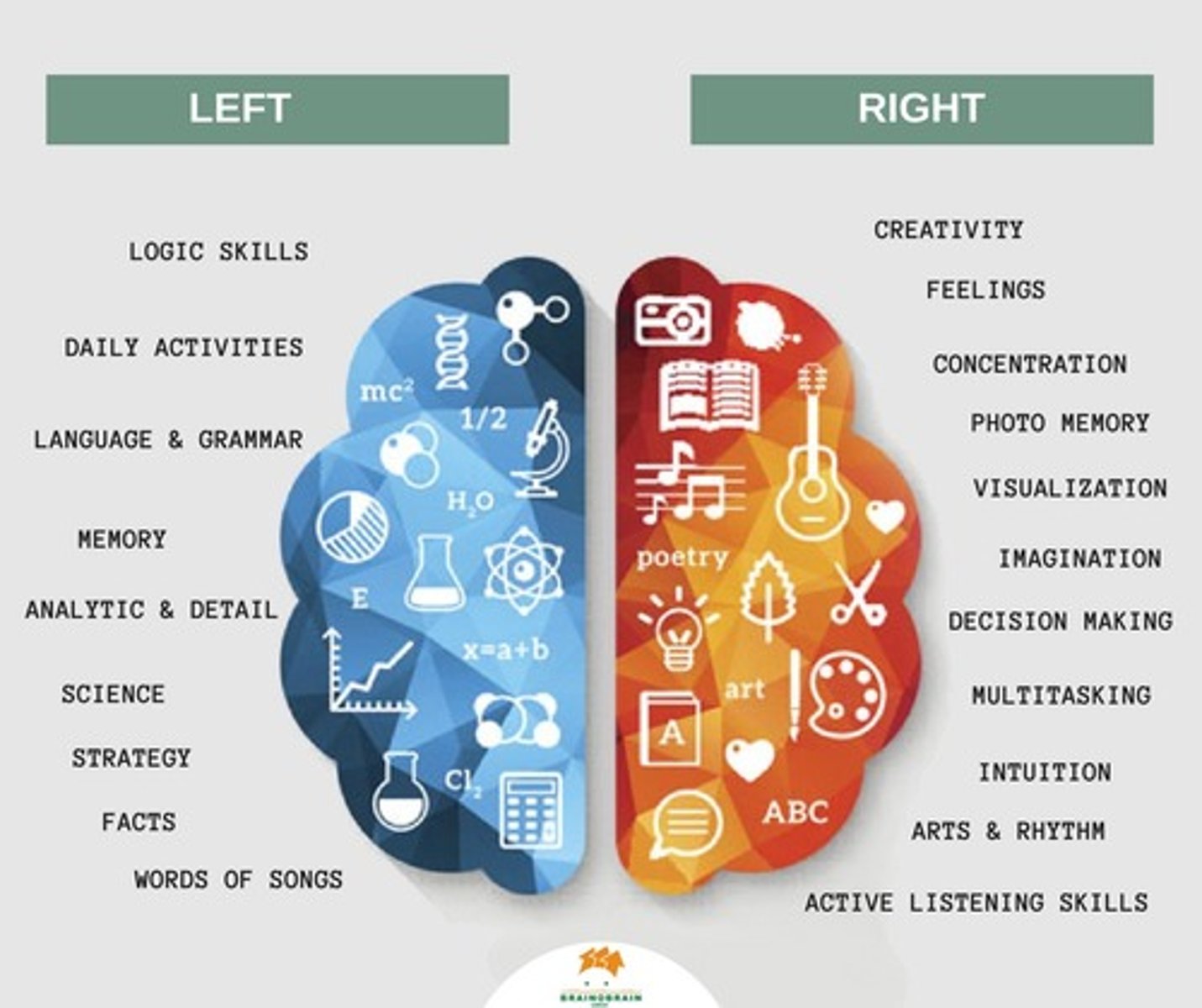
What is the right hemisphere responsible for?
• Spatial awareness
• Recognising Faces
This hemisphere is often seen as being more creative. It is involved in processing music that we hear and also making sense of visual information that we see.
What are the sexual differences in brain lateralisation?
• It is found that females are usually better at language skills, left brain tasks. For example identifying and understanding word meanings.
• It is found that males are usually better at spatial skills, right side of the brain tasks. Such as imagining what a shape would look like at another angle.
• There is some evidence that females have a thicker Corpus Callosum, meaning they use both sides of their brain for some tasks - this supports the point that 'women are better at multi-tasking'.
• Males will however show dominance on one side of the brain during an activity.
What are the strengths of using lateralisation as an explanation of sex differences between males and females?
• Studies have shown that parts of the brain which process language are slightly bigger in females compared to males. This explains why their is a view that females are better at language tasks. Males have also been found to have better spatial tasks, using the right hemisphere. This explains why it is viewed 'men are better drivers'.
• A lot of evidence regarding activity and size of different areas of the brain are backed up using scientific methods such as brain scans, this is a strength.
What are the weaknesses of using lateralisation as an explanation of sex differences between males and females?
• While there is evidence that males have better spatial awareness, during experiments, men did not always do better than females in spatial tasks.
• There is no strong evidence that females used both hemispheres of the brain during language tasks so this can not be used as a reason for females to be better at language tasks.
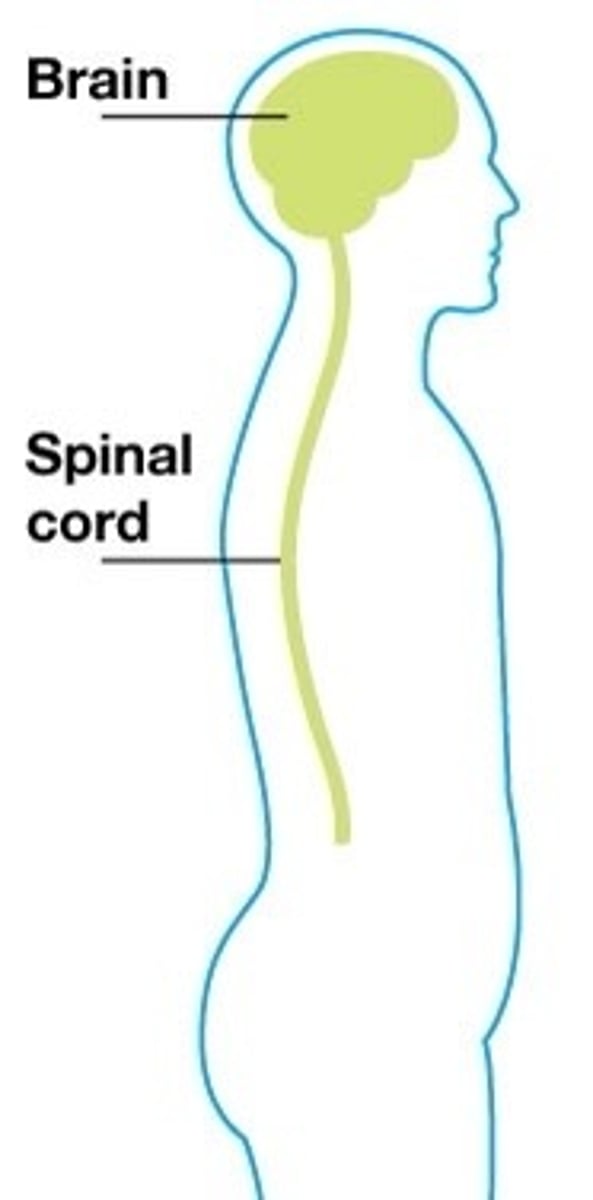
What is the CNS?
The brain and spinal chord, which replays messages from the brain to the rest of the body to instruct it what to do.
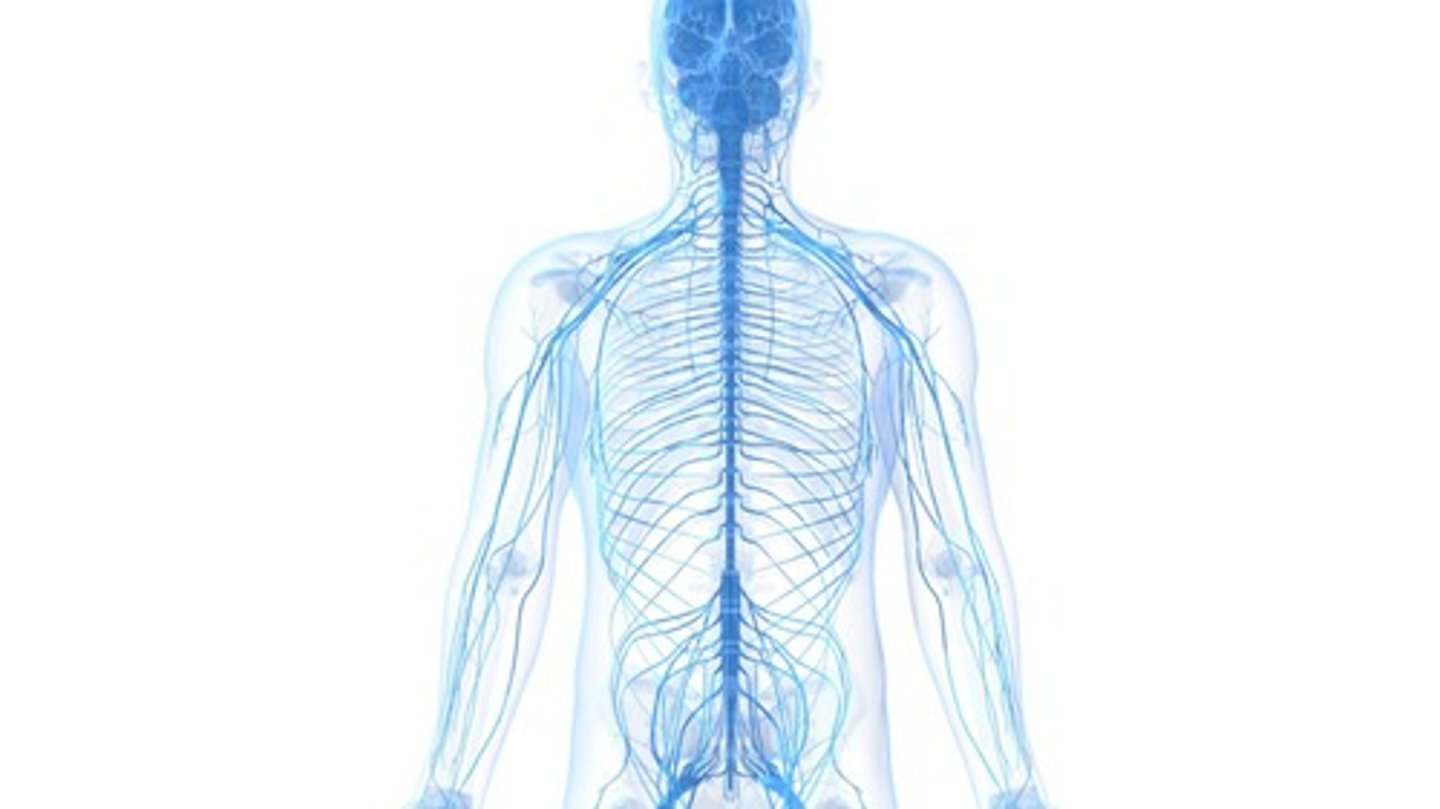
What is the PNS?
The Peripheral Nervous System is the system of nerves that connect the CNS, mainly the spinal chord to the skin, muscles and organs in the body.
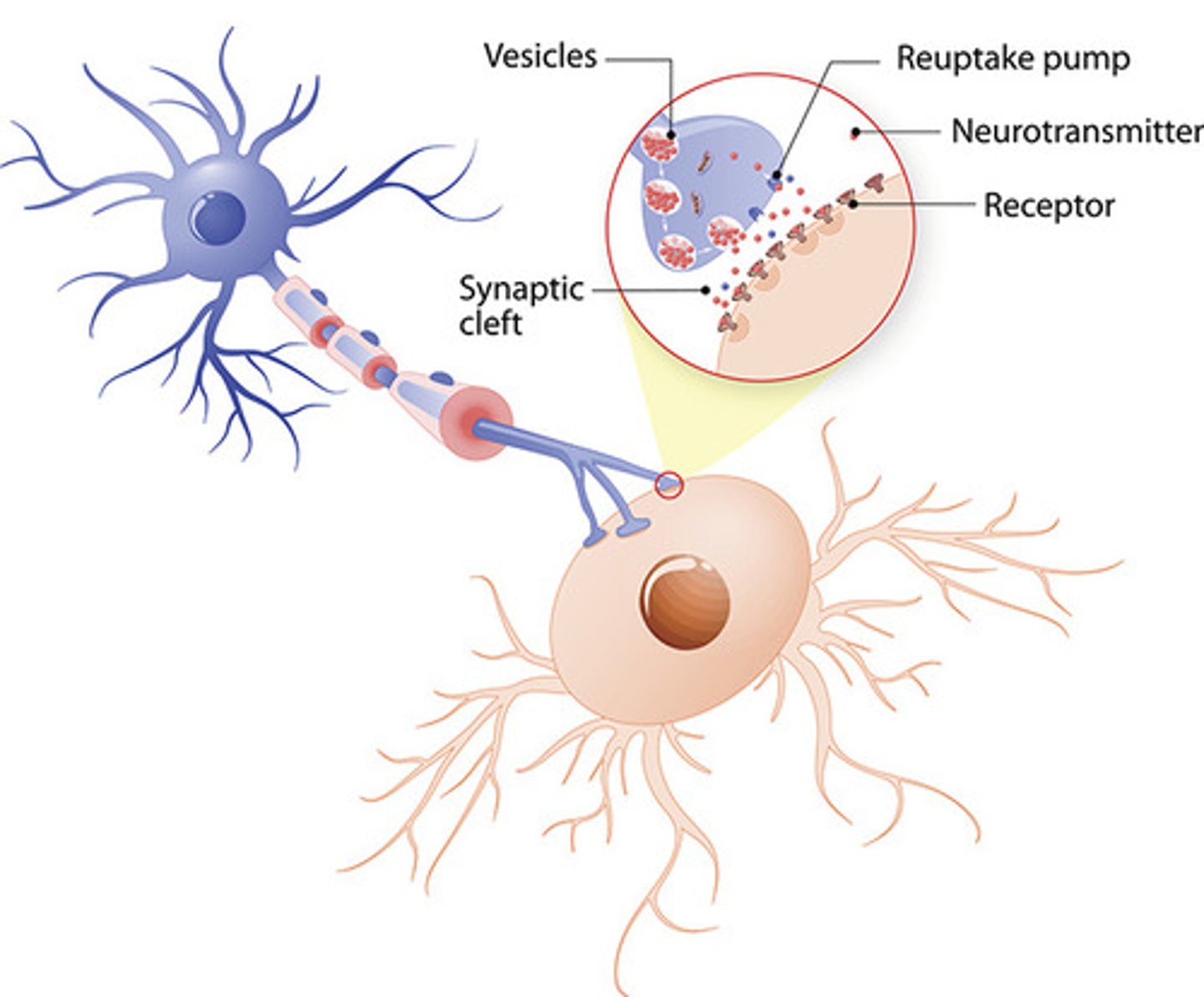
What are neurotransmitters?
Chemicals found within the nervous system that pass messages from one neuron to another across a synapse.
What is Dopamine?
A neurotransmitter that plays a role in attention and learning. Not enough dopamine can make it difficult to concentrate on tasks.
What is Serotonin?
A neurotransmitter that plays a role in mood. Too little serotonin can make people feel depressed.
What is GABA?
Gamma-aminobutyric acid, is a neurotransmitter that plays a role in calming us down when we feel stressed. The GABA produced relaxes us.
What is a synapse?
A gap between two neurones that allows messages, in the form of neurotransmitters, to pass from one cell to another.
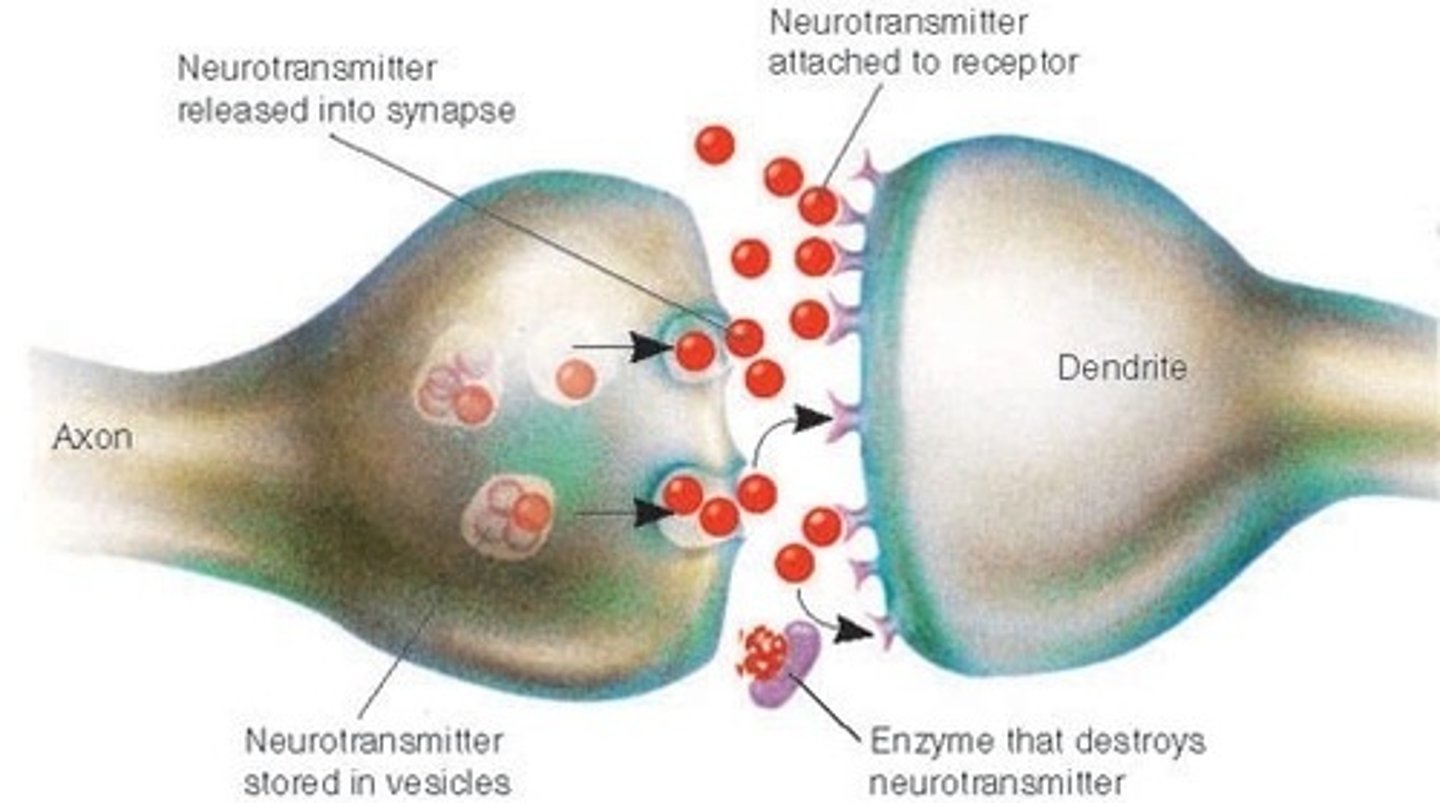
What is synaptic transmission?
The process by which neurotransmitters are released by a neurone (nerve), moves across the synaptic gap and are then taken up by another neuron.
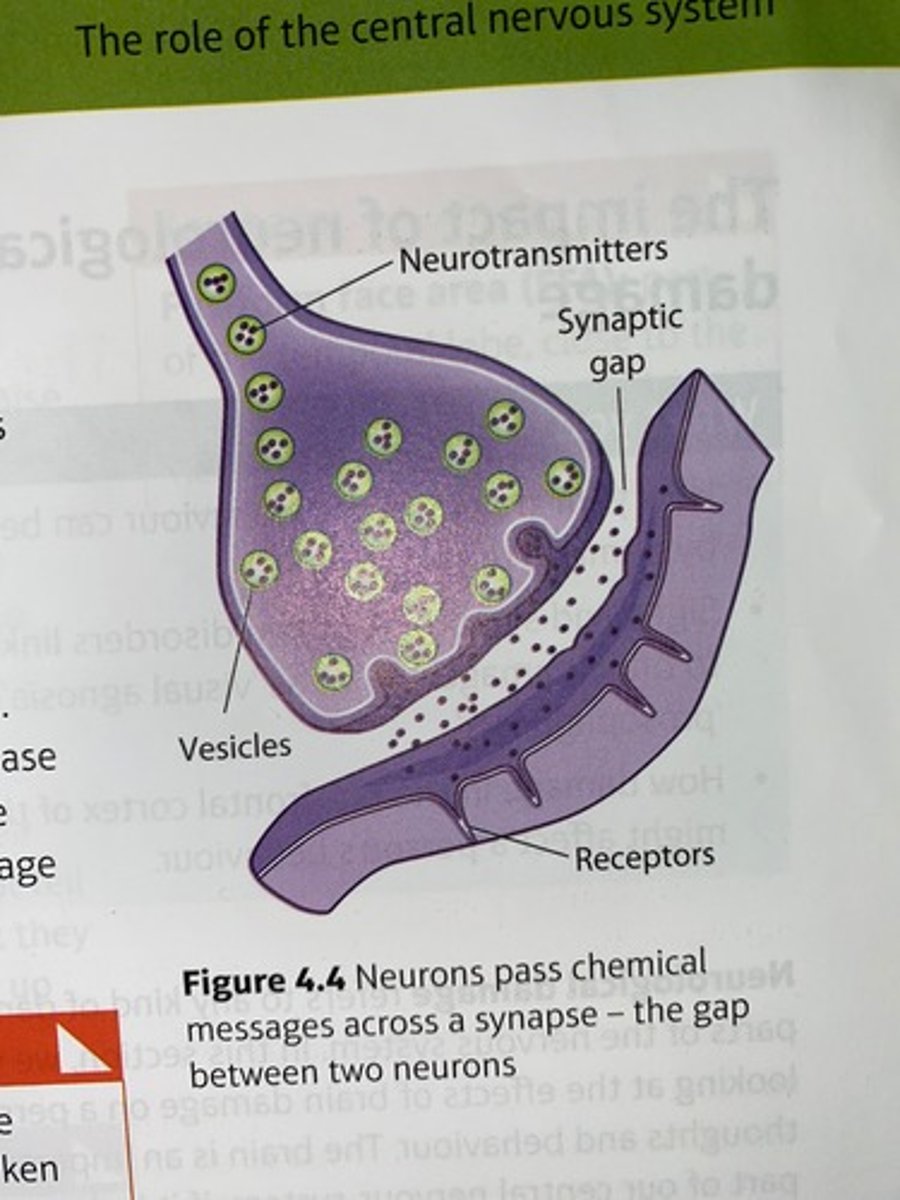
What are vesicles?
Small sacs containing neurotransmitter molecules.
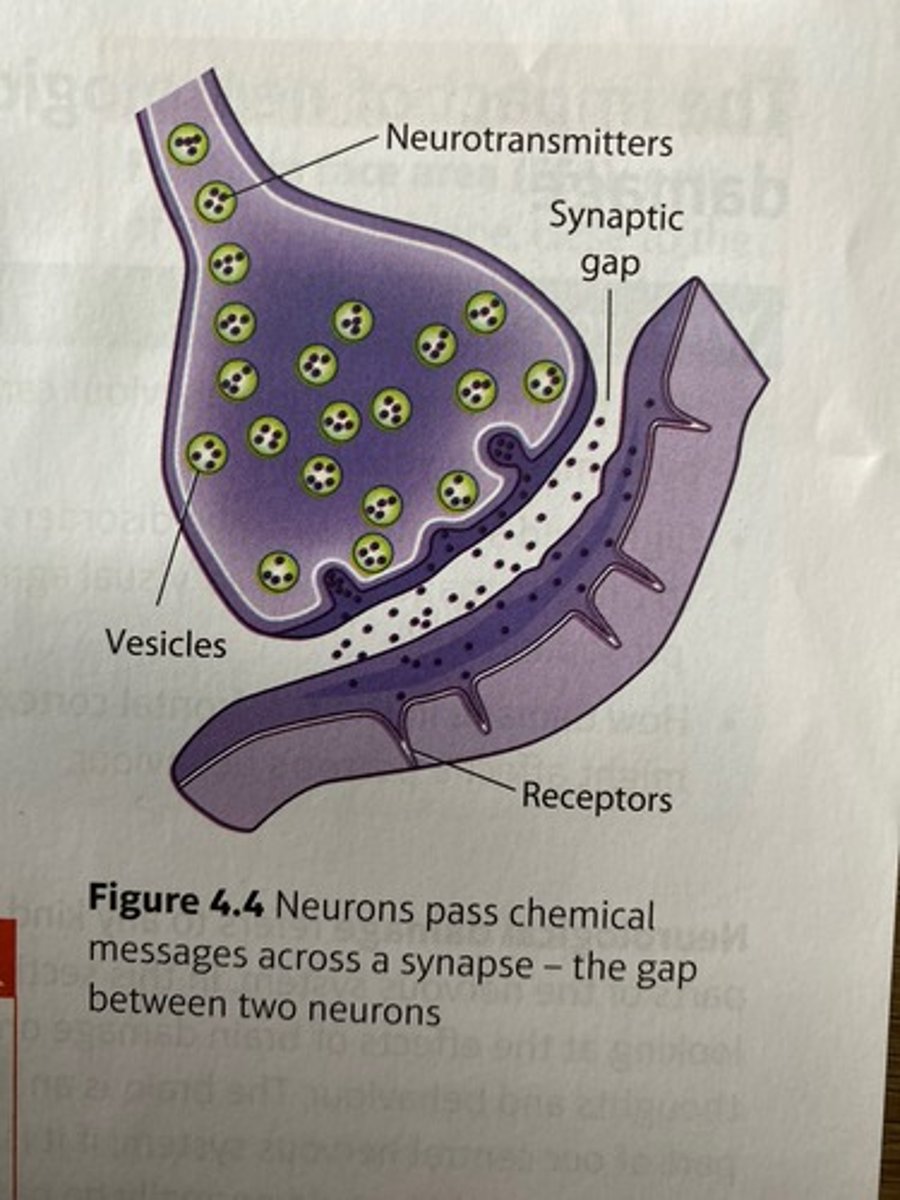
What are receptors?
Special sites on neurones that are designed to absorb neurotransmitter molecules.
What does neurological damage mean?
Damage to the body's central and peripheral nervous system.
What is visual agnosia?
An inability to recognise things that can be seen. The patent can see the object clearly but their brain can not identify what the object is.
An example is seen where a patient looks at a kettle, the patient can see the kettle but they will not know what it is.
What are the symptoms for visual agnosia?
• Not being able to identify what the colour of an object is (excludes people who are colourblind).
• Not being able to identify the name of an object.
• Not recognising places they should be familiar with, for example: Home.
What is Prosopagnosia?
'Face blindness' or the inability to recognise faces.
What are the symptoms of prosopagnosia?
• Difficulty to identify faces.
• Seeing all faces as 'the same' and cannot tell different faces apart.
• No being able to match names to faces of people known really well, such as close family members and friends.
What is the pre-frontal cortex?
The part of the brain responsible for controlling our impulses and balancing emotions. This stops us from hitting someone when angry. The prefrontal cortex is located at the very front of the frontal lobe.
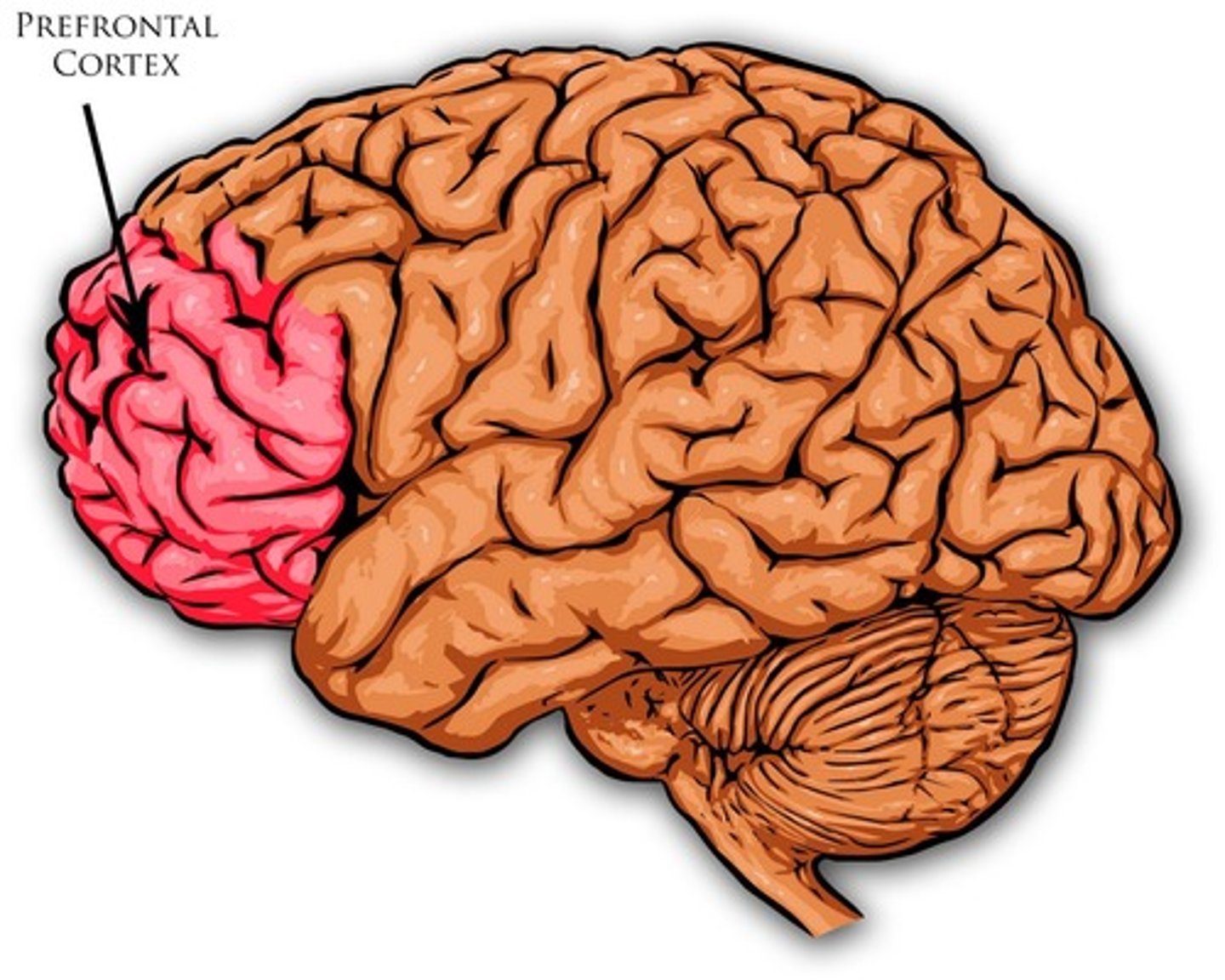
What are the impacts of damage to the prefrontal cortex?
• A person may find it difficult to control their emotions and impulses.
• Patients will be more likely to commit crime because of this.
• Studies have show that people convicted of murder generally had less activity in the pre-frontal part of the brain, compared to others who generally had more activity in this region of the brain. This can be used as evidence to explain why people with damage to the prefrontal cortex are more likely to commit crime.
What were the aims of Sperry’s hemispheres deconnection study?
Patients with sever epilepsy who had not responded to treatment were offered surgery to help reduce their seizures. This involved cutting down the corpus callosum; resulting in the disconnection of the brain hemispheres, called a 'split brain'.
Sperry wanted to evaluate the effects of patients processing information with a split brain in comparison to someone with a normal brain.
What was the procedure of Sperry’s hemispheres deconnection study?
11 participants who had their corpus callosum cut were asked to participate in a rage of tasks that involved processing information.
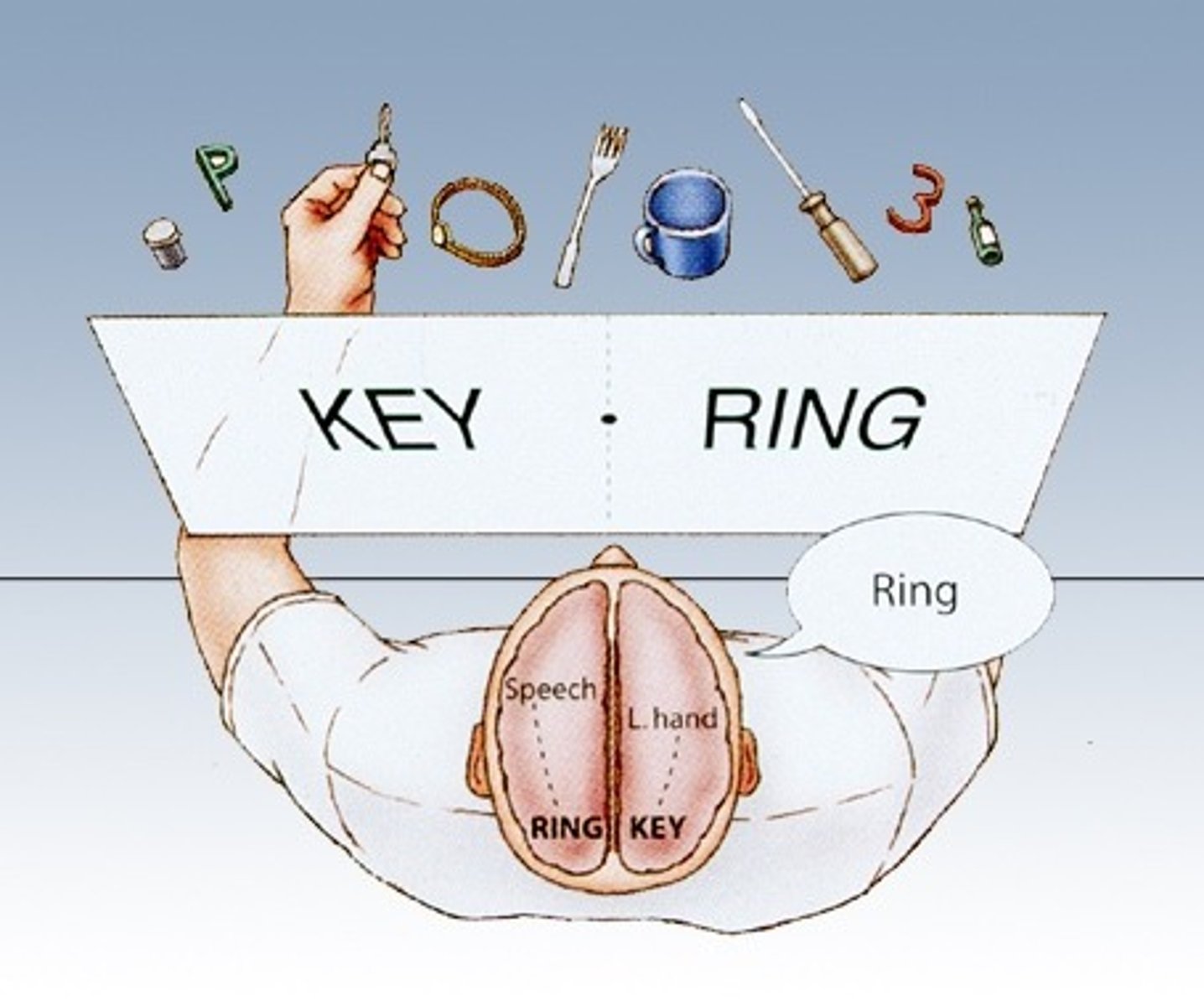
What were the results/conclusion of Sperry’s hemispheres deconnection study?
Sperry found that the left and right hemispheres control different abilities. When connections between the two hemispheres are broken, it is easier to observe what each hemisphere does.
Patients with a split brain failed to carry out tasks correctly because the brains were disconnected and information from each hemispheres could not be transferred.
What were the aims of the Damasio study?
To examine the parts of the brain that had been damaged as a result of the accident and identify why Damasio's behaviour changed significantly after the accident.
What was the procedure of the Damasio study?
Scientists created a replica of Damasio's brain and worked out the likely paths that the metal rod took through is skull.
The scientists then identified the most likely ways the rod would have penetrated the skull.
They then looked at what areas of the brain and neutrons which had been damaged.
What were the results/conclusions of the Damasio brain study?
It was found that large areas of the frontal lobe were damaged and that many neurons in the head had also been damaged.
As a result, they concluded that the frontal lobe must play a vital role in a person being able to control their behaviour and emotions. Because Damasio frontal lobe was damaged, this may have had been the cause for his dramatic change in behaviour.
What are the strengths of Damasio’s brain study?
• Reaserchers could use modern technology to investigate data from 1848, giving the results a more scientific status. The results could actually be seen rather than inferred.
• We can now understand and make predictions of what can happen to future patients with damage to the frontal lobe.
What are the weaknesses of Damasio’s brain study?
• The scientists were using information about the accident that was over 150 years old. There could not be sure that the information about accident was accurate and reliable.
• It can be argued that using information from one persons accident can not be used to determine the results of other accident.
What does post-mortem mean?
An examination of the body after death, often to work out how or why a person died.
What is an EEG?
A method of measuring brain activity using electrodes placed on the scalp.
What is an MRI?
A method of studying the brain using electromagnets.
What is a PET?
Imagery showing the amount of energy being used throughout the brain.