BOH - Chapter 9 - Leadership
 Call Kai
 Learn
Learn Practice Test
 Spaced Repetition
 Match
Match Flashcards
 Knowt Play
1/64

There's no tags or description
Looks like no tags are added yet.
Name | Mastery | Learn | Test | Matching | Spaced | Call with Kai |
|---|
No analytics yet
Send a link to your students to track their progress
65 Terms
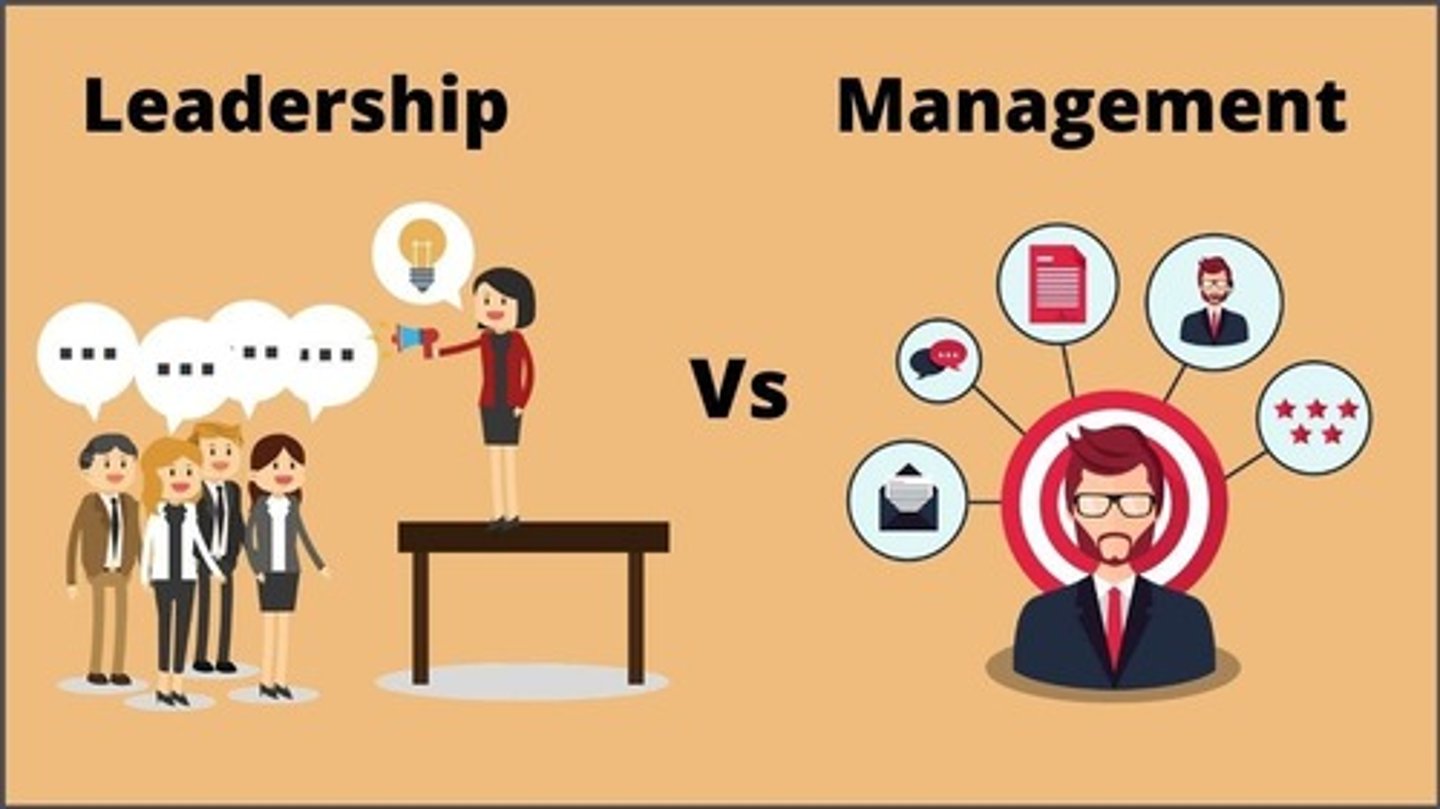
Management
Brings order and consistency to organizations.
Leadership
Inspires others to achieve important tasks.
Autocratic Leadership
Leader makes decisions unilaterally without input.
Democratic Leadership
Leader involves team in decision-making processes.
Laissez-faire Leadership
Leader provides minimal direction, allowing autonomy.
Vision
Future state aimed to improve current conditions.
Visionary Leadership
Communicates a compelling future and necessary actions.
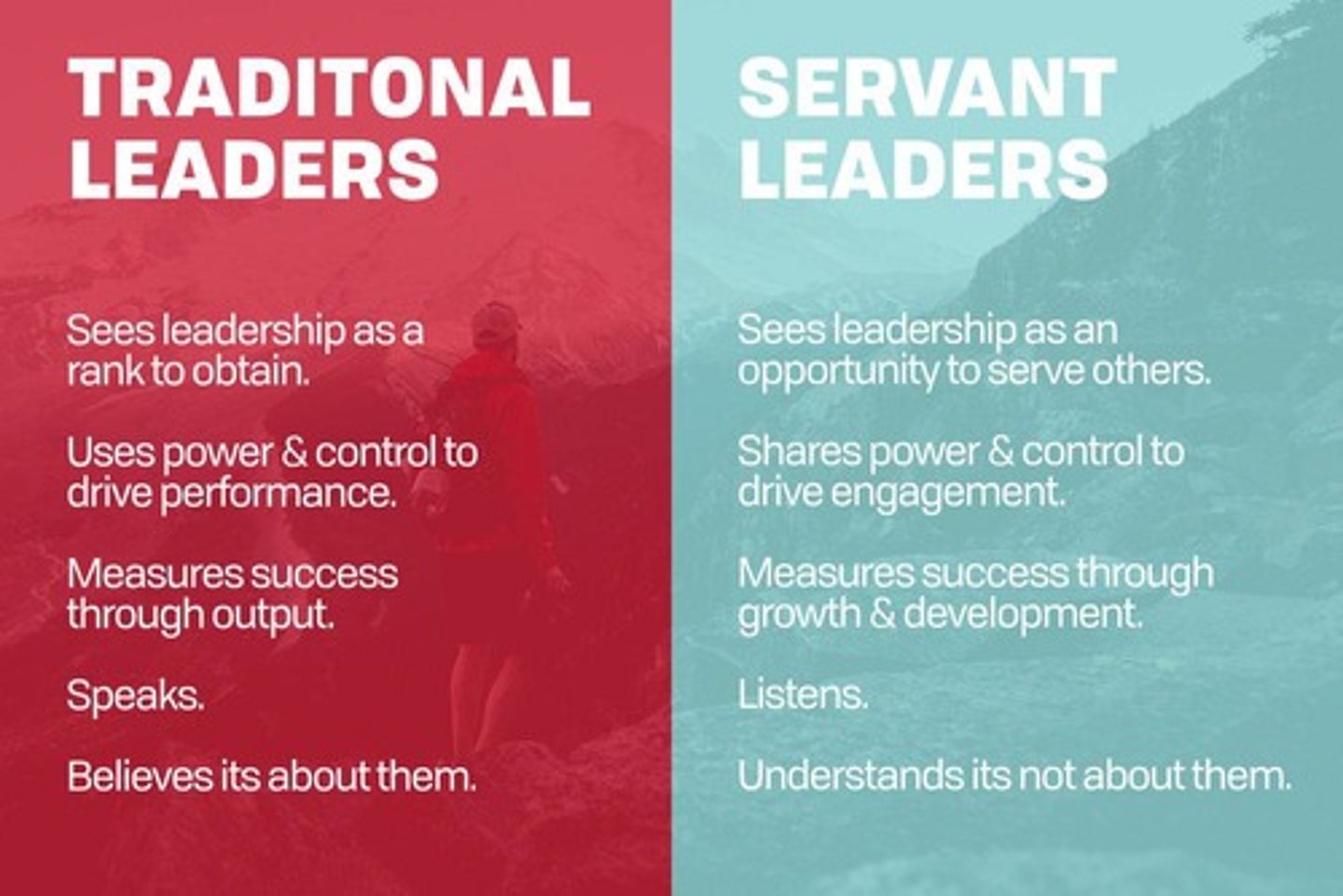
Servant Leadership
Commitment to serving others over self-interest, followers more important than leader
Empowerment
Enabling others to gain power and influence.
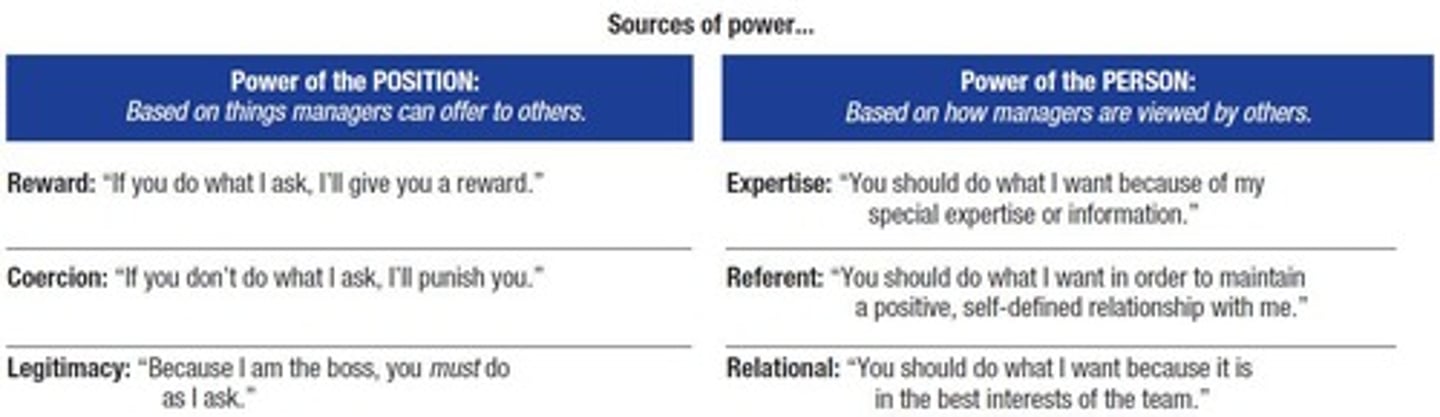
Power
Ability to influence others' actions or outcomes.
Position Power
Power derived from official status in hierarchy. (Reward, Coercive, Legitamate)
Personal Power
Influence based on individual qualities and skills. (Expert, Referent, Relational)
Reward Power
Ability to offer valuable incentives to others.
Coercive Power
Ability to punish or withhold positive outcomes.
Legitimate Power
Authority granted by organizational position.
Expert Power
Influence due to knowledge and expertise.
Referent Power
Influence based on admiration and respect.
Relational Power
Ability to collaborate effectively within a team.
Leadership Research
Studies on traits and behaviors of effective leaders.
Delete
Delete
Leadership Qualities
Vision, innovation, dedication, and self-belief.
Leadership Behaviors
Focus on how leaders interact with followers. (concern for task/people)
Leadership Styles
Patterns of behavior exhibited by leaders.
Team Management
High task concern and high people concern style.
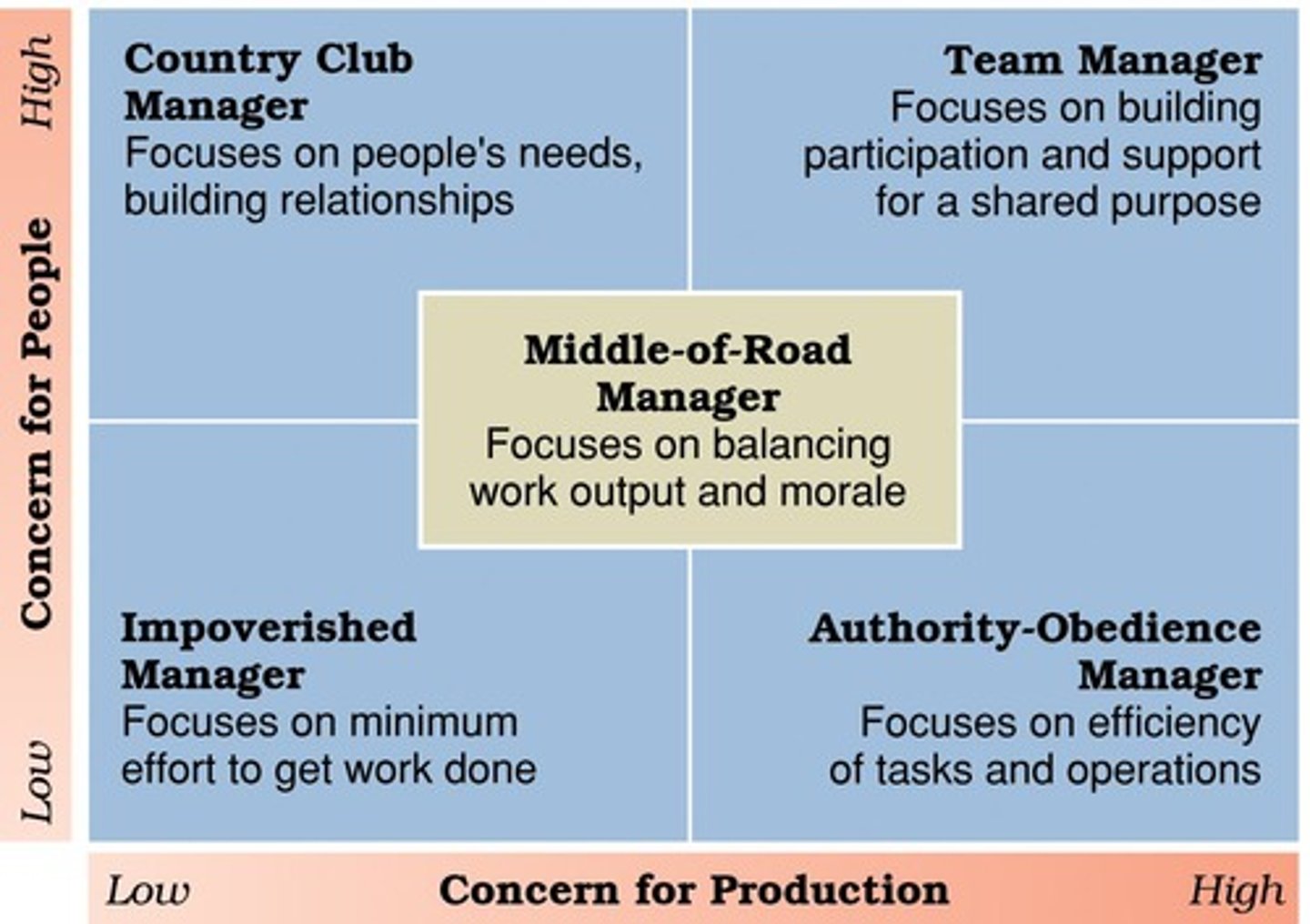
Authority-Obedience Management
High task concern with low people concern.
Country Club Management
Low task concern but high people concern.
Impoverished Management
Low concern for both tasks and people.
Middle of the Road Management
Moderate concern for tasks and people.
Autocratic Style
Leader makes decisions unilaterally without input.
Laissez-Faire Style
Minimal leader intervention; hands-off approach.
Democratic Style
Encourages group participation in decision-making.
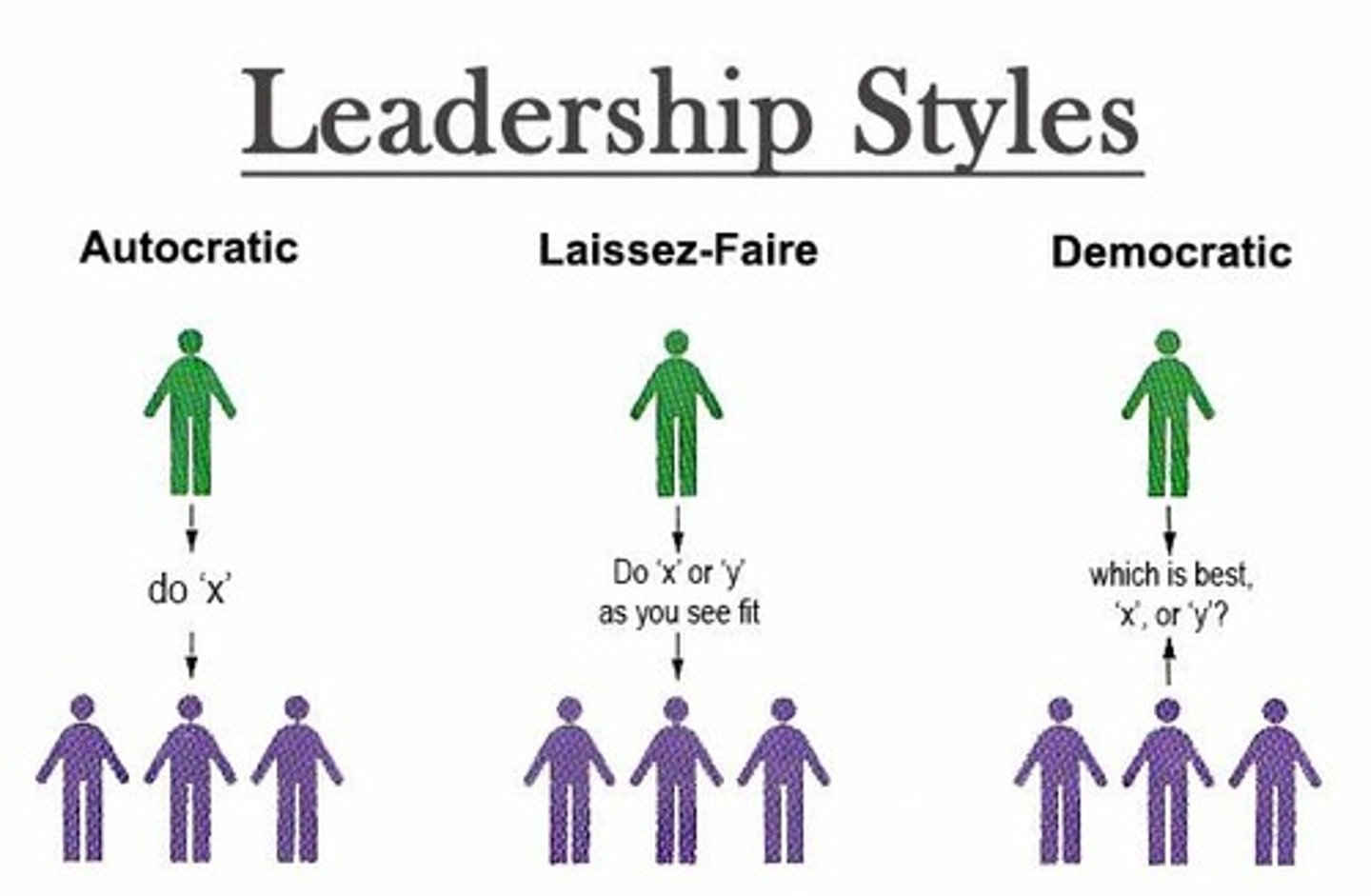
Autocratic style
Focuses on task over team dynamics.
Democratic style
Balances task completion with team involvement.
Laissez-Faire style
Minimal supervision, group makes decisions.
When Autocratic is Effective
Time constraints and low group skills.
When Autocratic is Ineffective
Desire for teamwork and spontaneity. (when Ineffective)
When Laissez-Faire is Effective
High skill and motivation among members. (effective)
When Laissez-Faire is Ineffective
Low team interdependence and skills. (when ineffective)
When Democratic is Effective
Time available and motivated group. (when effective)
When Democratic is Ineffective
Unmotivated group with high conflict.
Contingency Theories
Leadership effectiveness depends on situational context.
Fiedler's Contingency Model
Leadership style must match situational demands.
LPC Scale
Measures leader's relationship vs task motivation.
High LPC Score
Indicates relationship-oriented leadership style.
Low LPC Score
Indicates task-oriented leadership style.
Hersey-Blanchard Model
Leaders adapt style based on follower readiness.
Delegating Style
High competence, low-task, low-relationship approach.
Participating Style
High competence, low-task, high-relationship approach.
Selling Style
Moderate competence, high-task, high-relationship approach.
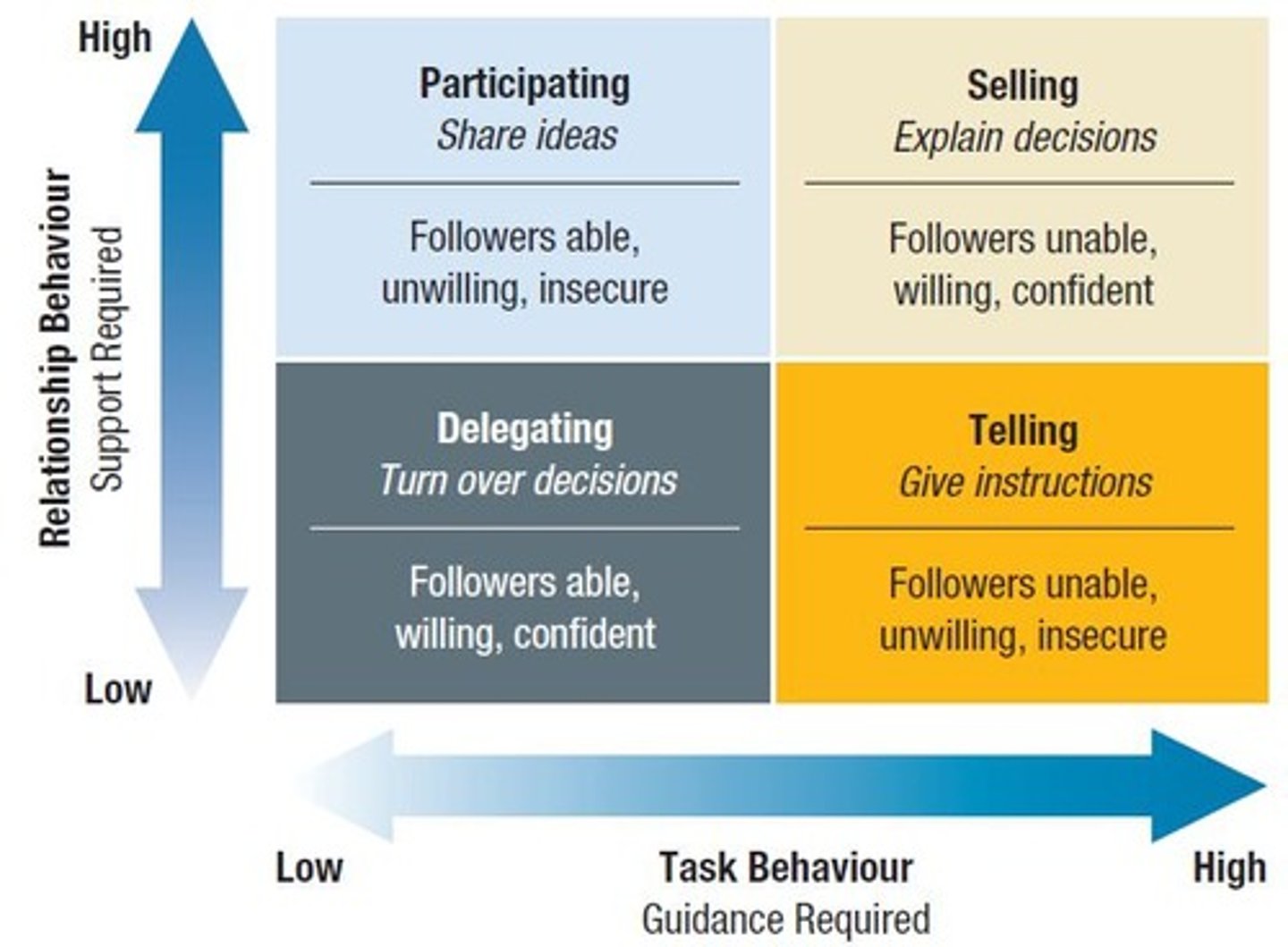
Telling Style
Low competence, high-task, low-relationship approach.
Leader-Member Relations
Support level of group for the leader.
Task Structure
Clarity of goals and procedures for tasks.
Position Power
Leader's ability to reward or punish.
Blake and Mouton Leadership Theory
Team management, Authority-obedience management, Country club management, Impoverished management, Middle of the road management.
Manager
Day to day caretaker activities
Exhibits supervisory behaviour
Stays within culture of organization
Status quo supporter and stabilizer (how and when)
Leader
Makes long term objectives
Acts to bring about change
Creates vision and meaning for organization
Status quo challenger and change creator (what and why to change)
Leadership challenges
Shorter time frames for accomplishing things
Expectations for success on the first attempts
Complex, ambiguous, and multidimensional problems
Taking a long-term view while meeting short-term demands
5 principles of Visionary Leadership
Challenge the process
Show enthusiasm
Help others out
Set the example
Celebrate achievements
Path-Goal Leadership Theory
Leaders job is to assist follower’s in attaining their goals and to provide support and direction. (Directive Leadership, Supportive Leadership, Achievement-Orientated Leadership, Participative Leadership)
Directive Leadership
Communicates expectations
Gives Directions
Schedule Work
Maintain Performance standards
Clarify leader’s role
Use when job assignment is unclear
Supportive Leadership
Treat group members as equals
Be friendly and approachable
Show concern for subordinates’ well-being
Use when worker’s self confidence is low
Achievement-Orientated Leadership
Set challenging goals
Expect high performance levels
Emphasize continuous improvement
Display confidence in meeting high standards
Use when task is not challenging enough
Participative Leadership:
Involve subordinates in decision making
Consult with subordinates
Ask subordinates’ suggestions
Use subordinate’s suggestions
Use when performance incentives are low
Transactional Leadership
Someone who directs the efforts of others through tasks, rewards, and structures
Transformational Leadership
Someone who is truly inspirational as a leader and who arouses others to seek extraordinary performance accomplishments. They have vision, charisma, empowerment, intellectual stimulation, integrity