WGU C724 - Info Systems Questions with 100% accurate answers (PASS GUARANTEED)
 Call Kai
 Learn
Learn Practice Test
 Spaced Repetition
 Match
Match Flashcards
1/219

There's no tags or description
Looks like no tags are added yet.
Name | Mastery | Learn | Test | Matching | Spaced | Call with Kai |
|---|
No analytics yet
Send a link to your students to track their progress
220 Terms
SONET
Synchronous Optical Network Technologies. A multiplexing protocol used to transfer data over optical fiber.
WPA2 CCMP
• WPA2 certification began in 2004
• AES (Advanced Encryption Standard) replaced RC4
• CCMP (Counter Mode with Cipher Block Chaining
Message Authentication Code Protocol) replaced TKIP
• CCMP block cipher mode
• Uses AES for data confidentiality
• 128-bit key and a 128-bit block size
• Requires additional computing resources
• CCMP security services
• Data confidentiality (AES), authentication,
and access control
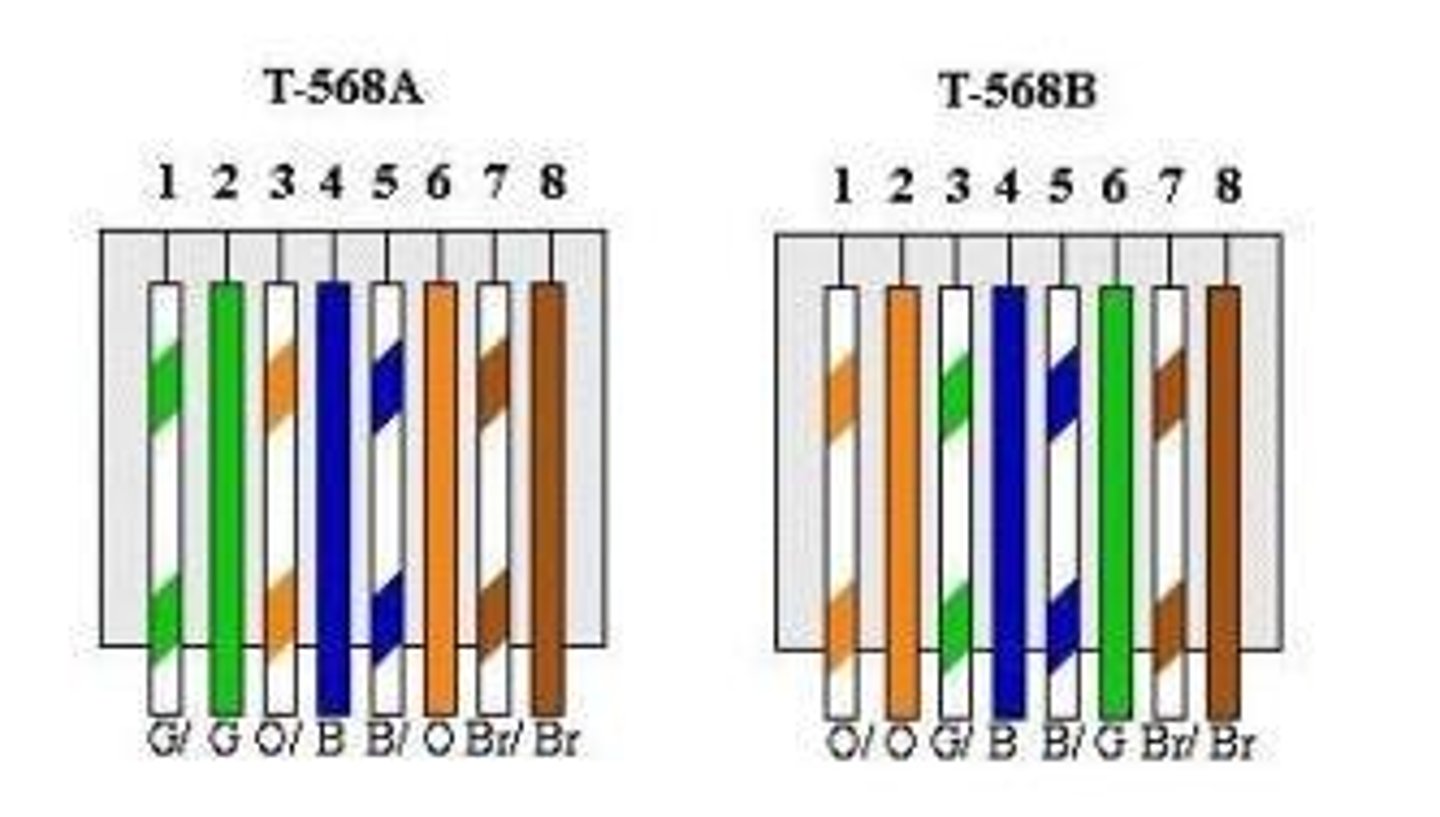
T-568B
White/orange, orange, white/green, blue, white/blue, green, white/brown, brown
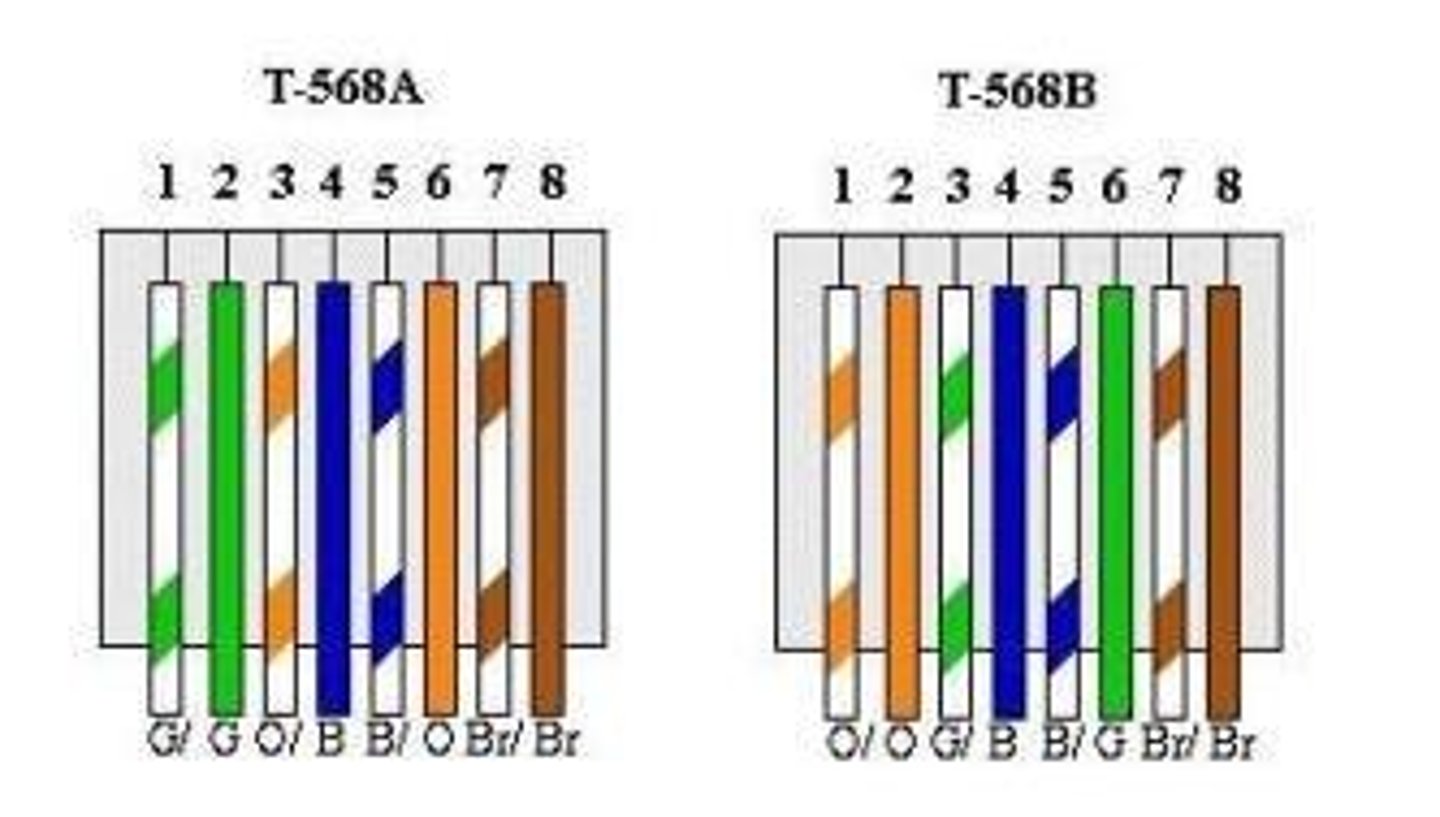
T-568A
White Green, Green, White Orange, Blue, White Blue, Orange, White Brown, Brown
FTP Port Number
20, 21
SFTP Port Number
22
Rollover Cable
Rollover cables, sometimes referred to as Yost cables are most commonly used to connect to a device's console port to make programming changes to the device. Unlike crossover and straight-wired cables, rollover cables are not intended to carry data but instead create an interface with the device.
SNMP
(Simple Network Management Protocol) An Application-layer protocol used to exchange information between network devices.
802.11
The IEEE standard for wireless networking.
802.11a
54 Mbps - 5 GHz
802.11b
11 Mbps, 2.4 GHz
802.11g
54 Mbps, 2.4 GHz
802.11n
600 Mbps - 5GHz and 2.4GHz
802.11ac
5GHz 1300mbps
802.11ad
7GBps
60GHz
30 feet
Traceroute
A program that shows the route a packet takes across the Internet
nslookup
A utility that is used to test and troubleshoot domain name servers.
ping
a DOS command that tests connectivity and isolates hardware problems and any mismatched configurations
netstat
A TCP/IP utility that shows the status of each active connection.
TACAS
Terminal Access Controller Access Control System
TACAS+
Terminal Access Control Access Control System Plus (TCP Port 49)
Discovery Protocol
identify the switches connected to each port quickly
packet sniffer
A device or program that monitors network
communications and captures data.
ad hoc mode
A peer-to-peer wireless configuration
where each wireless workstation talks
directly to other workstations.
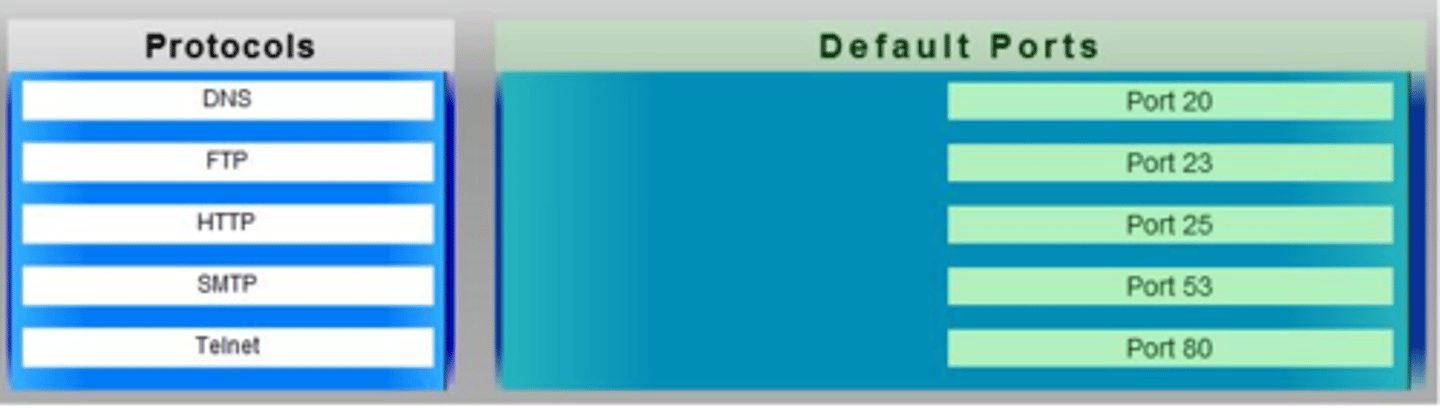
DNS Port
53 TCP/UDP
High-gain antenna
High gain antennas put out increased signal strengths and can reach further with fewer WAPs.
UPS
Uninterruptible Power Supply
SCADA/ICS
(Embedded Systems)
Supervisory Control and Data Acquisition System / Industrial Control Systems
Used in:
- Manufacturing Equipment
- Power Generation
- Refining
- System Controls
Management:
- Super Private Network Segments
authPriv
SNMP Security Level: Offers HMAC MD5 or SHA authentication and provides privacy through encryption.
Specifically, the encryption uses the Cipher Block Chaining (CBC) Data Encryption Standard (DES) (DES-56) algorithm.
RADIUS server
A server that offers centralized authentication services to a network's access server, VPN server, or wireless access point via the RADIUS protocol.
RADIUS
Remote Authentication Dial-In User Service (RADIUS) is a networking protocol that provides centralized authentication, authorization, and accounting (AAA) management for users who connect and use a network service.
RADIUS vs TACACS+
TACACS+ provides more control over the authorization of commands while in RADIUS, no external authorization of commands is supported. All the AAA packets are encrypted in TACACS+ while only the passwords are encrypted in RADIUS i.e more secure.
IPS
(Intrusion Prevention System) software or hardware that monitors patterns in the traffic flow to identify and automatically block attacks
Application-aware Firewall
A firewall that can identify the applications that send packets through the firewall and then make decisions about the applications.
stateful firewall
A flrewall that monitors communication paths and data flow on the network.
stateless firewall
A flrewall that manages and maintains the
connection state of a session using the filter and ensures that only authorized packets are permitted in sequence.
E1
- E1 is the European variant of T1.
- defined by the European Conference of Postal and Telecommunications Administrations
- link speed of 2.048 Mbps. - enables each user channel to have 64 Kbps of usable bandwidth.
- can simultaneously carry 32 voice calls.
T1
- A T1 line is a communications transmission service that uses 2 twisted pair copper wires to transmit and receive data or voice traffic.
- can transmit data at a speed of 1.544 Mbps.
ADSL
Stands for 'Asymmetric Digital Subscriber Line'. A fast way of sending computer data over an ordinary phone line - usually used to provide broadband internet access to homes, schools and offices. An alternative to a cable modem.
VDSL
(Very High Bit Rate DSL) downloads over copper wire, it can make up 50mbps for short distances, otherwise use fiber optic
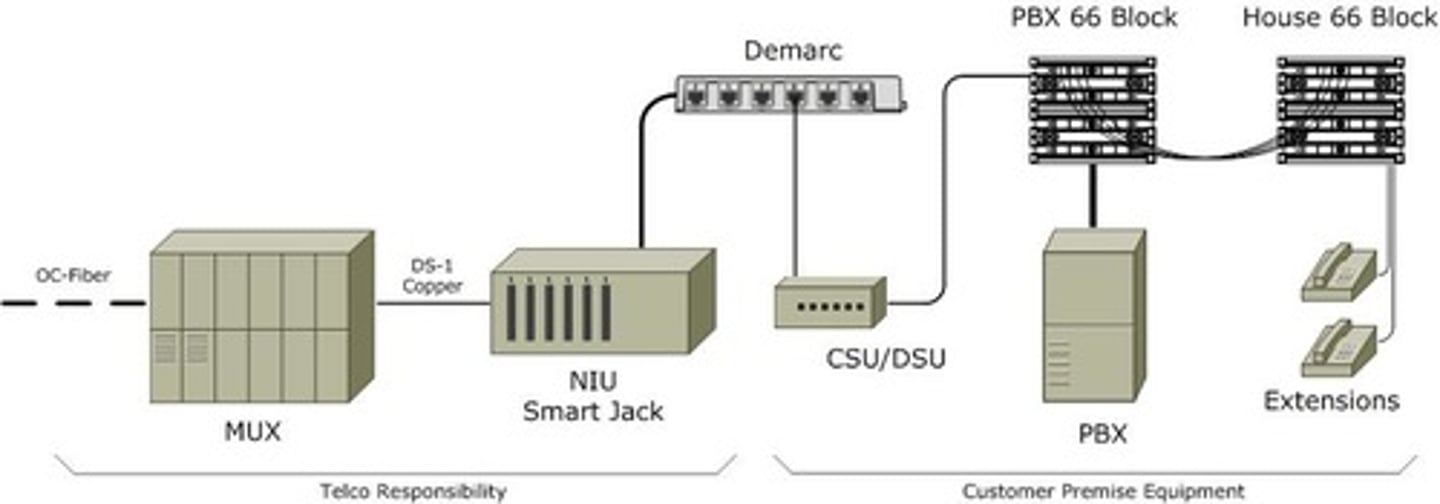
smart jack
A termination for T-carrier wire pairs that is located at the customer demark and which functions as a connection protection and monitoring point.
AAAA
Authentication
etAuthorization
Accounting
Address
Frequency mismatch
Problem in older wireless networks with manual settings where the WAP transmitted on one channel and a wireless client was set to access on a different channel.
Evil Twin
A wireless network with the same name as another wireless access point. Users unknowingly connect to the evil twin; hackers monitor the traffic looking for useful information.
ARP cache poisoning
A man-in-the-middle attack, where the attacker associates his MAC address with someone else's IP address (almost always the router), so all traffic will be sent to him first. The attacker sends out unsolicited ARPs, which can either be requests or replies.
ARP cache
A table used to maintain a correlation
between each MAC address and its
corresponding IP address.
WPS attack
An attack against an AP. A WPS attack discovers the eight-digit WPS PIN and uses it to discover the AP passphrase.
high availability
occurs when a system is continuously operational at all times
load balancing
Distributing a computing or networking workload across multiple systems to avoid congestion and slow performance.
Quality of Service (QoS)
Policies that control how much bandwidth a protocol,
PC, user, VLAN, or IP address may use.
802.1x
A port-based authentication protocol. Wireless can use 802.1X. For example, WPA2-Enterprise mode uses an 802.1X server (implemented as a RADIUS server) to add authentication.
WPA
Wireless Protected Access
WPA2
Wireless Protected Access 2. Wireless network encryption system.
WPA2-PSK
- "WPA2-PSK" is "Pre-Shared Key" mode, also called "Personal" mode. In this mode, you add a secret key to all devices on the same SSID.
- best solution for securing a small network lacking an authentication server
ICMP
Internet Control Message Protocol. Used for diagnostics such as ping. Many DoS attacks use ICMP. It is common to block ICMP at firewalls and routers. If ping fails, but other connectivity to a server succeeds, it indicates that ICMP is blocked.
MTU black hole
A problem that occurs when a router receives a message that is too large for the next segment's MTU. The router returns an ICMP error message to the sender, but the error message is not returned correctly. From the sender's perspective, messages are lost for no apparent reason.
RFI
(Radio Frequency Interference) Caused by broadcast sources such as TV, radio, wireless phone, fluorescent light bulbs
Plain Old Telephone Service (POTS)
Standard telephone service, as opposed to other connection technologies like Digital Subscriber Line (DSL).
WiMAX
(Worldwide Interoperability for Microwave Access - 802.16) Technology that allows wireless Internet access over a wide area
DHCP Ports
UDP 67, 68 (Dynamic Host Configuration Protocol)
DWDM
(Dense Wavelength Division Multiplexing) A multiplexing technology that uses light wavelengths to transmit data.
LACP
(Link Aggregation Control Protocol) A network specification that enables the bundling of several physical ports together to form a single logical channel.
EAP
(Extensible Authentication Protocol) A protocol that enables systems to use hardware-based identifiers, such as fingerprint scanners or smart card readers, for authentication.
MSCHAPv2
Microsoft Challenge Handshake Authentication Protocol
ipconfig
The utility used to display TCP/IP addressing and domain name information in the Windows client operating systems.
ipconfig /release
command releases any IP configurations received from DHCP server
ipconfig /renew
Renew the DHCP lease
parabolic antenna
focus the signal to a signal point
uses a dish
Yagi antenna
unidirectional antenna; works well transmitting and receiving signals in some directions but not in others
Patch Antenna
A directional antenna that has a planar surface and is usually mounted on a wall or column.
CIDR
Allows network administrators to expand the number of network nodes assigned to an IP address.
Classless Inter Domain Routing (CIDR) is a method for assigning IP addresses without
using the standard IP address classes like Class A, Class B or Class C. Ex. /24 /32 /16
ASN
(Autonomous System Number)
A globally unique number allocated for a collection of networked systems that operate common routing protocols and are under control of a single administrative authority.
Teredo Tunneling
Establishes a tunnel between individual hosts so they can communicate through a private or public IPv4 network.
Miredo
A third-party software that provides Teredo service on UNIX and Linux systems.
spectrum analyzer
A tool that assesses the characteristics (for example, frequency, amplitude, and the effects of interference) of wireless signals.
SMTP
Simple Mail Transfer Protocol, 25 (TCP)
OTDR
(Optical Time-Domain Reflectometer)
A tool used to
locate problems with optical media,
such as cable breaks.
TFTP Port
UDP 69 (Trivial File Transfer Protocol)
split-horizon DNS
An implementation of DNS where internal and external DNS queries are handled by different DNS servers or by a single DNS server that is specially configured to keep internal and external DNS zones separate.
MSDS
A widely used abbreviation for Material Safety Data Sheet. A MSDS contains details of the hazards associated with a chemical, and gives information on its safe use.
de-encapsulation
De-encapsulation occurs as the data travels up the OSI layers. As information travels down the OSI model from layer 7 to layer 1, it is encapsulated along the way.
NIC
(Network Interface Controller)
A card that is plugged into a slot on the motherboard inside of the computer and allows a network cable to be plugged in so it can interface or communicate with other computers.
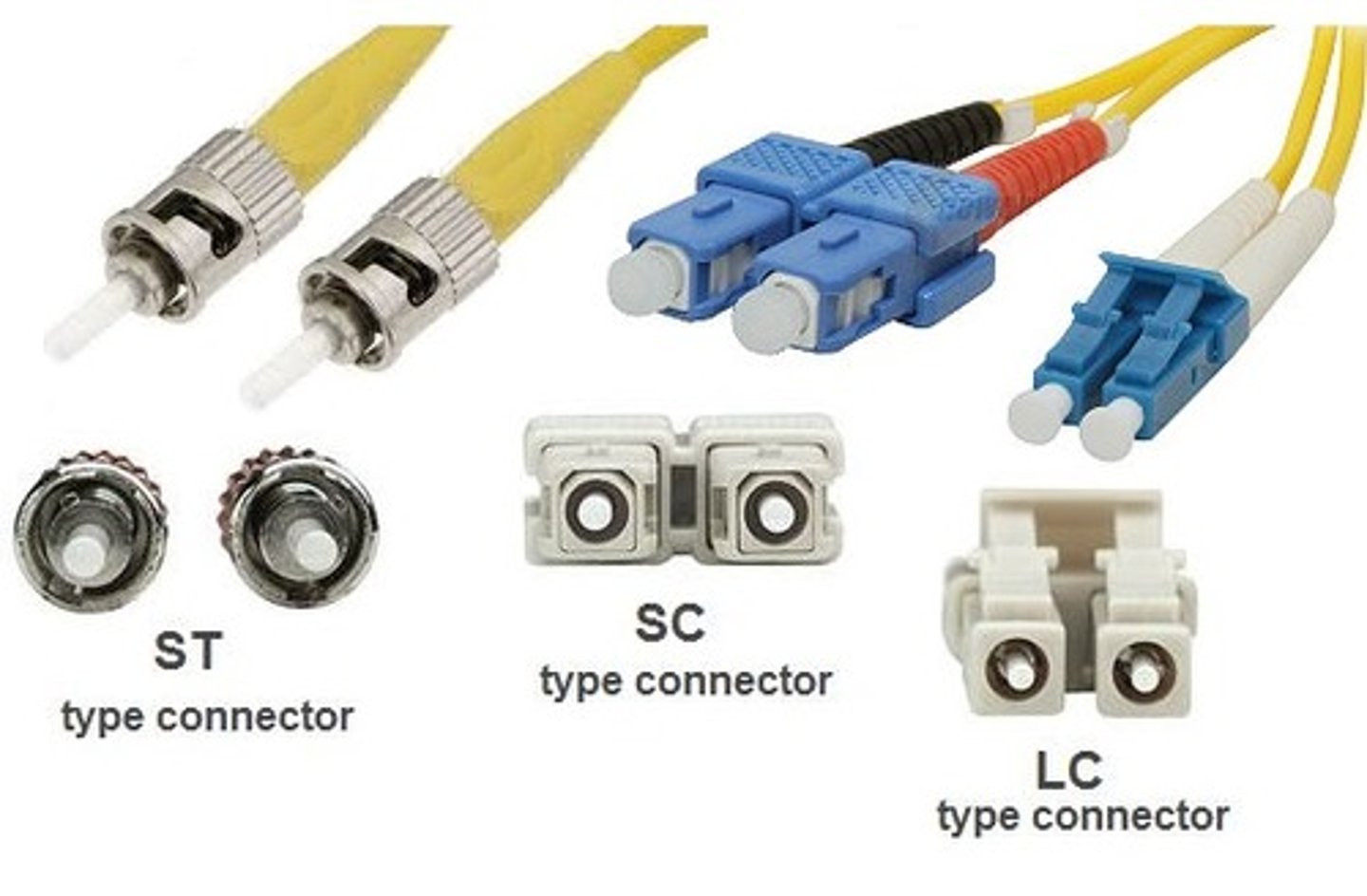
SC
- Square connector
- 2.5 mm ferrule
Fiber Connector Types
- ST - stab and twist, like BNC
Both multi and single mode
- LC - push pull connector, basic wiring
- SC - larger diam than LC, stab and click
- MT-RJ - latched push pull ; smallest can send and receive fiber at the same time
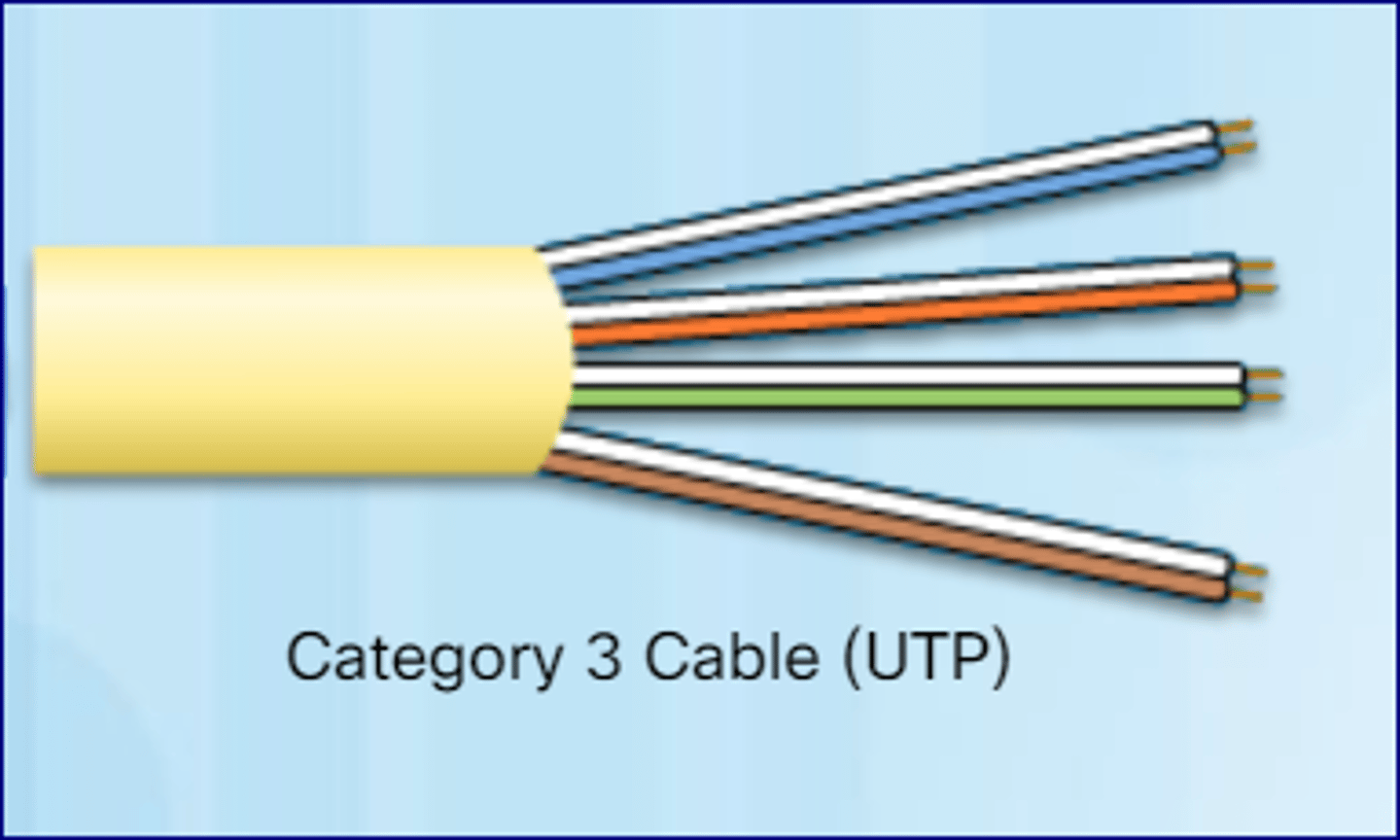
CAT3
- Networking twisted pair cabling standard to support 10 Mbps Ethernet connection speeds.
-10BASE-T
-100 meters
-UTP
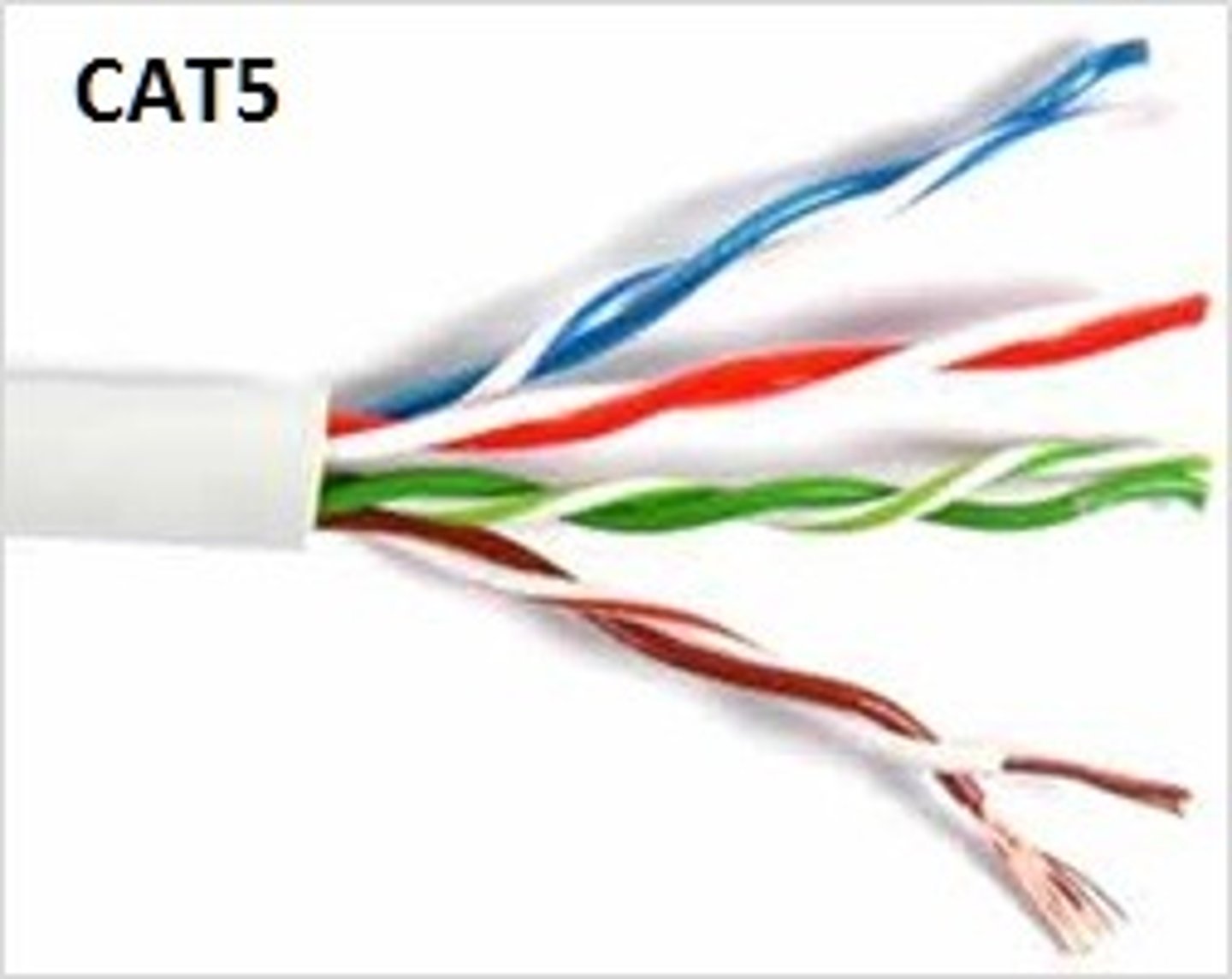
CAT5
- Networking twisted pair cabling standard used to support 100 Mbps and 2 Gbps Ethernet connection speeds.
- 100BASE-TX &
- 1000BASE-T
- 100 meters
CAT5e
- Networking twisted pair cabling standard used to support 100 Mbps and 2 Gbps Ethernet connection speeds.
- Provides additional protection from EMI.
- 100BASE-TX &
- 1000BASE-T
- 100 meters
CAT6
- Networking twisted pair cabling standard used to support 10 Gbps connection speeds.
- 10GBASE-T
- 37-55 meters
CAT6a
- AKA augmented
6.
- Offers improvements over
Category 6 by offering a minimum
of 500 MHz of bandwidth.
- 10 Gbps
networking speeds.
- 10GBASE-t
- 100 Meters
CAT7
- 600 MHz
- 100 GB/sec
- 10GBASE-t
- 100 meters
SIP
(Session Initiation Protocol)
A VoIP signaling protocol used to set up, maintain, and tear down VoIP phone calls.
RTSP
(Real Time Streaming Protocol)
tcp/554, udp/554 - communicates w/ media server and controls playback of media files
IS-IS
The IS-IS (Intermediate System - Intermediate System) protocol is one of a family of IP Routing protocols, and is an Interior Gateway Protocol (IGP) for the Internet, used to distribute IP routing information throughout a single Autonomous System (AS) in an IP network.
BGP
(Border Gateway Protocol)
A path-vector protocol used by ISPs to establish routing
between one another.
RIPv1
The first version of RIP, which had several shortcomings, such as a maximum hop count of 15 and a routing table update interval of 30 seconds, which was a problem because every router on a network would send out its table at the same time.
RIPv2
The current version of RIP. Fixed many problems of RIPv1, but the maximum hop count of 15 still applies.
MDF
(main distribution frame) Main cross connect, the first point of interconnection between an organization's LAN or WAN and a service provider's facility
VTP
(VLAN Trunking Protocol)
Cisco's protocol for exchanging VLAN information over trunks. VTP allows one switch on a network to centrally manage all VLANs.
MPLS
(Multiprotocol Label Switching)
A network technology defined by a set of IETF specifications that enable Layer 3 devices, such as routers, to establish and manage network traffic.
MIMO
(multiple input-multiple output)
In the context of 802.11n wireless networking, the ability for access points to issue multiple signals to stations, thereby multiplying the signal's strength and increasing their range and data-carrying capacity. Because the signals follow multipath propagation, they must be phase-adjusted when they reach their destination.