Art History Final Flashcards (Centro Spring 2026)
 Call Kai
 Learn
Learn Practice Test
 Spaced Repetition
 Match
Match Flashcards
 Knowt Play
1/68

There's no tags or description
Looks like no tags are added yet.
Name | Mastery | Learn | Test | Matching | Spaced | Call with Kai |
|---|
No analytics yet
Send a link to your students to track their progress
69 Terms
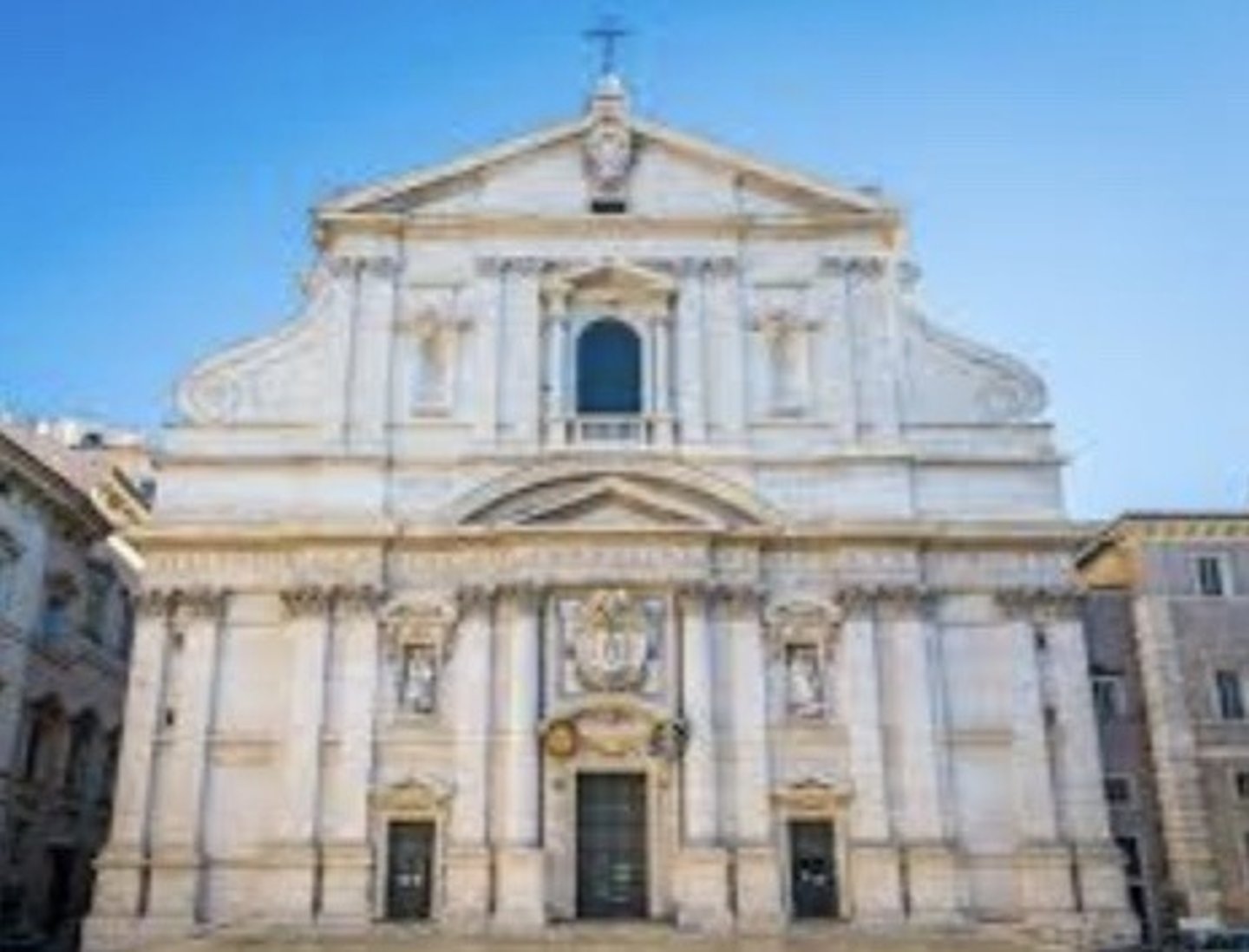
Il Gesu Facade - 1568-1575
Creator: Giacomo della Porta (Patron: Cardinal Alessandro Farnese) (same guy as palace at caprarola)
Vignola does NOT get the commission for the facade
Style: baroque (counter reformation)
Extra: Mother church of the Jesuit order, vignola dies in 1573 before the facade is completed, one of the earliest examples of a counter reformation church
Barrel vaults
Very wide single nave, dark side chapels
Lots of people can participate in mass, the jesuits can tell ppl what it means to be catholic
Pulpit - where person giving sermon would be
Both clergy and laypeople would participate in mass
Carefully designed to unify the faithful and priest
Farnese funded the church
This church establishes counter reformation type
Lots of color and luxury → didn't used to be this way (before = white walls)
Most influential facade built in rome in 16th cent
Farnesi name on outside right over IHS symbol
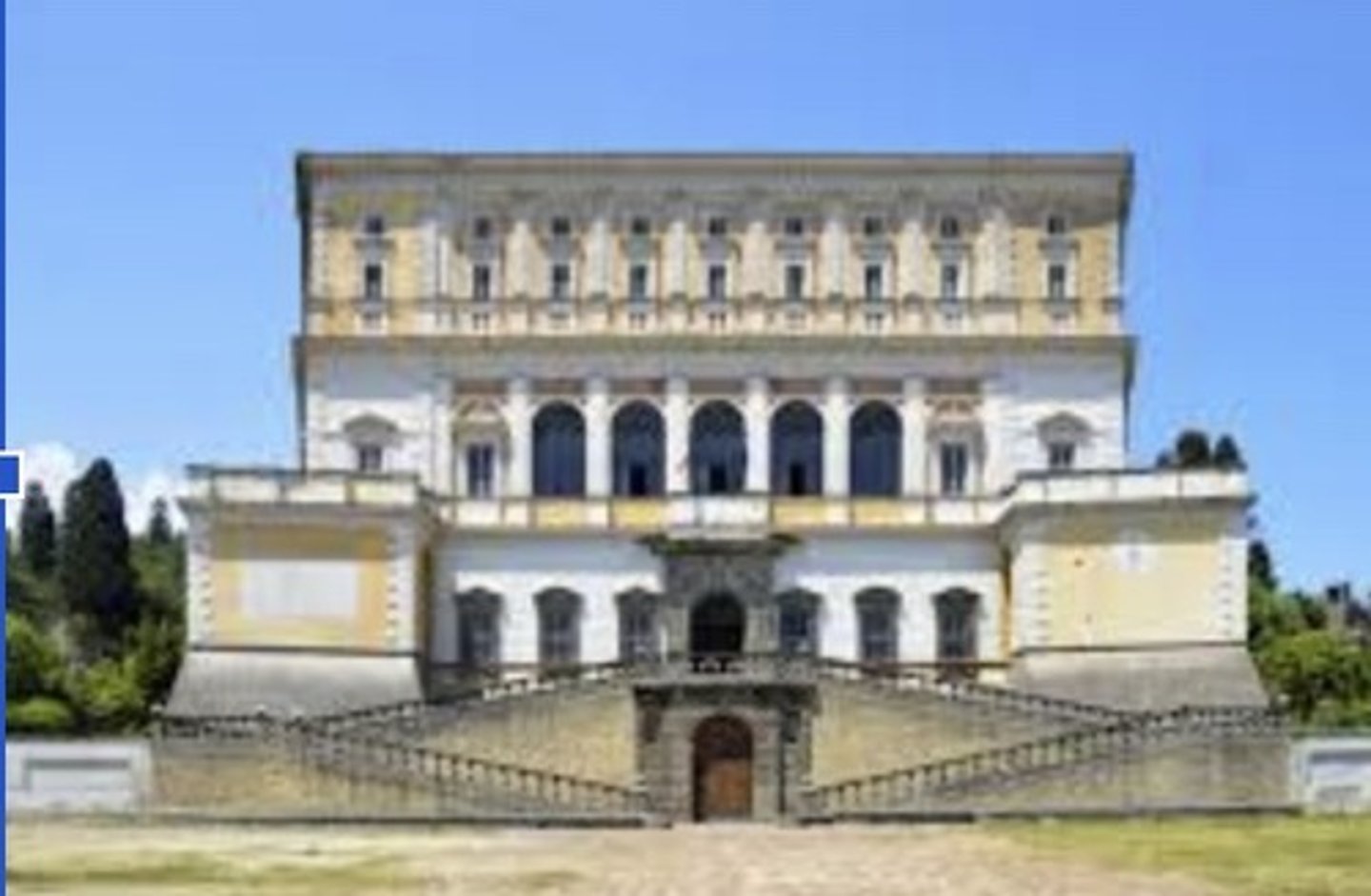
Palazzo Farnese Caprarola Facade- 1559
Creator: Architect Jacopo Barozzi da Vignola
Location: Caprarola
Extra:
Front entrance area was for entertainment, jousts, & processions
Members of court watch shows here
Exterior & facade: meant to look like it had more stories than it really does, lower story has alternating circle and triangle pediments (pantheon)
Ramp is mannerist
Ground floor exterior: stucco on brick, like a fortress
fleur de lis - farnese family symbol
Sundial and clock: that this is a superior building that tells time → controlling time
Idea that cardinal had power of life and death over people and power of time is controlled by the men in power
Second floor: most important floor in the household - exterior is ionic pilasters (reference to classical style)
Banqueting room was painted by vingola
Room w seasons depicted - mannerism → intended for highly educated people
Style/period: Mannerism
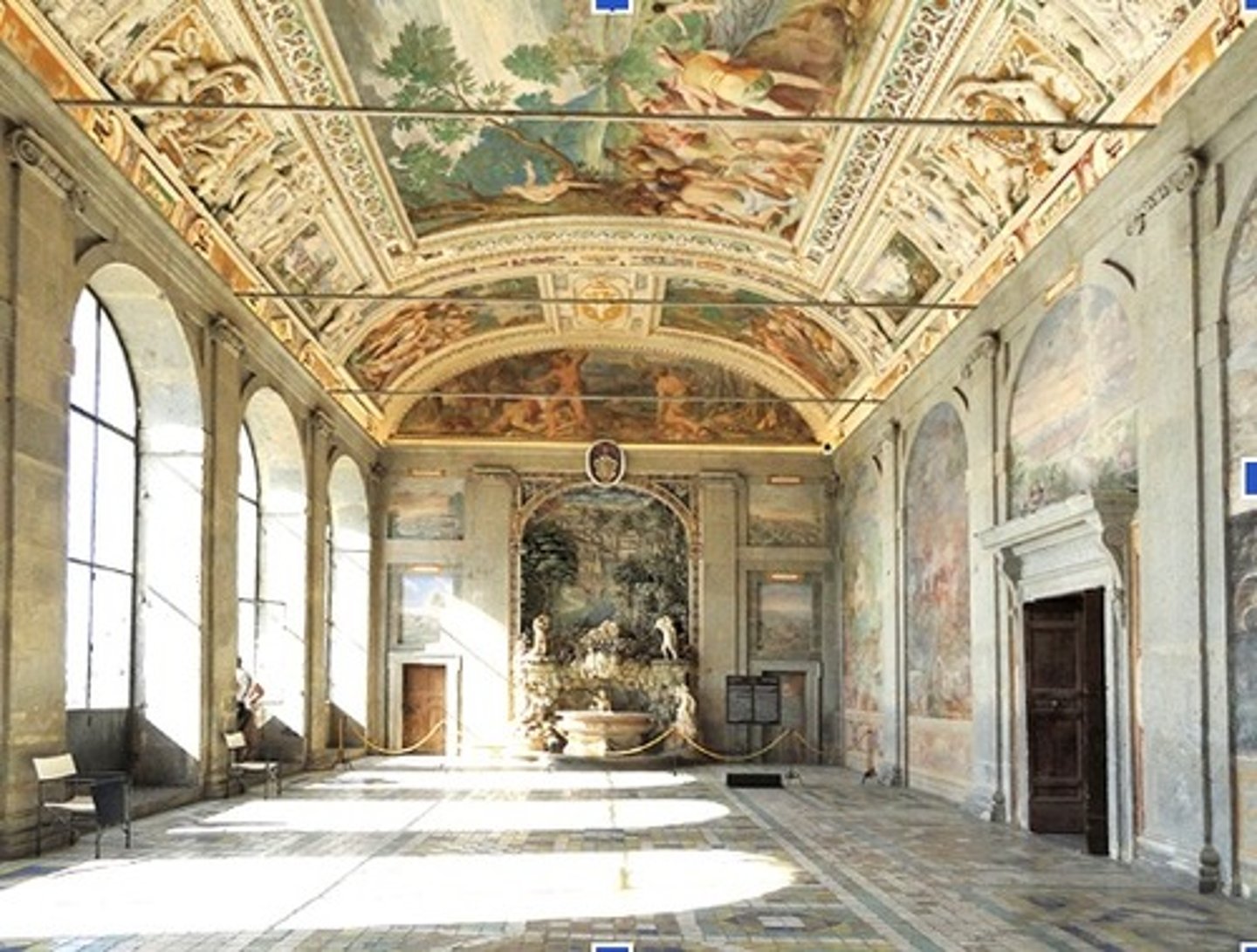
Sala d'Ercole - Dining Room & Fontana della Boccacce (LP)
Time: 1559
Creator: Federico Zucchari (painter)
Location: Palazzo Farnese
Extra:
Towns under control of the family shown
Perspective → complex, gorgeous
Main public gathering room on lower floor
fountain in back acted as natural air conditioning for spring/summer dining room
Hercules founded Caparola, frescoes show Hercules specifically in Caparola, connects ppl in banqueting room to this history, increases power of Farnese family
frescoes show all the towns that the Farnese own - power of Farnese family
style/period: mannerism (?)
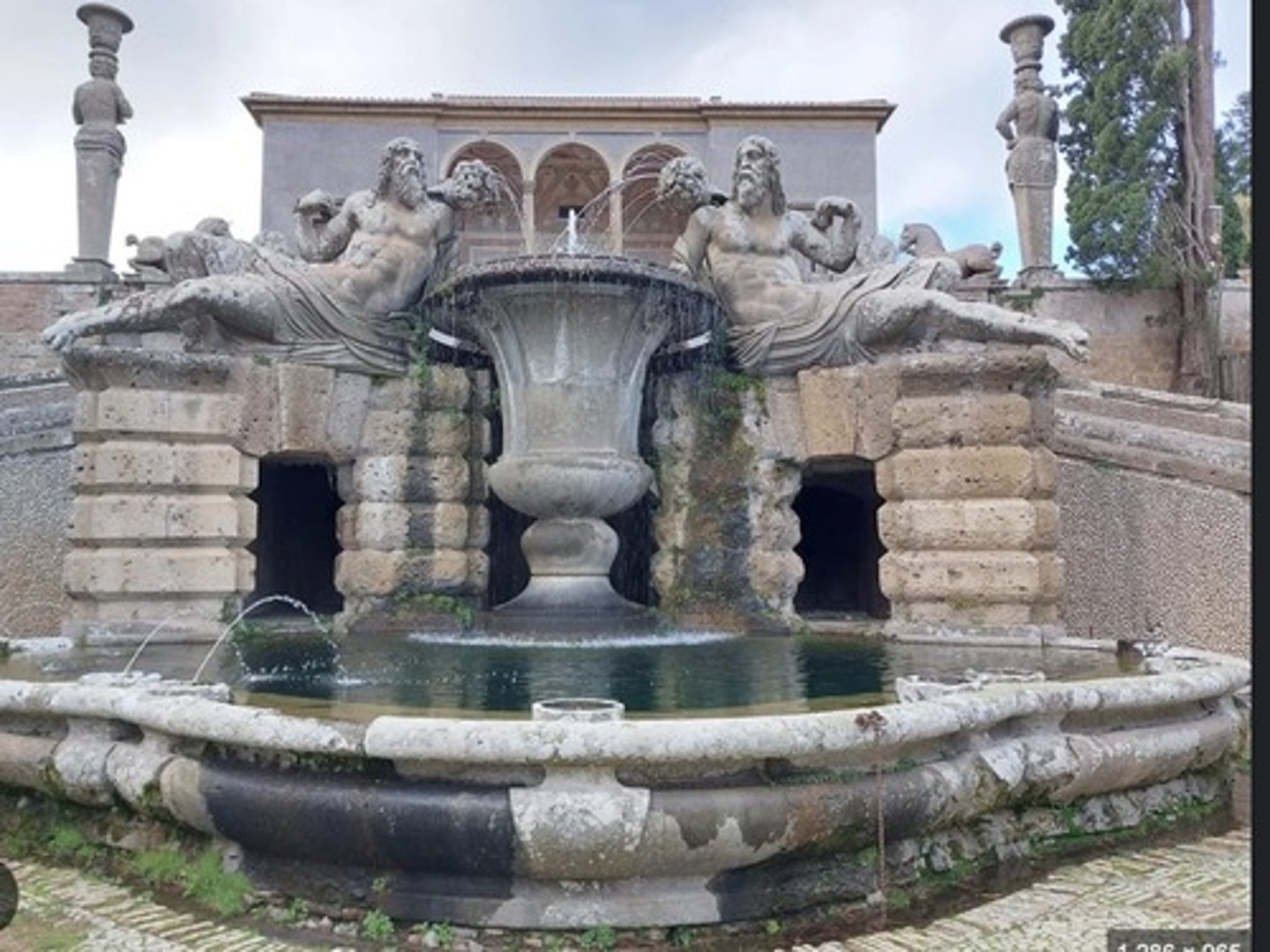
Fontana della Boccacce - 1572
At the palazzo farnese caprarola
architect is Macaroni
reference to villa d'este @ tivoli, same architect
grotesque style, natural grotto stones, man-made nymphaeum
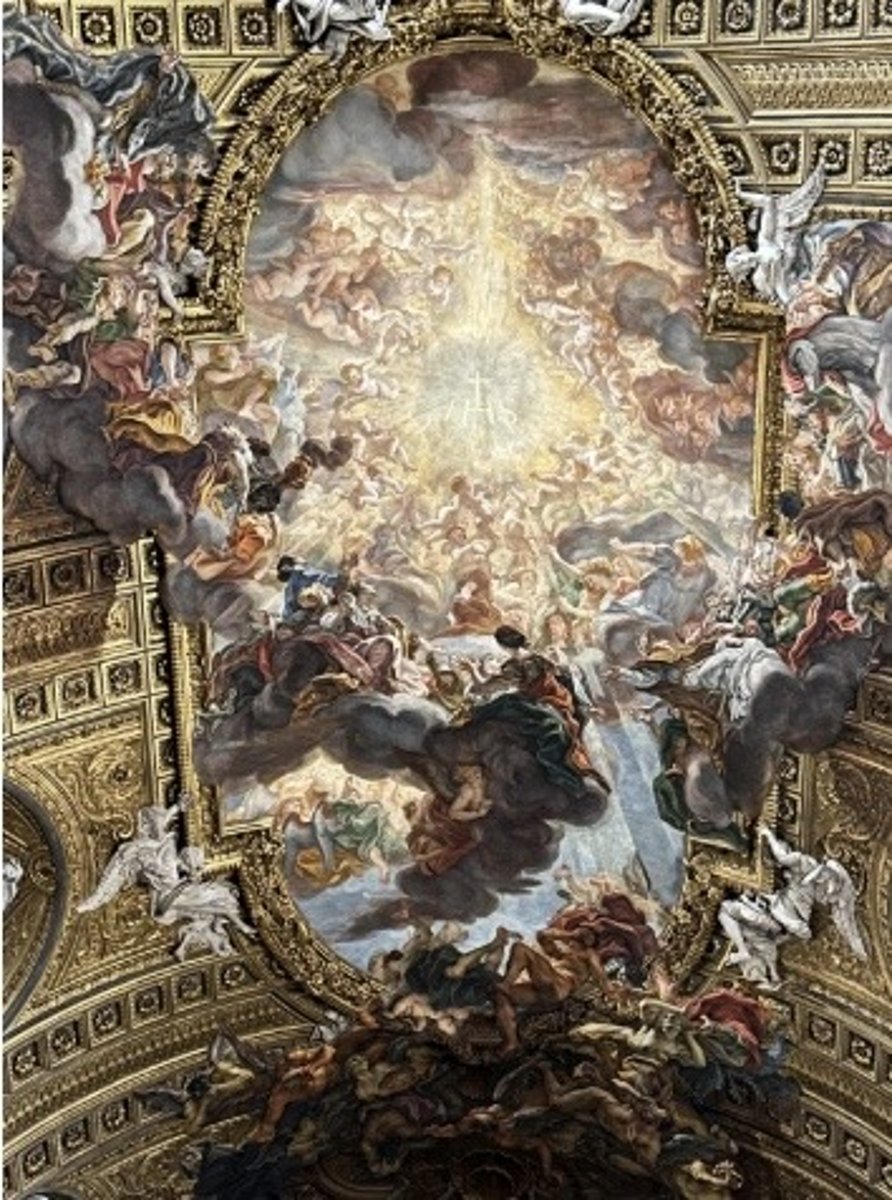
Triumph of the Name of Jesus, 1676-1679
Giovanni Battista Gaulli (Baciccio)
Il Gesu
Style: baroque
Dedicated to jesus
Monogram framed by angels and people
Fallen damned at bottom
Name of jesus in greek is abbreviated - sacred
Belief that names had spiritual power
Most spectacular illusionistic scene in Baroque art
Response to jesus entering human history
Symbolic and was meant to be interpreted by the individual - not a historical scene
Angels shows as closest to the light of jesus
north group: 3 magii from nativity, closest humans to jesus (first ppl to interact w baby jesus), extending towards jesus, shepherds from nativity story
Emperors: tiberius holding jesus' face on cloth, Augustus too
South groups: priests, cardinal farnese (patron of this church), pope
East group: all women, queen of shiba (old testament), eclesia (personification of church), st helena, catherine of siena, etc.
Damned group: fallen
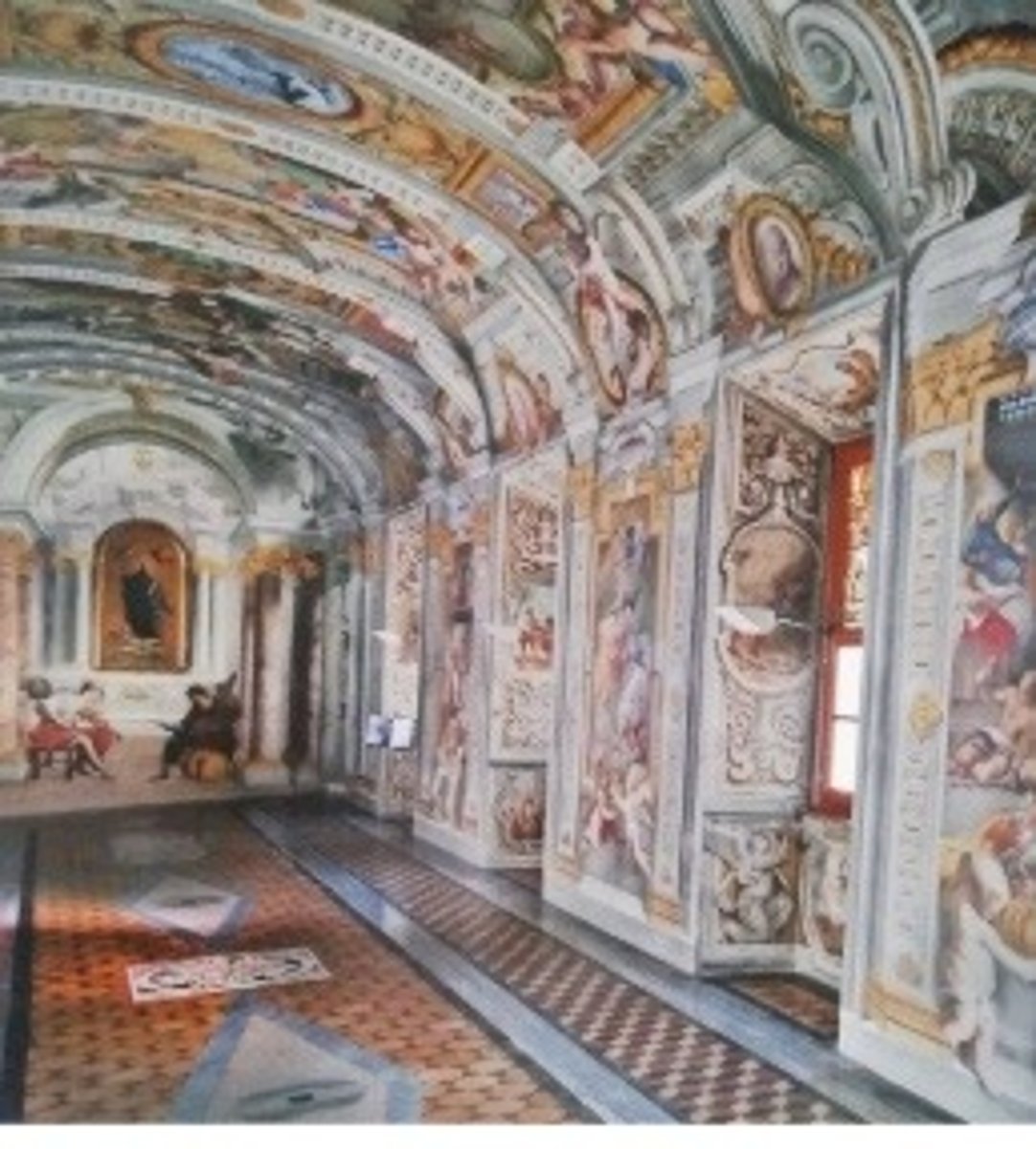
Casa Professa
Time: 1681-1686 (17th cent)
Creator: Andrea Pozzo
Location: St. Ignatius Apartments, next to the Il Gesu (literally next door to the Gesu)
Extra: Celebration of Ignatius & Jesus and the deficiation of Ignatius. Back wall has a 45° angle, crazy perspective paintings that only look normal standing in the middle of the room (center of room = god's point of view. this is the right view, must return to god's view for things to make sense)
Apartment building used/lived in by Ignatius
Master illusionism, geometrically complicated
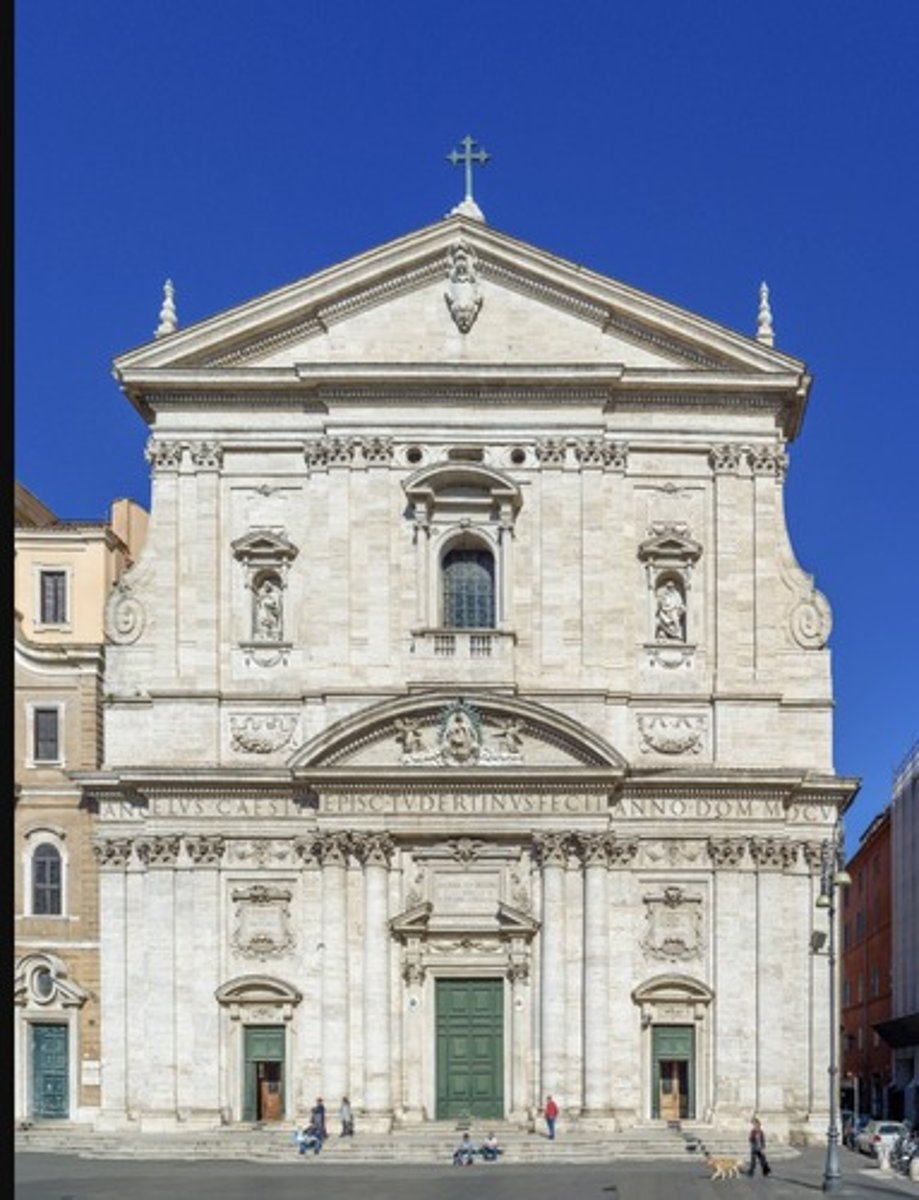
Chiesa Nuova Facade
Time: 1575-1606
Creator: Fausto Rughesi (did the facade)
Architect = Matteo Bartollini (???)
Location: Chiesa Nuova
Extra: Example of a new order church of the oratorians, counter reformation style. Early Facade had to be redone when the expanded the inside. Rughesi based on Vingola's facade design of Il Gesu. References to the virgin (miracle-working virgin holding child on inside, only thing that remains from the og old church on this site), inscription mentions Cardinal Pier Donato Cesi (gave the money for its construction)
Nave w/ chapels directly off of it → smaller nave than Il Gesu, cramped inside
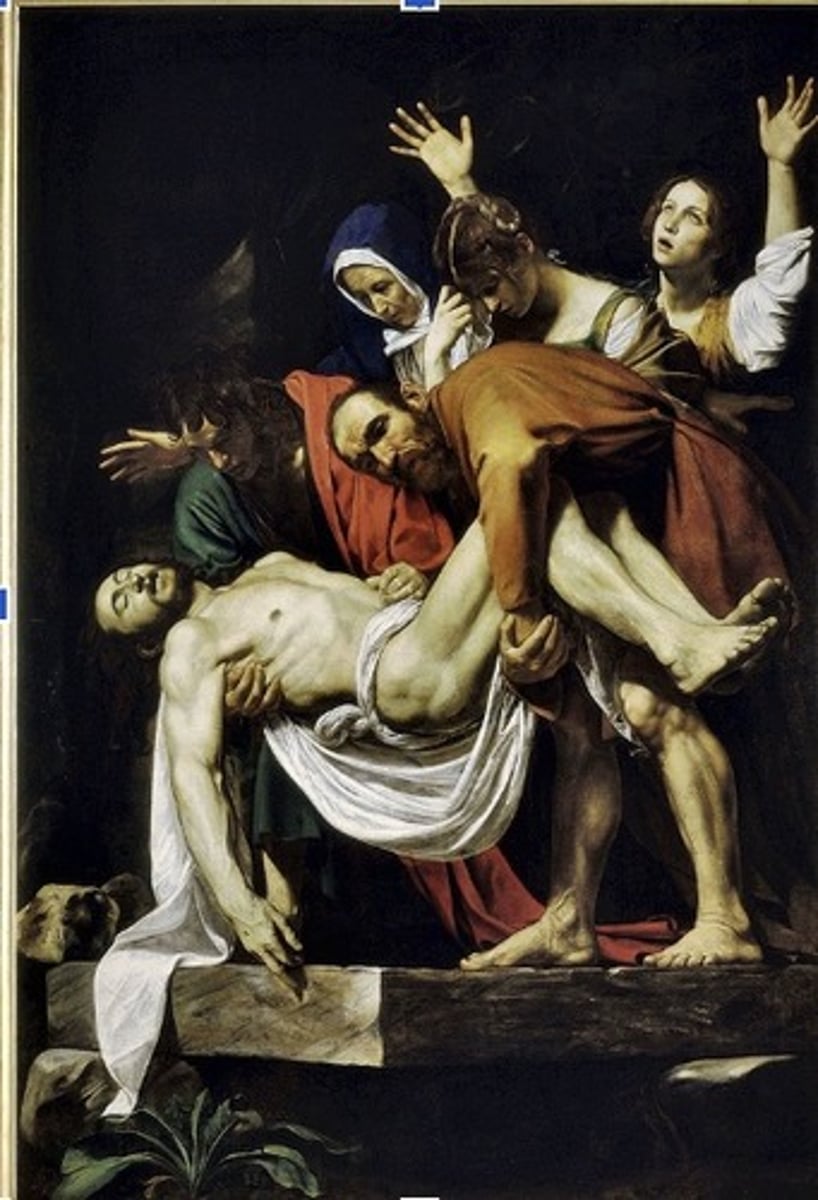
entombment of christ
Time: 1602-1604
Creator: Caravaggio
Location: Vittrici Chapel, Chiesa Nuova
Style: baroque
Extra:
Commissioned by caravaggio's nephew
Shows christ after his death
No cross - not a deposition, it's an entombment
Shows the moment after he is taken down from the cross (after pietas scene would have happened, even tho we know thats not canonical biblical imagery)
Inspired by michelangelo pietas
Chiarascruo (strong dramatic contrast btwn light/dark)
Emotionally intense, mary is depicted as older
Mary is actually touching jesus unlike the pieta, shows his humanity
Sense of physical struggle → Nicademus struggling to hold the weight of christ's dead body
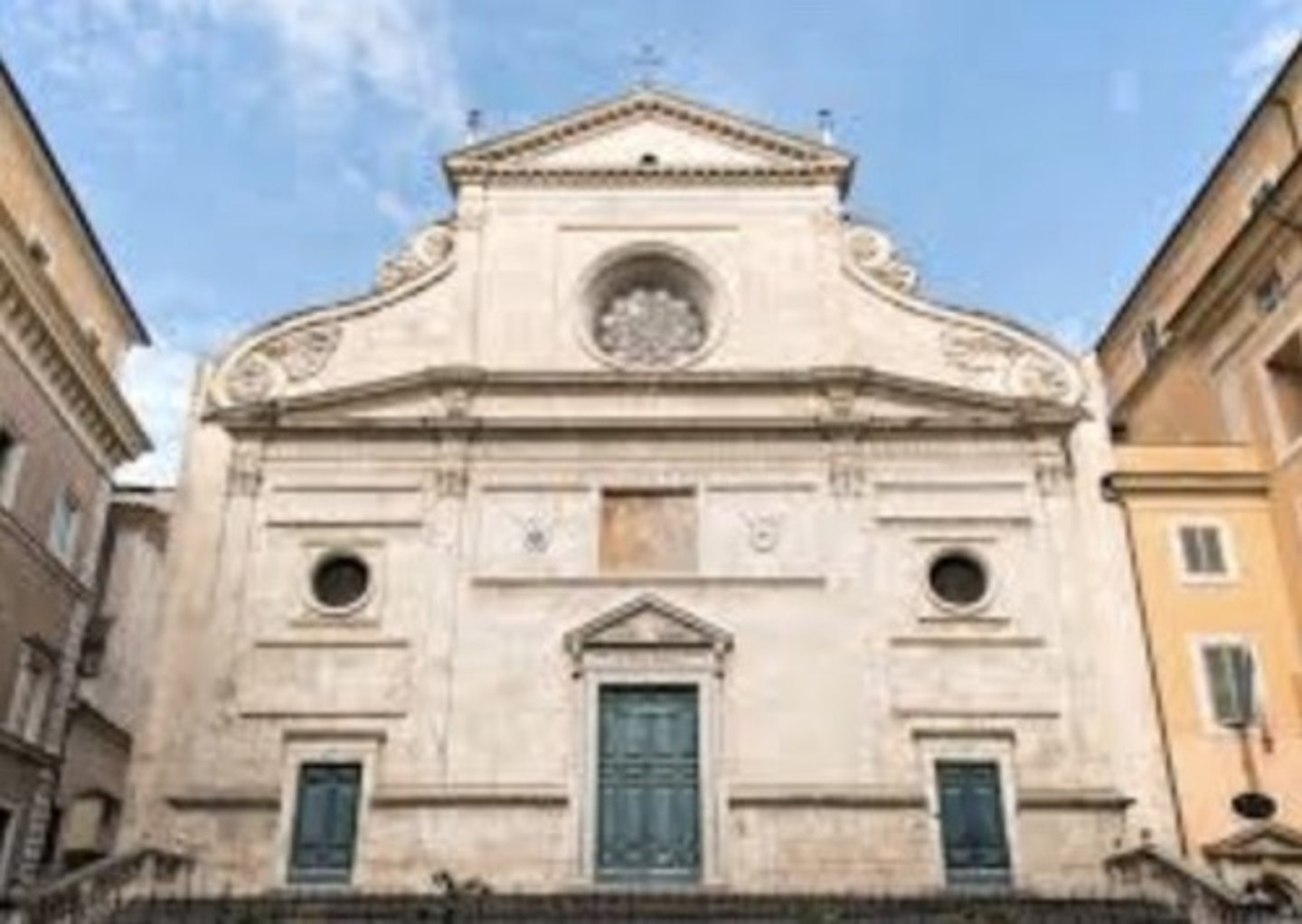
San Agostino in Campo Marzio
Time: late 1470s-1483
Creator: unknown, probably Florentine (Patron: Cardinal Guillaume d'Estouteville)
Location: San Agostino
Extra: Built in reference to the Santa Maria del Popolo, one of the six sistine churches, Travertine from the Colosseum, 2 registers, basilical plan, 2 scrolls unifying upper and lower registers. Beanpod decoration on scrolls (florentine design). Strange architect, started to made a pediment then it gets broken by second register (archiectural mistake?)
Road parallel to church used as major pilgrimage route (augustan road)
3 doors on register
Mother church of augustinian order
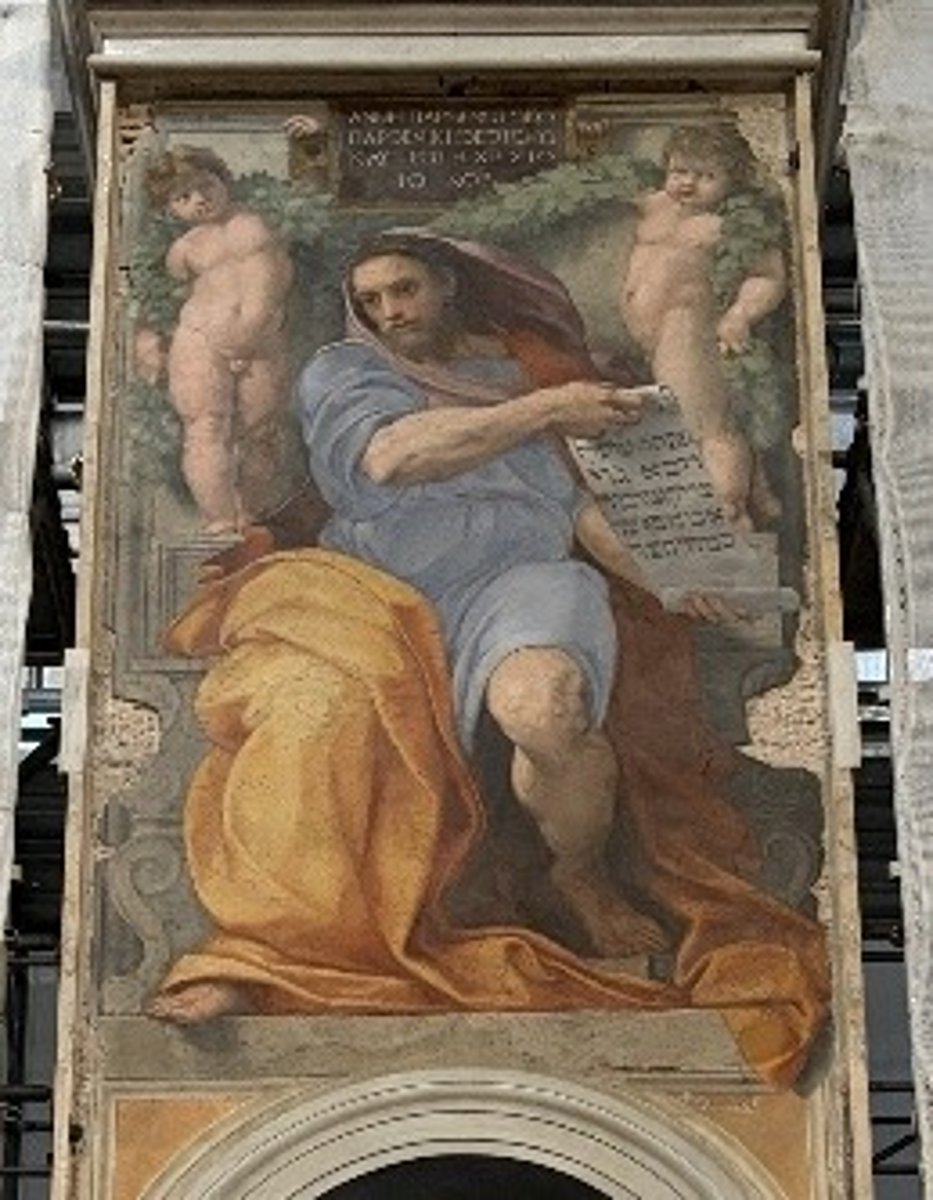
Johann Goritz Tomb Altar (painting)
Time: 1512
Creator: Raphael
Location: San Agostino
Extra: Prophet Isaiah. Latin, Greek, and Hebrew all in the painting. Reference to sistine chapel prophets. Frozen moment (2D and 3D - blue/yellow colors help w this effect). Isaiah about to stand up. Right foot casts a shadow. Complex contrapposto (legs twisting)
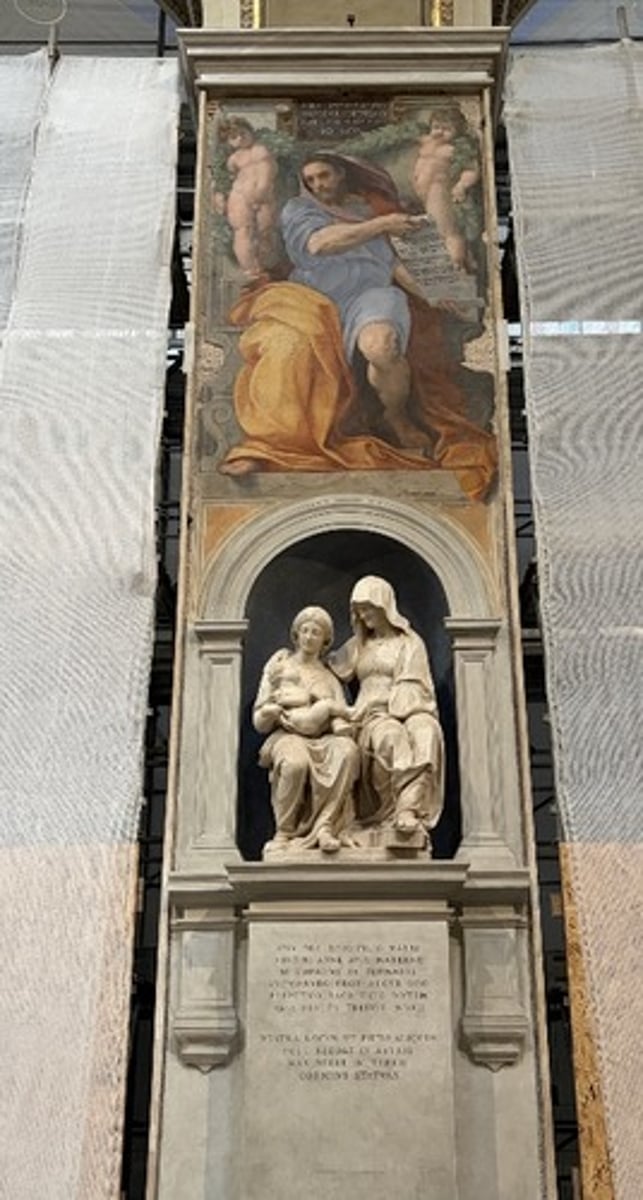
Johann Goritz Tomb Altar (Sculpture) (LP)
Time: 1511-12
Creator: Andrea Sansovino
Location: San Agostino
Extra: St. Anne, Madonna, and child, earliest example of 3 figures out of single block of marble. Sansovino pushing the medium of sculpture (180° the statue draws the viewers in). Virgins face based on Ancient Rome sculptures. Christ complex, contrapostal, holding bird (reference to the end of his life, accepting his fate [holding the bird away from Mary & Anne])
Anne is the highest figure, first one you see when you walk in (she's Mary's mother and Christ's grandmother)
Christ is holding a bird, goldfinch → represents christ dying on cross
Bird comes and bathes in blood → reference to christ's death, depicting his fate
Only example of multiple figures carved from 1 block of stone
Sculpture addresses us
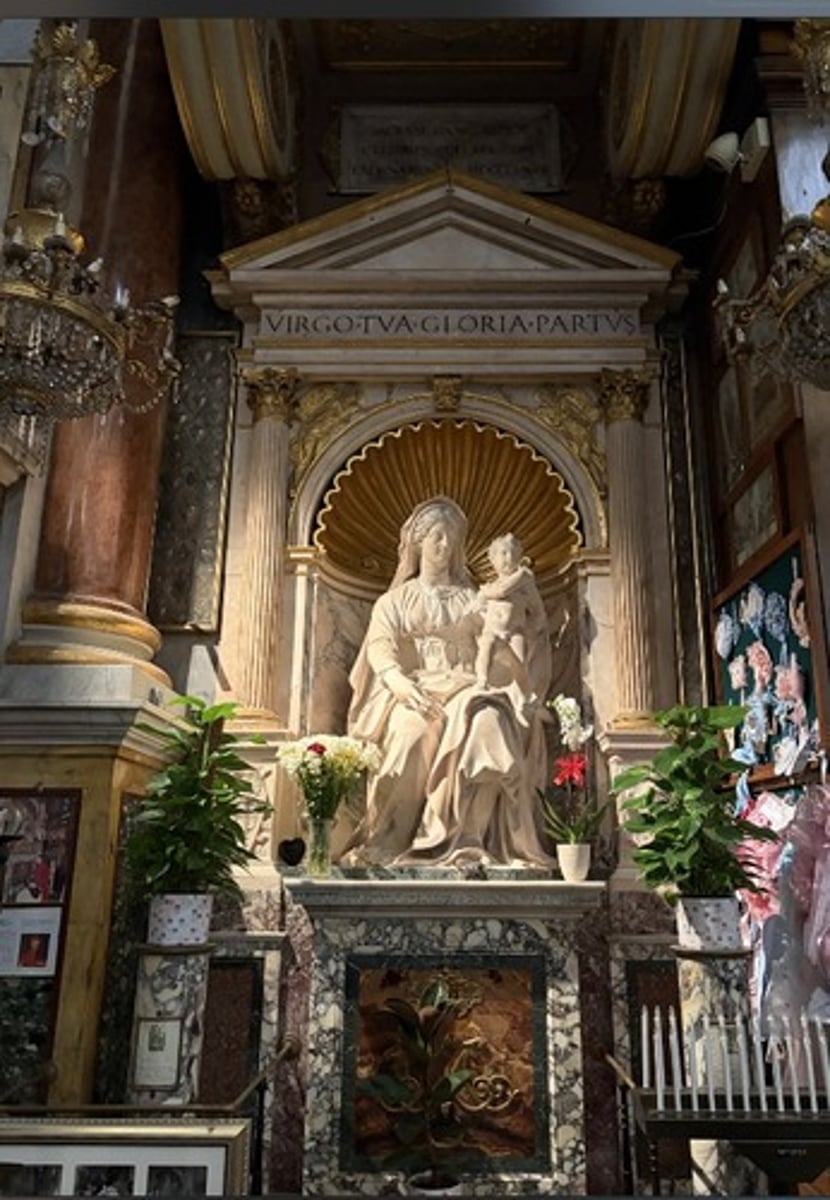
Martelli Tomb Altar (LP)
Time: 1516-1521
Creator: Jacobo Sansovino (DIFFERENT than andrea san sovino)
Location: San Agostino
Extra: based on seated Apollo with a lyre statue (this apollo was unbearded w/ long hair, thought to be a woman). Christ holding a bird and leaping out (Based on boy with goose statue and the Sansovino sculpture in the church). Miracle working sculpture (birth/fertility miracles)
Madonna di Loreto
Time: 1604-1606
Creator: Caravaggio
Location: Cavalletti Chapel, San Agostino (major pilgrimage site)
Extra: Transforms religious imagery into an ordinary meeting of pilgrimage. Downward line through painting. Light coming from the left and highlighting mary (indicates Mary's youth and beauty). Christ a large toddler (to indicate his human side) and yet Mary doesn't struggle to hold him (look at her arched feet, testament to her otherwordliness). Mary's body moves in two ways at once. Christ depicted a human (growing and aging, humanity). The pilgrims depicted as the realities of pilgrimage, and as actual pilgrims looked at the painting they could identify with them. Almost touching Christ's feet (closeness yt impossible distance between divine and humanity) creates a tension in the painting. Viewers can see themselves in this piece, access to the divine is not just for the wealthy. ]
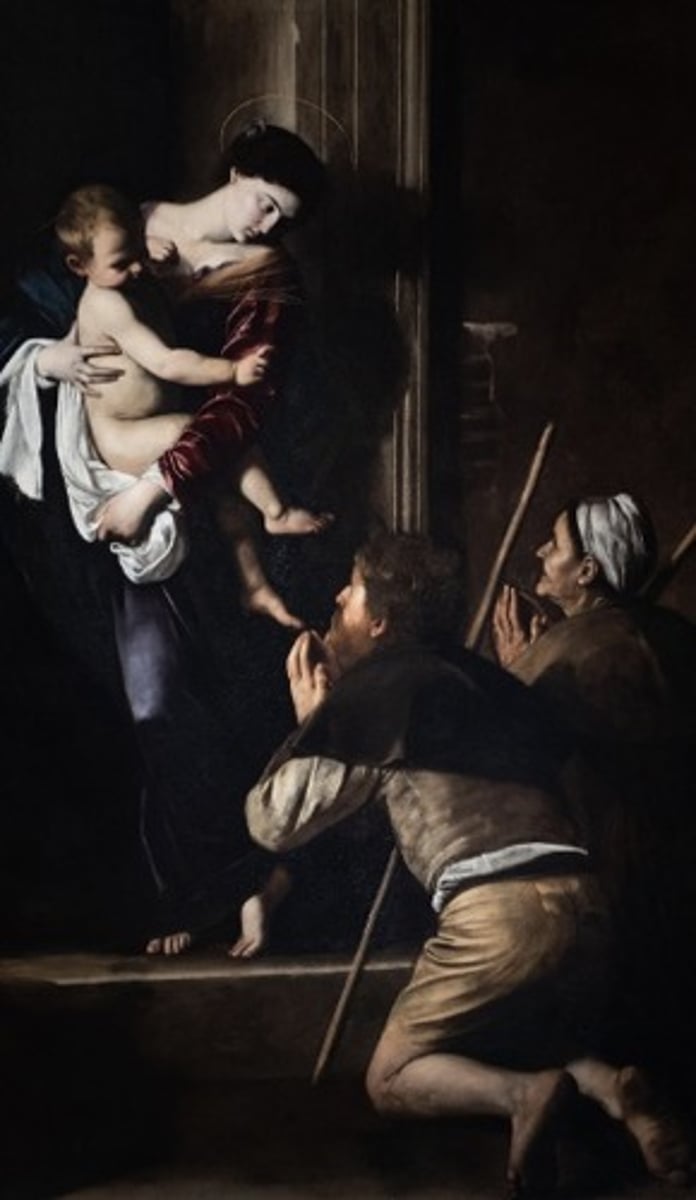
San Luigi Francesi
Time: 1560s-1580s
Creator: Giacomo della Porta (designed the façade) and Domenico Fontana.
Location: San Luigi Francesi
Extra: french national church
sparsely decorated initially
Belonged to french
Cardinal dies and leaves money for painting of his burial chapel inside
Exterior made w/ travertine, 2 registers
Style: high ren
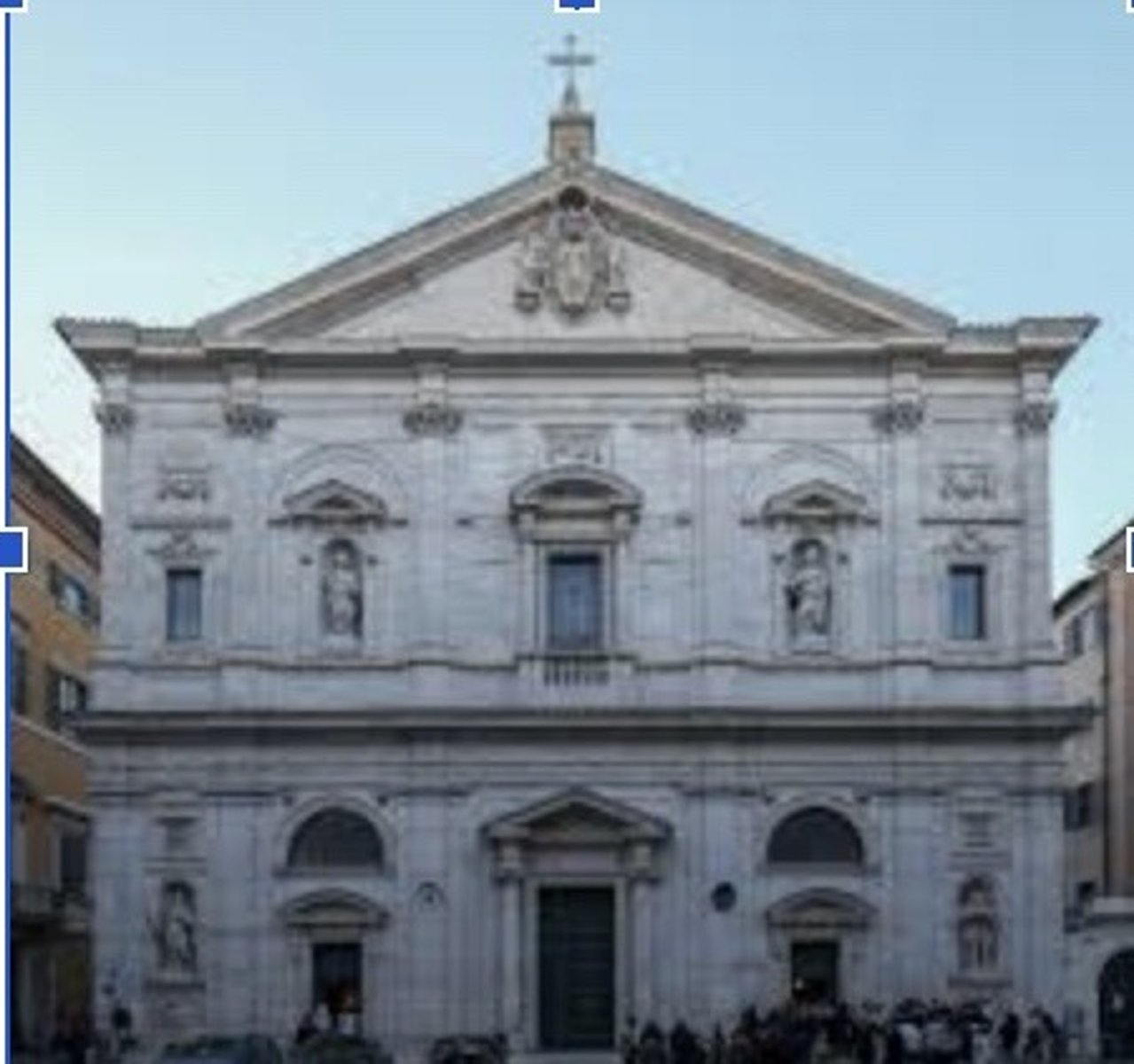
Contarelli Chapel Paintings - Calling of Matthew
Time: 1599-1600
Creator: Caravaggio
Location: San Luigi Francesce
Extra: Caravaggio's first public commission (through Cardinal Del Monte's help). Oil on canvas, completed in workshop then brought to church. Originally people didn't like them(too dark, why oil?). Art guys love it, makes him famous. First large paintings w/many figures. Contrast between quiet scene of the "Calling" and loud scene of the "Martydom". All referencing conversion, beginning of faith and the end.
Painted in the street, follows the biblical description but has a sense of interiorness. Mathew surrounding by other tax collectors but only he is ready to hear the call of Jesus (seen through the contrast with the other collectors, either uninterested/don't fully accept what they see). Christ illuminated across his face with a copy of Adam's hand from Michelangelo's Animation of Adam.
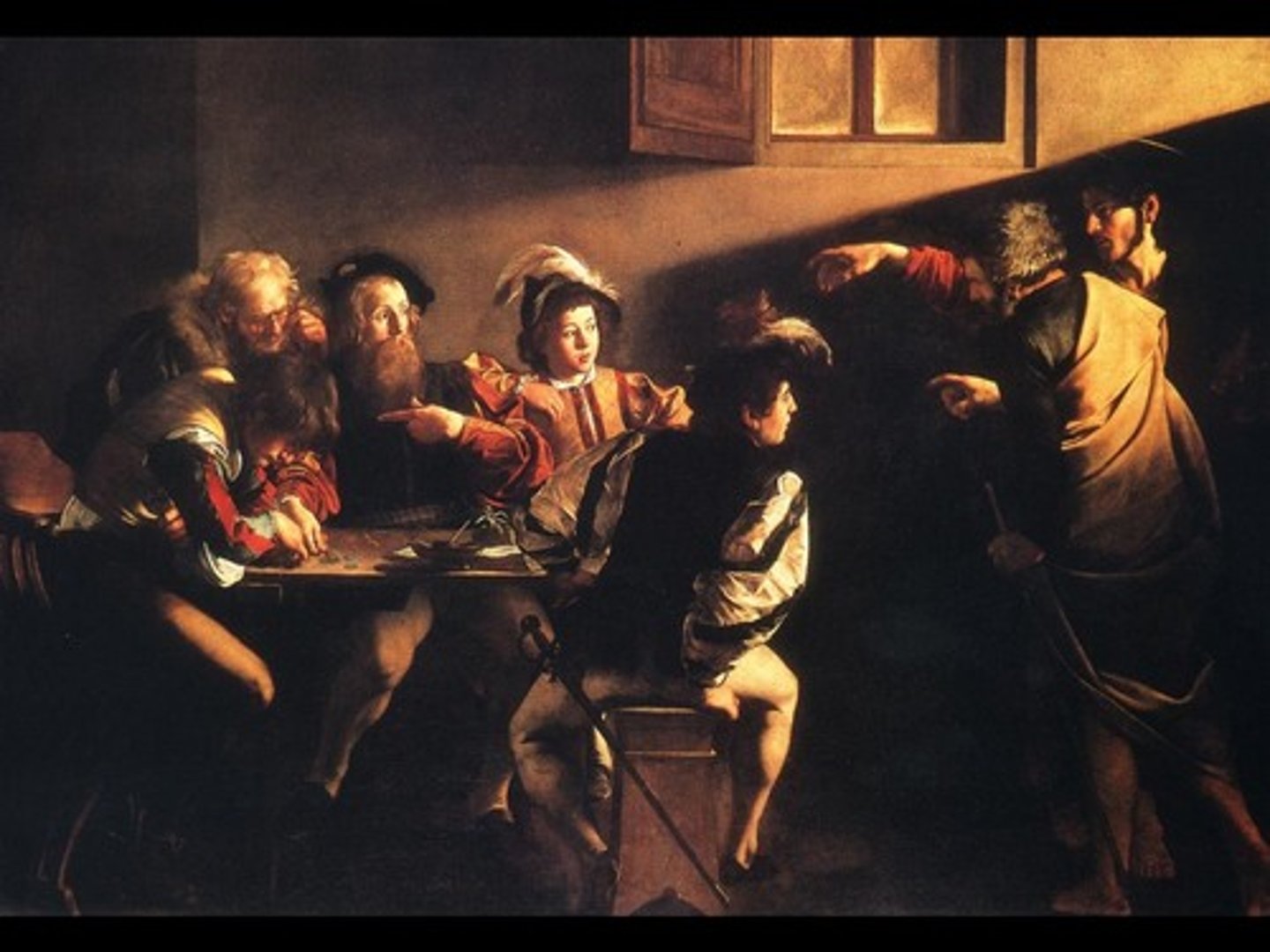
Contarelli Chapel Paintings - Martyrdom of Matthew
Time: 1599-1600
Creator: Caravaggio
Location: San Luigi Francesce
Extra: Caravaggio's first public commission. Oil on canvas. makes him famous. First large paintings w/many figures. Contrast between quiet scene of the "Calling" and loud scene of the "Martydom". All referencing conversion, beginning of faith and end.
Mathew saying mass when he's killed. Scene is loud, bloody murder. M stabbed and on ground in christlike position, assassin ready to strike again. M reaches up to touch the angel in cloud holding a palm leaf (symbol of martyrs). Everyone in motion, majority of action on right side (first part of the chapel seen when entering church, drawing visitors into the chapel). Self portrait of Caravaggio in background (quoting School of Athens). Loincloths - takes place in a Bapitismal vault, aligns w/ ideas of conversion. Must be willing to die for your faith.
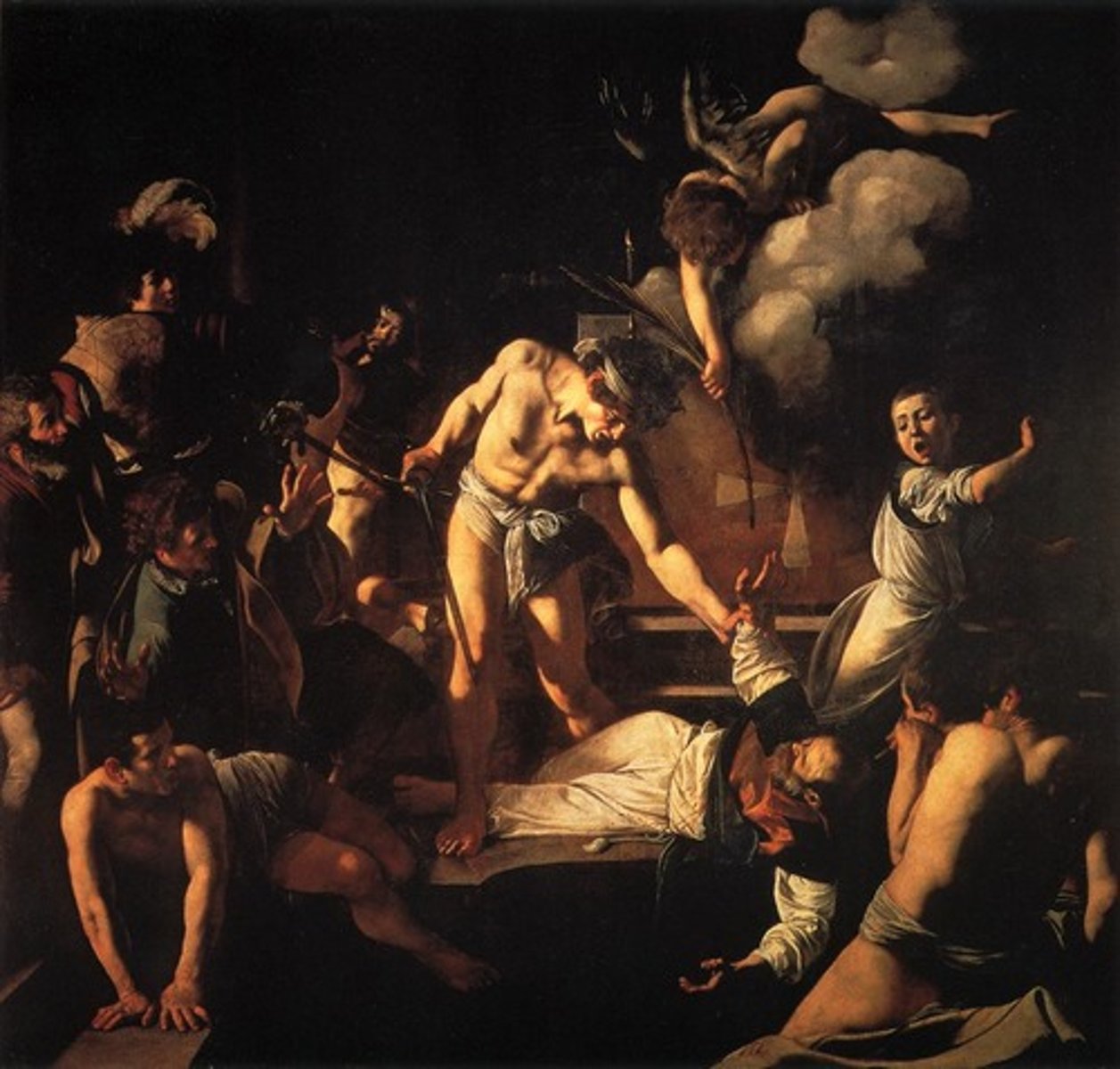
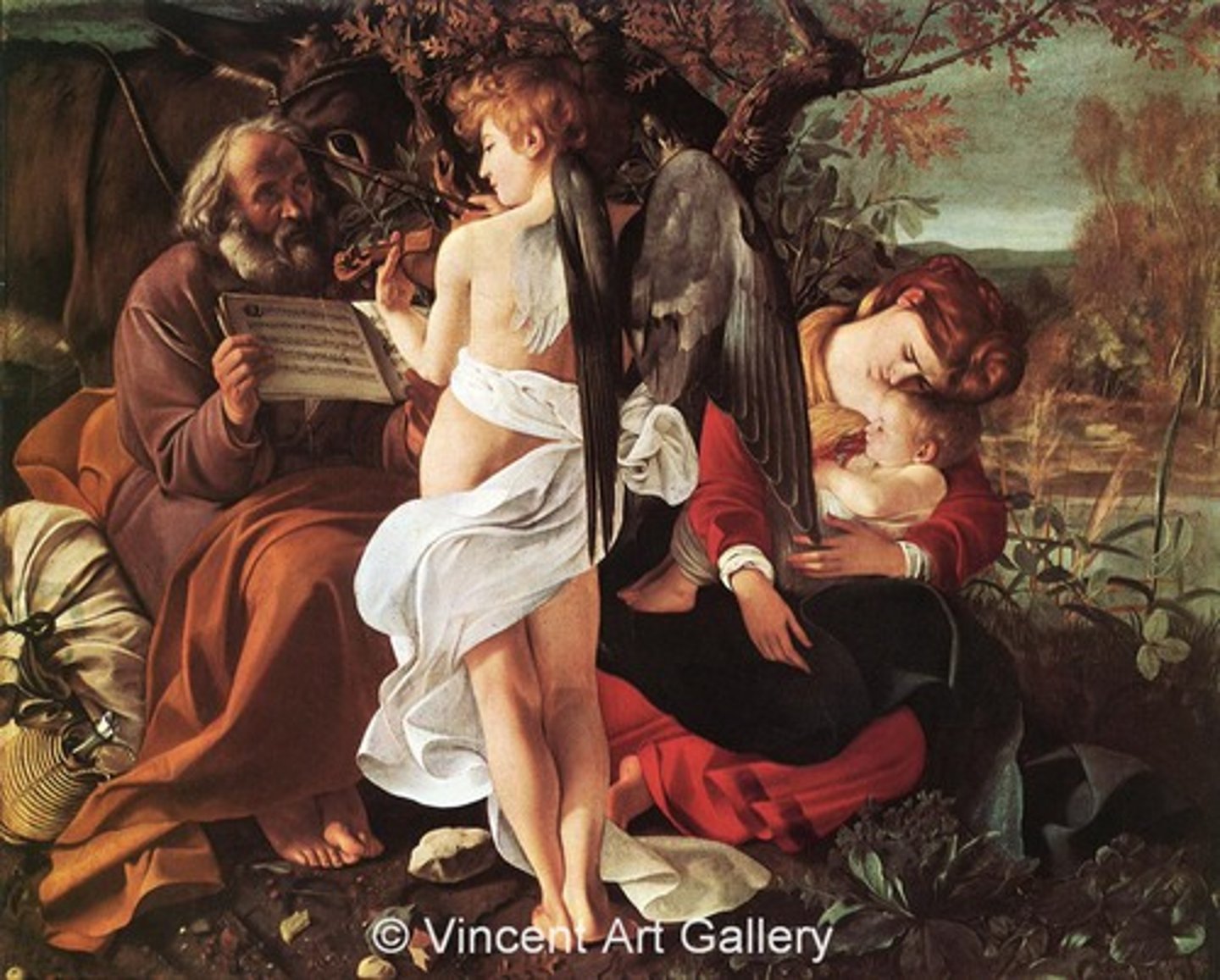
Contarelli Chapel Paintings - Inspiration of Saint Matthew (1601)
Not apart of the original commission. Done twice, first time they didn't like that Caravaggio implied that Mathew was illiterate and that his dirty foot stuck straight out into the priests face, also a third mathew model which was confusing. Final piece caravaggio uses the same model from martyrdom, mathew kneeling on a stool listening to the angel's words. Leg of the stoof over the edge of the stairs(only Mathew's weight keeps it grounded). Wearing a red/orange cloak (almost looks like fire-buring inspiration). The way the angel's cloak moves it looks like smoke.
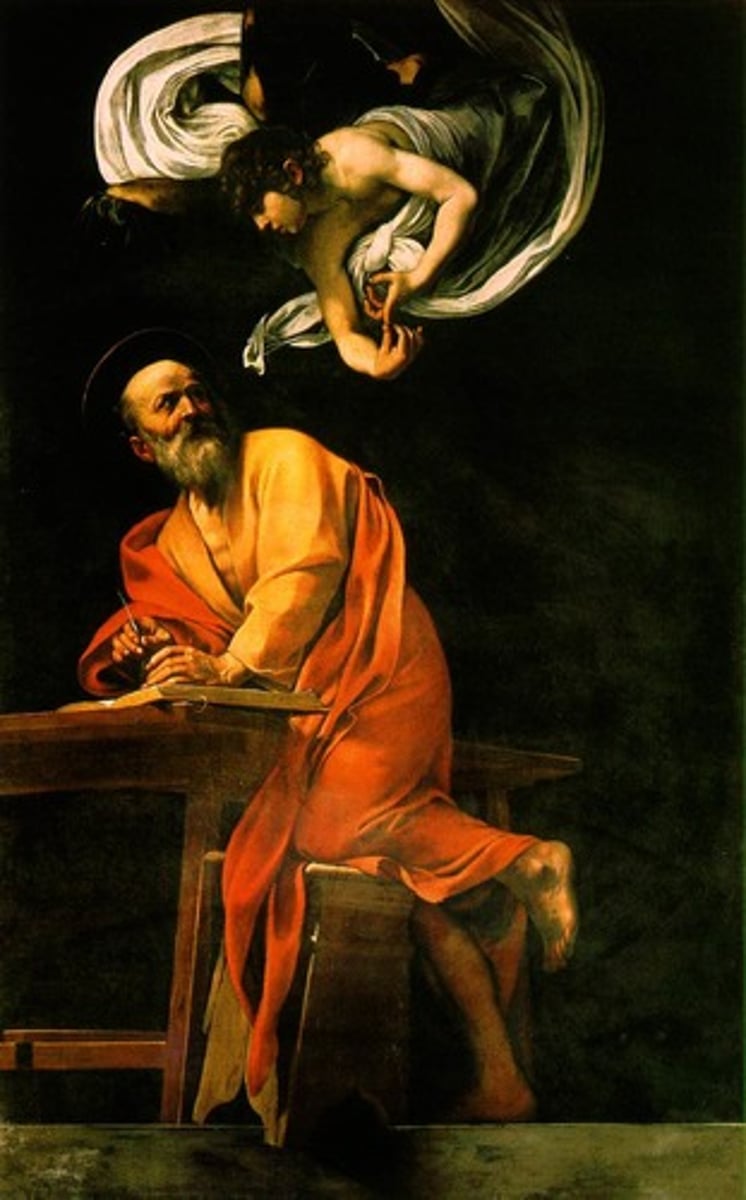
Santa Maria sopra Minerva
Time: 13th-14th c. (took 50 years to build)
Creator:
Location:
Extra:
2nd dominican church
Dedicated to virgin mary
Thought this was a site of a temple to minerva but actually wasn't (hence the name)
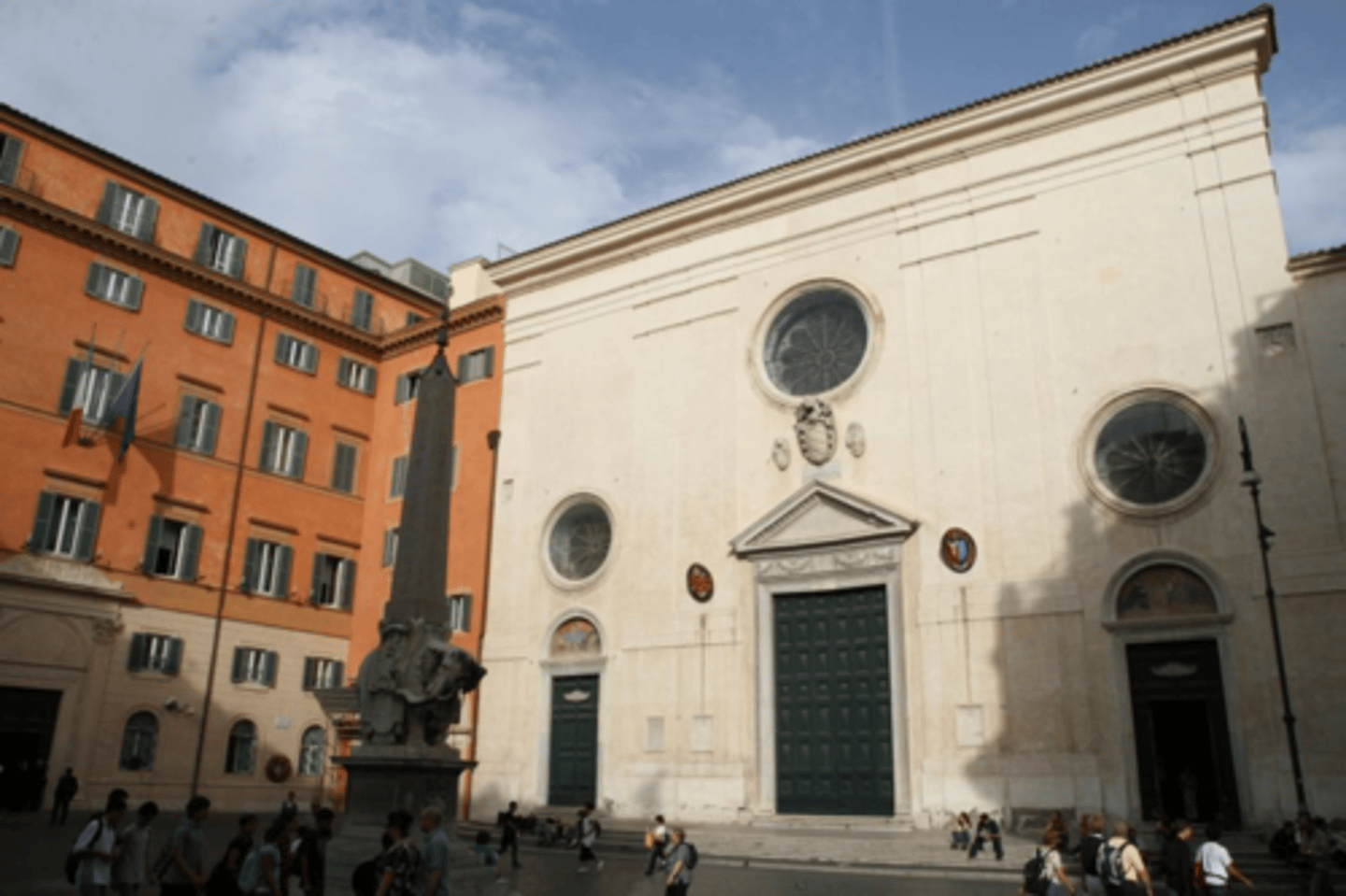
Papal Portrait of Pope Innocent X
Time: around 1650
Creator: Diego Velasquez
Location: Galleria Doria-Pamphili
Extra:
One of the most important european papal portraits
Can sense his power when looking @ this portrait
3 different shades of red used -- impressive
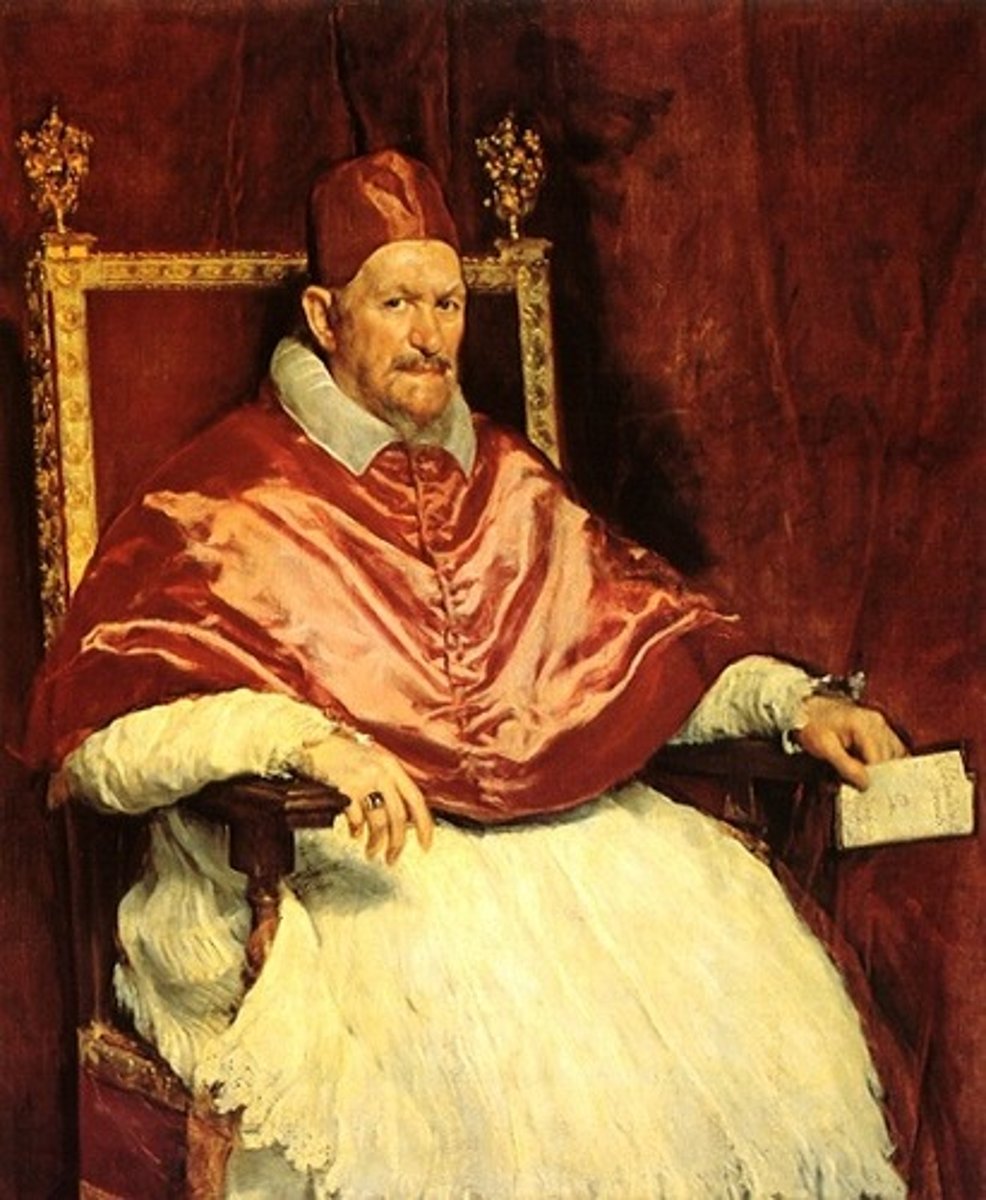
Rest on the Flight into Egypt
Time: 1594-98 (sometime in those years, not a year spread, near the end )
Creator: Caravaggio
Location: Galleria Doria-Pamphili
Extra: one of the first paintings done by Caravaggio. Four figures, the angel breaks the painting in half (earthly realm and the divine realm): Joseph & the Donkey, rocky ground, dark, remnants of dinner on the floor/Mary & Christ, green grass, lush forest, light (however its Autumn which alludes to Christ's death). Caravaggio is getting used to multi-figure composition (Mary is the same model and pose as his Magedalen painting). Subject quite sweet compared to his later violent works. He plays with dimensionality, flat wings of the angel vs. the delicate forest. Demonstrates his ability to complete religious works (would have been important in order to get a commission).
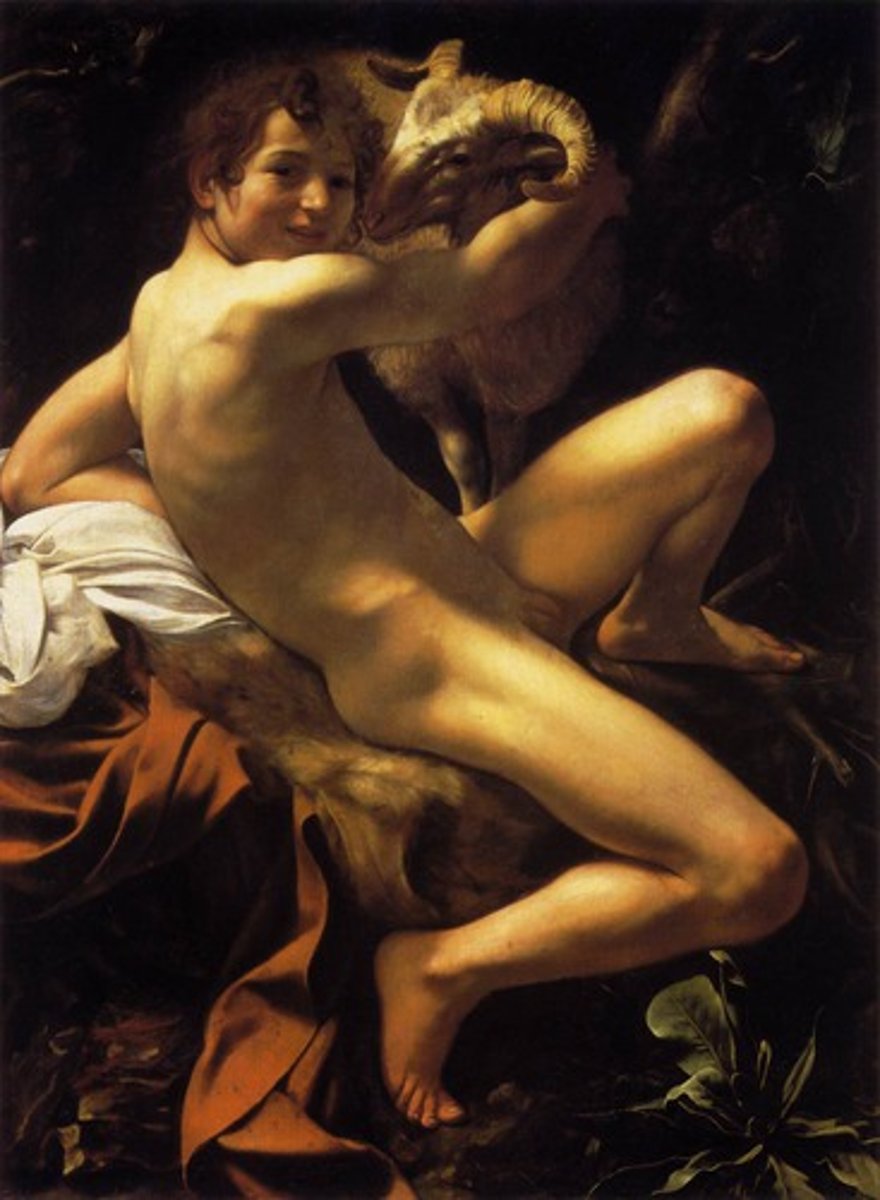
John the Baptist (actually Isaac and the Ram) (LP)
Time: 1602 (done sometime before 1600?)
Creator: Caravaggio
Location: Galleria Doria-Pamphili
Extra: called john the baptist but paul disagrees (no lamb, instead a ram). Sistine Chapel ceiling inspiration clear (sibyls/prophets, complex contrapposto). Isaac looking at Abraham with a smile (pleading not to be killed) - in this scene he just got saved which is why he's smiling. Moment of emotional complexity, showing intense emotion. Demonstration of Caravaggio's unique interpretations of stories (he reimagines these biblical tales with drama and a certain realness and rawness).
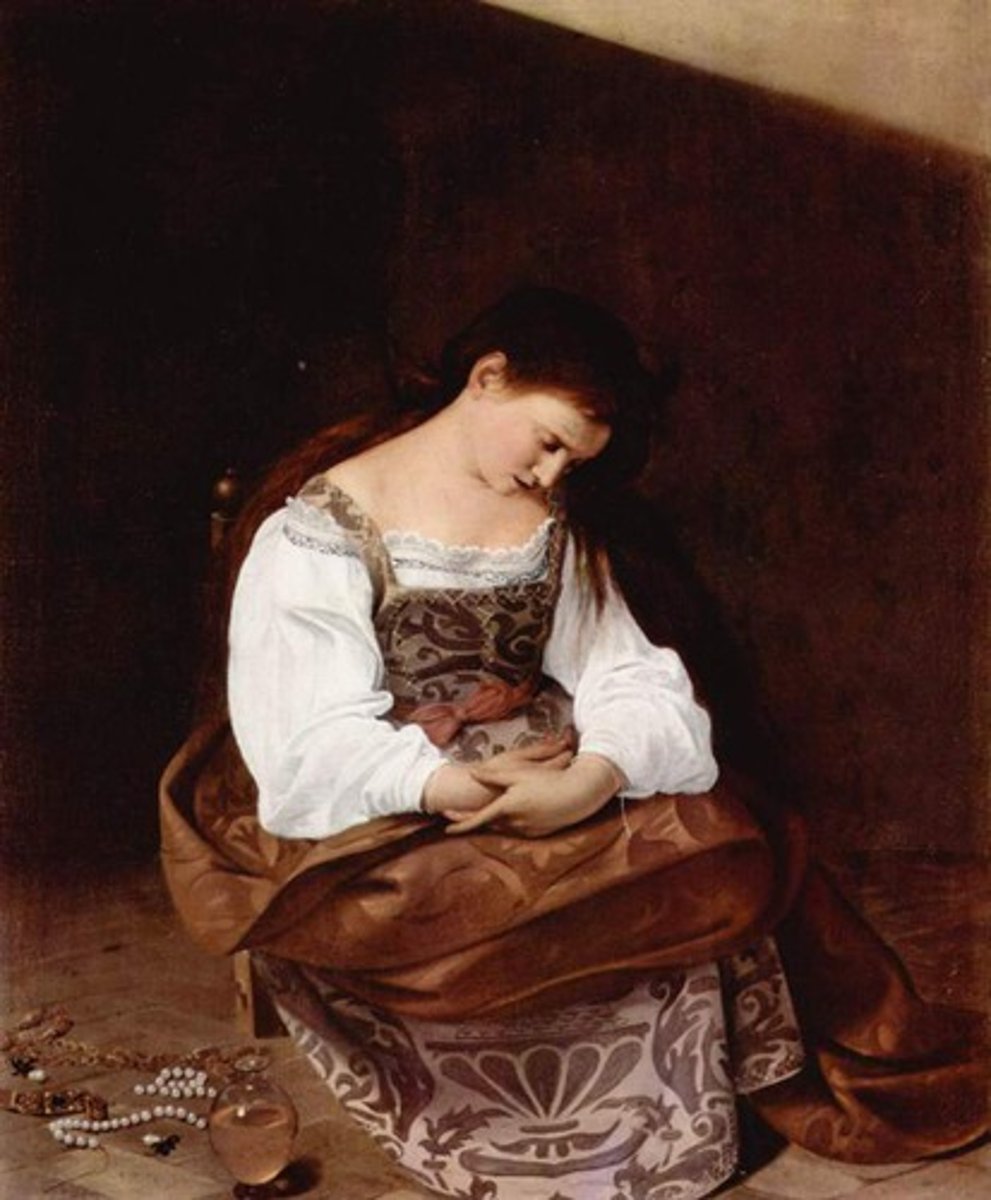
Penitent Magdalene (LP)
Time: 1597
Creator: Caravaggio
Location: Galleria Doria-Pamphili
Extra: Simplicity. One shelf of light in the top right corner. Jewllery broken & thrown to the ground (Mary has just met christ and gained spiritual depth). Tear dripping across cheek. Example of second period Caravaggio. Unknown patron but thinking about subject potentially for a young girl of a wealthy family whose parents want her to remember God and humility. Sullen pose, tear dripping across her face, deeply moving image. Simple background/image, light coming from corner.
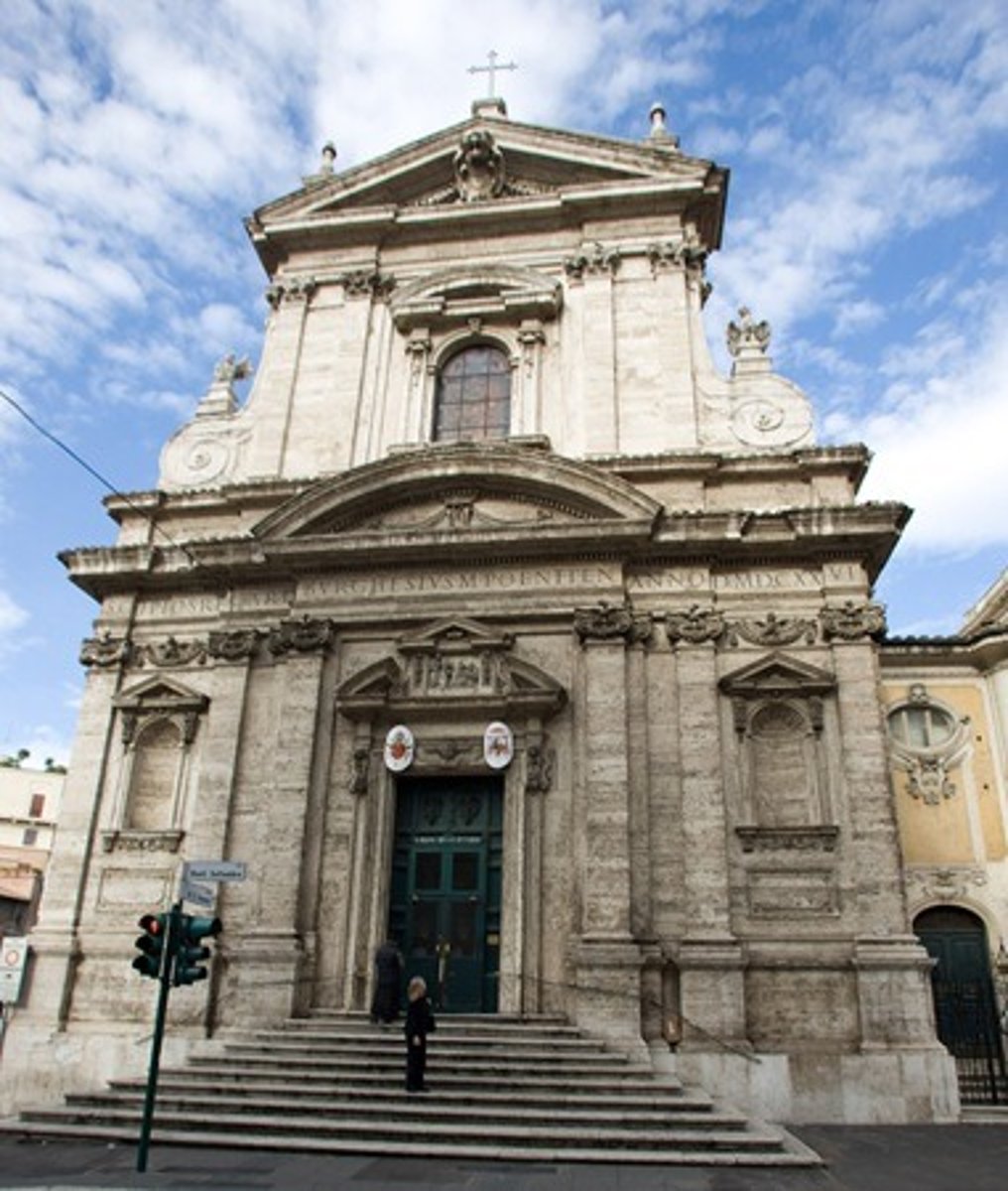
Santa Maria della Vittoria (LP)
Time: 1610
Creator: Carlo Maderno??
Location: Santa Maria della Vittoria
Extra: Small counter reformation church located on an important route in and out of the city. Belongs to carmellite order. Originally dedicated to St. Paul rededicated to Mary (Mary of Victory) in 1620s. Cornaro chapel with ecstacy of santa theresa sculpture inside this church.
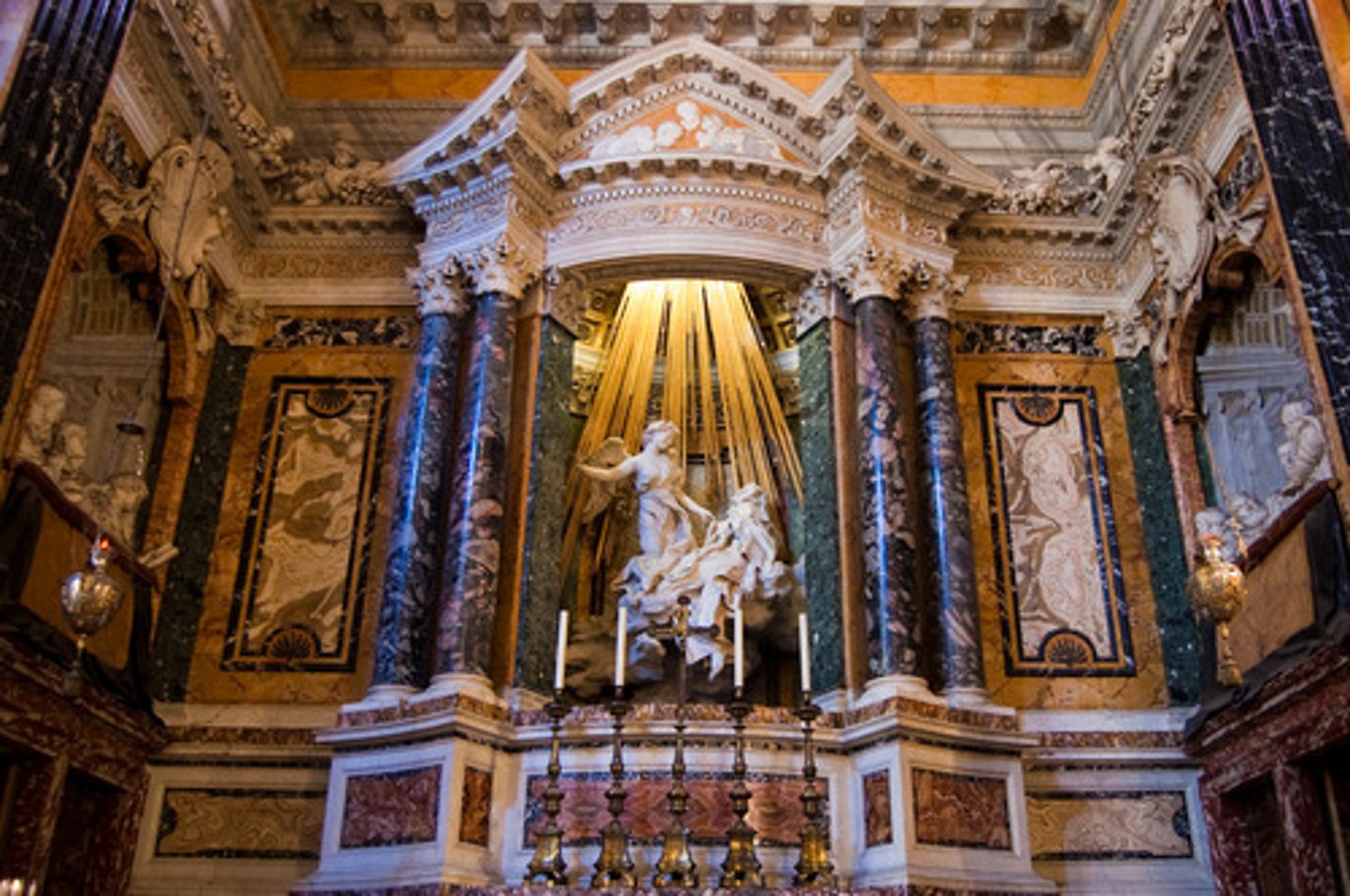
Chapel of Santa Theresa of Avila
Time: 1647-1652
Creator: Bernini, (Patron: Federico Cornaro)
Location: Cornaro Chapel, Santa Maria della Vittoria
Extra: Bernini designed entire chapel. Inlaid marble floor with praying skeletons looking towards the altar for salvation. Sculpture by Bernini depicts the ecstasy of St. Theresa, almost orgasmic moment, difficult to depict what contact with God would be like (white marble stands out against the colors of the chapel). Pediment is undulating, imaginative and complex - typical of high Baroque architecture. Sculpture illuminated by light from window. Outer walls depict the Cornaro family members (creates a stage for visitors, you are brought into the chapel, high baroque theatrics).
Themes: salvation through faith/illusionism (clouds, melting of the vault)/stage design, theatricality (High Baroque)/polychrome (painting the interior with marble)/Total work of Art/idea of spac
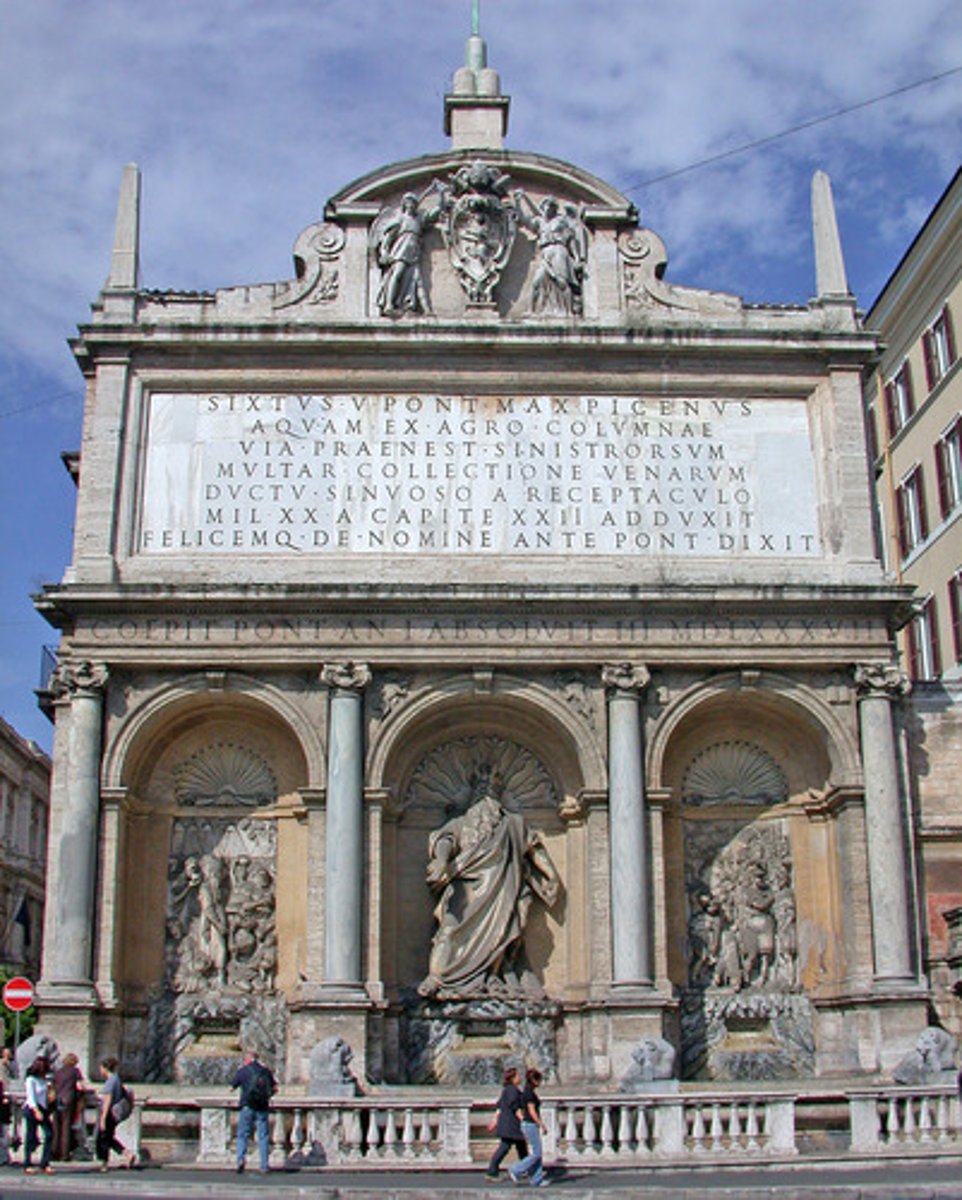
Fontana dell'Acqua Felice - Moses Fountain
Time: 1585-1589
Creator: Domenico Fontana (Patron: Sixtus V)
Location: Quirinal Hill
Extra: Copies a Roman Triumphal Arch (Three Niches). Lions from egypt. Biblical scenes related to water. Counter reformation.
Moses: combines many ancient ideologies (catholics triumphing over all), bringing water just as Pius has done with the fountain. Supposed to feel the power of Moses. Figure a little off (never used full scale model). Often seen as a failure.
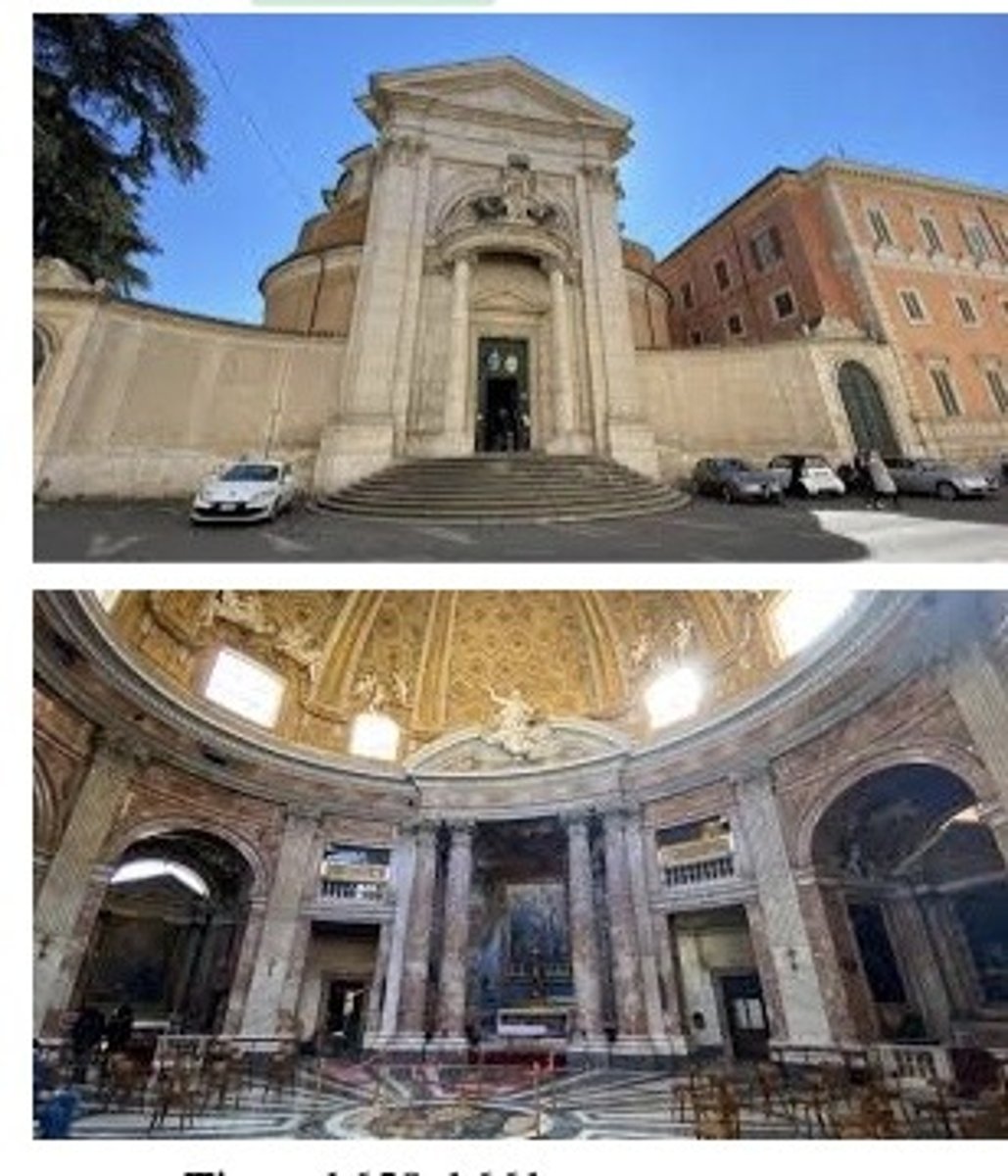
Church of San Andrea Quirinale (Facade + Interior)
Time: 1658-1661
Creator: Bernini (Paid for by Pamphili family)
Location: Quirinal hill :)
Extra: weird/unusual oval positioning, done for free (as in he wasnt paid), jesuit church
Baroque church, not all white inside, colored marble
St andrew above painting riding on a cloud (on pediment) → ascending to heaven??
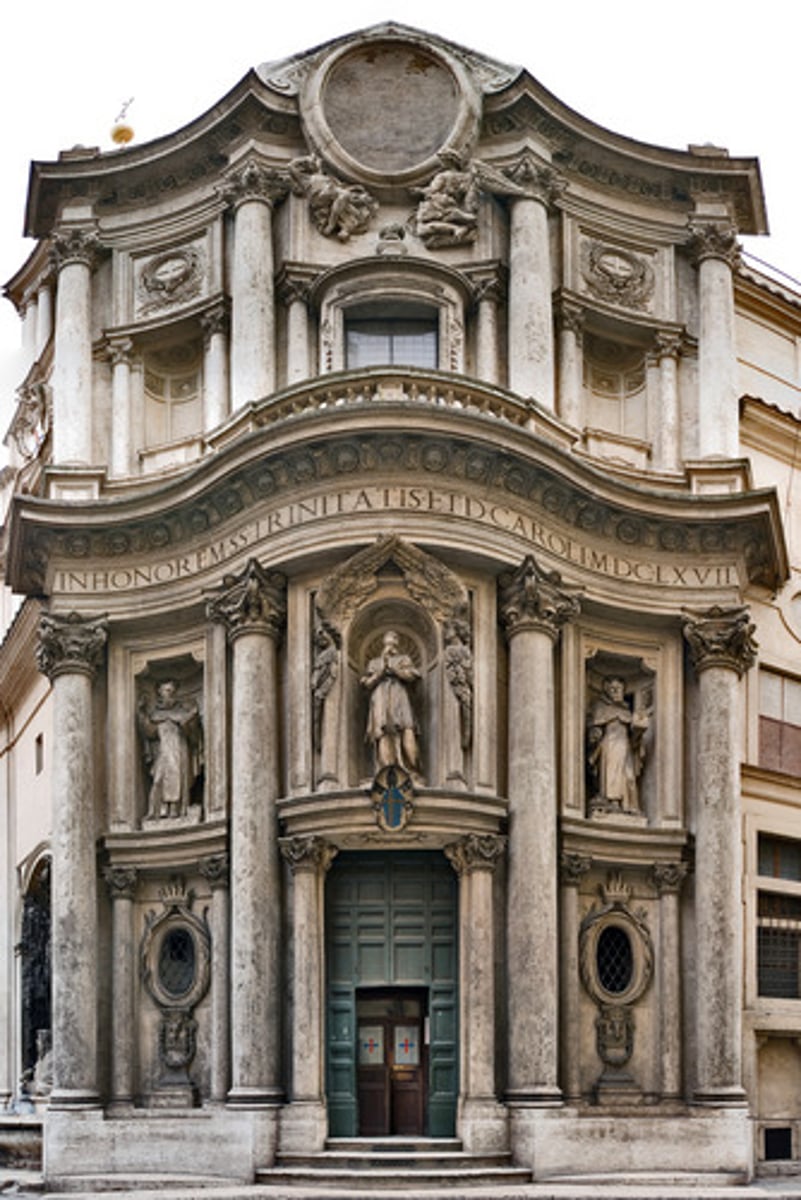
Church of San Carlo alle Quattro Fontane Facade
Time: 1634-1641
Creator: Francesco Borromini
Location: Church of San Carlo
Extra: facade is curvilinear, one of first examples of this
Inside of church → all white interior. No frescoes, no decoration. 16 columns in diff groupings of 4. Oval dome, dove of the holy spirit in an equilateral triangle. Borromini intending spiritual experience → trying to bring you up to heaven just through architecture. Super theatrical, Borromini trying to trick the eye (convex vs. conclave niches of church, what you think you see isn't actually what's happening)
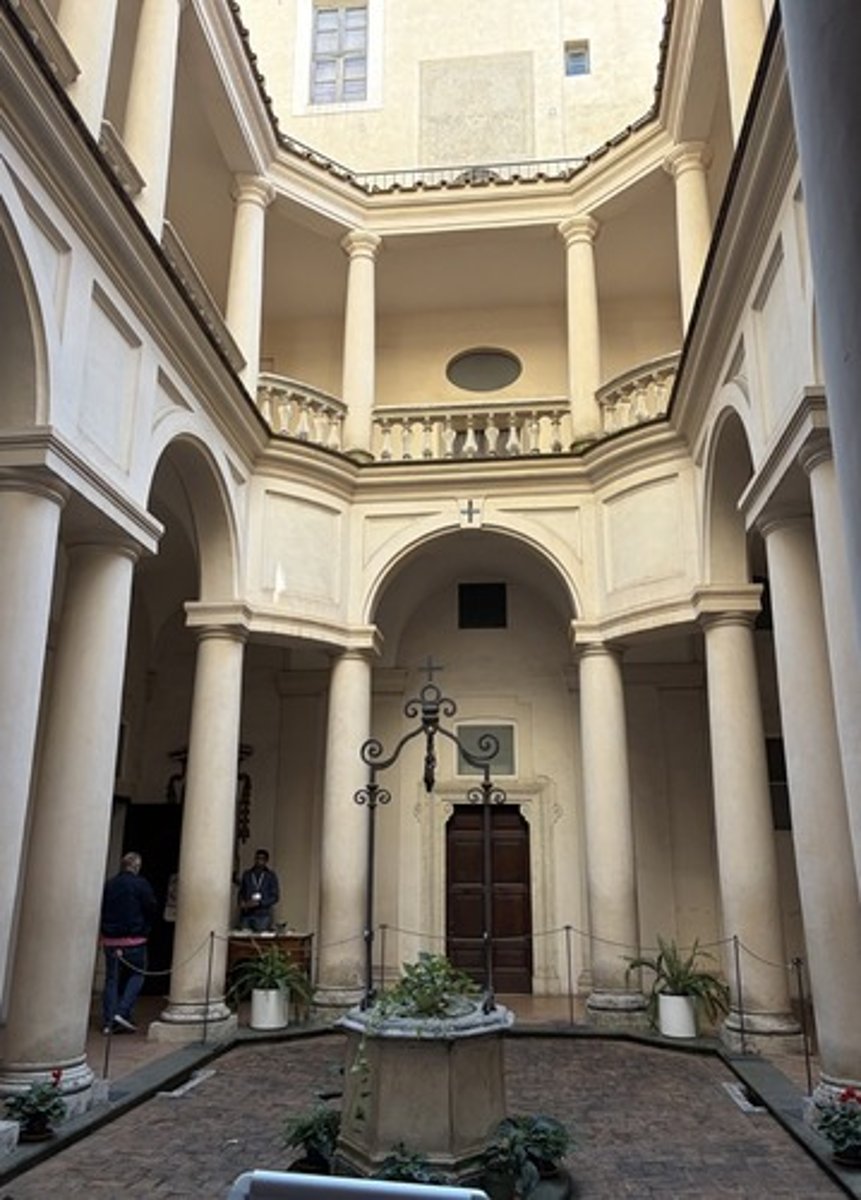
Courtyard of Church of San Carlo alle Quattro Fontane Facade
Time: 1660s
Creator: Boromini
Location: Church of San Carlo
Extra:
Paul yapped about the courtyard inside this church for DAYS and gonna be so honest I did not understand like any of it. But something about the "corner problem?" and as you move through the space new arches are being formed/seen, experiential space as you move around it
Palazzo Barberini Facade (LP)
Time: 1625
Creator: Carlo Maderno, Gian Lorenzo Bernini, Francesco Borromini
Location: Quirinal Hill
Extra:
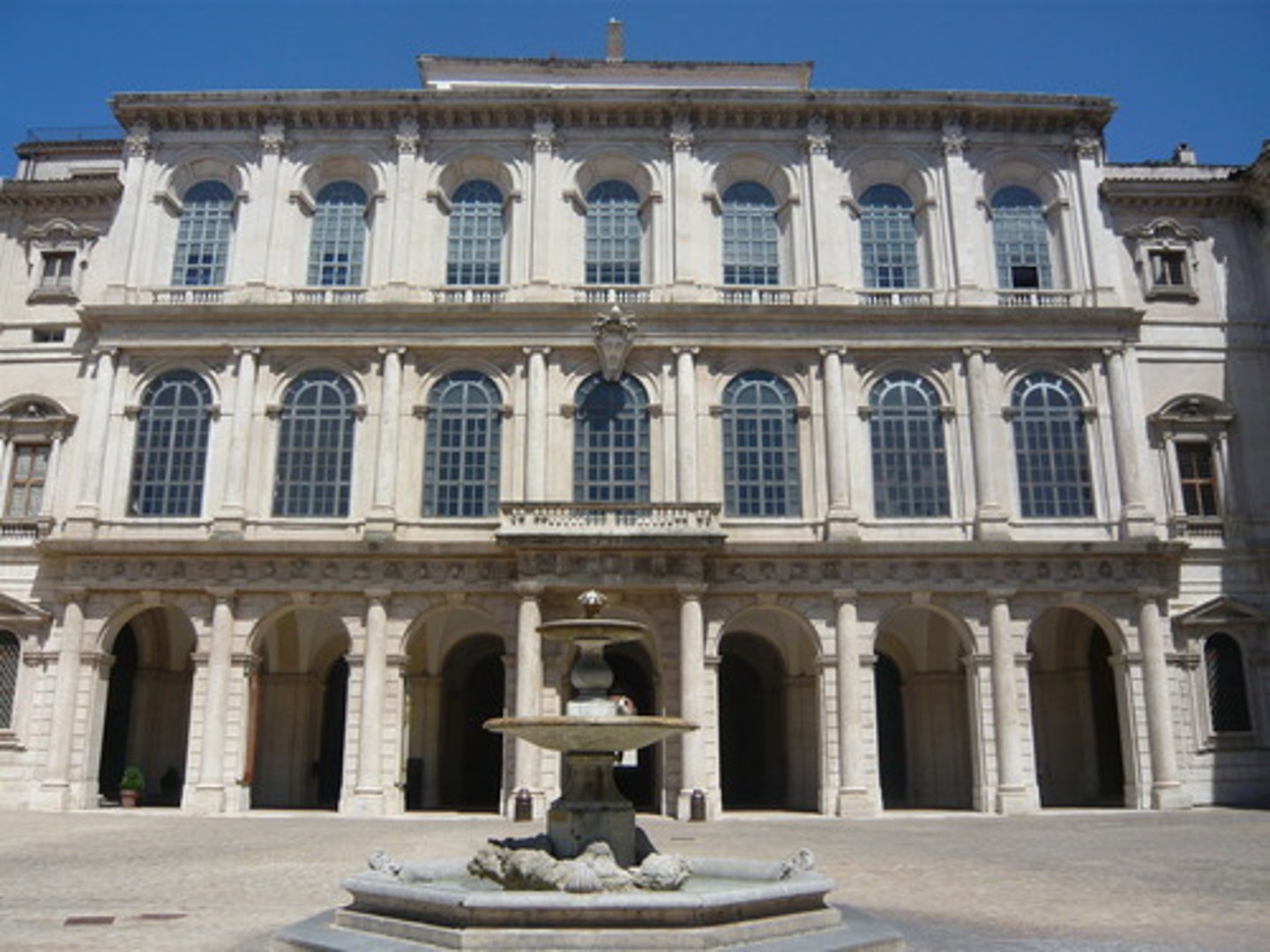
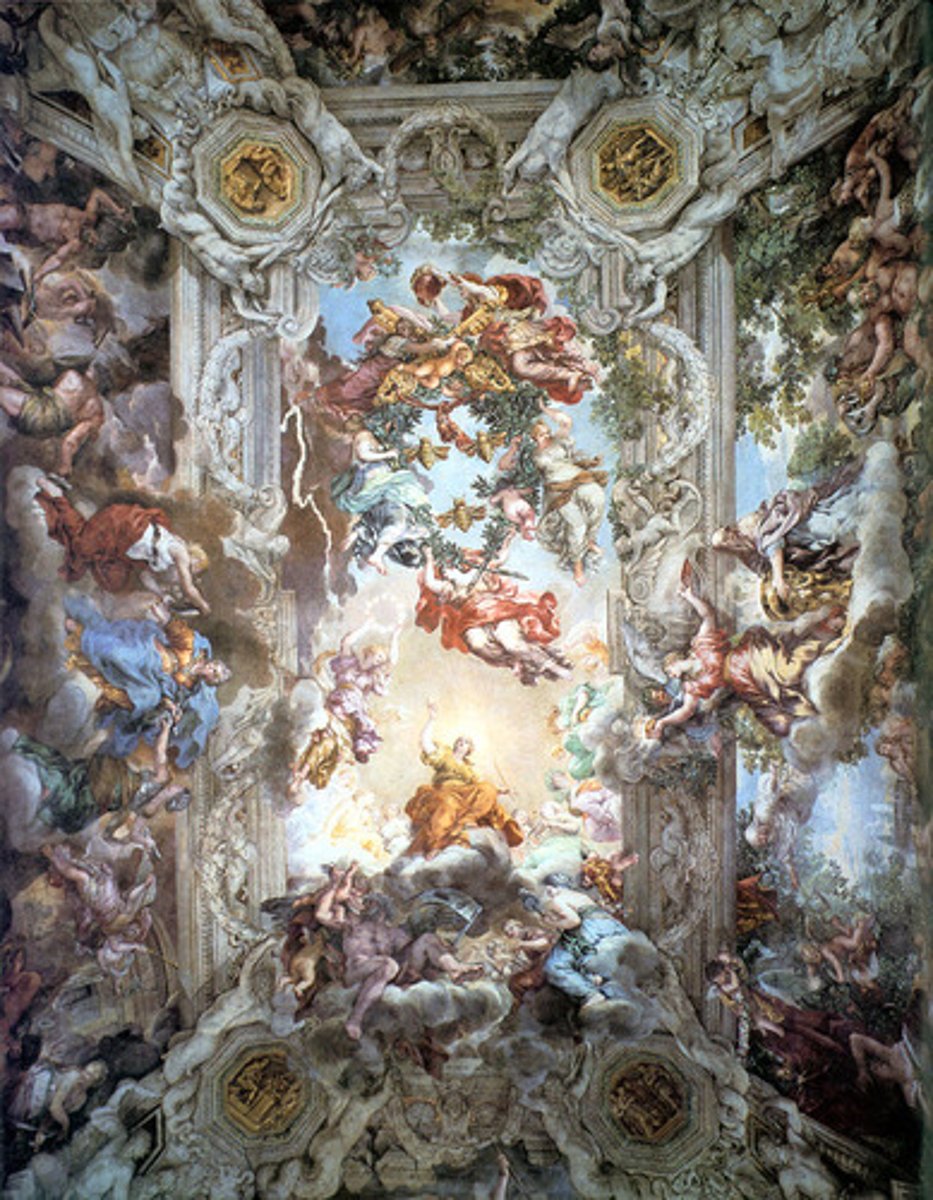
Triumph of Divine Providence (or the glorification of urban the 8th)
Time: 1632-39
Creator: Pietro da Cortana (Patron: Pope Urban VIII)
Location: Palazzo Barberini
Extra: Allegorical personifications of virtues, tells viewers about the superiority of the papal states, mythological scenes and animals, lots of symbolism/very complicated (look @ lilly's printout of all the diff figures in the painting)
In the palace of a papal family
Glorifying the pope, but mostly glorifying the barberini family
Full of personifications of virtues and values
Wreath of barberini bees
Divine providence = God directing things in such a way that the people are where they're meant to be
Urban being elected pope
Massive reception room in the palace of the barberini family → imagery that is so complex/confusing glorifies family and speaks to the power of the family
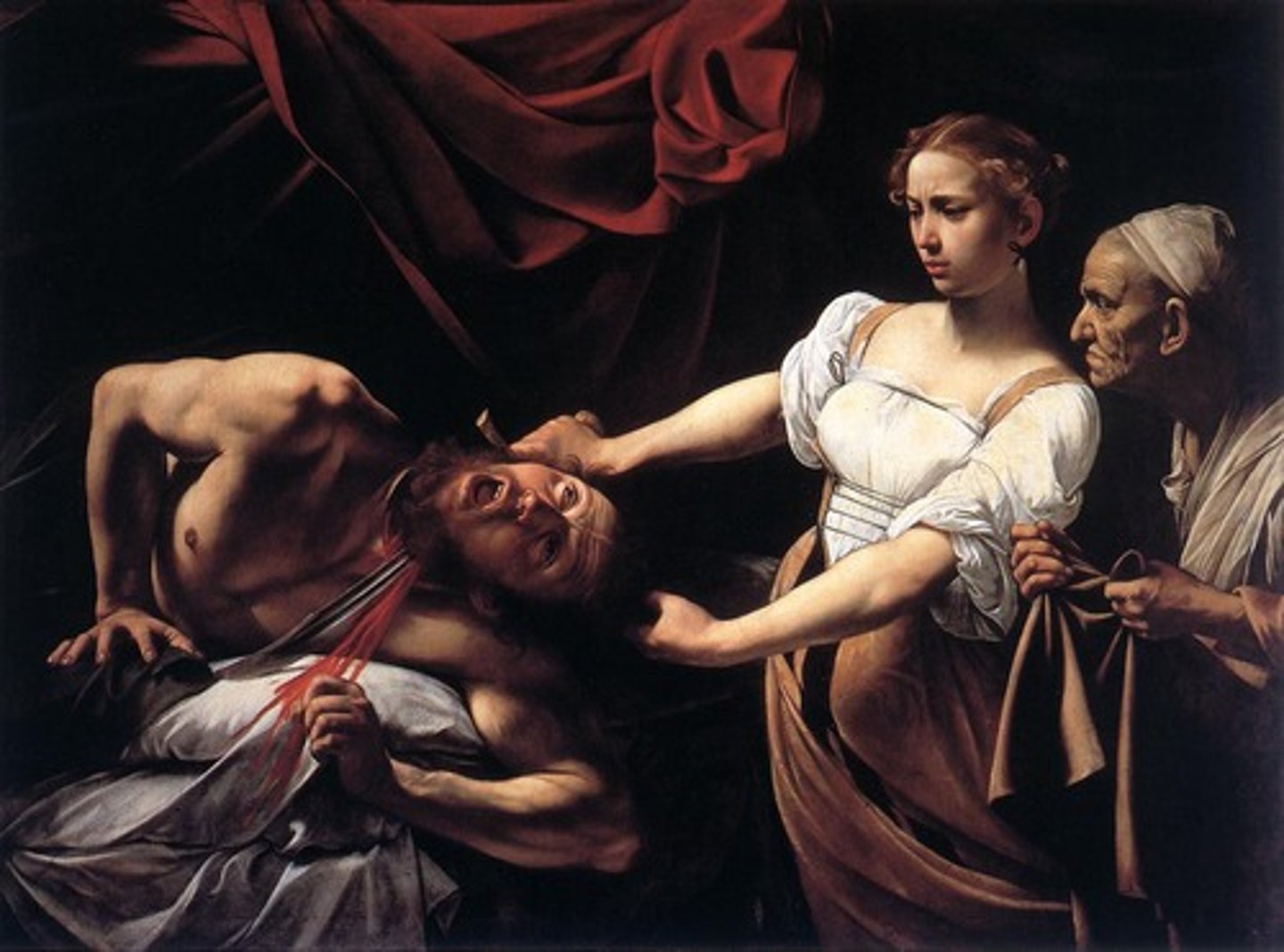
Judith Beheading Holofernes
Time: 1598-99
Creator: Caravaggio
Location: Palazzo Barberini
Extra: Example of Caravaggio's signature chiaroscuro during his late second period (right before he gets his first public commission). Beginning of Caravaggio's thematic changings - drama, cruelty, violent deaths, mutilation. Fairly simple composition - three figures all in front plane. Complicated through little details and the complex expression on each of the figures spaces. The simplicity of the composition allows the viewer to become overwhelmed by emotion.
We see judith as a protector of the weak against evil. Raw, intense, yet religious piety. Focused on act yet also revulsion.
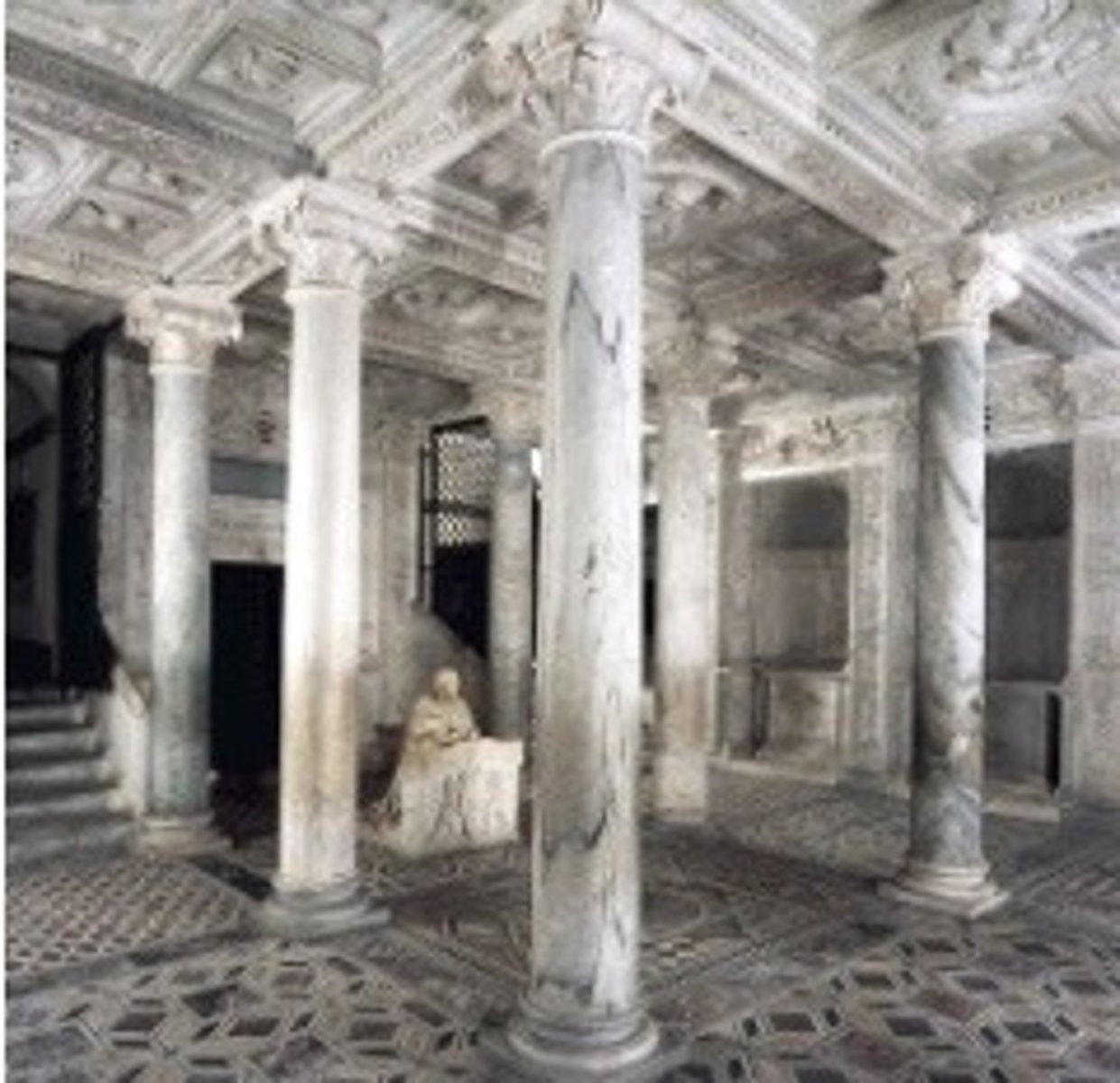
Succorpo Chapel/Crypt
Time: 1496/8-1506
Creator: Tommazo Malvito, Cardinal Carafa (patron)
Location: Duomo di Napoli
Extra:
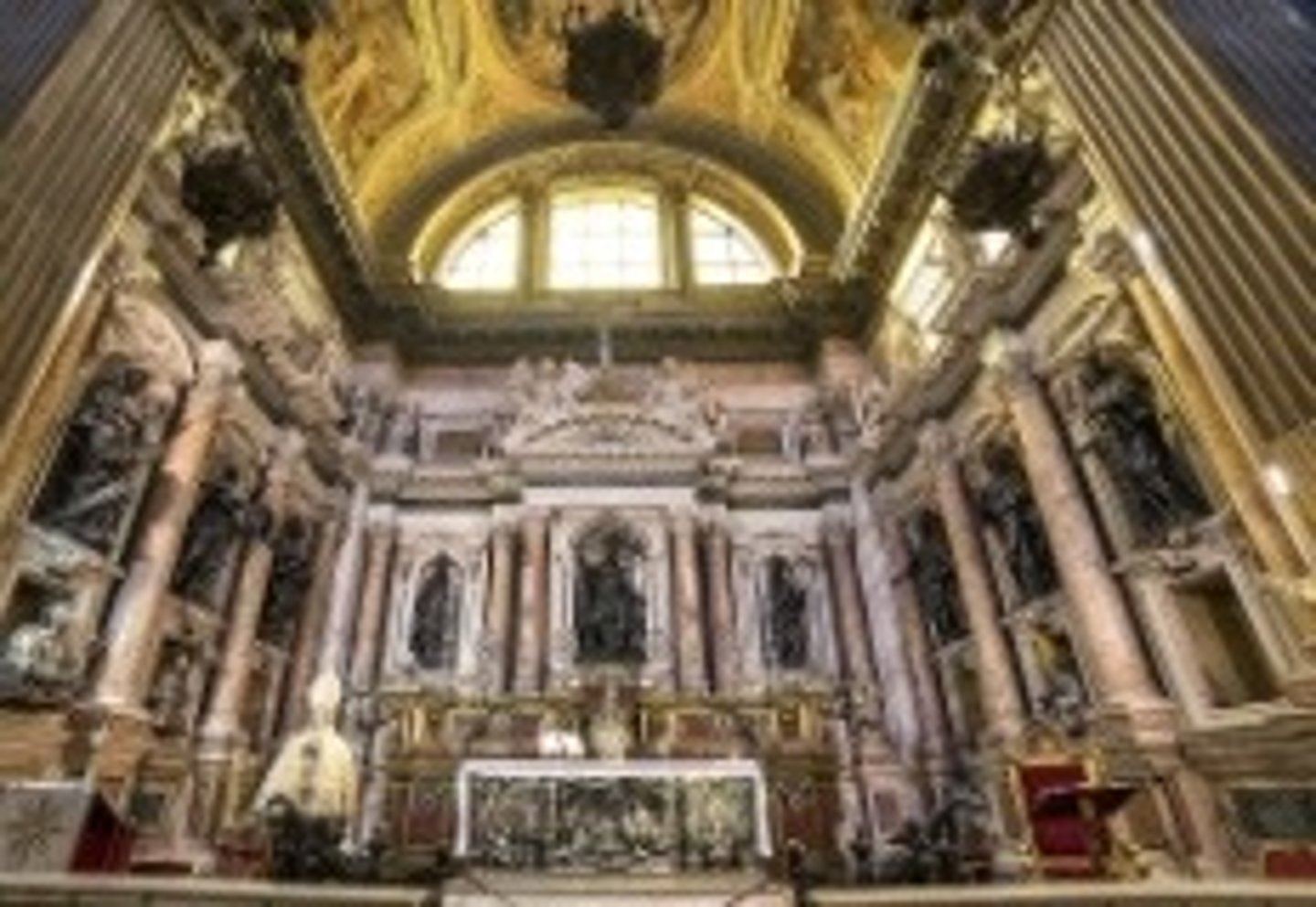
Chapel of San Gennaro
Time: 1608-46
Creator: Francesco Grimaldi (architect), Domenichino (painting), Lanfranco (dome paint)
Location: Duomo di Napoli
Extra:
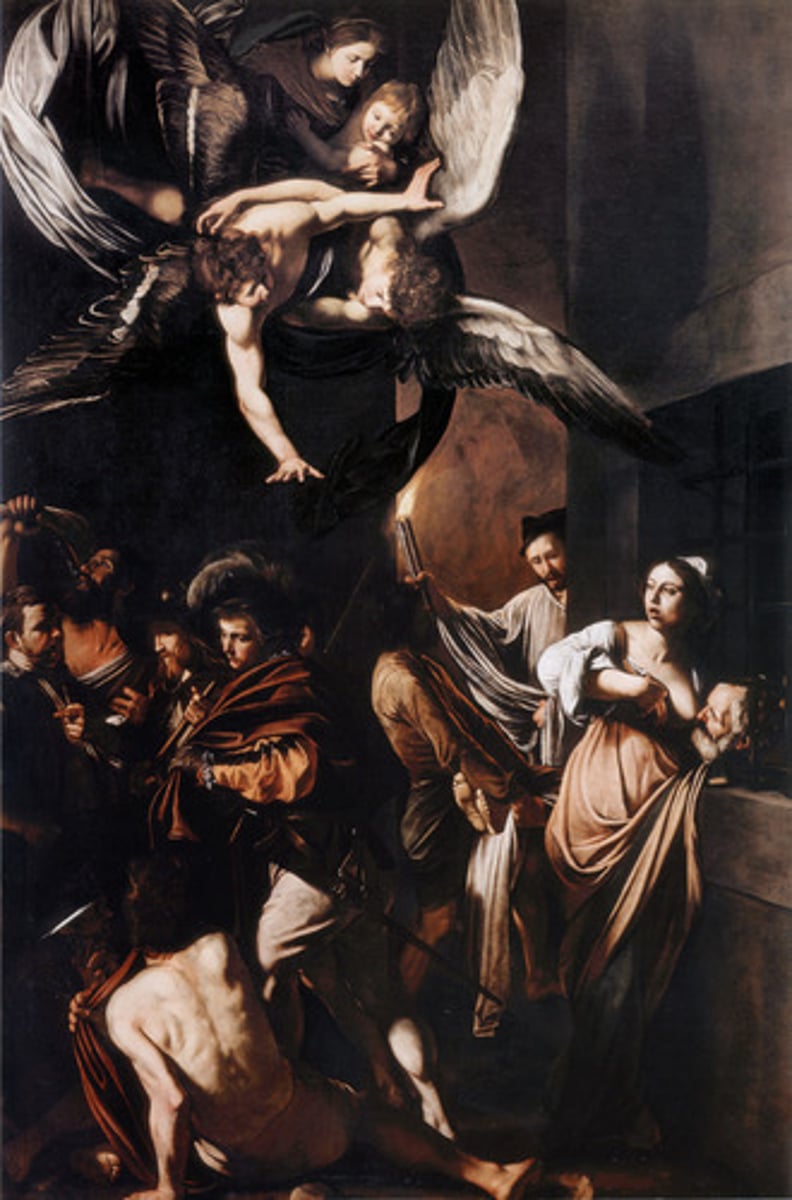
Seven Works of Mercy
Time: 1607
Creator: Caravaggio
Location: Pio Monte della Misericordia (Naples)
Extra: scene from Matthew (acts of charity - when i was hungry you fed me, etc). Upper part = heavenly realm. Lower part = frieze, all representing different acts of mercy in one scene.
Anonymous figure carrying feet of a dead body → burial of the dead (act of mercy that Caravaggio adds)
The confraternity men would see themselves in the anonymous man
Woman visiting her father in prison feeding him breast milk → 2 acts of mercy: (hungry/fed, visiting prisoners)
Man drinking: act of mercy: giving water
Man pointing back → innkeeper, when I was a stranger you took me in
Taking in a pilgrim that looks like christ, idea that christ is in everyone you help
Wealthy man in center → giving cloak to man in ground → when I was naked you clothed me
Figure kneeling and sick → taking care of sick
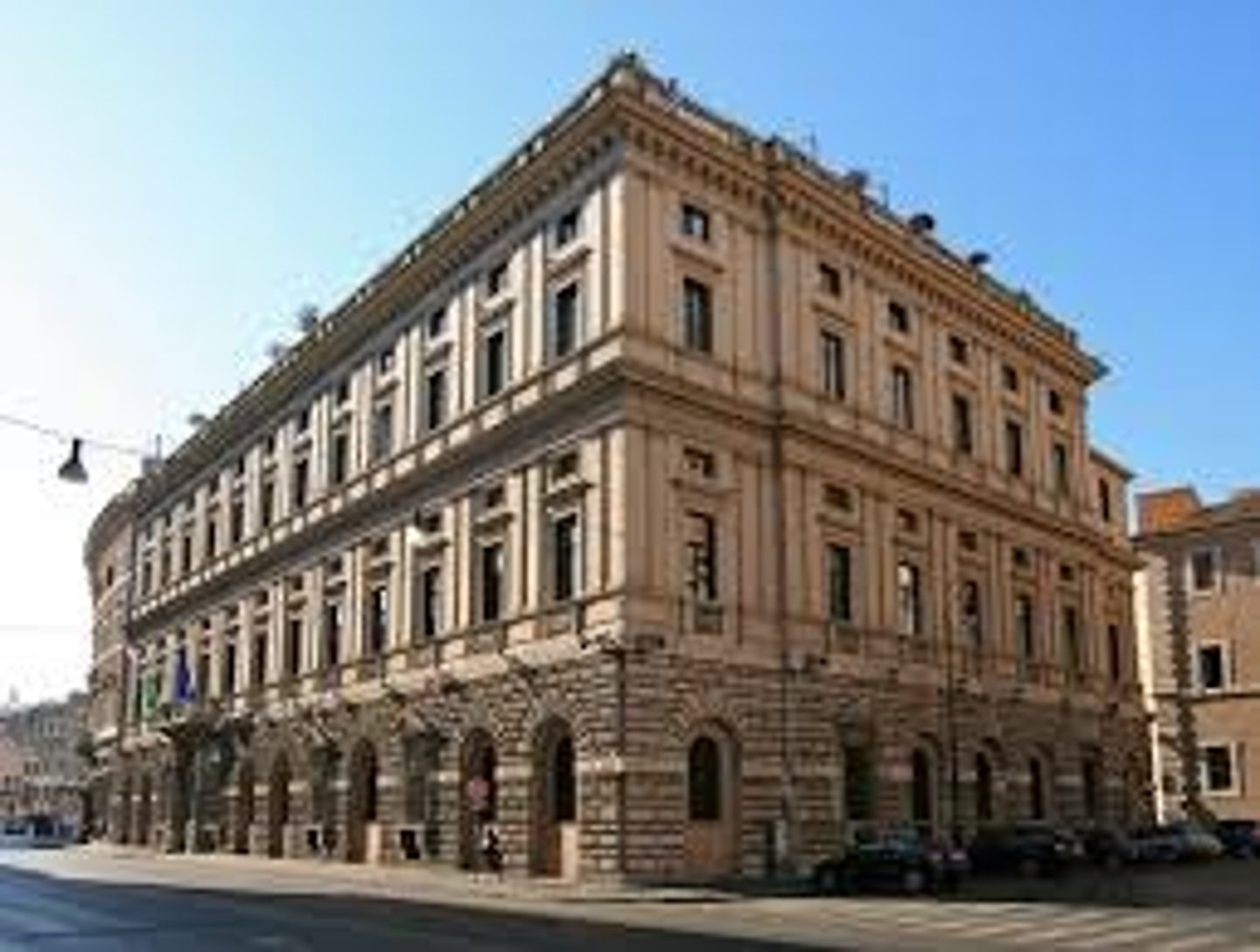
Palazzo Vidoni-Caffarelli
Time: 1520s
Creator: Lorenzetto
Location: Palazzo Vidoni-Caffarelli
Extra: copies Palazzo Caprini which was designed by bramante
Rusticated travertine exterior
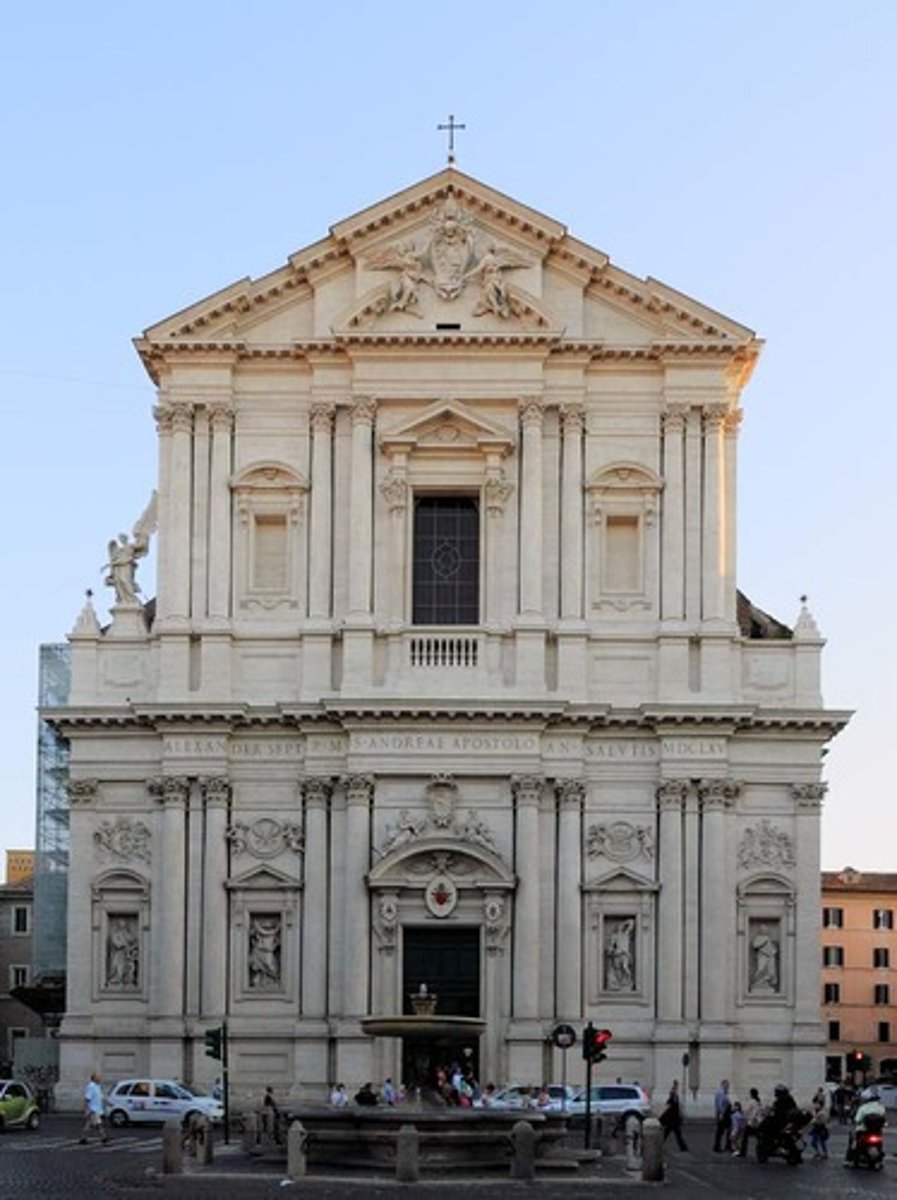
Sant'Andrea della Valle
Time: money given and facade started in 1590s. Finished in 1650s
Creator: Giacomo della Porta (architect), Domenichino (painter), Lanfranco (painter)
Location: Sant'Andrea della Valle
Extra: mother church of theatine order
Church was big enough to bring in people, teach them what it meant to be catholic
Wide nave fits a lot of ppl
Not a basilical plan → no side aisles, central nave
Side chapels - become standard in 15th C, would be sold to wealthy families
Barrel vaults → carried human voice best
Got rid of side aisles to everyone could see and pay attention to the altar
Interplay between clergy and laypeople, clergy have to walk past them to enter - sense of participation
Dome w drome represents heaven
All orders founded in 16th c (e.g. Jesuits and Theatines) were a reaction to protestant reformation, emphasis on greater spirituality, ideas of christian love and charity are important. Fur
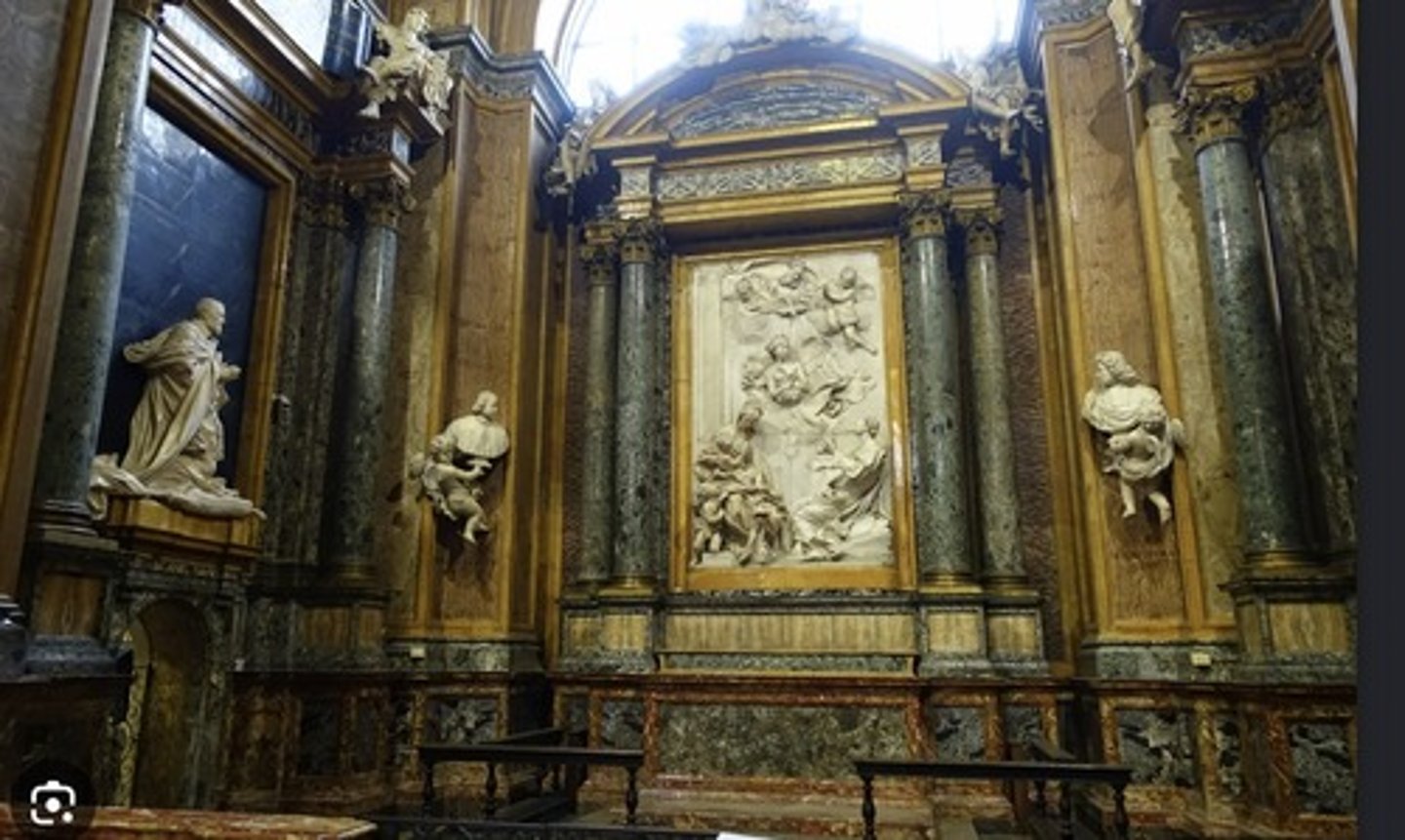
Ginetti Chapel
Time: 1670s-1680s
Creator: Carlo Fontana
Location: Sant'Andrea della Valle
Extra: bernini-esque → all colored marble, except statues remain white
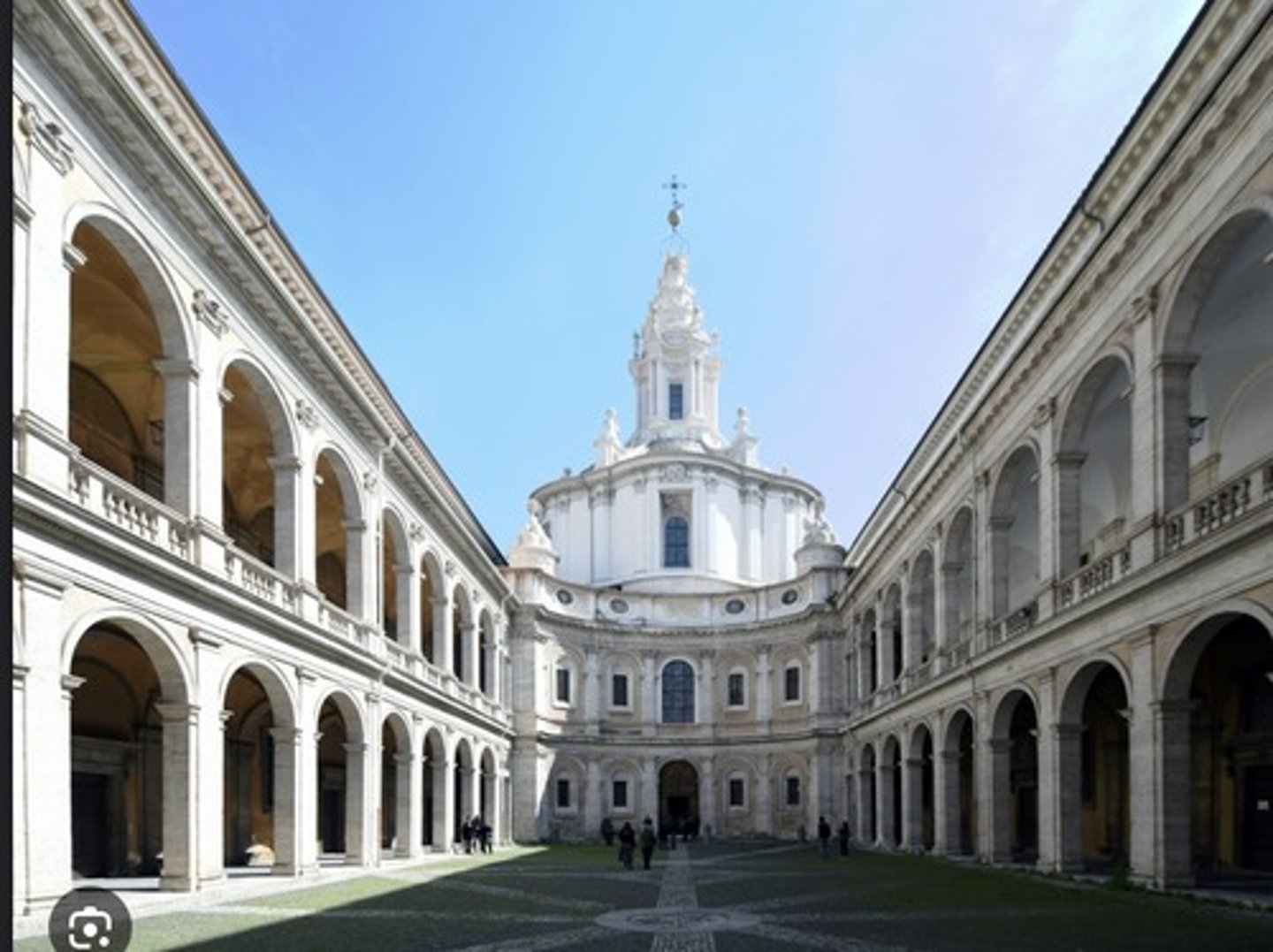
Sant'Evo Sapienza
Time: 1642-1660
Creator: Boromini
Location: Sant'Evo Sapienza
Extra: hexagonal, spiral lantern
Popes paid for everything (civil lawyers receiving an education @ this university). Chapel @ roman university
From far away, top looks like just layers. But when you get closer you can see that it's actually a spiral. Spiral inspired by tower of babel bible story → students lucky enough to be illuminated, use knowledge for good
Sant'Evo Sapienza Doors (LP)
Time:
Creator: Boromini
Location:
Extra:
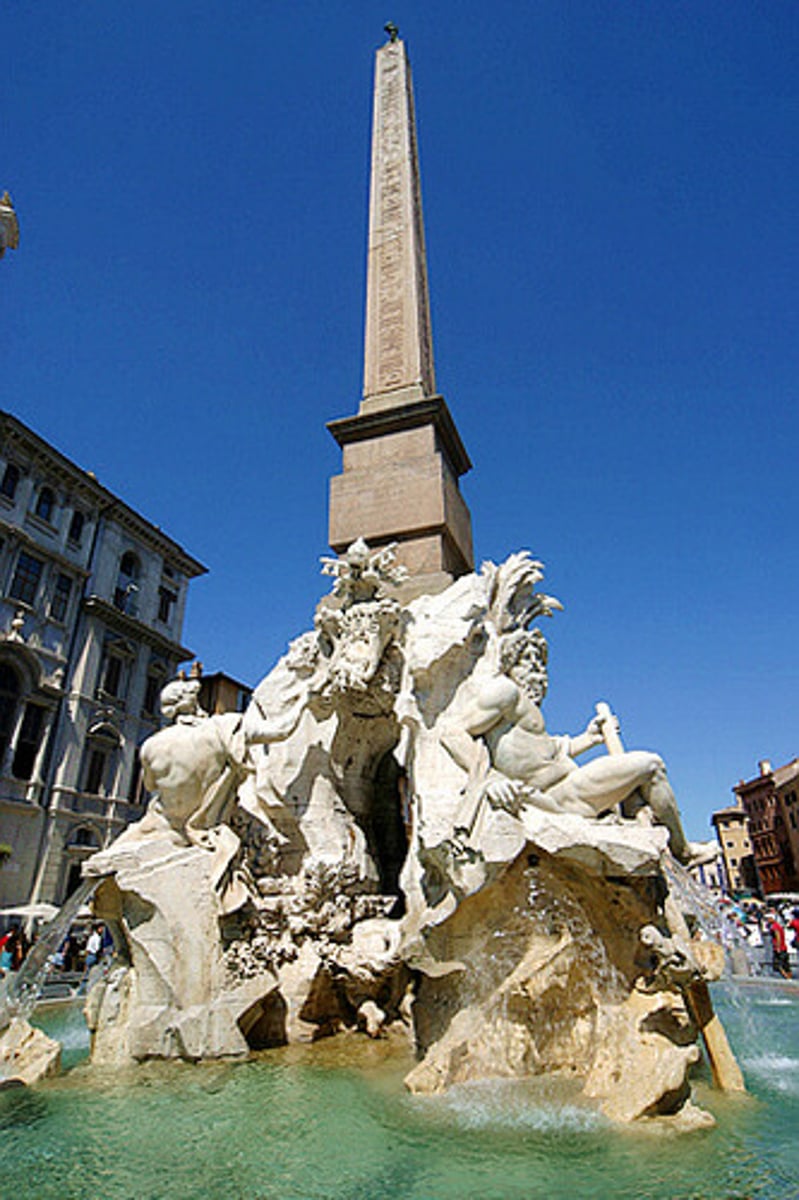
Fountain of the Four Rivers
Time:1647-1652
Creator: Bernini (Patron: Pope Innocent X Pamphili)
Location: Piazza Navona
Extra: fountain made to hold obelisk of dominican. 4 figures, river god poses, classically inspired
Gangese (asia) → lack of flora/fauna, reflects mountainous terrain. Slowness of river, holding oar. Dragon head. Turned away from obelisk - catholicism didn't catch on in asia
Nile (africa) → shroud over head - unknown origin of nile @ time, ignorance of africa to christianity. Date palm + plants assoc. w fertility/life
Danube (europe) → both arms reach up to obelisk, one hand touches Pamphili crest. Laurel wreath - eurocentricism. Largest river in europe. Plants and blooming flowers
Rio della plata (americas) → huge missionary focus in south america. Silver coins = riches of the americas. Pear tree, armadillo - perceived exoticism. Exotic head, looks like stereotypical depiction of black africans
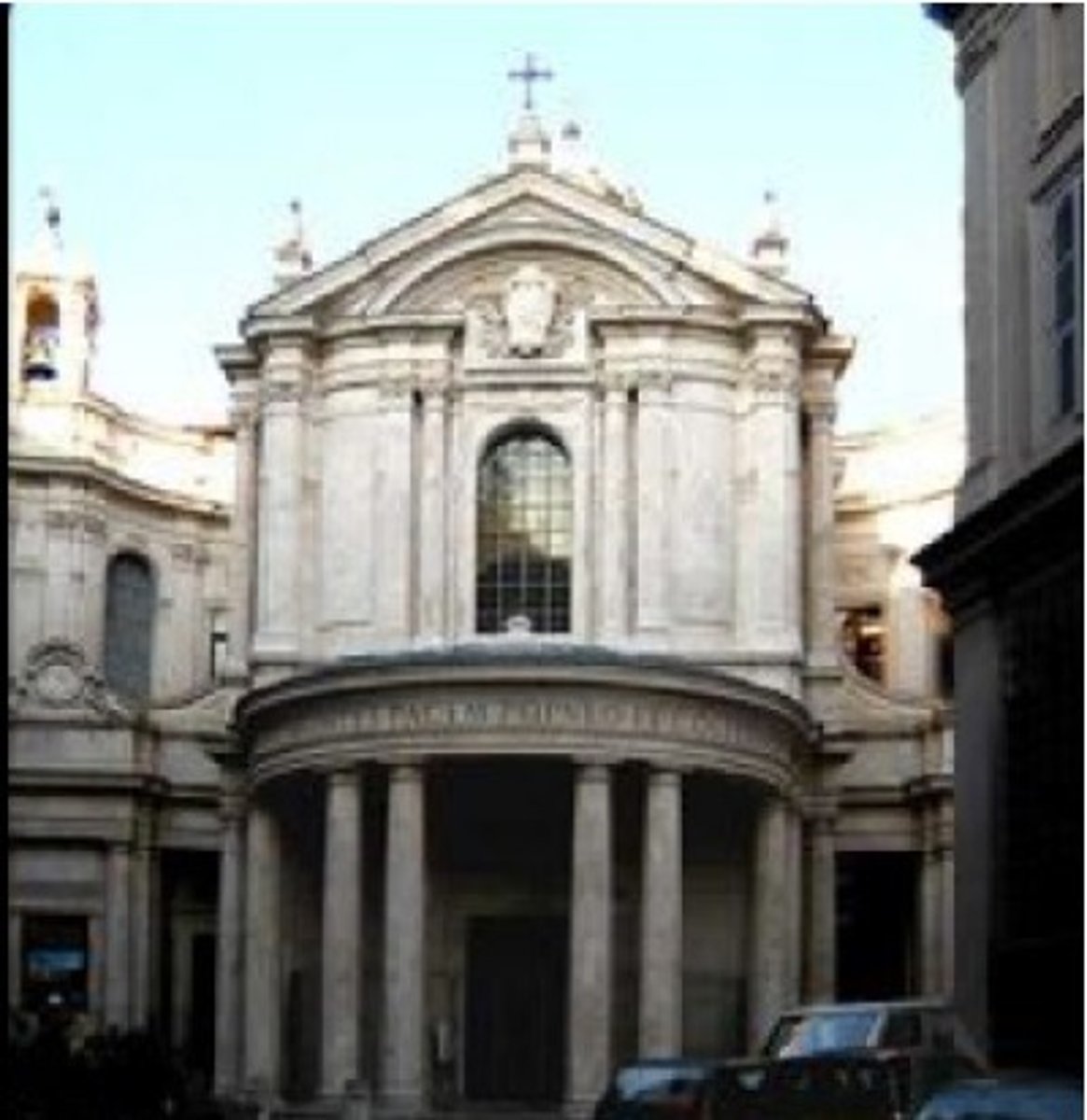
Santa Maria del Pace Facade
Time: 1655-1657
Creator: Pietro da Cortona (Patron: Pope Alexander VII Chigi)
Location: Santa Maria del Pace
Extra: Cortona designed piazza and facade
Location is kinda cramped, multiple alleyways. 8 paired tuscan doric style columns. Raphael fresco inside church
High baroque → second half of the 1650s
In the Piazza della pace, kinda near the piazza navonna → jammed in between a bunch of other buildings
Cortona making reference to temple of peace in the forum (which was round), but this of course is a christian temple
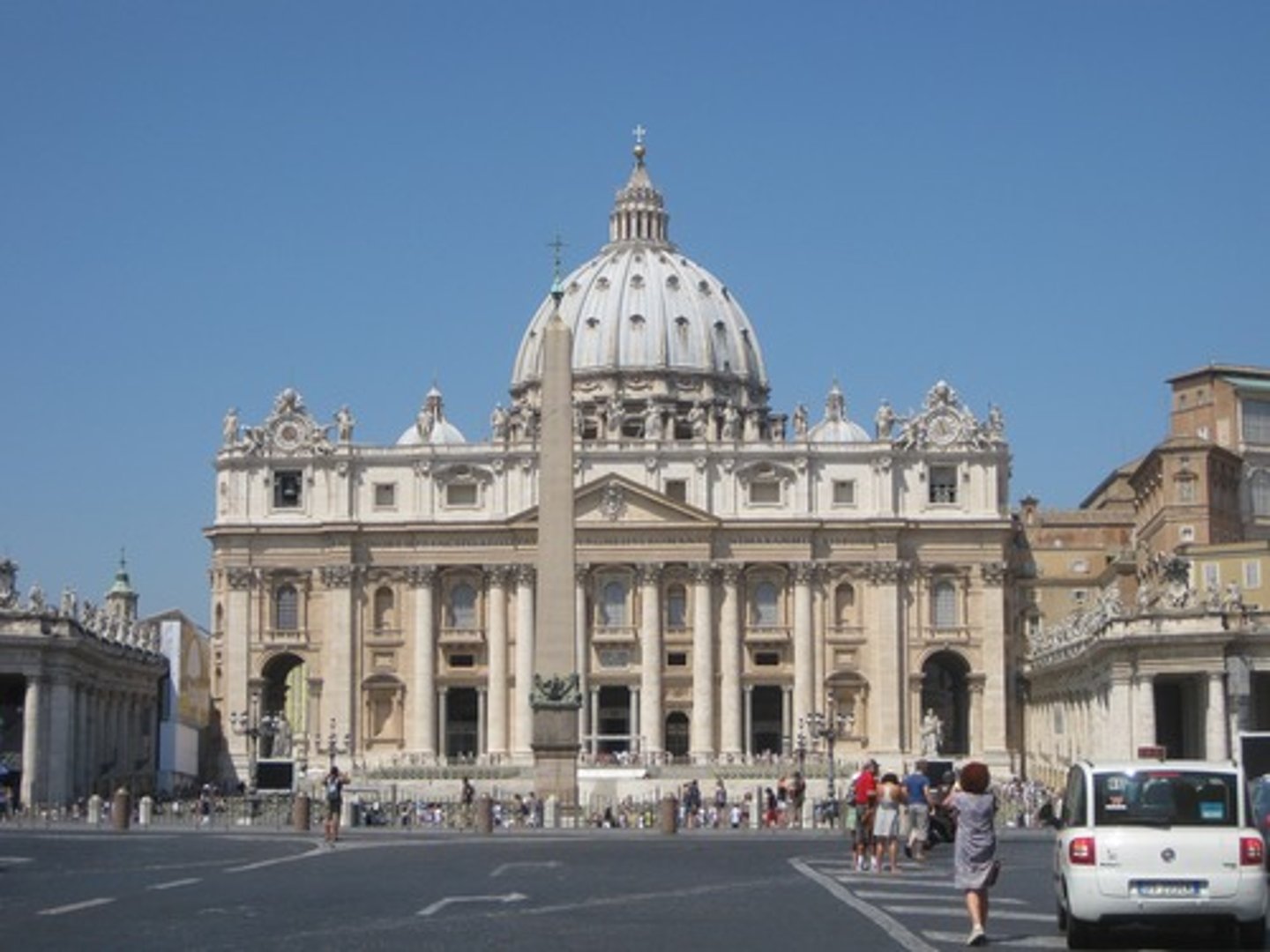
St Peters Facade
Time: 1608-1612
Creator: Carlo Maderno (Patron: Pope Paul V Borghese)
Location: Vatican City
Extra: originally was only width of the visible inscription with side bays added later
single register with large entablature
influenced by Vignola's unused Il Gesu design
Use of columns and pilasters to create depth on a flat facade
Meant to emphasize the central balcony for papal appearances
Honey colored varnish on back walls but not columns to create more depth
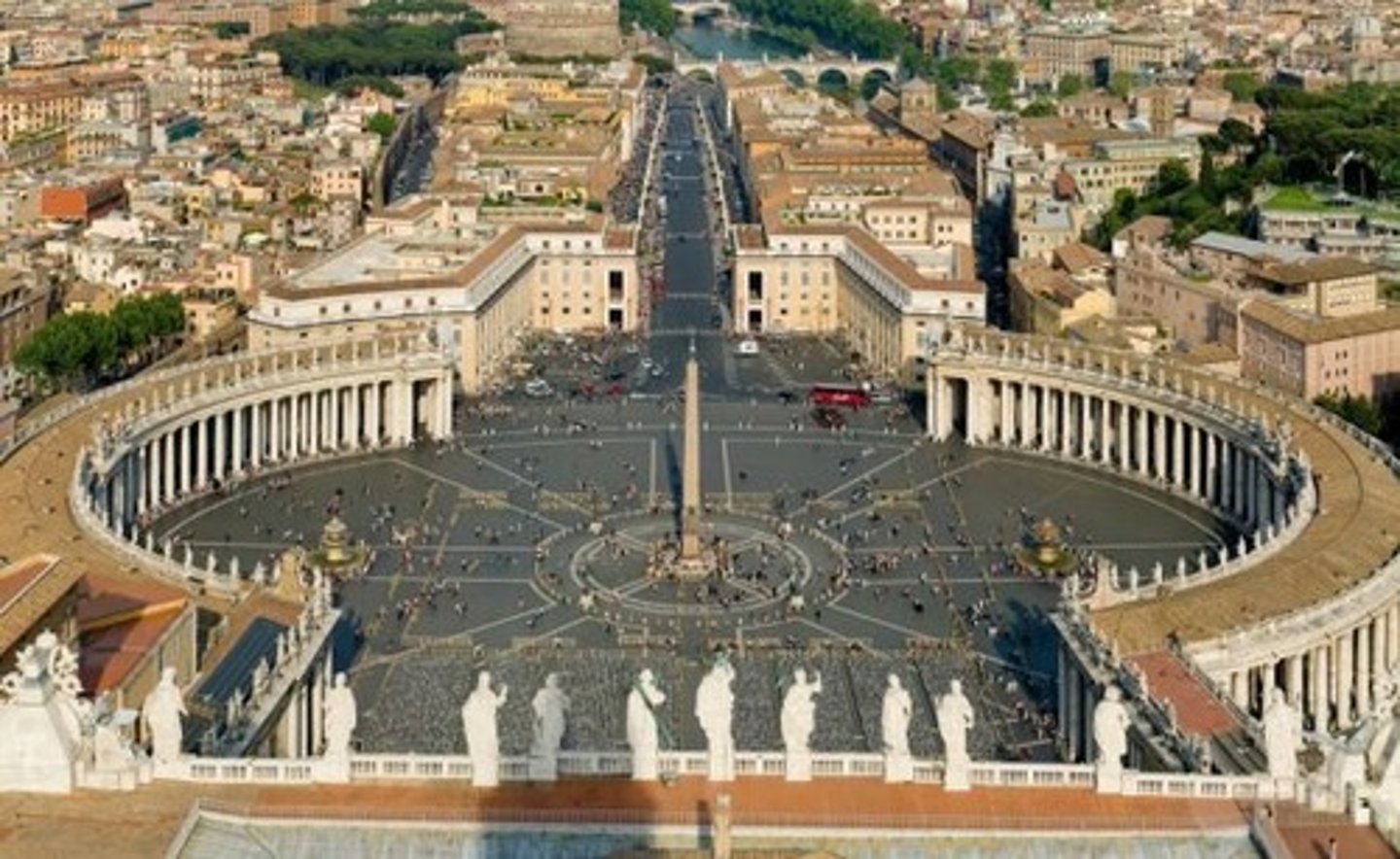
St. Peters Square (Piazza San Pietro)
Time: 1656-1667
Creator: Bernini (Patron: Alexander VII Chigi, finished under Clement IX)
Location: Vatican City
Extra: oval piazza with 2 colonnades (southern and northern), tuscan doric columns
Southern colonnade done first, actually enters into papal palace while northern colonnade is just for symmetry
Never completed, third arm was meant to exist between the two existing ones
Piazza itself is meant to act as a church
There is an altar, also relic of the true cross in the obelisk topper
Also meant to mimic a theater/circus with obelisk and fountains
St peter was killed on spina of a circus
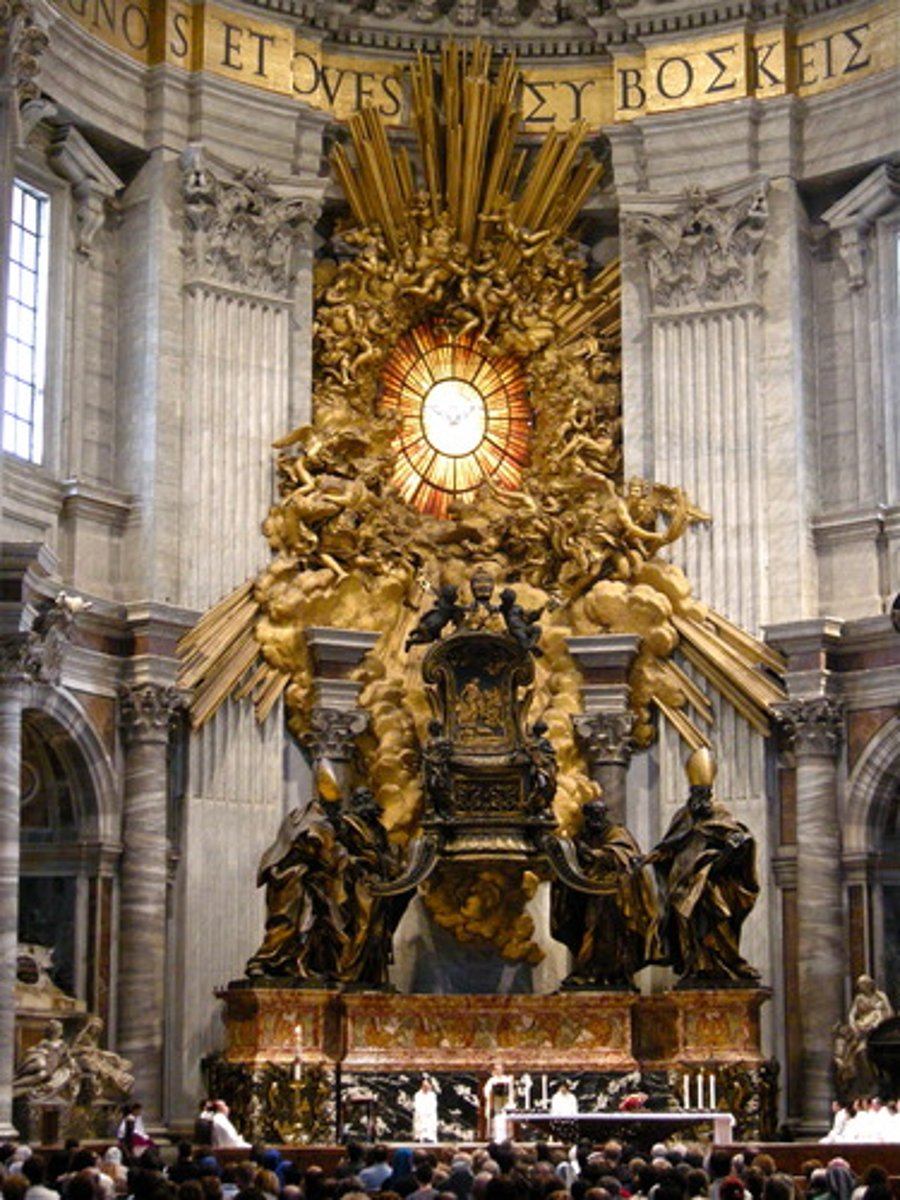
Cathedra Petri
Time: 1657-1666
Creator: Bernini
Location: St. Peters Basilica
Extra: chair of st peter enclosed within throne. throne is the center of the space, represents multiple layers of authority. scenes on the throne - christ ordering peter to lead, transfer of authority, handing over keys. gilded bronze
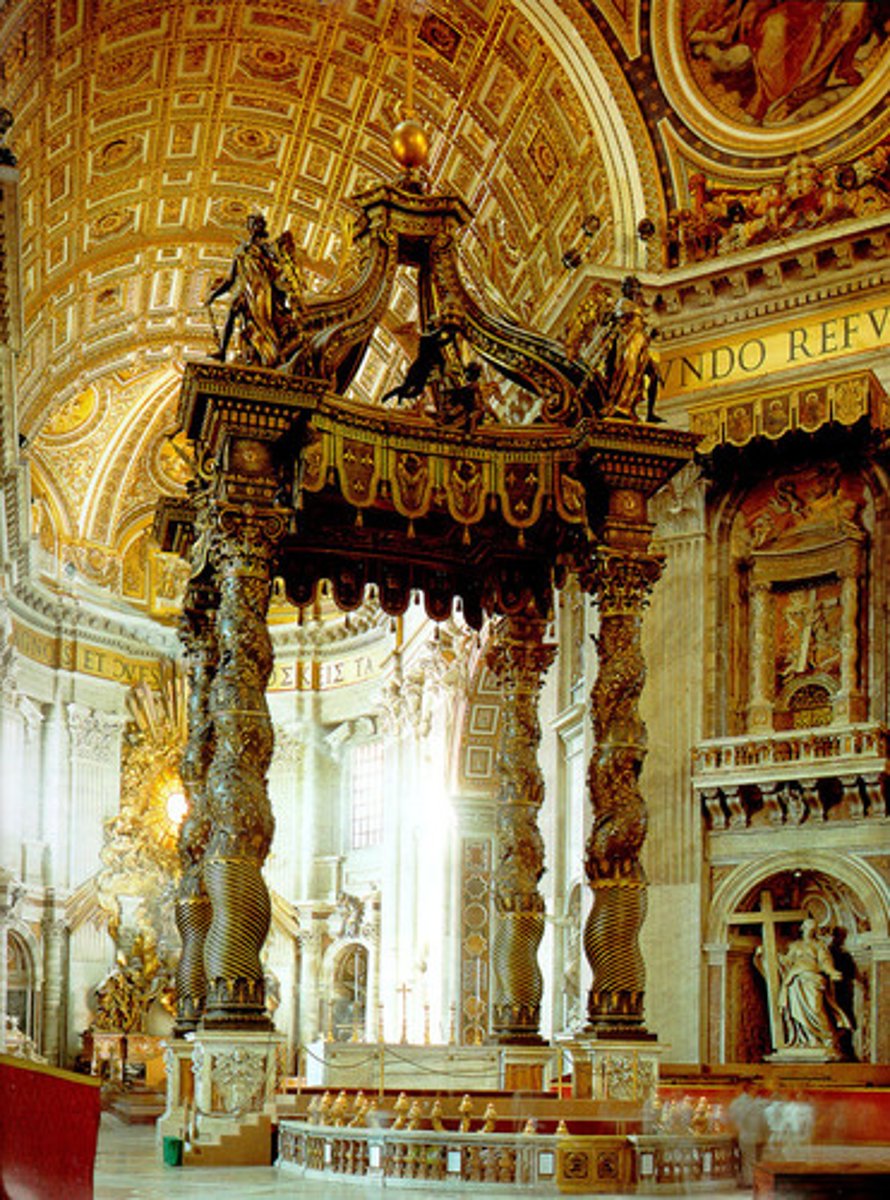
Altar Baldicchino
Time: 1624 -1633
Creator: Bernini
Location: St. Peters Basilica
Extra: made out of wood covered in bronze
Same spot as altar in old st peters
Makes references to both peter and paul
Mixes two different type of altar coverings
scrolls - Boramini-esque
twisted vine covered columns
St Peters Basilica Dome
Time: 1588-1590
Creator: Michelangelo, Giacomo della Porta
Location: St. Peters Basilica
Extra: double dome, 2nd largest dome in the world. God the father in center of dome. stars, ranks of angels. as you come up the nave, first figure you see is the resurrected christ.
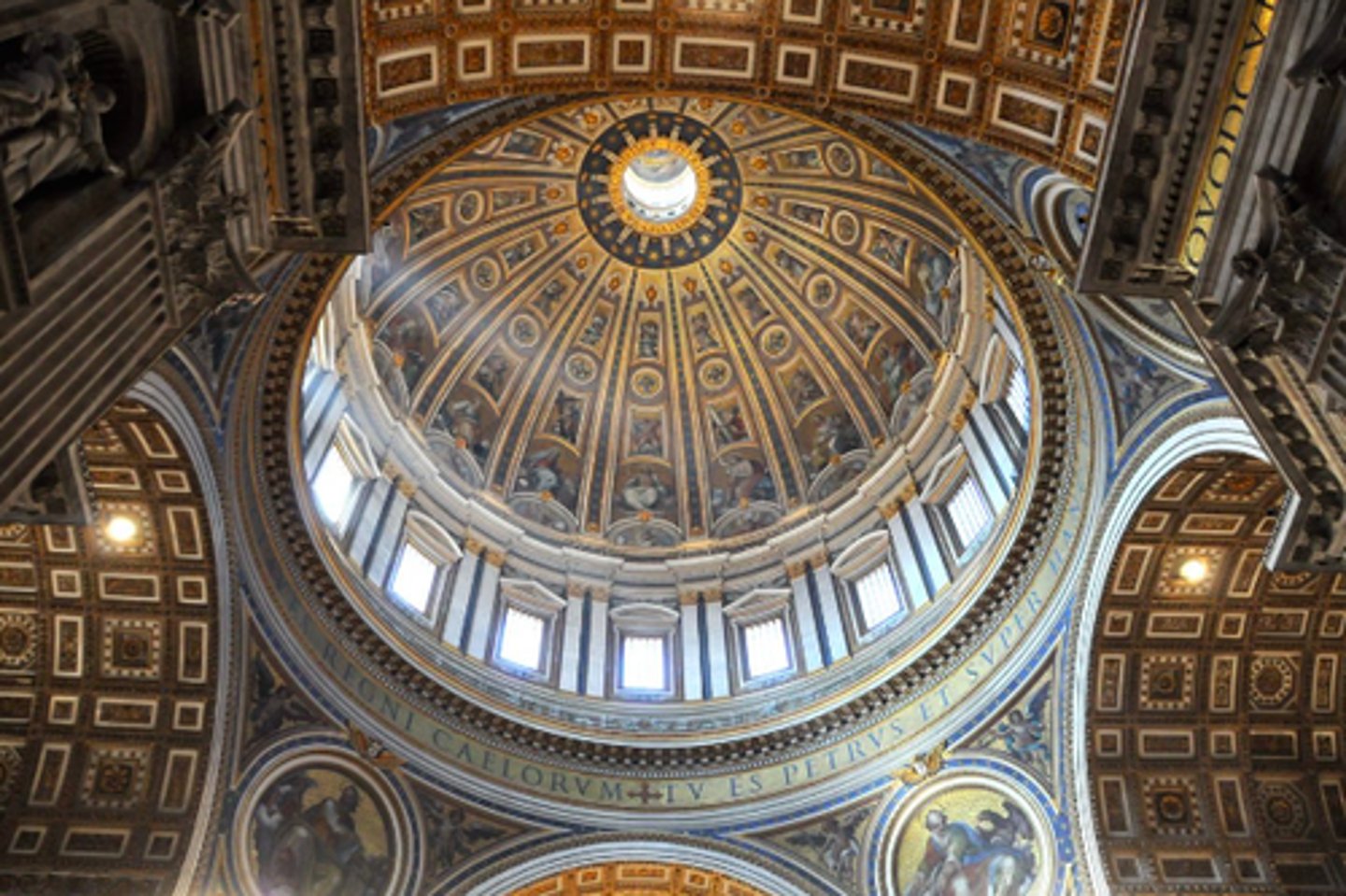
St Peters Basilica Dome piers
Time: mid 1620s-1630s
Creator: Bernini
Location: St. Peters Basilica
Extra: four piers, four relics with statues representing relics by bernini in niches
Spear of longinus, veil of veronica, true cross, St. Andrews head
Bernini designed all four, only sculpted longinus
Women looking earthwards, men heavenwards
Balconies above have aediculas with same imagery as the statue below them
Off of rooms that hold relics
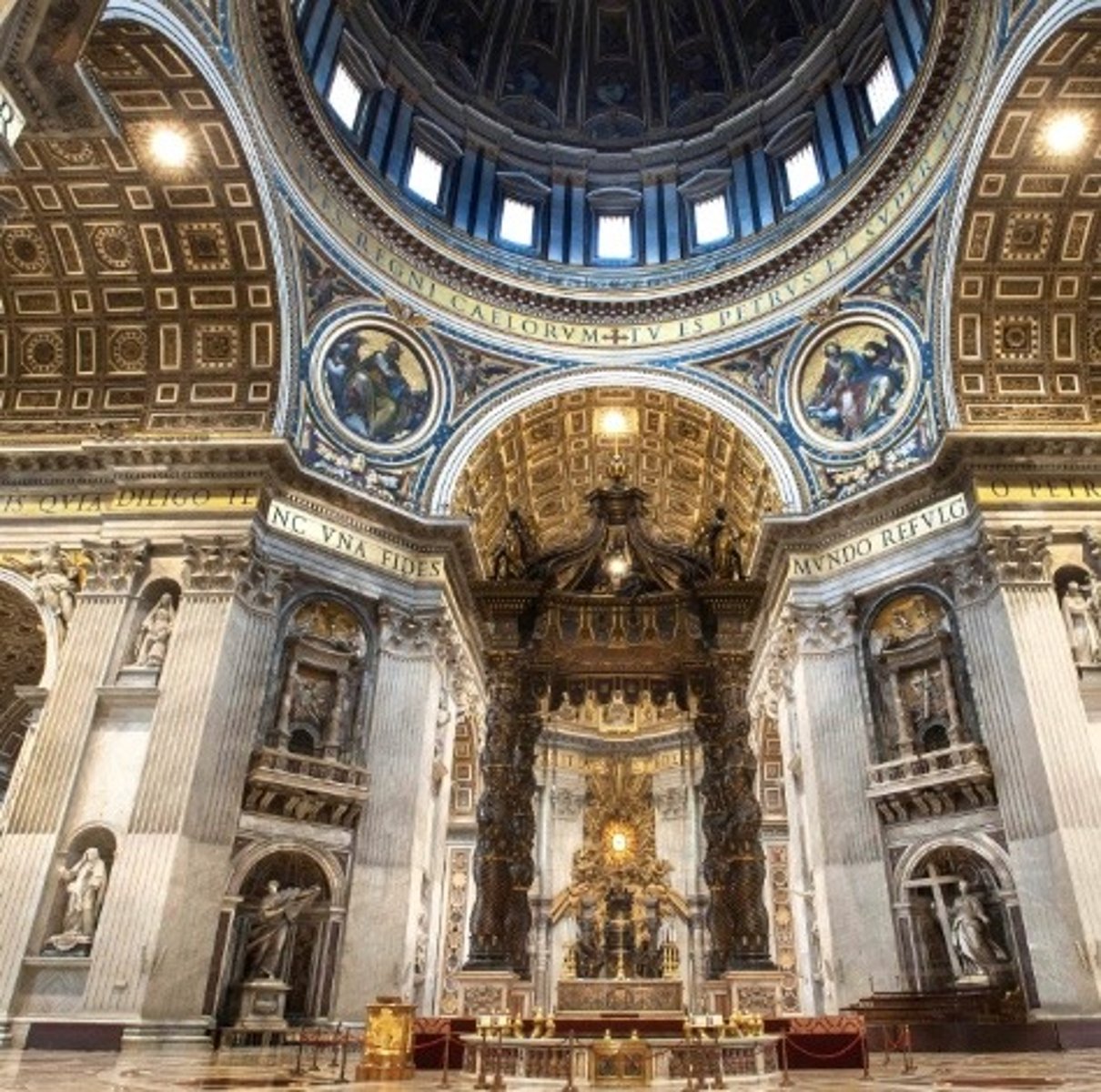
sanctity of the place + stuff that's in here (lots of relics, constantine built over body of peter, everything in here becomes holy, primary pilgrimage church in all of Catholicism)
universality of catholic religion (largest church + piazza - everyone brought here)
direct succession of each pope not from each other, but directly from peter himself (peter = first pope)
supreme authority of the papacy (pope as stand in for christ on earth, more powerful than any king/prince, etc., no higher state in the world)
earthly jerusalem (place of salvation, passing into earthly salvation, cross bridge for procession/pilgrimage of salvation, reflection of heavenly jerusalem)
ST PETERS BASILICA THEMES
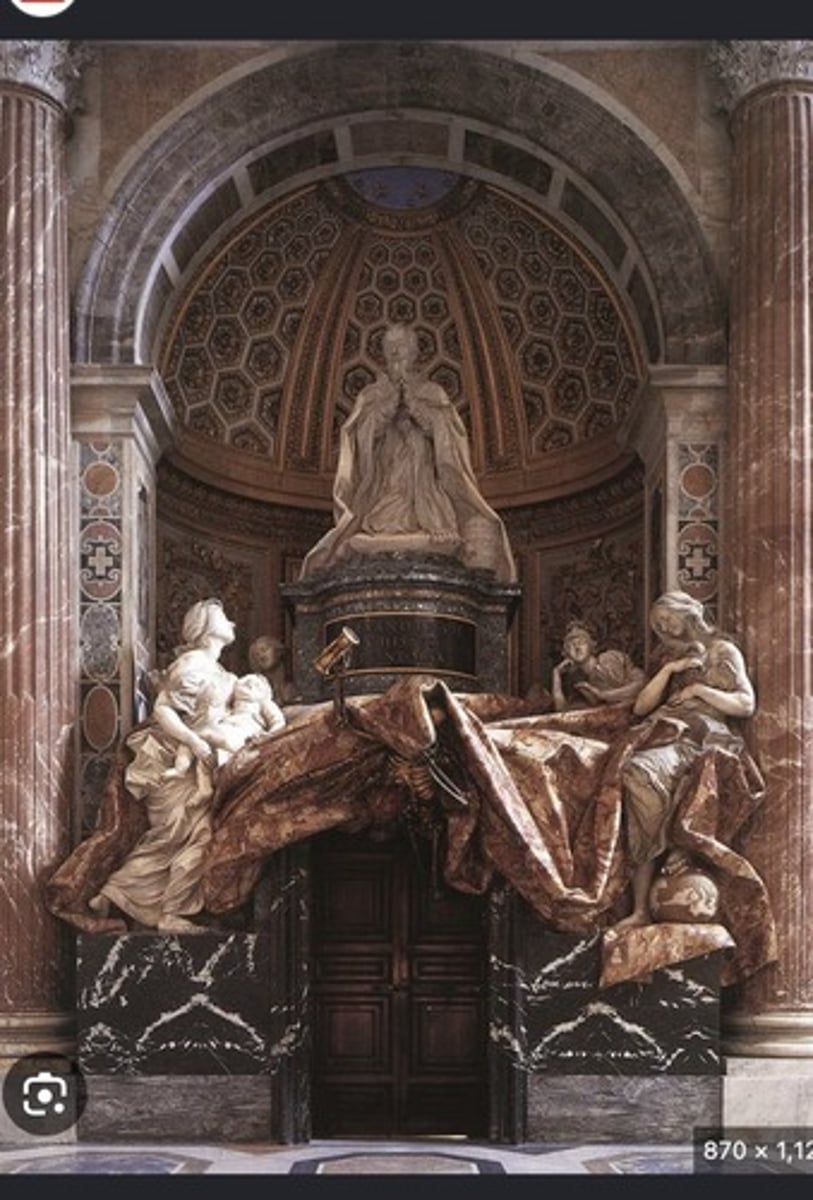
Tomb of Pope Alexander VII Chigi
Time: 1671-1678
Creator: Bernini
Location: St. Peters Basilica
Extra: last major sculptural commission by bernini
Figure of death @ front → hooded, holding hourglass
Mother holding baby on left side → charity
Woman on left holding bronze sun → truth
Also in back are female figures of prudence and justice (hard to see/hidden)
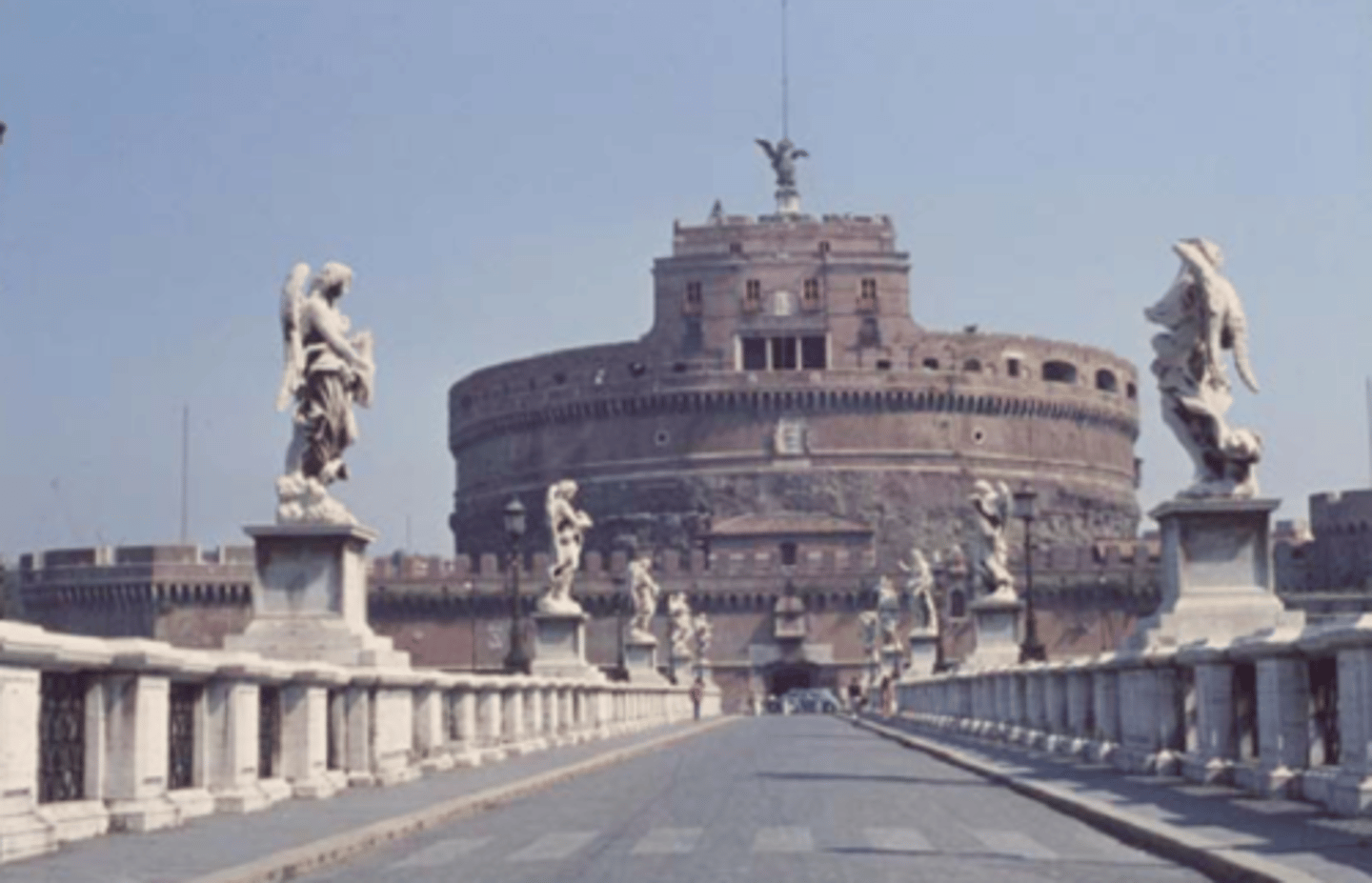
Ponte Sant'Angelo Angels
Time: 1668 (1667-1669)
Creator: Bernini
Location: Ponte Sant'Angelo
Extra: under pope clement 9th, taking up the renovatio romae mantle. Replacement angels are in 1671 (too beautiful to have the ogs out on display). Bernini does the designs, but only carves 2 angels himself (angel carrying superscription and angel with crown of thorns). Chronological element to bernini's angel sculptures. Guardian aspect of the angels too. Arma christi (weapons used to harm christ), go through your own via crucis as you walk along the bridge and to st peters basilica. Angels help you move from secular to holy and back, occupy this liminal space.
Villa Borghese Facade
Time: 1610
Creator: Flaminio Ponzio
Location: Borghese Gardens/Villa Borghese
Extra:
some influence from villa farnesina
Built to be a place to display the borghese families collection, not meant for living in
Not built that well, has to be renovated a lot
Used to be covered in ancient roman spoglia (e.g. friezes from triumphal arches)
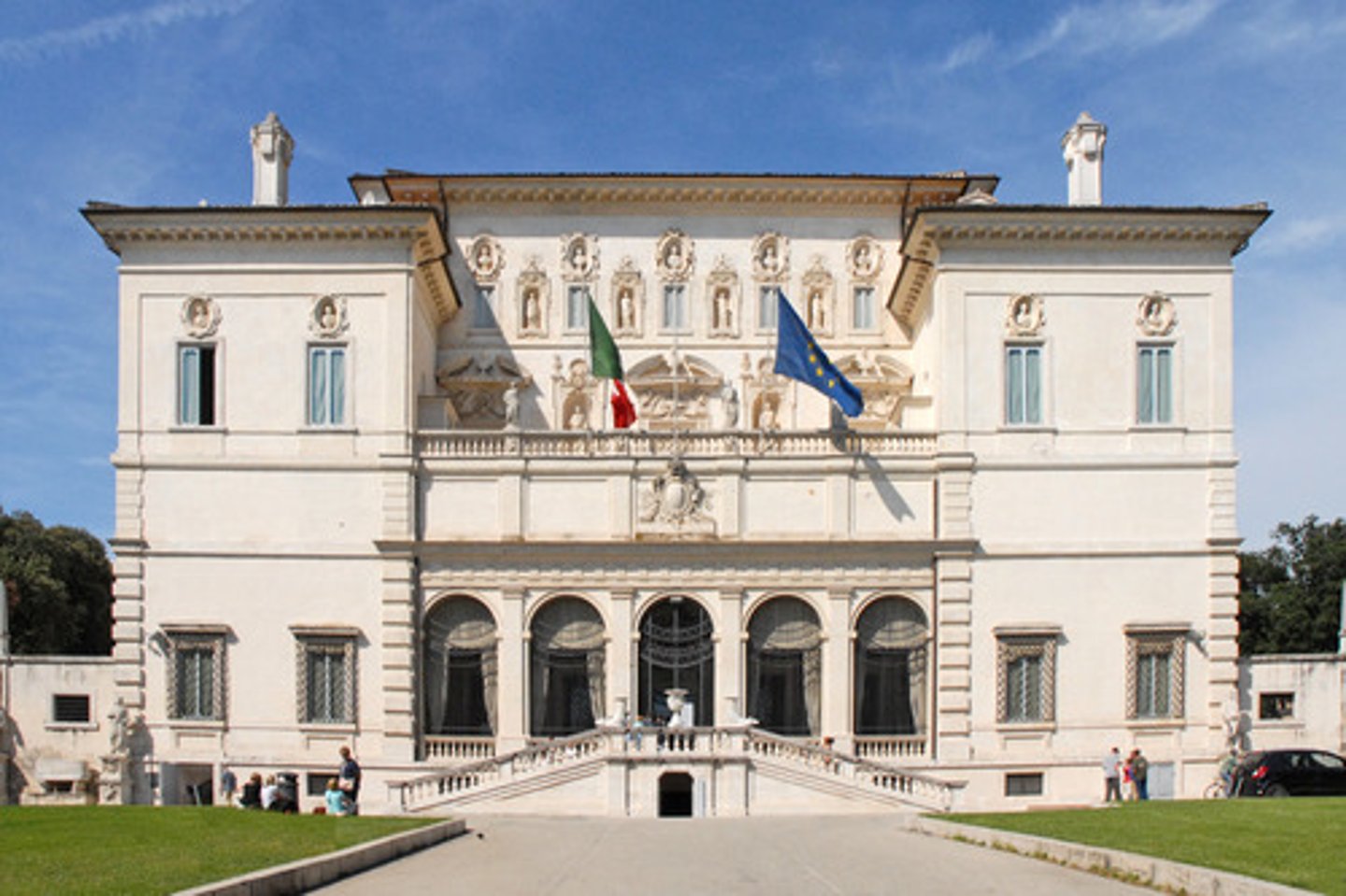
Aeneas, Anchises, and Ascanius
Time: 1618-1619
Creator: Bernini (Patron: Cardinal Scipione Borghese)
Location: Galleria Borghese
Extra:
First large-scale sculptural commission for bernini
3 stages of man
Piety, loyalty to family, important to roman history/connection
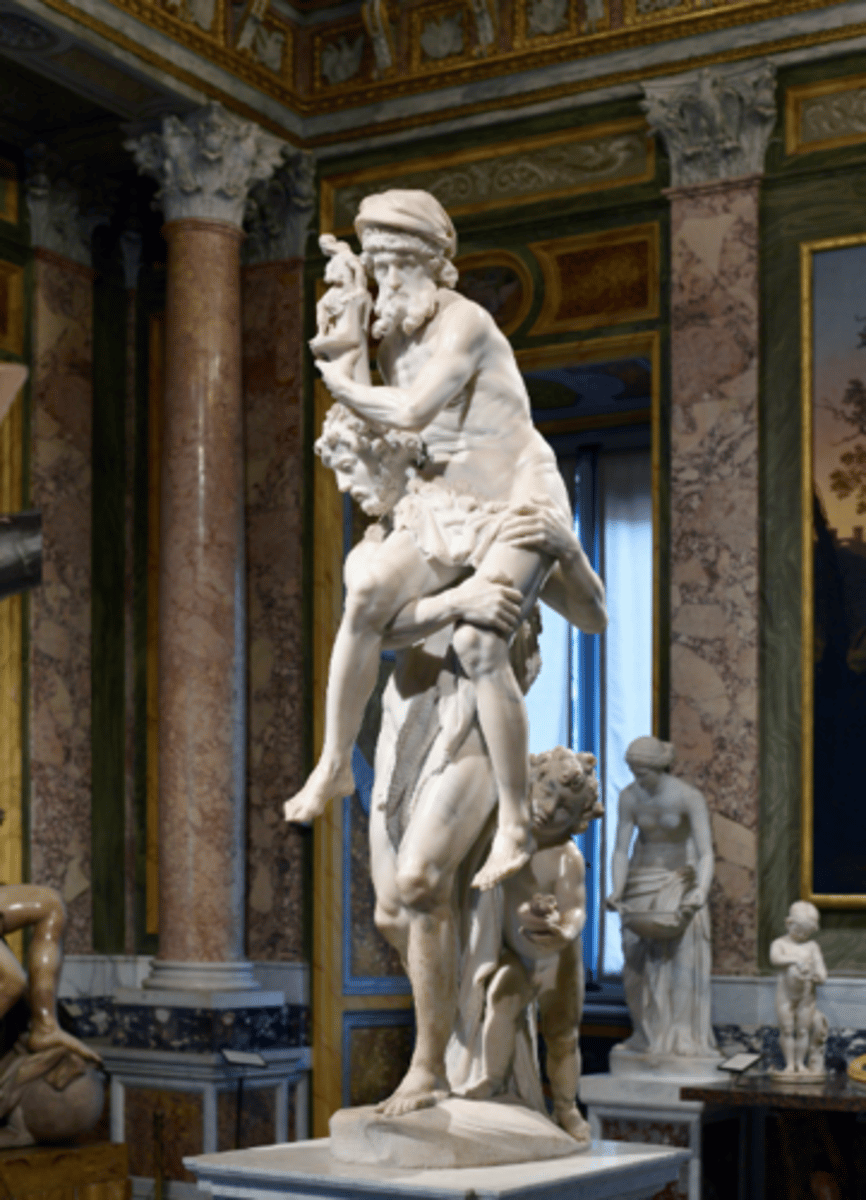
Boy with a Basket of Fruit
Time: 1595
Creator: Caravaggio
Location: Galleria Borghese
Extra:
Probably painted to be sold, not on commission
Shows how good caravaggio was at still lives
Sensual, meant to entice and then for viewer to reject the temptation
Model was likely mario minniti (a "good friend" of caravaggio, nothing gay here)
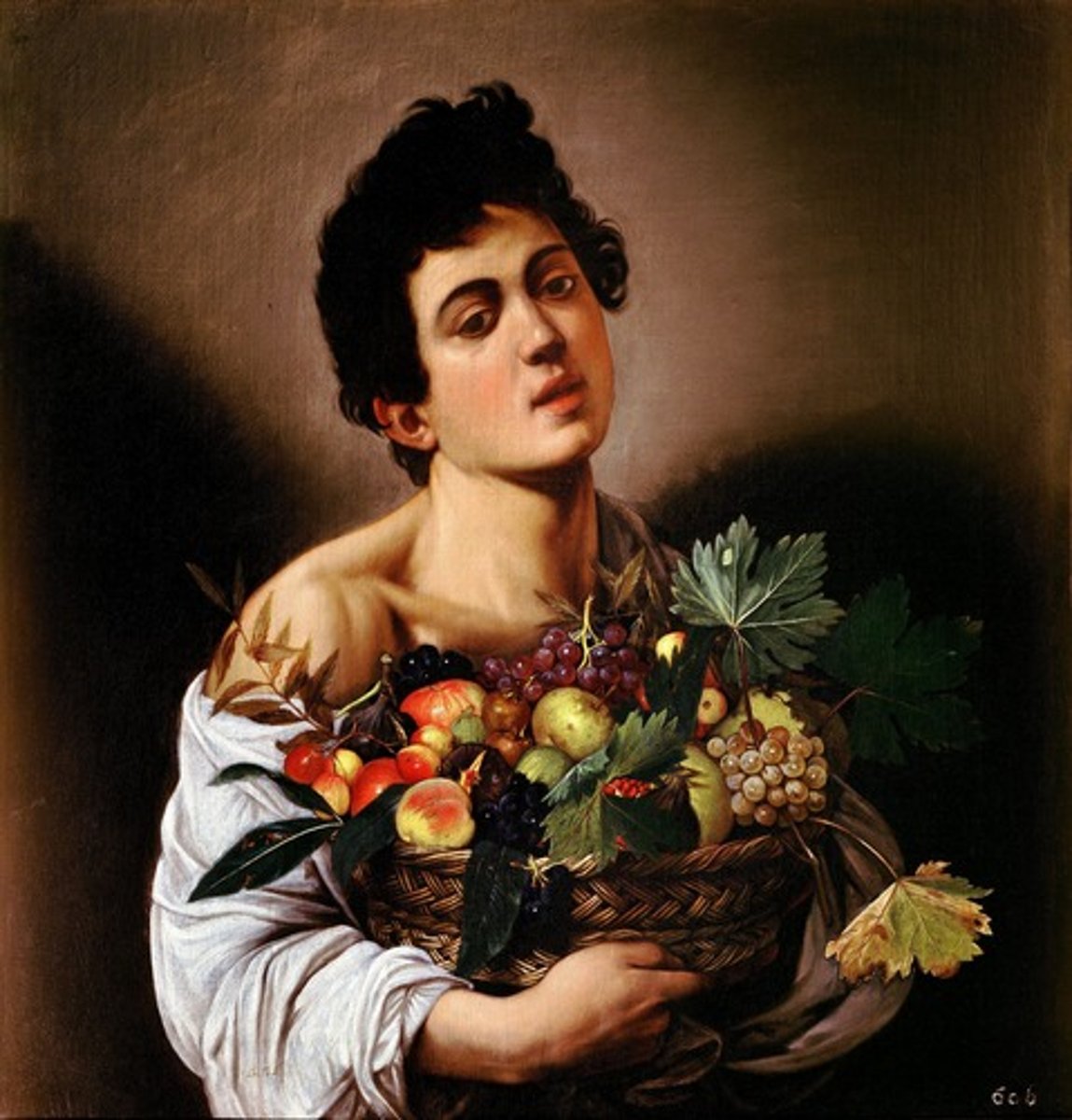
Sick Bacchus
Time: roughly 1593
Creator: Caravaggio
Location: Galleria Borghese
Extra:
Perhaps a self portrait
Dont know what the disease is
Sickly complexion but healthy body
Interaction with viewer, perhaps offering the grapes and also looking right at us
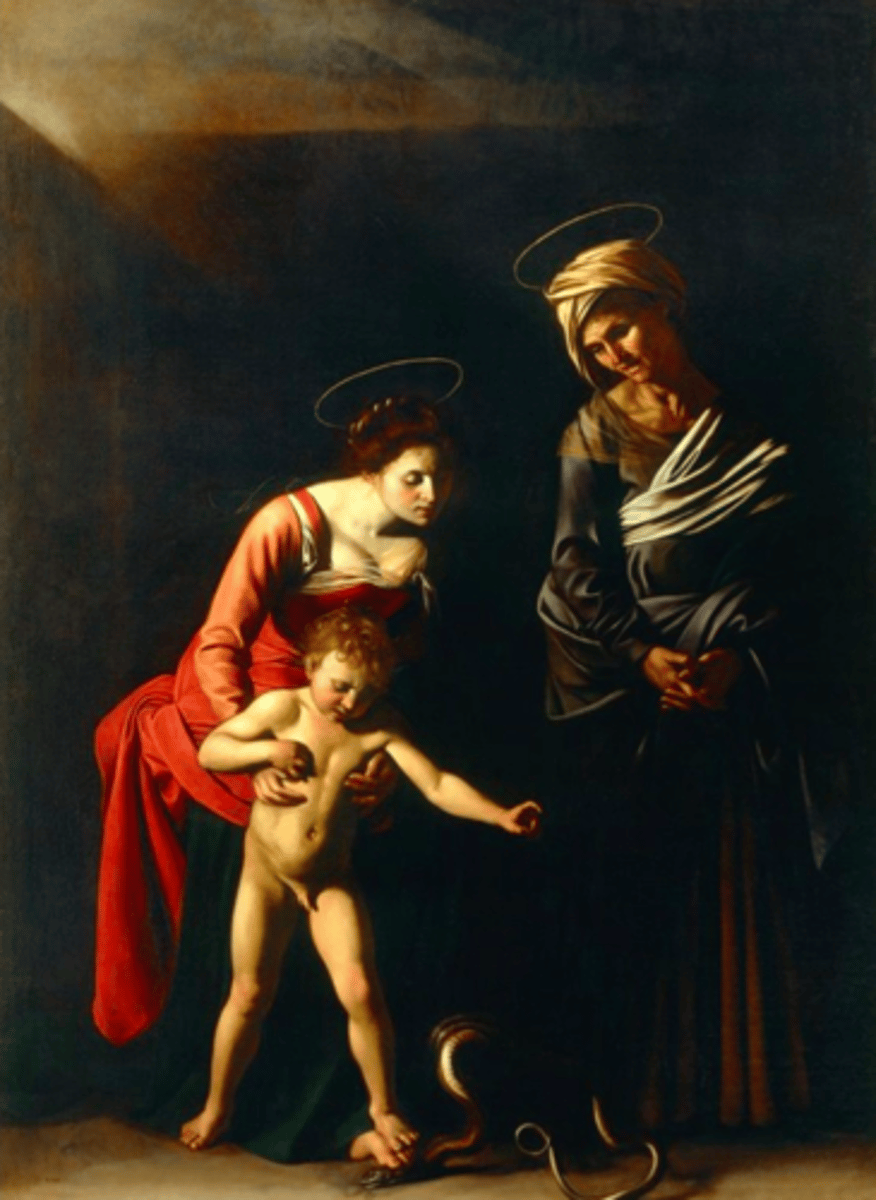
Madonna and Child with St. Anne
Time: 1605
Creator: Caravaggio
Location: Galleria Borghese
Extra:
Referring back to genesis with snake getting crushed under christs heel
Mary helping christ, anne just watching
No interaction with the audience (weird!)
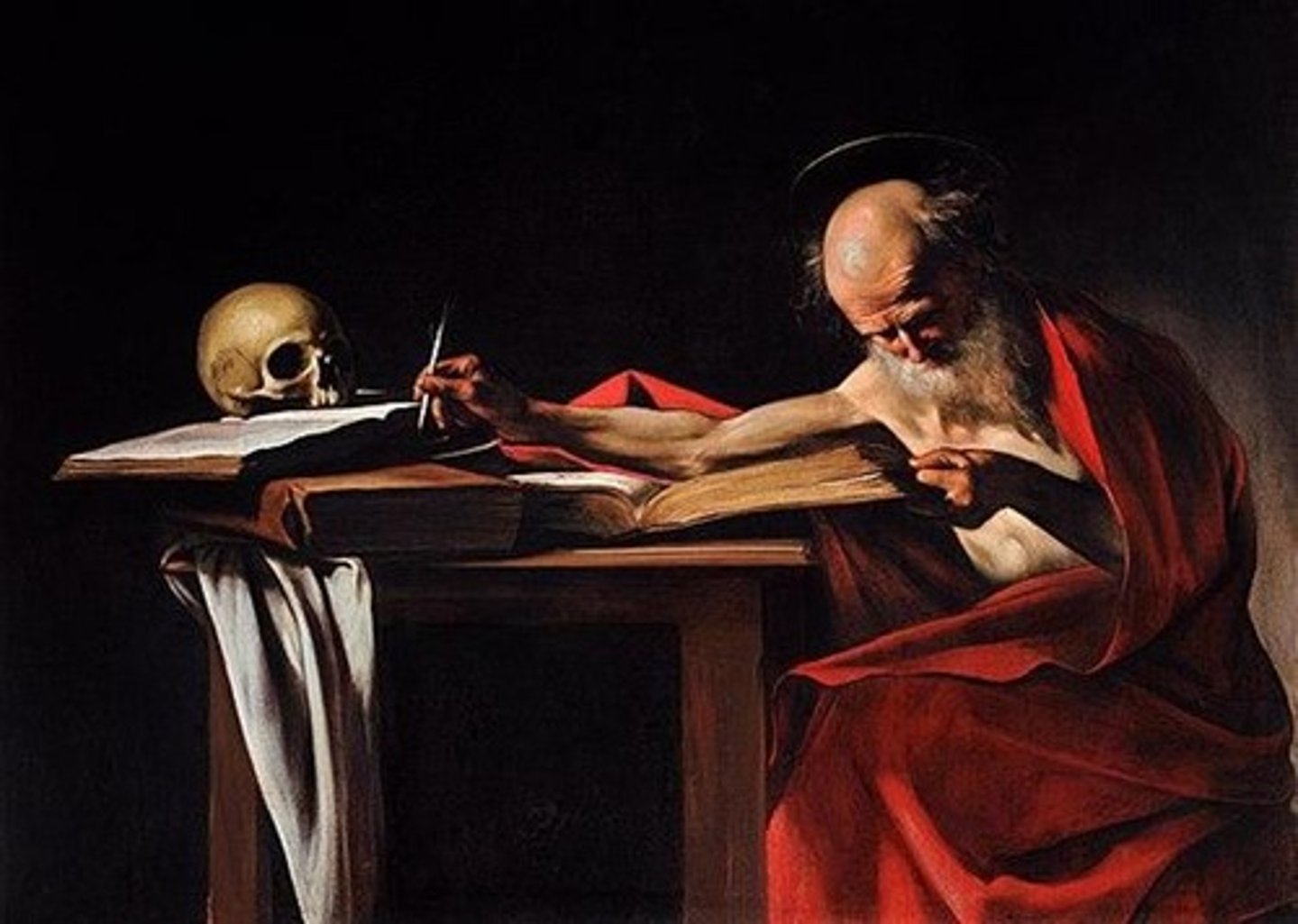
St. Jerome Writing
Time: 1605
Creator: Caravaggio (Patron: Cardinal Scipione Borghese)
Location: Galleria Borghese
Extra: wrapped in red blanket (red cloaks of the cardinals). receiving inspiration from God --> how do I translate the word of God? (translating bible into latin?) simplicity of image, just a table, skull looking @ jerome
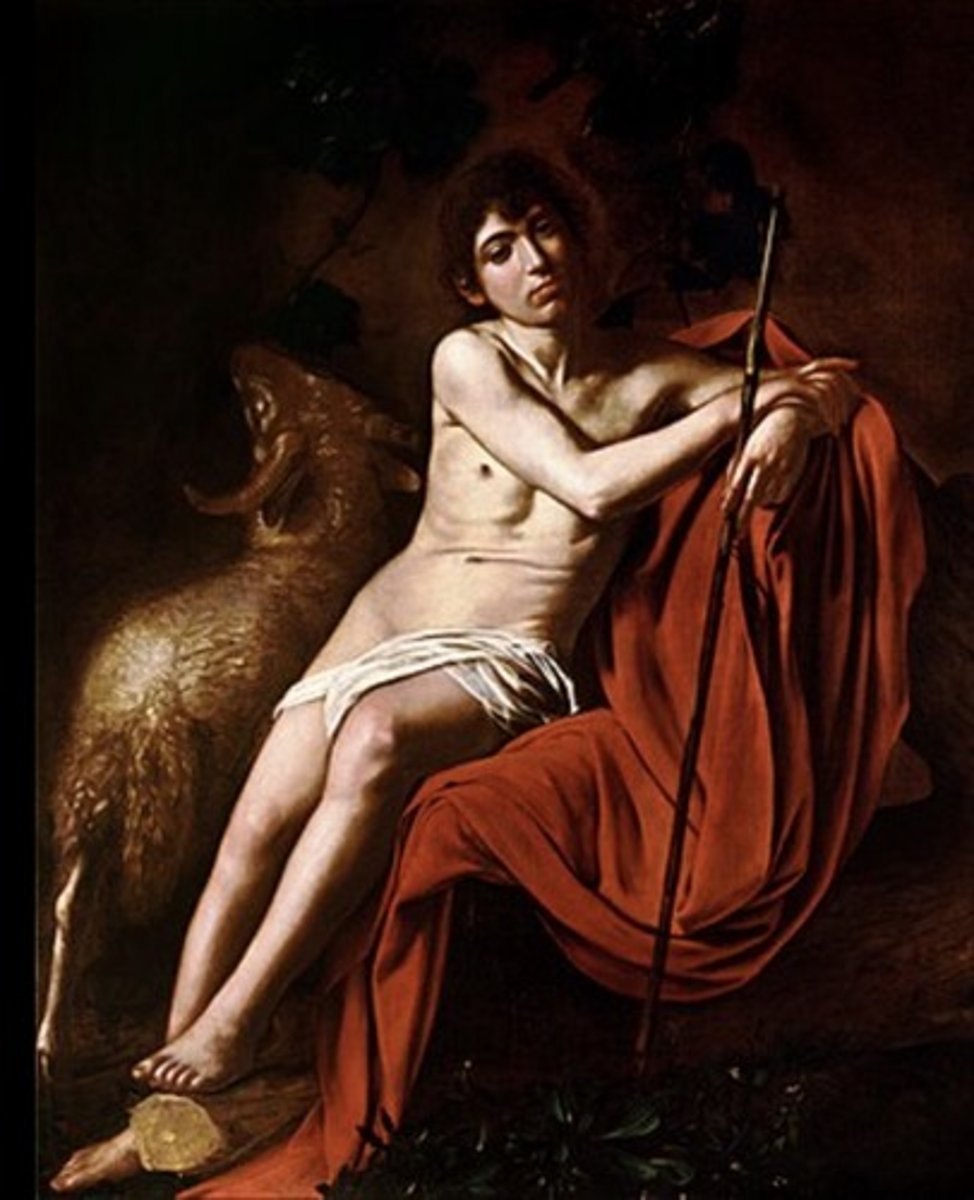
St. John the Baptist (but ACTUALLY Isaac and the Ram) (second one of these)
Time: 1609ish? Sometime in 4th period (1606-10)
Creator: Caravaggio
Location: Galleria Borghese
Extra: unfinished/incomplete painting. Ram, not lamb. Slightly earlier in Isaac story, before Isaac has been saved (other Isaac painting by Caravaggio @ Doria Pamphili is a tiny bit later in the story). Moment is strategically different. We feel the emotional state of Abraham/dad having to kill his son
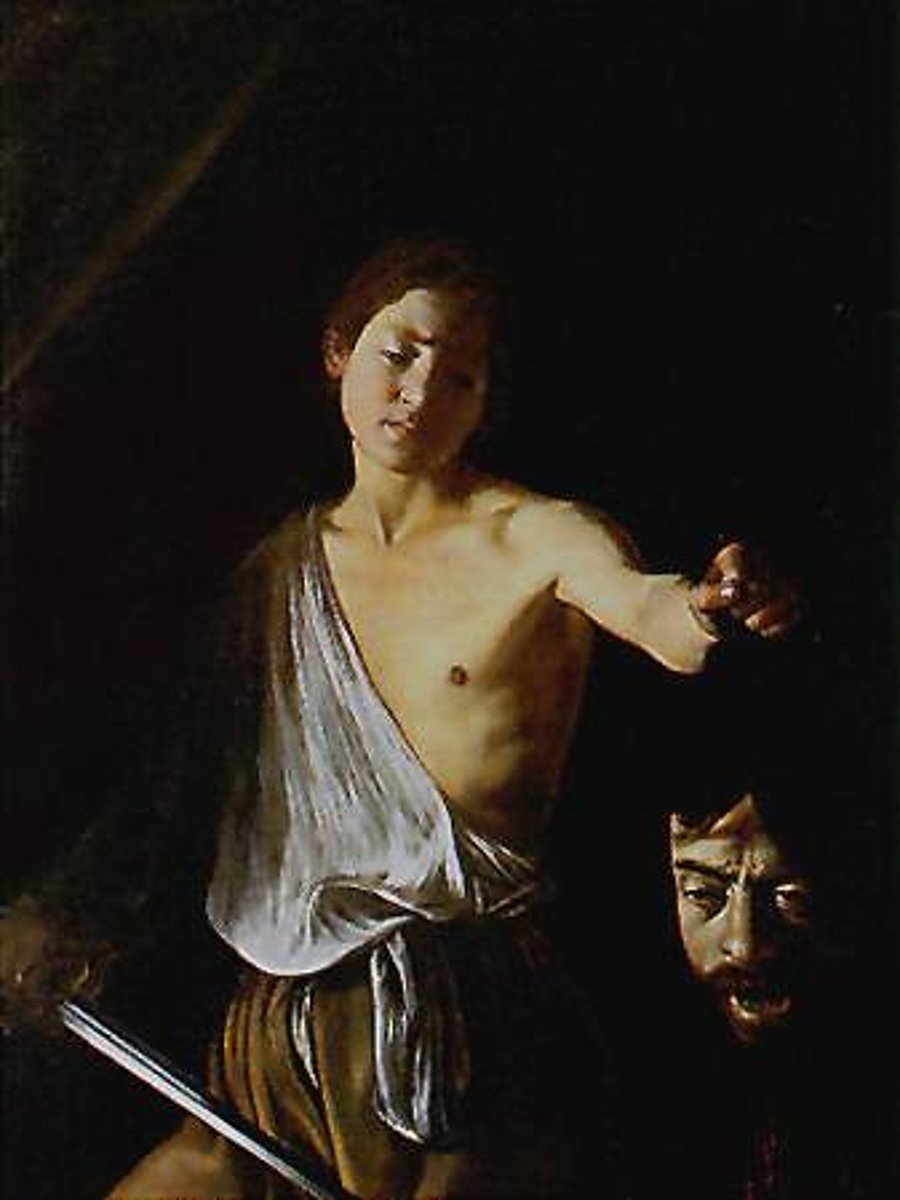
David with the Head of Goliath
Time: 1609
Creator: Caravaggio
Location: Galleria Borghese
Extra: David dressed in contemporary costume. Caravaggio shows himself as the severed head of Goliath (deep emotions here - his self portrait as decapitated head), blood gushing from dead head, holding sword near groin area
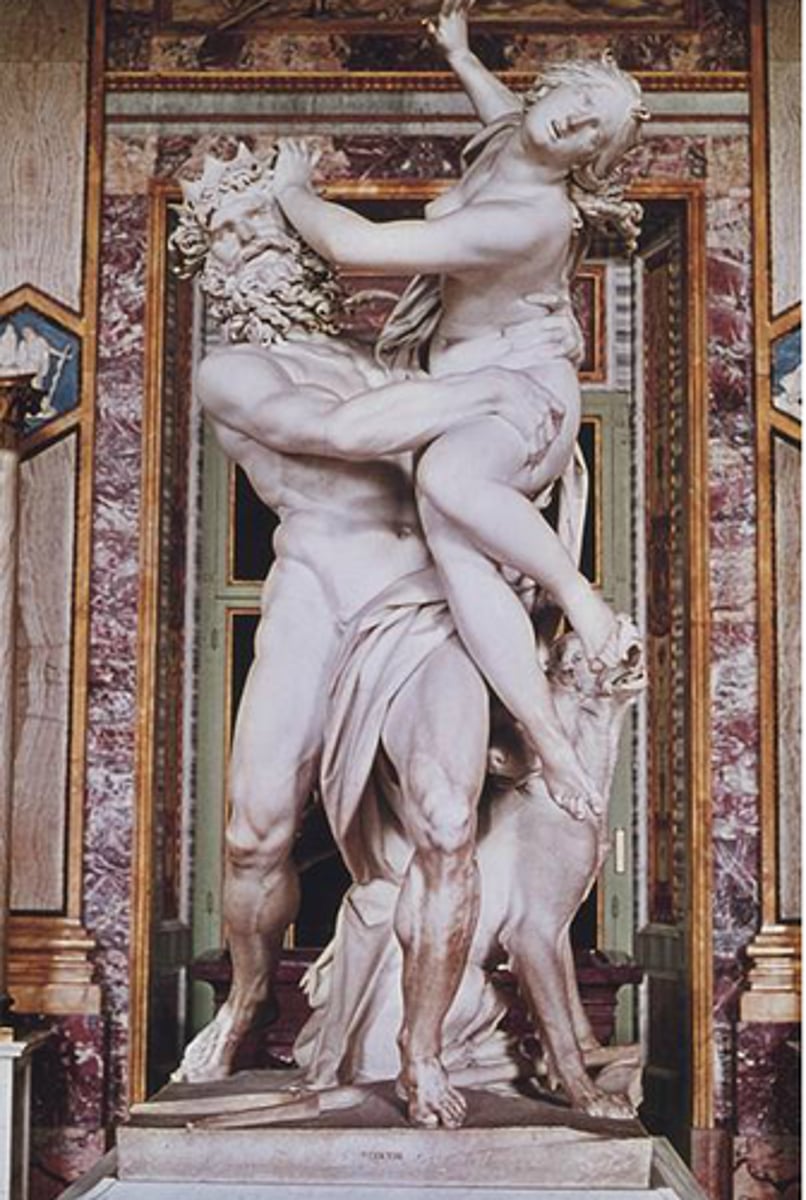
Pluto and Proserpina / Rape of Proserpine
Time: 1621-1622
Creator: Bernini (Patron: Cardinal Scipione Cafafarelli/Borghese)
Location: Galleria Borghese
Extra: Pluto abducting Proserpina for the underworld. Both figures covered up/modest. Proserpina's hair blowing in the wind. Suggestion that these figures are literally running
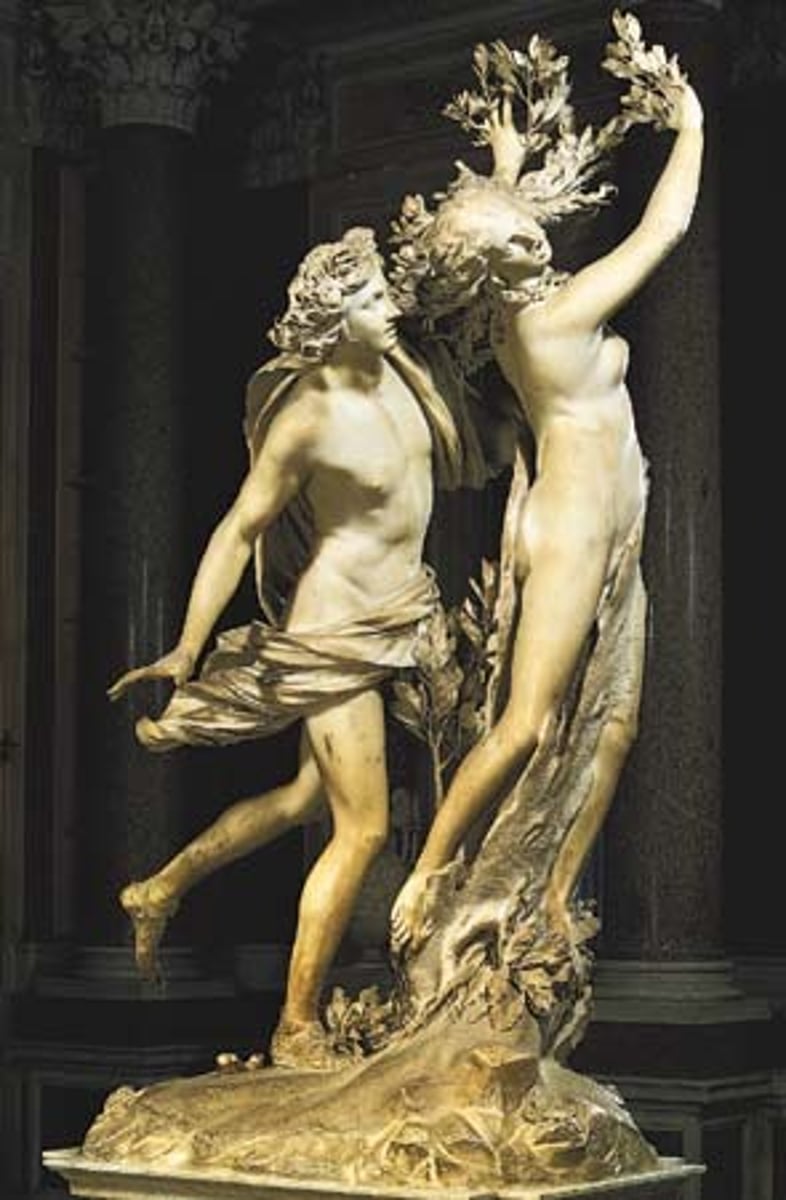
Apollo and Daphne
Time: 1622-1625
Creator: Bernini (Patron: Cardinal Scipione Caffarelli/Borghese)
Location: Galleria Borghese
Extra: Left leg of Apollo completely back in air. Arms in air. Can't see any genitals on either figure. Figures running, through garden/rugged terrain. Apollo chasing her, Daphne prays to her father (river god?) for help, he turns her into a tree. Bernini modeling this Apollo off of Apollo Belvedere (Vatican). tons of emotion in this scene -- Apollo thinks he has her, then realizes he doesn't, Daphne also very scared. Daphne's toes are turning into roots, fingers turning into leaves/branches.
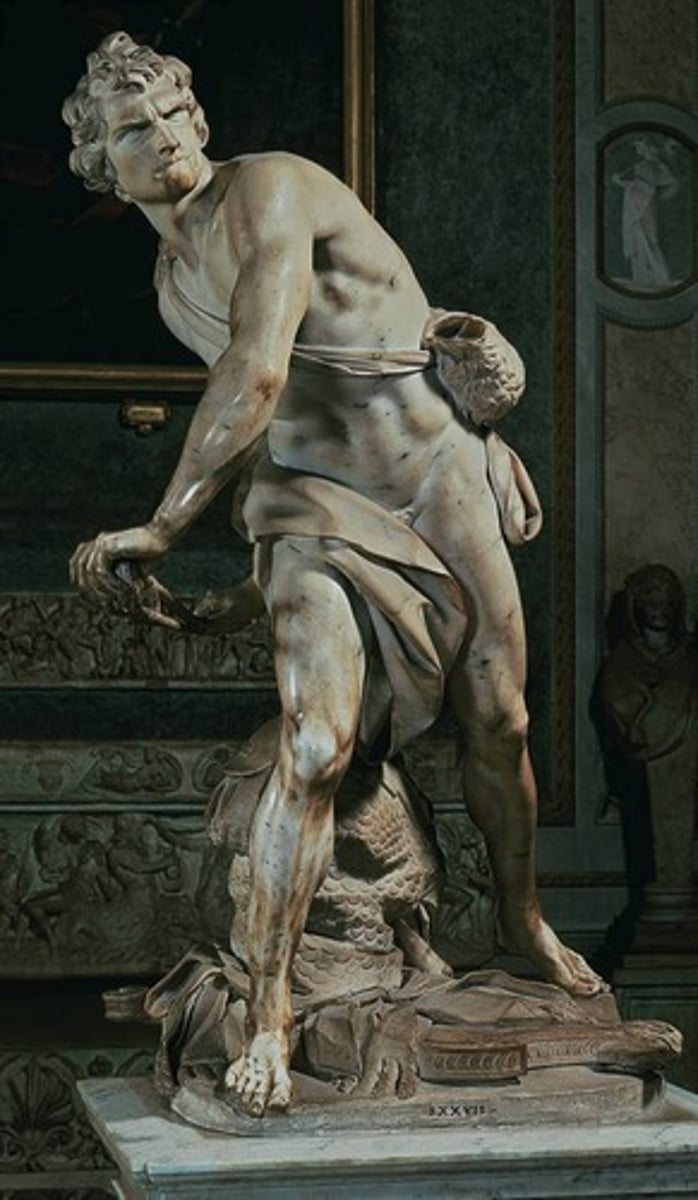
David
Time: 1625
Creator: Bernini (Patron: Cardinal Scipione Borghese)
Location: Galleria Borghese
Extra: Human size (not like Michelangelo's big David). Tensing every single muscle in his body. story that this is a self-portrait of Bernini himself. 4th commission to scipione borghese. Mich's David = full of potential energy. Bernini's David = in action, displaying active movement/energy. twisting figure, complex pose
1400s
Linear perspective (depth!)
More natural human bodies
Interest in science, math, and anatomy
Flat, square, boxy
papal power
quiet classicism
Early Renaissance
late 1400s - early 1500s
Balanced compositions, ideal beauty
Mastery of perspective and anatomy
Techniques like sfumato (soft blending)
Artists: Leonardo da Vinci, Michelangelo, Raphael
contraposto
rich emotions
High Renaissance
1520s to 1600
Key idea: Artificiality and exaggeration
Elongated bodies, strange poses
Unnatural colors and space
Reaction against High Renaissance perfection
Pastel colors
confusion
shot colors (conjanti)
weird proportions
busy
hard to understand/tell what's going on in a scene
Mannerism
(movement that shapes baroque, not a style itself)
Catholic church responds to the protestant reformation (post council of trent)
Sets rules for art: clear, emotional, religious message must be obvious
Artists: Caravaggio, Bernini
Counter Reformation
1600s
Key idea: Drama and emotion
Strong contrasts of light/dark (chiaroscuro)
Movement, intensity, realism
Designed to evoke emotion (especially in Catholic Counter-Reformation)
Artists: Caravaggio, Bernini
Baroque
- simplicity, didactic, white churches, purity, very religious
Early Baroque
?
Intended emotional experience for viewer
theatricality
Aestheticism
Return to beauty
Art communicating messages → greater interest from viewer
High Baroque
Still learning (6)
You've started learning these terms. Keep it up!