Final Lecture 10 Autism Spectrum Disorder
 Call Kai
 Learn
Learn Practice Test
 Spaced Repetition
 Match
Match Flashcards
 Knowt Play
1/17

There's no tags or description
Looks like no tags are added yet.
Name | Mastery | Learn | Test | Matching | Spaced | Call with Kai |
|---|
No analytics yet
Send a link to your students to track their progress
18 Terms
Savant abilities
Islets of ability”…Savant like abilities
•10% of ASD cases
George Widener
- Can name the day of the week for any given date.
Stephen Wiltshire

What are the symptoms of autism spectrum disorders?
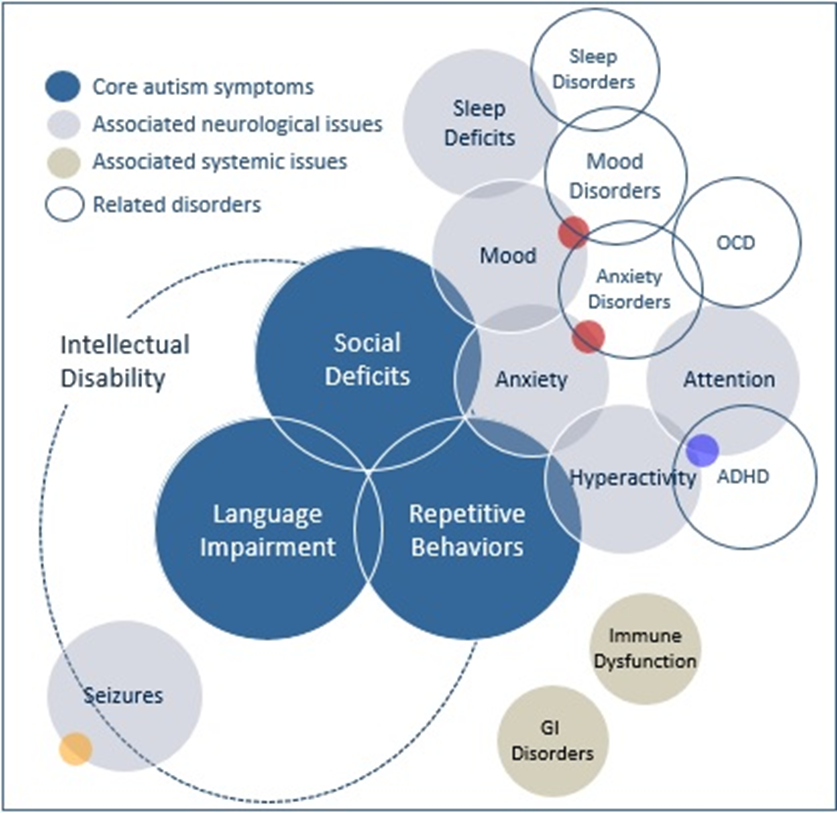
-Affects ~1% of the population
-They are neurodevelopmental disorders
-Age of onset between
6 months – 2yo
Intellectual disabilities
What are some of the social deficits in autism?
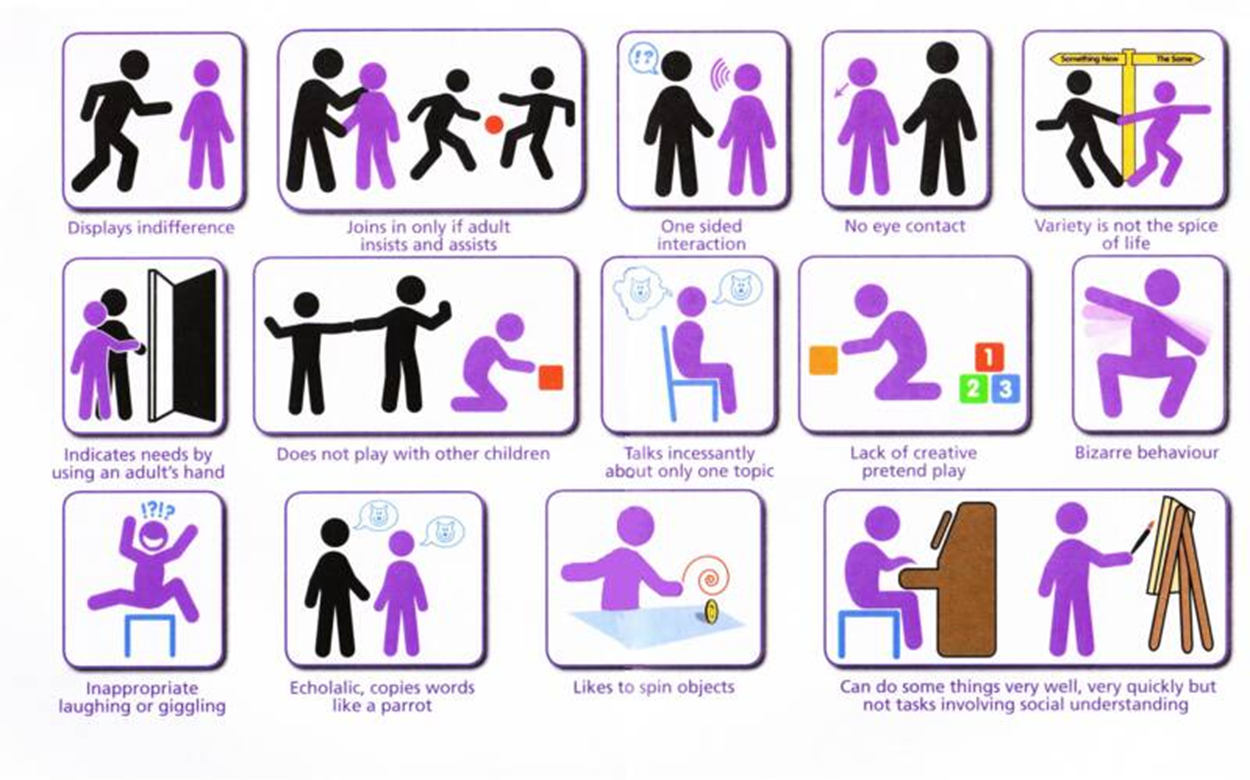
• hyper- or hypo-sensitivity to or unusual response to the smell, texture, sound, taste, or appearance of things.
Describe the genetic component to autism?
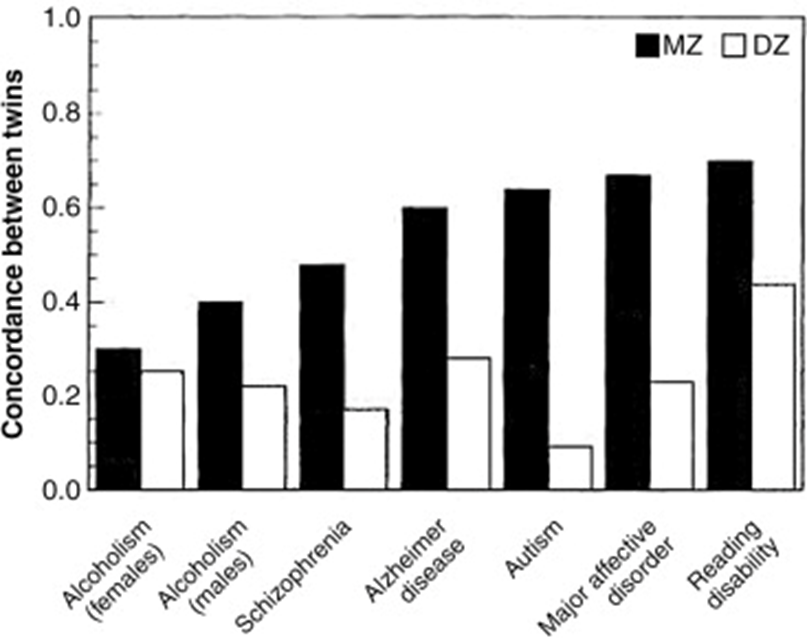
Concordance can be up to 91% for monozygotic twins if full spectrum of autism related disorders is considered
There is a very large discrepancy between concordance between monozygotic (MZ) twins and dizygotic (DZ) twins.
Which brain areas are implicated in the core edificits of autism. Mention what category of symptoms they affect
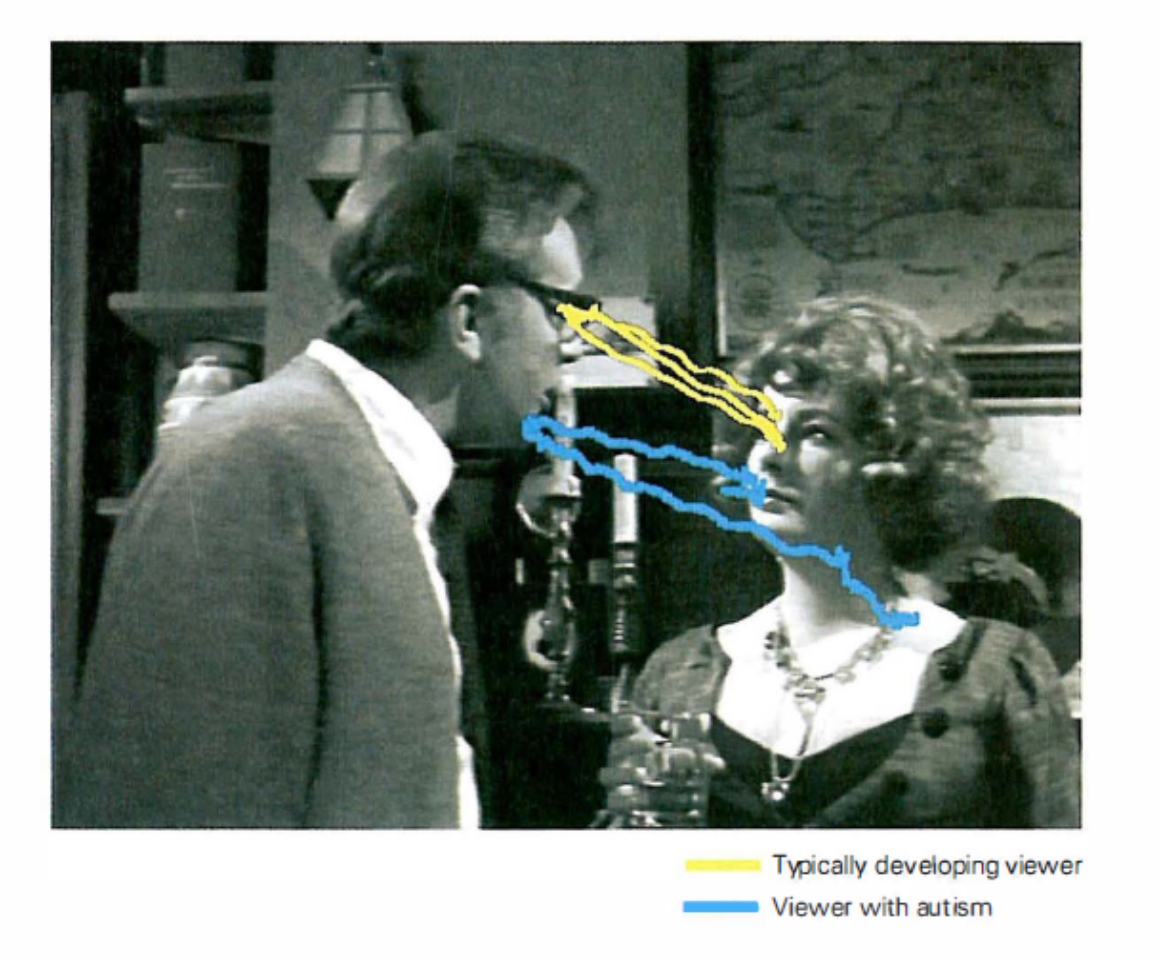
Social deficits:
Orbitofrontal Cortex
Anterior cingulate cortex
Amygdala
Fusiform gyrus
Superior temporal sulcus (gaze perception)
Fusiform Gyrus (face processing)
Comprehension of Language:
Pontine nuclei
Repetitive behaviors
Striatum
Describe Fragile X syndrome symptoms. What is its cause?
Idopathic asd is where a genetic cause cannot be identified, may be hundreds of mutations
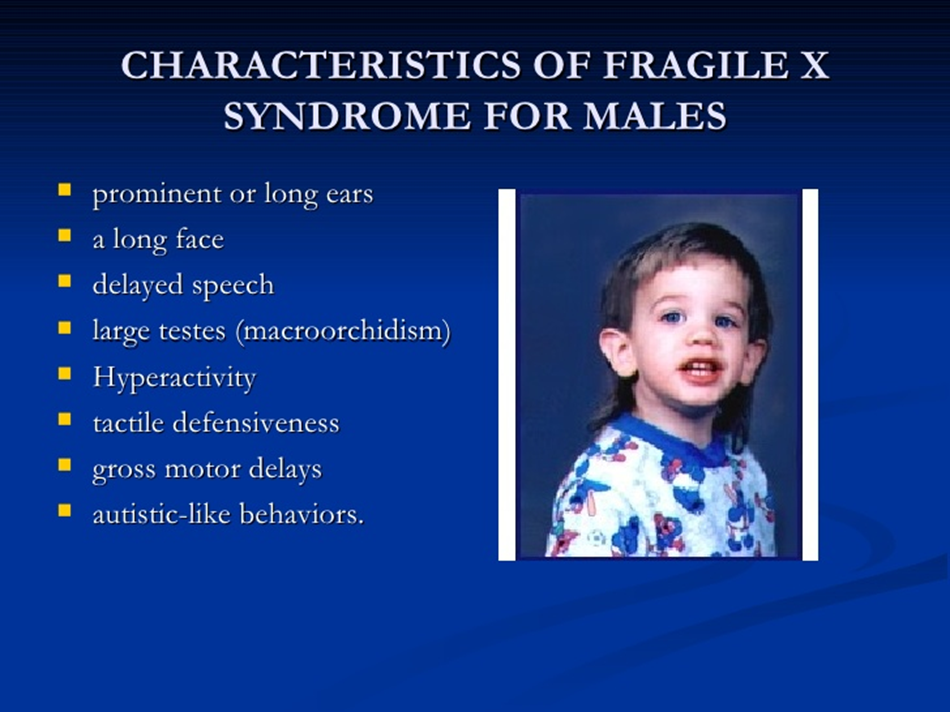
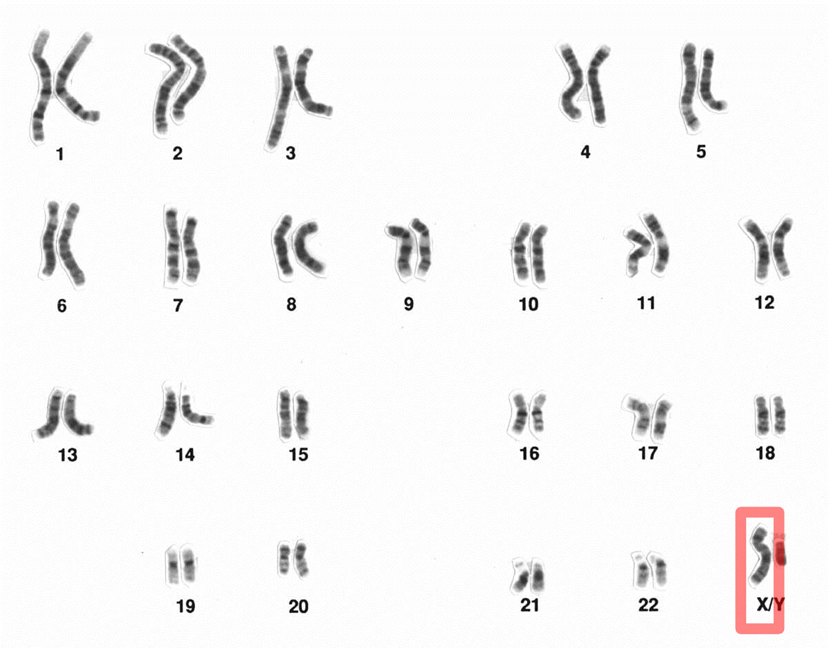
Caused by disruption of the FMRP gene on the X chromosome.
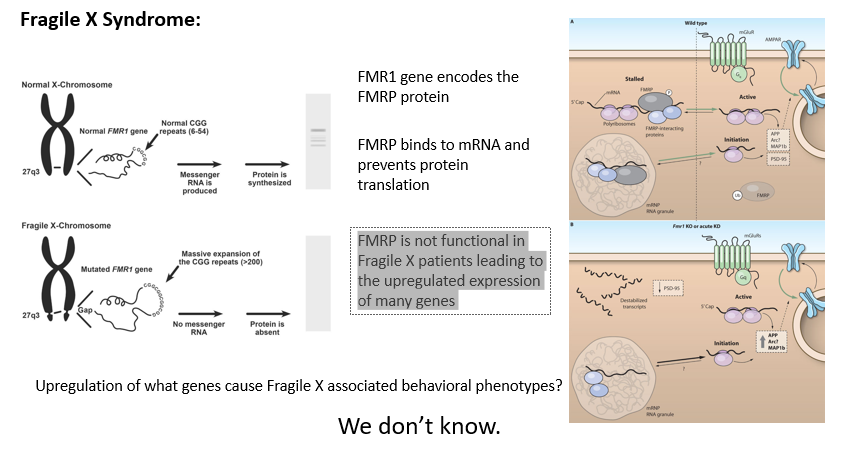
What does the gene for Fragile X do?
FMR1 gene encodes the FMRP protein
FMRP binds to mRNA and prevents protein translation
FMRP is not functional in Fragile X patients leading to the upregulated expression of many genes
Normally there are CGG repeats 6 to 54
In Fragile X there is a massive expansion of CGG repeats to over 200
ALl these repeats influence how readily the gene can be transcribed into mRNA becaause they keep the FMR gene wrapped very tightly around histones limitting mRNA that can be produced from the fMR1 gene
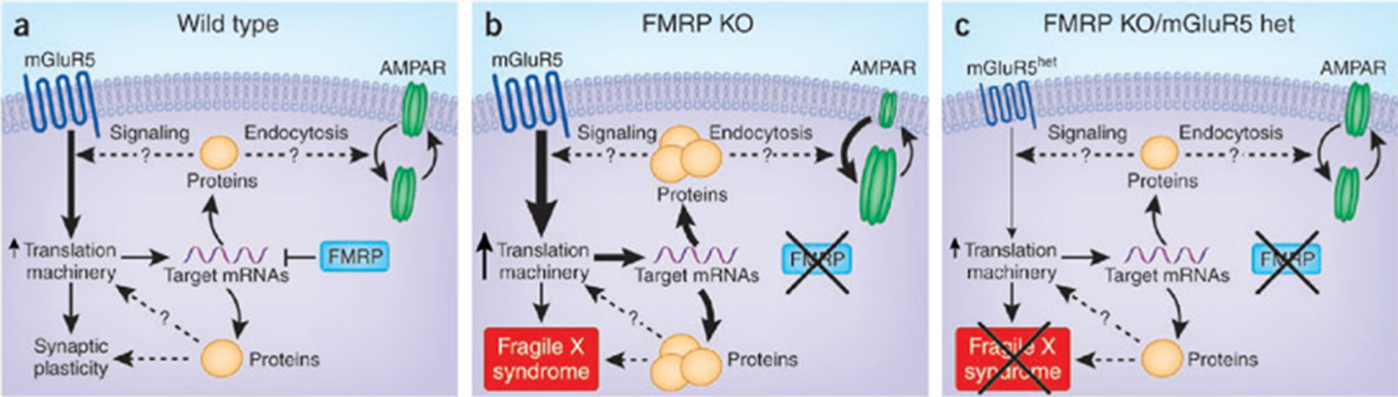
Normally when you activate MGLUR5 receptors that leads to an elevation of proteins that promote endocytosis of AMPA receptors
By removing FMRP causes an overreaction of cells to MGLUR5 activation and more proteins are upregulated that promote endocytosis of AMPA receptors causing a weakening of synapses.
What does loss of FMRP do to glutamatergic synapses?
Loss of FMRP function results in weaker glutamatergic synapses in the brain.
What is Rett syndrome caused by? What are the symptoms
Caused by mutations in the MeCP2 gene which is also on the X-chromosome.
The syndrome is not seen in males typically because male infants usually die from lack
of a functional MeCP2 gene.
MeCP2 regulates gene transcription in many ways:
When the function of MeCP2 is damaged by Rett-related mutations the transcription of many genes are disrupted.
Disrupting the transcription of what specific genes give rise to Rett syndrome?

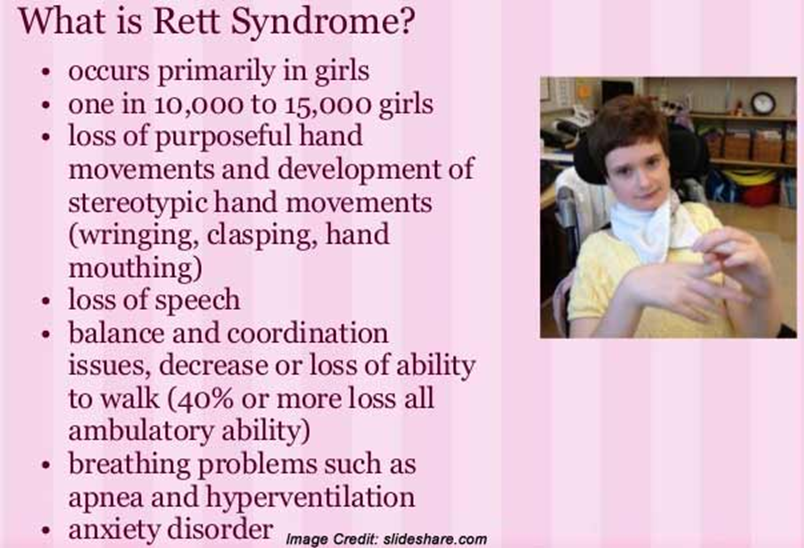
What is a treatment for Rett potentially
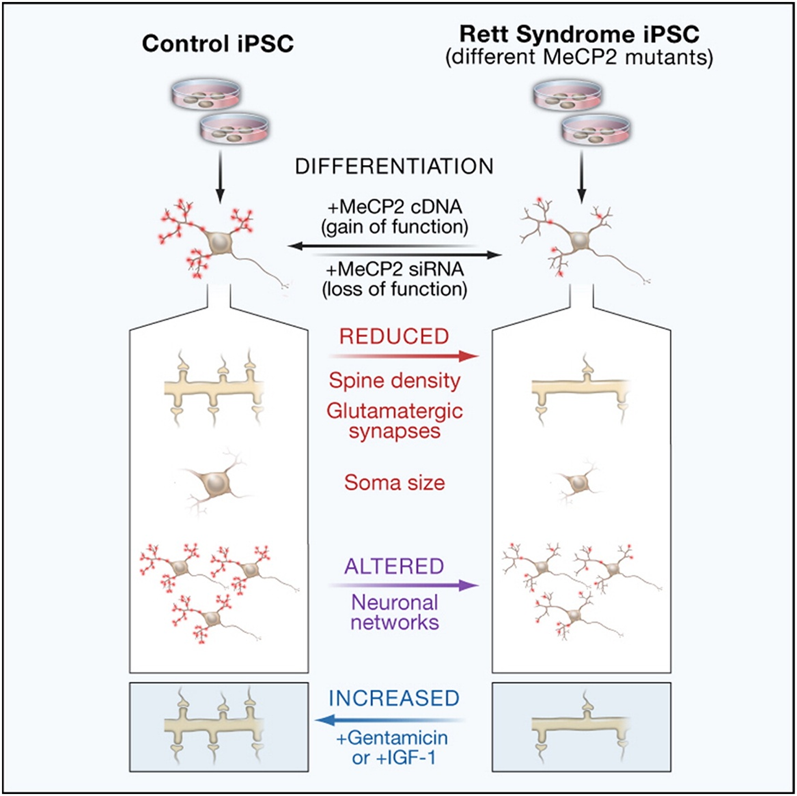

IGF-1 aanalog restoration of glutamatergic function
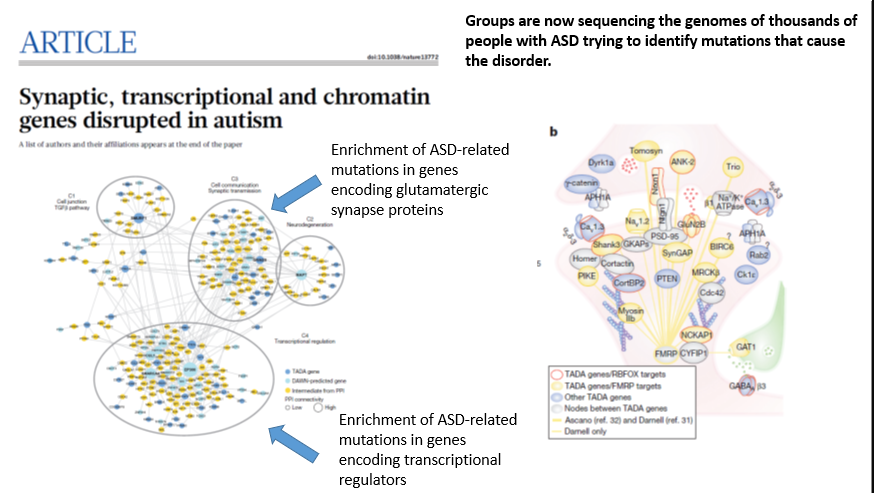
Groups are now sequencing the genomes of thousands of people with ASD trying to identify mutations that cause the disorder.
Enrichment of ASD-related mutations in genes encoding glutamatergic synapse proteins
Enrichment of ASD-related mutations in genes encoding transcriptional regulators
100-200 genes that have a very high confidence roles
Biggest areas are in glutamatergic synapse proteins
and transcription regulators
Disruption of glutamatergic synapses is probably an important cause of autism
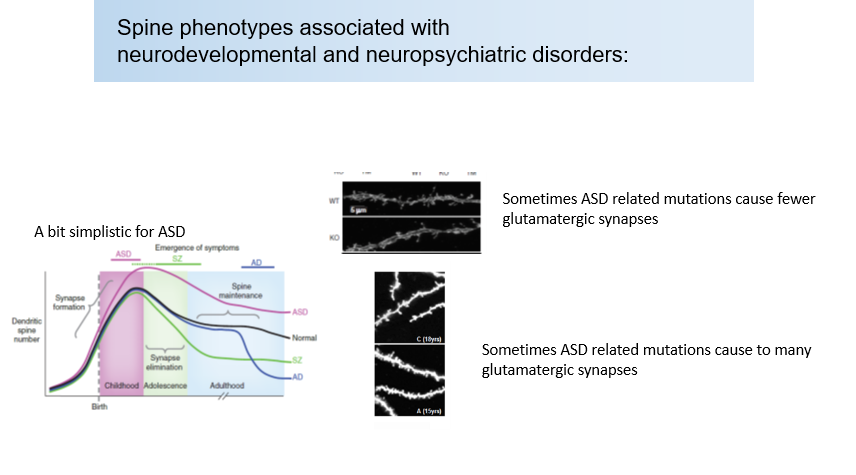
How does ASD affect glutamatergic synapses?
Kalirin and Trio are GEF proteins at glutamatergic synapses. What is the relevance of trio to autism spectrum disorder? Where are the mutations clustered? What do these mutatiions do
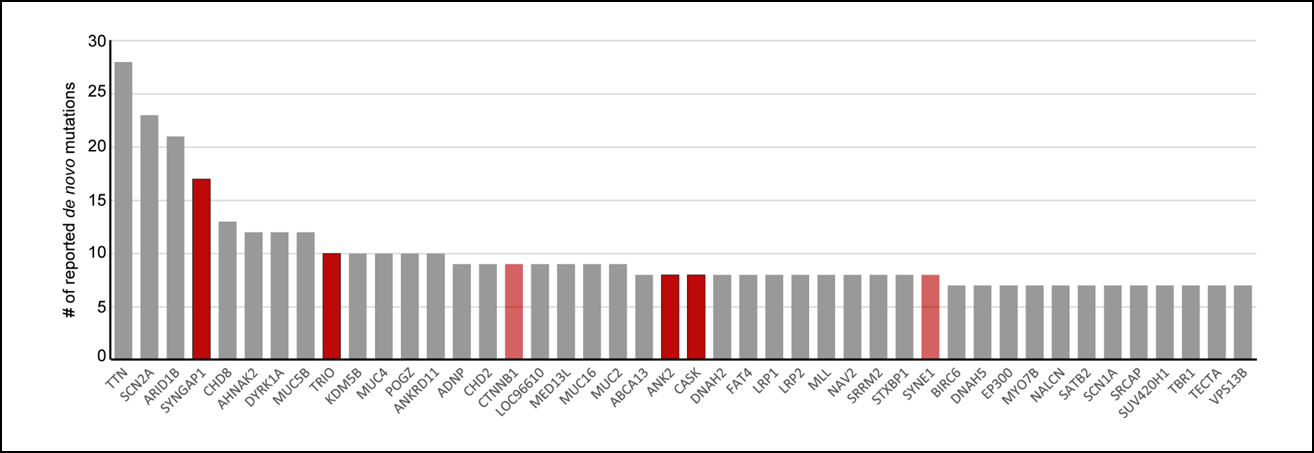
Trio is in the top 10 for autism spectrum disorders
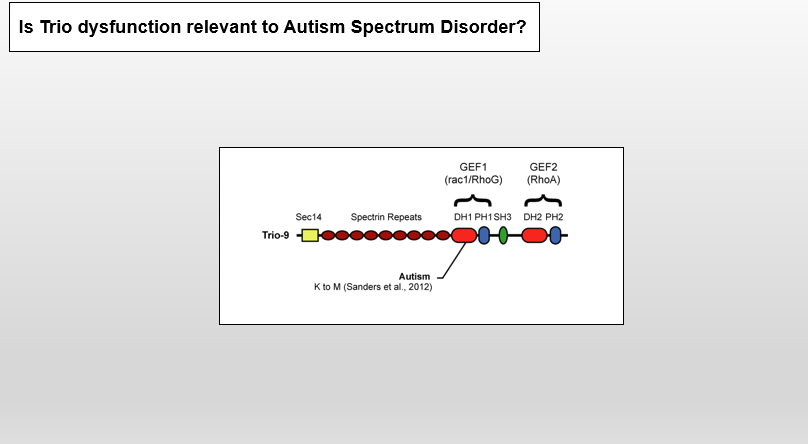
ASD-associated mutations are clustered in Trio’s GEF1 domain.
ASD-associated mutations in Trio’s GEF1 domain were predicted to inhibit GEF function.
They prevent Trio from activating RAC1 and promoting actin polymerization and have a dominant negative effect on synaptic function
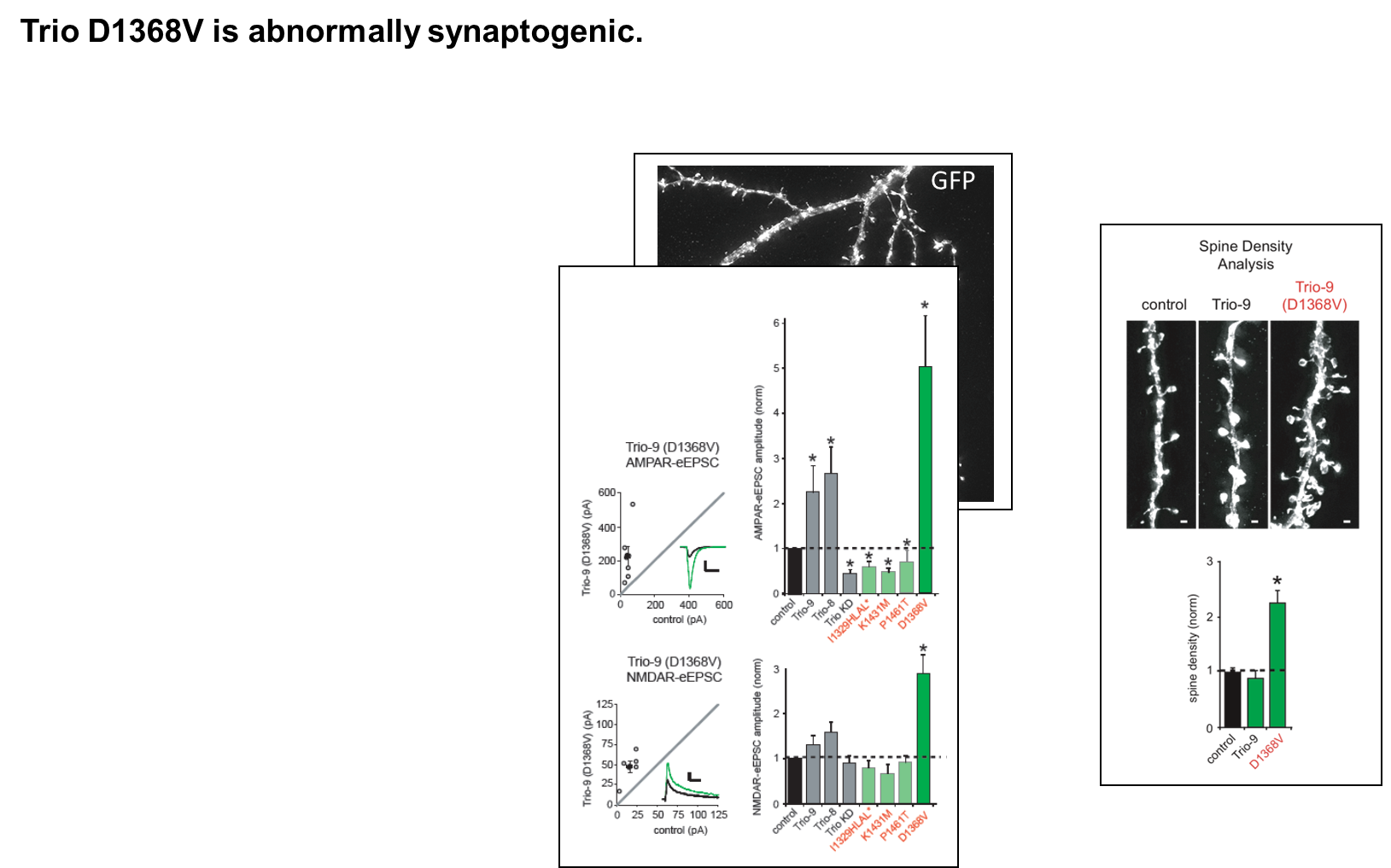
Trio D1368V is abnormally synaptogenic.
Dont know what happening from minute 55 onwards
D1368V prevents autoinhibition of Trio’s GEF1 domain.
What is TRIO syndrome
Which ASD mutations are found in Kalirin?
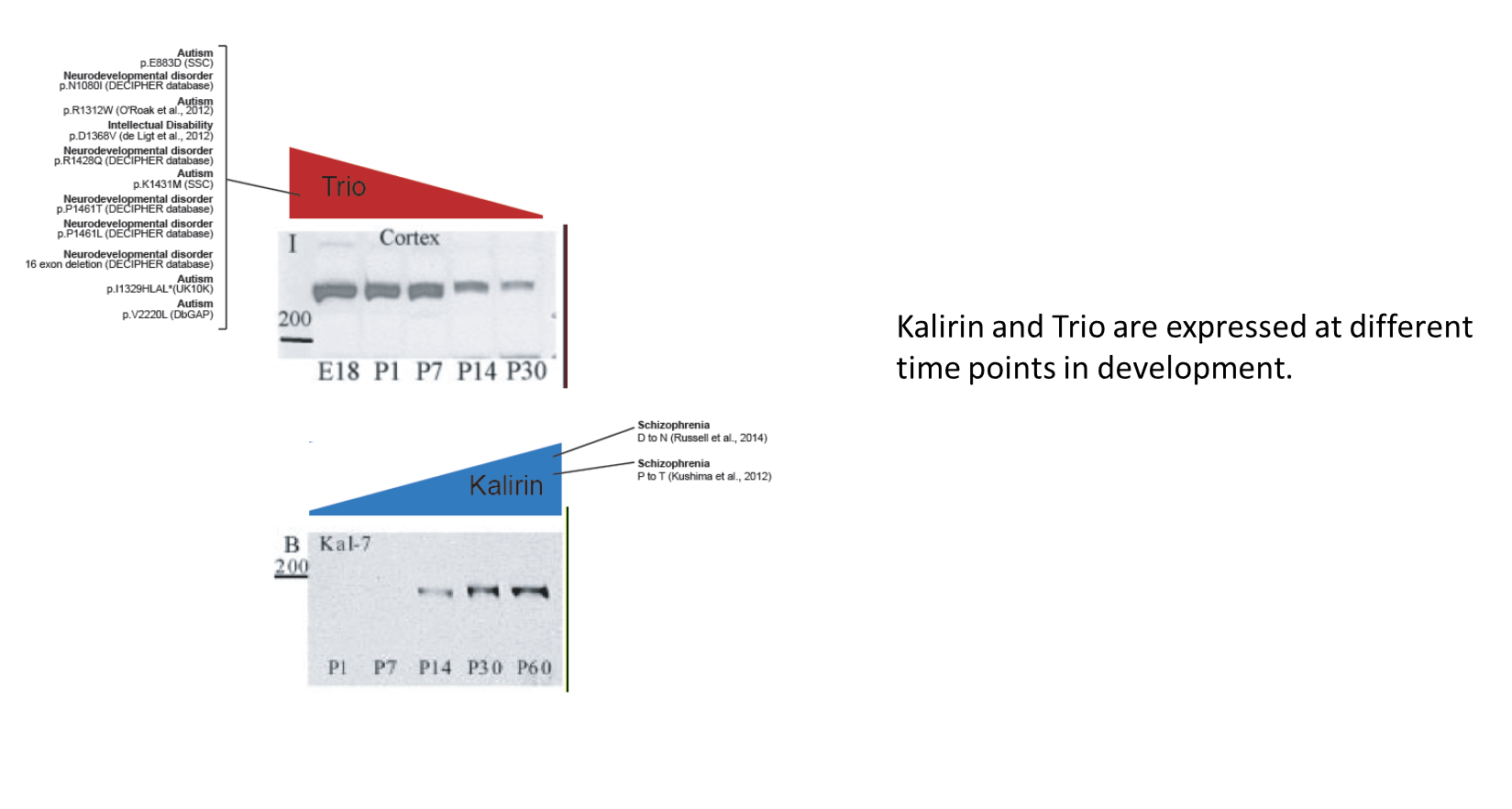
Trio and Kalirin are expressed at different time points in development so no ASD related mutations are in Kalirin.
Can genetic intervention be used to correct ASD-related behavioral phenotypes later in life or does it have to be early in life? What evidence is there for this. What does Shank 3 knockout mice exhibit what if you turn it back on
Shank 3? What is the significance of this
Created Shank3 knockout mice where the Shank3 gene could
be turned back on later in the animal’s life.
Shank3 knockout mice exhibit repetitive grooming,
social interaction deficits, increased anxiety and motor deficits.
Turning Shank3 back on at 2-4.5 months of age restored deficits
in glutamatergic synapse function.
Turning Shank3 back on at 2-4.5 months of age rescued repetitive
grooming and social interaction deficits.
…but turning Shank3 back on earlier (postnatal day 20-21) did produce some rescue of anxiety and motor deficits.