Reptile Radiation
 Call Kai
 Learn
Learn Practice Test
 Spaced Repetition
 Match
Match Flashcards
 Knowt Play
1/23

There's no tags or description
Looks like no tags are added yet.
Name | Mastery | Learn | Test | Matching | Spaced | Call with Kai |
|---|
No analytics yet
Send a link to your students to track their progress
24 Terms
reptile
a vertebrae amniote with scales, lungs, and typically lays shelled eggs on land
theropod dinosaurs
birds are derived from _____ _____, meaning they are technically reptiles in evolution
amniotes
vertebrates that produce an amniotic (where embryo develop on land instead of water) egg
synapsids
early amniotes with ONE temporal opening in the skull; ancestors of mammals
synapsid skull
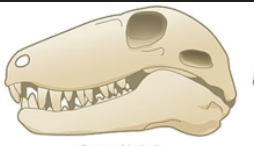
legs move under body
specialized teeth
develop hair
synapsid evolution:
1.
2.
3.
pelycosaurs
early synapsids; lizard like with sprawling posture
therapsids
more advanced synapsids with upright posture and differentiated teeth
morganucodon
small, rat like early mammal
monotremes
egg laying mammals (ex: platypus); no nipples, lays eggs
placental mammals
develop young inside uterus with placenta for nutrient exchange
hair
mammary glands
endothermy
differentiated teeth
3 middle ear bones
mammal traits:
1.
2.
3.
4.
5.
lays eggs
lacks nipples
monotreme traits:
1.
2.
live birth
placenta
placental traits:
1.
2.
sauropsids
reptiles plus bird lineage
anapsid skull
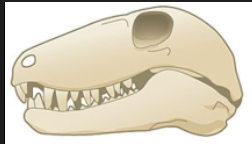
diapsid skull
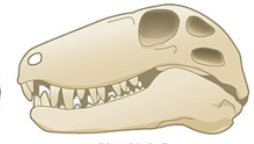
none
living anapsid?
they evolved rapidly to fill niches left after Permian extinction
why were there many unique animals in triassic?
mosasaur
large marine predator; elongated body, paddle limbs, like a giant lizard
ichthyosaur
dolphin like; streamlined body, large eyes, fast swimmer
pterosaurs
flying reptiles (not dinosaurs)
long tails, small heads
short tails, large heads
two types of pterosaurs:
1. early →
2. later →