L7- Gene cloning and expression in Bacteria
 Call Kai
 Learn
Learn Practice Test
 Spaced Repetition
 Match
Match Flashcards
 Knowt Play
1/22

There's no tags or description
Looks like no tags are added yet.
Name | Mastery | Learn | Test | Matching | Spaced | Call with Kai |
|---|
No analytics yet
Send a link to your students to track their progress
23 Terms
what is gene cloning
making multiple copies of a gene and manipulating it
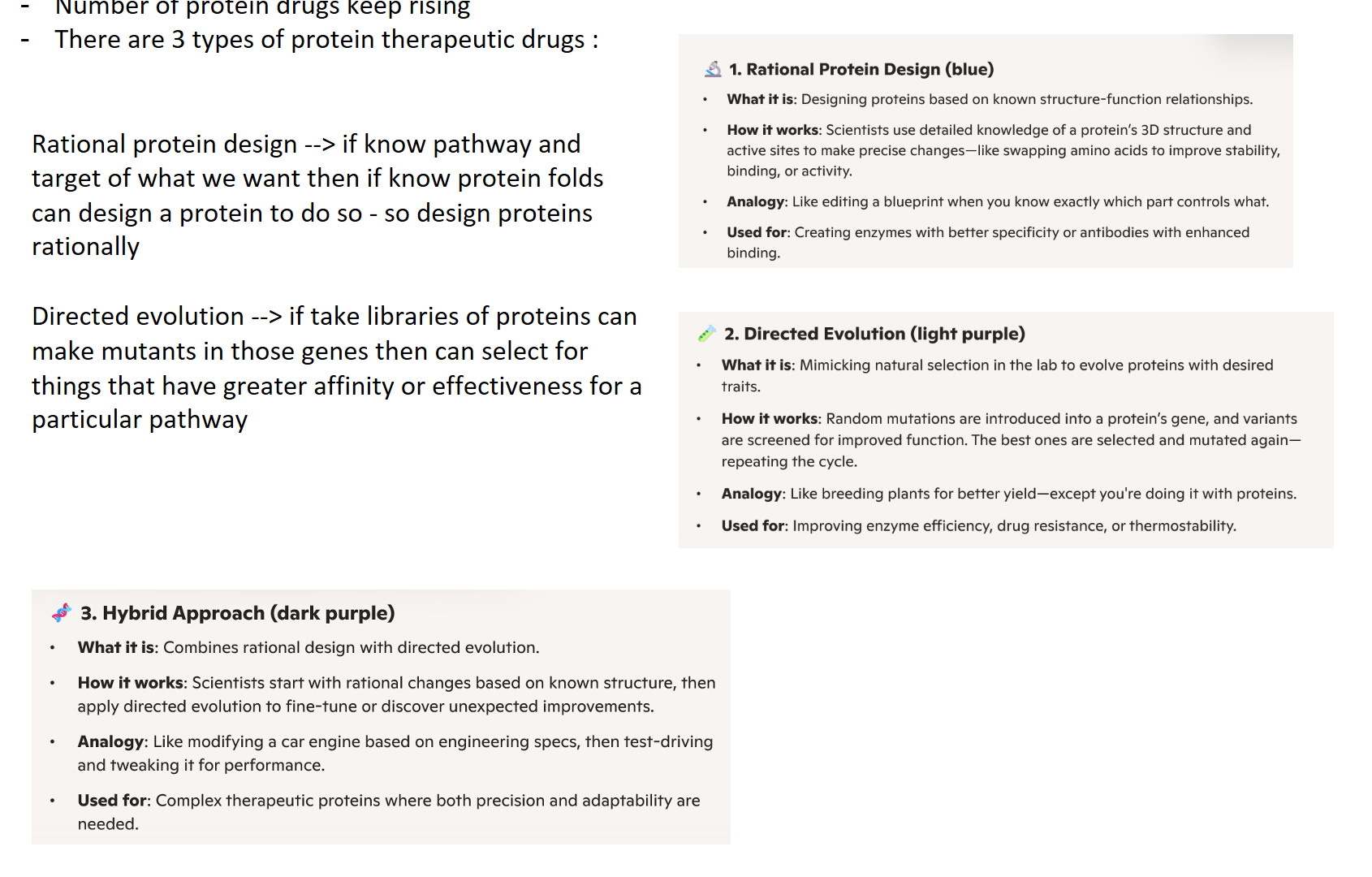
the 3 types of theraputic drug designs
how did we used to get protein of interest and problems
take cells that have genes, make transcrips and make proteins then could purify proteins made form those cells e.g. done with insulin
problems
need somewhere to get starting material
make sure there is a lot of it
contamination
ethical issues
,
what do we do now to get protein of intrest
use moelcular genetics to isolate gene of intrest
engeneer the gene and put it in a host cell that will happilie grow into huge quantite
and make large amounts of that protien
then purify that protein
what do we need to consider when picking host organism
non pathogenic
can easily be manipulates - allows itsself to be manipulated
we understand the mechanism the cell uses to be able to manipulate it
easily cultures
Recombinant DNA
use same RE on 2 different organsism
RE cuts at spcifci sequnces so leaves compatibe stickly ends
and T4 DNA ligase get DNA joing from different organisms togetehr
have hybrid DNA
How do we amplify the recombinant DNA
bacteria divides and divies again making multiple coppies of itself
if put DNA of intrest into that single bacterial cell will then copy over and over again making multiple cells cinatiang recombiant DNA
where is DNA added in teh bacterium
2 places can put the dna
bacteria has 1 chromosome, can put DNA in the chromosome but every time divides only get 1 more copy
preferred way is to add it to plasmid - circular DNA , bacteria has multiple so when divide have much ,more copies, they are advantagous (antibiotic resistance , nitrogen fixation and virulence)
Bacteria and plasmid uptake
as have antibiotic resiance can be tarsfered between bacteria through horizontal gene transfer
Transformation → randomly take up plasmids in environemnt, done at really low rates, its a stress response
(other ways is by conjugation and transduction)
how do scientist increase bacteria uptake of plasmids
using heat shock create a stressuful envoronmet for bacteria and so higher rate will pick up plasmid from environemnt
plasmids contain antibiotic resistnace can add antibiotic to check if bacteria has taken up plasmid
should survive when exposed to antibiotic
plasmid can also rejoin back on itself instead of joing DNA how do we stop this
remove 3’ pi group using alkali phosphatase
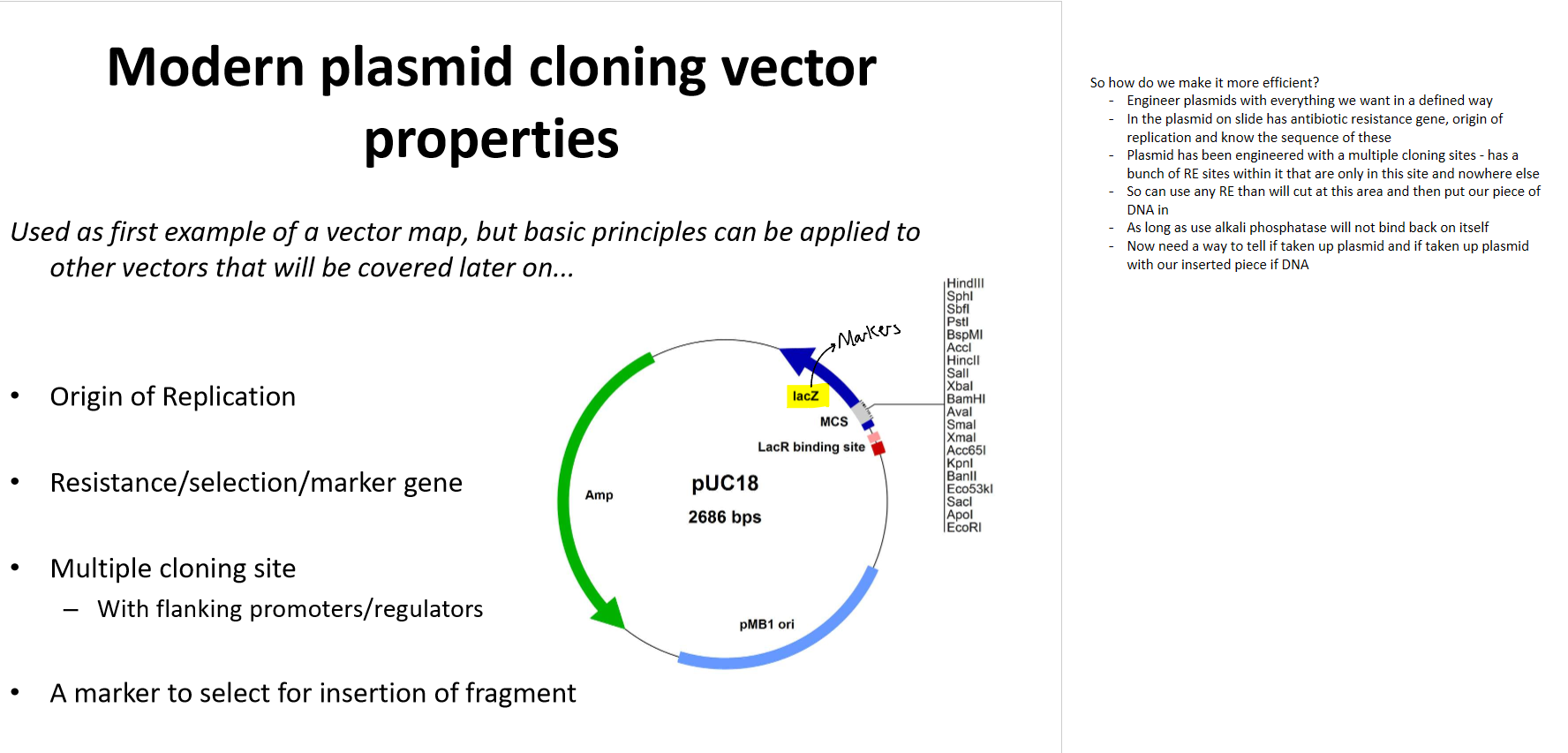
how do we engerneer plasmis
we add antibiotic resistanec gene and add origin of replication site → know both of tehse sequnces so can add to plamid
on a seperate are on plasmid we add the RE sites so when cuts only cuts there and not other things we add - multiple cloning site
then can add DNA
also make sure to add alkali phosphitase
How do we select the recombinat plasmids
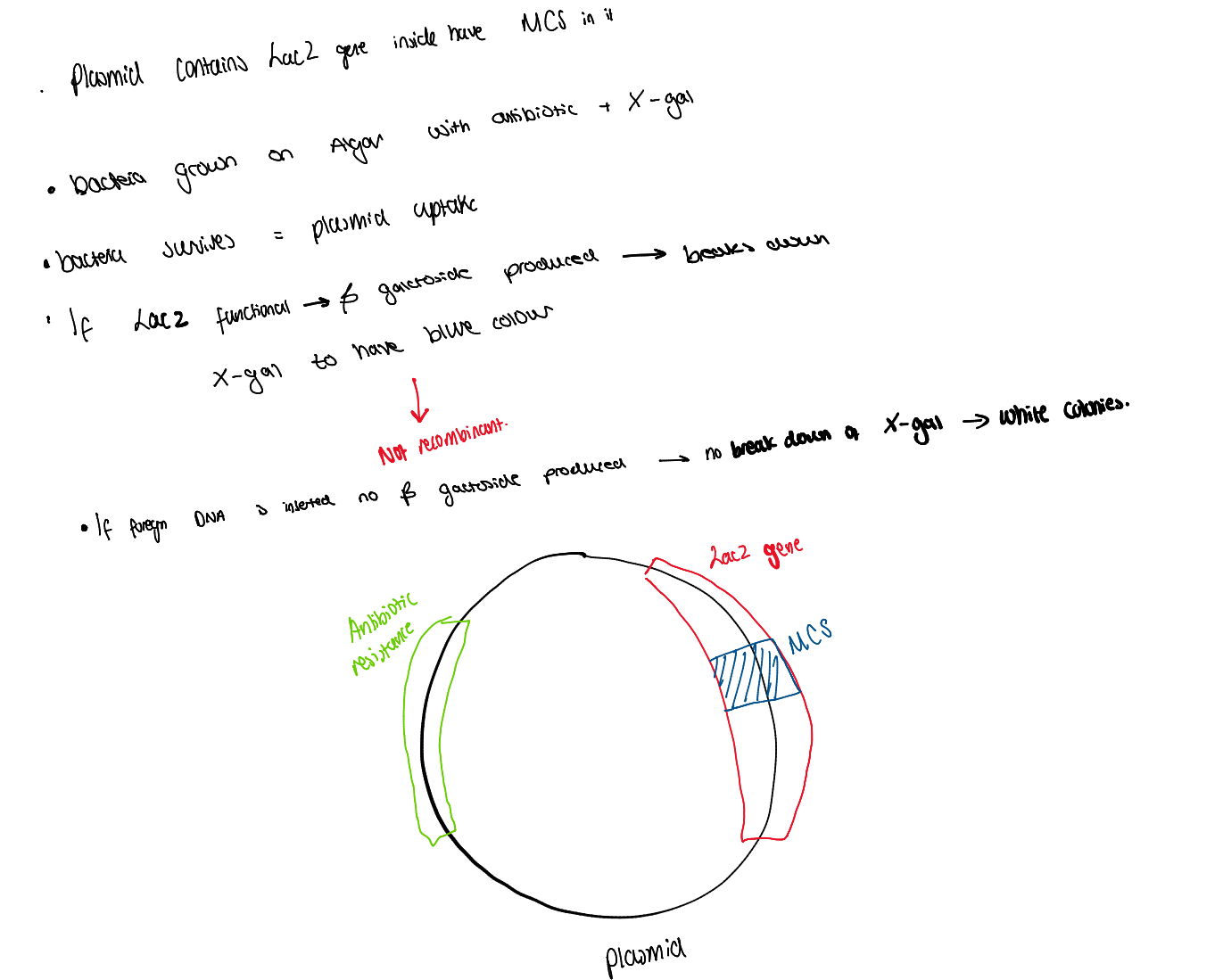
The plasmid contains the LacZ gene with a multiple cloning site (MCS) inside it
Bacteria are grown on agar containing antibiotic and X-gal
If the plasmid enters the bacteria successfully, the bacteria survive the antibiotic
If LacZ is functional, β-galactosidase is produced
β-galactosidase breaks down X-gal, producing a blue colour
If foreign DNA is inserted into the MCS, the LacZ gene is disrupted
Disrupted LacZ means no functional β-galactosidase is made
Colonies with inserted DNA remain white
Blue colonies = no DNA insert
White colonies = plasmid contains inserted DNA (desired colonies)
what to do when fragmnet does not have any of the RE in it
can use blunt ends → inefficent
can use compatible cohesive ends
use PCR to add RE sites
How do we use PCR to add RE sites
Restriction enzyme (RE) sites can be added to PCR products by designing them into the 5′ end of PCR primers
The primer contains:
extra clamp bases
the RE recognition site
a region complementary to the target DNA
Only the 3′ end of the primer needs to bind the template DNA for DNA polymerase extension to occur
The extra 5′ sequence containing the RE site does not need to base-pair initially
During PCR, DNA polymerase extends from the primer’s free 3′ OH end
The extra RE site sequence becomes incorporated into the newly synthesised DNA strand
After multiple PCR cycles, all amplified DNA products contain the RE sites at their ends
Extra clamp nucleotides are added before the RE site because restriction enzymes cut poorly at the very end of DNA
The PCR product can then be digested with the restriction enzyme to generate sticky ends for cloning into a plasmid cut with the same enzyme
TA cloning
can create recombnate plasmid withou RE site
Taq polymerase in pcr very ineffcient uslaly adds A to the 3’ ends to PCR porducts
can get vector with T ends and then they van join togetehr as complementary
not efficent as only 1 base pair
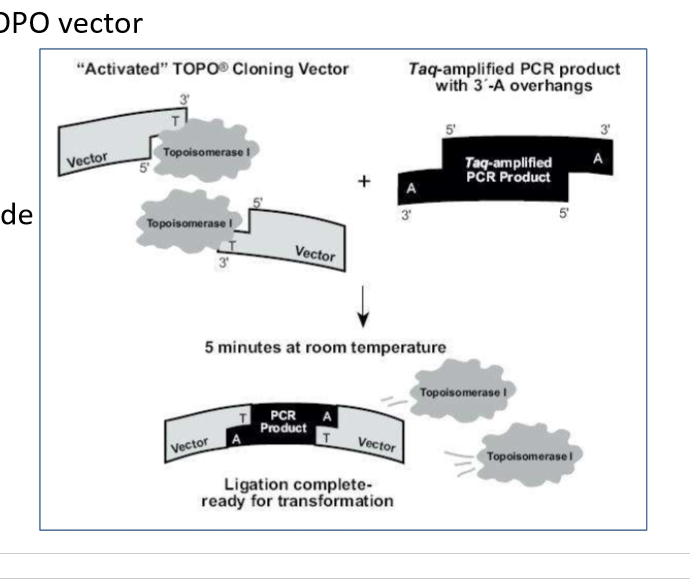
TOPO cloning
much fatser than original ways when no RE sites
palmids naturally have TOPO vector with tropoisomerae 1 attached to ends with 3’ T on it
in PCR Taq polymerasee leaves 3’ A
Toposimonerase joings the A and the T toegteher insead od DNA ligase
much quicker
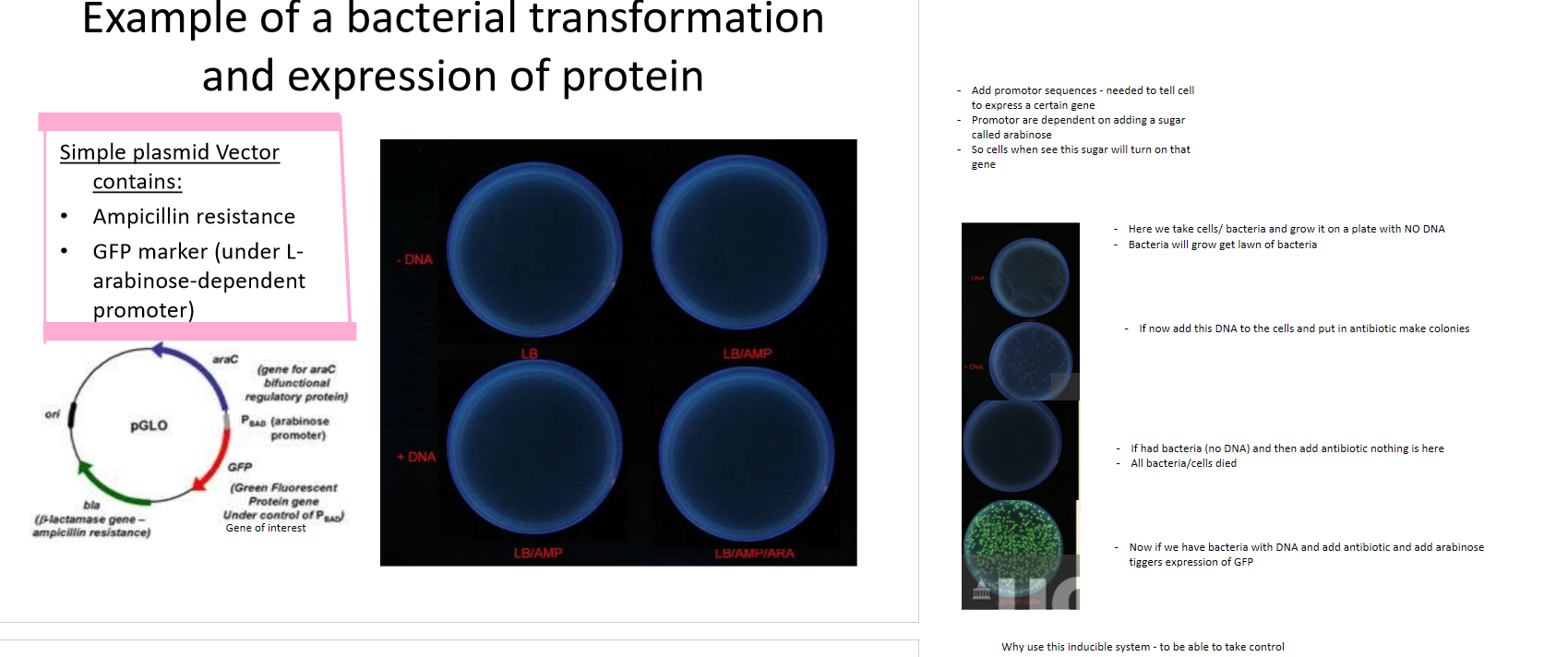
example of inducible system
probelm with genes in euk
our DNA has introns, taht we splice to make mRNA
bacteria cannot romove introns so giveing out DNA directly will not be usefl - make non fuctional proteins
so what we do get matur mRNA and convert it into cDNA usuing reverse tarscription
Lacz induciable system
have a repressor that binds to lac operon so RNA polymerase cannot trnacribe
when add allolactose binds to repressoe allowing gene to be transcribed
Protein production
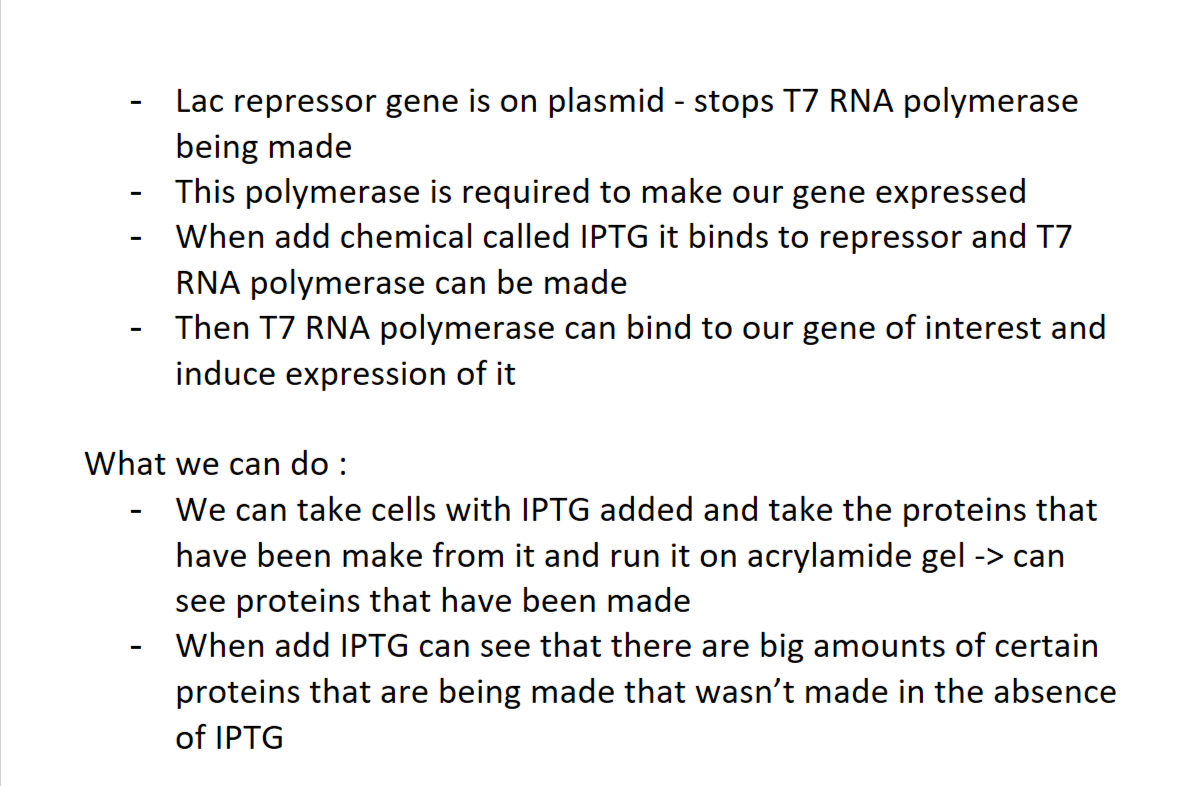
when repressor is on lac operon cannot make T7 RNA polymerase which tarnscribes gene of interest
when add IPTG induces tarscription of T7 gene and then go on to trascribe gene of intrest
use gel elecropheresis to see which proteins are being and in large amounts before and after IPTG addition
Protein production and purification
The gene of interest is cloned into an expression plasmid/vector
A DNA sequence encoding a protein tag is added next to the gene
Common tags include:
His-tag → binds nickel
MBP → binds maltose
GST → binds glutathione
The plasmid is transformed into bacteria (e.g. E. coli)
Bacteria are grown in culture and protein expression is induced (often using IPTG)
The bacteria produce the tagged protein of interest
Cells are lysed to release proteins, DNA and other cell contents - break open cells
The lysate is loaded onto an affinity chromatography column containing beads that bind the tag
The tagged protein binds to the beads while most other proteins flow through
The column is washed to remove unbound contaminants
Elution buffer releases the tagged protein from the beads
Purified protein fractions are collected
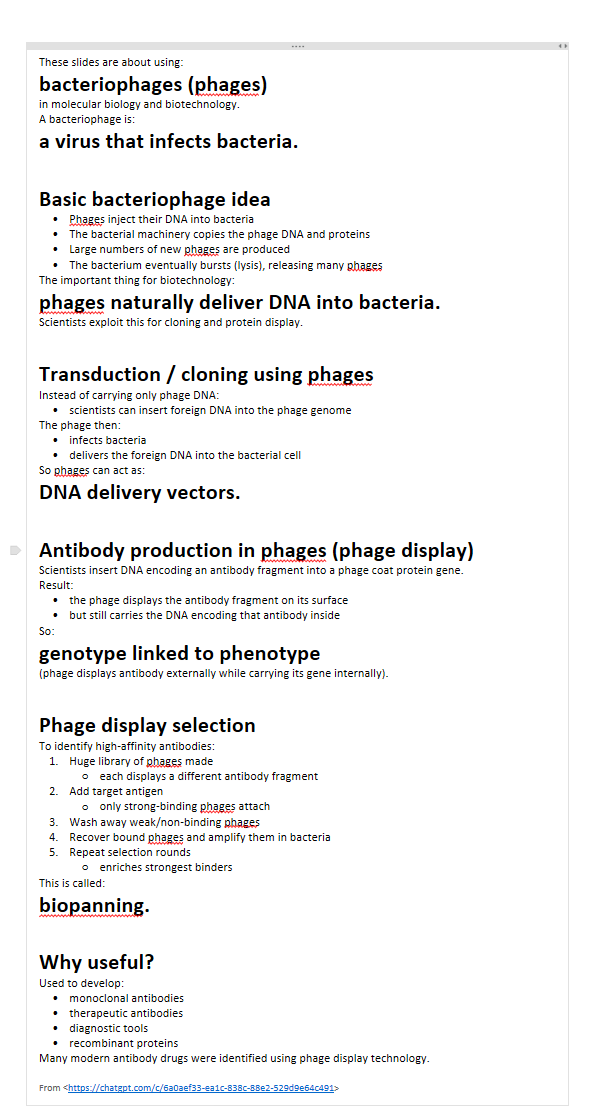
Bacteriaphage