L27 - Colour in Plant Cells
 Call Kai
 Learn
Learn Practice Test
 Spaced Repetition
 Match
Match Flashcards
 Knowt Play
1/7

There's no tags or description
Looks like no tags are added yet.
Name | Mastery | Learn | Test | Matching | Spaced | Call with Kai |
|---|
No analytics yet
Send a link to your students to track their progress
8 Terms
Functions of plant colour
photosynthesis
pollen/seed dispersal - by animals attracted to colour
protection
a mutant appearance preferred by ppl
Plant Pigments
= small organic molecules
absorb certain light wavelengths
use subtractive mixing ( more colour = darker)
Types:
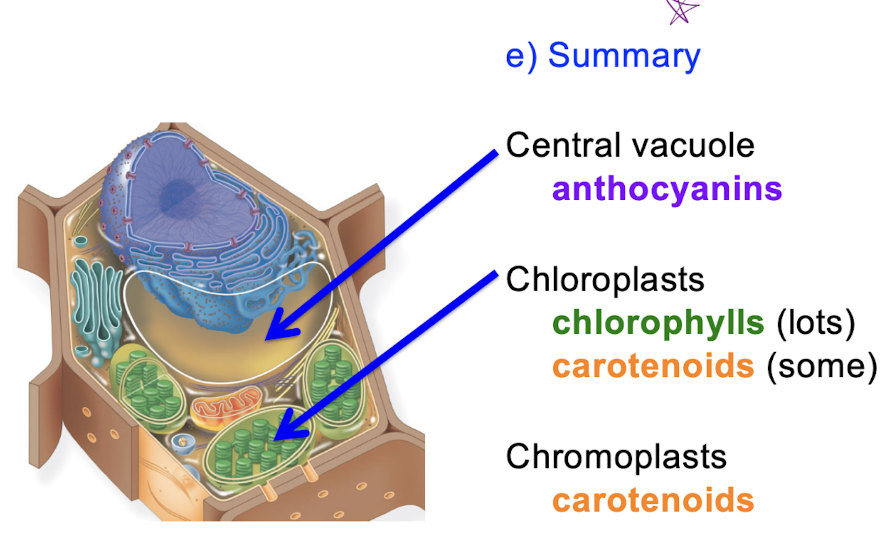
Chlorophylls (green)
in chloroplasts for photosynthesis
Carotenoids (orange/red)
in chromoplasts for colour
in chloroplast for photosynthesis
Anthocyanins (red/purple/blue)
in central vacuole for colour & UV protection (bc UV makes reactive oxygen species that are dangerous)
note: can also be for camoflage
Photoautotroph vs. chemoheterotroph
Photoautotroph = does photosynthesis
ex. green leaves
ex. venus fly traps
Chemoautotroph = feeds on other plants
ex. white leaves
Leaves
= for photosynthesis + gas exchange
structure: broad leaves or needles
colour meaning:
green = chloroplasts for photosynthesis
green + white = defective chloroplasts
green + purple = anthocyanins for UV protection
combos = for 4 leaf colours
white = no chloroplasts → feed on other plants
changing colour = trees in temperate climates shed broad leaves
green → orange & yellow = removal of chlorophylls from chloroplast to reveal carotenoids ( bc chlorophylls contain valuable nitrogen, THUS only drop leaves containing carotenoids (yellow/red))
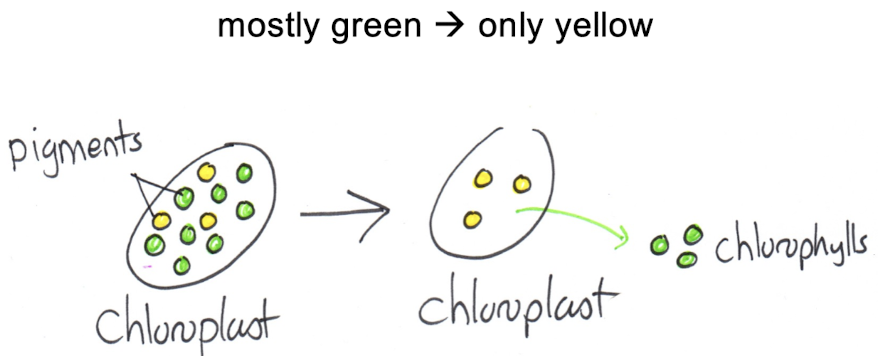
green → red = synthesis of new anthocyanins for protection during chlorophyll removal
Flowers
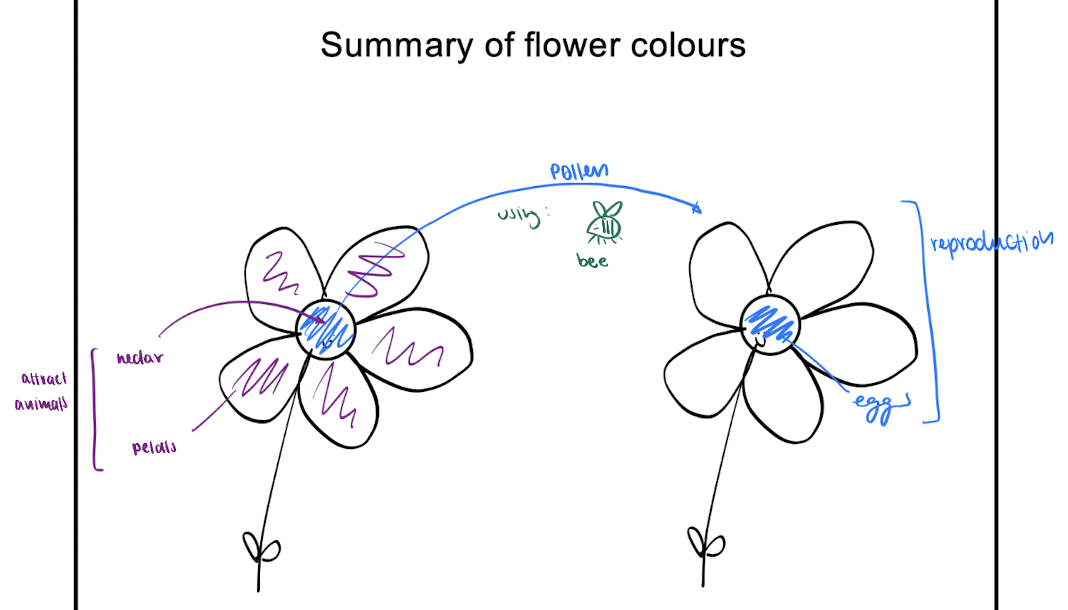
= for pollen dispersal using hungry animals (gives animals nectar)
structure: single flowers or flower clusters
colour meaning:
orange & yellow = carotenoids in chromoplasts
red, purple & blue = anthocyanins in CV
bright colours = to attract birds & bees
no colour = attract beetles or nocturnal animals using scent
Fruits
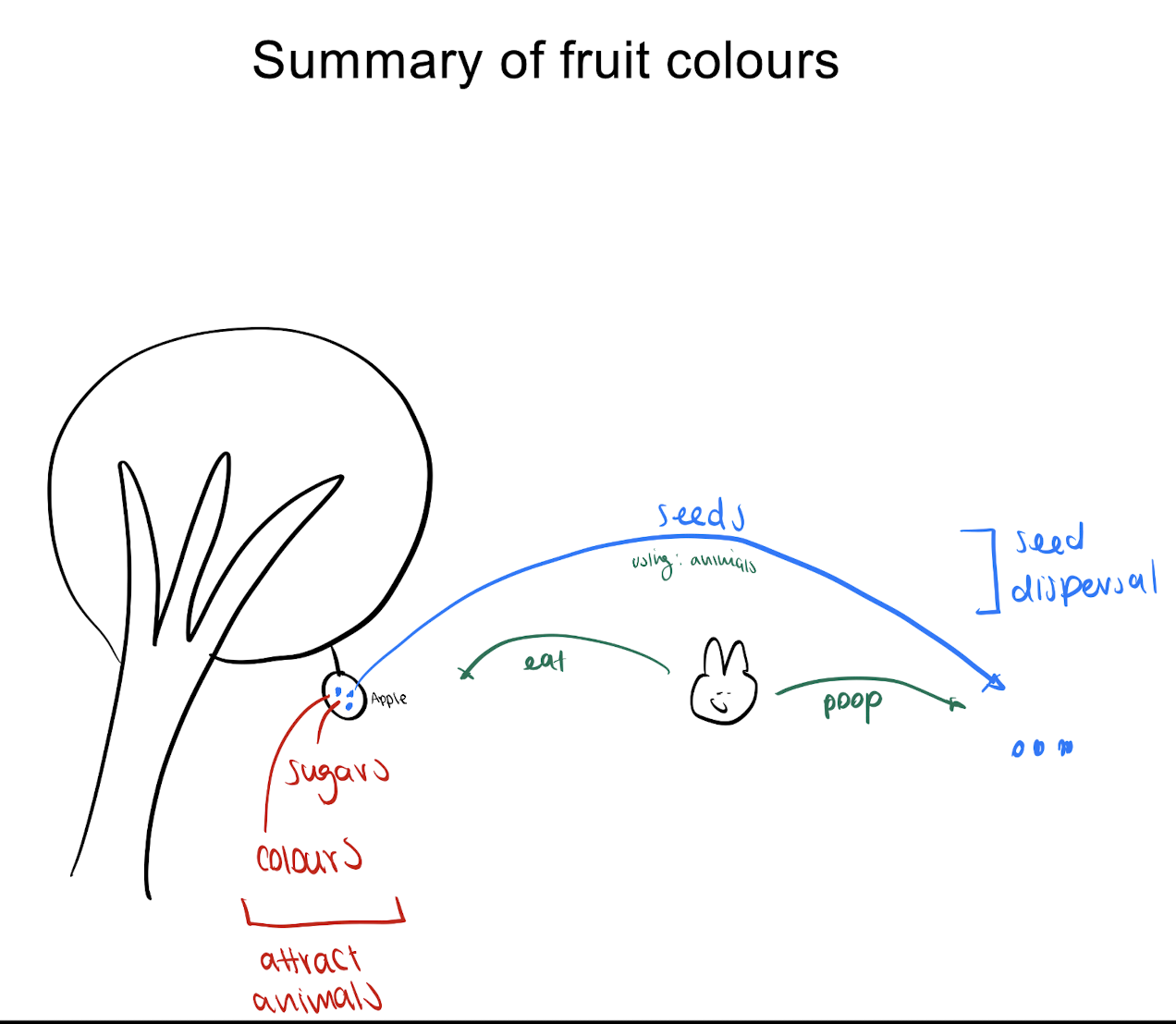
= for seed dispersal using hungry animals
→ fruit changing colour:
immature fruit is green to synthesize sugars
mature fruit is red/orange/yellow/purple to attract animals
colour meaning:
green → red, orange & yellow = chloroplasts change into chromoplasts
(ex. tomatoes turn red, citrus fruits turn orange, bananas turn yellow)
green → blue & purple = synthesis of anthocyanins
(ex. blueberries, blackberries)
Roots
= anchor plant in ground + obtain water and nutrients + storage
usually unpigmented
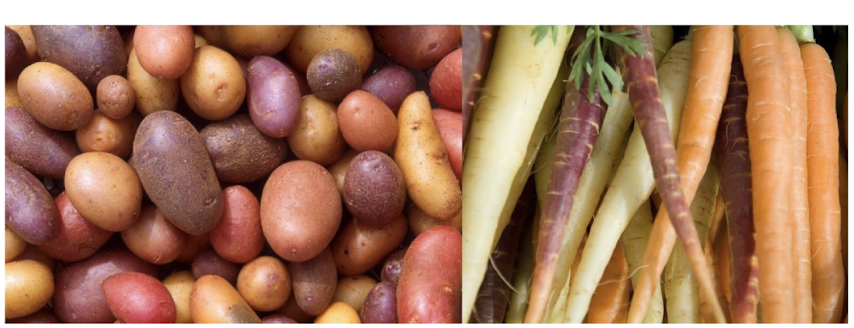
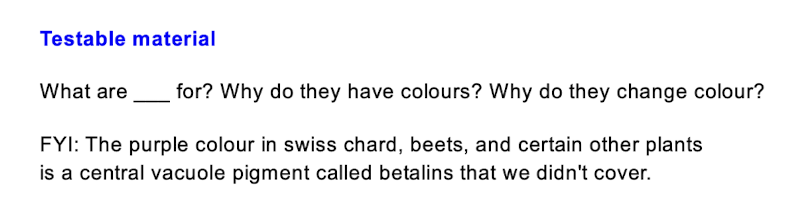
BUT, mutant strains of potatoes & carrots make carotenoids & anthocyanins
Examinable Content