9- Sheep Production
 Call Kai
 Learn
Learn Practice Test
 Spaced Repetition
 Match
Match Flashcards
 Knowt Play
1/103

There's no tags or description
Looks like no tags are added yet.
Name | Mastery | Learn | Test | Matching | Spaced | Call with Kai |
|---|
No analytics yet
Send a link to your students to track their progress
104 Terms
Why raise sheep?
Produce 2 (sometimes 3) valuable prducts
Utilization of range lands
Have less energy requirements than cattle
Sheep are highly adaptable
In the United States, there are more than
5.2 million head of sheep and lambs
Why decreasing numbers in U.S.?
Less demand for wool (synthetic and blends are cheaper)
Low consumer demand for lamb and high price of lamb (with low quantity) compared to other meats
Americans consume less than 1 lb of lamb each year
Decreased resources available
Land, shepherds, and government support
Predators
Farmer diversification into other enterprises
World Sheep Numbers
Larger sheep numbers in other countries
Australia
Middle East
Ram
intact male sheep
Ewe
female sheep
Lamb
young sheep
Wether
castrated male sheep
Flock
group of sheep
Wool
a fabric made from the hair of sheep
Industries
shearers
Wool buyers/warehouses
Sheep producers
Lamb feeders
Lamb processors
Types of Sheep Production
Range flocks
Farm flocks
Farm flocks
Commercial
Purebred
lamb
Range flocks types
Fenced
Migratory
Commercial Farm Flocks
Produce lambs for traditional meat markets or ethnic markets
Largest of farm flocks
Use crossbreeding
Purebred Farm Flocks
Smaller operations
Emphasize on purebred genetics
Typically register animals with breed association
Goal is to sell breeding stock
Usually hobby farms
Exhibit at livestock shows and sell at purebred sales
Club Lamb Farm Flocks
Small flocks
Typically crossbred or commercial purebred
Marketed to 4-H or FFA members
Sell lambs at lighter weight to allow youngsters to raise and feed them
Exhibited at local, regional, state or national shows
Affordable FFA or 4H project
Range Flocks
Large sheep numbers per flock
Usually thousands of ewes
Large acreage
Very open
Grassland
Range operations produce the majority of the lamb and wool in the U.S.
Fenced range sheep production
Located in Texas, New Mexico and other areas in the Southwest
Texas leads the country in total sheep numbers and number of sheep operations
Migratory range sheep production
Located in mountain states
Typically use land owned by government or is leased from Bureau of Land Management (BLM)
Grazing permits are issued
In winter, keep ewes at lower elevations
In summer, move ewes to higher elevations
Kept by herder or shepherd
Migratory range sheep production Breeds used:
Rambouillet, Targhee, Columbia, Polypay and Merino
Fenced Range Sheep Production Breeds used:
Rambouillet
Merino
Pregnancy Toxemia
Most common metabolic disease in sheep
Pregnancy Toxemia Cause
disturbance of carbohydrate metabolism
Resulting in hypoglycemia and ketosis
Due to inadequate nutrition and stress in late gestation
Pregnancy Toxemia signs
aimless walking, muscle twitching, grinding of the teeth. This progresses (generally over 2-4 days) to blindness, incordination, and finally coma, and death.
Pregnancy Toxemia Treatment
Propylene glycol daily
Cesarean or induced labor
Enterotoxemia Cause
bacteria, C. Perfringens, type D
Enterotoxemia Symptoms
Sudden death
Nervous disorders
Convulsions
Grinding teeth
White Muscle Disease Cause
selenium or vitamin E deficiency
White Muscle Disease Symptoms
Stiffness in hind legs
Muscle damage
White Muscle Disease Prevention and treatment
Feed/supplement with selenium
Inject lamb with Bo-Se
Urinary Calculi
Occurs in rams and wethers fed high concentrate diet or imbalance of P:Ca
Urinary Calculi Prevention
Fresh water
Add 0.5% ammonium chloride to feed
Add calcium to high phosphorus diets
Urinary Calculi Treatment
Not very successful
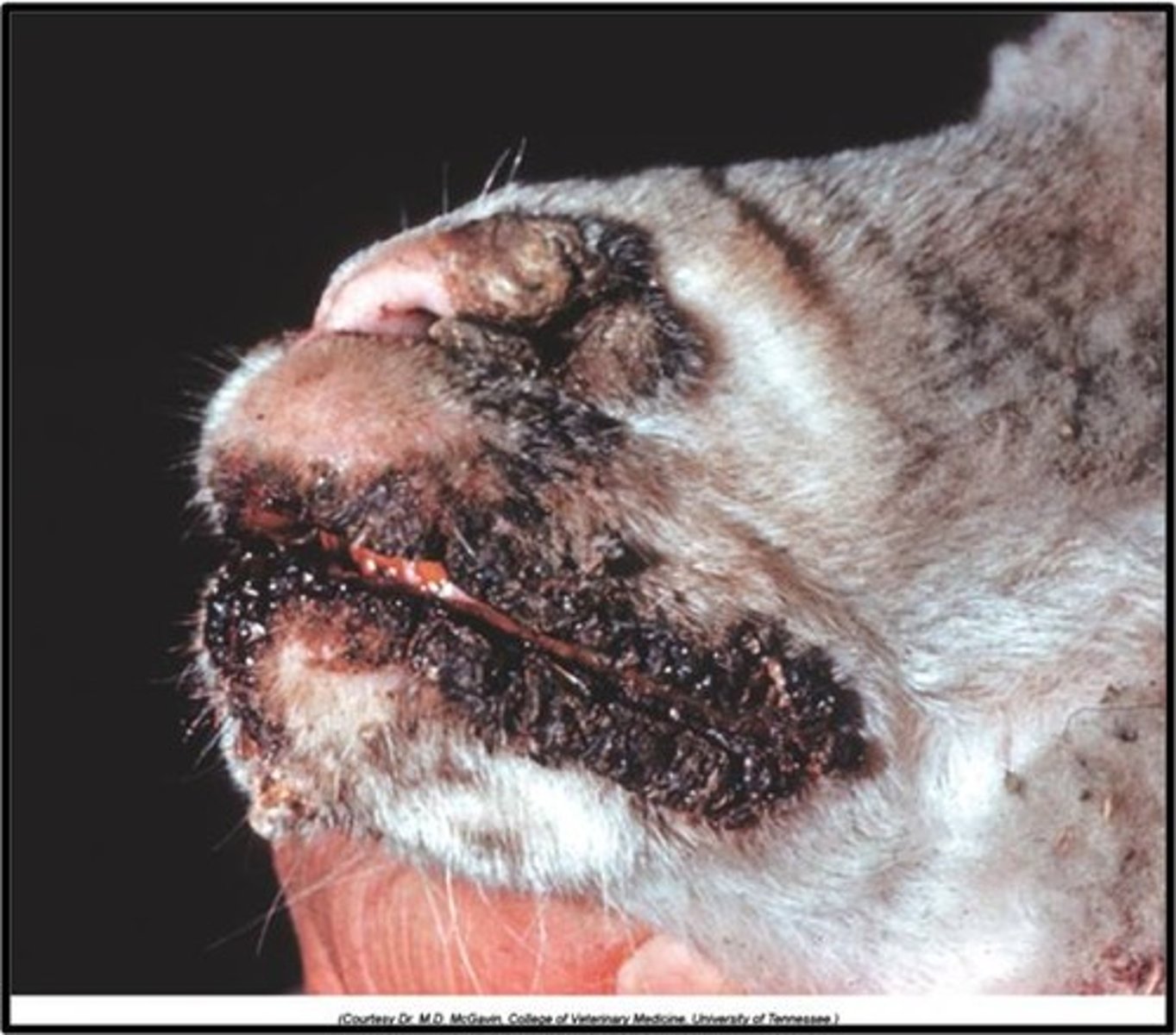
Sore Mouth Treatment
Iodine and glycerol on lesions
Let it run it's course
Sore Mouth sheep
Polyarthritis
Inflammation of joints generally caused by a bacterial infection.
Polyarthritis Symptoms
Stiff joints
Reluctant to move
Depression
Decreased body weight
Fever
Polyarthritis Treatment
Treat with broad-spectrum antibiotic
Polyarthritis Prevention
Maintain clean environment
Scrapies
Affects nervous system
Degenerative disease
Scrapies Symptoms
Itching and wool pulling
Incoordination and muscle tremors
Sensitivity to sound or light
Weight loss
Scrapies treatment
No treatment, deadly
Internal Parasites
are an ever growing concern in the management of sheep
treat with a dewormer
Normally oral
Parasite resistance
External Parasites
Sheep keds-
Wool maggots
Sheep keds-
Symptoms-
Poor growth
Unthrifty appearance
Poor gain
Prevention/ Treatment -
Ectoban, Ectrin, or Permectin
Wool maggots
Attracted to open wounds, urine, feces
Will set up in rectum
Symptoms-
Constant movement of dock
When moving, hind legs move in a high kicking fashion
Treatment - cleanliness, dock tails
Seasonal Breeders
Will start estrous cycles when daylight hours decrease(at end of summer/early fall)
Stop cycling when daylight hours increase (late spring/early summer)
What Affects Reproductive Efficiency in Ewes and Rams?
temperature
Genetics
Age
Nutrition
Season
At breeding
Need to flush ewes
Feed concentrates to increase energy and protein content
increases ovulation rates
3rd trimester of pregnancy
Greatest growth of lamb
Minerals and Vitamins
Typically don't need to supplement vitamins
Need to provide mineral supplement
Must be formulated for sheep
Ewe Breeds
These are white- faced breeds of fine-wool type or crosses of fine-wool types.
These breeds contribute traits for good mothering ability, hardiness, good fleece characteristics, and good volume of wool.
Usually, slower growth rates
Ram Breeds
These breeds are selected for the growth and meat qualities of their offspring
They are used as terminal sires in crossbreeding programs.
Usually, lower quality wool
Hair Breeds
Not all sheep have wool; to the untrained eye, hair sheep often look more like goats than sheep.
Dairy Breeds
It is only recently that an interest in dairy sheep has developed in the United States.
Mostly utilized for specialty marketsfor cheese production
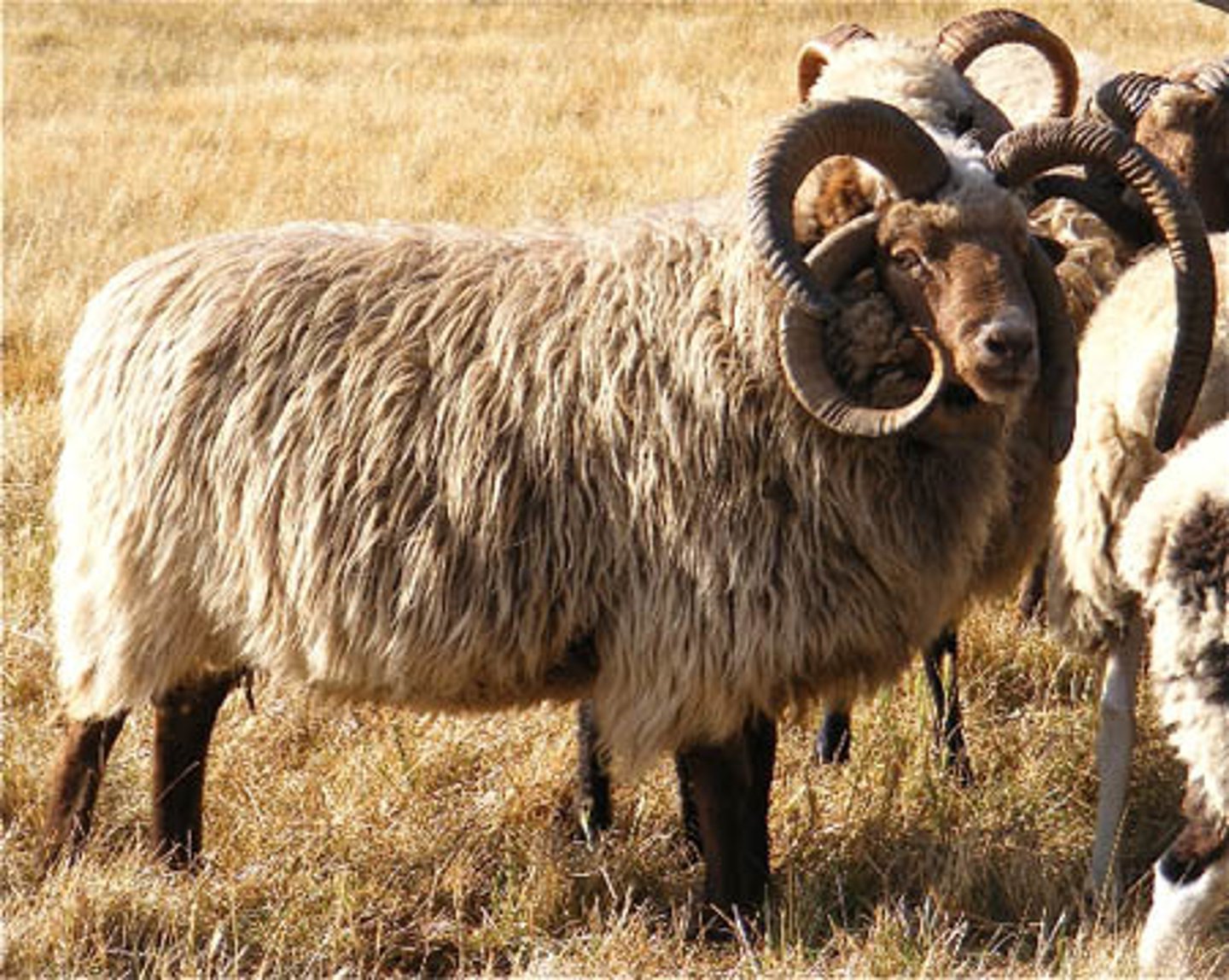
Churro
First domesticated sheep introduced in North America
Churro Known for:
Small breed
Hardy
Disease resistant
Long or coarse fleece
Rams can carry four horns
Fleece is used for weaving rugs/blankets
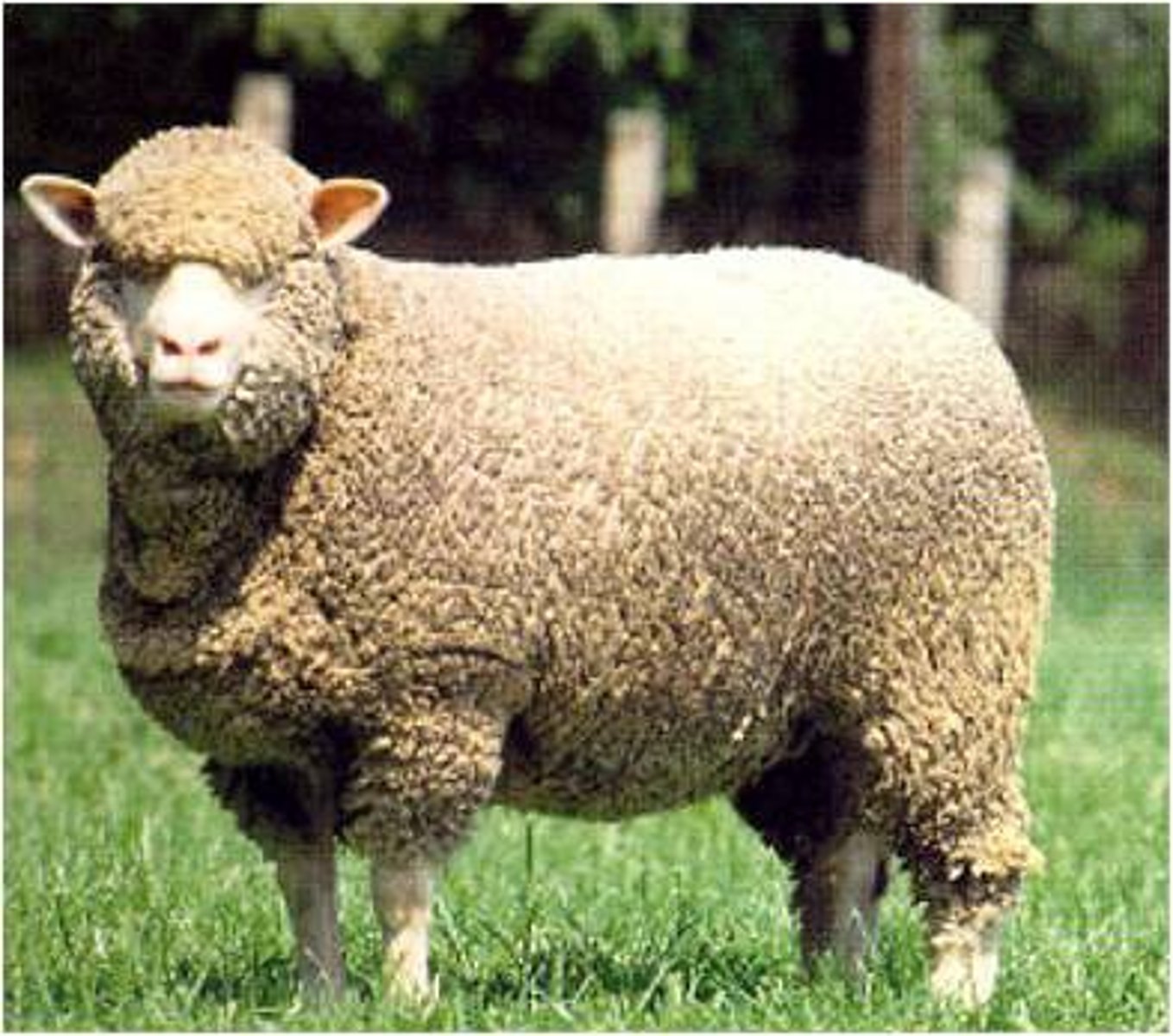
Merino
Origin: Spain
Can be polled or horned
typically M are horned/ F are not
White
Merino Known for:
Fine wool
Low-med growth rate
Adaption to range
Foundation breed for most modern day fine wool breeds
Used extensively in Australia
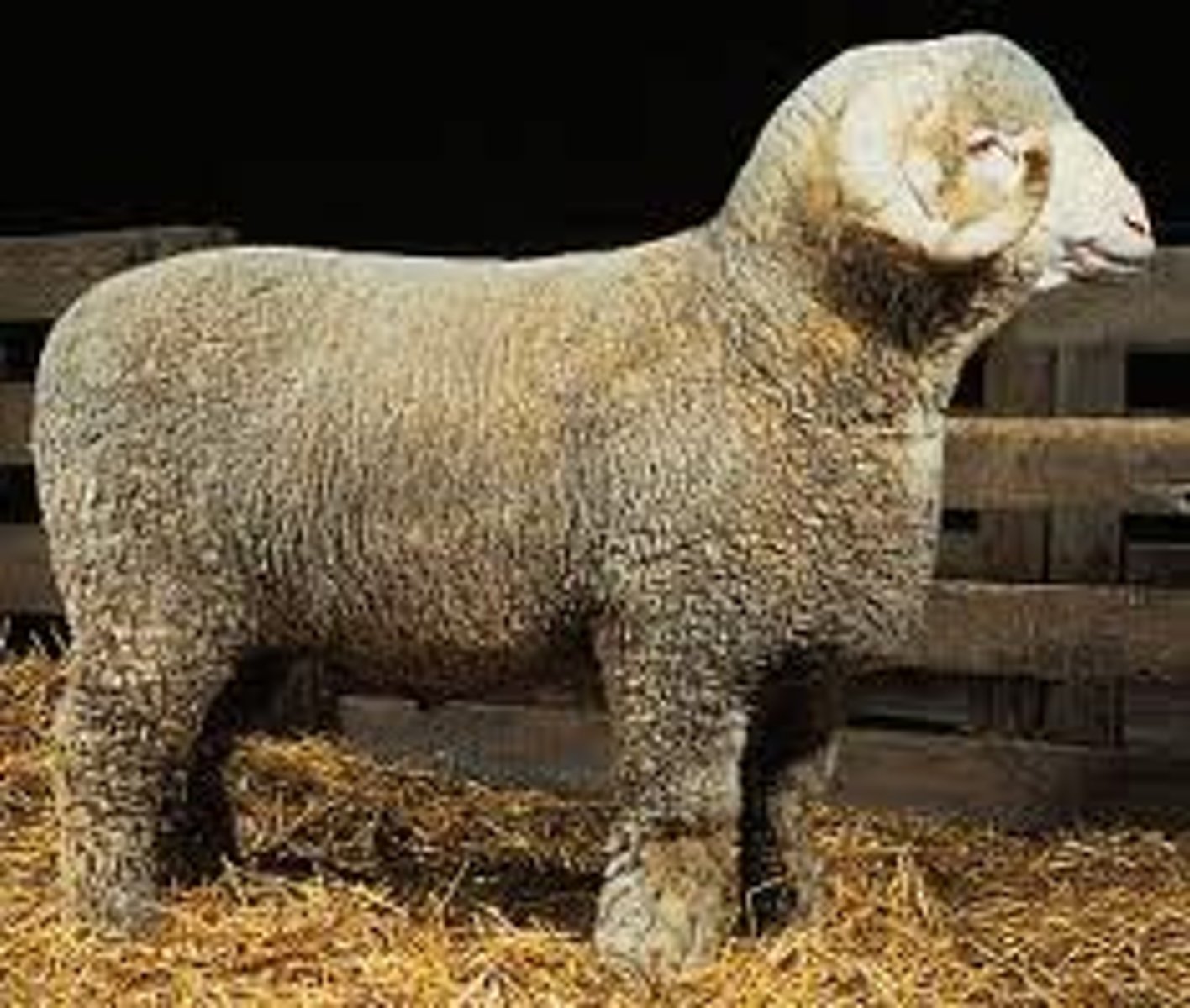
Rambouillet
Origin: France
Developed from the Merino
Developed with many western range flocks
Rambouillet Known for:
Fine wool with tight crimp
Med-high growth rate
Longevity/hardy
Strong flocking instinct
Polypay
Developed at US Sheep Experiment Station (Idaho) in 1960s-70s
Cross of Targhee x Dorset and Rambouillet x Finn sheep
Developed to produce two lamb crops and one wool crop per year
Polypay Known for:
Mixed wool
Medium size
Prolific breed
Extended breeding season
Acceptable growth/ high carcass quality
churro look
Merino look
Rambouillet look
Polypay look
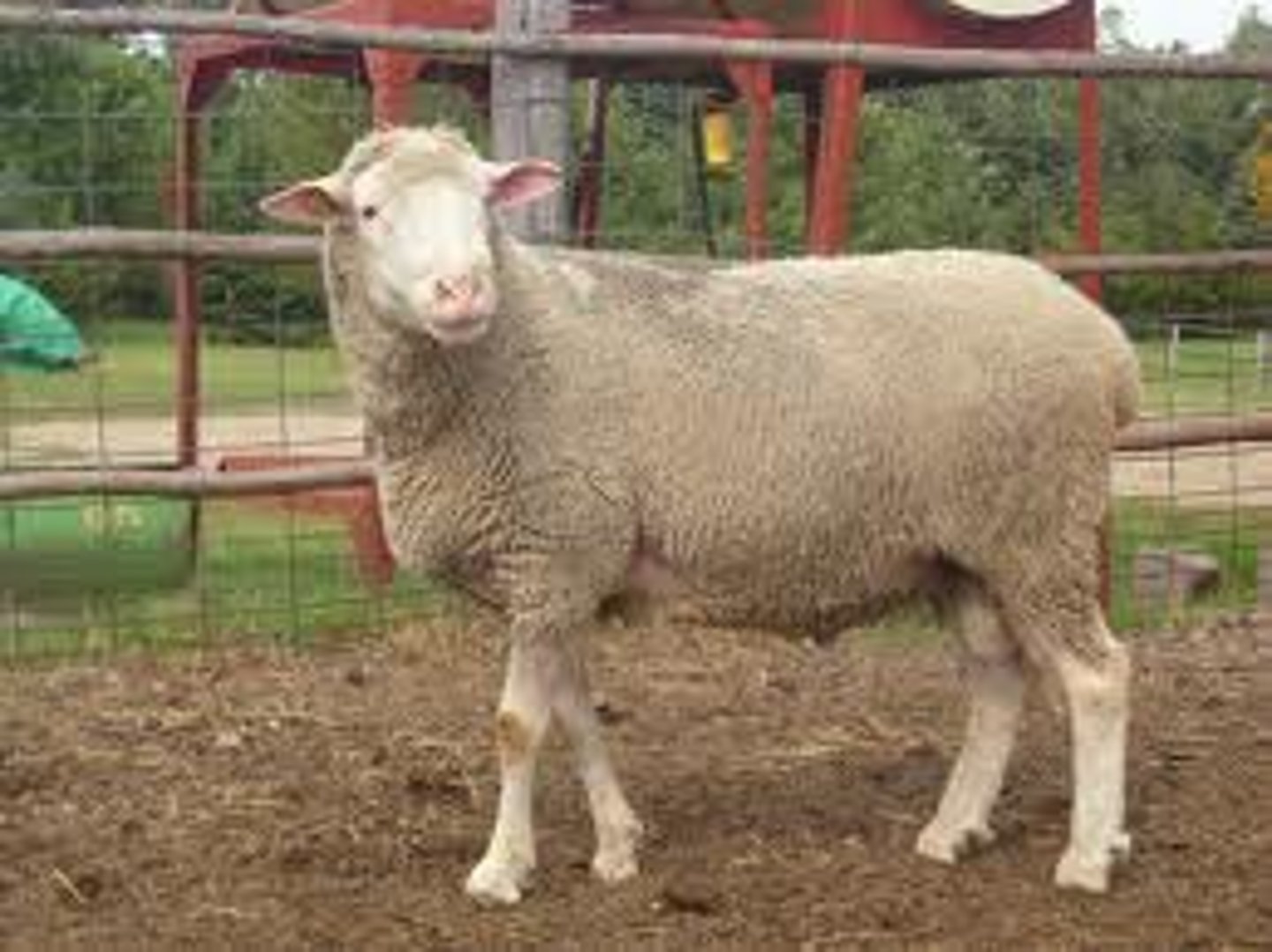
Hampshire look
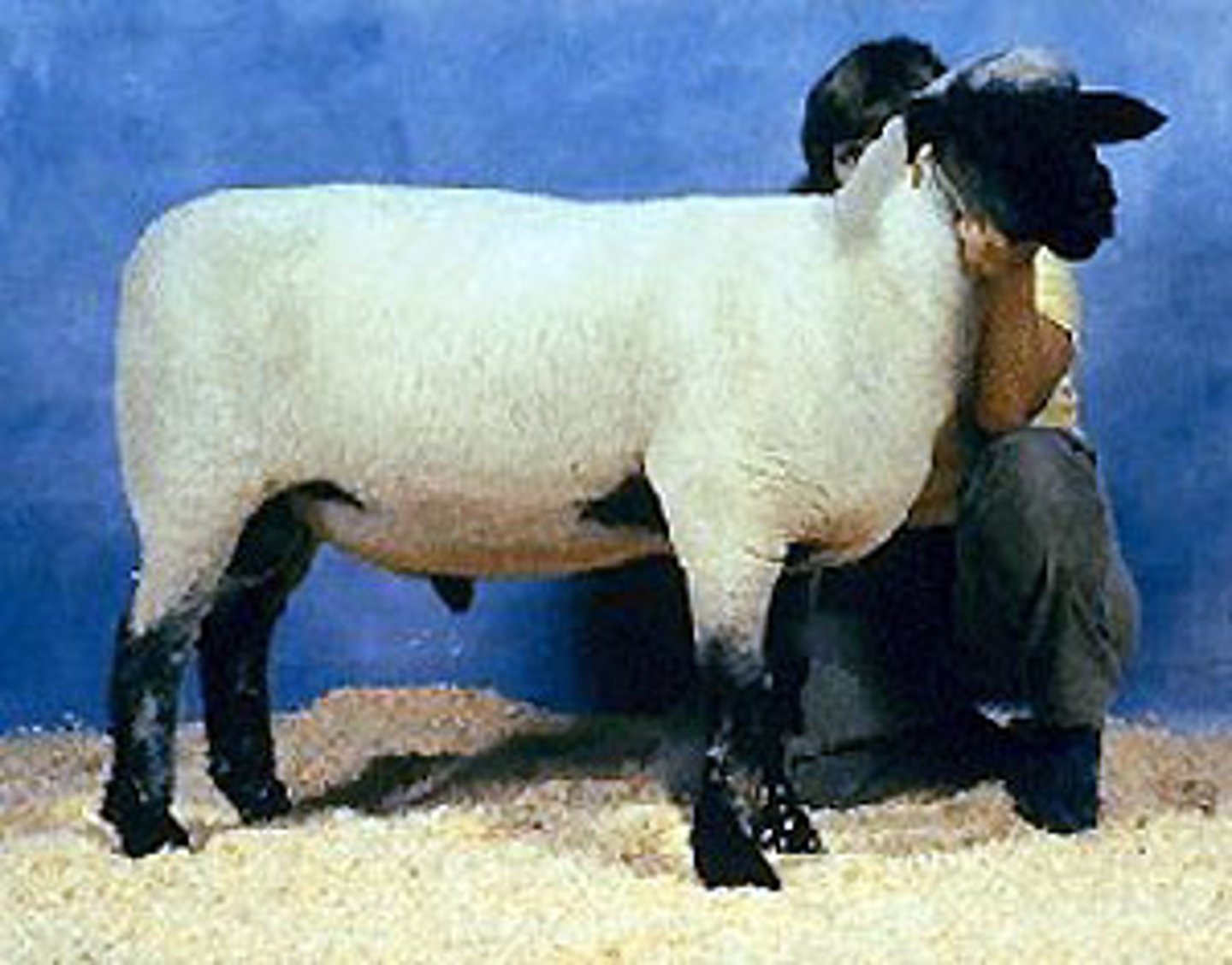
Hampshire
Origin: England
First arrived in 1860 but flocks were destroyed or scattered during Civil War, reintroduced in 1880s
Hampshire Known for:
Medium wool breed
High growth rates
Large frame size
Black face with wool cap and wool on legs
Quality carcasses
Suffolk look
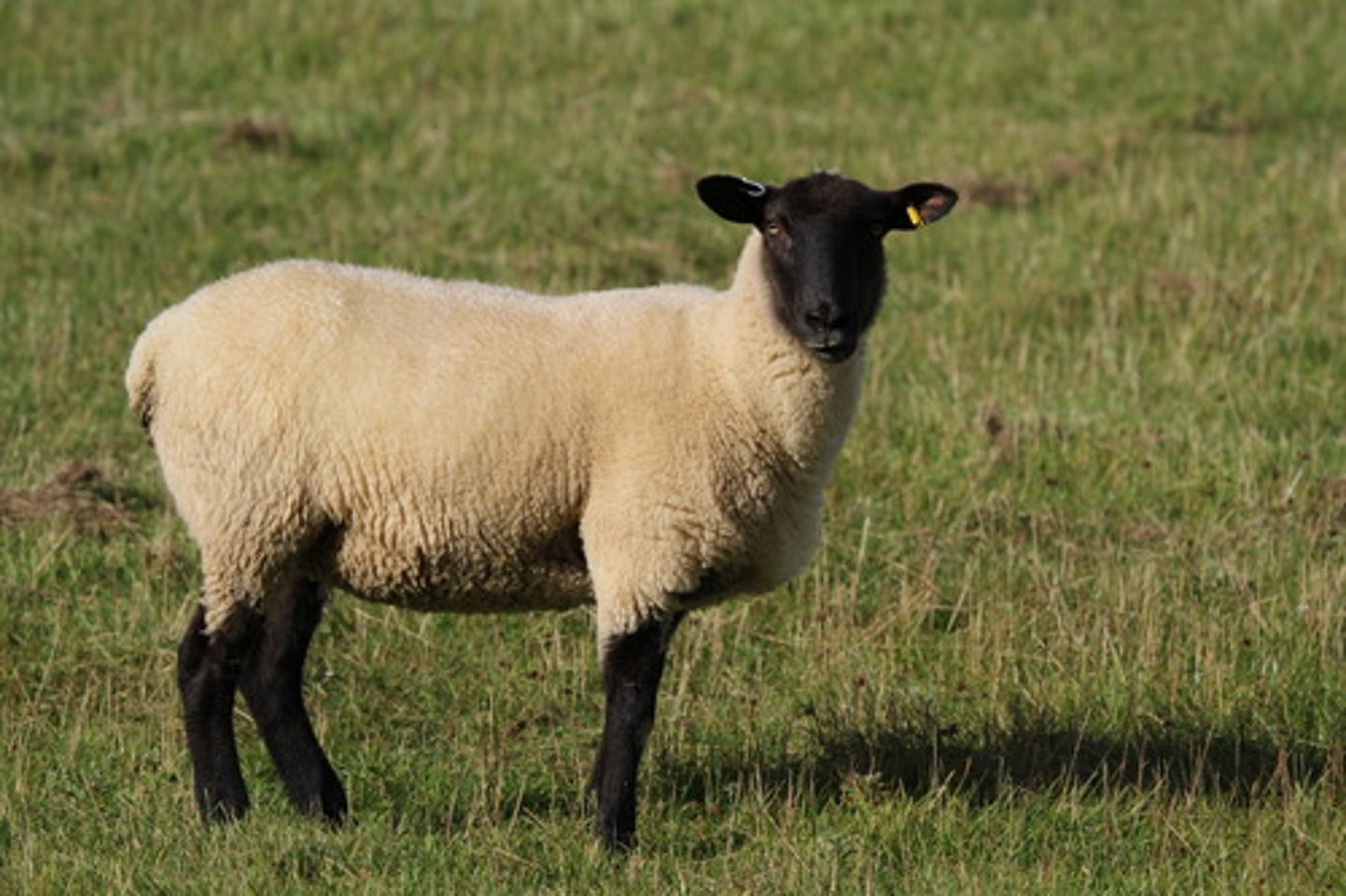
Suffolk
Origin: England
Arrived in U.S. in 1888
Most popular breed in U.S.
Suffolk Known for:
Medium wool
High growth rates
Large frame
Heads/legs free of wool
Heavy, high cutability carcasses
Southdown look
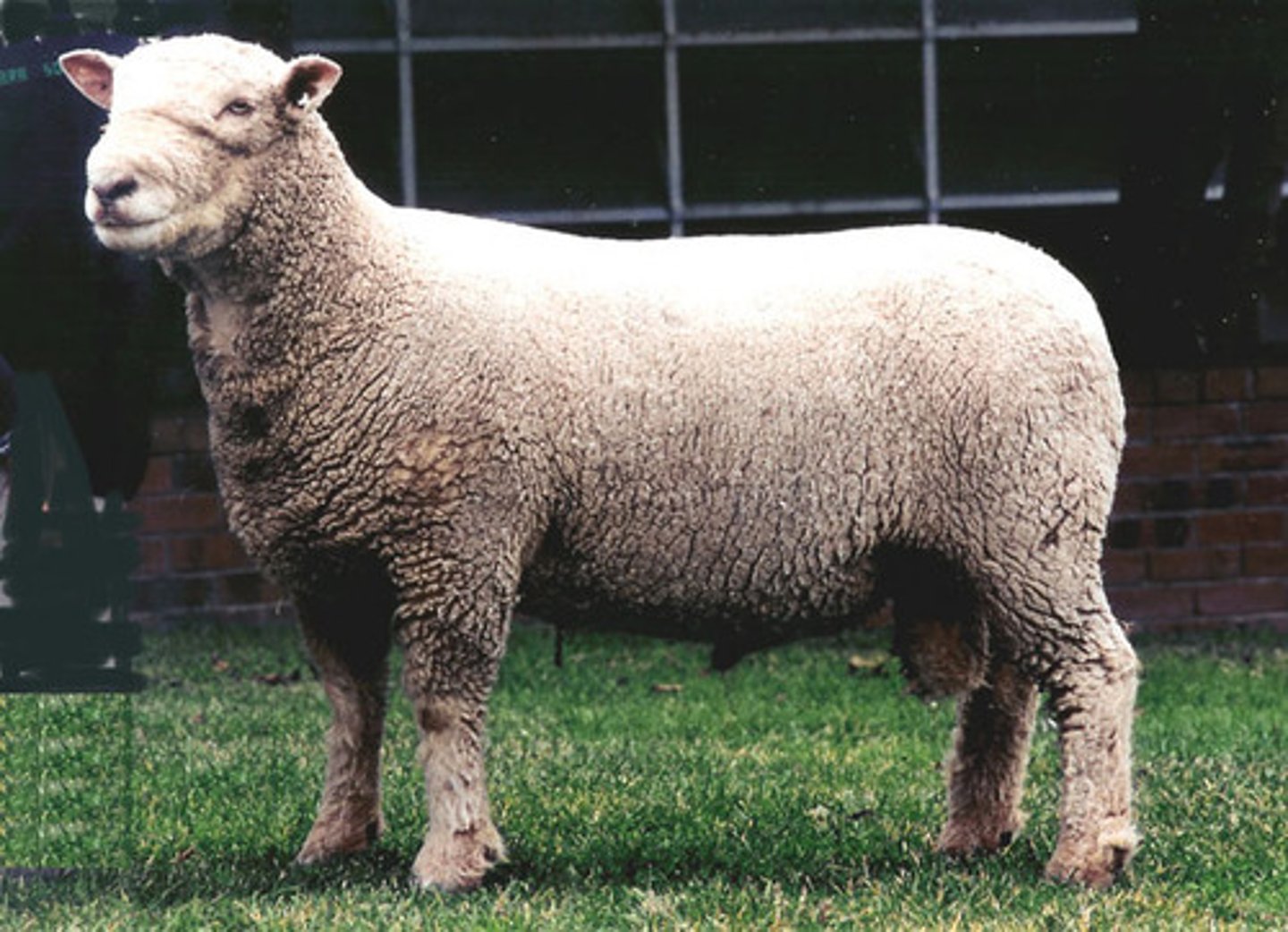
Southdown
Origin: England
One of oldest breeds
Contributed to many other breeds
Arrived in U.S. in 1648
Southdown Known for:
Medium wool
Med growth rates
Small frame
Easy keepers
Heavy/ quality carcasses
Early maturity
Dorset look
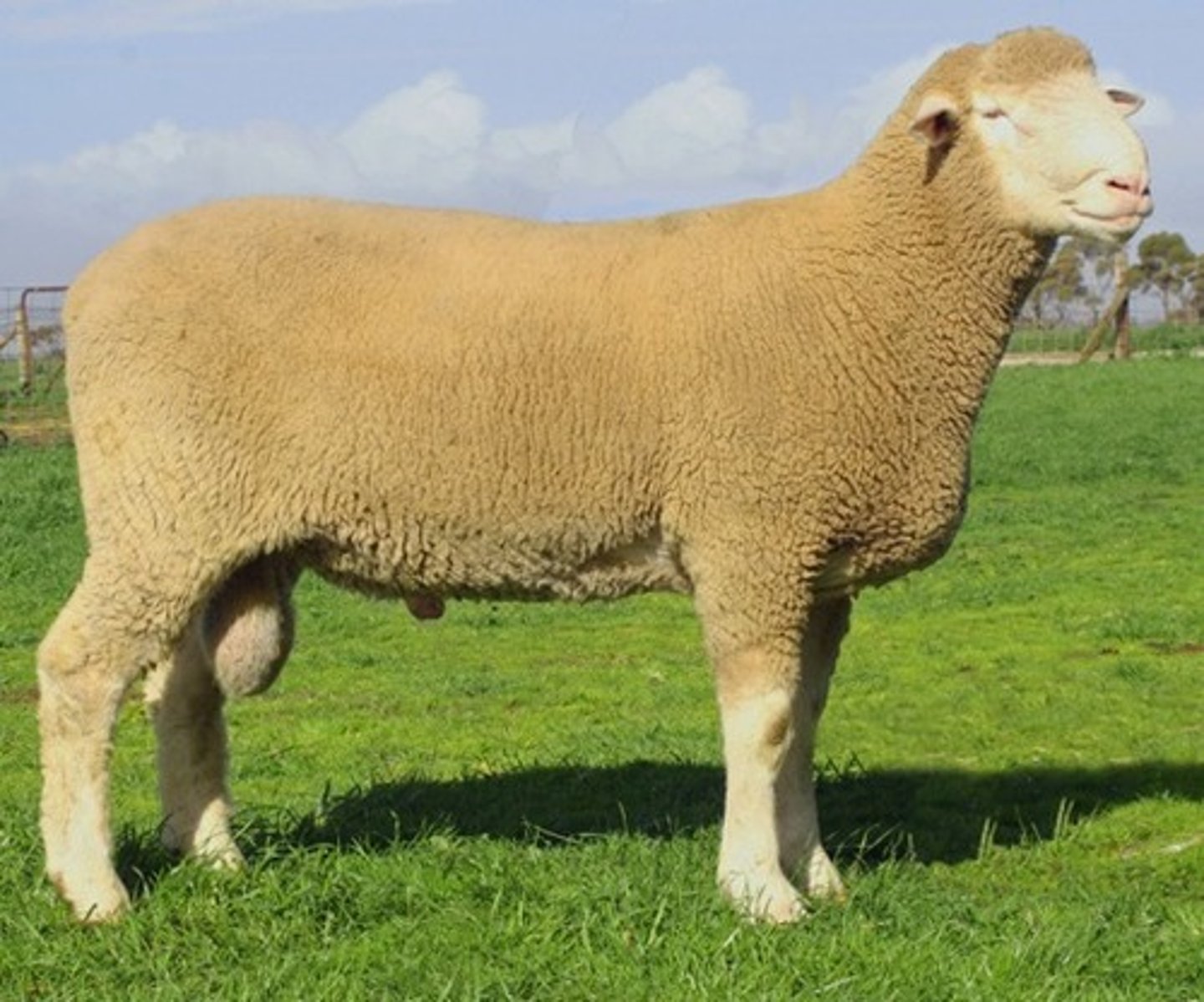
Dorset
Origin: England
Can be either horned or polled
Arrived in U.S. in 1885
Dorset Known for:
Medium wool
Med-high growth rates
Heavy muscled carcass
Prolific
Heavy milkers
Docile
Adapt to almost any environment
Texel look
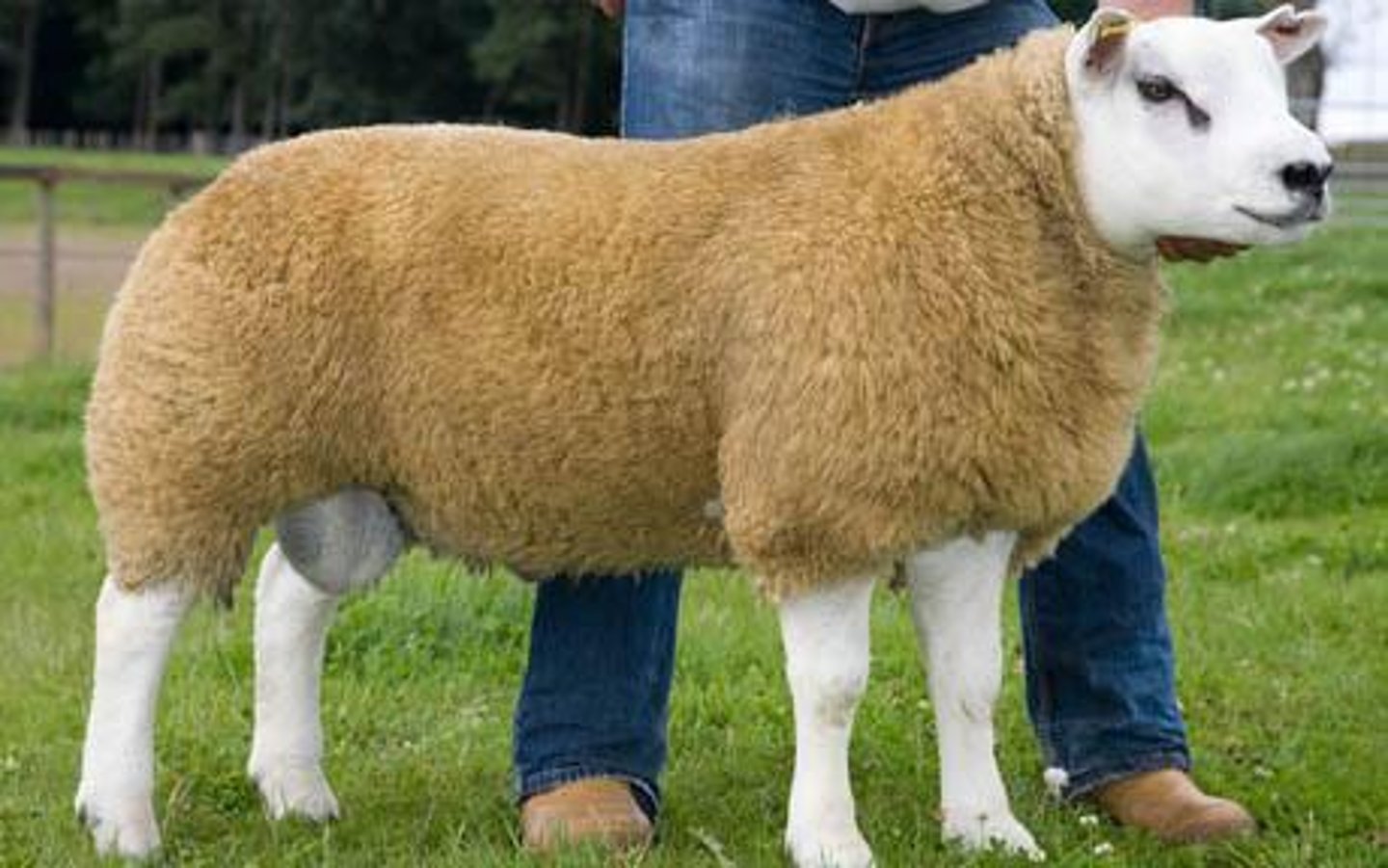
Texel
Origin: Island of Texel in the Netherlands
First imported to the U.S. by the Meat Animal Research Center at Clay Center, NE in 1985
texel Characteristics
Med frame size
Heavy muscled
Good quality lean carcass
Med grade white wool
Docile and calm
Feed efficient and do well on pasture
Barbados Blackbelly look
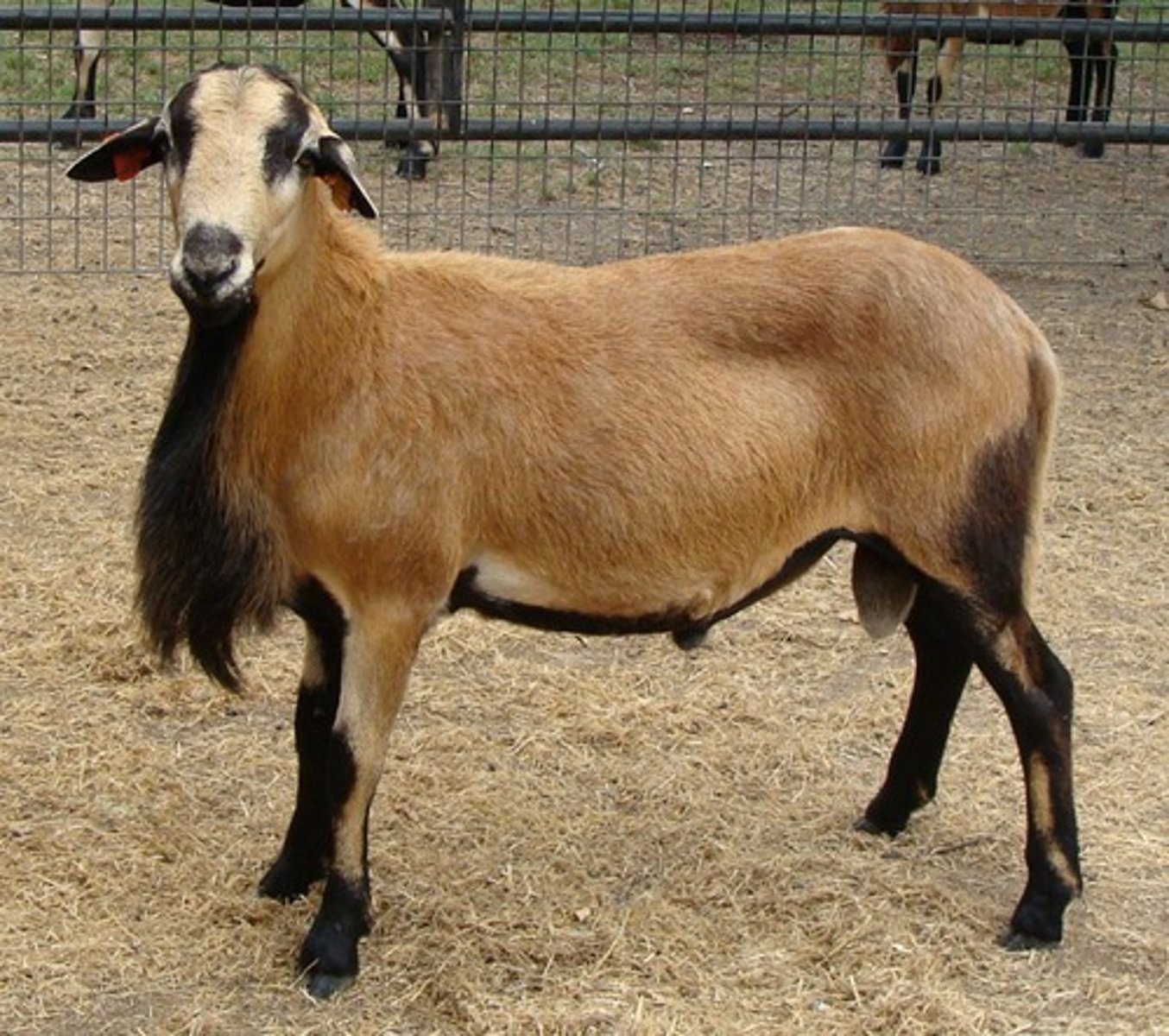
Barbados Blackbelly
Origin: Caribbean island of Barbados
"Antelope-like" in appearance
Barbados Blackbelly Known for:
High quality meat
Hardiness (thrive in hot and humid environments)
Reproductive efficiency
Dorper look
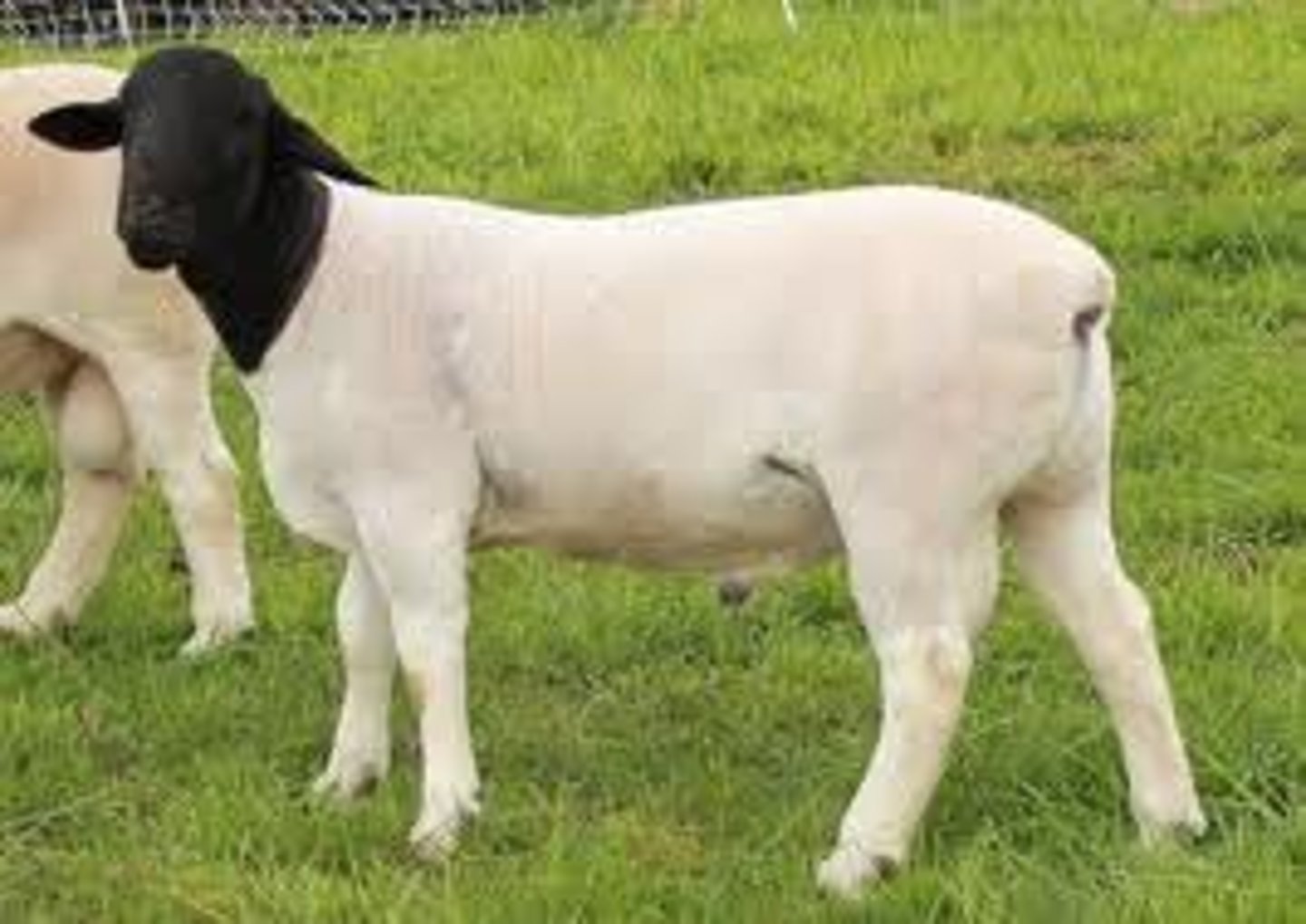
Dorper
Origin: South Africa
Cross of Blackheaded Persian ewe and Dorset Horn
Developed in 1930
Arrived in U.S. in 1995
Polled
Dorper Known for:
Characteristic black head or can be all white
High growth rates
Very muscular
Thick skin
Most sought after sheepskin
Average lambing 150- 160%
Katahdin look
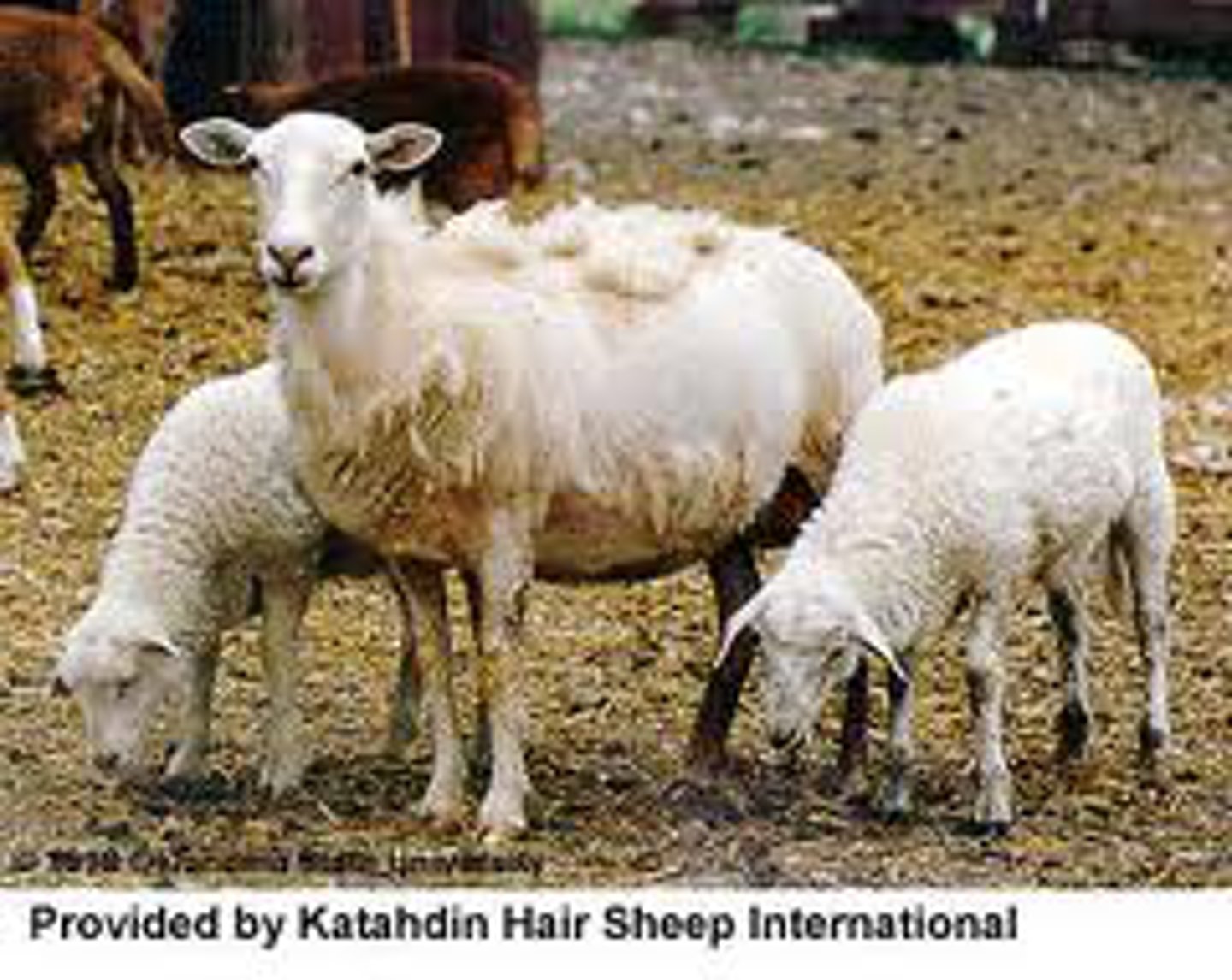
Katahdin
Origin: U.S. (Maine)
Developed in 1950s
Hair breed
Med frame size
Cross of Suffolk, African Hair sheep, St. Croix, and Wiltshire Horn
Katahdin Known for:
Improved carcass quality
Natural resistance to internal parasites
low maintenance
High twin rate (150-170+%)
do well on pasture
Color variety
Karakul Fat-Tailed Breed look
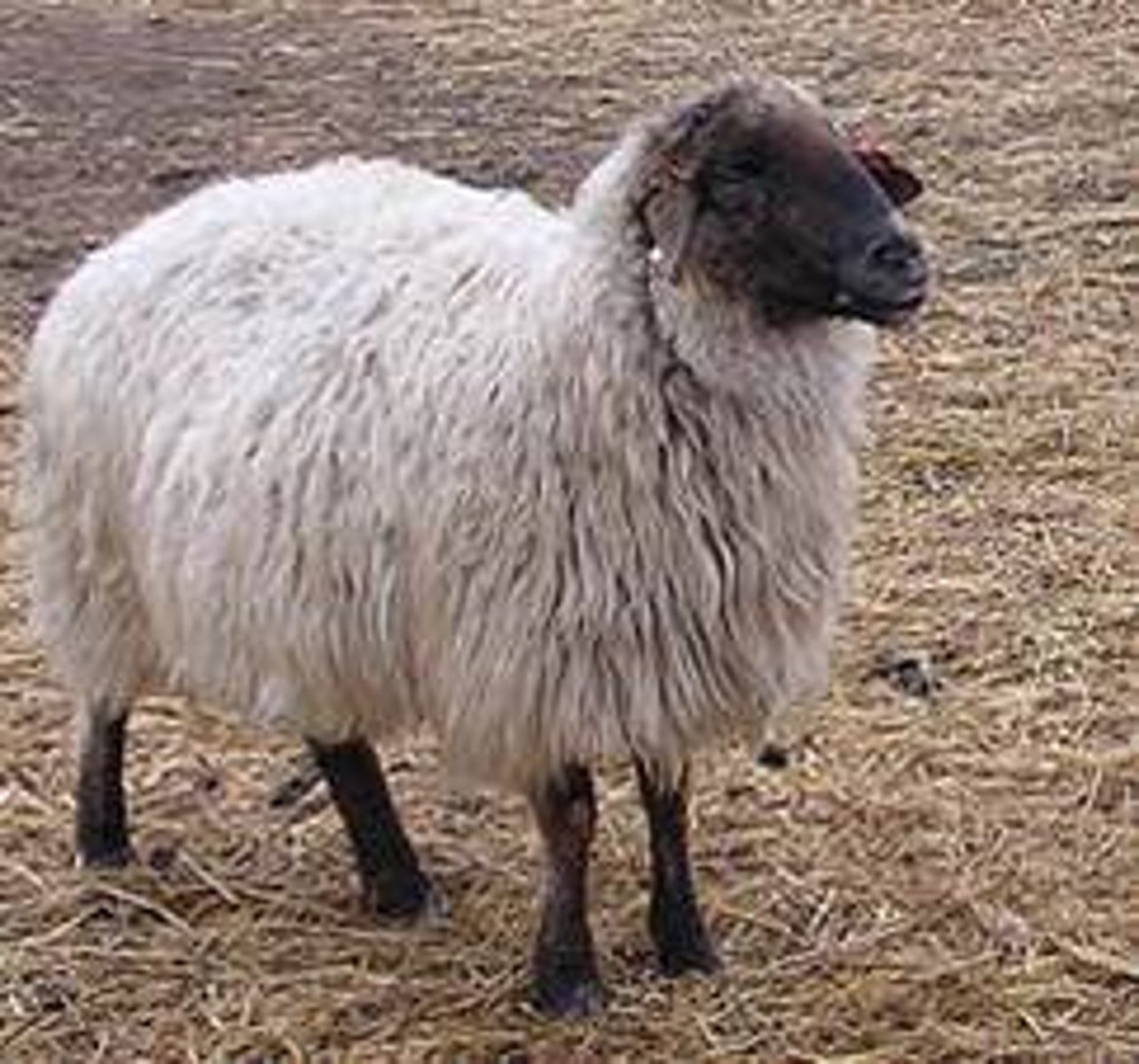
Karakul Fat-Tailed Breed
Origin: Central Asia
Male sheep has horns but female has no horns.
Specialty breed in U.S.
Karakul Fat-Tailed Breed known for
Large tails that stores fat
Silky Fleeces are prized by handspinners and felters
source of milk, meat, tallow, and wool
Survive in adverse conditions with very little forage
Finn Sheep Rat-Tailed Breed look
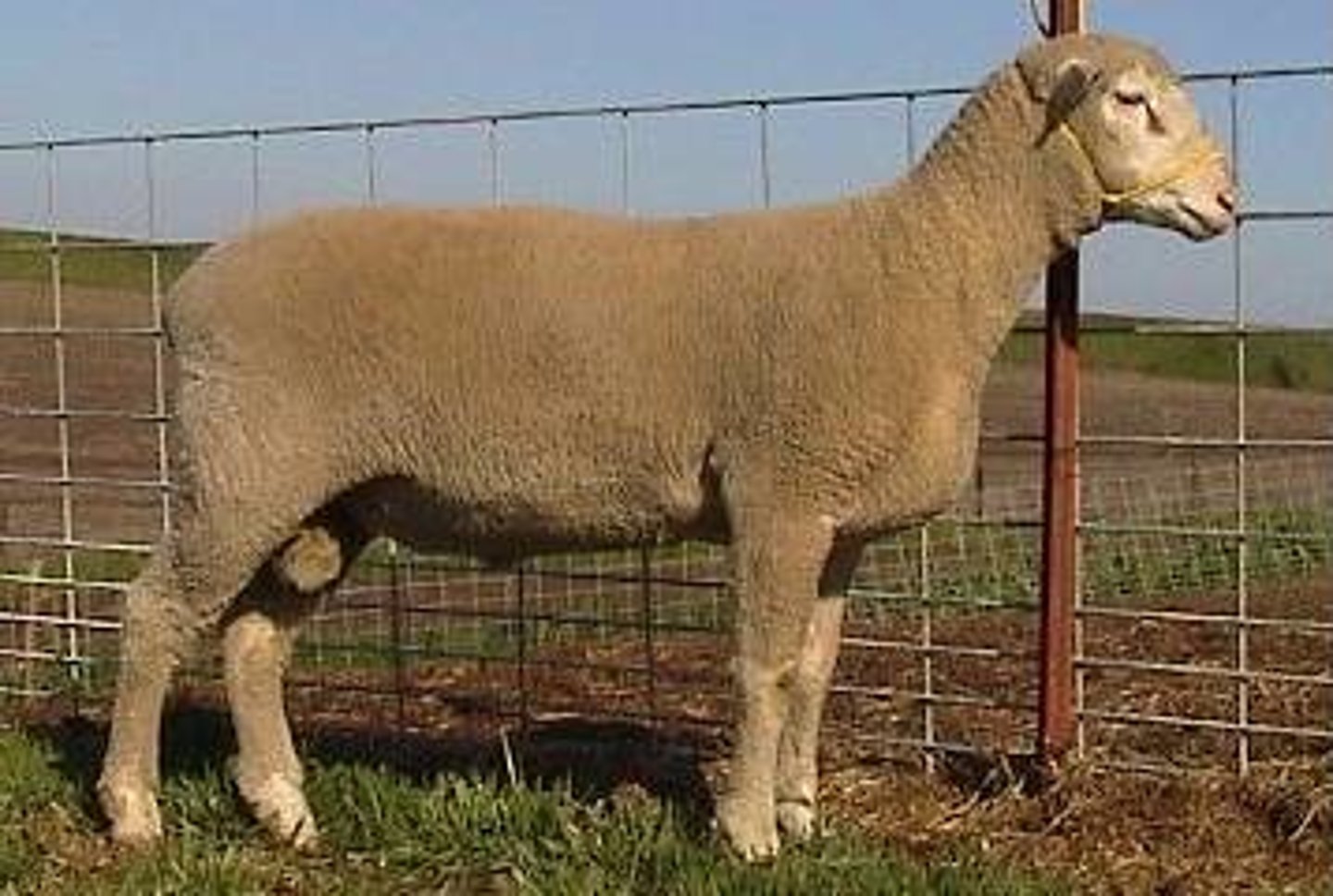
Finn SheepRat-Tailed Breed
Origin: Finland
Also known as Finnish Landrace
Arrived to U.S. in 1968
Used for crossbreeding
Finn SheepRat-Tailed Breed Known for:
Med wool
Low growth rates
Very prolific
Strong maternal instincts
Will lamb on accelerated lambing program
Good for meat, milk, and wool
Awassi look
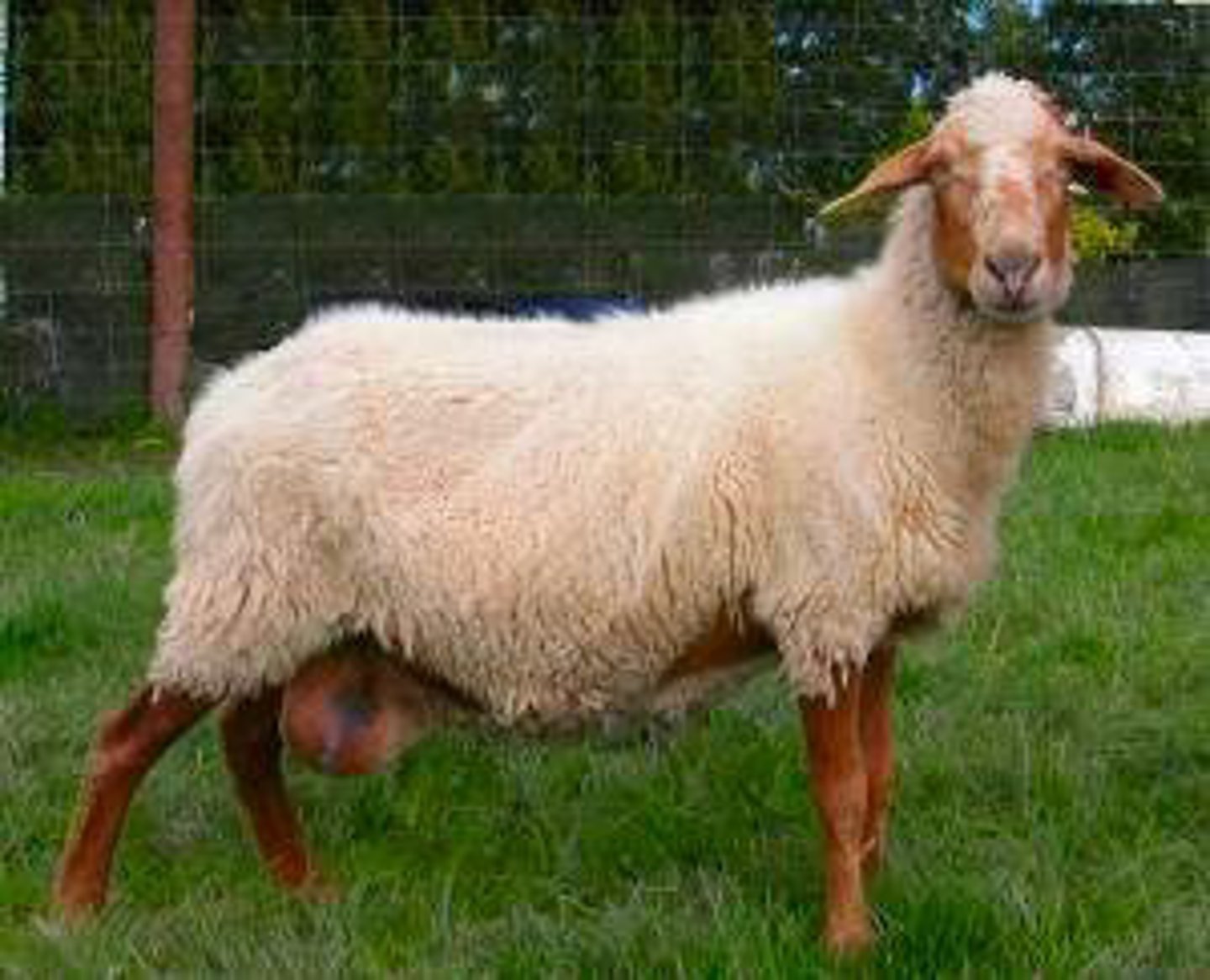
Awassi
Origin: Middle East/ Arabian desert
White with brown heads