BIO240 EXAM 5 Major Points
 Call Kai
 Learn
Learn Practice Test
 Spaced Repetition
 Match
Match Flashcards
 Knowt Play
1/30

There's no tags or description
Looks like no tags are added yet.
Name | Mastery | Learn | Test | Matching | Spaced | Call with Kai |
|---|
No analytics yet
Send a link to your students to track their progress
31 Terms
Tell me what a gland is? What does it do, what does it produce?
Endocrine system secretes into bloodstream, made of glandular tissue, secretes hormones
2 major classes of hormones?
steroids and amino acid based
steroid and main ex and where it is released and what it does in the cell
lipid soluble, can pass through membrane, act in complex by binding to a receptor or goes in and finds receptor on inside, DIRECT GENE TRANSCRIPTION regulators, goes to nucleus as complex and is TF, regulates gene transcription by binding to intracellular receptor (ex: estrogen), act on target tissue, ex: aldosterone acts on collecting duct and DCT (encourages salt to come into system so water follows), adrenals releasing a lot of these
amino acid based, main ex, what they do in the cell
amino acids, peptides, proteins, ex: insulin, hypothalamus signaling hormones, glucagon gets released to release more glucose into blood and insulin stores glucose out of blood oppose each other (antagonistic) they control a homeostatic mechanism for blood sugar, second messengers (triggers series of events to activate something) within cell
posterior pituitary gland hormones, main ex, where theyre made
Posterior pituitary gland hormones released here synthesized in hypothalamus, provides highway to pp, released in pp, ex: oxytocin during childbirth
ex: oxytocin during childbirth
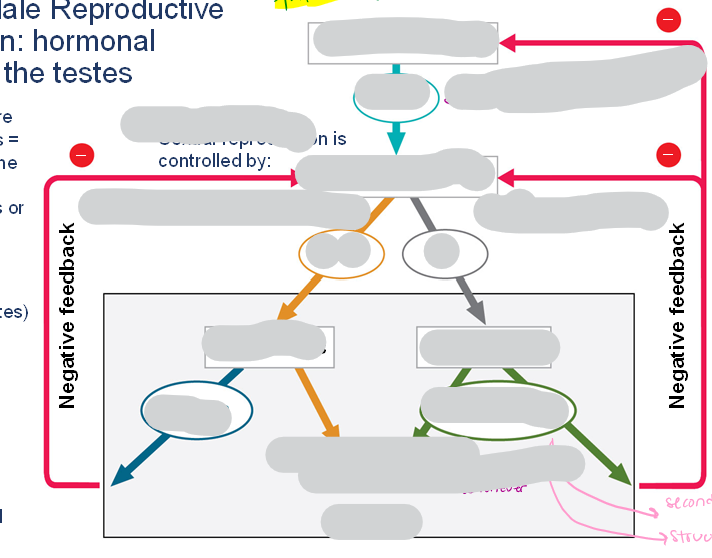
ACTH, what activates it, if it was stimulated what would happen
adrenocorticotropic hormone, interconnected (adrenals), CRH hormone activates ACTH, if you took a drug to stimulate a ton of ACTH, you will make a bunch of glucocorticoids.
generic endocrine feedback loop
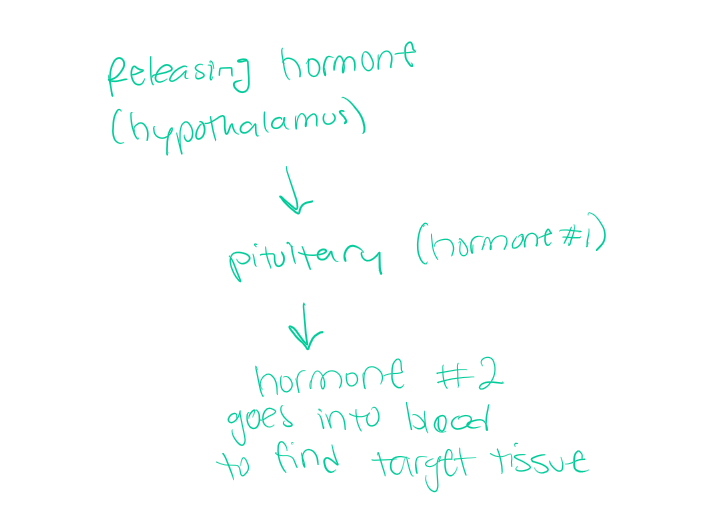
humoral stimuli, what changes, what could happen
change in blood, change in pH or temp, salt concentration, dehydration, see effect on reduced blood glucose, reduced pee, change in bicarbonate levels
hormonal, what changes, what causes it
other hormones, think metabolism, skin, mood, reprod health
neural, what causes, what changes
tell from the outside (if someone hits their head and their awake, check the pupils to see if theyre reacting right), triggered, overstimulated, stress, car accident, see increased HR, sweating, alertness, fight or flight
who makes epinephrine
adrenal medulla in kidney
gibberellins, what they do, who they oppose
think south to north, makes plant grow upward, if you want to slow growth, inhibit them, anytime dormant seed gets watered, gib activated bc they have huge role in germination
Gibberellins and ABA oppose each other, any time a seed wants to germinate, need to inhibit ABA to germinate
ABA, what they do, who they oppose
drought tolerance and to keep seed dormant
Gibberellins and ABA oppose each other, any time a seed wants to germinate, need to inhibit ABA to germinate
ethylene
ripening of fruit
auxin, what it does, who it opposes
cells expand and dont divide with only auxin
apical growth, inhibit axillary growth
cytokinins
cell division only
axillary growth, inhibit apical growth
advantage of sexual reproduction
genetic diversity
Why do we see more evolution in species that asexually reprod
because they can do it faster and always pass on their mutations, accumulate mutations quicker
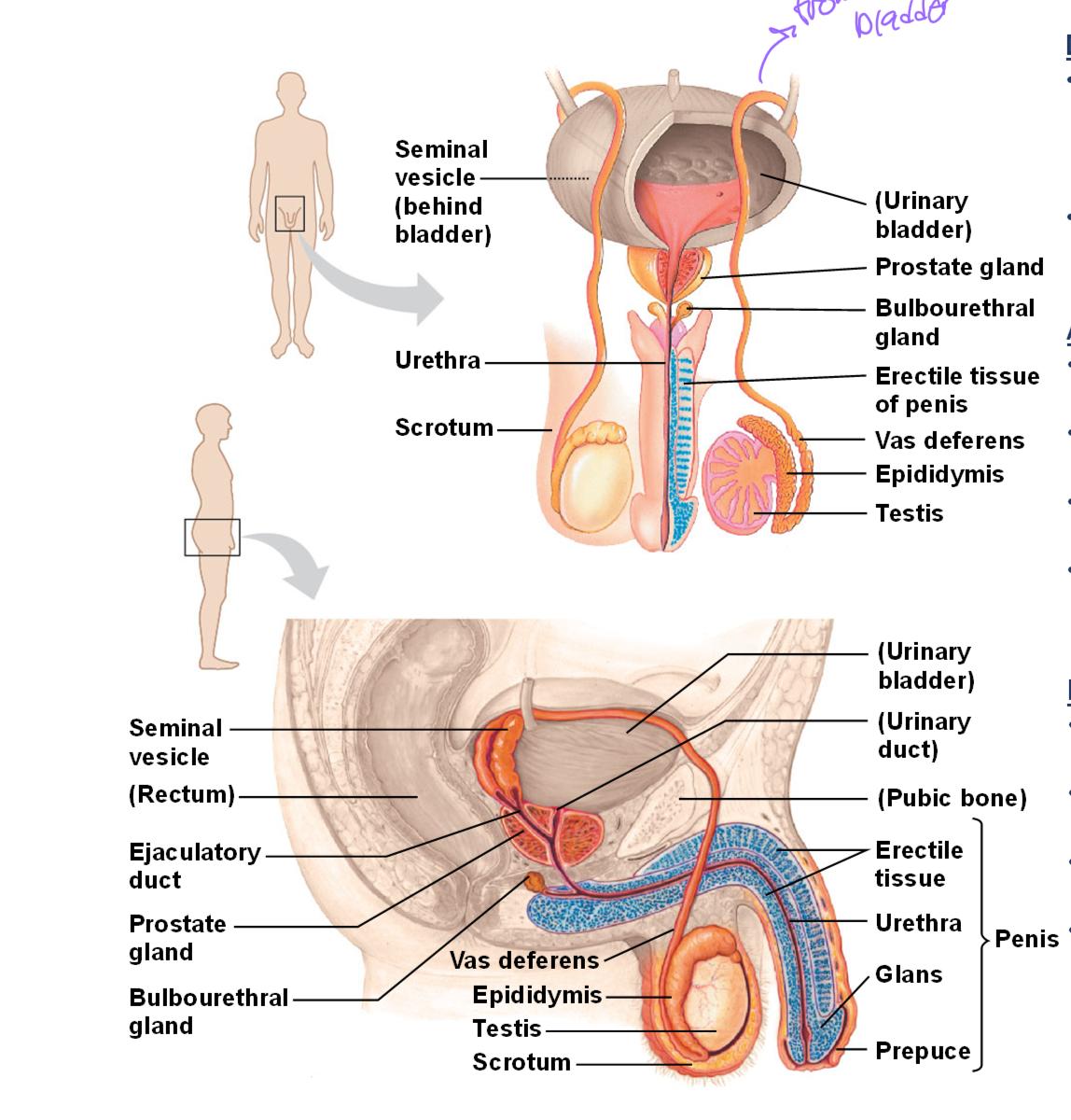
vas deferens
highway for sperm to get into vagina through ejeculation
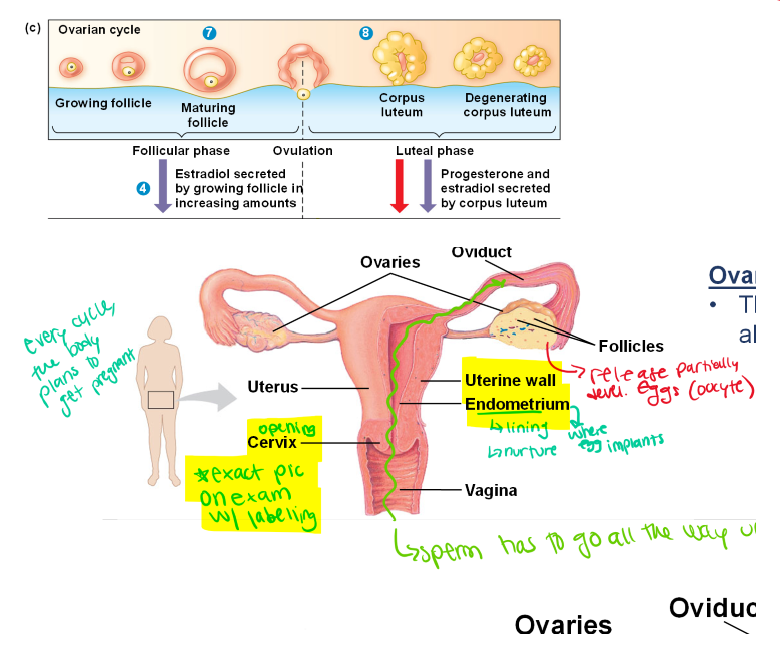
oviduct
highway for eggs to get to uterus
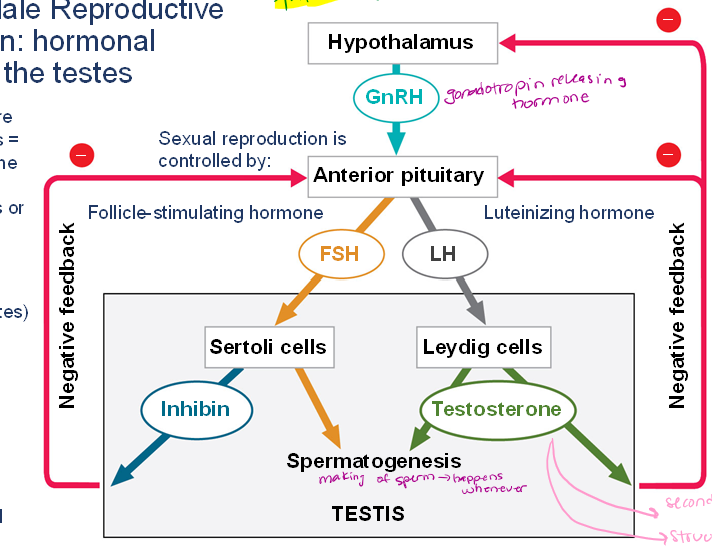
describe where vas deferens, prostate gland, and testes are located
describe where/what cervix, corpus luteum and where embryo implantation occurs
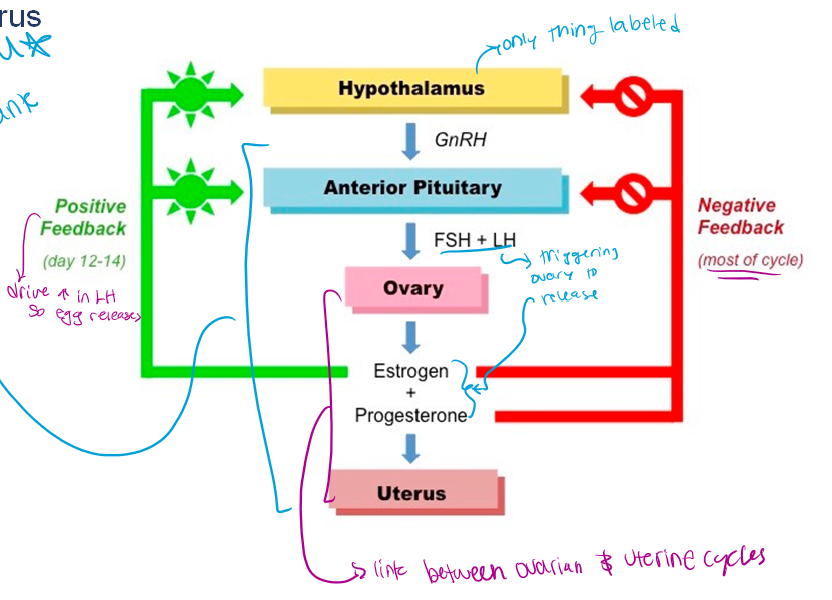
uterine cycle (3 phases)
shedding of lining (menstruation) is beginning, menstruation, proliferative (egg matures), secretory phase
ovarian cycle (3 phases)
starts with follicular phase, once you have a follicle, next step is to ovulate, then luteal phase
only thing the same between spermatogenesis and oogenesis
they are both making haploid gametes for reproduction
acrosome, what it does, what happens if doesnt work
part of sperm necessary for sperm to penetrate egg is acrosome (has enzymes) if this does not work, the egg unable to finsih metaphase II so unable to finish meiosis II
Sperm penetrates egg and fertilizes it and then locks down egg, when sperm penetrates, egg gets to finish metaphase II
secondary spermocyte, how many chromatids/chromosomes
23 chromatids, 46 chromosomes (not haploid yet)
if you ovulated and didnt fertilize an egg, what happens
egg dies and body sheds uterine lining in menstruation
spermatogenesis vs oogenesis (3 differences)
all our products of meiosis develop into sperm, while only one of the four becomes an egg
spermatogenesis occurs throughout adolescence and adulthood, but women go through more changes throughout life (menopause)
sperm are produced continuously without prolonged interruptions in oogenesis (menstrual cycle)