GCSE Geography: The Challenge of Natural Hazards
 Call Kai
 Learn
Learn Practice Test
 Spaced Repetition
 Match
Match Flashcards
 Knowt Play
1/82

Earn XP
Description and Tags
paper 1
Name | Mastery | Learn | Test | Matching | Spaced | Call with Kai |
|---|
No analytics yet
Send a link to your students to track their progress
83 Terms
what period are we in
the quaternary period
evidence for climate change (4)
air and sea temperatures rising as scientists have a record of it for 100yrs ago (instrumentzal temperature record)
using deep marine sediment cores and ice cores
studying air bubbles
composition of water
current evidence for climate change (3)
sea levels rise: risen by 21-24cm since 1800 due to higher temps which causes glaciers and ice sheets to melt and this freshwater flows into the sea. water also expands when it gets warmer so as the earth warms, the whole sea is expanding and rising
melting of glaciers and icesheets. sea ice is thinning and not extending as far (by 65% since 1975 in the arctic ocean)
changes in ecological pattern: bird migration, plant flowering pattern and breeding seasons have been shifting
natural causes of climate change (5)
orbital changes: the orbit of the earth changes from a near perfect circle to an ellipse (oval) which affects how intense the sun’s rays hits the earth, one cycle takes 100,000 years
the tilt of the earth’s axis changes from 21.5 degrees and 24.5 degrees which affects the contrast between summer and winter seasons. the change between 21.5 and 24.5 takes around 41,000 years
precession describes the wobble of the earth’s axis which affects the length of days, a full cycle takes over 20,000 years
sun spots: 11yr cycle where the amount of sunspots on the sun surface varies from minimum then maximum then minimum. when minimum it reduces the solar output.
volcanic activity: the ash and the gas that erupted into the atmosphere caues a cooling effect causing a reduction in surface temperature (volcanic winter). large amounts of volcanic ash stay in atmosphere and block out the sun (short term cooling). Volcanic eruptions emit gases which react to form aerosols which reflect solar radiation the effect can last several years
Human causes of climate change (3)
burning of fossil fuels releasing greenhouse gases
different farming methods which release methane
deforestation which reduces co2 taken up by trees
what is the greenhouse effect
when greenhouse gases (water vapour, carbon dioxide, methane and nitrous oxides) trap energy from the sun in the earth’s atmosphere which heats the earth
what happens when the sun shines on the earth (4)
solar radiation from the sun (short wave radiation) travels to our earth and heats up the earth’s surface
the earth gives off heat (long wave radiation) when it cools
some of this heat leaves our atmosphere and goes into space
some of this heat is trapped by greenhouse gases which keeps our earth warm
what % of global warming is caused by methane emissions
25% even though there is much less methane than CO2 in the atmosphere
how much methane do cows produce everyday
250-500 litres
how much will avg global temp increase by at the end of the century
4 degrees
what does mitigate mean and how can we mitigate climate change? (4)
reducing the causes of climate change so that climate change slows or even stops such as reducing greenhouse emissions
alternate sources of energy (nuclear power, biomass, hydroelectric power, geothermal, solar,wind and tidal power)
carbon capture: capturing and storing it underground in resevoirs. can reduce up to 90% of co2 emissions from industry
planting trees: trees release moisture into the atmosphere which forms clouds to reflect solar radiation (albedo affect)
how much of the uk has renewable energy
1/3
international agreements
manage climate change by setting goals to recuce their emissions
paris climate agreement - 2015
paris climate agreement
2015
195 countries agreed to ensure warming is kept below 2 degrees by the end of the century
strengthen the ability of countries to deal with the impacts of climate change
adaptation meaning and how we adapt to climate change
responding to climate change by coming up with ways to live and cope with the effects by reducing the risks assosciated with climate change like building flood defenses to manage sea levels
introducing irrigation systems (giving crops controlled amount of water creating new strains of crops that produce higher yields)
new technology such as some farms in sudan have air conditioned rooms for cows
building dams and resevoirs to store water for the population
educating people to not waste water and food
sea levels are expected to rise from 26-82cm by 2100
himalayas water management
they depend on meltwater but now the glaciers are melting quicker so in the future the region may not have any resources of meltwater left so they have to create artificial glaciers. meltwater is collected and sprayed onto the structure so it freezes and can be stored when needed
managing sea levels rise (4)
building flood defenses such as sea walls or use sandbags to stop water
houses built on stilts and redistributing populations to other areas areas
constructing areas that are high above sea level
restoration of mangroves which are shrubs that can trap sediment and slow water flows with their thick roots
what is a natural hazard
natural occuring event that is a threat that can negatively affect (threat) the population
nepal (5)
april 2015
killed 9000 people
7.8 earthquake
19k injured
ADB provided 3 mil to nepal for immediate relief efforts
what is an event
something that doesnt affect the population
geological hazards (4)
volcanoes
earthquakes
landslides
mudflows
hydrological hazards (1)
flooding
atmospheric hazards (3)
tropical storms
tornadoes
droughts
what is a hazard risk
probability that a natural hazard will actually affect a population
what factors affect hazard risk (5)
urbanisation (housing can collapse)
population growth
wealth
land use (floodplains are very fertile)
climate change
layers of the earth outside to inside (4)
crust
mantle
outer core
inner core
comparing continental crust and oceanic crust (4)
continental is older
less dense
thick
oceanic made from basalt, continental made from granit
convectional currents (6)
core heats up the magma in the mantle
hot magma is less dense so it rises upwards
when it reaches the top it cools
so it becomes more dense and sinks back down to the bottom
it is heated up again and the cycle continue
the plates ontop are pushed and pulled by convectional currents in the magma
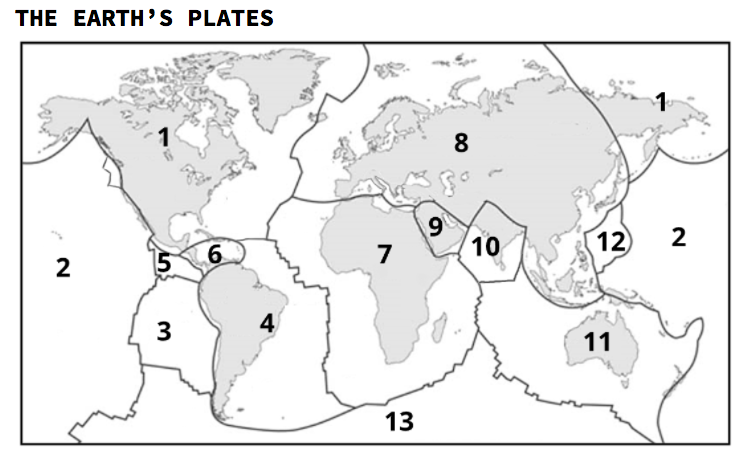
north american plate
pacific plate
nazca plate
south american
cocos
caribbean
african
eurasian
arabian
indian
australian
philippine
antarctic
where is the ring of fire
pacific ocean
where does tectonic hazards occur the most
west of north america and south america or in the atlantic ocean between africa and south america
where else can volcanoes occur other than on land
in the pacific ocean (hawaii)
magma breaks through the middle of the plate and travels up to the surface (the hotspot)
constructive plate (4)
move away from eachother
magma rises and lava pours out the surface
volcanoes forms and form shield volcanoes
this can happen on continental or oceanic crust
what is it called when new land s formed on the ocean floor
sea floor spreading
how do islands form
when lava cools it forms rock, when the rock builds up it forms islands
destructive plate (8)
when the plates move towards eachother
happens with two oceanic ( islands form e.g. mariana trench) or two continental plates (neither can subduct and instead the crust crumpled upwards by pressure building which creates fold mountains (himalayas formed by eurasian and indian plate)
oceanic subducts under the continental crust as its denser
the plate that is subducting leaves a deep ocean trench
friction between the two plates causes strong deep earthquakes
the ceanic crust is melted as it is pulled deeper into the mantle, creating magma
this magma causes pressure to build up under the crust
eventually the magma pushes out through weaknesses in the crust, creating composite volcanoes
conservative plate margin (4)
parallel plates move in different directions or at different speeds to eachother
friction builds between the plates over many years and eventually the pressure gets to large that he plates move in a sudden jolt releasing lots of energy which sends vibrations through the ground (an earthquake)
on oceanic crust, fault lines occur where the ground is cracked by the movement
there are no volcanoes on conservative as no magma is being generated
primary effects meaning for tectonic hazards
effects directly caused by natural hazard itself
secondary effects meaning for tectonic hazards
effects that are a result of primary effects
effects of tectonic hazards (4)
spread of disease due to poor hygeine, contaminated water
intense shaking of ground (avalanche, tsunamis, landslides)
infrastructure and homes destroyed
people killed from damaged buildings and infrastructure or by hot ash and gas frm volcano
immediate responses (3)
searching for people trapped under rubble
clearing roads to gain access to isolated areas to allow rescue services
setting up shelters
long term responses (3)
reconstructing services and buildings
insurance payouts
making infastructure safer
why do people live in hazadous areas (8)
lots of nutrients in volcanic material (most fertile), making soil fertile
agriculture is many people who live in the area’s main source of income
tourism, the blue lagoon makes £120 million per year heated by geothermal activity
warning systems have been developed like seismic activity and buldging of volcano.
better building designs such as carbon fibre curtain to minimise effects of shaking
infrequency of tectonic events (mount vesuvius has not erupted since 1944)
culture
poverty and education
how many people live in hazadous areas
2.7 billion and 400 million live near one of the 220 most dangerous volcanoes
types of hazard management (4)
monitoring: detecting and recording physical changes and warning signs
predicting: monitorying as well as historical trends to predict when a tectonic event may occur
protecting: increasing resistance of a population by designing things which will withstand tectonic hazards
planning: having systems in place such as evacuation routes so people are prepared
how to monitor earthquales
seismologists monitor small tremors in the ground
ground deformation
change in groundwater
there is no technology to indicate with certainty that an earthquake is coming
how to monitor volcanoes
ground deformation: buldges in the ground can indicate movement of magma
gases: sulfurous gases can indicate rising magma
changes in heat: temperature differences also indicate processes beneath the surface
vibrations underground: small earthquakes can indicate changes underground
smaller eruptions of smoke and steam: indication of a larger eruption coming
what can be used to monitor changes in volcanoes
satellites and sensors
Predicting
you can predict tectonic hazards by:
small warning signs
historical trends can give indication of the time frame when another similar event may occur, or even when an event is overdude
model the data on computers to more accurately predict hazadous events
predicting earthquakes
caused by buildup on energy due to friction of two plates
if earthquake hasn’t happened for a while scientists predict the next earthquake will be bigger because energy has been building up for longer
How to protect against volcanic eruptions
Concrete blocks and explosives are sometimes used to divert or slow lava flows, but this is only to redirect the flow from one place to another, such as away from densely populated areas
How to protect against earthquakes
buildings can be constructed to be resistant to intense shaking
foundations can be built deeper into the ground and reinforced to reduce risk of collapsion
rubber shock absorbers in foundations to absorb earth tremors
steel frames that can sway during earth movements
open areas outside of the buildings where people can assemble during an evacuation
Planning
hazard mapping: dividing hazadous areas into different levels of ris, and changing the land according
important buildings such as hospitals and power plants can be built away from high risk areas and it helps decide who should be evacuated when the event happens
evacuation plans and safety protocols can also be developed so the population knows what to do: “drop, cover, hold on”