Introductory Biology: Cellular and Molecular Biology (BIO 130): Exam #5
 Call Kai
 Learn
Learn Practice Test
 Spaced Repetition
 Match
Match Flashcards
 Knowt Play
1/175

There's no tags or description
Looks like no tags are added yet.
Name | Mastery | Learn | Test | Matching | Spaced | Call with Kai |
|---|
No analytics yet
Send a link to your students to track their progress
176 Terms
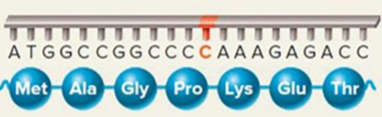
What is a silent point mutation?
A base substitution that causes no change to the amino acid sequence. This is due to degeneracy of genetic code.
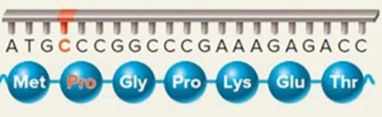
What is a missense mutation?
A base substitution that changes one amino acid in the sequence.
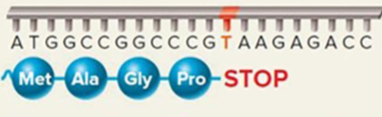
What is a nonsense mutation?
A base substitution that changes a normal codon to a STOP codon. This produces a truncated polypeptide.
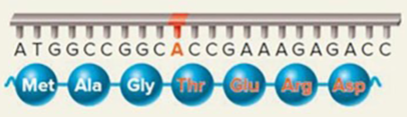
What is a frameshift mutation?
An addition of nucleotides (excluding multiples of three) that produces an entirely new amino acid sequence downstream from the mutation.
Describe where gene mutations can occur outside of coding sequences.
A mutation may alter the sequence within a promoter and enhance or inhibit the rate of transcription. Further, mutations may occur in other regulatory elements or operator sites (e.g. preventing the repressor from binding).
The time and location of a mutation determines its ___ and ___.
Severity and heritability
What are germ-line cells?
Cells that give rise to gametes
What are somatic cells?
All body cells other than germ-line cells that give rise to a genetic mosaic with patches of mutant tissue.
What are spontaneous mutations?
Mutations that arise from abnormalities in biological processes.
What are induced mutations?
Mutations caused by environmental agents, such as mutagens (chemical or physical agents that alter DNA).
Are errors in DNA replication associated with spontaneous or induced mutations?
Spontaneous
Are toxic metabolic products associated with spontaneous or induced mutations?
Spontaneous
Are changes in nucleotide structure associated with spontaneous or induced mutations?
Spontaneous
Are transposons associated with spontaneous or induced mutations?
Spontaneous
Are chemical agents associated with spontaneous or induced mutations?
Induced
Are physical agents associated with spontaneous or induced mutations?
Induced
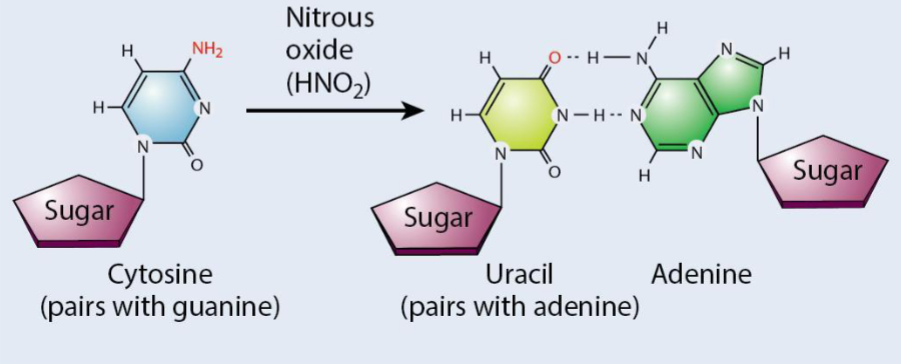
How does nitrous acid act as a chemical mutagen?
It deaminates bases.
How do 5-bromouracil and 2-aminopurine act as chemical mutagens?
They act as base analogues.
How do nitrogen mustard and ethyl methanesulfonate act as chemical mutagens?
They alkylate bases.
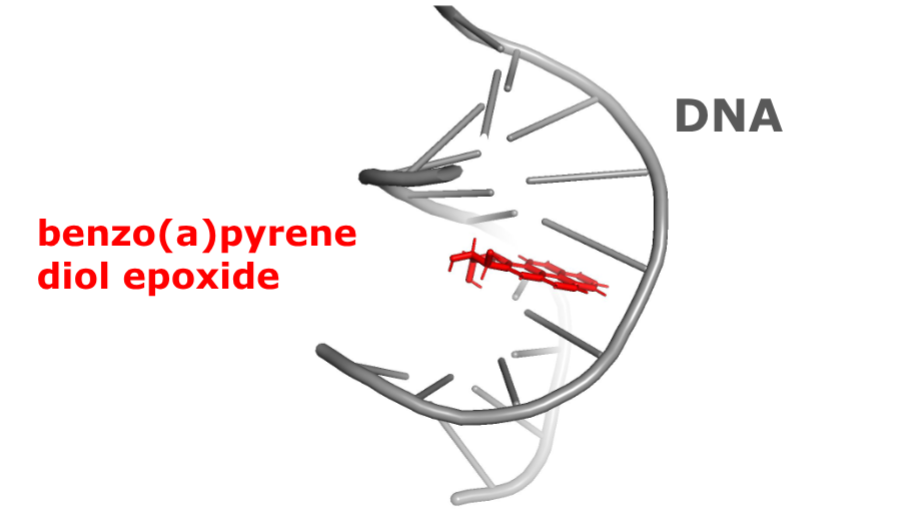
How does benzo[a]pyrene act as a chemical mutagen?
It inserts itself between bases in the DNA double helix and causes additions and deletions.
How do x-rays act as physical mutagens?
They cause base deletions, single nicks in DNA strands, crosslinking, and chromosomal breaks.
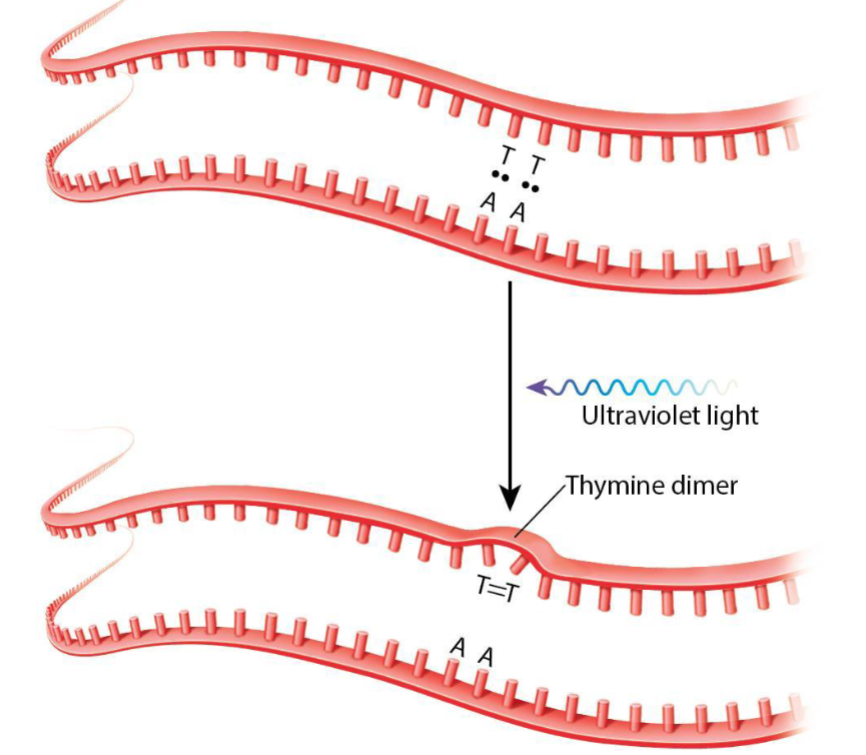
How do UV rays act as physical mutagens?
They promote pyrimidine dimer formation, which involves covalent bonds between adjacent pyrimidines (usually T to T, but sometimes C to C).
What is ionizing radiation?
A type of radiation that has high energy and penetrates deeply to create free radicals. This causes deletions or breaks in one or both DNA strands.
What is nonionizing radiation?
A type of radiation that has less energy and can only penetrate the surface. This can lead to dimer formations.
Describe the formation of a thymine dimer.
UV light excites thymine bases on the same DNA strand, allowing a covalent bond to form, which distorts the strand.
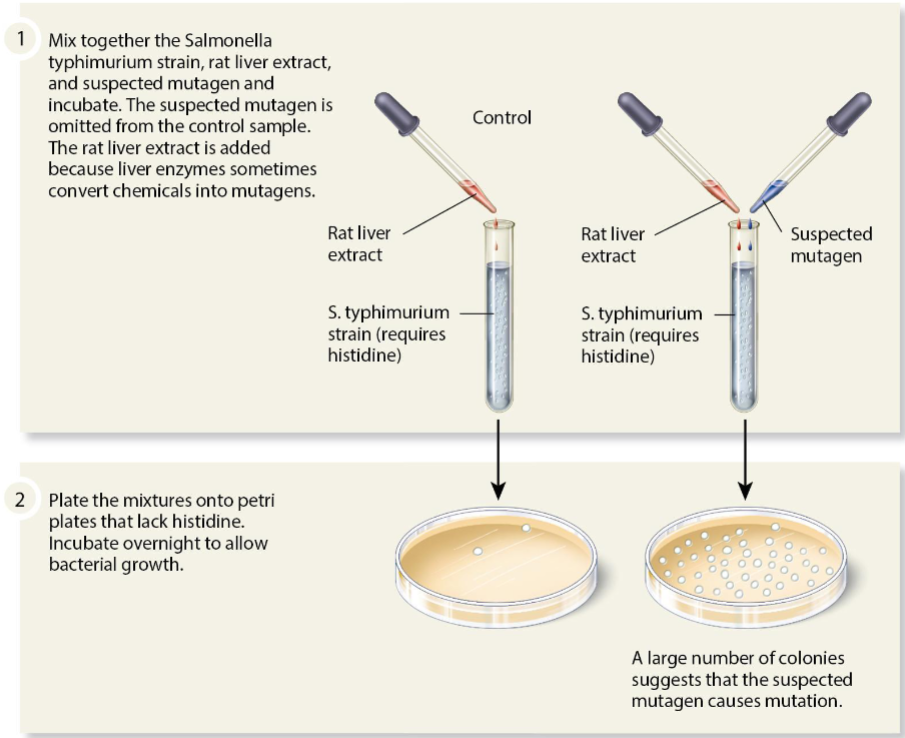
What is the Ames test?
An experiment designed to test and quantify mutagenicity. This test uses Salmonella typhimurium that cannot synthesize histidine due to a point mutation. These bacteria cannot grow unless histidine is added to the medium or unless a second mutation occurs that fixes the original, allowing the synthesis of histidine.
The Ames test…
A. provides a way to determine if any type of cell has experienced a mutation.
B. provides a way to determine if an agent is a mutagen.
C. allows researchers to experimentally disrupt gene activity by cueing a mutation in a specific gene.
D. provides a way to repair mutations in bacterial cells
E. does all of the above
B. provides a way to determine if an agent is a mutagen.
During an Ames test, if a substance is a mutagen, there will be ___ colonies on the plates in which the cells had been exposed to the mutagen because the mutagen converts some of the cells from …
b. fewer, his + to his -
c. more, his + to his -
d. fewer, his - to his +
e. more, his - to his +
e. more, his - to his +
What are the two major components of DNA repair?
Detection of damage
Repair of damage
Which enzyme detects damaged DNA in order to initiate the Base Excision Pathway (BER)?
DNA glycosylase
Which five enzymes are involved in the Base Excision Pathway (BER)?
DNA glycosylase
AP endonuclease
Kinase/phosphatase
DNA polymerase
DNA ligase
What is the role of AP endonuclease in the BER?
Strand incision
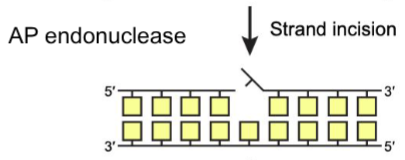
What is the role of kinase/phosphatase in the BER?
End processing
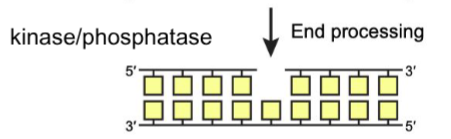
What is the role of DNA polymerase in the BER?
Repair synthesis
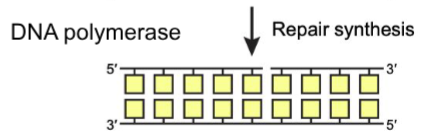
What is the role of DNA ligase in the BER?
Ligation
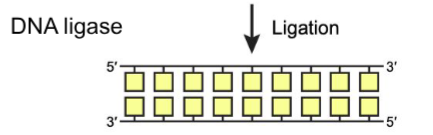
What is cancer characterized by?
Uncontrolled cell division
What are carcinogens?
Agents that increase the likelihood of developing cancer.
What is a tumor?
An overgrowth of cells with no useful purpose that may begin as benign (pre-cancerous) and may become malignant.
At the malignant stage, to what does invasive cancer refer?
Cancer that can invade healthy tissue.
At the malignant stage, to what does metastatic cancer refer?
Cancer that can migrate to other parts of the body
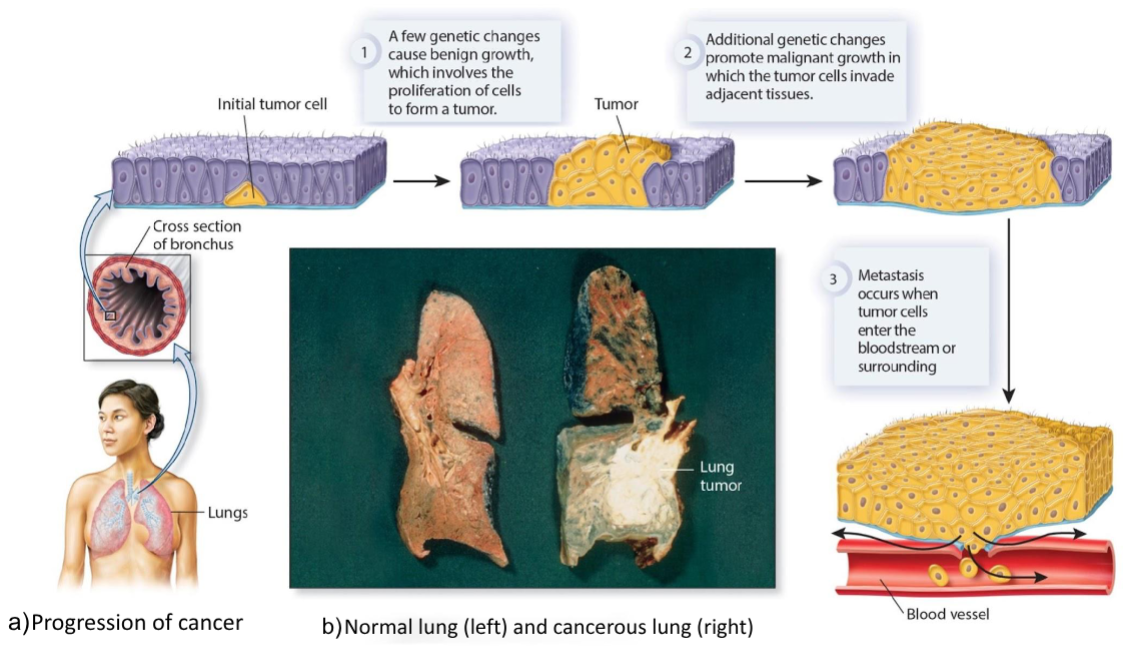
What are the three typical steps of cancer progression?
Genetic changes cause benign growth and eventually formation of tumor
Additional genetic changes promote malignant growth in which tumor cells invade adjacent tissues
Metastasis occurs when tumor cells enter the bloodstream or surrounding
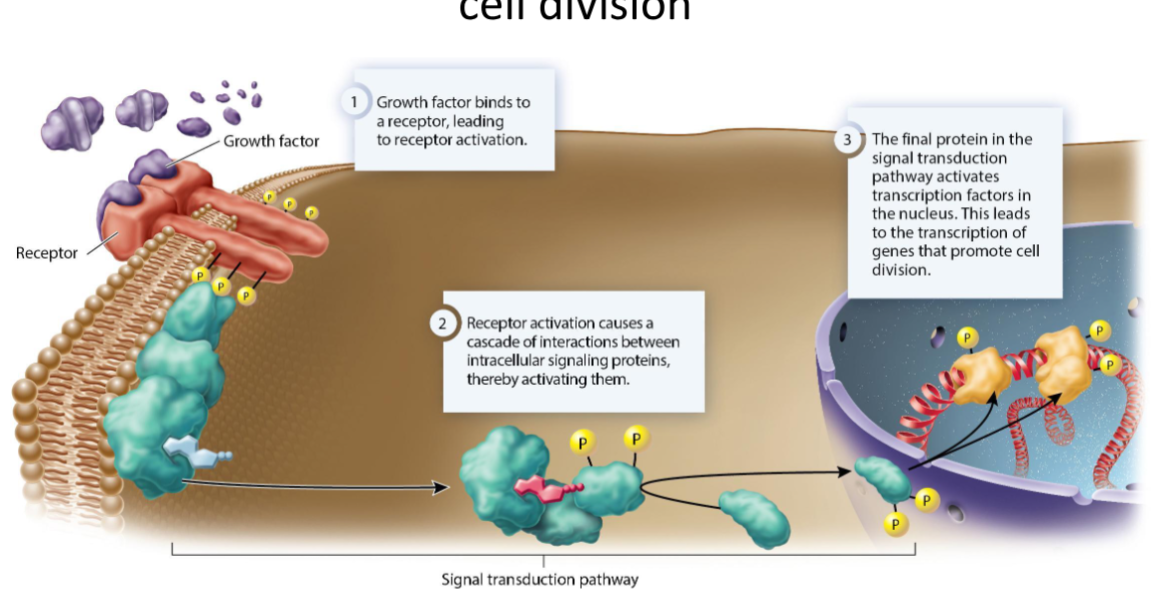
Cell division is regulated by hormones called ___.
Growth factors
What are oncogenes?
Genes that are mutated or overexpressed and can promote cancer by keeping the cell division signaling pathway in a permanent “on” position.
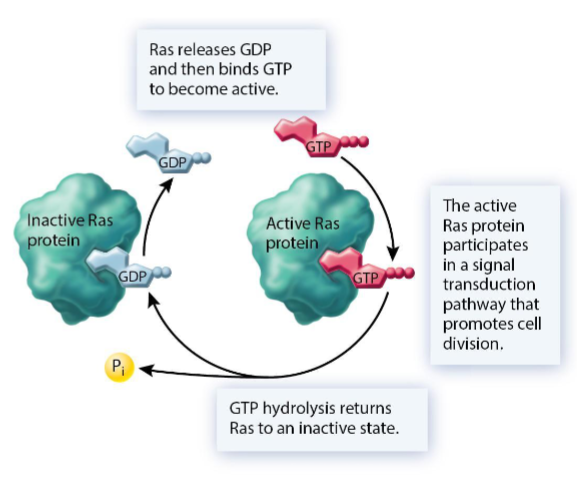
Explain how Ras can become an oncogene.
When GTP binds to Ras, Ras plays a key role in a signal transduction pathway by hydrolyzing GTP to GDP, which returns Ras to an inactive state. Oncogenic mutations may decrease the ability of Ras to hydrolyze GTP or exchange GDP/GTP faster, keeping the signalling pathway constantly on.
What is a proto-oncogene?
A normal gene that, if mutated, can become an oncogene.
What are the four common genetic changes?
Missense mutations
Gene amplifications
Chromosomal translocations
Retroviral insertions
Describe how chemical mutagens can cause missense mutations that lead to cancer.
A change in the sequence of the proto-oncogene may alter the amino acid sequence of the encoded protein and cause it to function in an abnormal way.
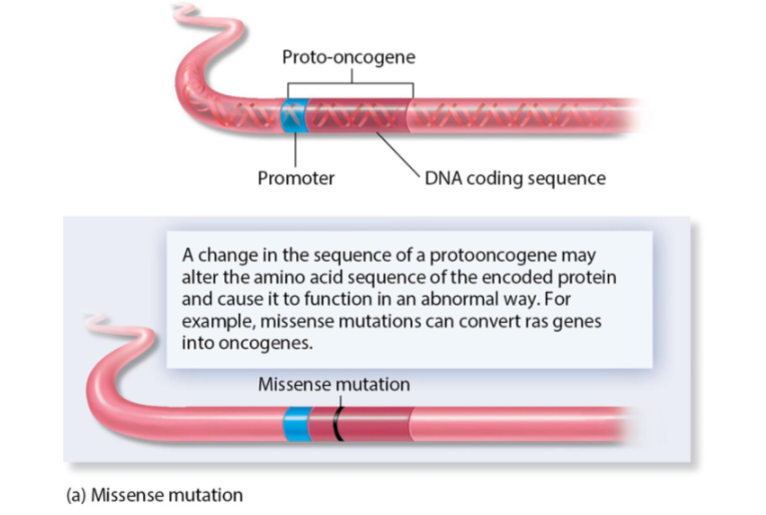
Describe how a missense mutation in the Ras gene can lead to cancer.
A missense mutation causes a change from glycine to valine, which decreases the ability of the Ras protein to hydrolyze GTP.
Describe how gene amplifications can lead to cancer.
The increase in copy number can result in too many proteins, which drive uncontrolled cell division.
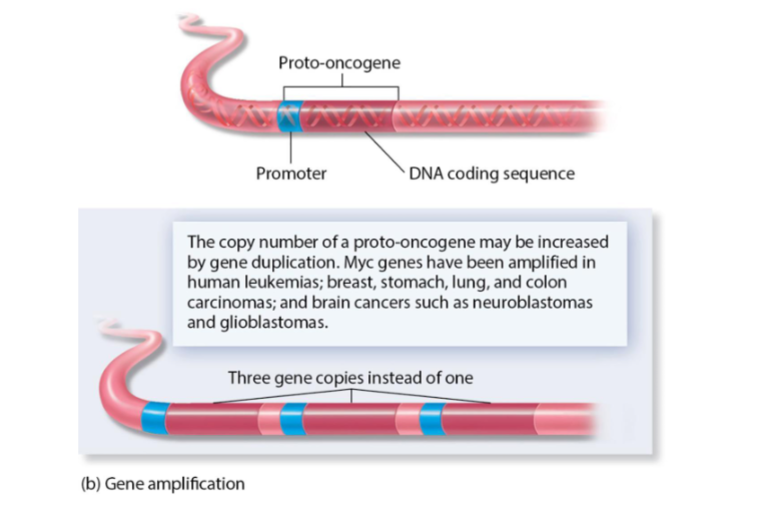
Describe how the amplification of the Myc gene can lead to cancer.
Amplification of the Myc gene results in overproduction of the Myc protein, which acts as a master transcription factor.
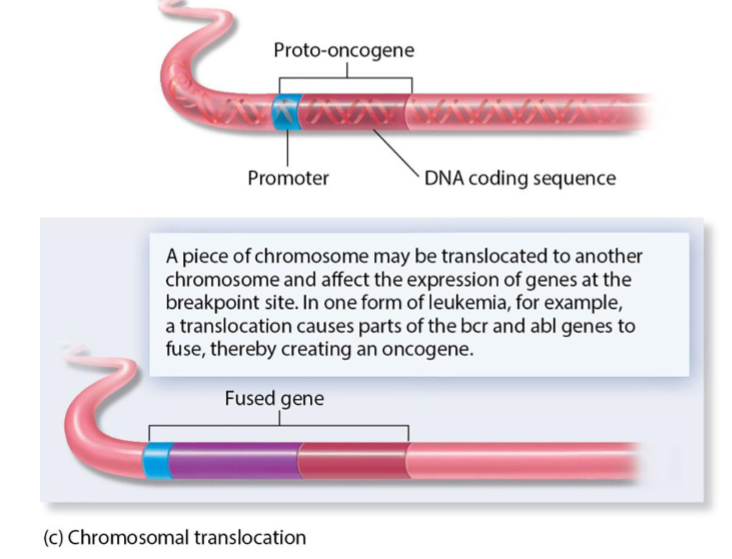
Describe how chromosomal translocations can lead to cancer.
Two chromosomes break and switch ends, which can create chimeric genes. These chimeric genes are often misrepaired due to improper reattachment.
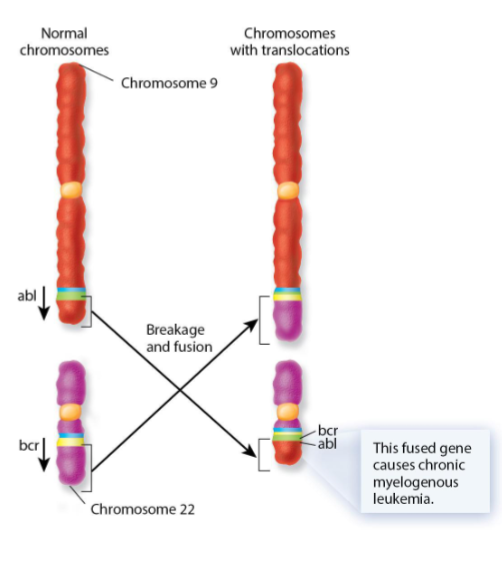
Describe how fusion of BCR and ABL genes creates an oncogene.
BCR and ABL switch ends and fuse, producing a chimeric BCR-ABL protein with uncontrolled tyrosine kinase activity.
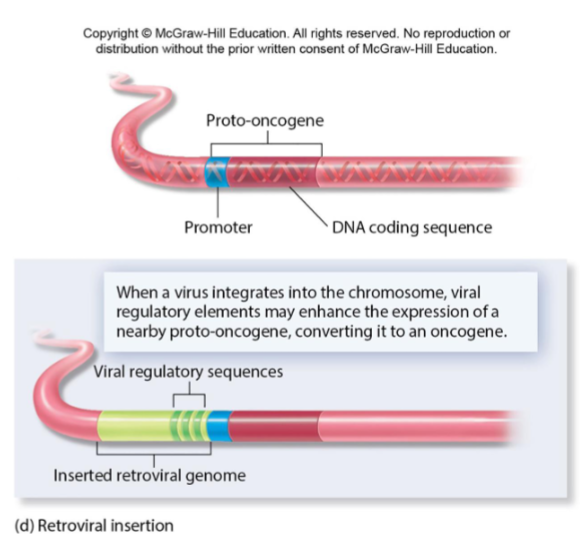
Describe how retroviral insertions can lead to cancer.
Viral DNA inserts into a chromosome, placing a viral promoter next to a proto-oncogene. If this proto-oncogene becomes overexpressed, it will promote cancer.
Describe the two ways in which viruses can cause cancer.
Modification of host DNA
Insertion of oncogenes in the viral genome into the host chromosome
Cancer cells are said to be metastatic when they…
A. begin to divide uncontrollably
B. invade healthy tissue
C. migrate to other parts of the body
D. cause mutations in other healthy cells
E. do all of the above
C. migrate to other parts of the body
What are the two primary roles of tumor suppressors?
Maintain genome integrity by monitoring and/or repairing DNA damage (code for checkpoint proteins)
Inhibit cell division
Describe how p53 acts as a tumor suppressor.
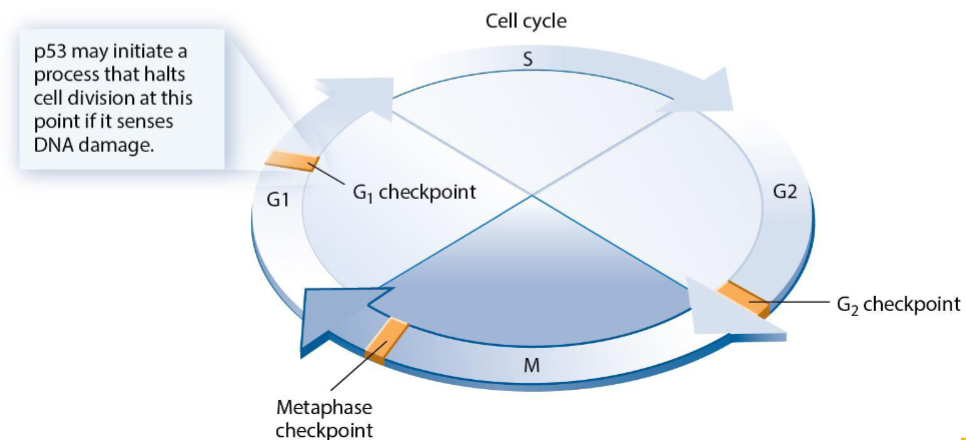
If p53 senses DNA damage, it encodes a checkpoint protein that prevents the cell from progressing from the G1 to the S phase.
Describe how Rb acts as a negative regulator of cell division.
Rb negatively controls transcription factor E2F, which activates genes for G1 to S phase cell progression. If Rb detects damage, it will bind to and inactive E2F, preventing transcription from occurring.
How many autosomal pairs of chromosomes do humans have?
22
How many pairs of sex chromosomes do humans have?
1
What does diploidy mean?
The state of a cell or organism containing two complete sets of chromosomes, with one set inherited from each parent (2n).
What does haploidy mean?
The state of a cell or organism containing one complete set of chromosomes (1n).
What are homologs?
Members of a pair of chromosomes.
How do autosomes and sex chromosomes differ?
In autosomes, each homolog is nearly identical in size and genetic composition. In sex chromosomes, X and Y are very different from each other in size and composition.
What is cytogenetics?
The field of genetics involving microscopic examination of chromosomes and cell division.
When cells are preparing divide, what do the chromosomes look like?
They are very compact and can be seen with a light microscope.
What is a karyotype?
A lab-produced image that reveals number, size (large to small), and form of chromosomes in an actively dividing cell.
Which three stages of the cell cycle make up interphase?
G1, S, and G2
What is the role of the G0 phase?
It substitutes for G1 for cells postponing division or never dividing again.
What occurs during the G1 (Gap 1) phase of the cell cycle?
Cell growth occurs and signaling molecules can cause the cell to accumulate molecular changes that promote progression through the cell cycle. The cell must pass the G1 checkpoint in order to enter the S phase.
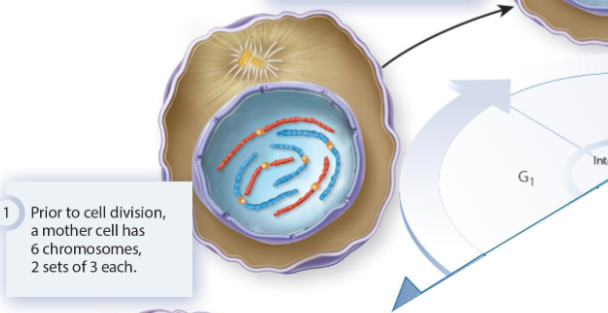
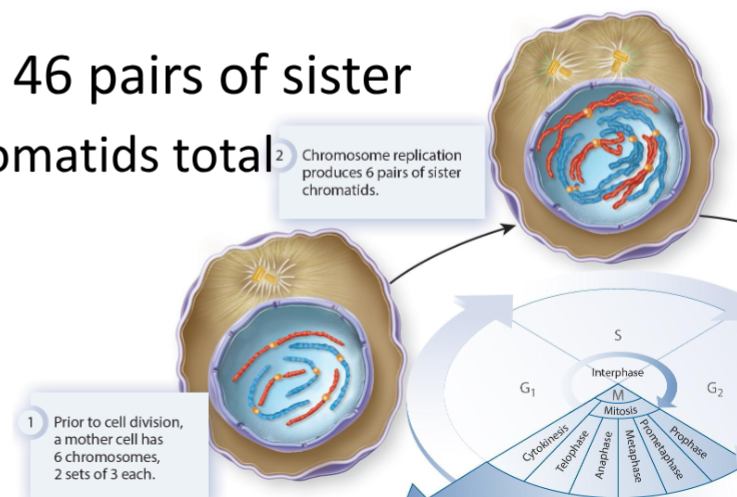
What occurs during the S (Synthesis) phase of the cell cycle?
Chromosomes replicate, and two copies stay joined to each other and are known as sister chromatids.
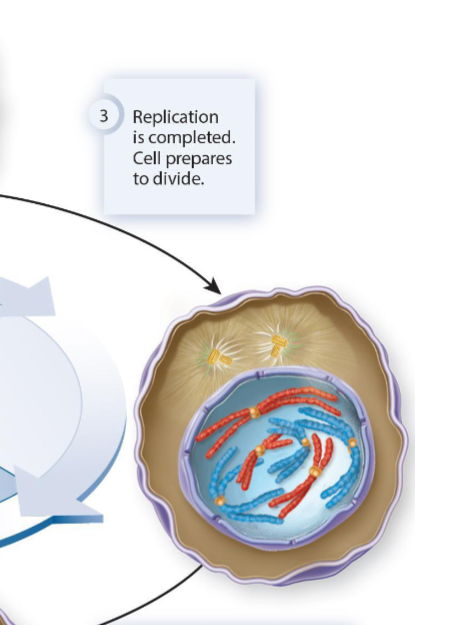
What occurs during the G2 (Gap 2) phase of the cell cycle?
The cell synthesizes proteins needed for mitosis and cytokinesis.
What occurs during the M (Mitosis and Cytokinesis) phase of the cell cycle?
Mitosis involves the division of one cell nucleus into two, with separation of sister chromatids, and cytokinesis involves the division of the cytoplasm into two daughter cells.
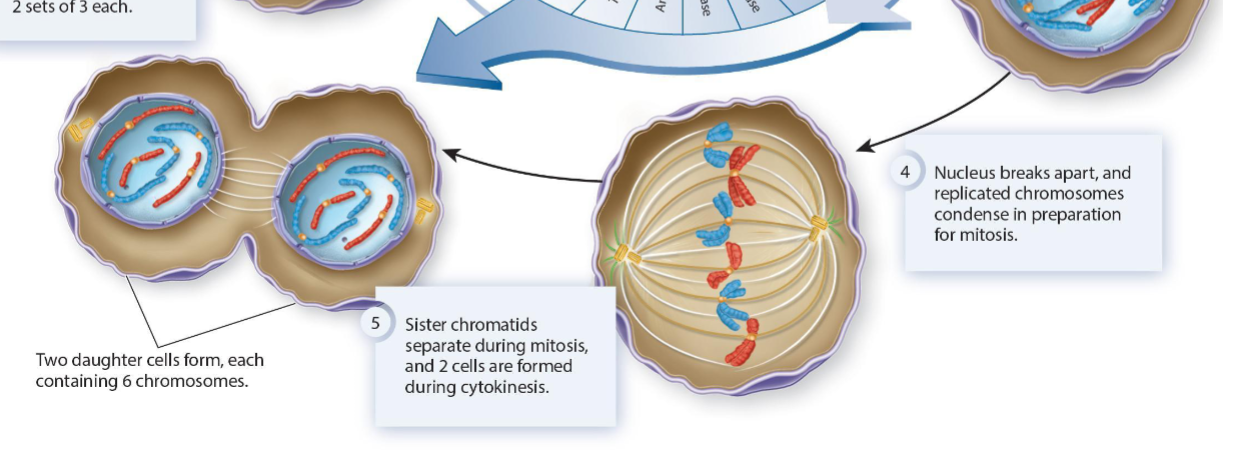
What are the two factors that influence whether a cell divides or not?
External factors (e.g. environmental conditions and signaling molecules)
Internal factors (e.g. cell cycle control molecules and checkpoints)
Describe the role of cyclins or cyclin-dependent kinases (cdks) in regulating the cell cycle?
CDKs become activated when they bind to cyclins, allowing them to act as serine/threonine kinases that phosphorylate target proteins, driving progression through phases.
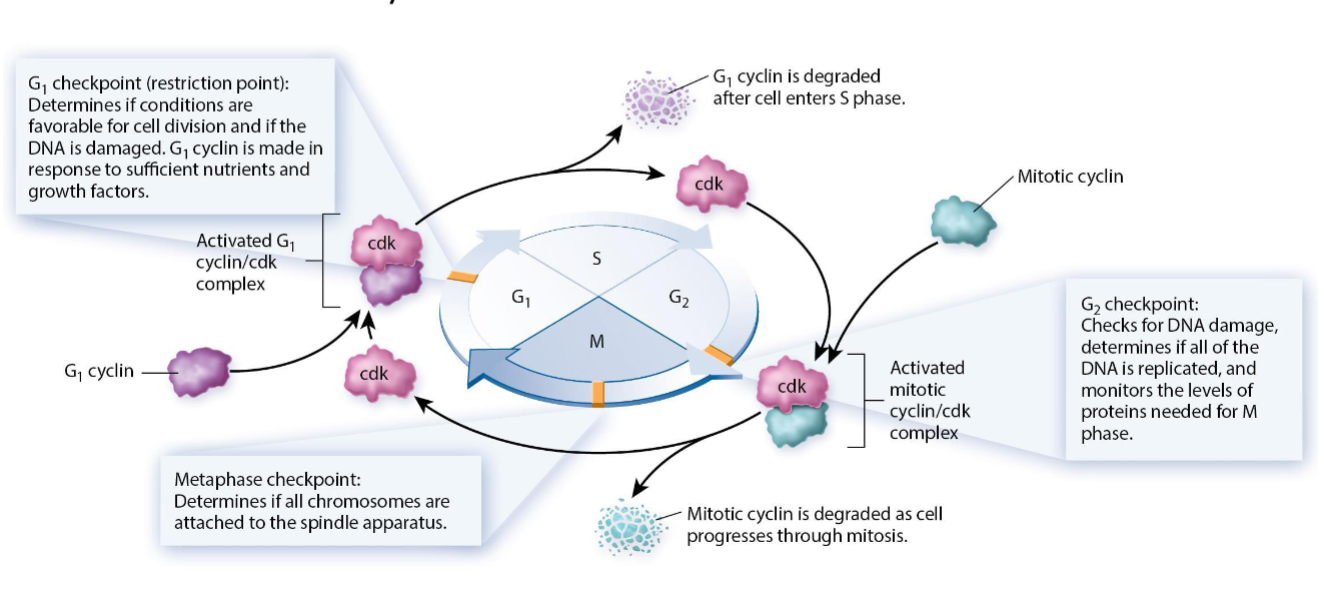
What are the three cell cycle checkpoints in mitosis?
G1 checkpoint (restriction point)
Is DNA damaged?
G2 checkpoint
is DNA damaged, has it been replicated, and are proteins available for mitosis?
Metaphase checkpoint
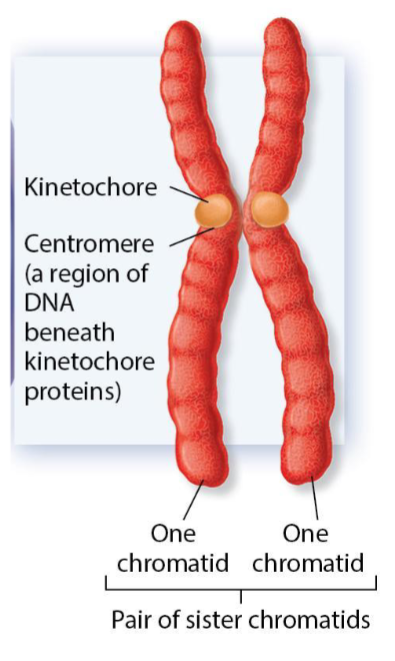
Describe the structure of a chromosome.
One pair of sister chromatids held together by the centromere, which serves as an attachment site for
kinetochore used in sorting chromosomes.
Describe the purpose of the mitotic spindle.
It is responsible for organizing and sorting the chromosomes during mitosis to ensure that each daughter cell will obtain the correct number and types of chromosomes.
What is the mitotic spindle made up of?
Microtubules formed from tubulin proteins.
What are the three types of microtubules?
Astral microtubules – position spindle in cell
Polar microtubules – separate two poles
Kinetochore microtubules – attached to kinetochore bound to centromeres
What are the six main stages of mitosis?
Prophase
Prometaphase
Metaphase
Anaphase
Telophase
Cytokinesis
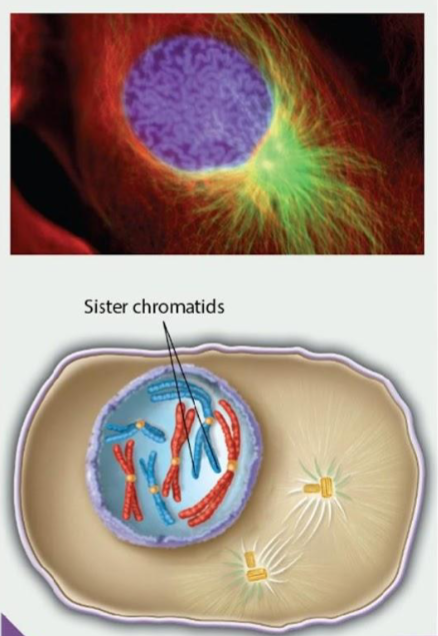
What occurs during prophase of mitosis?
The nuclear membrane dissociates into small vesicles and chromatids condense into highly compacted structures that are readily visible by light microscopy.
What occurs during prometaphase of mitosis?
The nuclear envelope completely fragments and the mitotic spindle is fully formed during this phase. Centrosomes move apart and demarcate the two poles. Spindle fibers interact with sister chromatids. Two kinetochores on each pair of sister chromatids are attached to kinetochore microtubules from opposite poles.
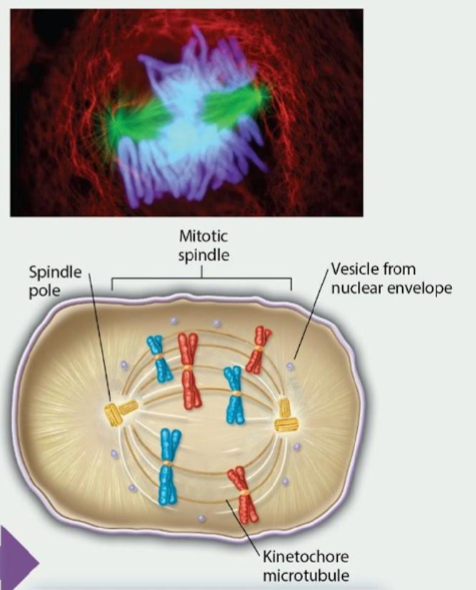
What occurs during metaphase?
Pairs of sister chromatids are aligned along a plane halfway between the poles, called the metaphase plate. At this plate, they are organized into a single row.
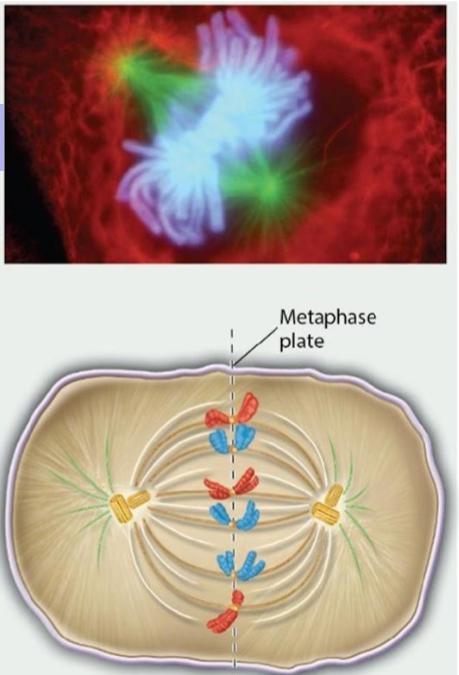
What occurs during anaphase?
The connections are broken between sister chromatids and each individual chromatid is linked to only one pole by kinetochore microtubules. Kinetochore microtubules shorten, pulling chromosomes toward the pole to which they are attached. The two poles move away from each other as overlapping polar microtubules lengthen and push against each other.
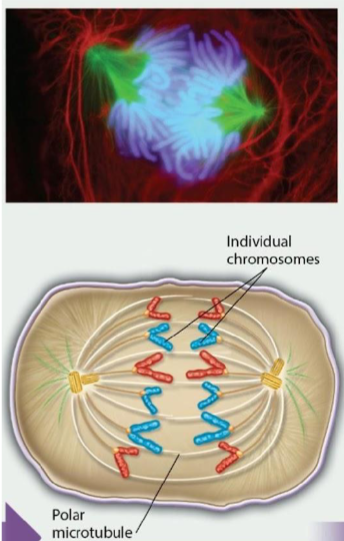
What occurs during telophase?
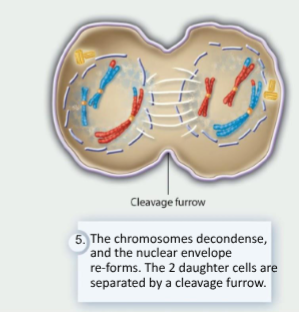
Chromosomes have reached their respective poles and decondense. The nuclear membranes now re-form to produce two separate nuclei.
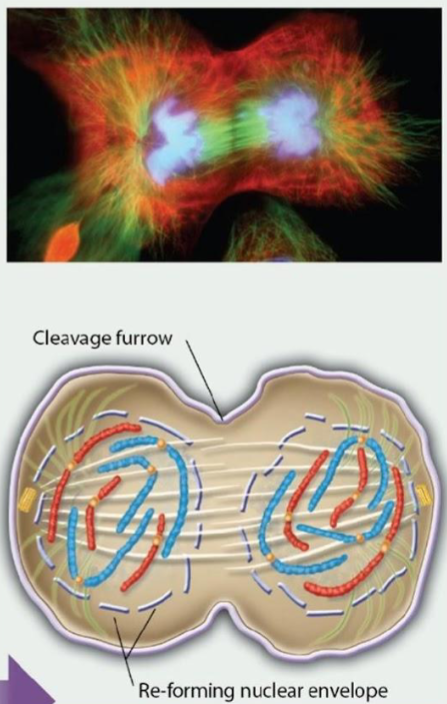
What occurs during cytokinesis?
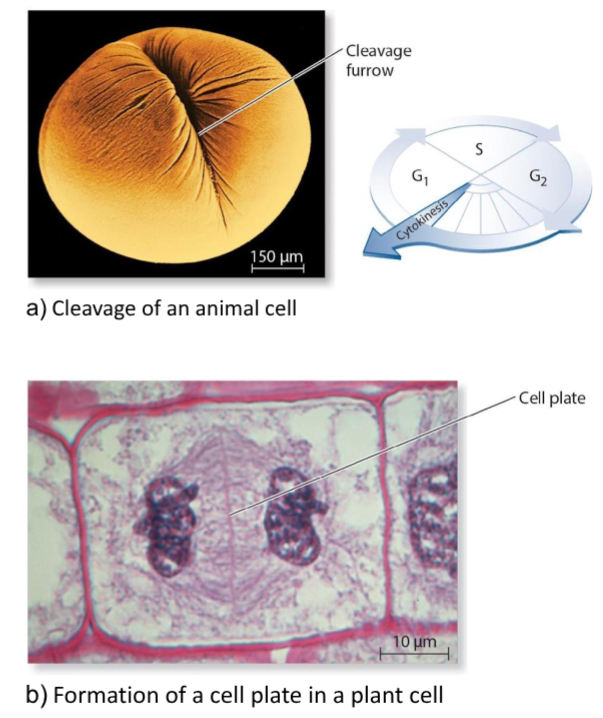
Two nuclei are segregated into separate daughter cells. This process is different in animals and plants. In animals, the cleavage furrow constricts like a drawstring to separate the cells. In plants, the cell plate forms a cell wall between the two daughter cells.
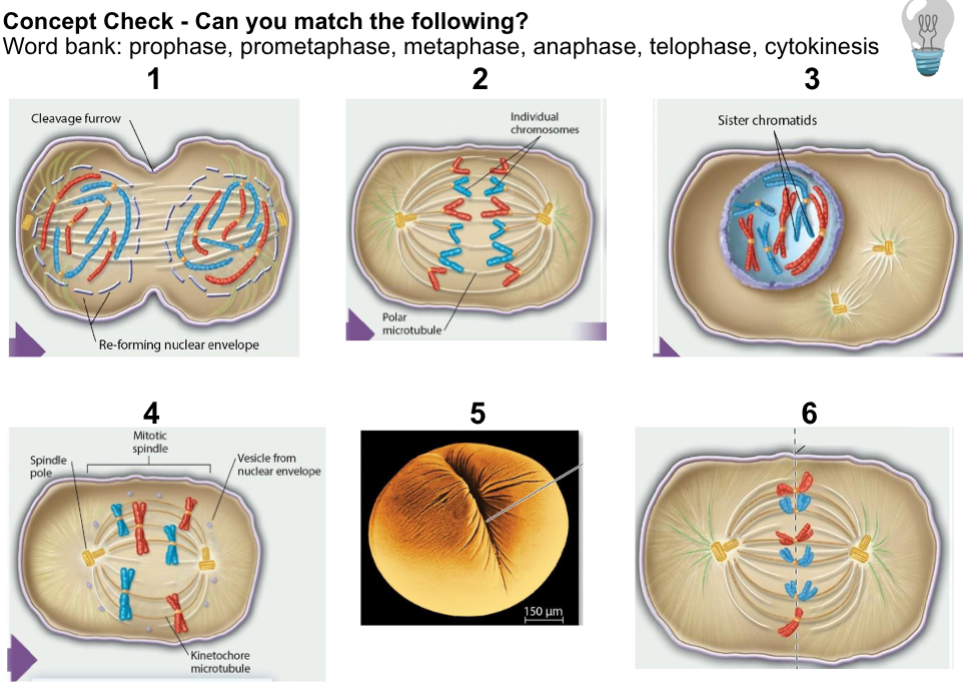
Match the following pictures to the correct stage of mitosis.
Telophase
Anaphase
Prophase
Prometaphase
Cytokinesis
Metaphase
If a diploid human cell has 46 chromosomes, then after meiosis the haploid egg or sperm would have how many chromosomes?
23
What are the two key events that occur in meiosis but not mitosis?
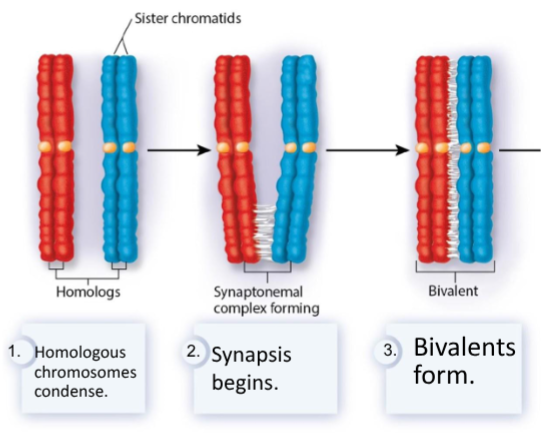
Homologous pairs form a bivalent or tetrad
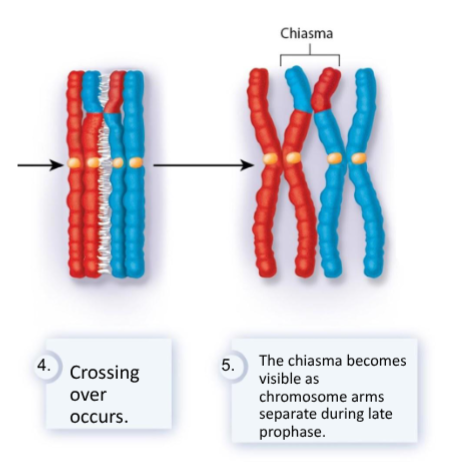
Crossing over
Describe the formation of a bivalent/tetrad.
Homologous pairs of sister chromatids associate with each other, lying side by side to form a bivalent or tetrad via a process called synapsis. This forms the synaptonemal comple, which is a protein structure that connects homologous chromosomes.
Describe the process of crossing over.
The physical exchange between chromosome pieces of the crossing bivalent that may increase the genetic variation of a species. During this process, homologous chromosomes form a chiasma, where the arms of the chromosomes tend to separate but remain adhered at a crossover site.
Meiosis I separates ___.
Homologous chromosomes
What occurs during prophase I?
The chromosomes condense, bivalents form, and the nuclear membrane breaks down.
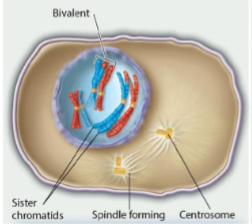
What occurs during prometaphase I?
The nuclear envelope completely dissociates into vesicles. The spindle apparatus is complete, so chromatids attach to the kinetochore microtubules.
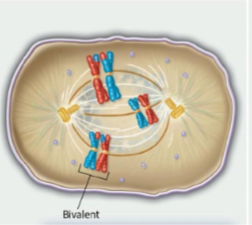
What occurs during metaphase I?
Bivalents organize along the metaphase plate as a double row. This is an essential mechanism in promoting genetic diversity.
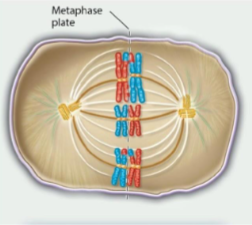
What occurs during anaphase I?
The segregation of homologs occurs, as connections between bivalents break, but sister chromatids stay connected together. Each joint pair of chromatids migrates to one pole, while the homologous pair moves to the opposite pole.
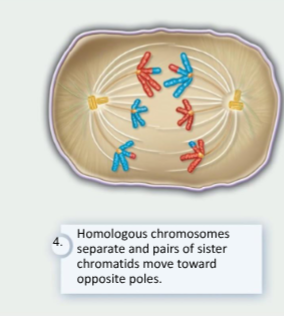
What occurs during telophase I?
At this point, sister chromatids have reached their respective poles, and they decondense. Nuclear membranes reform. A cleavage furrow is formed, and cytokinesis occurs.
Which phase of the cell cycle does the cell undergo after meiosis I?
G1