ch 14-2 beyond Neptune and Meteoroids
 Call Kai
 Learn
Learn Practice Test
 Spaced Repetition
 Match
Match Flashcards
 Knowt Play
1/60

There's no tags or description
Looks like no tags are added yet.
Name | Mastery | Learn | Test | Matching | Spaced | Call with Kai | Chat |
|---|
No analytics yet
Send a link to your students to track their progress
61 Terms
when was Pluto thought to explain?
thought to be needed to explain irregularities in the orbits of Uranus and Neptune, but it turned out that there were no such irrgularites
when was Pluto discovered
1930
what were wobbled and irregularities believed to be caused by?
to be caused by the gravity on an undetected 9th planet
Neptune influence was not sufficient enough to?
account for all irregularities in Uranus rotation, even itself
Why did the predicted orbital irregularities of Uranus and Neptune disappear?
Improved calculations and more accurate measurements showed the irregularities were not real.
Why wasn't Pluto needed to explain Uranus's orbit?
The original calculations were wrong.
Pluto’s orbit
is eccentric and inclined to the plane of ecliptic, tiled 7°
elongated
248 orbit period
what does Pluto’s orbit cross?
the orbit of Neptune
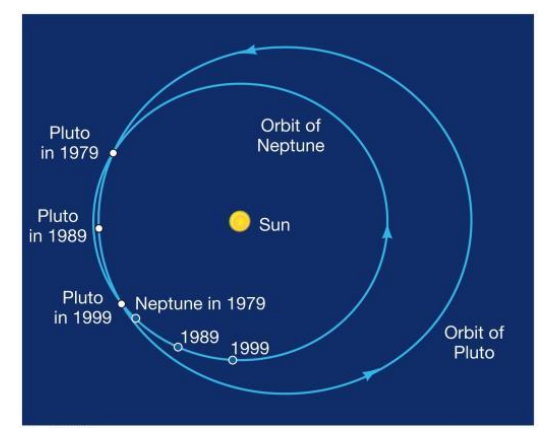
where does Pluto orbit?
in Kuiper belt
What is the 3:2 orbital resonance between Pluto and Neptune?
For every 3 orbits Neptune completes around the Sun, Pluto completes 2 orbits.
what is Pluto’s largest moon?
Charon
discovered in 1978
orbitally locked to Pluto and about an eighth as large
(four additional moons)
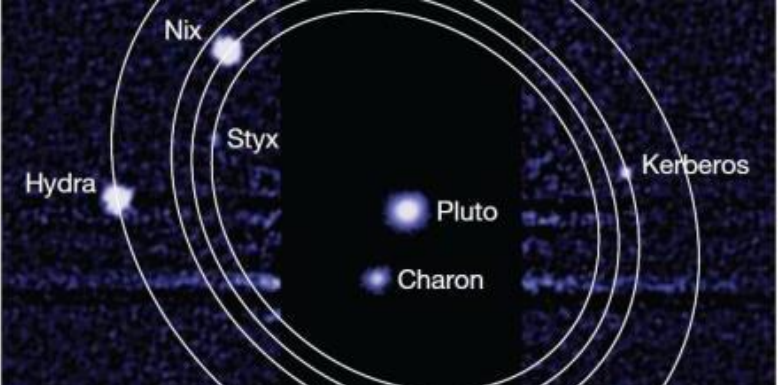
what is Pluto and Charon often referred to as?
double dwarf planet system
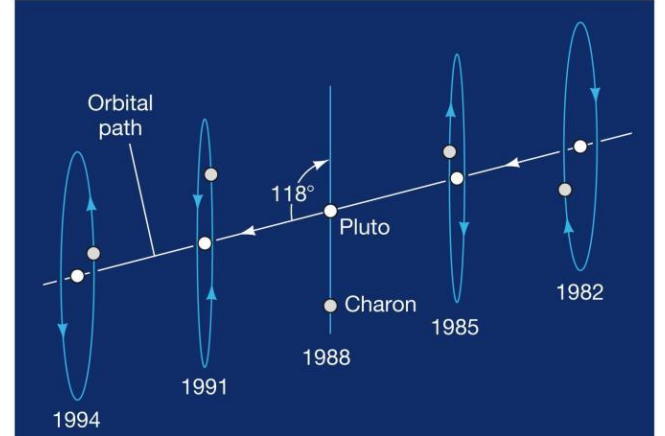
what did observations of eclipses of Pluto and Charon allow?
measurement of orbital details
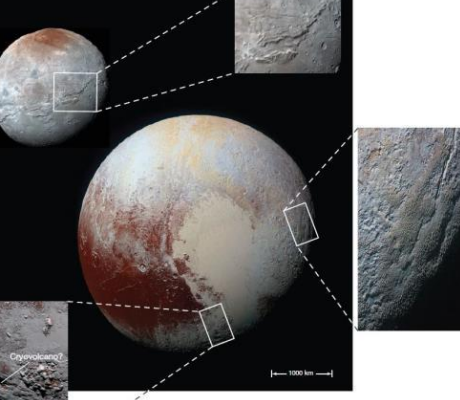
what did the New Horizons mission that flew past Pluto and Charon show?
very complex terrain
detected Nitrogen fog in valleys
90% nitrogen and 10% other molecules such as methane
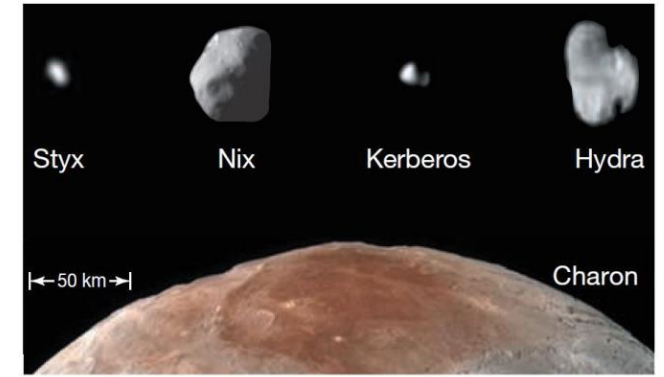
what are Pluto’s four smaller moons?
Styx
Nix
Kerberos
Hydra
Pluto’s atmosphere
thin
consisting mostly of nitrogen and traces of methane and carbon monoxide
how does Pluto’s atmosphere behave?
behaves seasonally
sublimated ice when closer to sun and freezes on surface further away
at,. high alt. blue haze
have objects been observed in the Oort cloud?
no, it is simply too far away
have objects been observed in the Kuiper belt?
some Kuiper belt objects (KBOs) have been observed
about 4000 so far
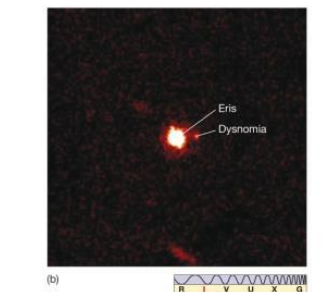
Pholus and Eris with its small moon Dysnomia
what are the only objects that have been observed?
the ones that enter the inner solar system
direct observation not possible because it is too far
believe their are hundreds to thousands of objects existing in the belt
What are Trans-Neptunian Objects (TNOs)?
Objects that orbit the Sun beyond Neptune.
Where are Trans-Neptunian Objects found?
Beyond Neptune, mainly in the Kuiper Belt.
How do Trans-Neptunian Objects compare in size to Earth?
They are much smaller than Earth, though some are comparable in size to the Moon.
Give examples of Trans-Neptunian Objects.
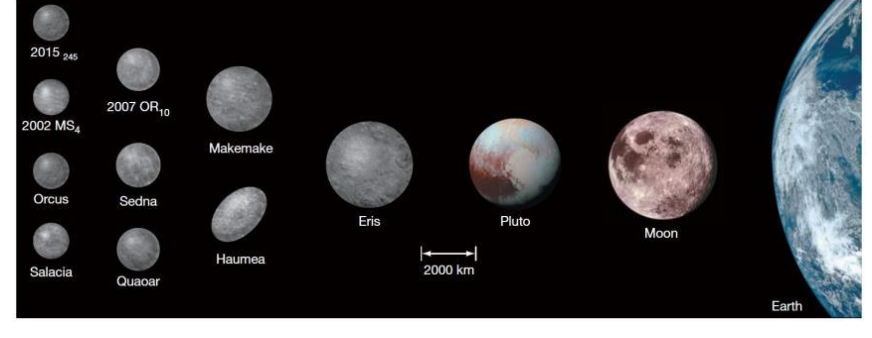
Pluto, Eris, Haumea, and Makemake.
what are the three requirements for an object to be classified as a Planet?
It must orbit the Sun.
It must be massive enough to become nearly spherical.
It must have cleared its orbital neighborhood of other objects.
Why is Pluto not considered a planet?
Pluto meets the first two requirements but has not cleared its orbital neighborhood.
what is the largest known member in the Kuiper belt?
Pluto
Eris may be larger
what is the farthest known object in the solar system?
Sedna
in 2008, icy dwarf planets beyond Neptune would be known as?
Plutoids
what are meteoroids?
“shooting stars”
small rocky or metallic body consist of dust grains to 1m wide
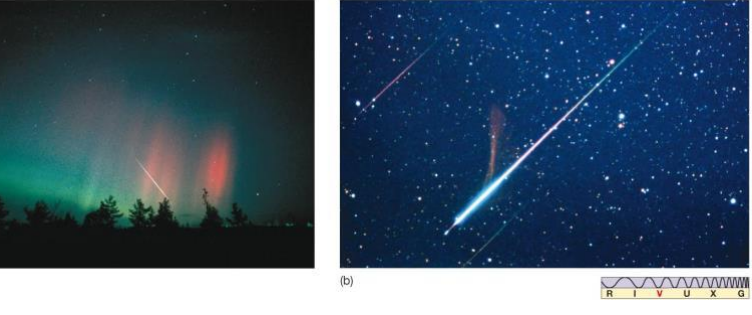
on an average dark night how many meteors can be seen?
a few every hour
what is the flash of the meteoroids caused by?
heating; most meteors do not survive to reach the ground
what are the sizes of meteoroids?
less than 100m in diameter; smaller ones are the remnants of comets that have broken up
what gives the off the glowing streak of meteoroids?
high speeds and heat air in front of them
surround air ionize and meteor surface vaporize
each time a comet passes near the sun
some cometary fragments are dislodged from the nucleus
What causes a meteor shower?
Earth passes through debris left behind by a comet.
Why do meteor showers occur on the same date each year?
Earth crosses the same comet debris trail at the same point in its orbit each year.
What happens to meteoroids during a meteor shower?
They burn up in Earth's atmosphere, producing visible meteors.
When does the Perseid meteor shower occur?
Every August, when Earth passes through debris left by Comet Swift-Tuttle.
When does the Lyrid meteor shower occur?
Every April, when Earth passes through debris left by Comet Thatcher.
Perseids vs. Lyrids
Perseids → August → Comet Swift-Tuttle
Lyrids → April → Comet Thatcher
what have produced the most of the visible craters in the solar system?
larger meteoroids are usually loners from the asteroid belt
how many craters does Earth have?
around 200 craters
what makes impact craters hard to discern?
erosion
geological activity (plate tectonics) erased most of evidence of meteors
where is the largest impact crater?
on Canada
What is the typical density of meteoroids that burn up in Earth's atmosphere?
About 500–1000 kg/m³; they are usually comet-like in composition.
What is the typical density of meteoroids that reach Earth's surface?
About 5000 kg/m³; they are usually asteroid-like in composition.
Which meteoroids are more likely to survive atmospheric entry?
Dense, asteroid-like meteoroids.
What is a meteoroid?
A small rocky or metallic object traveling through space.
What is a meteor?
The streak of light produced when a meteoroid burns up in Earth's atmosphere.
What is a meteorite?
A meteoroid that survives passage through the atmosphere and reaches Earth's surface.
what is the composition of most meteoroids?
very rocky composition although a few % are composed of mainly iron and nickel
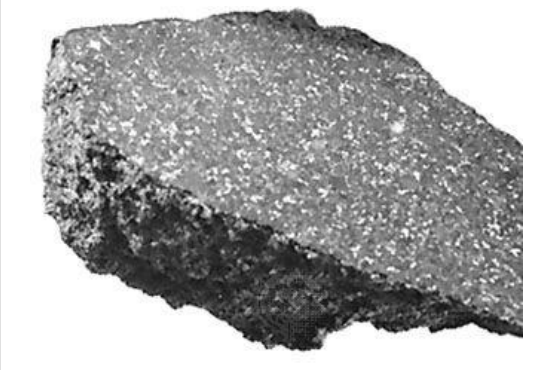
types of Meteorites: Stony
most common 90%
silicate rock forming (dark)
trace: Ni and Fe metal (light)
most primitive of all are carbonaceous
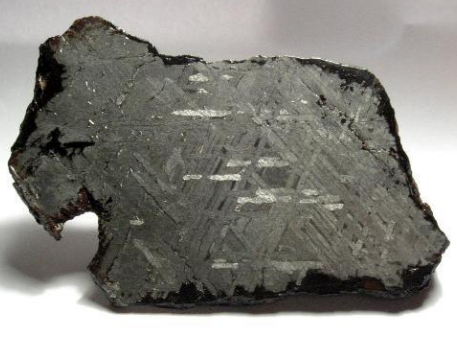
types of meteorites: iron
metallic rements or core of early asteroids
composed primary of iron and nickel
durable and heavy
unique crystal pattern when polished
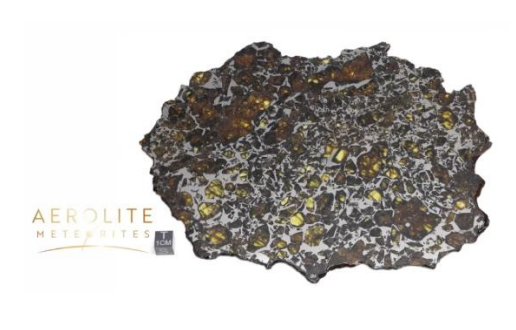
types of meteorites: stony-iron
rare
1-2% of recovered falls
equal parts of iron and nickel alloy and silicate minerals
asteroid types
S-type (silicate), M-type (metallic), and C-type (carbonaceous)
comets orbits
Some comets have highly eccentric orbits and enter the inner solar system
where is the Kuiper belt located?
just beyond the orbit of Neptune; a number of Kuiper belt objects have recently been observed
comets nucleus, coma, and tails
Comet nucleus is tiny, but coma and tails can be enormous, covering 30–40°of the sky
meteors that burn up in the atmosphere are most similar to?
comets; those that land are more like asteroids
How does a comet create a meteor shower?
As a comet gradually breaks apart while orbiting the Sun, it leaves a trail of debris (a meteoroid swarm). When Earth encounters the swarm, the particles burn up in the atmosphere, creating a meteor shower.