Human Geography Unit 5 study guide answers
0.0(0)
Studied by 9 people Call Kai
 Learn
Learn Practice Test
 Spaced Repetition
 Match
Match Flashcards
 Knowt Play
Card Sorting
1/41

Earn XP
Description and Tags
42 Terms
1
New cards
what is organic agriculture?
the production of crops without the use of synthetic or industrially produced pesticides and fertilizers
2
New cards
What percentage of the total organic food production takes place in the United States?
2 to 3%
3
New cards
Where can organic food be grown?
Everywhere
4
New cards
Where is the demand for organic food the greatest?
core countries
5
New cards
which 2 states in the US have no acres certified for organic agricultural production?
Oklahoma and Mississippi
6
New cards
Which state is the US has the most acres certified for organic agricultural production?
California
7
New cards
What is agriculture?
the deliberate tending of crops and livestock to produce food, feed, and fiber
8
New cards
What are the primary economic activities?
activities that involve the products closest to the ground. Ex. Agriculture, ranching, hunting and gathering, fishing
9
New cards
What are the secondary economic activities?
activities that take a primary product and manufacture it. Ex. Toys, ships, processed foods, chemicals
10
New cards
What are the tertiary economic activities?
activities that are part of the service industry, connecting producers to consumers and facilitating commerce and trade. Ex. Bankers, lawyers, salespeople
11
New cards
What are the quinary economic activities?
activities that have to do with information or the exchange of money or goods. Ex. Tax consultants, software developers, teachers
12
New cards
What are the quaternary economic activities?
activities that are connected with research or higher education. Ex. researchers
13
New cards
Give an example of the order of economic activities using oranges or milk.
Primary: Picking oranges off of the tree, Secondary: Manufacturing that orange into orange juice, Tertiary: A cashier selling that orange juice in a grocery store, Quaternary: Developing a way to make the orange juice taste better, Quinary: The CEO approves changes to the formula
14
New cards
What areas of the world are known for having some of the highest percentages of arable land?
Eastern Europe and South Asia
15
New cards
Explain the concept of hunting and gathering. When was this concept most used?
Before agriculture was invented, people did this to survive. The men hunted while the women/children gathered food like berries and nuts. These people were nomadic, meaning they moved where the food moved and they traveled in clans.
16
New cards
According to Carl Sauer, the earliest plant domestication involved root crops. What are those?
crops that are reproduced by cultivating either the roots or cuttings from the plants (such as tubers, including manioc or cassava, yams and sweet potatoes in the tropics)
17
New cards
During the first agricultural revolution, seed cultivation began. Where do most scholars believe that seed cultivation first occurred?
the Fertile Crescent
18
New cards
Crops are often associated with regions other than the one in which they developed. Where did the corn of the American “corn belt” originate?
Mesoamerica/Mexico
19
New cards
What are some examples of modern day hunting and gathering groups that still exist in the world today?
The San of Southern Africa, the Aboriginals of Australia, the indigenous peoples of Brazil
20
New cards
What is shifting cultivation?
the process of shifting fields to find better land. Found primarily in tropical and subtropical regions.
21
New cards
What is slash-and-burn agriculture? What is another name for it?
A type of shifting cultivation where trees are cut down and all existing vegetation is burned off. The ash is used to fertilize the soil. It is also known as milpa agriculture and patch agriculture.
22
New cards
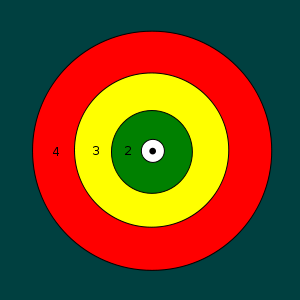
Draw Von Thunen’s Model and explain what commodity can be found in the various concentric circles as well as there proximity to the city.
Center: The central city. 1/White circle: Market gardening and dairying, closest to the city. 2: Forestry. 3: Field crops/grains. 4: Ranching/livestock, farthest from the city
23
New cards
What was the second agricultural revolution?
A series of innovations, improvements, and techniques used to improve the output of agricultural surpluses
24
New cards
What is the third agricultural revolution/ green revolution?
Invention of high-yield grains, especially rice, and other technologies with the goal of reducing hunger
25
New cards
What are some of the reasons/ concerns of those involved in the anti-green revolution movement?
Vulnerability to pests, Soil erosion, Water shortages, Micronutrient deficiencies,Dependency on chemicals for production, Loss of control over seeds, (GMO) crops
26
New cards
the first product of the green revolution was called IR36. What crop was that? By 1992, it was the most widely grown crop on earth.
A strain of rice bred from 13 parents to achieve genetic resistance against 15 species of pests and a growing cycle of 110 days under warm conditions (making it possible to plant 3 times a year)
27
New cards
In the 1940’s american philanthropists funded research on which crop in mexico? By 1960, mexico no longer depended on importing this crop due to production in their own country meeting demands.
Corn
28
New cards
What was the long-lot survey system and where was it implemented?
A system that divided land into narrow parcels stretching back from rivers, roads, or canals. Common in french america (Quebec, Louisiana, Texas)
29
New cards
What is the technical name of the rectangular survey system that we use in the US that was also part of a cadastral system?
Township-and-range system
30
New cards
In the township-and-range system, what was the basic unit of measurement for the land?
The 1 square mile section
31
New cards
What was Koppen’s climate classification system based on?
temperature and precipitation
32
New cards
Who modified Koppen’s climate classification system?
Rudolph Geiger
33
New cards
What are 2 of the most significant contemporary cash crops?
Cotton and rubber
34
New cards
Where were rubber trees first developed/tapped?
equatorial rainforests (mainly in the Amazon Basin in northern South America)
35
New cards
Where did the colonial powers transplant rubber trees to?
Southeast Asia (Malaysia and Indonesia)
36
New cards
What are luxury crops? Give the examples of those in your text.
Crops that are grown for things other than sustaining human life. Ex. tea, cacao, coffee, and tobacco
37
New cards
Where is approximately 70% of the world’s annual production of coffee harvested?
Middle and south america
38
New cards
Where is tea consumed in great quantities? Where do they grow it?
Consumed and grown in India, China, Sri Lanka, and Japan.
39
New cards
What agricultural activity is widespread particularly in the northeastern US and in northwestern Europe?
Dairying
40
New cards
The coca plant is the source of making cocaine. Where is it most widely grown?
Colombia, Peru, and Bolivia
41
New cards
Which 2 countries primarily dominate the opium growth and trade?
Afghanistan and Myanmar
42
New cards
Who controls 11 of the 13 largest drug markets in the US
Mexicans