IS265 Ch 11 - Enterprise Information Systems
 Call Kai
 Learn
Learn Practice Test
 Spaced Repetition
 Match
Match Flashcards
 Knowt Play
1/23

There's no tags or description
Looks like no tags are added yet.
Name | Mastery | Learn | Test | Matching | Spaced | Call with Kai |
|---|
No analytics yet
Send a link to your students to track their progress
24 Terms
what are RFID tags and what does it stand for
radio-frequency identification tags
used to track items through different distribution centers and locations
personal information systems vs enterprise systems
personal
things like “Quicken” for finances or Microsoft word to write papers
for individuals
enterprise
serve the needs of the org or parts of an organization
ex. SAP’s ERP apps to run payroll, invoices, etc.
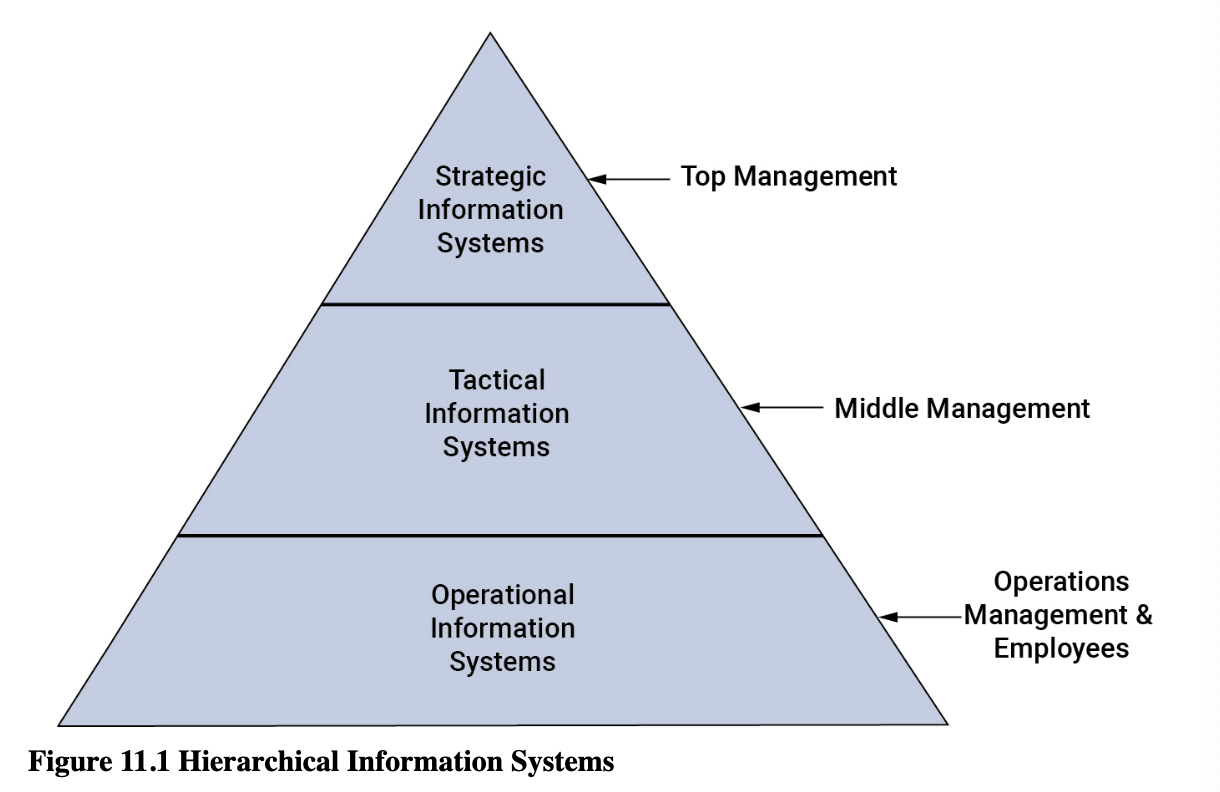
hierarchical perspective of information systems
Meet the needs of a level within the organization
What level inside the org does it mean? → the 3 levels in the triangle
Who is gonna be using it and what do they need?
ex. diff applications for executives (decision making)
middle and frontline managers need ones for tactical and operational info
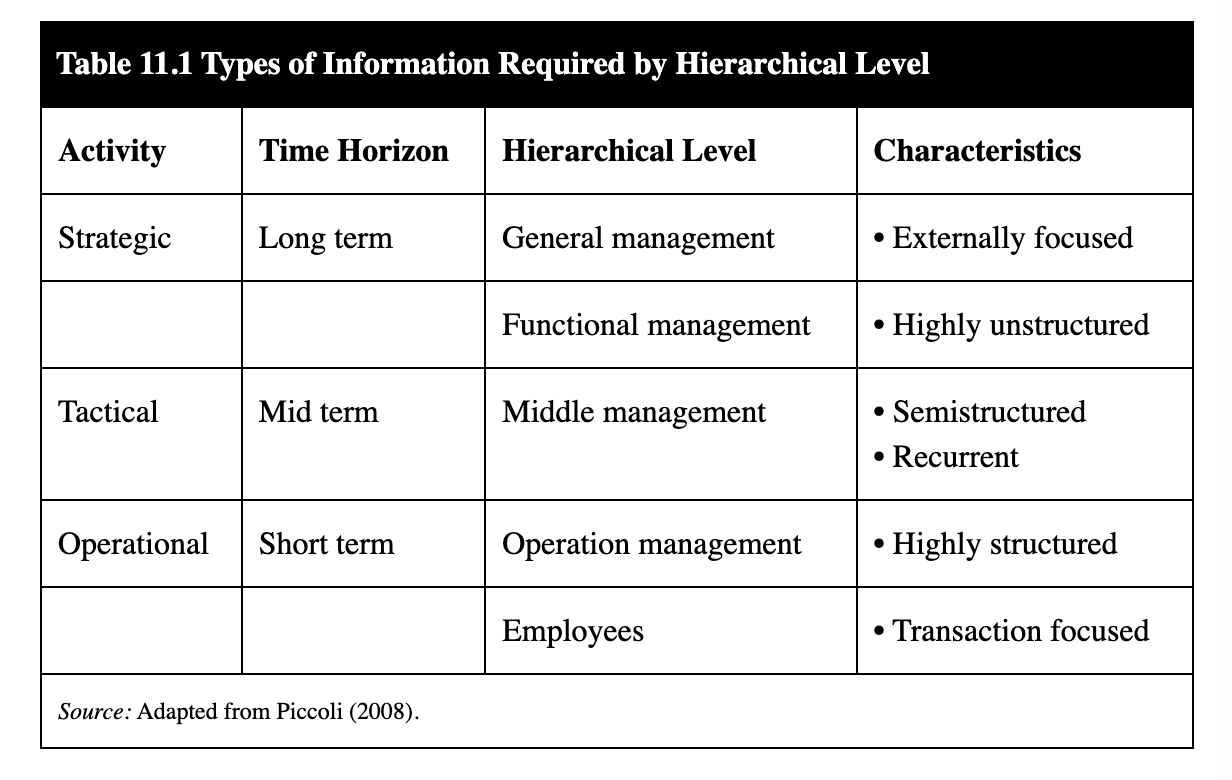
types of information needed per level in the hierarchical perspective —> add to cheatsheet
functional perspective of information systems
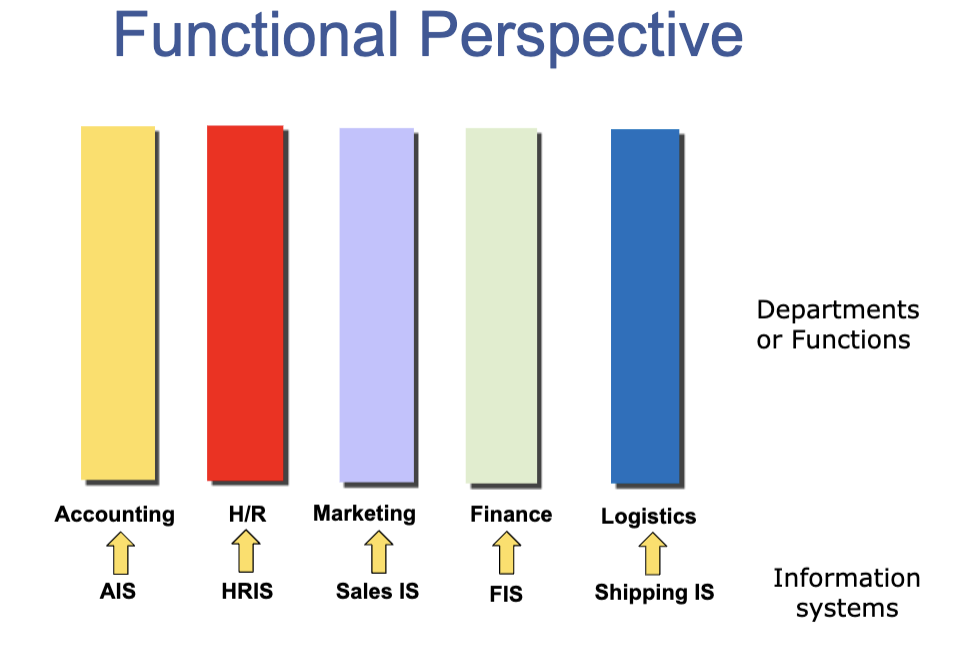
Meet the needs of a functional area
So one system per functional area
Each function has its own systems that do not communicate with each other
HR is everything to do with the actual employees and people, so they get their own system, finance people get their own etc, its a lot of customization
but can cause redundancy and inaccuracy of data bc of having to update info in many places
process perspective of information systems
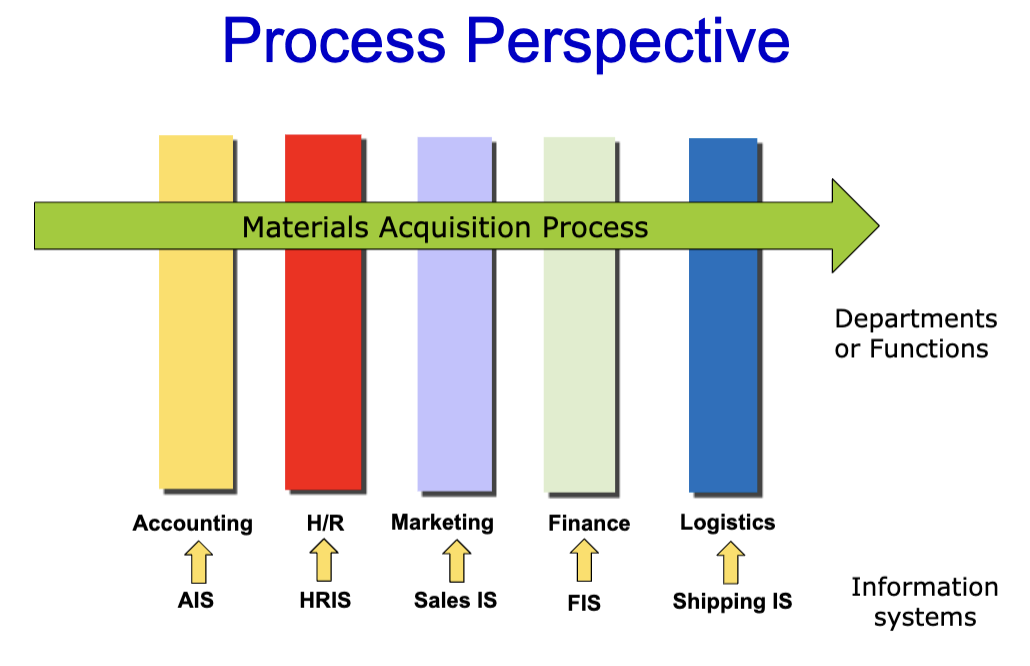
Support the process at hand
From beginning and end of a process everyone involved uses one system to help them with decision making (ignores diff levels and departments)
The entire process from start to end, creating a system to support that and connect the diff systems and functions
what is business integration and data integration
business integration
unification of business processes previously performed as separate activities to create cohesive and streamlined process
ensure processes are performed at the best location
data integration
ensuring everyone who needs the information can access all the necessary
table of diff Enterprise Information Systems —> add to cheatsheet
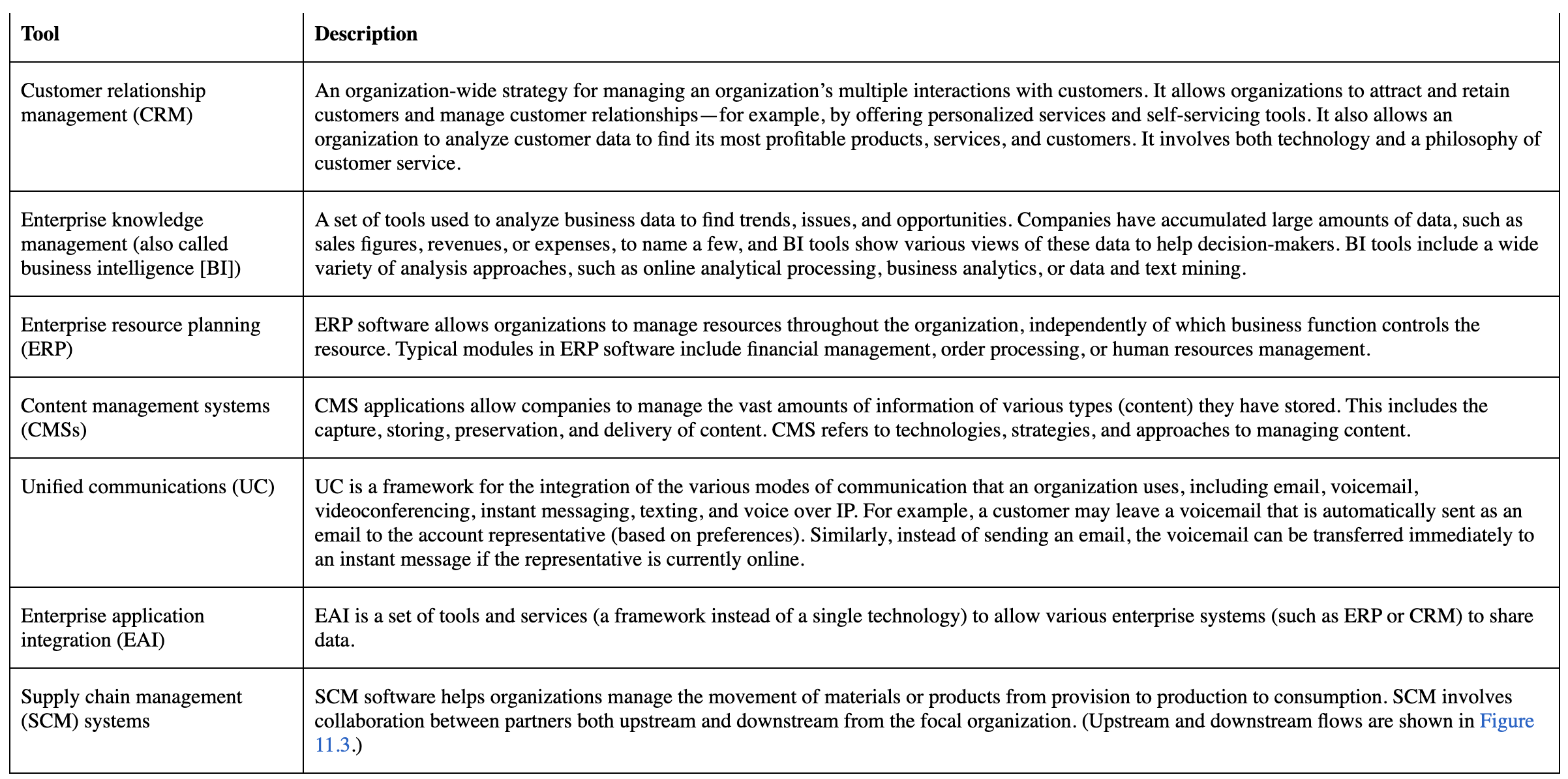
what is systems integration and what enterprise info systems they need —> maybe add to cheatsheet
the unification of information systems and databases that were previously operating as diff systems
includes ERP (enterprise resource management), CMS (content management), and SCM (supply chain management)
what is application integration —> add to cheatsheet
organization implementing parts of modular systems together as needed to limit costs and disruptions
something happening in one module automatically triggers another in other modules
key problem of ERP
Problem of ERP system: Can be complex and costly
Another challenge is getting ERP systems to be customized (bc each custom upgrade costs a bunch)
what is Enterprise Resource Planning (ERP)
what did we do before ERP
and what are its challenges?
—> add to cheatsheet
Set of IS tools used to enable information flow within and between processes.
Before ERP, diff application for diff functions
Data integration
Module based
Centralized database
Customizable
challenges
very large
changes peoples jobs
requires customization
need strong champion
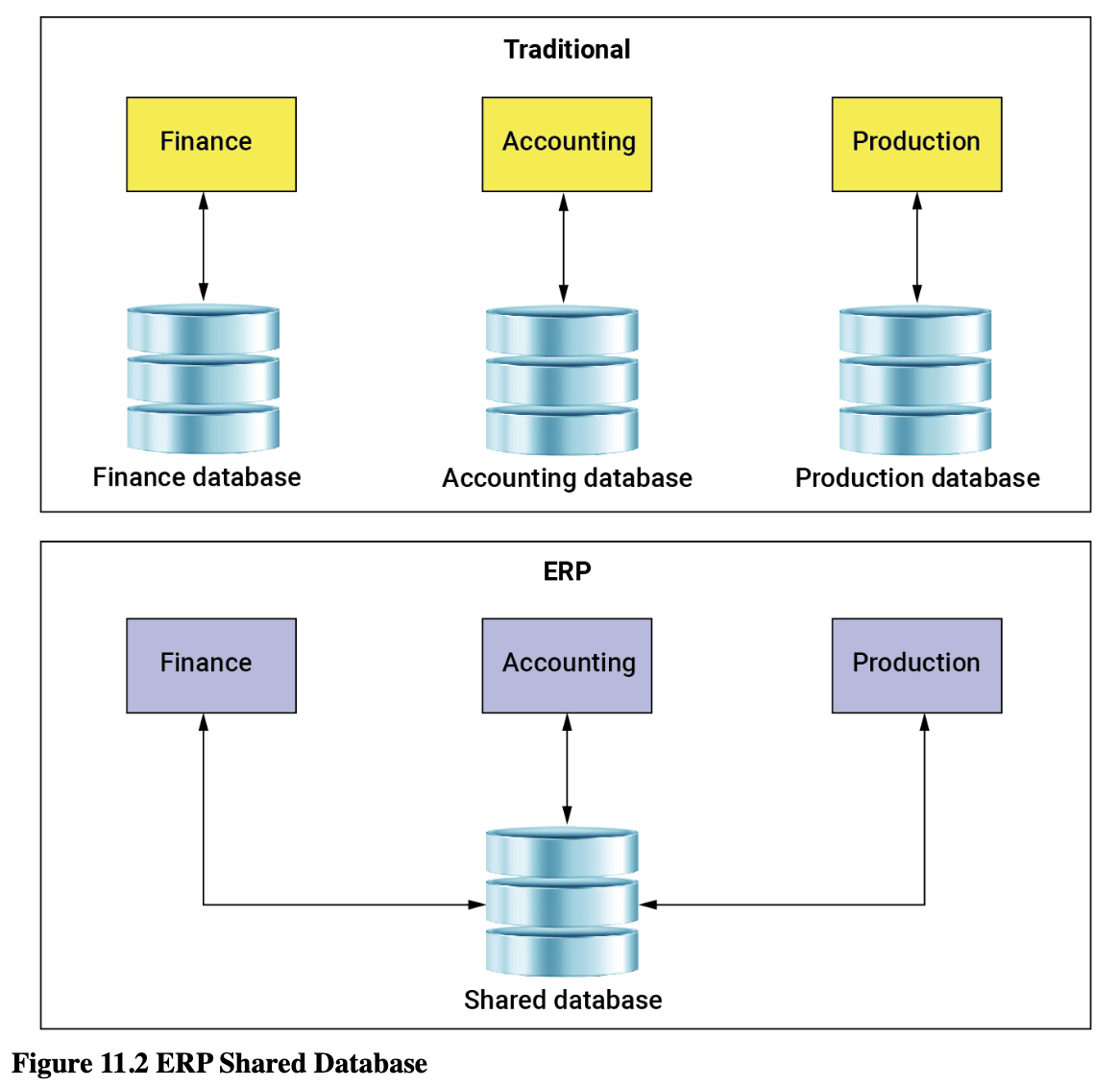
advantages and disadvantages of ERP —> add slides shortcut to cheatsheet (“Enterprise Resource Planning (ERP)”)
advantages
reduce data redundancy
improve communication
cut costs
improve efficiency
customizable + adaptable
disadvantages
very high cost
lots of work to create/implement due to customization needs
take a long time
people may be resistant to change or risk
four key points of AI and ERP
automated process discovery
ex. Walmart using AI to automate the delivery process
virtual implementation of processes
automate testing by generating test cases and executing them
use for robotic process improvement (makes ERP implementation faster and more efficient)
what is a supply chain in supply chain management (SCM)
flow of goods, information, or money upstream and downstream between suppliers and customers
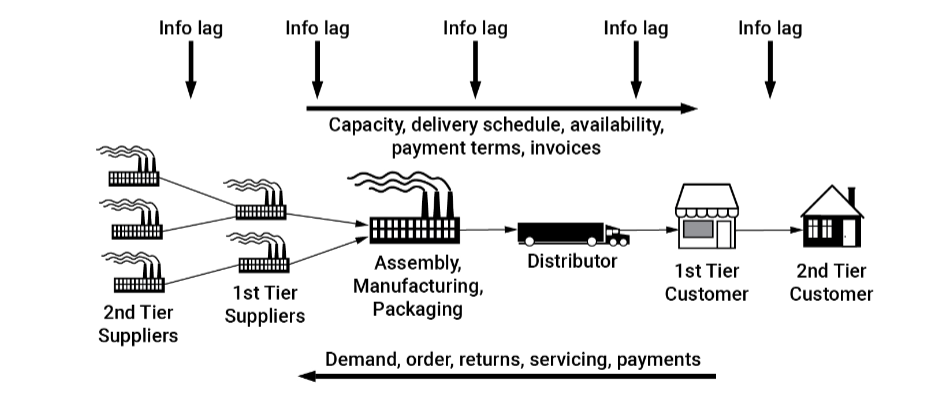
supply chain disaster examples
in textbook after the Beer Game / traditional supply chain section
disruptions to the supply chain
Unanticipated disruptions to the supply chain can have a negative impact on firms’ performance
Many supply chain disasters lead to substantial costs
COVID-19 Pandemic
Manufacturing firms were forced to close
Substantial delays in shipments
Many supply chain disaster lead to substantial costs (see Table 11.3)
what is customer relationship management (CRM) and its goals? —> add main def to cheatsheet? (“Customer Relationship Management”)
Organization-wide strategy for managing an organization’s multiple interactions with customers.
ex. when you talk to a company to buy a product, you use chat, email, or phoen
Goals
Manage multiple channels of interaction with customer
Provide unified view of each customer across enterprise
Analyze information about customers
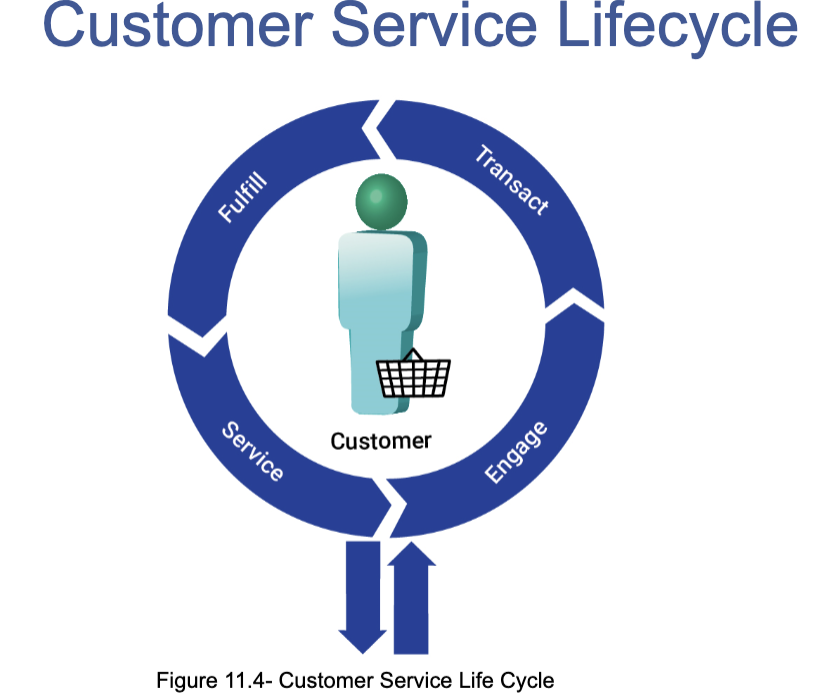
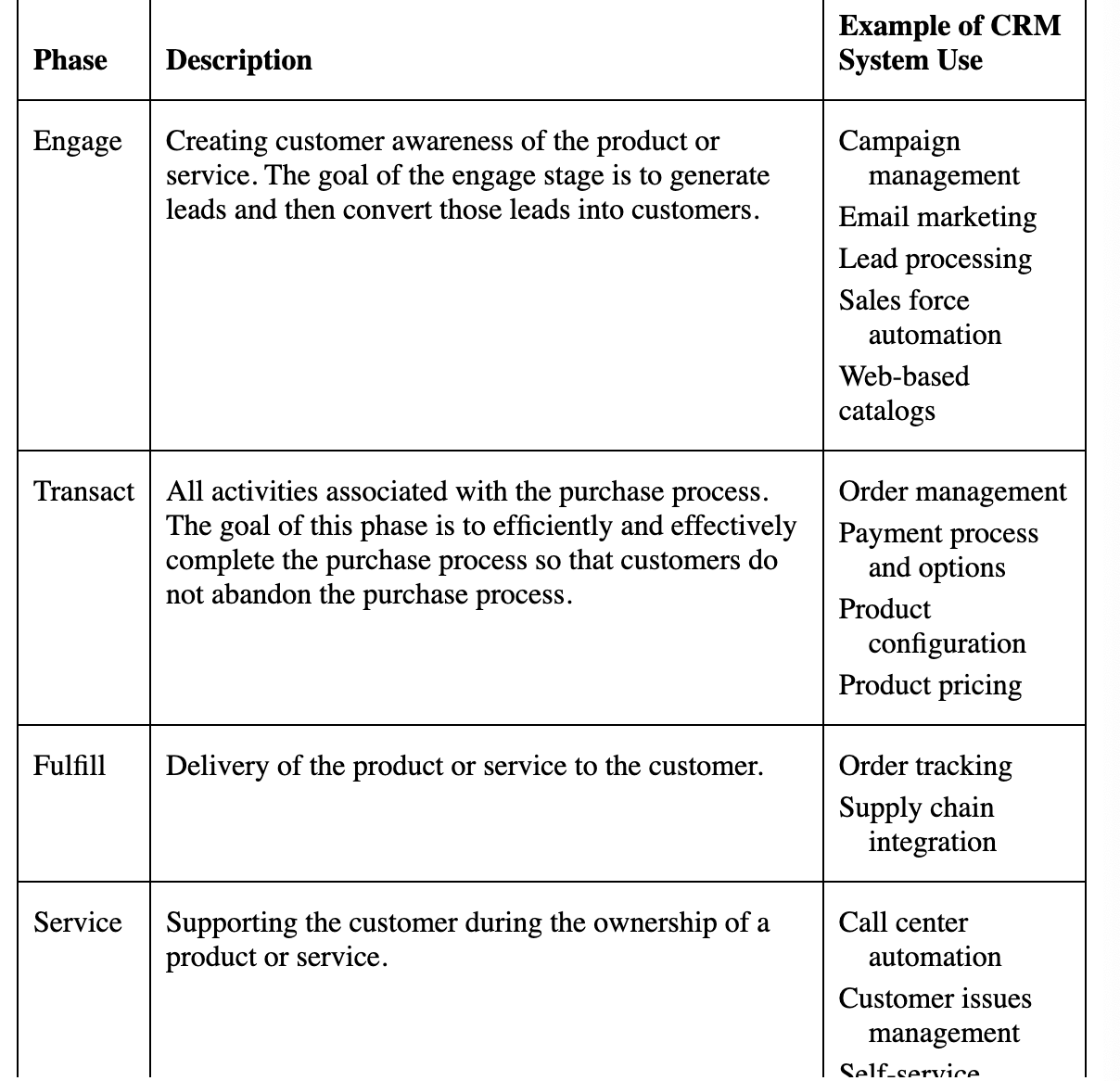
what is the customer service life cycle —> add to cheatsheet
a series of phases customers pass through when interacting with an organization
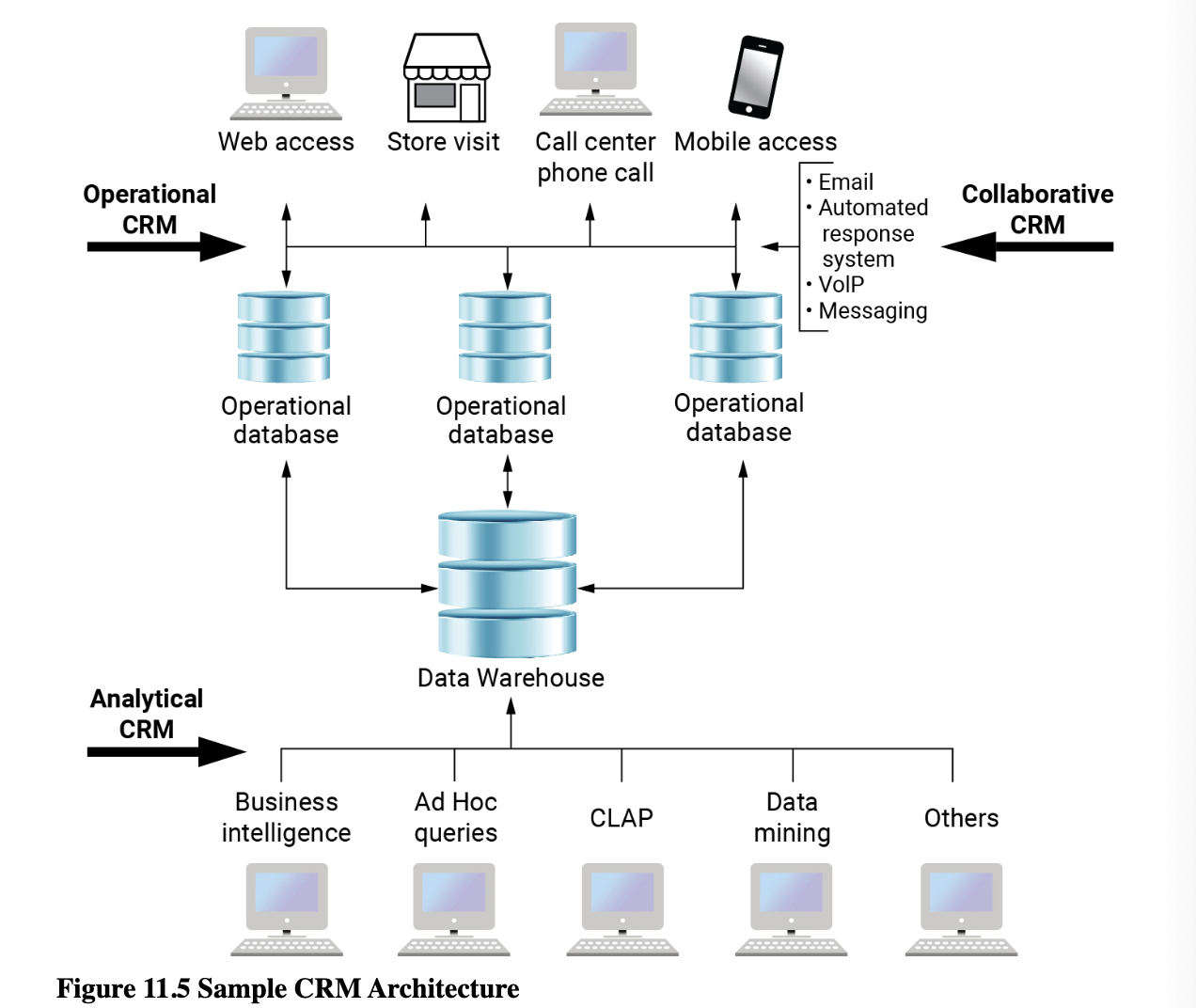
what are the three components of CRM systems? —> add to cheatsheet
operational
help and org improve day to day interactions with customers
involved with operations of the company, like sales or repairs
collaborative
help and org interact and collaborate with its customers
can include older apps like email and automated response systems, but also newer ones like interactive voice response (IVR) systems, and voice over IP
analytical
tech and processes to analyze customer data
data mining to discover patterns and groups in data warehouse data
on premise vs on demand CRM —> add to cheatsheet?
On-premise CRM: acquired, leased, or developed by organization and installed
on local servers.
Customized solution but high costs of development and maintenance
On-demand CRM (software-as-a- service CRM): remote use of CRM provider’s applications through Internet.
Up-to-date applications and no maintenance or implementation costs but must use standard functions (plain vanilla)
benefits and disadvantages of CRM
benefits
greater customer satisfaction bc of personalization and faster responses
leads to repeated business (customer retention)
maximizes profits bc of customer loyalty
disadvantages
must identify all channels of customer interaction
tech issues must be addressed (CRM acrhictecture)
implementation is more than installment
customer managed interactions and what limitations of CRM it solves
Customer data is stored and managed by the customer
CMI solves limitations of CRM initiatives:
Future events are more likely known
Inferences are more precise
warehouse automation and robotics
and its downside
Enabled by advancement of warehouse technology and capabilities of robotics.
Robot completes tedious and physically taxing jobs.
Human warehouse worker focuses on less physically demanding aspects of warehouse operations.
CON: can lose human jobs (but at amazon this has led to growth which led to increased jobs, making available hired jobs safer)