BIO 206 Plants Sensing the Enviroment
 Call Kai
 Learn
Learn Practice Test
 Spaced Repetition
 Match
Match Flashcards
 Knowt Play
1/23

There's no tags or description
Looks like no tags are added yet.
Name | Mastery | Learn | Test | Matching | Spaced | Call with Kai |
|---|
No analytics yet
Send a link to your students to track their progress
24 Terms
signal transduction
the process of converting an external signal into an internal signal
can result in either a phosphorylation cascade or second messengers
Steps for Sensing
Sensory cells perceive external stimuli and transduce (change) into intercellular signal
Cell-cell signal is sent by sensory cells to target cells in body that can respond
Target cells receive this signal and change their active to produce appreciate response
hormone
organic compound produced in small amounts in one part of a plant (or in glands in animals) that is transported to target cells, where it causes a physiological response
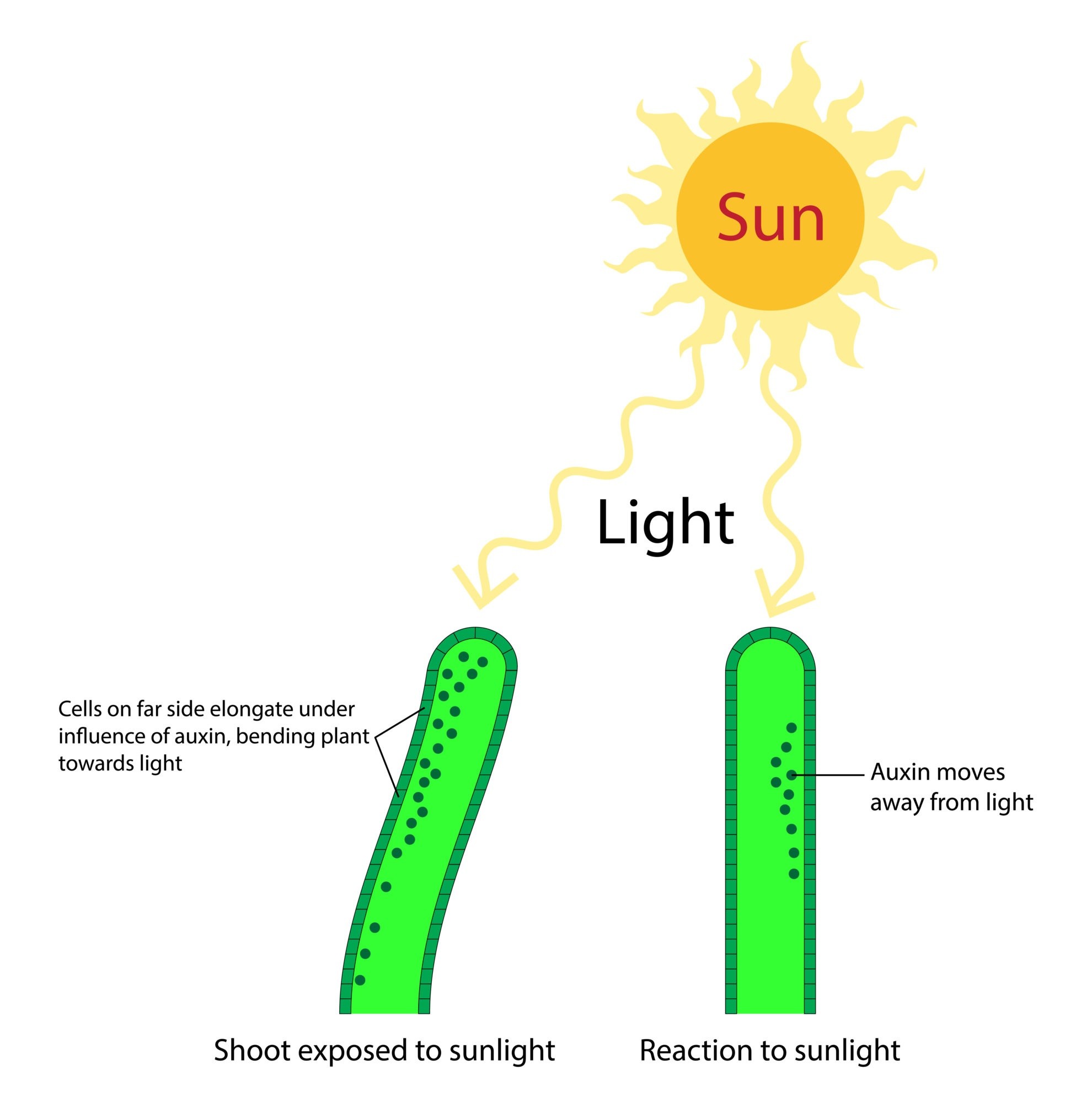
Phototropism
differential cell elongation exhibited by a plant organ in response to directional blue light
grows toward light to light to maximize photosynthesis
auxin accumulates on the shaded side of the plant, causing extra growth
Tropism
Any directional plant movement that occurs in response to a directional stimulus
nastic movements
Other plant movements in which the direction of the response is not dependent on the direction of the stimulus (closing venus flytrap)
Pigment
molecule that absorbs certain wave lengths of light
Photoreceptors
Phototropins
• blue-light receptors mediate effects of blue light
Phytochrome
• red-light and far-red-light receptors mediate the effects of red light
Types of receptors
Photoreceptor: light
Mechanoreceptor: physical
Chemoreceptor: chemical
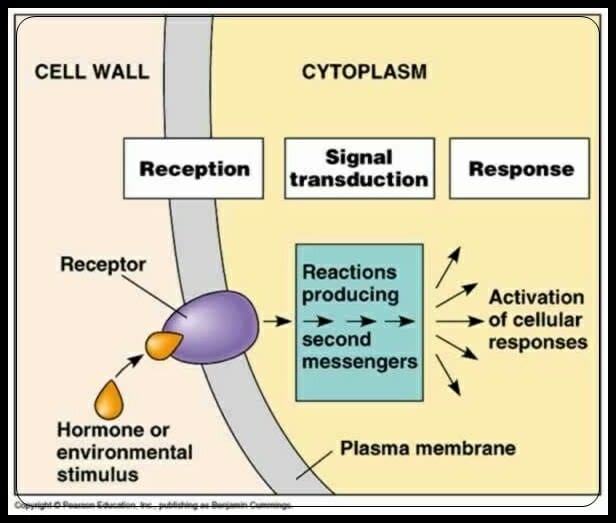
Signal transduction
Step 1: signal arrives
Step 2: receptor protein conformation change in response to signal
Step 3: receptor or associated protein catalyzed phosphorylation
Step 4: phosphorylation triggers either
Phosphorylation
Second messenger
Step 5: Phosphorylated proteins or 2nd messenger initiate response
Step 6: multiple possibilties
active/repress transcription
activate/repress translation
Change ion flow
Three Types of Signals
Light: photoperiod, quality, quantity
Physical: touch, air/fluid movement, gravity
Chemical: specific molecules, gradients
Light quality
the wavelengths of light that can be absorbed by molecules in the plant
Light Quantity
the intensity and duration of light exposure
Phototropins
photoreceptor that changes conformation, exposing active site for protein kinase, initiates signal transduction cascade, stimulates cell elongation with hormone auxin
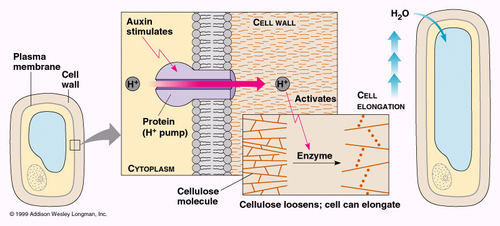
Acid growth hypothesis
Protons are pumped from cytoplast into the cell wall
pH in the cell wall is lowered
Cell wall proteins, expansins, are activated
Cross-link fiber (aka hemicellulose) H+ bonds interrupted
Steps for sensing
Sensory cells perceive external stimuli and transduce (change) into intercellular signal
Cell-cell signal is sent by sensory cells to target cells in body that can respond
Target cells receive this signal and change their activity to produce response
Coleoptile
modified leaf that forms sheath protecting emerging shoots of young plant
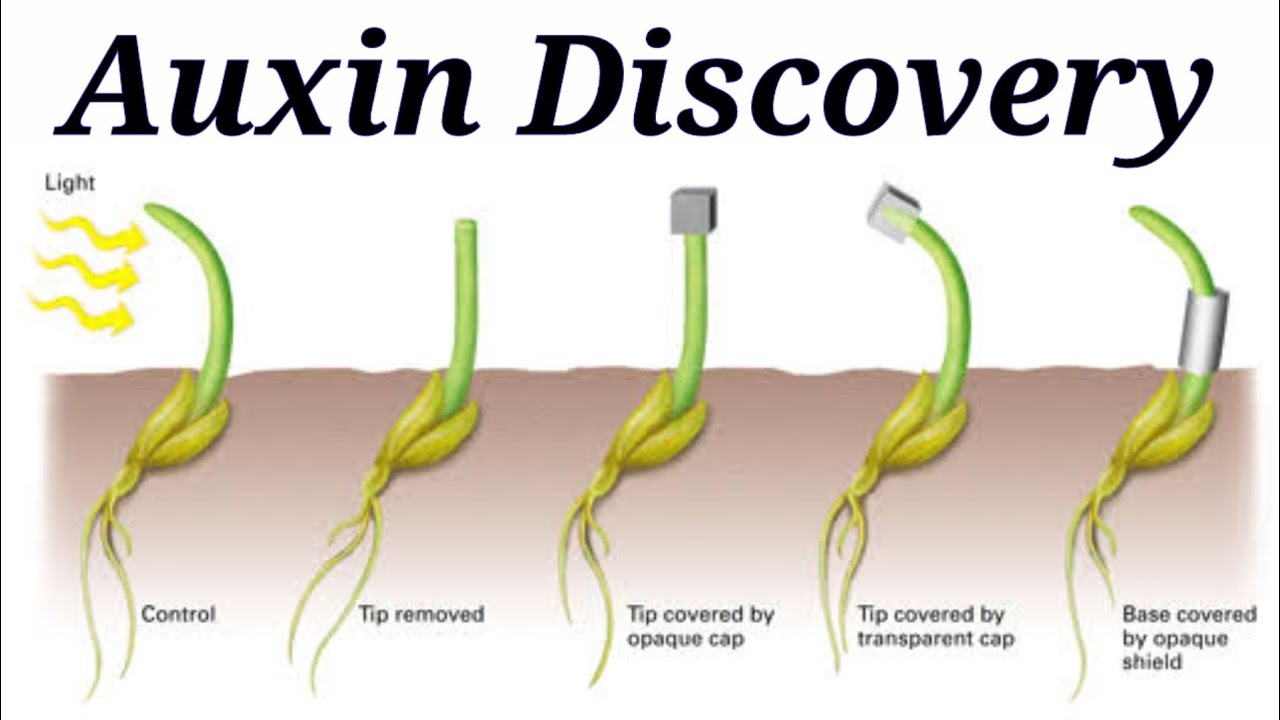
auxin
hormone that maintains the long axis of the plant body, playing a key role in phototropism and gravitropism
Photoreversibility
pigment in two shapes/confirmations, one shape absorbs red light and one shape absorbs far red light
critical night length
length of time in darkness that must be exceeded to initiate flowering (short) or not exceeded (long day)
Statolith hypothesis
Amyloplasts are organelles that contain starch granules, starch is denser than water so sink to bottom of root cells by the force of gravity
Position of amyplast actives pressure receptor that initiate gravimetric response
Ethylene
gaseous hormone that triggers senescence (cell aging) and fruit ripening, and it plays a role in leaf abscission.
Synthesized from methionine and helps flowers fading, and leaf abscission
Vegetative growth to flowering
Apical meristem to leaves, then apical meristem becomes floral/inflorescent meristem, controlled by photoperiodism
Types of flowering
Short day plants (SDPs) flower when the day is shorter than a critical maximum; flower in plate summer or fall, need long nights
Long-day plants (LDPs) flower when day is longer than a critical maximum; flower in mid summer