Review on Cervical and Upper Extremity Conditions
 Call Kai
 Learn
Learn Practice Test
 Spaced Repetition
 Match
Match Flashcards
 Knowt Play
1/18

Earn XP
Description and Tags
Flashcards covering essential topics related to cervical and upper extremity conditions.
Name | Mastery | Learn | Test | Matching | Spaced | Call with Kai |
|---|
No analytics yet
Send a link to your students to track their progress
19 Terms
What is the clinical presentation of someone with Vertebrobasilar Insufficiency (VBI)?
5Ds: Dizziness, Diplopia, Dysarthria, Dysphagia, Drop attacks.
3Ns: Nausea, Numbness (Perioral), Nystagmus.
What is VBI? What are some of the risk factors? (Description + Cause)
Insufficient blood supply to the hindbrain due to compromise of the vertebral or basilar artery
Brain stem
Cerebellum
Visual cortex
Neck pain and neck stiffness are usually associated with a higher risk of VBI. Other risk factors include:
Atherosclerosis-related conditions
Sustained extreme rotation or extension of the neck
Prolonged or more forceful extremes of movement may cause stretching or even tearing of the arteries (Cervical Arterial Dissection)
What are some of the considerations that must be taken in a patient with suspected VBI? How do you test a patient with VBI (Tests + Contraindications)
The VBI positional tests are not indicated when the patient has clear symptoms of VBI (5Ds, 3Ns). Positional tests are only used when the clinician is unsure or is ruling out other sources of dizziness.
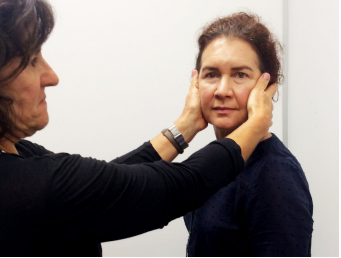
Test to be used: Sustained Rotation in Sitting
Rotate head to one side maximally
Sustain for at least 10 secs
Wait 10 secs in neutral between sides (latency)
Repeat on other side
To know if the test is positive, look for:
Dizziness
Nystagmus which does not settle within a few seconds
Pre-syncope
Feeling ‘unwell’
Any of the 5 Ds
Cease testing if symptoms not settling within seconds and/or getting worse
What is Cervical Arterial Dissection (CAD)? What are the risk factors (Description + Cause)
Tearing of inner (tunica intima) or middle (tunica media) layers of an artery.
Some risk factors include:
Underlying arteriopathy (genetic predisposition)
Hereditary subclinical (unremarkable) connective tissue disorders
Recent minor mechanical stress on neck
Infection (respiratory or gastric, resulting in vigorous coughing or vomiting)
Migraine
Smoking
What is the clinical presentation of someone with Cervical Arterial Dissection (CAD)?
The patient will often present with:
Acute onset neck pain
Headache may also be present
Young patient (under 55 years)
Unfamiliar pain
What are some of the considerations that must be taken in a patient with suspected CAD? How do you test a patient with CAD (Tests + Contraindications)
CAD is a medical emergency and must be spotted. To do so, there are a few tests that can be conducted:
Gait examinations
Balance disturbances
Horner’s Syndrome (a smaller pupil (miosis), drooping eyelid (ptosis), and reduced sweating (anhidrosis) on the affected side)
Spontaneous onset of pain after minor trauma
What are Cervicogenic Headaches? What are the risk factors (Description + Cause)
A cervicogenic headache is caused by an underlying physical issue in the neck, such as joint, disc, or soft tissue injury
What test is positive for Cervicogenic Headache?
Flexion-Rotation Test.
What does Craniocervical Flexion Test (CCFT) assess?
Activation and endurance of the deep flexors of the cervical spine.
What are common causes of whiplash-associated disorders (WAD)?
Motor Vehicle Accidents (MVAs) and sports injuries.
What are the symptoms of WAD?
Neck pain, headaches, dizziness, arm pain/weakness, hyperalgesia.
How is WAD graded according to the Quebec Task Force?
Grade 0 (no complaint) to Grade 4 (neck complaint and fracture/dislocation).
What factors affect the prognosis of Whiplash-Associated Disorders?
High pain intensity, post-traumatic stress symptoms, and older age.
What is the recommended initial treatment for someone with WAD?
Advice, education, and frontline treatments for inflammation and neck pain.
What common elbow injury is characterized by pain on the lateral epicondyle?
Lateral Epicondylalgia (Tennis Elbow).
What test indicates Lateral Epicondylalgia?
Cozen's Test.
What is a key feature of a Colles's Fracture?
Dinner fork deformity due to posterior displacement of the radius.
What exercise approach is beneficial for Tennis Elbow management?
Mobilisation with movement.
What symptoms might indicate Cubital Tunnel Syndrome?
Tingling in digits 4 and 5, weak grip strength, pain.