Early Modern Worlds Historiography
 Call Kai
 Learn
Learn Practice Test
 Spaced Repetition
 Match
Match Flashcards
 Knowt Play
1/134

There's no tags or description
Looks like no tags are added yet.
Name | Mastery | Learn | Test | Matching | Spaced | Call with Kai |
|---|
No analytics yet
Send a link to your students to track their progress
135 Terms
Paquette
Global and comparative approach: WEEK 2 TRADE, NETWORKS, AND EMPIRES
The "Europe was peripheral" corrective His most significant contribution is probably pushing back against Eurocentric narratives that treat European dominance as natural or inevitable. By opening with the argument that seaborne empires were dwarfed by Eurasian terrestrial empires until the 19th century, he intervenes in the long-running "Rise of the West" debate — engaging with scholars like Pomeranz and Abu-Lughod who similarly argued that European dominance was late, contingent, and not predetermined.
Comparative imperial history Rather than treating each empire in isolation, Paquette insists on comparing them systematically. Reviewers noted this as genuinely valuable — showing that the Spanish, Portuguese, British, French and Dutch empires faced parallel challenges and developed shared strategies, which pushes against nationalist historiographies that treat each empire as unique.
Inter-state competition as the driver His bellicist thesis — that rivalry between European states was the galvanising force behind imperial expansion — contributes to debates about what caused empire. This engages with Charles Tilly's state-formation arguments and applies them to the imperial context.
Deindustrialisation and structural inequality By including the Indian textile passage you quoted, he contributes to debates about whether colonial underdevelopment was incidental or structurally produced by European expansion — siding clearly with the latter.
Cañizares-Esguerra and Breen
WEEK 2: TRADE NETWORKS AND EMPIRE
Approach: Global, Atlantic, Revisionist
Main historiographical contributions:
Misconception that Iberian empires were moribund and weak which were then overtaken by more modern mercantilist Britain and the Dutch
Incomplete picture of the role of Africans, immigrants, and local situations
Iberian atlantic as an incubator of modernity:
Large scale urbanization, economies of scale, voluntary migration, breakthroughs of scientific revolution
Importance of Potosí, Mexico city, and Cartagena in the world economy and trade
Smuggling economies in Jamaica
Ibero-African creole populations
Hybridisation isn’t always related to Europe and its connections to other populations but also between immigrants, slaves, locals, etc.
Role of Jewish Portuguese traders in South America
Jesuit’s bark brought to Europe 1630s
Schwartz
Locates the origin of religious tolerance in the atlantic iberian world
John Tutino
Capitalism originated in Mexico and not England - Mexican silver fueled global markets
Mauro
Mauro posits examples of merchant communities:
Antwerp: foreign merchants were treated well, became a booming market place, ‘nation’ was used to refer to merchant communities from certain nationalities
Certain nations could control/monopolise certain commodities
Lyon: different but also dominated by foreign merchant communities
Commercial city, mainly banking
Italians there negotiated loyalties in France and Italy
but they maintained their culture and solidarity —> networks
Jewish disapora:
Persecution due to the inquisition forced many to baptise themselves to escape, they moved to commercial cities and pursued trade which was one of the few high level activities they could do
Family ties and networks remain
North African Jews migrate as well
Armenians:
Displaced from Armenia by Shah Abbas I and forced to settle in New Julfa, Iran, because he wanted them to enrich Persia in the silk trade
Became highly successful taking up all forms of commerce
Even engaged in maritime trade when European competition was heightened
Kinship and family ties were significant, created merchant dynasties
Declined due to the industrialisation of Europe
Parker
recognises the landed empires and their significance - agrees with Paquette
A problem is Eurocentrism
BUT places emphasis on the military revolution thesis in the development of European empires and states and interstate conflict —> differs from Paquette’s support of the Tilly' thesis —> because it focuses heavily on the military aspect
Weber
Sociological historical approach:
locates the origins of capitalism endogenously through the rise of protestantism and the protestant work ethic
Also mentions the rise of instrument rationality vs value rationality
Robert Brenner
Marxist:
Capitalism emerged in the English late medieval countryside
Initially was a feudal society of landlords and peasants
Crisis happened which was a class struggle, the black death and demographic drop contributed, lords win the class struggle by 1500, disposses the peasants and create a system of temporary tenants
Three tiered structure is made:
Landlords
Capitalist tenant farmers
Wage labourers
Increased agricultural production which helped industrialization
Mokyr and Landes
Endogenous
european modernity = capitalism —> Eurocentric
Marx and Engels
Marxist
Exogenous explanations
Discovery of the Americas, colonisation, navigation and increased connection with foreign markets, generally the increase of modes of exchange and more commodities created an impulse for industrty, navigation and commerce
Eric Williams
Anticolonial
Exogenous explanation of the rise of capitalism
He posits it was due to Atlantic slavery, and its role in funding European modernity, it paradoxically created a new capitalism which was hostile to mercantilism and slavert
Walter Rodney
Marxist
European development was through the underdevelopment of Africa and the rest of the world
Slaver abandoned when it is no longer seen as acceptable by new capitalism - Agrees with Williams
Africa played a key role in the development of Europe
Janet Abu-Lughod
Global, postcolonial, athropological
Exogenous
Counters wallerstein by saying that a sophisticated economic system predated European hegemony and that European hegemony was therefore not predetermined or inevitable
It was the decline of the other empires, which was due to an cumulative change based on multiple things, without which Europe could not have risen, Europe used to be peripheral
Counters Eurocentrism
Immanuel Wallerstein
Marxist approach
Core/Periphery Dependency theory
endogenous
Blaut
Exogenous capitalism through slavery and colonialism but only in Europe did capitalism really emerge as a dominant form of economic and social life
Candido
Uses primary source inventories of African women in Benguela to show how they were integrated into world economies as consumers of foreign goods
However, she also supports Rodney’s argument that Europeans acted as mediums for trade and controlled exhcanges through connecting Asian markets to African ones
Habib
Crticises the Brenner thesis - Marxist
Brenner thesis is wrong because it ignores key discussions of Marx’s despite Brenner being a marxist historian
Why?
Peasant agriculture lasted until the 1750s, it was only then that enclosure reached a intensive state
Ireland has to pay tribute in foodstuffs and the Irish starve to support English modernization —> role of colonization
Ignores the New World and slave labour/capital gained from colonization
It was not exclusively endogenous, it was much slower, cruel to tenants, impacted by colonialism, slavery, the rise of commerce through intercontinental networks. By excluding these factors, Brenner paints a picture of a successful organic natural shift to capitalism which was purely endogenous.
Toby Green
Fistful of Shells:
Agrees with Rodney, but not necessarily on the HOW the underdevelopment happened, he adds a layer of agency due to differences in value of things in Africa, both exploitation and agency existed simultaneously
Europe underdeveloped Africa, but he highlights the Agency of Africans in this process, there were African kingdoms that did have agency, it was just that the deals made produced wealth for Europe and poverty for Africa
Africans saw value in shells, cloth, copper, therefore they exchanged them for gold and slaves —> europe gained surplus, and created an influx of those goods in Africa which led to inflation and depreciation of that currency, any capital accumulated was not invested into manufacturing and local manufacturers had to compete with imported goods
The relationship between Europe and Africa explains the rise of capitalism and structural inequality
Laura Gowing
Gender, patriarchy
Susan Lay —> argues that there are hierarchies between women on the domestic level, using the case study of servant Susan Lay who is haunted by the ghost of her mistress Priscilla Beauty for having illegitimate children with her husband and son. Shows the tensions between Susan wanting to be Priscilla and betraying her, and the fear caused by mistresses but also a responsbility to care for servants and clean up husbands messes. As well as how magic and ghosts could be used to bring forth such issues in court, which otherwise would be considered domestic.
"mistresses bearing responsibility for managing their husbands' sexual transgressions within the household"
Relationship between servant and master as another form of domination
shows the fragility of order and patriarchal family structures
Alexandra Shepard
Gender
Dod and Cleaver’s a Godlie form of household was a depiction of an ideal patriarchal structure, with defined gender roles as women being confined to the domestic sphere —> she criticises scholarship that has taken this as description of reality
However, in reality the patriarchal society was far more conflicted and messy - didn’t always fit so neatly
Women’s lives departed from it
Connection between men and economic autonomy has been assumed, hardly tested
Women, often married women, engaged in forms of commerce and provision
Poor men, servants, wage labourers with no credit, men as victims of patriarchal ideals
Violent conduct asserted manliness - drinking:
Shepard argues the assumed link between masculinity and economic autonomy/householder authority has been overstated. Most men — servants, labourers, the poor — couldn't access this ideal, so asserted manhood through alternative credit (violence, drinking, physical prowess). Women also participated in commerce, complicating the domestic/public divide.
Defamation in the Butcher’s shop
1694, man countersues woman after she accuses him of defamation and calling her a whore, she calls him rogue and sheep stealing —> demonstrating the fragility of masculinity and credit anxiety - supporting Alexandra Shepard’s argument
Court depositions of south west England - possibly Somerset
Barbara Watson Andaya
Despite colonization and the expansion of global trade bringing ideas of patriarchy to challenge local structures of SouthEast Asia in which women possessed agency, local traditions persisted:
role of women in economies: rice harvesting, matrilineal inheritance, female roles in textile production, played roles as wives to foreign traders and brokers
Women retained agency to a degree as wives, negotiating patriarchal trade systems:
Argument: Colonial expansion and global trade introduced patriarchal structures that challenged but did not simply displace Southeast Asian women's agency — the relationship was mutually transformative, with local traditions reshaping incoming systems as much as being reshaped by them.
Evidence: Women's structural centrality to local economies (rice harvesting, textile production, matrilineal inheritance) gave them leverage that colonisers couldn't easily override. As wives and brokers to foreign traders, women functioned as cultural, linguistic and commercial intermediaries — a distinct form of power beyond domestic roles.
Historiographical point: Challenges narratives that treat colonialism as straightforwardly imposing patriarchy on passive female subjects — women were active participants in shaping how trade networks developed.
Caveat: Colonial contact did erode these roles and even locally patriarchy did exist and men were more revered and women remained vulnerable to sexual violence, and women negotiated the patriarchy by marrying and using their roles as wives to become participants and brokers. through marriage they gained goods, languages, and higher likely hood of remarriage.
Amy Kallander
Middle Eastern Rural economies run by women, harvesting , weaving, and embroidery
Ottoman empire, islamic law allowed women to own property
Ottoman empire royal women held leadership and management ppower in philanthropic endeavors, even acting as political advisors to their husbands
Julie Hardwick
Women and men jointly handled labour
Many professions were considered female domains such as spinning, seamstressing, few female guilds existed, domestic work was also an option
Elizabeth I, many female monarchs, had to identify androgynously and identify with both female and male characteristics in order to combat criticism from Knox - The Monstrous Regiment of Women
Mihoko Suzuki
gender
Female political thinkers were often believed incapable of participating in political discourse - however many women took advantage of the social chaos produced by civil wars and violence to negotiate and paraticipate in discourse, such as the frondueses and Christine de Pizan HOWEVER, exists mainly within instability and conflict
Motteville, Montpensier, de La Guette
Madeline Zilfi
Gender
Hul - Divorce initiated by women, who commonly compensated the husband to get him to consent to the divorce - fees and mutual consent made it challenging but it was a right
Hierarchies existed within larger muslim households, between junior and senior women as well
Margaret R. Hunt
Gender/ineuqalities/hierarchies
Recognizes the complexity of patriarchy, and the existence of hierarchies between women, intersecting with other hierarchies of class, age, race
Women negotiate with the patriarchy to gain power over other women but still within the patriarchal structure - reproducing their own subordination - Kandiyoti’s patriarchal bargain
Susan D. Amussen and Allyson M. Poska
Gender is a crucial analytical tool for understanding the Atlantic world. European attempts to impose patriarchal systems in Africa and the Americas were limited and often unsuccessful, as indigenous and African gender systems, along with local conditions, reshaped or resisted European norms. This reveals the agency of non-European peoples and challenges Eurocentric, imperial narratives.
Key Examples:
Work:
Europeans promoted a strict gendered division of labour, but
Indigenous societies (e.g., Cherokee, Iroquois) maintained female agricultural roles
Enslaved women worked alongside men in plantations, contradicting European ideals
Sexuality & Family:
Europeans used sexual violence and concubinage to assert power
Indigenous women used sexuality strategically (alliances, diplomacy)
Intermarriage often followed indigenous, not European, kinship systems
Cultural Encounters:
Europeans misinterpreted indigenous gender systems (e.g., complementarity, matriliny)
“Gender frontiers” emerged where norms clashed and were renegotiated
Historiographical School:
Atlantic History (revisionist / trans-imperial)
Influenced by Gender History and New Imperial History
Challenges older Eurocentric and nation-based narratives by emphasizing:
Comparison across empires
Cultural exchange and hybridity
Agency of indigenous and African peoples
Anthony Reid
A: The main argument is that women in pre-colonial Southeast Asia had relatively high autonomy and economic importance compared to other regions, due to their active roles in agriculture, trade, marriage, and social life.
Examples/Evidence:
Women played key economic roles such as farming, weaving, and especially trade and market exchange, often dominating local commerce.
Marriage systems allowed easy divorce and female initiation, showing social independence and security.
Women could act as merchants, diplomats, and even rulers, demonstrating influence beyond the household.
Cultural norms valued daughters and did not restrict women’s mobility or participation in society as strongly as in other regions.
example: Nyai Gede, who acted as a harbour master of Gresik, having sent her ships to trade in Bali and Cambodia.
Gender approach
Linda Heywood
Gendered approach, challenges ideas that women didn’t have political authority
Looks at how Njinga was inspired by other female warriors to changed their identity to become a man, she made her male concubines dress as women and made everyone call her king, therefore through adopting the identity of a man she reinforced patriarchal ideals but negotiated within them to gain power - compare to Elizabeth I in Hardwick
Merry Weisner-Hanks
Gender
Criticises the Annales school’s Long durée model by Braudal, saying that there was actually change through the reformation, we just need to see how such changes affected women
periodisation and use of renaissance as an analytical category for women is questioned, instead early modern should be more of an analytical category as it captures more of the developments in the era - reformations, military revolution, global interactions
There was some change in reformation, women took part in iconoclastic riots, civil wars, preaching in the early years, writing and translating religious works, but it was followed by a period of intense social discipline and rigidity, no more brothels, adultery, or celibacy —> nuclear family structures and marriage —> Dod and Cleaver
Therefore gender history fits more of Judith Bennett’s model of patriarchal equilibrium
‘early modern’ marks 1500 as a transition from medieval, with the discovery, printing press, gunpowder, capitalism —> what about looking at this through the lens of gender
Diana Robin
Gender historian
Against Joan Kelly’s idea that women did not experience a renaissance, instead argues that upper class women gained agency through salons, humanism, increased literacy and political participation
Not all women though
Mesdames des Roches as examples, writing about women education, intellectual independence, poetry etc. —> Learning as liberatory BUT Merry Weisner-Hanks’ view: did this translate into actual insitutional opportunity? —> women and education
Joan Kelly
Gender historian
Questions the periodisation of ‘renaissance’ for women, arguing it was by men for men
Brought cultural and social advances for elite men
But for women:
Opportunities narrowed
Patriarchal control intensified
Increased restriction on sexual activity, marriage, lack of alternative routes, more social discipline and rigid gender roles
Judith Bennett
Gender Historian
Complementary to Joan Kelly
Focuses on continuities in the role and status of women
Concept of patriarchal equilibrium —> that the patriarchy has adapted and responded to times of instability in which there was resistance and agency of women such as the Reformation where there was increased involvement and radical women in iconoclastic riots and the reformation generally, followed by intense social rigidity and how ideas about women, spousal relations and rights were not so different from pre-Reformation
Kandiyoti
Gender Historian
Patriarchal bargaining concept
How some women negotiated with the patriarchy to gain agency over other women, and sometimes men
But ultimately reinforced the patriarchy and domination of men
e.g. daughter in law allowing it because she will soon be the mother in law
Fernand Braudel
Annales School
Long duree model
No distinct changes, all part of a long shift which is slow evolving
Annales School
Annales School
Braudel, Le roy laudrie
History of mentalities, trying to get at how people think
Long duree, looking at long term trends in a geographic view
Broader structures in history, everything is linked
Borrowing from disciplines like anthropology and sociology
Marxist approaches - more preoccupied with change and revolutions but Annales were more concerned with long term continuities
Alison Rowlands
Gender History and witchcraft —> social and cultural
Critiques of feminist work such as that of Andrea Dworkin
Jennifer Morgan
Historiographical focus on race and gender
In scholarship about the slave trade, the focus has been heavily focused on men and male slaves, Morgan emphasises and argues that slavery as an enterprise was heavily linked to the control and perversion of women’s reproductive capacities —> women were used as ways to break kinship networks, the commodification and separation of families and of women was used to break notions of family, while paradoxically, women were used to produce children which would be automatically enslaved and commodified - Reproductive Racial Capitalism
To fully understand the slave trade one must centre the experiences of women
It is also important to consider the experience of women on slave ships in the middle passage in terms of sexual violence
Sailors and enslavers sexually abused female slaves
Many were forced to give birth during the voyage
Their general mobility on deck they gathered information and assisted in resistance, or committed suicide
It is difficult in terms of historical sources to understand this because
Visual sources like maps of slave ships: no agency, anonymous figures
Captain’s Logs: Womens deaths and lives are noted with clinical detachment, some women are numbered - again no agency
Survivor’s narratives: autobiographical accounts are minimal due to the unrepresentable trauma
Olaudah Equiano is one detailed account of women’s shrieks
Joan-Pau Rubiés
Ethnology and race
Argues that in the evolution of ideas of racism there was a stark shift in the 18th century from ‘soft racism’ of the early modern period to ‘hard racism’ of the modern period, which occurred due to a breakdown of Christian authority due to the radical enlightenment and the increased intensity of the Transatlantic Slave Trade which (alongside enlightenment) required new justifications for slavery.
Soft Racism: The belief that all humans came from one source —> monogenism (orthodox consensus), and that human capacity and temperament was shaped by climate, diet, temperature etc.
Hierarchical model of temperments based on civilisation and politics - not skin colour - Acosta’s model of civilised, barbarian, nomadic
Championed by Count of Buffon, who represents the most sophisticated articulation of the orthodox consensus
Christianity impacted this belief that all are one family
Came from antiquity
Shift begins: Religious Radicalisation
Religious persecution of converted muslims and jews led to the idea of ‘purity of blood’ which suggested that difference was inherited and innate —> first switch to biological causes
Role of Slave trade:
Increased slavery required justifications such as the ‘Curse of Ham’ used to link black skin to a legacy of servitude —> shift to innate biological
Ideas rise of how black bodies are naturally suited to labour
Shift: Hard Racism
Valignano’s racial hierarchy: European whites, Asian whites, blacks —> links to skin colour
Le Peyrère: model of Pre-Adamites - shows we are not all one - polygenism
Lord Kames and Lord Monboddo - directly challenge orthodox consenus -1774
Kate Lowe
Race
Challenges the ‘traditional theory’ that all black people were enslaved in the early modern period
Gondolier: people who operate gondolas
Main argument; unique environment where sub-Saharan Africans, particularly those who became gondoliers, managed to successfully navigate the transition from slavery to freedom and achieve a significant level of inclusion and integration into Venetian society
- Black Africans were visibly present in Renaissance Venice, especially as slaves and later as freed workers
Most arrived as slaves via:
- Portugal & Spain (West Africa route)
- Ottoman & North African trade routes
- Slavery was legal and widely accepted in Venice
Many slaves were eventually manumitted (freed), often:
- After years of service
- Or on the death of their master
Freed Black Africans faced major social and economic difficulties:
- Continued dependence on former masters
- Risk of poverty without secure employment
- Gondolier work became a key route to integration:
- Some freed Black men joined gondoliers’ guilds (traghetti)
- These provided wages, welfare support, voting rights, and status
Some Black gondoliers reached positions of authority:
- Including the role of gastaldo (guild leader)
- Venetian art reflects real social history:
- Paintings by Carpaccio and Bellini show Black gondoliers as real working figures
Crime records show extreme vulnerability:
- Black slaves appear as both victims and perpetrators
- A 1489 law allowed runaway Black slaves to be killed without punishment
- Venice was exceptional:
- It uniquely allowed some freed Black Africans stable work, guild membership, and social participation
Francisco Bethencourt
Global, race
Argues against a theory of races preceding racism, the idea that ethnic descent was developed in the 18th and 19th centuries by the theory of races which defined a natural division of humankind into subspecies placed into a hierarchy, or that the theory of races became a major tool to justify discrimination
Classification did not precede action
We see blood and descent notions in medieval forms of collective identification
Not a transition because discriminatory action existed alongside the prejudice concerning ethnic descent. - Rubiés frames it as a transition
Views such as Benjamin Isaac’s view that racism and prejudice produced steadily and spread widely fails to demonstrate consistent and systemic discriminatory action
His study breaks with an approach that looks at the past in slices, like Rubiés and instead establishes connections and avoids anachronism
Emphasises continuities in racism which is defined as prejudice concerning ethnic descent coupled with discriminatory action. —> notions of racism require both, discrimination and ideas —> which did exist before Rubies alleged shift
Racism as relational
Blurred line between religious/cultural and natural hierarchies
Bethencourt acknowledges the significance of the emergence of scientific frameworks, but ultimately presents them as a development within a broader continuum of prejudice and discriminatory practices rather than a decisive break
Siep Stuurman
Siep Stuurman argues that François Bernier marks a key turning point in the history of racial thought, as one of the first to systematically classify humanity according to physical characteristics such as skin colour and bodily features. While earlier thinkers like Alessandro Valignano recognised and described human differences, these were largely explained through cultural, religious, or environmental frameworks. Bernier’s innovation was to organise these differences into a more fixed, bodily-based taxonomy, signalling a shift toward later modern racial classifications, even if it did not yet constitute fully developed biological racism.
Not arguing that prejudice about race didn’t exist, instead saying it was more about the taxonomy based on physical characteristics and a break from biblical explanations which is significant - no more Curse of Ham, instead science (aligns with Rubies argument, also acknowledged limitedly by Bethencourt)
Alison Rowlands
Witchcraft
Important stuff she said in her chapter:
Criticisms of the feminist approach of scholars such as Andrea Dworkin argue an over-emphasis on the binary model of male elites targeting the female sex
Patriarchy as a precondition/consolidated by witchcraft trials
Defines patriarchy as a result of social hierarchies which ‘generally but not exclusively privileged men over women’
INVERSION as key to understanding prosecutions and early modern fear
Witches were the antithesis of archetypal member of patriarchal society
Lyndal Roper
Case study of lying-in-maids in 17th century
Prosecution of those that did not represent ideal members of a patriarchal society - inversion of the ideal
They were elderly, unmarried widows, accusations of them killing newborns
They were accused by mothers
The inversion is present through the contrast between the fertile married young women with her own household and the old barren women with no family, itinerant, who is considered jealous of the new mother
The wicthes were through to suck the fluids out of the new born instead of nourishing it - inversion of mothers
Robin Briggs
Witchcraft prosecutions brought people together in attempts to rid societies of evil, in the process they reinforced existing social hierarchies favouring patriarchs
Braddick and Walter
Emphasise that women played a crucial role in the maintenance of patriarchy authority, defending morals within their communities, critizing other women for deviance. Patriarchal authority requires women to uphold its values, justify, and maintain it, and it thrives on divisions between ideal and deviant women
Christina Larner
Women possess power through their ability to produce life, which threatens the hegemonic ambitions of patriarchs, thus through inciting divisions between women, men fragment potential solidarity against the patriarchy.
E.J. Kent
Gender and witchcraft
Study of male witches in New and Old England, revealing that they were me who did not fit the identity of an ideal patriarch - they were overly ambitious, or irregular in their behaviour as either head of the household, or as single and itinerant, ultimately they were considered disruptive to social order
Male witches did possess an advantage as a result of their social status and patriarchal authority that female watches did not, which was access to sufficient resources to litigate - shaped the outcome of the trials, some resulting in acquittal
What was the global turn?
The Global Turn in the 1990s challenged national historical narratives emphasises border corssing interactions and entangled histories such as how European manufacturing was reshaped by Asian products - Industrial revolution e.g.
Anne Gerritson and Giorgio Riello
Material culture studies and global history
Discuss the material turn and global turn
Material Turn
1980s - after the publication of the social life of things by Arjun Appadurai which encouraged scholars to shift their focus from the production of things to their circulation and consumption, looking at them as commodities with economic value in motion
1990s - A shift that challenged national histories by emphasising global connections and entangled histories
E.g. silver (used as an engine of global trade, the currency that first connected Europe to the Asian markets, mined in Potosí), porcelain, textiles
Case studies:
The Hybrid Knife: Blade is from sheffield, handle is from Goa —> commercial connection
Astronomical Clock: global exchange of knowledge through objects, made by Chinese artisan, using English designs so that the time can be read in oth Chinese and European
Columbian exchange —> significant in terms of foodstuffs
Significance of cabinets of curiosity, museums, collectors
However, value judgement is significant here, value was determined on the cultural context of its collection and display
Giorgio Riello
Material culture studies
Focuses on methodological revisions posed by material history, spatial reconceptualisation, intimacy, but also the limitations of the material approach
Historiographical criticisms:
The Columbian Exchange - Alfred Crosby’s thesis focused on the exchanges both biological and environmental that occurred between Europe and the Americas
BUT… what about material exchanges? And material culture expands this geography to include Asia and Africa… crops such as maize were painted into Japanese screens from the 17th century, showing how the exchanges were more global
The Great Divergence - Kenneth Pomeranz’s macrocomparison focuses solely on the divergence in the industrialization and economies of Asia, Africa, and Europe —> IN REALITY, imitation of Asian luxuries drove technological change and industrialisation in Europe - e.g. Vernis Martin - copying Japanese lacquer —> focuses on imitation of goods and influence rather than solely the acquisition of resources as drivers of change in industrialization
Reconceptualization of spaces of the global:
Cosmopolitan - global connection in a localized room or city - paintings - Antonia de Pereda’s Still Life with an Ebony Chest
Itineraries - movement of objects physically through paths
Production centres - how demand impacted local areas - Jingdezhen - Porcelain in china
Accessibility - presence of global goods in remote rejoins —> CIPA
Global microhistory allows for intimacy and the study of small spaces and individual lives to illustrate changes on the macro scale. - connecting the local and global
Criticisms:
Eurocentrism - Eurocentric collections - cabinets of curiosity
Jeremy Adelman: focusing on global objects or mobility leads us to ignore the ‘static’ those who did not move or consume global commodities
Material bias - survival bias, what about the goods that did not or could not materially survive
Disconnecton- how about the places that were excluded from global maritime networks such as Central Asian Silk Roads after the rise of maritime trade
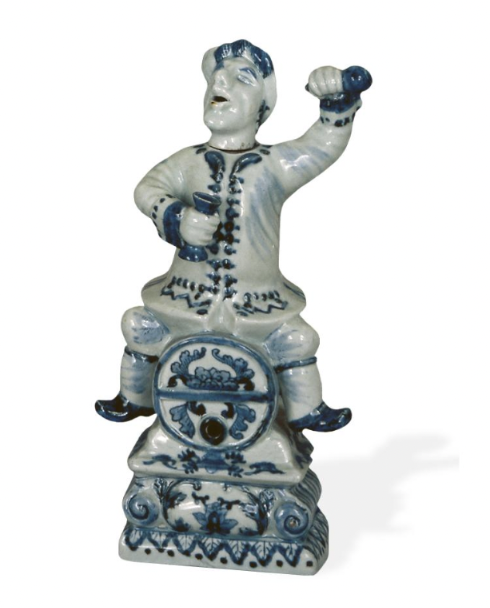
Porcelain Keg - 1750s, British Museum
Small figure of dutch man
Dressed in traditional dutch clothing
Produced in Japan - Arita
Porcelain introduced there by Korean Potters who migrated to Japan and brought with them specialised knowledge and techniques
Object reflects both exchange between Europe and Asia but also within Asia
Challenges narrative of solely east west narrative or eurocentric views
Barrel was made specifically for the European Market —> ducth merchants commissioned objects, cultural hybridity between Japanese porcelain and Dutch designs
Cultural curiousity
Ability of artisans to adapt and respond to foreign markets and consumption patterns - Dutch figures would have been unfamiliar —> dissemination of knowledge
Tim Ingold
Material culture studies
Materials as constantly being transformed by their surroundings, not static, not just what they are made of
E.g. potatoes adapted ecologically, not just moved - same with maize
Jeremy Prestholdt
Global, Material, consumer history
Essentially argued that objects such as beads, cloth, foodstuffs, liqour were all valuable to African society, creating social and political identities
These goods were imported in exchange for slaves
COMPLEMENTS toby green: the unequal economies derive from the fact that Africans desired these goods in exchange for goods that gave the europeans influx —> vs how europeans flooded Africa with these objects causing inflation and devaluing local currencies
Material culture: how imported textiles and other imports possessed great social and political meanings and demonstrate how global interactions shaped those meanings
Shows African agency in consumption alongside broader exploitation —> complicates Rodney and Williams adds another layer
Chinese ceramics being used to ornament coastal tombs and mosques: tim ingolds point about objects constantly in transformation and changing
Niccolo Machiavelli - THE PRINCE
Florence 1464 - was a self governing republic, in which Machiavelli exercised a significant political role in administration, including as secretary of foreign relation, then Spain attacks Florence which makes way for the Medicis who had previously ruled Florence to return and they reinstate it as a principality, arresting Machiavelli and sending him to Prison, once he is released he writes The Prince , dedicates it to Lorenzo de Medici
The Prince is a text meant to guide princes on how they should rule, almost like a set of instructions
Machiavelli argues against the core political thought in which the ruler is supposed to rule and promote the public good, instead he says that a prince must balance both cunningness and self-interest with the rule of law
Both force and law should be balanced because it is a dog eat dog world, (realist) - to achieve glory a prince must see his own interests
Cicero characterised force and fraud as the lion and fox, arguing that both are wholly unworthy of man - Machiavelli counters this and says both are needed
Machiavelli introduces this idea of interest and realpolitik into political discourse, Hobbes and Weber (who defined the state as having a legitimate monopoly of force) follow suit
He says ‘My view is that it is desirable to be both loved and feared; but it is difficult to achieve both and, if one of them has to be lacking, it is much safer to be feared than loved.’ (Machiavelli, The Prince)
James I and VI
First King of United Kingdom, oversees 3 kingdoms, religious conflict
Stuarts are absolutists
Writes The True Law of Free Monarchies
He essentially argues that kings are divinely chosen and therefore it is their job to overlook the public good, but they are not bound to it by the people, they are only answerable to God
He makes many connections to nature and biology → positioning the king as father and head of the body, and therefore asking what could justify cutting the head off or children killing their father → regicide with patricide
Uses historical examples to illustrate how before parliament and laws, there was King as the original form of governance, and therefore the king is above the law
Also uses examples of Nero as a tyrant - showing that even resisting a tyrant who God has put on the throne is ‘unlawful libertie’
‘By the Law of Nature the King becomes a natural Father to all his Lieges at his Coronation’
‘consider, I pray you what duetie his children owe to him, & whether upon any pretext whatsoever, it will not be thought monstrous and unnaturall to his sons, to rise up against him, to control him at their appetite, and when they thinke good to sley him, or cut him off, and adopt to themselves any other they please in his roome: or can any pretence of wickedness or rigor on his part be a just excuse or his children to put hand into him?’
Robert Filmer
Patriarcha
Complementary to James
Essentially argued that a King is a father
Republished during the Glorious Revolution - constitutional crsis
Kings as legitimate as descendants of Adam, father to his children
‘For as Adam was lord of his children, so his children under him had a command and power over their own children … I see not then how the children of Adam, or of an man else, can be free from subjection to their parents. And this subjection of children is the only fountain of all regal authority, but the ordination of God himself. … This lordship which Adam by creation had over the whole world, and by right descending from him the patriarchs did enjoy, was as large and ample as the absolutest dominion of any monarch which hath been since the creation.’ Filmer, Patriarcha The Naturall Power of Kinges Defended against the Unnatural Liberty of the People, pp. 6-7.
Again, focusing on the unnatural nature of resistance to a paternal figure
‘If we compare the natural duties of a father with those of a king, we find them to be all one … As the father over one family, so the king, as father over many families, extends his care to preserve, feed, clothe, instruct and defend the whole commonwealth. His wars, his peace, his courts of justice and all his acts of sovereignty tend only to preserve and distribute to every subordinate and inferior father, and to their children, their rights and privileges, so that all the duties of a king are summed up in an universal fatherly care of his people.’ Patriarcha, p. 12.
Hayashi Razan - Japan
Tokugawa Shogunate is interesting in unifying Japan and centralising power
However, unlike England Tokugawa rulers rely on the agreement of local lords and rulers - however they are also interested in ideas of organizing politics and justifications for such organization
Political advisor Hayashi Razan
Relies heavily on the idea of natural hierarchies such as those within the family
‘Rulers should love their people; ministers should serve their rulers; fathers should be compassionate toward their sons; husbands should manage external matters, while wives should handle the family’s internal affairs; elder brothers should teach their younger brothers, and younger brothers should follow their older brother’s instructions; friends should associate with on another on the basis of rites and justice’, Hayashi Razan.
Authority mirrors other scenarios ruler/subject, father/son, husband/wife, elder/younger
Natural hierarchy
Intimate relation between public and private
‘The laws for the military houses’, first issued in 1615
‘The study of literature and the practice of the military arts, including archery and horsemanship, must be cultivated diligently’
Mirror the fatherly duty to educate his son
‘Henceforth no social intercourse is to be permitted for residents of your domain with people from other domains’
‘The castles in the domains may be repaired but this must be reported. New construction is strictly prohibited.’
Quentin Skinner
Argues that despite the significant role played by neoroman liberalism in the English civil war, in modern political thought it has been replaced by classical realism and skinner seeks to uncover the role of neoroman liberalism and its theory - recovering this intellectual history
Neo-roman liberty = freedom as non-dependence, not just absence of interference. Even a kind master leaves you unfree if you remain liable to their will (alieni iuris)
Free state required — genuine liberty only exists where the community is governed by its own will, not another's. Self-government is constitutive of freedom, not just a safeguard of it
Harrington — senate deliberates, assembly enacts (two girls/cake); Milton — single popular assembly
Hobbes's rebuttal — liberty = absence of physical impediment; extent of law matters, not its source (Lucca = Constantinople)
Paley — neo-romans confused liberty itself with its safeguards; an absolute monarch enacting fewer laws leaves subjects freer than a democracy
Result — neo-roman tradition politically defeated (1660 Restoration, 1688 liberal settlement) then conceptually dismantled, leaving grievances about domination and dependency inexpressible in the liberal vocabulary that replaced it
Niccolo Machiavelli - The Discourses
Thinking about him as a republican theorist in the context of the Discourses
In a republic - common interests served because interests of all are represented in the legislation
Republic also provides freedom because it is subject to its own will rather than the will of someone else like a prince
Significance of Constitution - you cannot rely on human beings to be virtuous and to act in each other’s interest, naturally human beings are inherently selfish → constitution as a mechanism to check, balance, and hold accountable
Taxonomy of various constitutions: the one, the few, the many
Could be king, aristocracy, plebs
Thomas More - Utopia
Rose to power under Henry VIII - undersheriff of London, on the way to direct service of Henry
1516- Utopia
It’s a dialogue between More and Hythloday (fictional character - fictional dialogue)
Conversation before they get into thinking about Utopia- question of what to do when you find yourself under bad government, living under a tyrant - flattery, corruption, politics as a mechanism or way of life cannot result in anything other than corruption, selfishness, violence, and corruption
Hythloday says stay out of politics and the world, withdraw from the injustice of the world
More says no we have to try
More is executed because Henry VIII doesn’t listen to More’s opinion on the reformation → irony
If you really want to generate the common good, the only way you can do that is if you create a commonwealth - all wealth to be held in common, abolish private property - a true republic - private property makes one selfish - worst kind of people are the people in power
Perception of inequality created by wealth
More talks about constitutions in Utopia, how self-government can be achieved - separation of power - senate (nobility) and assembly (the people)
Kumazawa Banzan - JAPAN
Philosopher
Also wrote about monarchy in familiar ways to James, as in fatherly rule
Compassion, restraint, virtue in a monarch → common interest
Opens up a way of republican thinking when he discusses counsel → is it worth becoming a counsellor to a king? It is absolutely essential that Lords and Kings have counsel around them, they should speak to power and be heard
Counsel flows up as authority flows down
Complementary to harrington who believes a healthy state is one with a fluidity of office, people, and thought
Counsel flowing up is not unique to Western political thought
Thomas Hobbes - Leviathan
Written in the context of the English civil war - highly complex political event, a function of religion and multiple monarchy, the course of which a King is tried and executed, and England became a republic - free state, commonwealth
He’s trying to do the science of politics - why do we think its a good idea to obey a government?
We come into the world equal and free → it is in our human nature to be competitive - we become frightened of each other and what others may want from us, we lash out in preemptive ways → vain glorious ones, who like dominating other people - our condition of nature is one of war
Whatsoever therefore is consequent to the time of warre, where every man is enemy to every man; the same is consequent to the time, wherein men live without other security, than what their own strength, and their own invention shall furnish them withall. In such condition, there is no place for Industry; because the fruit thereof is uncertain: and consequently no culture of the earth; no navigation, nor use of the commodities that may be imported by sea; no commodious building; no instruments of moving, and removing such things as require much force; no knowledge of the face of the earth; no account of time; no arts, no letters; no society; and which is worst of all, continuall feare, and danger of violent death; and the life of man, solitary, poore, nasty, brutish, and short.’ (p. 89)
Without politics, in nature, we will necessarily be at war with one another
Solution to this problem is to create a state that is so powerful that it will terrify everyone, even the most vain and glorious into obeying it - that is leviathan, the entity which has the monopoly of the legitimate use of violence/power
We are frightened of going to prison, we know that it's in our best interests which is why we obey - we are better now than if we were at war
Politics as providing safety
We have to give Leviathan power to give it enough to keep us safe
For Hobbes we must bind ourselves completely in order for it to work - social contract theory BUT… people do not have the right to resist because they give authority to the monarch
John Locke - Two Treatise
Sees the Leviathan turn on us - Charles II shutting down parliament
Hobbes has the beginnings right but we also have to check the power of the state
We do not alienate our natural political power - we simply delegate it to the state, if the state abuses it, the power reverts back to us and we have a right to form another government that suits us - right to revolution - protecting our life, liberty, and property
Social contract dissolves when the state comes for you
For Locke, we don’t bind ourselves completely, the contract can dissolve
First Treatise
Locke dismantles Filmer's patriarchalism argument by argument. God's grant to Adam in Genesis was dominion over animals, not over other human beings. Even if Adam had political dominion, the genealogical chain to any existing king is entirely lost — no monarch can identify themselves as Adam's legitimate heir. Paternal authority is also temporary and purposive — a good father works toward his own redundancy by raising children to independence. And primogeniture is a human legal convention, not a law of nature. Authority cannot be inherited like property. Locke's demolition clears the ground for his own theory: if patriarchal authority cannot ground political legitimacy, consent must.
Second Treatise
Natural rights. All individuals possess life, liberty, and estate as natural rights pre-existing the state. They are naturally political — possessing the right to execute the law of nature (to preserve mankind) in the state of nature itself.
Delegation not alienation. The crucial move against Hobbes: when individuals enter the social contract, they do not permanently alienate their political power — they merely delegate it to government for specific purposes. The power remains fundamentally theirs. Unlike Hobbes, consent must also be express, not merely tacit.
The fiduciary trust. Government holds power in trust for the people, to be exercised for the protection of life, liberty, and property. The legislature — the representative body of the people — is the supreme power, but is itself limited by the terms of the trust. It cannot take property without consent, and must operate by equal standing law, not arbitrary decree.
Right of revolution. If government breaches the trust — governs arbitrarily, dissolves Parliament, comes for the people's life, liberty, or property — the social contract dissolves and power reverts to the people. They then have the right to constitute a new government. This is not a last resort but a structural feature built into the original contract.
Locke and democracy (via Dawson)
Locke avoided the word 'democracy' — using it only three times in the Two Treatises. But his theory has democratic foundations: popular sovereignty, majority rule, government accountable to the people's will and interest. The tension in Locke is that he also subordinates the people's will to the law of nature and even defends prerogative power if used for the public good — making consent necessary but not sufficient for legitimacy. He is the least democratic of the late Stuart triumvirate, never looking the people squarely in the face, yet his framework of delegation, trust, and revolution became the foundation of modern liberal constitutionalism.
Young-Chin Kim - Political thought in Tokugawa Japan
Tokugawa Shogunate gain political power through military success, but they need political legitimacy, so they hire Hayashi Razan who creates the Shushi order where the natural hierarchies normalise subordination
As the heavens are above, the earth is below and the upper and lower are determined - principle of Li
When confucianism is adopted from China by Japan, they extend the morality within family dynamics (including loyalty of the son to the father) to the political sphere and relationships between lord/subject \
Natural classes in Tokugawa Japan:
Samurai
Warriors
Farmers
Artisans
Merchants
Kim uses Mannheim's Ideology vs Utopia distinction: Ideology = thought that supports existing power; Utopia = thought that challenges and seeks to replace it. He analyses three schools against this lens to explain both the durability and eventual disintegration of the Tokugawa regime.
Shushigaku (Neo-Confucianism):
Society = natural hierarchy; ruler > subject is “natural”; good ruler = order; people ignored; loyalty > filial piety → worked in stability, failed with unrest
👉 Ideology (justifies Tokugawa)Soraigaku (Ogyū Sorai):
Order = human-made, not natural; politics > morality; rulers create laws; people’s feelings matter but no participation; if made → can be remade
👉 Ideology + Utopian potential —> Is NOT like Hobbes’s individualistic or utilitarian premises (both do say order is man madeKokugaku (Motoori Norinaga):
Humans = feeling (mono no aware); obey ruler but heed sentiment; no action plan (quietist); emperor = divine → later undermines shogun
👉 Ideology → becomes Utopian
Key conclusion
The Tokugawa regime never had a monopoly on legitimacy — the theory of imperial rule was always maintained in parallel. Shushigaku served as a powerful ideology while social stability held, but as economic contradictions (the rise of a money economy, class permeability, peasant riots) eroded that stability, neither Soraigaku nor Kokugaku provided a stable alternative ideology.
Hannah Dawson
Neville, Sidney, and Locke never called themselves democrats — the term was politically toxic and personally dangerous (Sidney was executed 1683; Locke fled to the Netherlands). Yet Dawson argues their frenetic denial reveals their proximity to the concept rather than their distance from it. They were simultaneously pulled toward and repelled by self-government, stamping a conflicted imprint on democracy in the process.
Democratic Principles they do hold
1. Power originates in the people. Locke: individuals possess political power in the state of nature and only delegate it to government in fiduciary trust — breach of trust returns power to the people. Sidney: even monarchies are 'Popular Governments' since power flows from free consent. Neville: government founded on the people's original consent to protect property.
2. Popular representation. All three favour mixed constitutions over pure democracy — senate proposes, people resolve, magistrates execute (Neville). Sidney lists Athens, Venice, Lucca as models. Neville calls for rotation of offices and councils accountable to Parliament.
3. Government must serve the people's will and interest. They use 'will' and 'interest' — not just 'public good' — which Dawson reads as a democratic move. Connects to Skinner's neo-roman liberty: a people is only free if sui iuris, acting under its own will rather than another's.
Counterpull - public good trumps popular will, morality comes into play here
All three ultimately subordinate the people's will to a higher moral standard. Liberty is not licence — Sidney says it must be accompanied by virtue. Most strikingly, Locke defends prerogative power in the Second Treatise: if the executive must rule by discretion to serve the public good, this is legitimate. Sidney agrees: the difference between good and ill government is not whether it holds arbitrary power (all do) but whether that power is directed to the people's benefit. This pulls the authors away from Pericles and back toward Plato.
Distrust of the people
All three give voice to elite scepticism. Sidney, while fighting Filmer's charge that democracy produces mob rule, gets entangled in affirming it. Neville says the 'meaner sort' are less careful of public concerns. Locke implies the people cannot govern themselves — in the state of nature the greater part are no strict observers of equity and justice. Women were excluded from 'the people' entirely, which Dawson notes immediately bleaches the deepest shades of their democratic discourse.
Pulled between democratic sympathy and anti-democratic moralism, the three authors settle in pragmatically democratic territory — not endorsing pure democracy, but unable to abandon the people because governance must work with actual human beings. Their engagement reveals the radical historicity and indeterminacy of the concept itself: there is no essence to 'democracy', only language in use. → it was just a label, the concept existed without the term
Francisco de Vitoria
Spanish Theologian
Called upon by the Spanish crown to to reflect on the rights of both native Americans and the Spanish population in order to determine whether the endeavour of conquest was legitimate or illegitimate
Writes ‘On the Amerindians’
Organised into 3 questions, first on the rights of indigenous americans, second is the discrediting of Spanish titles and their justifications, third is possible justifications that the Spanish could use
Question 1: Did indigenous Americans have dominion over their land before the Spanish arrived?
The challenge he addresses
Some argued that if the Amerindians were Aristotle's "natural slaves" — insufficiently rational to govern themselves — then they had no true dominion, making Spanish conquest legitimate.
His answer:
Yes — they absolutely had dominion. The indigenous Americans were rational beings with organised cities, proper marriages, laws, magistrates, commerce, and religion. God and nature do not fail the majority of a species in its chief attribute (reason). Any apparent irrationality was the product of "evil and barbarous education," not natural incapacity — just as European peasants might seem like "brute animals." Thus, they have potential
His reinterpretation of Aristotle
Vitoria argues Aristotle never meant natural slaves had no rights of ownership or self-possession. What Aristotle meant, Vitoria claims, is that such men have a natural deficiency requiring guidance — like children before adulthood, or a wife to a husband. This is Vitoria's own interpretive move, not Aristotle's explicit claim. Aristotle in fact distinguishes children (temporarily irrational) from natural slaves (constitutionally deficient). Vitoria exploits this ambiguity to universalise rational capacity.
On sin and madness (Article 6)
Sinfulness does not remove dominion — even evil emperors retain it. The Amerindians are not mad; they demonstrate reason through ordered social life. They could not be blamed for lacking Christianity since it was never presented to them persuasively or peacefully.
Conclusion
What the Spanish are doing looks like robbery and theft. The indigenous peoples possessed true dominion, both public and private, before Spanish arrival.
Question 2
What justifications do the Spanish claim and are they legitimate?
Papal authority
The Pope has spiritual, not temporal power. He cannot grant dominion over non-Christian lands.
Imperial dominion
No natural law basis. Dominion comes from human law, not nature — otherwise the French could claim the same right as the Spanish.
Right of discovery
Cannot apply — the land was already inhabited by people with their own dominion.
Refusal of Christianity
The Amerindians are not obliged to believe a faith never persuasively presented to them. Their experience of Christianity was brutal violence, not miracles or saintly example. They cannot be punished for rejecting what they never properly received.
Voluntary choice / consent
Any "agreement" was made under duress, surrounded by armed men, without understanding what was being asked. Choices under oppression are not true choices. A people cannot elect new masters without good cause and without the assent of all.
Question 3: How can the Spanish legitimately justify colonisation?
Vitoria shifts to asking whether, even granting Amerindian rights, there are grounds for Spanish presence. He identifies possible just titles — but crucially, these justify presence and interaction, not outright conquest or enslavement.
Ius gentium — law of peoples
Natural law establishes free movement and trade between nations. Spaniards have the right to travel, dwell, and trade peacefully. To deny this is inhuman. Natural resources not yet claimed by the natives may be taken by first possession.
Right to preach
Spreading the gospel is permissible. Force may be used only if peaceful preaching is violently obstructed — not merely refused.
Protection of converts
If native Christians are persecuted by their own rulers, Spain may intervene to protect them.
Alliance and war
If the Spanish are invited as allies by one native group against another, they may assist — and may claim some dominion from victory.
The "madmen" argument (Article 8) — his most ambivalent passage
Vitoria entertains — but does not endorse — the idea that the Amerindians are so close to madmen in rational capacity that Spanish princes could take over their governance "for their own benefit," as one would govern children. He explicitly says he does not dare affirm or condemn this. If done, it must be entirely for the natives' benefit, not Spanish profit — and it is in that restriction that "the whole pitfall to souls and salvation is found." He links this back to the natural slave argument from Question 1, raising but refusing to resolve the tension. → but what about the potential? Couldn’t they graduate
Key tension: Vitoria grants Amerindian rationality and rights in Question 1, then partially retreats in Question 3 by entertaining guardianship on the basis of diminished rationality. This is not necessarily contradictory — as a scholastic disputation, all arguments must be considered — but it reveals his ambivalence and the limits of his critique. He even acknowledges the real economic rationale for empire (the financial catastrophe for Spain if they lost the colonies), entertains it, then dismisses it. His work ultimately refines and reframes colonial justification rather than rejecting it outright.
Disputes like this are meant to evaluate all counter arguments and possible perspectives
Bartolomé de Las Casas
Lawyer and Clergyman
Writes ‘a short account of the destruction of the Indies 1542’
Eyewitness of atrocities
Argues that this is purely the greed of the Christians
The people had dominion
They ‘dispossess the people who are natural masters and wellers in those vast and marvellous kingdoms, killing a thousand million of them, and stealing treasures beyond compare’ - ‘natural masters’ - slave terminology
He admires them but is also a bit patronising, calling them ‘simple’ and ‘submissive’
The Nahaus of Colonial Mexico - The Annals of Juan Batista
Shows revolt and discussion, appeals made against a tax imposed on colonial Mexico
Popular resistance not only as violence but as discussion and argument - nothing done
Queen Cockcoekse of the Pamunky People
Intersection of colonised and women: she is a bit of an exception
Cockacoekse complicates simple narratives of indigenous victimhood. Despite operating within a colonial context of extreme violence and dispossession, she actively asserted agency, navigated English political structures, and wielded real power — demonstrating that gender and colonial subjugation did not eliminate the possibility of indigenous female authority.
Lineage and legitimacy
She was descended from Opechancanough, a former emperor of Virginia — a lineage Matthew explicitly records, signalling that her authority rested on deep dynastic legitimacy within both Pamunky and wider indigenous political traditions.
Her husband fought with the British against other native groups, husband dies, no care or compensation from British - she is angry and skeptical
Bacon’s rebellion begins - British call on her to help them, Thomas Matthew records this account
When pressed to contribute warriors, she delivers a quarter-hour speech invoking "Tatapatamoi Chepiack" — "Totopotomoi dead" — repeatedly and with great passion. She publicly shames the committee for never compensating the Pamunky for her husband's death, at the very moment they are again asking for the same sacrifice.
Forces the Englishmen to admit that what happened was to their ‘shame’ and true
She only offers 12 men as tribute when she had 150 - defiance
Elizabeth I Speech to Troops at Tilbury
‘I know I have the body but of a weak and feeble woman; but I have the heart and stomach of a king, and of a king of England too, and think foul scorn that Parma or Spain, or any prince of Europe, should dare to invade the borders of my realm: to which rather than any dishonour shall grow by me, I myself will take up arms, I myself will be your general, judge, and rewarder of every one of your virtues in the field.
I know already, for your forwardness you have deserved rewards and crowns; and We do assure you in the word of a prince, they shall be duly paid you.’
Also refers to her people as ‘my loving people’
Elizabeth also plays into her virginity as honour, and ‘marries’ the kingdom - the feminine side
Patriarchy and conquest over women has this mirror in empire, in terms of the conquest over the Americas, the Americas are virgin lands to be claimed and owned and that parallel with virgin women
Discourses of domination and power work in relation to gender and empire
Men needed because women’s reason is overpowered by her passion → natural inferiority → John Knox → Monstrous regiment of women
He essentially argues that the idea that women should rule goes against nature
Elizabeth has to negotiate these prejudices, by maintaining her virginity and making a virtue of it → She marries England
Parliament and counsel regulating the queen?
She manages this problem of her sex by sometimes playing the role of a virgin and other times adopting the identity of a man and refers to herself as a prince
Mary Astell
Writes Reflections Upon Marriage 1706 - published anonymously
Hypocrisy of the enlightenment thinkers, she came for Locke explicitly, who had said human beings are free and equal and we shouldn’t be subject to the arbitrary will of another → but that is the way marriage functions?
Women as covered by the legal identity of her husband, she had to follow his will and judgement by law, if she didn’t he had the right to beat her and conform her to his will
Her whole self was essentially subject to her husband
She calls on these Whigs and says that is exactly what you are doing to women
If all men are born free, how is it that all women are born slaves? → ‘If all Men are born free, how is it that all Women are born slaves? as they must be if the being subjected to the inconstant, uncertain, unknown, arbitrary Will of Men, be the perfect Condition of Slavery?’
‘By your own logic you do injustice’
John Locke - Justifications for empire
Locke’s argument for empire
He is a natural law theorist → through this he derives his theory of property rights and his theory of property rights grounds his notions of empire and his justification for empire
Locke says I exist → I know that I must exist, thus someone must have made me → God → this God who made me must want me to survive → God must want other creatures and humans to survive as well → fundamental law of nature is that mankind should be preserved → I must have a right to the means of preserving myself, it must be naturally right for me to get the necessities I need for survival → thus to gain these things we must own things and say ‘this is mine’ → insofar as I’m the owner of my body, however I use it in terms of labour → The work im doing with my body to possess an apple makes it right for me to own it, I got it out of my labour thus it would be wrong for you to take it from me → you can naturally acquire things for yourself without asking consent, you can go into the wilds of America and take and cultivate that land and mix your labour with that land, which makes you own that produce legitimately
Ironic since he suggested the opposite when he put forth the idea of a social contract back home
English and Europeans have a stronger right to the property in America than the native Americans because they are better at cultivating the land, they are superior and the native Americans are not properly doing it → this is what gives them the right → it is about efficiency → they will augment the fruits of the earth and therefore God’s will
Chloe Ireton
History from below and Atlantic history - slavery - intellectual histories
Draws connections between ideas that often appear to rest in separate intellectual spheres or registers within the same physical spaces - theological thought developed by missionaries and legal strategies deployed by enslaved subjects in litigation suits
Investigates how Guinian slaves used litigation and discourse about justifications for slavery to gain freedom through arguing that as Christians they were unjustly enslaves
Showed how Africans spearheaded broader transatlantic discourses that sought to put limits on slavery - such as those contributed to by De Las Casas
The enslavers would argue that they had captured the slaves in a just war, whereas the slaves argued that they had been illegitimately abducted
De Las Casas argued all of Africa was pagan and had not been exposed to Christianity therefore, it was unjust to take them as slaves,
Indeed often, the discovery of ancient christianity in Ethiopia served as the just enslavement of all Africans, a counter argument to the ‘lack of exposure’ argument they weaponized a history of a decayed ancient Christian Ethiopian church in order to post that the mass enslavement of Africans would lead them back to christianity - a solution to the problem of conversion
Whereas, enslaved Africans litigated for their freedom on the basis that their Christianity rendered their enslavement illegitimate arguing that there is no right to enslave between Christians
Enslavement of black christians was actually a concern for the crown, as it created juridical mechanisms for enslaved Africans to seek justice for their unjust enslavement
This was different for Africans than it was for native Americans because native americans were freed on the grounds that they were not christians, whereas africans were freed on the grounds that they were christian
The crown liberated Africans on the basis that they were already Christians when they were enslaved
Therefore, enslaved Africans’ intellectual histories of just enslavement had an impact on Iberian epistemologies and imperial rule, as the crown did indeed set free enslaved litigants against the will of powerful merchant interests
Complementary with Toby Green’s research on Upper Guinea and Senagambia and the polities/how they defined conditions that legitimated enslavement - complex negotiations between different polities about the legality of enslavement
Candido - examined the establishment of an inquisitor of freedom
New laws - 1542 - prohibited indigenous slavery of Amerindians - therefore a thriving discourse existed in Castile - In our time podcast says that these laws were not followed strictly or successfully
Susan Doran
Gender
Popular scholarship has suggested that Elizabeth I’s success was possible only because she had suppressed her ‘natural womanly’ side and taken on ‘masculine characteristics’ unlike Mary Queen of Scots and Mary I who were deemed unsuccessful
Instead it was a negotiation of her gender
Elizabeth’s gender affected the style rather than substance of monarchical rule, and in practice sixteenth century queenship differed little from kingship
Often religion posed more of a problem than gender during this time
Elizabeth’s protestant rule even forced Knox to ‘backpedal’
John Aylmer composed An Harborowe for Fathfull and Trewe Subjectes in 1559 to blash away the Scottish reformers Blasy - exposing fallacies in Knox’s argument and reasoning saying that Elizabeth’s bloodline legitimated her rule
He even argues that is was appropriate for God to work through weak vessels
Thus, gender as irrelevant
Aylmer argued that because England was a mixed monarchy, other other bodies i the constitution would balance the Queen
There were justifications of female rule that were written in Elizabeth’s reign
No denials and questioning of the legitimacy of her rule after her accession on the grounds of her gender
Elizabeth and her propagandists exploited traditional concepts and tropes about monarchical rule to reassure doubters that a woman could display the ‘masculine’ characteristics essential for the exercise of sovereignty
King’s two bodies (complementary with the Herrup reading) - because it maintained that whatever natural defects might exist in the natural body, the body politic remained unaffected - immortal
Elizabeth also believed that a monarch needed to possess both masculine and feminine traits to govern well - and took advantage of this trope
Just and merciful, courageous and peace-loving
She presented her nature and rule as bringing together desirable male and female characteristics, and she called herself interchangeably a king, prince, and queen, praise for Elizabeth was bigendered
Despite her gender, Elizabeth retained all the traditional prerogatives and pre-eminences of monarchy
Although it has been traditionally assumed that Elizabeth’s gender explains why the queen assumed the title of Supreme Governor, not head of the Church of England because of her gender, it also could have been because the new title was thought to be less offensive to the Roman Catholic Bishops - still it made no difference to the actual material power that Elizabeth held
Few concessions were made to her gender
However, Elizabeth did suffer a loss of authority in times of war against Spain, to compensate for her inability to take on an active military role, Elizabeth became a figurehead for a nation at war - going to Tilbury to review her troops
‘If any defense was needed, it arose from her religion, not her gender, especially once the Knox episode had passed
She further argues that the emphasis on Elizabeth’s ‘reciprocal love’ relationship between the monarch and people actually was part of a broader change in ruler-ruled relationships and was even carried onto James’s accession
Elizabeth’s refusal to marry also wasn’t her necessarily escaping her gender as she entered into several matrimonial negotiations - virgin queen was an image of her later years
Elizabeth’s gender had only a limited impact on the actual politics of her own reign
Patriarchy could accommodate a female ruler as it introduced no significant changes to the institutions of the monarchy
That is not to say that there was no misogyny in early modern England, it impacted her rhetoric and style of governance but in practice she could still rule through negotiation
Natalie Zemon Davis
Female sex thought to be disorderly, disorder seen in Eden when eve was the first to yield to the serpent’s temptation and incite Adam to disobey the Lord
Physiology:
Female composed of cold and west humours which meant changeable, deceptive and tricky temperament. Her womb was like a hungry animal that overpowered her speech and senses - more prone to witchcraft
Female as hysterical
Long before Africans were considered innately inferior, this was the justification for female inferiority
Even John Alymer, a defender of queenship placed great emphasis on the role of parliament
A way to remedy or control this unruliness was subjection to the men and the husband who could care for and have authority over the less capable and rational
Christine de Pisan
Women are by nature more sober and modest
John Locke: men are ‘naturally abler and stronger’ and therefore dominant
Women - disorder, men -order
Cynthia Herrup
Gender, sexuality
Herrup argues that effective rule in Tudor–Stuart England required monarchs to embody an “artificial” dual-gendered identity, extending Kantorowicz’s idea of the “two bodies” into a functional model of governance (he was more focused on temporal and succession shifts, she turned it into functional governance). Rather than being strictly male or female, rulers had to perform a balance of gendered traits:
Masculine (rationality, severity, self-control)
Feminine (mercy, compassion, nurturance)
This balance was essential to political authority. Too much masculinity led to tyranny, while too much femininity led to effeminacy, both undermining rule. Gender was therefore a flexible political tool, not a fixed biological identity.
Herrup shows this through:
Language & symbolism (female monarchs called “kings,” androgynous imagery)
Advice literature (ideal ruler = synthesis of traits)
Royal mercy (monarch mediates between feminine pity and masculine judgment)
Ultimately, she argues that monarchy relied on this gendered duality to maintain stability, but by the late 17th century, increasing political tensions made this balance unsustainable, leading to a split of masculine and feminine roles across rulers (e.g. William III & Mary II).
👉 Key idea: Successful kingship required performing both genders—gender was a political strategy of rule, not a fixed identity.
Joan Kelly - Old Feminism
Gender and revisionist
Conventional accounts have posited that feminism began in the 1800s, instead Kelly locates the origins of a long tradition of feminist thought from 1400, started by Christine de Pizan
Joan Kelly argues that feminism began as a continuous intellectual tradition (1400–1789) through the querelle des femmes, not in the 19th century. Initiated by Christine de Pisan, this “battle of pens” produced a coherent early feminist theory that:
Opposed the defamation of women
Argued gender is socially constructed
Promoted a universal vision of human equality
Key Figures & Explanations of Misogyny
Christine de Pisan: Reframed debate to analyze causes of misogyny, not just defend women.
Lucrezia Marinella:
Identified psychological roots of misogyny:Male self-love and ego
Envy of women
Intellectual insecurity
Disdain linked to frustrated sexual impulses
Mary Astell:
Exposed “reason” and “nature” as biased male constructs used to justify inequality.Marie de Gournay:
Showed how women’s ideas were dismissed without engagement, revealing systemic bias.Anna Maria van Schurman:
Highlighted male envy and insecurity toward educated women.
Together, they argued misogyny was cultural and psychological, not natural.
Limitations of Early Feminism:
Despite these advances, Kelly stresses important limits:
Reactive framework: Arguments often responded to misogynists rather than forming independent political programs
Class bias: Focused mainly on elite women (queens, noblewomen) as examples of female capability
Limited social analysis: Failed to fully analyze broader systems of oppression
Neglect of extreme violence: Largely ignored the mass persecution and execution of women during witch hunts
Reliance on existing hierarchies: Sometimes reinforced rather than dismantled social and political structures (e.g. justifications using female queens and nobility which really only says that some women, not all women, deserve agency and power)
Conclusion
Kelly’s central claim is that the querelle des femmes created the intellectual foundations of modern feminism—including critiques of sexism, gender construction, and biased knowledge—while remaining constrained by its historical context and social limits.
Stephanie Jones-Rogers
Gender and race
Many assumed that southern white women were shielded from the horrors of slavery and indoctrinated to believe fiercely in slavery as an institution , however, this is a commonly held patriarchal view. In reality, slave owning women not only witnessed the most brutal features of slavery, they took part in them, profited from them, and defended them.
Martha Gibbs was one of these women - according to her slaves was a ‘big rich Irishwoman’ who ‘warn’t scared of no man’, she oversaw the overseer who was meant to monitor the labour of her slaves, every morning she buckled on two guns and came out to the place to personally ensure that things were running smoothly, she would even cuss out a man when things did not go correctly
She was widowed, but she managed her own slaves
In fact, in one instance her husband interjected when the overseer whipped the slaves very hard, saying she ought not to be so harsh as they will be free soon
Women like martha gibbs have received scant attention in historical scholarship - married slave owning women
My take: this works alongside Kandiyoti’s idea of patriarchal bargaining, in this sense also women are working within gender and racial hierarchies, reinforcing them but finding margins within which they gain negotiate their own agency whilst remaining dominated
Race and gender created unique constraints that these groups had to endure, adapt to, or circumvent. They were compelled to take extra steps to secure their separate management of slaves - owning slaves == a method of control
Jones-Rogers examines women’s relationship to slavery as a relation of property - one that is economic at its foundation, their economic investments in slavery demonstrate that they played a significant role in it as an institution, there were also hidden relationships among gender, slavery, and capitalism - complementary but the other end of the spectrum of Jennifer Morgan’s work on the intersection between slavery and gender
In the south, men did marry into wealthy families and were dependent on men for their money. Thus, in many respects married women, their slaves, and their other assets made their husbands’ commercial endeavors possible and enabled slavery to thrive in ways it might not have without those women’s economic investments in the institution. → mistresses of the market - a mistress that exercises ‘dominion, rule, or power’
Women as using more brutal methods of discipline than their husbands
Jones-Rogers foregrounds the testimonies of slaves/formerly enslaved people of their treatment and experiences with female owners - ensuring their voices are not sidelined
De Blas and Gorostiza
empire/race
Exploration of the debate over slavery in the Spanish empire during 16th and 17th centuries
First stage
Francisco de Vitoria
Bartolomé de las Casas
Juan Ginés de Sepúlveda
De Vitoria
Softened Aristotelian arguments on slavery
Said Indians, governed by natural law, were ultimately subjects of divine but not human legislation
Valladolid date
Dealt mainly with the political submission of Indians under the Spanish Empire
Sepulveda argued the purpose of empire was to subject natives to the government of Christians, not to strip them of their property
His justifications were:
Indians were of a barbaric nature
Conflict against Indians was a just war because Europeans were obligated to punish the Indians for idolatry and human sacrifice, save thousands who died has human sacrifice, suppress the obstacles that impeded the preaching of the Gospel
Las Casas said his arguments were ‘poison wrapped in honey’ and combatted them, Las Casas actually took inspiration from and quoted de Vitoria especially in relation to the argument that Indians were barbarians, but considered him to be soft and shy
Debate on the slavery of Africans
Soto - disciple of Vitoria
Everyone is born free
Slaves can submit themselves to slavery for the sake of their own lives
Mercado
Argued that contracts had to be just, truthful, without deception or coercion
Mentioned the following justifications for slavery
Prisoners of just war
Sale of children by parents in need
Also recognises that some wars among africans would have been initiated unjustly for the slave trade
Albornoz
Read Mercado
Basically there was anti-slavery rhetoric in relation to Africa, which relates to Ireton’s mention of how the empire did show concern in relation to African slavery through providing mechanisms for litigation, there was analysis and discourse on arguments for and against slavery, which as Ireton shows, reaches slave populations - critiques of unjust slavery - not all slavery per se
Peter Marshall
Peter Marshall
Post-revisionist (middle ground between revisionism (continuity and strength of Catholicism) and traditional view (swift transition of protestantism)
He posits that the British reformations were characterised by a persistent failure of the state to impose religious uniformity which resulted in a unique and pluralistic religious landscape which was later exported globally through colonialism making the British experience fundamental to world Christianity
Instead the British Reformations were bloody and contested processes
Pre-reformation there was strength in catholicism
Henry VIII and thinkers like Thomas Cranmer broke with the Roman Catholic Church but Marshall posits that his policy was an idiosyncratic mix: he abolished monasteries and authorized the translation of the bible in English, but retained the Latin mass and many Catholic structures
Even then he saw opposition
Stages following Henry
Edwardian Revolution - Protestant
Marian Restoration - Catholic
The Elizabethan Settlement - Protestant
Ambiguity, continuation of clerical vestments, ambiguous language about the Real Presence - a middle way and moderate protestant church with catholic elements
Scottish Revolution was against the crown, Knox was successful in constructing a Presbyterian Kirk
Irish reformation failed because: Linguistic and cultural barriers, Catholic resistance, Plantation of English and Scottish protestants in Ireland instead of conversion
James VI/I: Protestant: equilibrium ‘no bishop, no king’, also maintained a Calvinist consensus
Charles I: Arminianism (no pre-destination), considered popish, attempts to impose an English prayer book on Scotland → Civil war
Legacy and unintended consequences
Anglicanism - middle way
Dissent and non-conformity
Presbyterianism
Diverse global faith as a consequence
Carla Pestana
Atlantic, religion
Central paradox: while European leaders sought to export Protestant uniformity and hierarchy to the New World, the actual experience resulted in unprecedented diversity due to the realities of the new world which included, distance, cultural encounters, and migration - these undermined efforts to maintain a religious status quo
Not a Eurocentric view, instead looks at how religion took different shapes and reformation took different shapes in different contexts
Why?
Institutional failure: efforts to replicate the Church of England and its institutions failed, Protestantism was more mobile - especially dissenters as opposed to Anglicanism which was a middle way between Catholicism and Protestantism therefore still possessing institutions and bishops
Diversity: radical protestant sects escaping persecution in England, Catholic minorities, Jews, African influences due to slavery
Rise of tolerance
Thwarted conversion: attempts at conversion of the Native Americans were largely unsuccessful due to coercion, Africans were neglected (also because of fears that conversion would provide grounds for manumission) spiritually and thus produced their own types of religion intertwined with culture and African spirituality
Radicalism: religion played a role in revolt and provided a language for criticising the status quo
Expansion viewed as a way to eliminate Catholicism
Unique religious environment in north america - church and state separated in constitution post revolution
Religion as a catalyst for unity and division
Unity in religious pluralism, but there was division within denominations as well whether they were loyalist or patriots
Division in the ‘Anglicanism as the true faith’ and anti-Catholicism of the English
Religion did not dictate political affiliation in a linear way
Ethan Shagan
Post-revisionist, contested spaces of religion, social and cultural meanings of political change - bottom up? —> he brides the gap between bottom-up and top-down by saying they were heavilt interrelated
Focus is on a case study:
Cistercian Abbey of Hailes in Gloucestershire
How the English Reformation was enacted through popular participation rather than by mere government decree
Traditional historiography often separates the ‘Reformation from above’ (political/legal) from the ‘Reformation from below’ (spiritual conversion), events at Hailes abbey demonstrate that these processes were inextricably linked through the desacralization of monastic space and in this case: the Blood of Hailes relic
Physical destruction of the Hailes Abbey was a collaborative act, involving a broad cross-section of society from gentlemen to artisans and servants, this collaboration was made possible because religious reformers and the government reframed sacred objects as fraudulent commodities - regardless of their private theology, local subjects give their assent to the reformation by spoiling the abbey
Before the abbey was physically destroyed, it was ideologically destroyed
Blood of Hailes was doubted before but this doubt was used by reformers to attack roman idolatry
Hugh Latimer: mocked contradictions and said seeing physical blood doesn’t matter, faith does
Tyndale: used the relic to challenge the doctrine of the Real Presence (eucharist)
Public debunking: 1538: Relic is paraded in London Latimer opened the vial and described it as a gum that was yellow when removed from the glass - humiliation
Abbot Sagar eventually reported a conversion - requested the commission to investigate the blood and personally tore down the shrine, as a reward for his cooperation he received a mansion and a pension → significant as leadership is now abandoning it - did they know it was fake and the reformation was coming and try to get out of it?
Abbey dissolved 1539, crown seizes
Spoliation as a community project - involvement of gentry, artisans, and servants, it also served as a point of contact where different religious groups interacted through a shared activity of destruction - the most active were reformed
However, it did also divide the community, while many Catholics participated, others viewed it as sacrilege
Ultimately, the Henrician Reformation succeeded by converting religions devotion into economic opportunity - variety of dynamics present - no one story - aura of holiness dismantled - community enacting the physical destruction of the medieval religious framework with their own hands
Link between reformist rhetoric and economic gain
"Might I not as well as others have some profit of the spoil of the abbey? For I did see all would away; and therefore I did as others did." — An Elizabethan clergyman’s recollection of his father’s rationale for monastic plunder.
Katherine Gerbner
Race and Religion focus
Anglican church as central to the maintenance of planter power
Focus on Barbados
Ideology of Protestant supremacy → it defined mastery through religious belonging and excluded most enslaved people from the established Protestant Churches
An Act for the better ordering and governing of Negroes - Read in parish churches
Referred to enslaved men and women as ‘heathenish, brutish, and uncertain dangerous kind of people’ - sought to control them by limiting their actors and harshly punishing crimes against Christians
Parish churches functioned not only as a place of worship but also as a communal space for making announcements, posting notices sharing news, and verbally reinforcing labour laws - here anglicanism plays a central role in maintaining and enforcing plantation slavery - slaves juxtaposed with Christians - considered separate - Christian as synonymous with non-slave
Anglican churches also manifested such ideology in practice through separations in burial locations, architecture, sermons, seating arrangements (free coloured people at the back)
Can be compared to Ireton’s study of Iberian justifications
Challenges the idea that protestant colonists were irreligious
Planter elites saw the church as central to their personal and public lives
Protestant rituals such as marriage, baptism, and funerals, become integrated into a broader culture of exclusion that helped to define and maintain the brutal labour system in plantation colonies
There was a culture of domestic rituals, which was unique - another form of exclusion
Church of England disestablished in the mid 17th century → little oversight from London meant that planters were able to articulate and implement a new ideology of protestant supremacy to support their burgeoning slave society → protestantism acquired a new kind of ideology in these imperial contexts - civil war meant little attention was paid by London
Supports Pestana → states that a shortage of ministers meant religious pluralism → demonstrates diminished control of the commonwealth gov.
In this context, Quakers and other sectarians land and convince a number of residents
Post-restoration, more control over colonies by providing more ministers and wanting to invite slaves to the Christian faith - goes against planters
But… little has been done for the conversion of slaves…the English gov couldn’t actually carry out its goals
Complimentary with IRETON… some servants used their status as English Protestants to protest their bondage - 1650s: two ‘Free Born’ Englishmen wrote a series of letters and petitions to parliament, they had been sold - they aren’t black but still shows how this rhetoric is used to negotiate freedom - they use Protestant language - neither of these men protested the legitimacy of African or Native American slavery, instead they constructed their argument around religious difference but implicitly they are saying that non-English and non-Christian people were legitimate slaves → Shows the centrality of Christianity to the slave system
The transition to sugar plantations increased planter anxiety about control as African slaves grew in numbers - increased incentive to justify slavery
CONFESSIONALIZATION DEBATE
Schilling and Reinhard
Confessionalization → key period for state building and social discipline… Protestant and Catholic authorities used doctrinal, education, and legal reforms to build disciplined, ordered, and centralized states - that they used religious allegiance to enforce strict obeidience to their faith - centralising taxation by using the state church - modern state
Criticisms:
Overstates the uniformity of religious identity
Overstates the power and success of rulers to enforce both religious belief and social regulations
Points mainly to German states and HRE where rulers could choose religions and expect subjects to obey
EUROCENTRIC
What about religious pluralism and diversity in the Ottoman and Russian Empires? The authorities there do not attempt to solidify one single religion
Orenburg Muslim Spiritual Assembly, and the Millet system
Denis Lacorne
Religious history
Challenges the view that toleration existed only in western europe or was a western european phenomena, instead it existed across various cultural contexts in various forms such as in the Ottoman empire through the millet system. Although this was not a genuine shift towards equality, it was more about managing a diverse empire and delegating power (then again was anything here about equality) → it nonetheless, existed and it diminished due to centralization, the rise of nationalism and modernization
Tolerance in this context was an improvised response to rapid geographical expansion:
Incorporation as an imperial strategy: minimised the risk of rebellion
Bureaucratic vs Philosophical: unlike enlightenment values of Locke which focused on universal rights, was solely about administrative efficiency
Demographic composition meant that in many areas, muslims were a minority → Orthodox Christians were the majority of tax paying population → the economic and social fabric of the empire relies on the stability of these communities
Rights of the Dhimmi (people of the book)
Guaranteed protections: freedom of movement, conscience, and religious practice
Property rights: the right to own property and maintain existing places of worship
Legal autonomy: the right to operate separate legal systems for internal community matters
Obligations and limitations of the Dhimmi
Tolerance was conditional and hierarchical with Muslims at the top, all others were subordinate
Jizya tax in exchange for protection
Clothing codes: specific colours and items of clothing for specific religious groups - but also were these very strictly enforced?
Social Deference: non-muslims prohibited from carrying weapons, riding horses, or building new places of worship that surpassed Mosques
Public humiliation: E.g. Jews removing sandals in the presence of Muslims
The religious groups operated as autonomous little republics under the supervision of the Ottoman state. The roles of intermediaries was crucial, diversity was managed horizontally - by judges, merchants, and religious leaders who linked the centre to the periphery
Case study: Jews of the Ottoman Empire and the success of the Jewish millet
Sultan Mehmed II encouraged Jewish settlement to rebuild the commercial and financial infrastructure of cities like Constantinople → economic prosperity
Salonica’s Jewish community was so large and diverse that it functioned as a collection of local republics based on the members’ places of origin
Comparison with European models of toleration
Stark contrast between the Ottoman model and the European experience during the thirty years war
Ottoman model: encouraged coexistence of religious communities within the same physical space - separated by symbolic borders
European model: Cuius Regio, Eius Regio - whose realm, his religion → prioritised territorial and religious homogeneity and therefore expelled religious minorities
While Europe became more secularised to guarantee the state’s interest above religious factions, the Ottomans maintained the millet system
Collapse: happened when the empire attempted to transition into a centralized, modern nation-state with uniform citizenship → rise of Turkish nationalism, end of autonomy of religious groups, traditional protection of the Sultan rendered obsolete, inter-ethnic conflict → rise of intolerant nationalism culminated in mass violence including Armenian and Greek genocides → Due to Tanzimat reforms → triggered by adoption of western style legal equality
Joke Spaans
Historian of religion
Although the Dutch Republic was tolerant, it was not necessarily about harmony or toleration in a positive light, rather it was an authoritarian and disciplinary regime, divide and rule, which allowed the state to delegate the responsibilities of poor relief to various denominations - creating mutual insurance societies and welfare networks which were self regulating but socially stratified and strictly controlled by the state
The stability produced was not magisterial laxity but calculated authoritarianism
Modern shifts in historiography:
Focus on the conviviality of neighbourhoods and how minorities built communities
Approached handling religious diversity using Roman civil law - which permitted voluntary religious societies that lacked corporate identity - denied an official corporate identity so that they didn’t gain political aspirations
There was monitoring by magistrates, ministers were expected to preach civic morality and obedience to authority
In the second half of the seventeenth century, a pivotal shift occurred when urban magistrates urged all churches to provide for their own poor - they gained a corporate identity by necessity: to support their poor, churches had to amass property and bequests - granting them corporate identity without the name - despite roman law restrictions → Churches became insurance societies - mutual insurance societies where members supported one another (this classification and delegation of responsibility meant that Church elders were also deemed responsible for the conduct of the entire community
Socio-religious stratification - pillarization
19th century understandings of Dutch toleration: pillarization - can be challenged by catholic maltreatment (not all pillars are equal) and conviviality and connections in everyday life between the pillars, not so distinct
Delegation of welfare responsibilities created a social hierarchy among the different denominations by the 18th century
Elitest Churches: mennonites, Walloon reformed, Old Episcopal clergy: small, wealthy, highly selective, used high moral standards to limit membership and avoid the burden of the poor
Reformed Church - middle tier: only group eligible for public office
Poor/Immigrant churches: Catholics, Lutherans, Jewish communities: generally undemanding but financially burdened by the poor
Those who did not belong to any specific church, often poor and unsettled, were legally defined as Reformed because they were members of an officially reformed society - however the reformed only supported full members meaning that these unaffiliated individuals had to rely on public systems of poor relief - although some were classified they weren’t always protected - could then be forced to rely on minority churches
Stability of the Dutch republic was achieved through a ‘rather strict disciplinarian regime’ and significant social engineering and stratification - harmonious to early modern standards but we must be careful not to overstate it, it functioned as a monitored delegation of responsibility but it was still freedom as compared to other kinds of intolerance in early modern society e.g. St. Bartholomew’s day massacre
Benjamin Kaplan
Religious history
Flashpoints: the events that triggered violence
Explore the triggers and nature of popular religious violence in early modern Europe - religious violence was not a constant or inevitable force of a ‘culture’ of intolerance, rather it required specific flashpoints which overcome legal and social inhibitions → they tolerated each other but when these shows were public then it tested the limits of tolerance
Key Takeaways:
Publicity as Provocation: private dissent → public scandal
Three primary triggers
Processions (claims of territory)
They were mobile, noisy, and assertive claims to public space
Donauworth Crisis 1607
Premonitory of 30 years war
Monks alter a traditional pilgrimage to be more ostentatious with flying banners and chanting - this shift from back street piety to public artery dominance provoke Lutherans: they began to attack Catholics with stones and garbage, destroy religious symbols, force marchers through foul alleys
Eucharist processions requiring the kneeling and removal of hats when the Host passes by, Catholics purposefully go into protestant areas to beat them for not following it
Holidays (conflicts over calendars and labour)
Created friction because they dictated the use of time and labour within a shared economy
Gregorian calendar fight
1582 - calendar reform by Pope Gregory XIII became a confessional battleground - protestants reject it
Augsburg 1584 - Calendar fight marching whilst the other religion worked - erupted into a full scale revolt after the city council attempted to enforce the new calendar for economic stability
Political holidays
Protestant survival celebrated: Gunpowder plot, landing of William of Orange, street processions of the pope and devil
Funerals (disputes over honour and the ‘purity of burial grounds)
Funerals were ‘rituals of honour’ that asserted the deceased’s status in the community and therefore conflicts arose over whether a heretic deserved a ‘Christian burial’
Donkey’s burial- highways, outside church precincts
The Right to burial: dissenters fought for burial in communal churchyards to assert their status as members in good standing of the community - some protestants were superstitious about separation in death
Some Catholics and Lutherans believed that the corpse of a heretic polluted and profaned sacred burial soil – in France this led to the exhumation of hundreds of Huguenot corpses - sometimes dragged with ropes - symbolic acts of profanation
There were social (neighbourly) and legal inhibition to violence, but it usually erupted when authorities were perceived as failing their duties or when crowds felt legitimized by official encouragement, many viewed civil strife as a greater evil than temporary toleration of heresy
Gendered and symbolic nature of violence: protestant violence - iconoclasm, Catholic violence - bloodshed targeting infected bodies of heretics
Communalism: rituals viewed as enacting the will of the entire community, therefore the presence or participation of a dissenter was seen as sacrilege that threatened spiritual efficacy of the rite for all citizens
Religious Riot = drawing on Natalie Zemon Davis’ work defined as violent actions - using words or weapons against religious targets by individuals acting not as formal agents of authority - we can kind of see this bottom up kind of thing
Soldiers and students carried it out as they lacked roots and could dehumanize
Explosive potential of these flashpoints stems from three communal factors:
Group Identity: public rituals imparted a sense of ‘strength in numbers’ and semi-marital power, emboldening individuals to act violently
Inescapability: these acts forced witnesses to react
Representative power: rituals were viewed as enacting the will of the entire community - claiming authority over the whole town and making dissenters feel like unwilling accomplices
Some efforts were made to defuse these triggers such as Dutch catholics hiding banners or the limits on noisy labour on holidays - but tensions remained
A Friend to the Person
Toleration in early modern Europe operated through two distinct models rather than a linear progression toward modern liberalism
Liberal-individualist model (Dutch Republic) — individual as primary unit of rights, religion as private conscience, social integration across confessional lines in the public sphere; illustrated by Rembrandt's Syndics (1662) where men of radically different faiths collaborated professionally
Communal-segregated model (Ottoman millet system; Augsburg) — rights granted to groups not individuals, producing institutional separation extending to separate schools, hospitals, cemeteries, and pigsties; group autonomy at the cost of individual freedom of conscience
"Janus face" paradox — individuals simultaneously maintained private cross-confessional friendships ("friend to the person, enemy to the cause") while publicly lobbying against those same communities; personal intimacy decoupled from institutional hostility
Integration was self-undermining — social acceptance threatened group survival through assimilation; Dutch Mennonites gradually merged into the Reformed Church precisely because integration was so successful
Segregation was also self-undermining — preserved group identity but at the cost of social peace and individual freedom; separation was often imposed specifically to prevent violent clashes in shared spaces
Overall toleration was therefore always structurally unstable regardless of which model prevailed — each model carried the seeds of its own failure
The American Prediction: J. Hector St. John de Crevecoeur observed that without settlement in close, segregated groups, religious zeal would extinguish in the "melting pot" of the New World, leading to "religious indifference."
It was easier for early modern Europeans to tolerate difference in religion when it came to foreigners than within their own countries/communities - catgeorising them as ‘other’
Cunegonde’s Kidnapping
Investigates a case of child kidnapping in areas of borders between states of different faiths
Ordinary people pursuing religious goals
Mother is calvinist, father catholic - in German lands - how should the child be baptised? Midwife is Catholic - and concerned
Churches opposed interfaith marriage
Complications and confusions of interfaith marriage -
How these dynamics played out on a familial level
Cunegonde → sister of the father, despite baptism being baptism, she attempted to kidnap the baby from its calvinist baptism - authorised by the child’s father and bring it to a Catholic church for baptism. She was german catholic and had done this on Dutch calvinist soil - she attempted kidnapping and disrespected a reformed rite, if she had done this in Catholic lands she would never had been prosecuted
Although the kidnapping failed, it was an act of violence against a kind of worship
Intricacies and dynamics of borderlands -
This case triggered a cycle of violence, and occurred at the height of the enlightenment - challenges the idea that the enlightenment ushered in a new age of toleration- it was more complex than a linear progression and the borderlands were dynamic, where dissenters had certain fluidities and freedoms such as interfaith marriage —> complex
Brain Sandberg
Atlantic and religious history
Comparative history of religious and ethnic violence in the Atlantic with a focus on the actualization of violence
Challenges Foucault’s interpretation of power as producing knowledge and knowledge producing power by defining what is true and normal - violence as inscriptions of power/knowledge - violence being a mechanism of power which risks it being not understood in terms of experienced violence but discourse→ instead shows direct violence and power -
Religion played an important role in shaping the Atlantic world from its inception
Crusading ideologies motivated Columbus
Confessionalization
At the same time, early European imperialism in the Americas and the epidemic of diseases devastated Native American societies and destabilized their religious systems, however, some did survive
Religious groupings in mid-sixteenth-century Mexico were fluid and decentralized
Christian missionaries as both proponents and enactors of religious violence - inquisition - concerned with establishing an increasingly militant catholicism
Competition over the souls of Native American ‘children’
Religion in terms of struggle
Symbolic inversion of worldly order was integral to reformation-era propaganda and to widespread belief in the Apocalypse → this was a lens through which they interpreted the discovery of the Americas → providence
Belief that conversion is fighting the Lord’s battles
Many settlers in colonies were religious refugees fleeing repressive persecution - they imitated forms of judicial punishment in order to rid their communities of pollution and cleanse the world
Captive-taking
Forced reindentification - mutilation, torture, and other ritualized violence
Lack of tolerance towards native americans - framing indigenous belief systems and barbarism - while the state used religious justification to seize land, the people used it to dominate religiously
Ironic-dissenters demand tolerance, they don’t show that to native but their experiences with religious violence shape how they impose Christianity
Corbally and Sullivan - Enlightenment
Corbally and Sullivan
Global History
1500: Catholic Church dominates intellectual life; no room for scientific or political questioning
1517: Luther's Reformation fractures religious authority → opens door to broader questioning of all traditional thought; promotes literacy and individual reasoning
Reformation breeds violence but also pluralism — Protestant sects multiply (Calvinists, Puritans, Quakers, Baptists) with no centralising authority to suppress debate
Protestant nations (England, Holland) develop literacy cultures; Catholic nations stagnate under book banning and the Index of Forbidden Books (1559)
Tolerance and commerce become linked in England and Holland → economic growth rewards open-mindedness
Spinoza (Netherlands): first applied methodical rational analysis to the Bible → secular reasoning applied to all knowledge, not just scripture
Scientific Revolution (17th c.): Copernicus (heliocentrism), Brahe, Kepler, Galileo, Descartes (rationalism/deduction), Bacon (empiricism/induction), Harvey (blood circulation) → reason and evidence displace religious explanation
Newton: laws of gravitation and motion become the model for rational explanation of the universe → inspires Enlightenment confidence that reason can explain everything
Enlightenment: Locke (natural rights, social contract), Voltaire (critique of cruelty and orthodoxy), Diderot (Encyclopédie), Kant (categorical imperative, universal human ethics)
Key transition: Scientific Revolution provided the method; Enlightenment applied it to society, politics, and morality
Shadow side: scientific progress enabled colonialism, military dominance, and ultimately scientific racism — reason and brutality coexisted
Conclusion: What distinguished Europe by 1750 was not superior ethics or wealth but the application of scientific knowledge to industry and technology → enables the Industrial Revolution and European global dominance
Colin Jones
Colin Jones
Kant's definition: Enlightenment = humanity's release from self-incurred immaturity through reason — and crucially, still an ongoing project
Core ethos: reason dispels ignorance, superstition, and prejudice; empirical and inductive methods replace scriptural revelation
Newton = "patron saint" of Enlightenment — proved reason could unlock nature's secrets, universe reframed as precise mechanism not divine mystery - Diderot is also not openly atheist, he expresses his ideas through ficticious work
Scientific Revolution as precursor: 17th century breakthroughs in astronomy, chemistry, physics, biology provided the intellectual foundation; Enlightenment then extended this to social sciences and human affairs → questioning conventional authority, new techniques of exploration and inquiry
Key difference from Scientific Revolution: Enlightenment was a collective social enterprise not isolated individual genius — scientists like Galileo could be "picked off," philosophes could not
Institutions of sociability: Royal Society (London), Académie des Sciences (Paris), salons (run by elite women), coffee houses — all created networks for knowledge exchange and the emergence of public opinion
Encyclopédie (Diderot) = secular bible of Enlightenment — mission to gather all knowledge and improve humanity
Enlightened Despotism: rulers like Frederick the Great and Catherine the Great adopted Enlightenment language selectively to modernise and strengthen state power, not liberalise society — often an ideological smokescreen
Tensions and contradictions:
Philosophes largely distrusted ordinary people and were not democrats
Women gained some public space (salons, writing) but Rousseau's domestic ideology severely limited this
Colonial subjects and lower orders largely excluded — Enlightenment functioned as social control outside northwest Europe
Catherine the Great used Enlightenment rhetoric while expanding serfdom
Historiographical debate: Habermas sees it as an emancipatory bourgeois public sphere; Foucault sees it as overarching social discipline — feminist and postcolonial scholars largely follow Foucault
Bottom line: Enlightenment gave Western modernity both a model of collective rational debate and an awareness of that model's limits
Denis Diderot
18th century Enlightened thinker and Philosophe
Meets Ahutoru - brought back by Bougainville, writes Supplement to the Voyage of Bougainville - not sure how much of an accurate representation this is of any interactions with Ahutoru or even in Tahiti as Diderot has never been to Tahiti
Diderot was fascinated by the idea of ‘primitive’ other societies such as those discovered in the Pacific by Cook
Exotic societies real or imagined provided a means of rethinking human nature and its relationship to the natural world - a yardstick for gauging the character and apparent ‘progress’ of European civilisation
‘The Old Man’s Farewell’
Bougainville - French explorer of the pacific and Tahiti
Speaker: an old man (chieftain) who is the father of a large family → when the Europeans arrived he looked upon them with scorn
‘Weep, wretched natives of Tahiti, weep. But let it be for the coming and not the leaving of these ambitious, wicked men. One day you will know them better. One day they will come back, bearing in one hand the piece of wood you see in that man’s belt, and in the other, the sword hanging by the side of that one, to enslave you, slaughter you, or make you captive to their follies and vices. One day you will be subject to them, as corrupt, vile, and miserable as they are. But I have this consolation. My life is drawing to its close, and I shall not see the calamity I foretell. Oh fellow Tahitians, oh my friends! There is one way to avert a dreadful fate, but I would rather die than counsel you to take it. Let them leave, and let them live.’
Shows a challenge to colonialism on Diderot’s part
‘We are free, but into our earth you have now staked your title to our future servitude. You are neither a god nor a demon. Who are you then, to make them slaves?’
The Chieftain questions what rights the Europeans have over this land and what their justifications are… if a Tahitian should land on their shores then what would they think of the claim that the land was of the people of Tahiti
‘You are not a slave, you would rather die than be one, and yet you wish to make slaves of us?’ ‘Do you suppose, then, that a Tahitian cannot defend his own liberty and die for it as well?’
‘You are both children of nature’ ‘What right do you have over him that he does not have over you?’ ‘You came; did we attack you?’ → discourse of nature
Orou’s thoughts in conversation with Chaplain
Contrary to nature and reason → because they assume that a being which feels, thinks, and is free may be the property of another being like himself, on what could such a right be based?
Violates the nature and liberty of male and female alike in chaining them to one another for the whole of their lives?
Magistrates and priests → why do they regulate your conduct, are they masters of good and evil? Can they make what is just and transform what is unjust? → They control you and force you → People will no longer know what to do and what to avoid
Stick to the nature of things and actions, and to your relations with your fellow man, conduct on your own well-being and welfare
In your land doesn’t a young man lie with a young woman without their permission? Isn’t adultery committed? → your legislators are either severe or not severe, if severe they fight nature, if not severe they are imbeciles with useless laws
Chaplain says those who escape punishment legally are censured publically → ‘justice is administered by folly of opinion not by actual laws’
Why is a non-virgin a woman that has lost her honour?
Your laws are based on whim, are delirious, toss blame, and corrupt → it fosters suspicion
Marriage is mutual consent to live in the same hut and bed for as long as we find it good to do so
Birth of a child as a great thing, a dowry, a source of wealth
Growth of population, more children = more wealth - does it matter whose child it is? → children as dowry
The more girls have children the more sought after they are → not before puberty but afterwards we encourage mating
Domestic education as an important item of public morality, we teach our children that removing chastity garments has bad consequences, when they are of age, the male’s chastity chain on his genitals is removed and the girls veil is removed → then a woman may walk about freely uncovered → day of emancipation is a great holiday → the woman is shown all the men, and she consummates a marriage on a bed of leaves and chooses whether to stay with her parents or the man she chooses, beforehand the men gather around her hut and recite music for her → their equivalent of marriage .
Immanuel Kant
Prussian professor, enlightened thinker 18th century
‘Enlightenment is mankind’s exit from self-incurred immaturity - immaturity as the inability to make use of one’s own understanding without the guidance of another - we lack courage and resolution to use our own reason - we are lazy and cowardly
The public should enlighten themselves - freedom to make public use of one’s reason
We do not live in an enlightened age, rather we live in an age of enlightenment - primarily focuses on religious matters
Sapere aude! → Have the courage to use your OWN understanding
Joan Scott
Gender
Olympe de Gouges
Even as they announced the principles of the revolution in the declaration of the rights of man and citizen, architects of the french revolution were aware of the danger of such a universalistic pronouncement
It made possible the discontent of those, women, slaves, people of colour, who were exl;cuded from citizenship by the constitution 2 years later
Women had been recognised as civil agents as they had been granted the right to divorce but were excluded from politics - paradox
1791 - Olympe de Gouges publishes her Declaration of the rights of Women and Citizen
It takes the revolution’s universalism at its work and exposes the incompleteness of universalism in its own paradoxical attempts to represent women as abstract individuals by calling attention to their differences
She had previously been known in literary circles for her plays
Women as a part of the opposition to absolutism during the days of the ancien regime → salons, run by elite women sponsored discussions that contributed to public opinion - therefore the public soon before women of wealth, education, and social grace, De Gouges was not a salonniere but she was associated with more activist and reformist circles of journalists whose newspapers appealed to a wider constituency
Republican feminism of the revolution
She says ‘shameful slavery’ → using language of slavery?
Paradoxes
By taking the stance of an active citizen, she challenged the revolution’s continuing definition of women as passive citizens, expanding the debate to include women → could tie to Suzuki and argue that during the revolution, there was chaos which would have allowed women participation followed by patriarchal equilibrium
Women denied the vote
She wanted to equalize the operations of sexual difference
If women are subject to the law, why can’t they shape it?
BUT she associated the law with masculinity → within patriarchy but challenging it? → Paradox - she supported the monarchy for a time, and associating men with the law reproducing stereotypes that place the man with rationality and women with subordinating and childbearing - the man has power - she recognises this patriarchal system in a sense
Early days of revolution: no limit placed on the imagination - HOWEVER, consolidation of Jacobin rule brought a tightening of the connection between law, order, masculine virtue, and sexual difference - as well as an attempt to control expression if not the experience of imagination → made De Gouges’ challenges dangerous
After execution of Marie Antoinette, attacks on women’s political role became more vehement - reinforcement of social roles and gender roles
Anatomist Moreau said that because the reproductive organs of women are inside, and male ones outside, this determined the extent of their influence
Women as ‘breast’ - nurturer but not creator - takes away agency of women
She wrote to Robespierre and said he lacked virtue due to the terror - was sentenced to death for ‘having forgotten the virtues that belong to her sex’ - she had said he was a vile slave - self-interested while she was a man - she said she was more man than woman and in her desire to become a man she departed imaginatively from the existing conditions for women
‘Woman has the right to mount the scaffold; she ought equally to have the right mount the tribune’
She took the role of man (active citizen) to claim active citizenship for women
Her creative engagement was marked by paradoxes - feminism as testing limits
Jurgen Osterhammel
Global history - enlightenment
Core argument: The Enlightenment's engagement with Asia was deeply ambivalent and passed through phases, ultimately producing a racialised developmental hierarchy that made European colonialism intellectually justifiable — but ideas and power mutually reinforced each other rather than ideas simply driving colonial ambition
Phase 1 — Sinophilia: Early Enlightenment thinkers genuinely admired Asia, particularly China — Voltaire, Leibniz, and the Physiocrats held up Confucian ethics and Chinese governance as models to critique European despotism and religious intolerance; Leibniz suggested missionaries should travel from China to Europe
Phase 2 — The turn: By the mid-late 18th century admiration curdled into hierarchy — Montesquieu reframes Asian governance as Oriental despotism: static, tyrannical, incapable of progress; Asia is now defined by what it lacks relative to Europe
Ideas and power are mutually constitutive: As European commercial and military power in Asia grew, intellectual frameworks shifted to justify that dominance — but those frameworks also enabled further expansion; neither purely drives the other
Oriental despotism does ideological work: By coding Asian populations as incapable of self-governance it made European intervention appear rational, even benevolent — a crucial intellectual precondition for later colonial ambition - especially during an age of revolutions and enlightenment against monarchy - ‘dare to know’ Kant, but even Kant highlights the unequal nature of exchanges between these civilizations
Osterhammel's nuance: Enlightenment discourse on Asia was never monolithic — admiration never fully disappeared and dissenting voices persisted; the process was dialectical not linear
Connection to broader themes:Exchanges and connections with Asia encouraged Europe to imagine difference and position their societies against Asian ones, as economic prosperity grows, so does the idea that Europe is more civilized than Asia, these justifications of European modernity are used in later colonialism → connected to Diderot because some actually used this comparison of other places to critique their own societies - it is no one story - positioning of Ottomans as ‘others’ (connect this to the narrative of Ottomans banning print - but what was the reality and did some Europeans recognise it?)
Knights and McShane
.- Historians of print, revisionist (challenge Eisenstein's case for a print revolution)
Central question: Did print constitute a genuine revolution or was it one development among many in a broader communications transformation? — the question mark is itself the argument
Gutenberg's breakthrough (1440s): Combined movable metal type, oil-based ink, and wooden hand press → mechanical mass reproduction; by 1500 over 1000 printing shops across Europe; book production explodes from 20 million pre-1500 to 1,500 million by 1800
Print and literacy: Rose for both men and women but profoundly more for men; however signing rates underrepresent female literacy — women taught children to read at home and were active in the printing trades; reading was initially a sociable, oral experience before solitary reading emerged in the 18th century
The Case FOR a Print Revolution (Eisenstein):
Standardisation: Exact reproductions enabled scattered scholars to work from identical texts — crucial for astronomy and the sciences
Diffusion: Book fairs and libraries created a Europe-wide print culture shaping Renaissance, Reformation, and Scientific Revolution
Preservation: Print accumulated and compared knowledge, destabilising established order
Reformation: Protestantism was a religion of the word — vernacular bibles, pamphlets, ballads, and primers spread Lutheran ideas even among the barely literate; King Gustavus Vasa actively promoted Swedish publishing to spread Lutheranism; Catholic territories hampered by the papal Index of Forbidden Books which banned Galileo and Brahe
News Revolution: Mid-17th century newspapers and pamphlets became vital conduits for managing and challenging public opinion
Enlightenment: Print communities allowed intellectuals to bypass censorship — Voltaire relocating near Switzerland to access free publishers; even pirated and semi-pornographic books carried Enlightenment ideas; growth of Atlantic print communities fostered sociability in clubs, coffee houses, and salons; gave platform to marginalised voices including Olaudah Equiano and Phillis Wheatley
Political consequences: Contributed to bringing down the Ancien Régime and the English Revolution
The Case AGAINST a Print Revolution:
Print relied on prior infrastructural developments — better roads, canals, ships, and postal services were preconditions; the Habsburg postal system expanded to 2500 stations making manuscript newsletters and newspapers possible
No sudden break: Handwritten copies flourished until the 17th century especially under heavy censorship; Gutenberg's Bible itself copied scribal letter forms → what about outside of Europe, like the Ottomans? - Very Eurocentric view
Oral culture survived and coexisted: Print and orality mutually reinforced each other — what was talked about entered print and what was printed was always talked about; most popular print was performative — sermons, ballads, plays
Print reinforced authority as much as it challenged it: Traditional texts, schoolbooks, proclamations, and sermons defended the Ancien Régime; better communications facilitated bureaucratisation, centralisation, and fiscal militarisation; financial revolutions depended on newspaper information - a way for the Roman Catholic Church to maintain their indoctrination and authority
Misinformation: Partisans accused rivals of deliberate misleading; 'Grub Street' culture of invented stories fostered distrust rather than enlightenment → Wasn’t only used for enlightened purposes
Causation is unclear: If the French Revolution resulted from the Enlightenment, can we be certain the Enlightenment was caused by the press? Correlation between text and action is hard to establish - or was it a more minor factor, would the revolution have happened without it?
Assessment:
Both interpretations are not mutually exclusive — print was transformative but uneven, contested, and dependent on other developments
Knights and McShane are revisionist towards Eisenstein — resisting technological determinism and emphasising print as embedded in broader social, political, and infrastructural contexts
Andrew Pettegree
History of Print and news
Media transformations
Core argument: News commercialisation was gradual, rooted in 1450-1530 not the newspaper — transformed from elite prerogative to mass commodity over 400 years
Four driving principles: Speed, Reliability, Control, Entertainment
Medieval news was oral and trust-based — messenger's personal reputation guaranteed credibility; written word paradoxically less trusted than spoken
News was exclusively an elite prerogative — even elites knew sources were interested parties (ambassadors, merchants)
First commercialised as Italian avvisi — expensive handwritten weekly briefings for wealthy clients
Cheap print transformed this into a mass market — pamphlets and broadsheets created popular news culture
Elites immediately sought control — printers published only triumphs and successes → first systematic management of public opinion
Reformation deepened distortion — confessionally partisan news on both sides → manuscript services survived because more reliable than sectarian print
1605 Germany — first newspaper emerged but had a difficult birth: dry lists of facts, no storytelling, no moral context unlike exciting pamphlets
Pamphlets covered battles, crimes, sensations with causes, consequences, and religious moral lessons — far more readable
Took 100+ years for newspapers to become everyday — word of mouth remained dominant throughout
Commercialisation broke personal integrity of news — profit motive incentivised sensationalism and misinformation
Led to systematic corroboration culture — weighing conflicting reports, interviewing eyewitnesses, awaiting multiple confirmations
Journalism only became truly independent with French and American Revolutions — newspapers finally found strong editorial voice
Defoe secretly retained by politicians — reveals how compromised early news culture was
Revisionist: rejects newspaper-centred narrative — newspaper was late and initially unsuccessful in a much longer story → it wasn’t until political chaos and major events that newspapers really took the stage
Although it took time for news to develop, it was a hunger for knowledge and information that set European society on the road towards a modern culture of communication.
Complements Knights and McShane — both stress gradualism, continuity, and print's entanglement with power rather than clean revolutionary breaks
Kathryn Schwartz
-Ottoman focus, non-global
Core argument: Ottoman sultans did not ban printing — the claim is a historiographical myth generated by Eurocentric frameworks measuring Ottoman print culture against the European experience and finding it lacking
Frameworks questioning whether print transformed the Ottoman empire are ahistorical — they predicate Ottoman printing on the European model, asking why Ottomans didn't print rather than examining what they actually did
Ottoman empire hosted scores of early modern printing endeavours beginning with Castilian and Aragonese Jewish immigrants in the late 15th century
Manuscript culture remained dominant but not due to failure or inadequacy
No religious basis for a ban — aversion to print appears nowhere in the Quran, hadith, or sunna
Main regulatory mechanism was firmans (Sultanic decrees) — administrative in nature; only four related to print exist and the two most important (Bayezid II and Selim I) may never have existed
Murad III firman (1588): asserted rights of European merchants to trade printed Arabic books within the empire — ordered they be left unmolested; depicts printing as licit
Ahmed III firman (1727): granted permit to imperial printer Ibrahim Muteferrika — received sixteen imperial endorsements; Grand Mufti issued approving fatwa
Muteferrika enthusiastically pro-print — argued it preserved learning, reduced ignorance, promoted order, and would bring glory to the Ottoman state
Firman forbade printing of the Islamic canon not out of religious taboo but because it was a privilege not yet granted to him specifically
Both firmans confirm printing was legally permissible
André Thevet — first to publish the ban claim; no source cited; not an expert in Levantine languages; claimed Bayezid banned print in 1483 — nine years before Jewish printers arrived, a fundamental inconsistency
Count Marsigli — directly contradicted Thevet; fluent in Ottoman languages, lived among Janissaries as prisoner of war; said there was simply no prohibition
Joseph de Guignes — repeated the ban, likely sourced uncritically from Thevet
Volney — linked printing causally to Enlightenment and framed it as a specifically European moral achievement
19th century Ottoman scholars writing in Arabic (Ahmed Cevdet Pasha, Zaydan, Cheikho) — absorbed European frameworks uncritically; Cheikho introduced the ban into Ottoman scholarship creating two incompatible narratives simultaneously
Bernard Lewis (Emergence of Modern Turkey) — declared the ban a fact in an influential chapter titled 'The Impact of the West'; fused contradictory sources; embellished details; the myth became established orthodoxy
Turkish nationalist historiography reinforced this by framing the Ottoman empire as backwards in contrast to the modern Turkish republic
The entire process was a Chinese whispers of historiography — each scholar compounding the distortions of the last
Scholars must examine how particular Ottoman communities incorporated print into their existing manuscript cultures on their own terms rather than measuring against European experience
Focusing on discrete Ottoman contexts detects intentional engagement with foreign practice rather than passive failure to adopt it
The ban is not supported by evidence but by the determinism of the European print modernity narrative imposing itself on a different context
Complements Knights and McShane — both challenge grand revolutionary narratives of print
Adds an explicitly postcolonial and anti-Eurocentric dimension showing how such narratives actively distort non-European histories
They didn’t adopt print due to the artistic nature of manuscripts and detailed control of religious texts and knowledge .
Bennelong’s Letter
Dictated by Bennelong
‘Sir, I am very well. I hope you are very well. I live at the governor’s. I have every day dinner there. I have not my wife; another black man took her away. We have had muzzy doings; he speared me in the back, but I better now; his name is Carroway. All my friends alive and well. Not me go to England no more. I am at home now. I hope Mrs Phillips is very well. You nurse me madam when I sick. You very good madam; thank you madam, and hope you remember me madam, not forget. I know you very well madam. Madam, I want stockings, thank you madam. Send me two pair of stockings. You my good Madam. Thank you Madam. Sir, you give my duty to Lord Sidney. Thank you very good my lord, very good. Hope very well all Family, very well. Sir send me you please some handkerchiefs for pocket. You please Sir send me some shoes. Two pair you please. Bannelong.’
‘Muzzy’ as a transcription error
Does challenge the idea that aboriginals like Bennelong were shunned by Europeans - shows a kind of friendship
BUT…
Eurocentrism - how can we rediscover the voices of the marginalised using this kind of print if they didn’t write it? How accurate is this letter?
Thank you letter that he wrote to the wife of the man who captured him
He wasn’t literate
Colonial contact - effects of colonial contexts on histories of communications: colonised must learn the forms of communication of their colonizers
No original text - raises issues about the difference between literate and non-literate cultures and what happens when they come together → cross-cultural colonialism