Neuro Exam 3
 Call Kai
 Learn
Learn Practice Test
 Spaced Repetition
 Match
Match Flashcards
 Knowt Play
1/77

There's no tags or description
Looks like no tags are added yet.
Name | Mastery | Learn | Test | Matching | Spaced | Call with Kai |
|---|
No analytics yet
Send a link to your students to track their progress
78 Terms
Somatosensation
how do we sense things in our bodies?
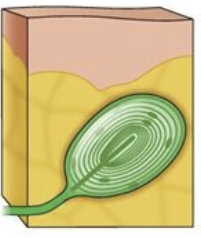
Pacinian corpuscle
large vague borders
fast adapting
vibration
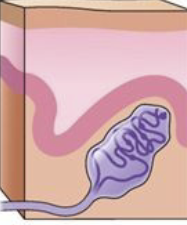
Meissner’s corpuscle
small, sharp borders
fast- adapting
touch
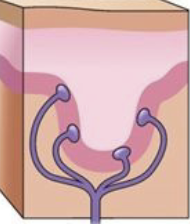
Merkel’s discs
small, sharp borders
slow-adapting
touch
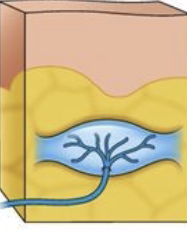
Ruffini’s ending
Large, vague borders
slow adapting
stretch
receptive fields
area on the body where a given neuron will respond to a stimulus
cerebrum (forebrain)
conscious control of movement
brain stem
direct movements
spinal cord
direct movements
subcortical basal ganglia
helps to produce the appropriate amount of force for movement
cerebellum
helps to regulate the timing and accuracy of movement
involved in balance, fine motor control, posture/muscle tone
motor command direction
sent via efferent pathways which leave the spinal cord through the ventral roots
prefrontal cortex
plans complex behavior (volition)
premotor cortex
maps out the appropriate complex movement sequences (what is necessary to do a task)
includes the coordination of multiple body parts
primary motor cortex
specifies and communicates how each movement is to be carried out
each area corresponds to the muscles of specific body parts
nociceptors
receptors expressed on free nerve endings
respond to painful stimuli
Adelta and c fivers carry this information to the CNS
A delta
Noxious and mechanical stimulus
C fiber
noxious heat and chemical stimuli
lateral corticospinal (dorsolateral)
controls contralateral distal limbs (descending)
anterior corticospinal (ventromedial)
controls trunk muscles and proximal limbs (descending)
spinal cord to muscle
neuromuscular joint
in the space between nerves and muscle, Acetylcholine is used
basal ganglia
projects back to motor cortex and substantia nigra
helps to fine-tune voluntary movements
inputs relay mapped sequence plan which is adjusted and relayed back to cortex
Basal ganglia input
from multiple areas of cortex
nigrostriatal dopaminergic system from the substantia nigra
hyperkinetic symptom
when damage to the caudate putamen causes unwanted writing and twitching (dyskinesias)
Huntington’s and Tourette’s
Hypokinetic symptom
when damage to basal ganglia results in loss of motor ability, leading to rigidity and difficulty initiating and producing movement
parkinson’s
Implicit memory
unconscious
retained skill, continued response, but can’t explicitly retrieve knowledge
explicit memory
conscious
can retrieve an item and are aware that they remembered the correct item
short-term
involves frontal lobes
briefly held in memory briefly then discarded
long-term memory
involves temporal lobe
info is held in memory for a lifetime
Patient HM
had severe epileptic seizures from 10 yrs old
his temporal lobe was removed including the hippocampus and amygdala (1953)
explicit anterograde memory
the inability to form new memories (usually starting from a traumaic event)
semantic
a type of explicit memory that recalls facts and information
episodic
a type of explicit memory that recalls events of life
explicit retrograde memory
remembering memories from the past (before traumatic event)
recalling relatives
daily tasks
facts from school
explicit retrograde amnesia
temporarily graded (the further in the past = more likely to remember)
implicit memory test
drawing inside the lines of a star by only using a mirror to see
working memory
short term memory with limited capacity while manipulating those pieces of information
HM and explicit memory
he could not create new declarative memories
what did HM have intact?
implicit memory
working memory
retrograde amnesia
what did HM not have intact?
long term explicit memory formation
explicit memory
Morris water maze
measures spatial ability, memory, navigational skills
hippocampal injury results in impairment finding the platform
radial arm maze
8 arms extend from center platform
one end is baited with food and the # of entries is recorded
Long-term potentiation (LTP)
long lasting enhancement of synaptic strength (cellular/molecular)
basis for learning and memory (behavioral/clinical)
No stimulation
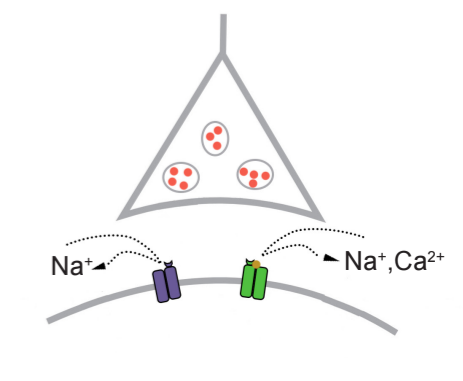
low stimulation
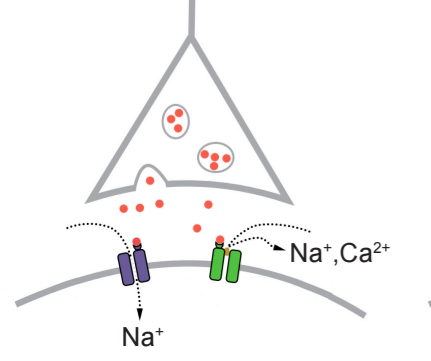
high stimulation
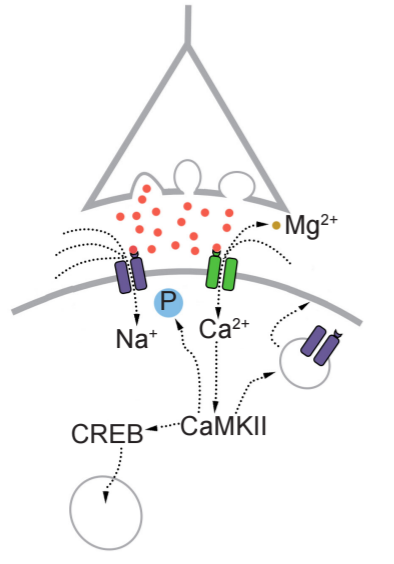
LTP
the cellular foundation of learning and memory
LTP at glutamatergic hippocampal synapse
it stimulates hippocampal inputs and records hippocampus neurons
the high frequency stimulation causes enhanced glutamate release
LTP presynaptic modifications
Glutamate release (frequency/amount)
LTP at glutamatergic synapses (postsynaptic modifications)
At resting potential:
1) glutamate release
2) AMPA receptor activation
3) postsynaptic depolarization
During postsynaptic depolarization:
4) relief of Mg2+ block at NMDA receptor => more depolarization and Ca²+ entry
5) CaMKII activation => gene transcription, AMPAR phosphorylation, actin-induced structural changes, etc.
Spoon and apple test
apple is put in the right visual field, so the left parts of your eyes receive that information
people with an intact corpus callosum first get this information in the left then passed to the right
those without it can say apple but the left hand cannot grab it when asked to
Spoon is on the left visual field → right brain sees spoon
without: cannot speak “spoon”, but left hand can reach under hood to select the spoon (right hand could not)
Commissurotomy
only the left hemisphere receives that information
holding object with left hand
1) put spoon into left hand
2) right brain feels spoon
subject cannot say the word spoon, but were aware something was there
left hand could choose another spoon
Anesthesia reversibly shuts down language
sodium amytal test prior to surgery
test is repeated for the other hemisphere
Dichotic listening task
left side of headphones says “ga” and participant repeats the syllable
imaging studies
fMRI or PET
more color => activity in those areas
chimeric faces test
determines which hemisphere is dominant for facial processing
the higher your laterality quotient, the more the left face is dominant (right hemisphere of brain)
Right hemisphere functions (better at)
music, spatial problem solving, facial processing
non-fluent aphasia (Broca’s)
has: normal comprehension of speech and written word
difficulty: producing speech, slow, inarticulate, omits pronouns, prepositions, conjunctions, tenses
writing: looks like a child’s
fluent aphasia (Wernicke’s)
can: speak articulately but it is a “word salad”
impaired comprehension and difficulty recalling names of objects
Writing: looks more articulated but the sentences make no sense
rehabilitation with aphasia
speech language training, TMS, medication
demonstration of plasticity/learning
Schizophrenia (SZ)
Affects 1% of people, more common in med
diagnosed in 20s-30s
risk factors in genetics and environment (ex. maternal stress)
positive symptoms (SZ)
delusions, hallucinations, disorganizations with speech, catatonia (motot abnormalities)
negative symptoms (SZ)
flat affective response, anhedonia (loss of pleasure)
Delusions
altered persisting complex perception of themselves
can occur after injury, schizophrenia, psychotic event
can go away spontaneously
Capgras delusion (CS)
perception that other people/objects have been replaced by an imposter
“delusional misidentification syndrome”
correlations between CS and Prosopagnosia (inability to recognize faces)
patients have the conscious ability to recognize faces, but disruption to the system that facilitates emotional arousal to familiar faces
Possible reasoning for Capgras delusion
disconnection between the temporal cortex(fusiform face area), and the limbic system involved in emotions (amygdala)
Alzheimer’s disease (AD)
Progressive neurodegenerative disease:
memory deficits. loss of speech, motor impairment
cellular atrophy
visual cortex is preserved
entorhinal cortex, associative cortices (sensory, and allocortex (hippocampus) are in loss
findings in AD
high levels of amyloid-beta plaques
have tau tangles and hyperphosphorylation
tau is normally just on axons, for this disease is it in the whole cell
No fear conditioning
What does no amygdala mean for rats?
Fear response
rapid physiological changes in response to a perceived threat/danger
increased heart rate, rapid breathing, dilated pupils, sweating
Amygdala
located in basal ganglia/forebrain
modulated hypothalamus: sympathetic/parasympathetic NS
Emotional responding, especially fear
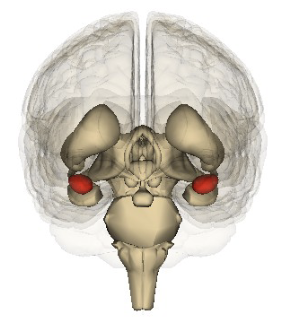
patient DR
intractable seizures for years
targeted lesions of amygdala in 1980s
had difficulty recognizing some emotions in others (fear/anger)
fear conditioning in nonhumans
1) subject is exposed to a conditioned stimulus (light, tone)
2) foot shock results in freezing of movement
3) CS produced the conditioned response (freezing)
empathy in rats
rat will help trapped cage mate more often than a stranger
prairie vole
experimental model for romantic love
socially monogamous after mating
also show social monogamy
male spends more time with female partner and less with strangers (and vice versa)
display increased anxiety after being separated from their partner
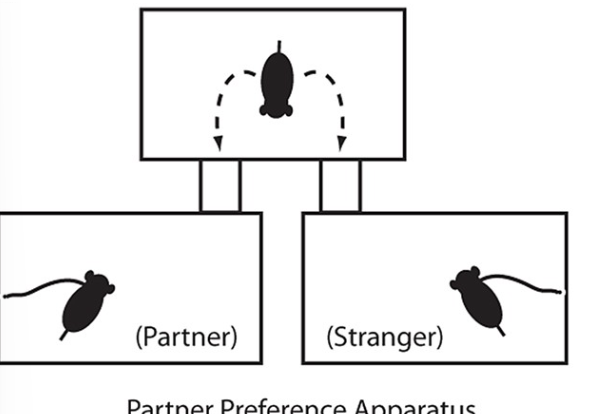
Chemical signals of romantic love
Vasopressin and oxytocin
both produced by the hypothalamus and released by pituitary gland
oxytocin & vasopressin (voles)
giving this increases pair bonding without mating
blocking it decreases pair bonding after mating