lesson 2: happiness comes in waves
 Call Kai
 Learn
Learn Practice Test
 Spaced Repetition
 Match
Match Flashcards
 Knowt Play
1/26

There's no tags or description
Looks like no tags are added yet.
Name | Mastery | Learn | Test | Matching | Spaced | Call with Kai |
|---|
No analytics yet
Send a link to your students to track their progress
27 Terms
strikes
have to do with conflicts on organizational/collective levels. There’s much change that has taken place from them
intrapersonal conflict
conflict within yourself
interpersonal conflict
conflict between individuals
intragroup conflicts
conflict within a team or group
intergroup conflict
conflict between teams or groups
conflict
between 2 (or more) parties, when at least 1 of the parties feels that the other party is opposing or irritating them
verrottingsstrategie
people that don’t fit well into the firm are ignored until they feel that they don’t belong within and leave (= passive aggressive)
intervention checks
keeping conflicts small by bridging in conflicts instead of talking behind each other’s backs
institutional conflict
with organization/context/system
interorganizational conflict
conflict between larger entities
international conflict
conflict within and between countries
interventions: golden rules
o Prevention is the best intervention
o Early actions: agila, small, clear, light
o Escalation, engage third parties
conflict sensitivity
- People differ strongly to the extent they experience conflict and are impacted
- Conflict experience is the result of interaction
conflict experience
the result of interaction
of person (conflict sensitivity)
and social situation/context
and the fit of both
important to recognize it
styles of conflict behavior
accommodating
problem solving
compromising
avoiding
forcing
conflict behavior
o Connected to our personality
o But also personal style, like culture and family: some of us are avoiding, others accommodating …
o Sometimes you have to make a strategic choice: for example to do something you usually wouldn’t
emotional confusion
tears for anger, blame for guilt…
cultural conflict communication
- Happiness: mostly associated with the fit with the culture and the persons personality
- Sometimes you think you understand each other, but you don’t because of difference in conflict communication style
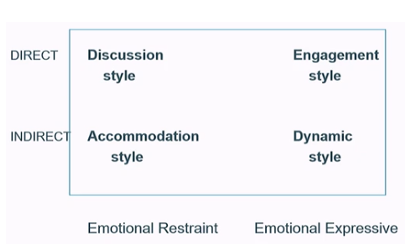
accommodation
Belgium: more restraint + indirect
dynamic
Italy: expressive + indirect
the 7 sins
in conflict, we see all of them come to the front (not all at the same time), important to recognize them
pride, vanity
greed
lust
jealousy
gluttony
wrath (anger)
sloth (laziness)
peacemaking
- Natural behavior in groups
- Aiming to restore harmony
- Extra role behavior of any group member
- Helping 1 or both parties
behaviors are voluntarily actions, by a multi-partial third party, without formal authority, offering (un)solicited help, to their peers in conflict
importance of peacemaking
conflict is stressful also to other group members
conflict is a threat for the group
restoring harmony is essential for surviving as a group
parts of peacemaking
1. Connecting to all parties
2. Emotional support (“I’m so sorry for you”)
3. Help finding solutions (“how would you do it, what would help for you?”) → be supportive and helpful
4. Use humor to ease tension
emotional support
“i’m so sorry for you”
thin line between supporting and siding
support is very important, but the moment you side, you fuel the conflict
humor
can be used to ease tension
haing a peacemaker in the group is great and really helpful
women tend to use this more in times of conflict
usually helps to get perspective → no one is perfect …
don’t be sarcastic, be connective
peacemaking: goal
you want to shift the perspective from the past to the present and the future